Piqué vs Jersey Fabric: Choosing the Right Material for Polo Shirts
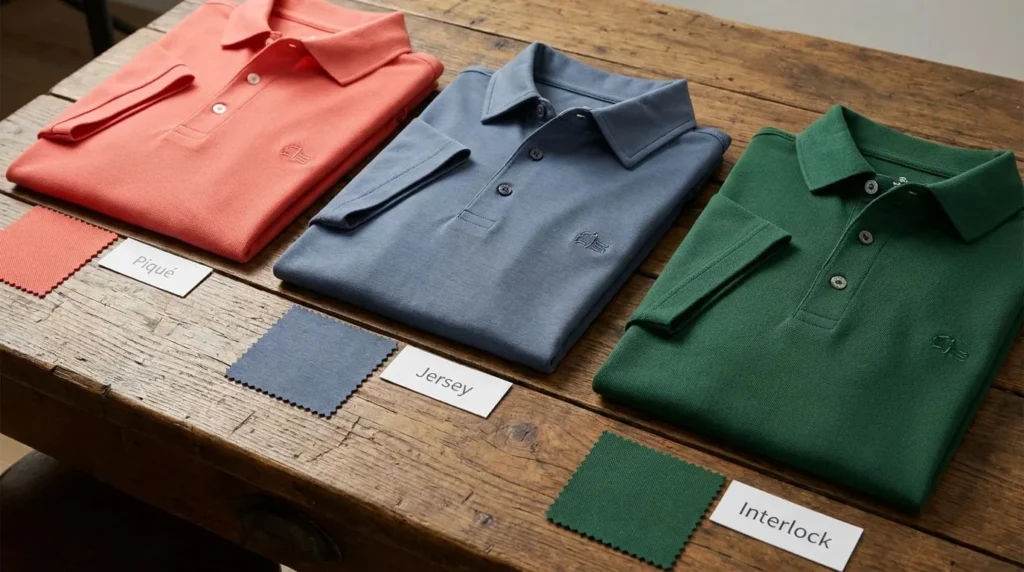
Piqué vs jersey fabric is a choice between two different polo styles. Start with piqué if you want a textured face and a shirt with enough body for a classic staff, club or retail polo. Start with plain jersey if you want a smoother surface and a softer drape for a lightweight golf, travel or lifestyle polo. Either can work for sportswear if the fabric passes the fit, wear and wash checks your product needs.
The fabric is only part of the decision. The collar, button placket and chest logo all sit on the same knit. A jersey that feels excellent as a swatch can pull under a heavy crest. A piqué that looks crisp on a hanger can still restrict the shoulders if the pattern is too close. For custom polo shirt development, compare the fabrics in complete, decorated samples before selecting one for bulk production.
Piqué vs Jersey Fabric at a Glance
| Decision | Knit piqué | Plain single jersey |
|---|---|---|
| Surface | Textured cells, often described as a honeycomb pattern | Smoother face with fine columns of knit stitches |
| Typical look | Classic polo with visible texture | Understated polo with a smoother finish |
| Drape | Often has more body in comparable options | Often falls closer to the body |
| Decoration | A stable option can suit a small embroidered crest | A smooth option can suit fine prints or a lightweight logo |
| What to check first | Texture consistency, placket bulk and coverage | Placket stability, hem shape and opacity under stretch |
| Useful starting point | Staff uniforms, club polos and classic retail styles | Golf, travel and soft lifestyle polos |
These are starting points for a piqué vs jersey fabric comparison. Weight, yarn and finish can shift the result in either direction. A fine polyester piqué may suit a lightweight golf polo, while a substantial jersey may provide the body needed for a structured retail shirt.
7 Fabric Decisions for Polo Shirts
1. Choose the surface and knit structure
In a polo specification, piqué vs jersey fabric usually means textured knit piqué versus plain single jersey. Common polo piqués combine knit and tuck stitches. A tuck is formed when a needle holds a loop while taking another, creating a different surface pattern from the regular knit stitches in plain jersey. Different arrangements of those stitches produce different cell sizes and textures. CottonWorks’ guide to single and double knits shows how common piqué constructions are formed.
Plain single jersey typically has a smoother face and a reverse that looks different from the front. Some piqués are also single knits, so the comparison is about the specific stitch pattern. When requesting piqué vs jersey fabric swatches, describe how pronounced you want the texture to be and ask for the exact fabric code. A coarse piqué and a fine micro-piqué can create two very different polos, even in the same shade.
2. Decide how the polo should hang
The piqué vs jersey fabric choice is easier to see on the body than on a table. Piqué often suits a straight silhouette with a clean line from chest to hem. Jersey often suits a relaxed shirt intended to fall softly, tuck easily or layer under a jacket. Neither fabric will correct a pattern that is too tight across the shoulders or too loose through the waist.
Compare the actual fabric weight in grams per square meter, or GSM, and look at thickness, coverage and drape separately. For a white polo, compare the piqué vs jersey fabric samples over the same dark undershirt in daylight. Then have the wearer reach forward to see if either fabric becomes more transparent. Check multiple sizes where possible: a shirt that looks opaque in a loose fit may behave differently when stretched. This is why it helps to define garment measurements and fit allowance before judging the fabric.
3. Match fiber and airflow to the activity
Start a piqué vs jersey fabric trial by separating construction from fiber. Cotton piqué and cotton jersey are both candidates for casual or retail polos. Polyester piqué and polyester jersey are both candidates for active uniforms. Cotton-polyester blends may suit everyday programs, and elastane blends can be considered where the garment needs more extension and recovery. Ask for actual fabric samples before selecting a blend.
Piqué’s visible texture does not prove that air passes through it more easily. A dense piqué can have less airflow than a light jersey. Airflow also differs from how a fabric moves liquid sweat or how quickly it dries. ASTM D737 assesses air permeability. AATCC TM195 evaluates liquid moisture management, while AATCC TM201 measures drying rate under a specified heated-plate procedure. Use the result that matches the claim you intend to make.
If you’re comparing piqué vs jersey fabric for custom golf apparel, try each shirt through a full swing, including shoulder rotation and follow-through. For a polo worn on a long shift, assess whether the fabric clings when damp, whether seams rub under the arms and whether the collar feels comfortable after hours of wear.
4. Design the collar and placket for the body fabric
The collar and placket can settle a close piqué vs jersey fabric decision. A soft jersey body can stretch while the placket is sewn, leaving the button opening wavy. A thick piqué can build up at the base of a folded placket, creating a bump or making it harder to press flat. Stabilization can help, provided the reinforced area still feels comfortable and lies flat against the surrounding panel.
Compare a rib collar with a self-fabric collar if you are unsure which suits the style. A rib collar can give a softer edge and distinct texture. A self-fabric collar can create a more uniform appearance, but the fabric and any interfacing must support the shape. For a piqué vs jersey fabric fitting, fasten both polos and turn the collars up and down to see whether the neckline distorts. After laundering, check for curling tips, puckering below the last button and uneven shrinkage between the body and collar. Specify the chosen construction in the sportswear tech pack.
5. Compare logos on the actual fabric
For embroidered polos, a piqué vs jersey fabric trial should use the same crest at the intended production size. A stable piqué can support a small chest logo, though very fine lettering may lose definition on a pronounced texture. A smooth jersey may show detail clearly, but a dense design can draw in a light or stretchy chest panel. Check the shirt on the body and inspect the backing from the inside, particularly when the polo is worn against bare skin.
When the design has small text or dense stitching, compare direct embroidery and embroidered patches before committing. A patch has its own weight and stiffness, so test it on the polo too. If you choose a transfer, check how evenly it adheres over the texture and inspect the edges after washing. On a color-blocked style, approve the collar, body, placket and logo together against physical color standards.
6. Check how the shirt changes after laundering
A useful piqué vs jersey fabric comparison includes the decorated garment after washing. Measure body length, chest width and sleeve length before and after the agreed wash and dry cycles. Look for side-seam rotation, a hem that no longer hangs level and a collar that behaves differently from the body. A polo can still meet its measurements and look untidy if the placket twists or the logo puckers.
For polos intended for home laundering, AATCC TM150 provides a method for measuring changes in garment length and width where applicable. If the shirts will be cleaned by a uniform service, ask for its actual wash and drying conditions. Agree on the test procedure, tolerances and appearance criteria before approving the polo’s care instructions.
7. Price the polo as a finished product
When comparing piqué vs jersey fabric for a wholesale order, request quotes for the same logo, size mix and quantities. Fabric consumption, usable width, collar and cuff sourcing, and placket construction all affect the finished cost. If a softer jersey requires additional stabilization or a different logo method, include those changes in the quote.
For recurring staff or club orders, check which colors are stocked and which require a custom dye lot. Confirm whether the minimum applies per style, color or material and how a repeat order will be matched to the original. Fabric sourcing and production lead times matter most when new staff members or late team orders need the same polo after the first run.
Piqué vs Jersey Fabric by Polo Type
| Polo program | Fabric to sample first | Check before approval |
|---|---|---|
| Corporate or hospitality uniform | Cotton-rich or blended piqué | Collar and placket shape after repeated washing |
| Golf or active club polo | Light performance jersey or fine polyester piqué | Shoulder rotation, wet cling and drying |
| Coach or team travel polo | Piqué for a classic look; jersey for a softer layer | Crest appearance and comfort beneath outerwear |
| Everyday retail polo | Cotton piqué for texture; cotton jersey for drape | Hand feel, opacity and wash appearance in each color |
| All-over printed event polo | A compatible polyester knit with a suitable print surface | Fine lettering, print continuity and coverage when worn |
A club can make different piqué vs jersey fabric decisions within the same collection. A coach’s polo might use textured piqué with a small crest, while a travel polo uses a softer jersey and a lighter logo. Keeping the crest position and physical color standards consistent helps the shirts work alongside the rest of the teamwear collection. For a range built around one shared shirt, define the custom polo uniform requirements and test the garment with the people who will wear it most often.
How to Approve a Polo Fabric Before Bulk Production
A fair piqué vs jersey fabric trial uses the intended collar, buttons and logo on both garments. Compare the same size and a representative color first. If one fabric needs more room through the shoulders or waist to fit well, make that adjustment before final approval. The goal is to select the better finished polo for the brief.
- Record the exact fabrics. Note the supplier codes, knit structures, fiber composition, finished GSM, usable width and color. Retain swatches so the selected fabric can be identified later.
- Inspect the polos while worn. Check shoulder reach, sleeve movement, chest coverage and how the placket sits when buttoned. Compare the fabric while dry and after representative activity if the shirt is intended for sports.
- Recheck after care. Measure the same points, inspect the collar and hem, and review how the logo looks and feels. Document the agreed criteria in the pre-production sample approval record.
- Freeze the complete specification. Approve the body knit, collar, placket, buttons, decoration and shade together. If a fabric changes, reassess fit, color and decoration compatibility before accepting the replacement.
For a private label order, send BUSHI Sports® the intended use, reference photos, size range, logo files and quantities per color. If the piqué vs jersey fabric choice is open, ask for one sample that prioritizes structure and another that prioritizes softness or mobility. That gives the team a clear basis for comparing the two options during fabric sourcing and sample development.
Frequently Asked Questions
Is piqué always better for embroidered polo shirts?
A stable piqué is a useful starting point for a small chest crest. It may be less suitable for fine details if the surface is heavily textured. In a piqué vs jersey fabric logo test, use the production artwork and check how the design sits on the shirt after washing.
Piqué vs jersey fabric: Which is better for summer polos?
A lightweight jersey is a good starting point if it feels comfortable when damp and suits the intended fit. A fine performance piqué can also work. Compare the finished polos during the activity you are designing for, paying attention to airflow, wet cling and how the shirt feels under the arms.
Does piqué vs jersey fabric determine how much a polo shrinks?
Knit structure affects dimensional behavior, but yarn, fiber, finishing and care also matter. Wash the finished shirt under the intended conditions and measure it afterward. Check the placket and collar as well as the body, since the parts may respond differently.
Does piqué vs jersey fabric change the collar options?
Both fabrics can support a structured collar. A rib collar or a properly supported self-fabric collar can give a soft jersey body a defined neckline. Check that the collar and placket do not pull on the body and that the collar points remain even after laundering.
Choosing the Right Polo Material
Start the piqué vs jersey fabric decision with the feature the finished polo needs most. Choose a piqué sample when texture and body are priorities, or a jersey sample when a smooth surface and softer drape are central to the design. Then let the sewn, branded and washed sample decide. It will show whether the fabric supports the collar, holds the logo and remains comfortable in the conditions the shirt was designed for.
To discuss a sample or custom order, contact BUSHI Sports® through the contact page, share your specifications by WhatsApp, or email info@bushisports.com. You can find the company on Google Maps or connect on LinkedIn. For product and collection updates, follow BUSHI Sports® on Instagram, Facebook, X and Threads. More product and design content is available on Pinterest, YouTube, TikTok and Medium.