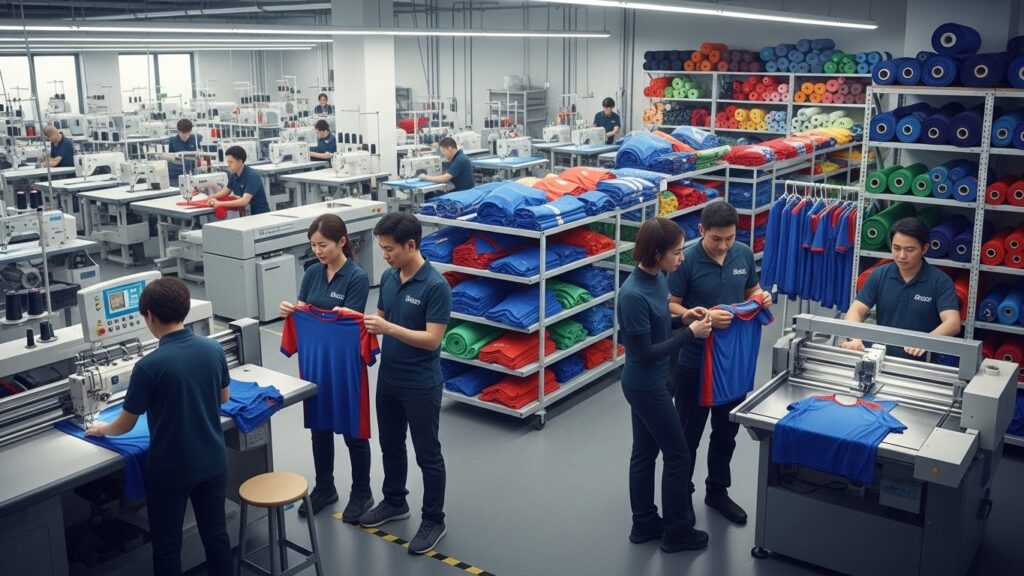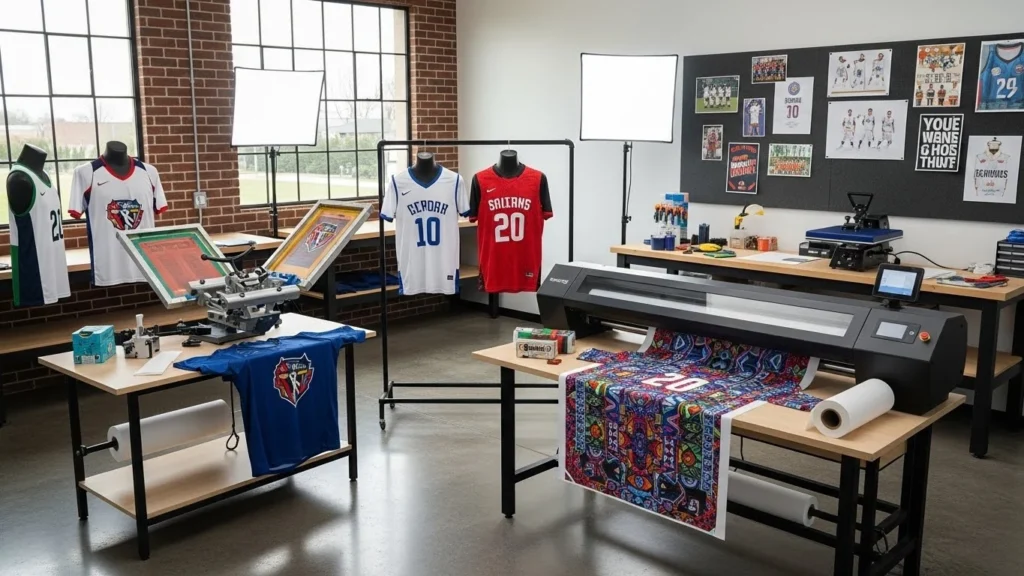
A sportswear sample approval checklist protects buyers from approving a garment that looks acceptable in photographs but fails in fit, fabric, colour, construction, testing, personalization, or packaging. Once bulk production begins, even a small unresolved detail can affect hundreds or thousands of units.
The approved pre-production sample is more than a visual reference. It should represent the agreed fabric, measurements, fit, colours, artwork, stitching, trims, labels, care instructions, packaging direction, and performance requirements. Approval confirms that the buyer and manufacturer are working from the same physical and technical standard.
A rushed approval creates expensive consequences. A collar that feels slightly tight in one sample can become a team-wide sizing complaint. A logo that sits only one centimetre too low may look wrong across an entire retail order. An incorrect wash symbol can create consumer-care problems. A fabric substitution can change opacity, stretch, moisture performance, colour, and fit even when the material looks similar on a screen.
This is why a sportswear sample approval checklist should be completed before cutting bulk fabric. The process should include the physical sample, measurement chart, bill of materials, artwork files, colour references, test results, labels, packaging, and written approval comments.
BUSHI Sports® supports sports brands, clubs, teams, academies, schools, universities, gyms, retailers, wholesalers, distributors, and private label buyers through sample development, customization, quality control, packaging, and bulk sportswear manufacturing.
This guide explains ten critical checks that help buyers approve sportswear samples confidently and create a clear production standard.
“A sample should not be approved because it is close enough. It should be approved because every production-critical detail is defined, checked, and recorded.”
Quick Sportswear Sample Approval Checklist
| Approval area | What must be confirmed | Main risk prevented |
|---|---|---|
| Sample status | Correct sample stage and revision | Approving an outdated prototype |
| Measurements and fit | Chart, tolerances, movement, size block | Bulk sizing complaints |
| Fabric | Composition, weight, stretch, hand feel, performance | Unapproved material substitution |
| Colour and artwork | Physical shade, print scale, placement, alignment | Visual inconsistency |
| Branding | Crest, logos, names, numbers, sponsor marks | Expensive personalization errors |
| Construction | Seams, stitches, panels, reinforcement, finishing | Weak or uncomfortable garments |
| Labels and trims | Composition, size, care, origin, hardware | Incorrect consumer information |
| Testing | Wash, colourfastness, shrinkage, adhesion, performance | Failures after use or laundering |
| Packaging | Folding, bags, labels, barcodes, assortment | Retail and distribution mistakes |
| Final approval file | Signed sample, BOM, comments, specifications | Changes during bulk production |
Understand Which Sample You Are Approving
Before using the sportswear sample approval checklist, identify the sample stage. Apparel terms vary between manufacturers, but the following sequence is common.
Development or Prototype Sample
This sample tests the initial pattern, construction, and general idea. Substitute fabric, approximate colours, temporary trims, or incomplete branding may be used. It is normally not suitable as the final bulk standard.
Fit Sample
A fit sample focuses on measurements, ease, balance, mobility, and pattern shape. The buyer may approve the fit while requesting changes to colour, branding, fabric, or packaging.
Size-Set Sample
A size set checks grading across selected sizes. It helps confirm that sleeve length, body length, graphic scale, ventilation panels, and logo placement remain consistent throughout the range.
The published sports uniform size guide explains how body measurements, garment measurements, fit allowances, and physical try-ons should work together.
Sales or Presentation Sample
This sample may be created for sales meetings, photography, trade shows, or buyer presentations. It can look finished but may not represent the exact bulk production process.
Pre-Production Sample
The pre-production sample, often called a PP sample, should use approved bulk materials, artwork, construction, labels, and trims. It is the main sample normally approved before mass production.
Shipment or Production Sample
This sample is selected from actual bulk production. It verifies that production matches the approved pre-production standard.
A sportswear sample approval checklist should clearly state which sample is being reviewed. Approving a prototype as though it were a PP sample creates ambiguity and gives production teams no reliable final standard.
Check 1: Confirm the Sample Identity and Revision
The first sportswear sample approval checklist control is document accuracy. The sample must be connected to the correct style, colour, size, and revision.
The sportswear sample approval checklist should be completed against the identification on the physical sample, not against assumptions from an email thread.
The sample tag or approval sheet should show:
- Buyer or brand name
- Style name and style number
- Product category
- Sample stage
- Colourway
- Sample size
- Revision number
- Submission date
- Manufacturer reference
- Buyer comments from the previous round
Compare the current sample with the previous comment sheet. Every requested correction should be marked as completed, rejected, or still pending.
Avoid Mixed Revisions
A common problem occurs when the latest garment uses the revised pattern but an older artwork file, label, or measurement chart. The sample appears new, yet some components come from the previous version.
The sportswear sample approval checklist should therefore reference one controlled package containing:
- Current tech pack
- Current measurement chart
- Current bill of materials
- Current artwork files
- Current colour standards
- Current label files
- Current packaging specification
Use revision numbers and dates. The sportswear sample approval checklist should display the same revision on the garment tag, tech pack, artwork, and approval sheet. Avoid file names such as final, final-new, or final-corrected. A structured name such as Style-104_PP_R3_2026-07-02 is easier to track.
Photograph the Approved Sample
Take clear front, back, side, inside, label, trim, and close-up photographs. Images do not replace the physical sample, but they help prevent confusion when the approved garment is stored, shipped, or referenced by several departments.
Check 2: Verify Measurements, Fit, and Movement
The second sportswear sample approval checklist control is fit. Measure the sample rather than judging it only on a mannequin or model.
The buyer and manufacturer should use the same points of measurement. Important dimensions may include:
- Half chest or bust
- Body length
- Shoulder width
- Sleeve length
- Sleeve opening
- Neck opening
- Half waist
- Half hip
- Front rise
- Back rise
- Inseam
- Outseam
- Thigh
- Leg opening
Every point should have an agreed method and tolerance. The sportswear sample approval checklist should state whether the recorded dimensions are body measurements or finished-garment measurements. The sportswear sample approval checklist should record the actual measurement next to the required measurement.
Fit Must Match the Product Tier
A match jersey, replica jersey, compression top, fanwear shirt, and warm-up jacket should not share one fit expectation. The match jersey vs replica jersey guide explains why performance and supporter products require different fabric, ease, and pattern decisions.
During fitting, confirm:
- Correct men’s, women’s, youth, or unisex block
- Intended slim, regular, relaxed, or compression fit
- Base-layer or equipment allowance
- Shoulder and arm mobility
- Torso coverage during movement
- Waist and hip stability
- Crotch and rise comfort
- Sleeve and leg length
- Collar comfort
- Transparency under stretch
Conduct Sport-Specific Movement Tests
The wearer should perform movements relevant to the product. This part of the sportswear sample approval checklist confirms that the approved measurements work during actual sport movement:
- Raise arms overhead
- Reach forward and across the body
- Rotate the torso
- Squat and lunge
- Sprint or jog
- Jump
- Bend at the waist
- Assume the playing position
- Wear intended pads, guards, or base layers
A sample that fits while standing may pull, ride up, twist, or become transparent during activity.
Review More Than One Size
One medium sample cannot prove that the complete size range is correct. Approve a size set when the order includes several sizes, youth grading, women’s fit, tall lengths, or complex graphics.
Check 3: Confirm Fabric Identity and Performance
The third sportswear sample approval checklist control is material verification. Fabric affects appearance, fit, comfort, printing, durability, and price.
Confirm:
- Fibre composition
- Supplier and fabric code
- Knitted or woven structure
- Finished GSM
- Width where relevant
- Stretch direction
- Stretch percentage and recovery
- Thickness
- Surface finish
- Hand feel
- Opacity
- Moisture or ventilation properties
- Recycled-content evidence where claimed
Do not approve a sample based only on the words polyester, spandex, premium, or moisture-wicking.
Compare With the Approved Swatch
The sample fabric should match the signed or sealed fabric swatch. The sportswear sample approval checklist should identify the swatch code and supplier reference used for comparison. Check both the face and reverse sides. A visually similar replacement may behave differently during movement and laundering.
Review the fabric under:
- Daylight-equivalent lighting
- Indoor lighting
- Stretch
- Wet conditions where relevant
- Direct comparison with the approved reference
For lightweight products, confirm opacity over common undergarment colours. For compression products, inspect the fabric at the required extension.
Match Fabric to the Intended Environment
Hot-climate products may require controlled airflow, low thermal resistance, moisture spreading, and low cling. The sportswear for extreme heat guide explains why low fabric weight alone does not prove hot-weather performance.
Where environmental claims matter, confirm the exact test method and result. For polyester products, buyers may also review the published guide on microfiber shedding in polyester sportswear and decide whether fabric-release testing is relevant to the product brief.
Check 4: Approve Colour, Sublimation, and Artwork Placement
The fourth sportswear sample approval checklist control is visual accuracy. Screen colours and digital mockups are not sufficient bulk standards.
Confirm the physical sample against the references below. This section of the sportswear sample approval checklist should be completed under controlled and consistent lighting:
- Approved colour swatches
- Pantone or other colour references where applicable
- Approved strike-offs
- Previous approved products when colour continuity is required
- Sponsor and crest colour standards
Inspect Colour Across All Materials
The same digital value can look different on main fabric, mesh, rib, elastic, transfers, embroidery thread, and labels. Check:
- Main body to sleeve match
- Main body to mesh match
- Collar and cuff match
- Left and right panel consistency
- Colour variation across printed zones
- Shade under stretch
- White areas for contamination or show-through
Review Sublimation Quality
For sublimated sportswear, inspect:
- Print sharpness
- Colour saturation
- Banding
- Ghosting
- White gaps at seams
- Ink marks
- Pattern alignment
- Gradient smoothness
- Artwork scale
- Position across sizes
- Front-to-back continuity
Graphics should be placed on the actual graded pattern, not enlarged or reduced randomly from one sample size.
Use Correct Artwork Files
Vector artwork improves scaling, edge quality, colour control, and repeat production. BUSHI Sports® explains this in why vector artwork is important for sportswear printing and how to prepare print-ready files.
The sportswear sample approval checklist should confirm the exact artwork version used in the sample. That same sportswear sample approval checklist should identify any artwork elements that remain provisional or require licensing approval.
Check 5: Verify Crests, Logos, Names, and Numbers
The fifth sportswear sample approval checklist control is branding and personalization. These details are expensive to correct after production.
Inspect:
- Crest size and position
- Manufacturer logo
- Main sponsor
- Sleeve sponsor
- League or event badges
- Player name
- Player number
- Team name
- Country or club identifier
- Internal messages or coordinates
Check Method and Material
A crest may be:
- Sublimated
- Embroidered
- Woven
- Heat transferred
- Silicone or TPU
- Appliquéd
Confirm that the sample uses the agreed method. An embroidered crest cannot be silently replaced with a printed badge because both show the same artwork.
Test Placement From Defined Reference Points
The sportswear sample approval checklist should record branding placement from agreed landmarks such as high shoulder point, centre front, armhole, neckline, or hem. Visual judgement alone creates variation.
Review Names and Numbers Carefully
Confirm:
- Spelling
- Capitalization
- Font
- Number style
- Number size
- Spacing
- Outline
- Contrast
- Position
- Player list revision
For team orders, compare the sample with the approved name-number-size matrix. Personalized information should be checked by two people before bulk printing.
Check Adhesion and Flexibility
Heat-applied branding should be inspected for:
- Complete adhesion
- Smooth edges
- No lifting
- No scorching
- No colour migration
- No glue marks
- Suitable stretch
- No excessive stiffness
The final performance should be reviewed again after washing.
Check 6: Inspect Sewing, Construction, and Workmanship
The sixth sportswear sample approval checklist control is garment construction. A sportswear sample approval checklist must assess internal workmanship as carefully as the visible exterior. Turn the sample inside out. Many serious defects are easier to see internally.
Inspect:
- Seam type
- Stitch type
- Stitch density
- Thread colour
- Thread quality
- Seam allowance
- Overlock coverage
- Flatlock appearance
- Bonded seam width
- Bar tacks
- Reinforcement
- Hem depth
- Collar attachment
- Waistband construction
- Pocket bags
- Gussets
- Zippers and closures
Look for Workmanship Defects
Common defects include:
- Skipped stitches
- Broken stitches
- Open seams
- Uneven stitch density
- Raw edges
- Needle damage
- Seam puckering
- Twisted panels
- Wavy hems
- Uneven collars
- Loose threads
- Oil or dirt marks
- Fabric caught in seams
- Sharp internal edges
Evaluate Seam Function
A seam can look clean but fail during stretch or repeated use. Confirm that high-stress zones use suitable construction.
ISO 13935-2:2026 describes a grab method for determining maximum force to seam rupture in relevant sewn seams. The exact test programme should be selected according to the product, material, seam, and buyer requirement.
For stretch garments, inspect recovery after repeated stretching and confirm that the thread and stitch can extend without breaking.
Check 7: Verify Trims, Labels, and Consumer Information
The seventh sportswear sample approval checklist control covers every component that is not the main fabric.
Check:
- Rib collars and cuffs
- Elastic
- Drawcords
- Eyelets
- Zippers
- Snaps
- Hook-and-loop components
- Reflective trims
- Tapes
- Pads or foam
- Woven labels
- Printed labels
- Hangtags
The bill of materials should identify the supplier, code, size, colour, and placement for each trim. The sportswear sample approval checklist should confirm that every installed trim matches that bill.
Size and Composition Labels
Confirm that the label states the correct:
- Brand
- Size
- Fibre composition
- Country of origin where required
- Care information
- Product or batch information where applicable
Composition percentages should match the actual tested or supplier-certified material package, including relevant lining or contrast panels where required by the destination market.
Care Symbols
ISO 3758:2023 establishes a system of care symbols for textile articles. Care instructions should reflect the most severe treatment that does not cause irreversible damage to the product.
Do not copy a care label from another style. A jersey with sublimation, a silicone crest, and bonded seams may require different care from a cotton T-shirt or embroidered jacket.
Comfort and Safety
Inspect labels and trims against the skin. Check for scratching, sharp edges, exposed zipper ends, long drawcords, and uncomfortable seam tape.
Check 8: Review Washing, Colourfastness, and Performance Tests
The eighth sportswear sample approval checklist control is validation after use and care. A new sample can look perfect and still fail after the first wash.
The test plan should match the product and claims. The sportswear sample approval checklist should show which reports are mandatory before approval and which tests will be repeated on bulk production. Relevant areas may include:
- Dimensional change
- Colourfastness to washing
- Colourfastness to rubbing
- Colourfastness to perspiration
- Pilling
- Snagging
- Seam strength
- Stretch and recovery
- Transfer adhesion
- Print durability
- Moisture management
- Air permeability
- Water resistance
- UV protection
Dimensional Stability
ISO 6330:2021 specifies domestic washing and drying procedures for textile testing. ISO 5077:2007 covers the determination of dimensional change after suitable washing and drying procedures.
Measure the sample before and after the agreed cycles. Check chest, length, sleeves, waist, inseam, and other critical points.
Colourfastness
ISO 105-C06:2010 addresses colourfastness to domestic and commercial laundering. ISO 105-X12:2016 covers colourfastness to rubbing using dry and wet test cloths.
The buyer should define acceptable grades and test conditions rather than assuming every product needs the same threshold.
Test the Complete Garment
Fabric reports are useful, but finished-garment tests reveal interactions between fabric, thread, transfers, elastic, trims, and construction. Test the sample after all decoration has been applied.
Check 9: Approve Packaging and Order Presentation
The ninth sportswear sample approval checklist control is packaging. A retail sportswear sample approval checklist should review the packed product, not only the unpacked garment. Packaging errors can affect retail presentation, moisture, sorting, barcodes, and customer delivery.
Confirm:
- Folding method
- Garment orientation
- Tissue or insert
- Individual bag
- Bag material and thickness
- Ventilation holes where used
- Warning text where required
- Size sticker
- Barcode
- SKU
- Colour identification
- Player identification
- Carton assortment
- Carton markings
- Carton dimensions
- Moisture protection
Player-Based Packing
For customized team orders, confirm whether products will be packed as listed below. The sportswear sample approval checklist should show the chosen assortment method before cartons are prepared:
- By player
- By size
- By team
- By product category
- By retail SKU
The pack may need the player name, number, jersey size, short size, and set quantity.
Protect the Product
Products must be fully dry before packing. Hook-and-loop tabs should be closed or protected. Raised prints, silicone grip, padded areas, and crests should not be folded in a way that causes permanent marks.
BUSHI Sports® explains the commercial role of presentation in how packaging influences perceived value.
Check 10: Freeze the Bulk Production Standard
The tenth sportswear sample approval checklist control is final documentation. Verbal approval is not enough.
The final approval package should contain the records below. The sportswear sample approval checklist is complete only when these records agree with the signed physical sample:
- Signed or sealed PP sample
- Approved photographs
- Measurement chart and tolerances
- Bill of materials
- Fabric and trim swatches
- Colour standards
- Artwork files
- Branding placement chart
- Name-number-size matrix
- Label files
- Care instructions
- Test reports
- Packaging specification
- Buyer comments
- Approval date
- Authorized approver
Use Conditional Approval Carefully
Comments such as “approved with small changes” can be risky. If the change affects fit, fabric, colour, artwork, construction, or branding, request a revised sample or clear photographic and measurement evidence before bulk cutting.
Minor comments should still be written, measurable, and linked to the technical file.
Approval Does Not Replace Bulk Inspection
A pre-production sample defines what should be produced. It does not prove that every bulk unit will match it.
ISO 2859-1:2026 defines an acceptance sampling system for inspection by attributes. AQL, inspection level, defect classification, and sampling plan should be agreed according to the buyer’s risk and contract.
BUSHI Sports® explains the broader production framework in how quality control works in sportswear manufacturing.
Critical, Major, and Minor Defects
A practical defect system may classify issues as:
| Defect class | General meaning | Examples |
| Critical | Safety, legal, or serious compliance risk | Sharp component, prohibited material, incorrect mandatory label |
| Major | Product likely to be rejected or unusable for intended purpose | Wrong size, open seam, wrong colour, missing logo, failed closure |
| Minor | Limited issue that does not normally prevent use | Small thread tail or slight cosmetic variation within agreed limit |
The exact classification must be agreed before final inspection. The sportswear sample approval checklist should identify which sample defects would block approval immediately.
Downloadable-Style Sportswear Sample Approval Checklist
Use the following fields for every pre-production sample. This sportswear sample approval checklist can be copied into a buyer approval form or technical pack.
Product Identification
- Brand or buyer:
- Style name:
- Style number:
- Product category:
- Sample stage:
- Revision:
- Colourway:
- Sample size:
- Date reviewed:
Fit and Measurements
- Correct pattern block confirmed
- All critical measurements within tolerance
- Movement trial passed
- Equipment or base-layer fit passed
- Size-set review completed where required
- Transparency and coverage approved
Materials
- Main fabric approved
- Mesh and contrast fabrics approved
- Fibre composition confirmed
- GSM and stretch confirmed
- Fabric performance reports reviewed
- No unapproved substitutions
Appearance and Branding
- Physical colour approved
- Sublimation or print approved
- Artwork scale and placement approved
- Crest and logos approved
- Sponsors approved
- Names and numbers approved
Construction
- Seam type approved
- Stitch quality approved
- Reinforcement approved
- Collar, cuffs, waistband, and hems approved
- Internal workmanship approved
- No sharp or uncomfortable components
Labels and Packaging
- Size label approved
- Composition label approved
- Care symbols approved
- Country-of-origin information approved where required
- Hangtags and barcodes approved
- Folding and packaging approved
- Carton assortment approved
Testing and Final Decision
- Wash test passed
- Dimensional change accepted
- Colourfastness accepted
- Transfer and decoration adhesion passed
- Performance tests accepted
- Approval status: Approved / Rejected / Revised sample required
- Buyer comments:
- Buyer name and signature:
- Manufacturer representative:
- Approval date:
Common Sample Approval Mistakes
Approving From Photographs Only
Photographs cannot confirm fabric weight, hand feel, stretch, measurements, seam comfort, or exact colour.
Reviewing Only the Front
The back, inside, seams, labels, and packaging may contain the most serious defects.
Approving Fit Without Movement
Sportswear must be assessed during movement, not only while standing.
Ignoring the Measurement Chart
A sample can look correct on one model but fail the agreed specifications.
Accepting Substitute Fabric
A development sample made from substitute fabric cannot prove final colour, fit, opacity, or performance.
Forgetting Wash Testing
Transfers, elastic, colour, dimensions, and seams can change after laundering.
Using Vague Comments
“Make it better,” “slightly bigger,” or “colour should pop” cannot guide controlled production.
Making Late Changes After Approval
Changes after fabric cutting can create waste, delay, and mixed production standards.
Failing to Keep an Approved Sample
Both buyer and manufacturer should retain controlled references or clear access to the signed standard.
How BUSHI Sports® Handles Sample Approval
BUSHI Sports® supports sportswear and teamwear buyers through a controlled development process that can include:
- Requirement review
- Material proposals
- Artwork and mockups
- Pattern development
- Prototype samples
- Fit samples
- Size-set samples
- Pre-production samples
- Measurement review
- Branding and personalization
- Test coordination
- Quality-control planning
- Packaging development
- Bulk manufacturing
- Final inspection
- International delivery coordination
The exact process depends on the product, quantity, customization, test requirements, and destination market.
Start Your Sportswear Development Project
Brands, clubs, teams, academies, schools, universities, gyms, retailers, distributors, and private label buyers can contact BUSHI Sports® to discuss product specifications, samples, fabrics, measurements, printing, labels, packaging, minimum order quantities, testing, quality control, bulk production, and delivery.
- Email: info@bushisports.com
- WhatsApp: +92 348 4018 578
- Project inquiry: Contact BUSHI Sports®
Send the product type, reference design, target market, size range, estimated quantity, preferred materials, branding requirements, packaging, target price, and delivery date. Use the sportswear sample approval checklist before authorizing bulk production.
Frequently Asked Questions
What is a sportswear sample approval checklist?
A sportswear sample approval checklist is a structured review of the pre-production garment covering measurements, fit, fabric, colour, artwork, branding, construction, labels, testing, packaging, and final production documents.
What is a pre-production sample?
A pre-production sample is the final development sample made with approved or intended bulk materials, construction, branding, labels, and trims. It is normally reviewed before mass production begins.
Is a fit sample the same as a PP sample?
No. A fit sample mainly checks measurements and pattern performance. A PP sample should represent the final production specification more completely.
Can a sample be approved from photographs?
Photographs can support approval of limited visual corrections, but they cannot reliably confirm fabric, hand feel, fit, measurements, exact colour, seam comfort, or complete workmanship.
Should every size be sampled?
Not always, but a size set is strongly recommended for broad size ranges, youth products, women’s fits, complex grading, fitted garments, and large personalized orders.
What should be measured on a sample?
Measure every critical point listed in the approved chart, such as chest, length, shoulder, sleeve, waist, hip, rise, inseam, and openings. Record actual results and tolerances.
Why should the sample be washed before approval?
Washing can reveal shrinkage, twisting, colour loss, transfer lifting, elastic failure, pilling, and seam problems that are not visible on a new garment.
What is an approved sample or golden sample?
It is the signed, sealed, or otherwise controlled physical reference that bulk production and inspection should match.
Does sample approval guarantee bulk quality?
No. It defines the required standard. In-line and final inspections are still necessary to confirm that bulk production matches it.
What is AQL in garment inspection?
AQL is an acceptance quality limit used with a defined sampling plan. Buyers should agree on the applicable standard, inspection level, defect classification, and limits before final inspection.
Who should approve the sportswear sample?
Approval should come from an authorized person who understands product design, fit, quality, branding, commercial requirements, and any relevant compliance obligations. The completed sportswear sample approval checklist should name that approver.
Can changes be made after PP sample approval?
They can, but every change should be documented, assessed for cost and lead-time impact, and approved before the affected bulk operation begins. Significant changes may require a revised sample.
Conclusion
A sportswear sample approval checklist turns a physical sample into a controlled bulk-production standard. The process begins by confirming the sample stage, style, size, colourway, and revision. Measurements and fit should then be checked against the approved chart through sport-specific movement trials.
Fabric identity, stretch, weight, opacity, and performance must match the agreed specification. Colour, sublimation, artwork, crests, sponsors, names, and numbers require physical and measurable approval. Construction should be inspected inside and outside for seam quality, reinforcement, comfort, and durability.
Labels, care symbols, trims, testing, packaging, barcodes, and carton assortment are also part of the product. The final approval file should freeze the bill of materials, artwork, measurements, test results, and buyer comments before cutting bulk fabric.
The sportswear sample approval checklist does not replace bulk quality inspection. It gives production and inspection teams a reliable reference for what the finished order must be.
BUSHI Sports® supports sportswear development through material selection, patterns, samples, sizing, printing, private labels, test coordination, packaging, quality inspection, and international production management.
To discuss a custom project, email info@bushisports.com, message BUSHI Sports® on WhatsApp at +92 348 4018 578, or submit your requirements through the contact page.