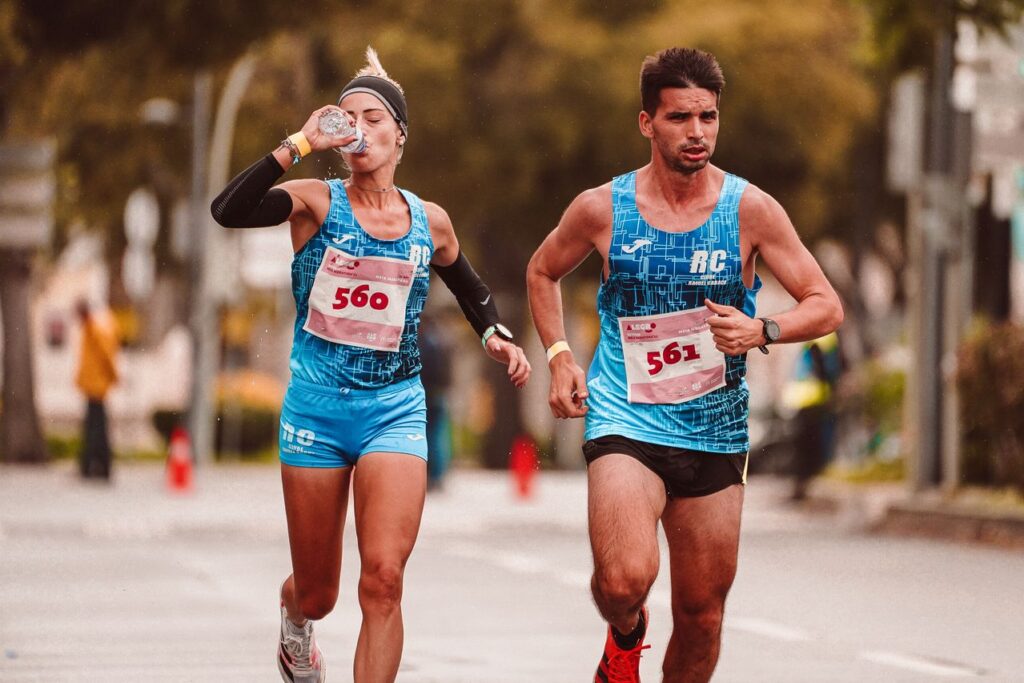
Sportswear for extreme heat cannot be developed by choosing the lightest polyester fabric in a supplier’s catalogue and adding a moisture-wicking claim. Heat performance depends on the interaction between the environment, the athlete, the sport, the garment, and the way the complete clothing system manages air, moisture, solar exposure, stretch, and movement.
Hot and dry conditions create different design problems from hot and humid conditions. A lightweight open mesh may release heat effectively in moving air but become transparent, snag easily, or provide limited ultraviolet protection. A tightly knitted fabric may improve coverage and print sharpness while trapping more heat and slowing evaporation. A dark colour may support identity and hide sweat marks but absorb more solar energy than a light colour under direct sun. A loose fit may improve air circulation in some activities but become unstable during sprinting, cycling, combat training, or contact sport.
For these reasons, sportswear for extreme heat should be treated as a heat-engineering project rather than a fabric-selection shortcut. The development team must define the climate, activity intensity, exposure time, body coverage, competition rules, fit, product tier, washing conditions, price target, and claims before approving materials.
The need for a complete risk-management approach is important. The United States Centers for Disease Control and Prevention advises athletes in hot conditions to wear loose, lightweight, light-coloured clothing, limit activity during the hottest part of the day, pace activity, drink more water than usual, and monitor teammates. Clothing is only one part of heat safety. It cannot replace hydration, acclimatization, rest breaks, scheduling, medical planning, and qualified supervision.
FIFA’s decision to provide three-minute hydration breaks in each half of matches at the 2026 World Cup offers a current example. Even the most advanced sportswear for extreme heat does not remove the need for operational heat controls when athletes compete in demanding summer conditions.
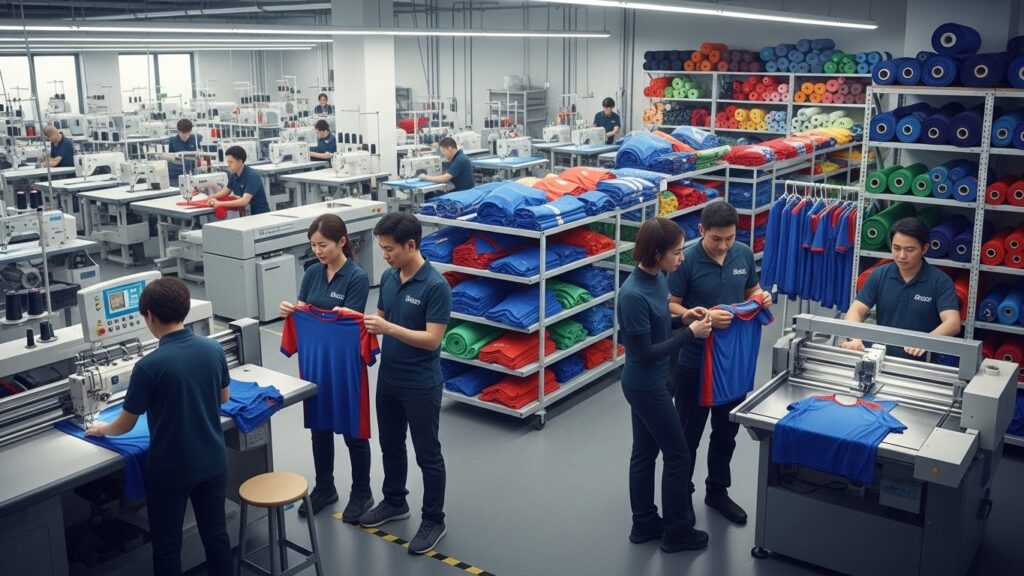
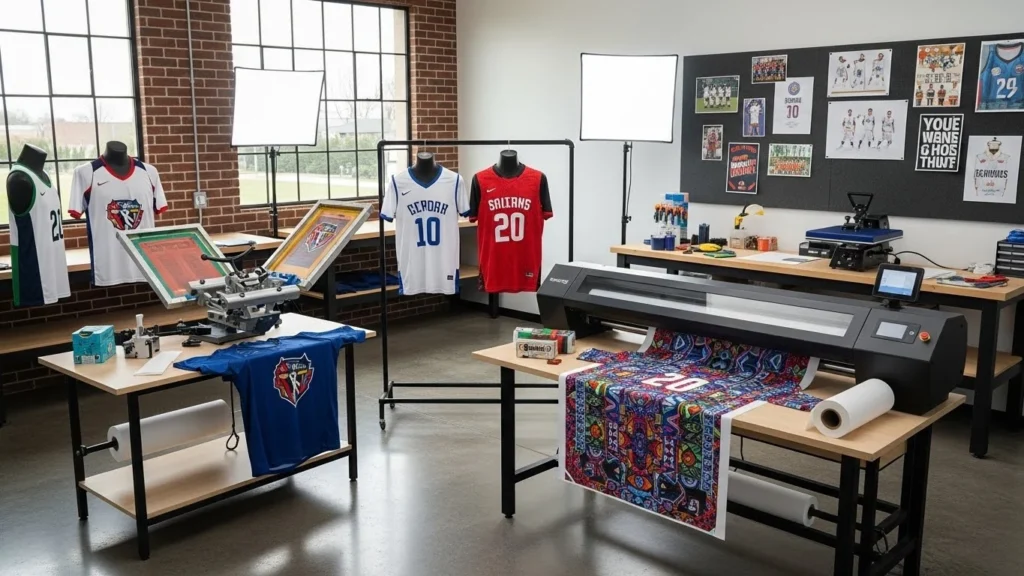
BUSHI Sports® provides custom wholesale activewear manufacturing and sports-uniform production for brands, clubs, teams, academies, gyms, schools, universities, retailers, distributors, and private label buyers. Projects can include lightweight training shirts, soccer kits, running tops, compression apparel, shorts, leggings, cycling uniforms, gym wear, warm-up products, custom labels, packaging, sampling, and bulk production.
This guide explains nine manufacturing decisions that determine whether sportswear for extreme heat remains breathable, dry, stable, durable, visually consistent, and commercially realistic.
“A hot-weather garment should not be judged by how cool the fabric feels in the hand. It should be judged by how the complete garment manages heat, sweat, air, sun, movement, and repeated use.”
Extreme Heat Is Not One Climate
The phrase extreme heat can describe several different environments. Each one changes the correct specification.
| Environment | Main physiological and product challenge | Manufacturing direction | Common mistake |
|---|---|---|---|
| Hot and dry | Strong solar radiation, rapid sweat evaporation, dehydration | Lightweight coverage, low thermal resistance, sun-conscious colour and fabric | Using very open fabric without considering UV or skin exposure |
| Hot and humid | Evaporation is limited by high moisture in the air | High air permeability, rapid spreading, low cling, minimal layering | Assuming absorbency alone creates cooling |
| Hot with low wind | Warm air remains trapped near the body | Body-mapped ventilation and movement-driven airflow | Relying on mesh placed where it receives little airflow |
| Hot and windy | Evaporation may improve, but dust, abrasion, and dehydration can increase | Stable lightweight fabric and secure fit | Choosing fabric that balloons or distorts |
| Indoor heat | Limited air movement, radiant heat, equipment contact | Light construction, ventilation, sweat handling, abrasion control | Using outdoor sun solutions while ignoring still air |
| Intermittent high-intensity sport | Repeated bursts create high metabolic heat | Low weight, mobility, rapid sweat transport, stable fit | Designing only for standing comfort |
| Endurance exposure | Long duration magnifies rubbing, salt, saturation, and fit change | Low seam bulk, fast drying, chafe control, stable sizing | Approving a short fitting without prolonged wear trials |
A single garment cannot maximize airflow, sun blocking, compression, abrasion resistance, opacity, structure, and low cost at the same time. Sportswear for extreme heat requires deliberate priorities.
Decision 1: Define the Environment for Sportswear for Extreme Heat
The first decision is to write a climate-and-activity brief. A reliable sportswear for extreme heat brief defines the environment before the supplier recommends fabric.
The brief should identify:
- Expected air temperature
- Relative humidity
- Direct sun or shade
- Wind or still-air conditions
- Indoor or outdoor use
- Sport and movement pattern
- Session or match duration
- Athlete work rate
- Required body coverage
- Contact with equipment or playing surfaces
- Competition regulations
- Intended user and size range
- Washing frequency
- Target price
- Required performance claims
The same sportswear for extreme heat specification should not be copied across football, running, cycling, cricket, gym training, tennis, equestrian sport, and general activewear. The body position, airflow, contact points, sweat distribution, and garment movement are different.
Hot-Dry and Hot-Humid Design Priorities
In hot-dry conditions, sweat can evaporate quickly when air moves across the skin. The design challenge may include intense solar exposure and rapid fluid loss. Lightweight coverage can help protect skin while allowing evaporation, but the fabric must not become an insulating layer.
In hot-humid conditions, the air already contains substantial moisture, reducing the rate at which sweat evaporates. A fabric may wick liquid across a wide area yet still remain wet because the environment limits evaporation. Sportswear for extreme heat in humidity therefore needs low cling, air movement, rapid spreading, and limited unnecessary layering.
Moisture-wicking and cooling are not synonyms. Wicking moves liquid. Cooling depends largely on evaporation, and evaporation depends on the environment as well as the fabric.
Use Environmental Measures Carefully
ISO 7243:2017 provides a screening method for assessing heat stress using the wet-bulb globe temperature index. The standard applies to total exposure over a working day and does not apply to very short heat exposures. It can help organizations understand environmental heat, but it is not a certification for sportswear for extreme heat and does not prove that a garment makes activity safe.
A sportswear manufacturer should ask the buyer for the intended environment rather than claiming that one fabric is suitable for every temperature.
Develop Climate-Specific Product Families
A useful product architecture may include:
- Dry-heat training top
- Humid-climate match jersey
- Long-sleeve sun-coverage top
- Lightweight indoor training shirt
- Endurance running top
- Ventilated team uniform
- Supporter version with more durable fabric
This approach is more credible than one universal “all-weather cooling shirt.”
Decision 2: Select Measured Fabrics for Sportswear for Extreme Heat
The second decision is to evaluate fabric performance through measurable properties rather than fibre names or supplier adjectives. In sportswear for extreme heat, the fabric specification must be supported by relevant results.
Polyester, nylon, polypropylene, cotton, and blended fabrics can all be engineered in different ways. Fibre type influences performance, but knit structure, yarn shape, thickness, density, finishes, stretch, and garment construction can be equally important.
Sportswear for extreme heat should be compared through a test matrix that includes:
- Fabric weight
- Thickness
- Air permeability
- Thermal resistance
- Water-vapour resistance
- Liquid moisture spreading
- Wicking rate
- Drying time
- Absorbency
- Stretch and recovery
- Opacity
- Snag resistance
- Pilling
- Dimensional stability
- Colourfastness
Air Permeability
Air permeability measures how readily air passes through a textile under defined conditions. ASTM D737-18(2023) is a current standard method for measuring the air permeability of textile fabrics.
High air permeability can support ventilation, but it is not automatically better. Very open fabric may:
- Become transparent
- Snag easily
- Lose print definition
- Stretch around numbers and crests
- Provide reduced sun coverage
- Distort during sewing
The target should match the product, not simply achieve the highest laboratory number.
Thermal and Water-Vapour Resistance
ISO 11092:2026 specifies methods for measuring thermal resistance and water-vapour resistance under steady-state conditions. The method can be applied to fabrics, films, coatings, foams, leather, and multilayer assemblies.
Lower thermal resistance can be useful when the goal is to reduce insulation. Lower water-vapour resistance can support the movement of water vapour through the material. These measurements help compare fabrics, but the final garment still needs wear testing because fit, panel placement, air gaps, and sweat affect real use.
Liquid Moisture Management
AATCC TM195 measures and classifies liquid moisture-management properties in knitted, woven, and nonwoven textiles. AATCC also lists methods covering vertical wicking, horizontal wicking, drying time, drying rate, and water-vapour transmission.
A fabric can spread liquid well but dry slowly. Another can absorb little moisture yet allow rapid evaporation. Sportswear for extreme heat should be selected by comparing the combination of properties needed for the sport.
Fibre and Structure Trade-Offs
Polyester
Polyester is widely used because it can be lightweight, strong, dimensionally stable, and compatible with sublimation. Its moisture behaviour depends heavily on yarn and finish design.
Nylon
Nylon can provide softness, abrasion resistance, and stretch in selected constructions. It may absorb more moisture than polyester and requires appropriate dyeing and printing methods.
Polypropylene
Polypropylene has low moisture regain and can feel light, but colour, printing, odour, heat sensitivity, and sourcing must be considered.
Cotton
Cotton can feel comfortable in dry casual use and absorbs sweat readily. During sustained high-intensity activity, it may retain moisture, become heavy, dry slowly, and cling. Cotton may still suit fanwear, warm-up, or lower-intensity products, but it should not be described as the universal answer for sportswear for extreme heat.
Blends
Blends can balance hand feel, stretch, strength, moisture behaviour, and price. Their performance must be tested rather than inferred from fibre percentages.
Avoid One-Number Fabric Selection
GSM alone does not define heat performance. Two fabrics with the same weight can have very different thickness, porosity, yarn structure, drying time, and thermal resistance.
A B2B specification should include the relevant test data, approved swatch, supplier code, lot control, and intended garment use.
Decision 3: Body-Map Ventilation in Sportswear for Extreme Heat
The third decision is where to place airflow. Body mapping in sportswear for extreme heat should follow movement, sweat, equipment, and exposure.
The human body does not produce or release heat uniformly. Activity, posture, equipment, and garment fit change which zones need ventilation or durability. Body mapping places different materials or structures where they provide the most value.
Potential ventilation zones include:
- Upper back
- Centre back
- Underarms
- Side body
- Lower back
- Behind knees
- Inner thighs
- Calves
- Sleeve panels
- Collar and upper chest
Sportswear for extreme heat can use:
- Engineered mesh
- Open-knit zones
- Laser perforations
- Lightweight side panels
- Raglan ventilation inserts
- Reduced lining
- Perforated transfers
- Strategically placed seam openings
Ventilation Must Match Movement
A cycling jersey receives airflow differently from a gym shirt. A runner’s upper body moves continuously, while a goalkeeper may spend periods standing before explosive action. A cricket player may wear a shirt for many hours under direct sun. A compression garment sits close to the skin and cannot rely on loose air gaps.
Body mapping should therefore be based on:
- Body position
- Direction of airflow
- Equipment coverage
- Sweat zones
- Contact zones
- Abrasion risk
- Sponsor and number placement
Mesh Is Not Always the Best Answer
Mesh can increase air movement, but it introduces trade-offs:
- Lower opacity
- Reduced surface for graphics
- Greater snagging
- Different colour appearance
- Seam instability
- Skin exposure
- Limited durability under backpacks or equipment
A stronger main body fabric may be needed beneath a backpack, shoulder pad, harness, saddle contact, or protective item. Sportswear for extreme heat should not sacrifice required durability for ventilation in the wrong location.
Panel Count and Manufacturing Complexity
Every additional body-mapped panel increases:
- Pattern development
- Cutting time
- Sewing operations
- Colour matching
- Inventory requirements
- Size-grading work
- Inspection points
- Potential seam discomfort
A well-designed two-fabric garment can outperform an overcomplicated product with five poorly controlled materials.
Reduce Heat-Blocking Decoration
Large, dense transfers, heavy embroidery, rubber patches, and thick sponsor applications can reduce flexibility and airflow. If a brand requires several logos, the development team should consider:
- Sublimated branding
- Lightweight heat transfers
- Perforated transfers
- Smaller applications
- Placement away from major sweat zones
- Reduced embroidery backing
Decoration is part of the thermal system.
Decision 4: Control Moisture in Sportswear for Extreme Heat
The fourth decision is moisture architecture. The moisture system in sportswear for extreme heat should reduce avoidable saturation, cling, and friction.
Sweat that remains between the skin and garment can increase cling, friction, discomfort, and perceived heat. The goal is not simply to absorb the largest possible quantity of liquid. The garment should move, spread, release, or manage moisture in a way that suits the climate and activity.
Sportswear for extreme heat may use:
- Capillary yarn structures
- Hydrophilic surface finishes
- Differential-knit faces
- Mesh channels
- Bi-component fabrics
- Low-absorption fibres
- Rapid-drying constructions
- Moisture-spreading inner surfaces
Wicking Direction Matters
Some fabrics are designed to move liquid from the skin-facing surface toward the outer surface. Others spread moisture horizontally to increase evaporation area. The correct system depends on:
- Humidity
- Air movement
- Garment fit
- Fabric thickness
- Activity duration
- Layering
A close-fitting base layer may need strong outward transport. A loose jersey may rely more on airflow and low saturation.
Drying Time Must Be Tested After Washing
Finishes can change after laundering. A sportswear for extreme heat claim should be evaluated on new fabric and after the expected number of washes.
Testing should assess:
- Initial wetting
- Spreading area
- Transfer between fabric faces
- Drying time
- Fabric weight when saturated
- Cling
- Odour retention
- Surface change
A treatment that performs well before washing but loses function quickly creates customer complaints and weak repeat orders.
Chafe-Control Construction
Heat and moisture increase the importance of seam placement.
High-risk zones include:
- Underarms
- Inner thighs
- Waistband
- Neck
- Shoulder under backpack straps
- Side body
- Bra underband
- Sock cuff
Possible solutions include:
- Flatlock seams
- Low-profile overlock seams
- Bonded seams where appropriate
- Soft thread
- Covered elastic
- Gussets
- Reduced labels
- Printed care information
- Correct negative or positive ease
Bonding is not automatically superior to sewing. Adhesives must tolerate sweat, washing, stretch, and high-temperature storage.
Anti-Odour Finishes Are Not Cooling Systems
Antimicrobial or odour-control treatments may influence freshness, but they do not prove improved cooling. Any antibacterial, antimicrobial, or odour-reduction claim needs suitable testing for the actual treatment and finished material.
The product page should keep moisture, cooling, and odour claims separate.
Decision 5: Balance Colour and UV in Sportswear for Extreme Heat
The fifth decision is optical and solar performance. Colour decisions in sportswear for extreme heat affect solar exposure, visibility, opacity, branding, and UV claims.
The CDC advises athletes in heat to wear light-coloured, lightweight clothing. Light colours can reduce solar heat absorption compared with darker colours under many outdoor conditions. However, colour is only one part of the garment.
Sportswear for extreme heat must also satisfy:
- Team identity
- Sponsor visibility
- Number contrast
- Opacity
- Dye stability
- UV transmission
- Sweat appearance
- Colourfastness
Light Colour Does Not Prove UV Protection
Ultraviolet protection depends on several factors:
- Fibre
- Knit or weave density
- Colour
- Fabric thickness
- Stretch
- Moisture
- Finishes
- Laundering
- Wear
A light, open mesh may feel cool but transmit more UV than a denser fabric. A dark dense fabric may block more UV while absorbing more solar energy. These competing effects must be tested and prioritized according to the product.
AATCC TM183 measures ultraviolet radiation transmitted or blocked by fabrics intended for UV protection and includes procedures for dry and wet specimens. ASTM D6544-25 covers preparation through laundering, simulated sunlight, and chlorinated pool exposure before UV testing. ASTM D6603-19 provides a labeling system for UV-protective textiles.
Brands should not claim UPF performance because a supplier described the fabric as sun protective. The exact fabric colour and finished garment should be tested under the intended labeling framework.
Opacity Testing
Lightweight white and pale-coloured sportswear can become transparent when stretched or wet.
Opacity should be assessed:
- Dry
- Wet
- Under stretch
- In direct light
- Across all sizes
- Over common undergarment colours
- After repeated washing
Solutions may include:
- Slightly denser fabric
- Double-layer zones
- Liner briefs
- Print placement
- Alternative yarn structure
- Darker shorts
A garment is not successful if low weight creates unacceptable exposure.
Sublimation and Dark Colours
Sublimation can create lightweight all-over graphics without heavy surface layers, making it useful for sportswear for extreme heat. However, very dark prints may increase solar absorption outdoors, and saturated areas can behave differently from white areas.
The designer should consider whether the entire garment needs to be dark or whether team identity can be preserved through:
- Light base colour
- Dark trim
- Tonal pattern
- Limited dark panels
- Contrast numbers
- Home and away climate options
Reflective and High-Visibility Details
Reflective elements may support visibility during early-morning or evening training. They should be placed without creating large heat-blocking areas and tested for adhesion, flexing, and washing.
Decision 6: Engineer Fit in Sportswear for Extreme Heat
The sixth decision is fit. Fit in sportswear for extreme heat must balance air circulation, stability, body coverage, and sport-specific movement.
Loose clothing can support air circulation, which is why public-health guidance often recommends loose, lightweight garments in heat. Performance sport, however, may require a closer fit to prevent flapping, drag, equipment interference, or fabric movement.
Sportswear for extreme heat therefore needs sport-specific ease rather than one universal loose fit.
Fit Directions by Product
| Product | Fit direction | Heat-related priority |
| Soccer jersey | Regular athletic or lightweight match fit | Air movement without excess fabric |
| Running singlet | Relaxed shoulder and arm opening | Ventilation and low cling |
| Cycling jersey | Close aerodynamic fit | Low water retention and body-mapped ventilation |
| Compression top | Controlled negative ease | Thin fabric, vapour movement, seam comfort |
| Cricket shirt | Regular fit with sun coverage | Long-duration comfort and ventilation |
| Gym T-shirt | Athletic or relaxed fit | Sweat spreading and mobility |
| Tennis polo | Structured but breathable | Collar stability with heat release |
| Equestrian top | Stable close fit | Movement, sun exposure, and tack compatibility |
Collar Design
High, thick, or heavily ribbed collars can trap heat around the neck. A hot-weather collar may use:
- Lower profile
- Lightweight rib
- Mesh insert
- Open V shape
- Bonded edge
- Reduced internal tape
The collar must still recover after stretching and retain shape through washing.
Waistbands and Elastic
Wide, dense elastic can increase heat and sweat retention. Shorts, leggings, and sports bras should use elastic that balances support with breathability and comfort.
Covered elastic, perforated elastic, mesh channels, and lower-bulk constructions may help, but they require testing for recovery and durability.
Pockets and Storage
Pockets add layers. In sportswear for extreme heat, pocket bags should be lightweight and placed away from major sweat or flex zones when possible.
A phone pocket can create a local heat and moisture zone. The product brief should decide whether storage value justifies the added layer.
Full Clothing System
The top cannot be evaluated alone. The complete system may include:
- Base layer
- Sports bra
- Jersey
- Shorts or leggings
- Socks
- Cap
- Protective equipment
- Bib
- Backpack
Two individually breathable layers can still trap heat when combined. Wear trials should use the full intended system.
Decision 7: Build Product Tiers for Sportswear for Extreme Heat
The seventh decision is product-tier architecture. Product tiers for sportswear for extreme heat should separate elite performance, team durability, training value, and supporter comfort.
Not every buyer needs the lightest and most delicate construction. A professional match garment, academy uniform, training product, and supporter shirt can share one design while using different materials and fits.
The published BUSHI Sports® guide on match jerseys, replica jerseys, and fanwear explains why product tiers should be defined transparently.
Match or Elite Tier
Possible direction:
- Lowest practical weight
- Athletic fit
- Body-mapped mesh
- Lightweight crest
- Low-bulk seams
- Premium fabric testing
- Narrow manufacturing tolerances
Team or Academy Tier
Possible direction:
- Durable moisture-managing polyester
- Regular athletic fit
- Stable sublimation surface
- Strong seam construction
- Wider size range
- Repeat-wash durability
Training Tier
Possible direction:
- Simplified pattern
- High air permeability
- Easy care
- Strong snag resistance
- Lower replacement cost
- Optional high-visibility colours
Fanwear Tier
Possible direction:
- Comfortable regular fit
- Stable polyester or cotton blend
- Softer hand feel
- Broader sizing
- Lifestyle decoration
- Retail packaging
Sportswear for extreme heat can be offered across all four tiers, but the claims and test results should match each version. A lighter match fabric should not be silently replaced with a heavier team fabric under the same technical description.
Women’s and Youth Development
Women’s and youth garments require dedicated fit review. Simply reducing an adult men’s pattern can create:
- Incorrect chest and waist proportion
- Poor armhole position
- Excess garment length
- Wrong collar opening
- Misplaced ventilation zones
- Oversized graphics
Children also have different heat-safety needs, and product design must be accompanied by qualified supervision, scheduling, hydration, and activity controls.
Decision 8: Validate Sportswear for Extreme Heat and Its Claims
The eighth decision is validation. Validation of sportswear for extreme heat must include the finished garment rather than fabric data alone.
Fabric test results do not automatically describe the finished garment. Seams, logos, fit, layering, panel placement, colour, and washing can change performance.
A sportswear for extreme heat testing plan should combine laboratory tests, garment inspection, wash conditioning, and controlled wear trials.
Laboratory Test Matrix
| Property | Example method or approach | Why it matters |
| Air permeability | ASTM D737 | Compares airflow through fabric |
| Thermal and water-vapour resistance | ISO 11092:2026 | Compares insulation and vapour resistance |
| Liquid moisture management | AATCC TM195 | Assesses wetting, spreading, and transfer behaviour |
| Wicking and drying | Relevant AATCC methods | Measures movement and drying of liquid moisture |
| UV transmission | AATCC TM183 | Supports UV-blocking assessment |
| UV conditioning | ASTM D6544-25 | Evaluates fabric after simulated exposure |
| UV labeling | ASTM D6603-19 | Supports consistent consumer labeling |
| Stretch and recovery | Buyer or recognized textile method | Confirms fit stability |
| Snag and pilling | Appropriate ASTM or ISO methods | Evaluates surface durability |
| Colourfastness | Appropriate ISO or AATCC methods | Checks sweat, rubbing, and washing stability |
The test method, specimen condition, unit, result, tolerance, laboratory, and date should be recorded.
Garment-Level Wear Trials
Wear trials should reproduce the intended use as closely as practical.
Assess:
- Perceived heat
- Air movement
- Sweat spreading
- Drying
- Cling
- Chafing
- Transparency
- Odour
- Fit change
- Collar comfort
- Waistband pressure
- Decoration behaviour
- Ease of movement
Trials should include the intended climate, activity, duration, base layers, and equipment where safe and feasible.
A thermal manikin or sweating guarded hotplate can support comparison, but human comfort and sport movement require additional review.
Test After Laundering
Sportswear for extreme heat should be tested after repeated washing because:
- Wicking finishes may change
- Fabric can shrink
- Mesh can distort
- Transfers can lift
- Elastic can lose recovery
- Colour can fade
- Surface texture can change
The care label should reflect the tested process.
Responsible Cooling Claims
Claims that require careful evidence include:
- Cooling fabric
- Temperature regulating
- Keeps the body cool
- Prevents overheating
- Heat proof
- UPF 50+
- Antimicrobial
- Odour free
- Instant drying
A garment cannot guarantee prevention of heat illness. Heat illness risk depends on environment, exertion, health, hydration, acclimatization, rest, equipment, and other factors.
Safer descriptions may include:
- Lightweight construction
- High-airflow mesh zones
- Moisture-spreading fabric
- Rapid-drying material under the tested method
- Low-profile seams
- Tested UV protection for the specified fabric and condition
Marketing language should match the evidence for the exact product.
Decision 9: Lock Sportswear for Extreme Heat During Bulk Production
The ninth decision is production control. Bulk control for sportswear for extreme heat prevents silent changes to fabric, mesh, fit, finishes, and claims.
A sample can perform well while bulk sportswear for extreme heat fails because the fabric lot, mesh, finish, panel size, transfer, seam, or fit changes.
The technical file should include:
- Intended climate and sport
- Product tier
- Bill of materials
- Fabric supplier and code
- Fibre composition
- Fabric weight and thickness
- Air-permeability requirement
- Moisture test requirement
- Thermal or vapour-resistance requirement where applicable
- Stretch direction
- Pattern set
- Ventilation map
- Seam type
- Thread
- Elastic
- Collar and cuff specification
- Artwork
- Colour standard
- Branding method
- Measurement chart
- Tolerances
- Test reports
- Wash method
- Care label
- Packaging
- Approved pre-production sample
Fabric Substitution Risk
Two visually similar fabrics can have different air permeability, drying time, opacity, stretch, and thermal resistance. No substitution should occur without written approval and relevant retesting.
Shade and Lot Control
Mesh and main fabric can display colour differently even when dyed or printed from the same digital values. Bulk control should check:
- Main body to mesh match
- Sleeve to torso match
- Left-right consistency
- Batch-to-batch shade
- Wet appearance
- Stretch appearance
In-Line Inspection
Inspectors should check:
- Ventilation panel placement
- Seam bulk
- Skipped stitches
- Transfer coverage
- Collar symmetry
- Elastic tension
- Pocket layers
- Label comfort
- Size measurements
Final Functional Inspection
Final garments should be checked for:
- Correct fabric
- Correct tier
- Airflow-panel placement
- Opacity
- Stretch recovery
- Decoration adhesion
- Seam comfort
- Size consistency
- Correct care and claim labels
- Dryness before packing
BUSHI Sports® explains broader inspection planning in how quality control works in sportswear manufacturing.
Manufacturing Process for Sportswear for Extreme Heat
1. Buyer and Climate Brief
The buyer defines the sport, climate, humidity, duration, body coverage, product tier, size range, price, claims, quantity, and destination.
2. Fabric Shortlisting
The manufacturer proposes fabrics using weight, structure, airflow, moisture, stretch, opacity, durability, print compatibility, and cost.
3. Laboratory Comparison
Selected fabrics are compared through relevant standardized or buyer-approved tests.
4. Pattern Development
Patterns are created for movement, airflow, body coverage, equipment compatibility, and user fit.
5. Ventilation Mapping
Mesh, perforation, and lightweight panels are positioned according to the sport and body zones.
6. Decoration Planning
Crests, sponsors, names, numbers, reflective details, and labels are selected to minimize unnecessary weight and blockage.
7. Prototype Sample
The first garment is checked for fit, appearance, airflow, opacity, seam comfort, and production feasibility.
8. Controlled Wear Trial
The sample is evaluated in the intended clothing system and environment under an appropriate protocol.
9. Wash and Durability Testing
The product is checked for shrinkage, colour, finish retention, drying, seam stability, and decoration adhesion.
10. Size Set
Small, middle, large, women’s, and youth sizes are reviewed where applicable.
11. Pre-Production Sample
The buyer approves the exact fabric, pattern, colour, graphics, labels, care instructions, and packaging.
12. Fabric Inspection and Relaxation
Bulk fabric is checked for shade, weight, width, defects, stretch, and lot consistency before cutting.
13. Cutting and Printing
Panels are cut and sublimated, printed, perforated, or decorated according to the approved sequence.
14. Sewing and Assembly
The garment is assembled with control of seam bulk, mesh stretch, panel alignment, and measurement.
15. Finishing and Final Inspection
Products are trimmed, cleaned, measured, functionally checked, paired into sets where required, and packed dry.
Quality-Control Table for Sportswear for Extreme Heat
Quality control for sportswear for extreme heat should verify the exact approved materials, construction, fit, claims, and packaging.
| Inspection area | What to check | Common failure |
| Main fabric | Correct code, weight, structure, hand feel | Unapproved heavier or less breathable substitute |
| Mesh panels | Placement, openness, shade, stretch | Transparency, snagging, colour mismatch |
| Moisture finish | Approved result and wash durability | Performance loss after laundering |
| Fit | Ease, mobility, body coverage | Excess cling or uncontrolled looseness |
| Seams | Profile, strength, skin contact | Chafing, skipped stitches, bulky joins |
| Collar and cuffs | Weight, recovery, shape | Heat-trapping bulk or distortion |
| Waistband | Tension, width, breathability | Pressure and sweat concentration |
| Colour | Physical swatch match | Shade variation and excess dark coverage |
| Opacity | Dry, wet, and stretched appearance | See-through fabric |
| UV claim | Correct tested fabric and label | Unsupported UPF statement |
| Decoration | Weight, adhesion, placement | Blocked ventilation or peeling |
| Size grading | Ventilation and artwork position | Mesh or graphics shift by size |
| Care label | Correct washing and claim language | Instructions copied from another product |
| Packaging | Dryness, ventilation, product identity | Trapped moisture or tier mixing |
Cost and MOQ Planning for Sportswear for Extreme Heat
The cost model for sportswear for extreme heat should separate fabric, construction, testing, sampling, labels, packaging, and freight.
Sportswear for extreme heat can range from a simple lightweight T-shirt to a body-mapped elite uniform. The price depends on the complete specification.
Major cost drivers include:
- Custom or stock fabric
- Fabric weight and knit structure
- Moisture-management finish
- UV testing or treatment
- Number of ventilation panels
- Laser perforation
- Bonded or flatlock seams
- Lightweight transfers
- Custom collars and elastic
- Men’s, women’s, and youth patterns
- Laboratory testing
- Size sets
- Packaging
- Order quantity
A basic training top using stock moisture-managing polyester, a standard collar, and sublimated graphics will generally cost less than sportswear for extreme heat using custom engineered mesh, several body-mapped panels, UV testing, bonded seams, low-weight branding, separate fit blocks, and premium packaging.
The quotation should identify:
- Fabric code and weight
- Main and mesh fabrics
- Moisture system
- Stretch
- Fit
- Seam type
- Decoration
- Testing
- Size range
- Packaging
- Sample costs
- Freight basis
BUSHI Sports® explains broader cost planning through its sportswear manufacturing cost breakdown and MOQ guide.
MOQ Considerations
Minimum order quantity may increase when the project requires:
- Custom yarn or knit
- Special moisture finish
- Custom mesh colour
- Several fabric types
- Custom elastic
- Bonding film
- Separate women’s and youth blocks
- Multiple colourways
- UV test programme
- Premium packaging
A smaller launch may be possible with stock polyester, one mesh, sublimation, a standard pattern, limited colours, and simple packaging.
How to Evaluate a Manufacturer of Sportswear for Extreme Heat
The following questions help buyers compare sportswear for extreme heat through measurable specifications instead of unsupported marketing language.
Environmental Questions
- Does the manufacturer ask about humidity as well as temperature?
- Is the sport and activity duration documented?
- Are direct sun and indoor heat treated differently?
- Does the supplier avoid universal temperature claims?
Fabric Questions
- Can air-permeability, moisture, drying, and vapour data be supplied?
- Are tests performed on the exact colour and fabric?
- Is the finish durable after washing?
- Can substitutions occur without written approval?
Design Questions
- How are ventilation zones selected?
- Is opacity checked when wet and stretched?
- Are logos placed away from major ventilation areas?
- Are full clothing systems considered?
Fit Questions
- Are match, team, training, women’s, and youth fits separate?
- Is the size set physically checked?
- Are high-friction seams relocated or reduced?
- Does the waistband balance support and heat release?
Testing Questions
- Which recognized methods are used?
- Are garment trials completed after laundering?
- Are test units, tolerances, and sample conditions documented?
- Is claim language reviewed against actual evidence?
Commercial Questions
- What is the MOQ per fabric and colour?
- Are testing and sample costs separate?
- What is the lead time after final approval?
- Can repeat orders use the same fabric lot or controlled replacement?
- Which shipping term is quoted?
Common Sportswear for Extreme Heat Development Mistakes
Developing sportswear for extreme heat requires balancing performance properties rather than maximizing one headline feature.
Choosing the Lowest GSM
Low weight does not guarantee airflow, rapid drying, opacity, or durability.
Calling Absorbency Cooling
Absorption can retain sweat. Cooling depends heavily on evaporation and environmental conditions.
Ignoring Humidity
A fabric that performs well in dry heat may remain saturated in humid air.
Using Mesh Everywhere
Excess mesh can create transparency, snagging, unstable graphics, and reduced sun coverage.
Adding Heavy Decoration
Dense logos, embroidery, and patches can block airflow and add heat-trapping layers.
Testing Only New Fabric
Moisture finishes, elastic, transfers, and fit may change after laundering.
Using Dark Colours Without Solar Review
Team identity matters, but large dark areas under direct sun should be evaluated against lighter alternatives.
Claiming UPF Without Testing
Fabric density or colour alone does not justify a UV-protection label.
Treating Match and Fanwear as One Product
Athletes and supporters may need different fits, fabrics, durability, and prices.
Claiming Heat Protection
Sportswear for extreme heat cannot guarantee prevention of heat illness or replace heat-safety procedures.
Why Work With BUSHI Sports®?
A manufacturer of sportswear for extreme heat should connect fabric testing, ergonomic patterning, sampling, bulk controls, and responsible claims.
BUSHI Sports® is a custom sportswear manufacturer based in Sialkot, Pakistan. The company supports sports brands, clubs, teams, academies, schools, universities, gyms, retailers, wholesalers, distributors, and private label buyers through OEM, ODM, sampling, customization, and bulk production.
For hot-climate sportswear projects, BUSHI Sports® can support:
- Lightweight training shirts
- Soccer and team uniforms
- Running tops and shorts
- Cycling jerseys and bib products
- Gym T-shirts and tank tops
- Compression shirts and tights
- Workout leggings
- Tracksuits and warm-up apparel
- Men’s, women’s, and youth sizing
- Breathable polyester fabrics
- Mesh and body-mapped panels
- Sublimation
- Lightweight branding applications
- Custom labels
- Size-set sampling
- Quality inspection
- Custom packaging
- International order coordination
BUSHI Sports® can help buyers compare materials, develop patterns, produce samples, and establish production files. Heat-safety protocols, medical decisions, environmental exposure limits, and athlete supervision remain the responsibility of qualified organizations and professionals.
Start Your Hot-Climate Sportswear Project
Sports brands, clubs, teams, academies, schools, universities, gyms, retailers, distributors, and private label buyers can contact BUSHI Sports® to discuss sportswear for extreme heat, fabric options, ventilation mapping, samples, minimum order quantities, fit, colours, branding, labels, packaging, production, and delivery. A clear sportswear for extreme heat brief should accompany the inquiry.
- Email: info@bushisports.com
- WhatsApp: +92 348 4018 578
- Project inquiry: Contact BUSHI Sports®
Share the intended sport, climate, humidity, exposure time, user group, preferred fit, fabric target, size range, artwork, estimated quantity, testing requirements, target price, and delivery date. A complete brief helps the manufacturing team recommend a practical specification without unsupported cooling claims.
Frequently Asked Questions
What is sportswear for extreme heat?
Sportswear for extreme heat is athletic clothing developed for hot environments through controlled fabric weight, air permeability, moisture movement, drying, fit, body mapping, seam placement, sun considerations, and testing.
What is the best fabric for extreme heat?
There is no universal best fabric. The right material depends on humidity, sun, airflow, sport, duration, fit, opacity, durability, printing, and price. Laboratory data and finished-garment trials are more useful than fibre name alone.
Is polyester good for hot weather sportswear?
Polyester can be suitable when the yarn, knit structure, weight, finish, and garment design support moisture movement and airflow. Poorly engineered polyester can still feel hot, cling, or dry slowly.
Is cotton suitable for extreme heat?
Cotton can feel comfortable for casual or low-intensity use, but it may absorb and retain substantial moisture during sustained activity. Product use and climate should determine whether it is appropriate.
Does moisture-wicking fabric cool the body?
Wicking moves liquid through or across the fabric. Cooling occurs when sweat evaporates, and evaporation depends on humidity, airflow, temperature, fit, and exposure. A wicking claim is not automatically a cooling claim.
Is mesh always more breathable?
Mesh often allows greater air movement, but results depend on hole size, yarn, thickness, stretch, and placement. It can also reduce opacity, durability, print quality, and UV coverage.
Should sportswear for extreme heat be loose?
Loose, lightweight clothing can support air circulation, but some sports require a close or stable fit. The correct amount of ease depends on movement, equipment, drag, safety, and garment type.
Are light colours better in extreme heat?
Public-health guidance commonly recommends light-coloured clothing in heat because it can reduce solar heat absorption. However, opacity, team identity, UV transmission, and colourfastness must also be considered.
Does dark clothing provide better UV protection?
Dark colours may contribute to lower UV transmission in some fabrics, but UV protection also depends on fibre, density, stretch, moisture, finish, and wear. Only testing supports a specific UPF claim.
How is breathability tested?
Breathability can refer to air permeability, water-vapour resistance, or both. ASTM D737 measures fabric air permeability, while ISO 11092:2026 measures thermal and water-vapour resistance under defined conditions.
How is moisture management tested?
AATCC TM195 evaluates liquid moisture-management behaviour. Other AATCC methods assess wicking, drying time, drying rate, and water-vapour transmission.
Can sportswear prevent heat illness?
No garment can guarantee prevention. Heat-illness risk also depends on environmental conditions, exertion, hydration, health, acclimatization, rest, scheduling, and equipment. Clothing is one part of a broader heat-safety plan.
Can custom team colours be used?
Yes. Brands can use custom colours, sublimated patterns, logos, names, and numbers. Dark colour coverage, opacity, solar exposure, and contrast should be evaluated during development.
Can UV protection be added?
Fabrics can be developed or selected for UV protection, but the exact product and claim should be tested. AATCC TM183 measures UV transmission or blocking, while ASTM standards address conditioning and labeling.
What affects the MOQ?
MOQ may depend on custom fabric, mesh colours, moisture finishes, UV treatment, body-mapped panels, bonding, fit blocks, number of colours, labels, testing, and packaging.
How should sportswear for extreme heat be washed?
Care depends on the fabric, finish, transfers, elastic, and construction. Buyers should approve care instructions after wash testing and avoid untested claims about fabric softener, dryers, or special detergents.
Conclusion
Sportswear for extreme heat is a complete engineering system. It cannot be reduced to low GSM, mesh panels, polyester content, or a moisture-wicking label.
A dependable development process begins with the climate. Hot-dry, hot-humid, indoor, outdoor, endurance, and intermittent high-intensity conditions create different requirements. The manufacturer then compares fabrics through air permeability, thermal resistance, water-vapour resistance, liquid moisture management, drying, stretch, opacity, durability, and colour stability.
The garment architecture must place ventilation where airflow and sweat make it useful. Fit should support movement without creating unnecessary cling or instability. Seams, waistbands, collars, pockets, crests, numbers, and sponsor applications must be treated as part of the heat system. Light colours, sun coverage, and UV protection also require balanced decisions rather than simplistic assumptions.
Brands should test sportswear for extreme heat at fabric and garment level, repeat key checks after washing, document every claim, and lock the approved specification before bulk production. No garment should be marketed as preventing heat illness or replacing hydration, acclimatization, rest breaks, medical planning, and environmental controls.
BUSHI Sports® supports custom sportswear for extreme heat through material comparison, pattern development, body-mapped ventilation, sublimation, sampling, size sets, private labeling, quality inspection, packaging, and international order coordination.
To discuss a custom project, email info@bushisports.com, message BUSHI Sports® on WhatsApp at +92 348 4018 578, or submit requirements through the contact page.