Horse Riding Breeches Fabric Guide: Stretch, Grip and Comfort Explained
Horse Riding Breeches Fabric Guide is an essential resource for equestrian brands that want breeches to perform well in the saddle, retain their shape, and remain comfortable through repeated riding and washing. A good pair of breeches is not defined by appearance alone. Fabric composition, stretch direction, recovery, surface texture, weight, moisture control, opacity, abrasion resistance, grip application, and seam compatibility all influence how the finished garment performs.
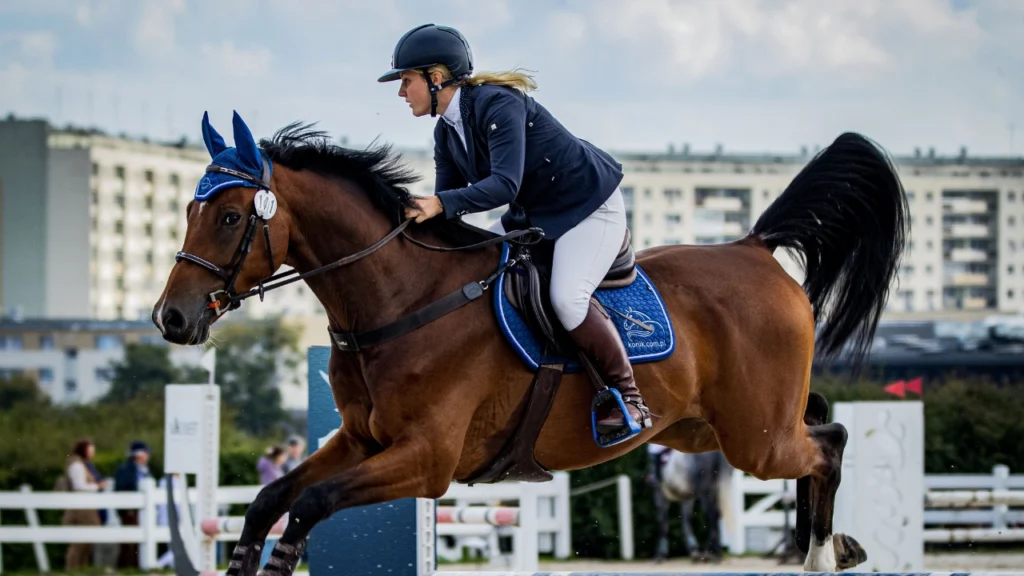
Riders repeatedly bend at the hip and knee, maintain close contact with the saddle, and often wear tall boots or half chaps over the lower leg. These conditions create different demands from ordinary leggings, casual trousers, or general fitness apparel.
For private label buyers, choosing horse riding breeches fabric therefore requires a product specific approach rather than simply selecting any stretch fabric from an activewear catalogue.
This Horse Riding Breeches Fabric Guide explains the main material options, how stretch and grip work together, what comfort means under real riding conditions, and what equestrian brands should approve before bulk manufacturing.
Table of Contents
- What Makes Horse Riding Breeches Fabric Different?
- Nine Important Fabric Properties
- Stretch and Recovery in Riding Breeches
- Two Way Stretch vs Four Way Stretch
- Nylon Spandex vs Polyester Spandex vs Cotton Blends
- Knee Grip vs Full Seat Grip
- Breathability and Moisture Management
- GSM and Seasonal Fabric Selection
- Abrasion Resistance, Pilling and Durability
- Stitching and Construction Compatibility
- What Brands Should Specify Before Sampling
- Sample Testing Before Bulk Production
- Choosing Breeches Fabric by Riding Use
- Frequently Asked Questions
What Makes Horse Riding Breeches Fabric Different?
Horse riding breeches sit close to the body while the rider moves continuously through hip, knee, and ankle flexion. At the same time, the seat and inner legs experience repeated contact with the saddle.
The material needs enough flexibility to support mounting, rising trot, sitting trot, jumping position, stable work, and general movement. However, maximum stretch alone does not make a good equestrian fabric.
Recovery is equally important.
A fabric can stretch easily but still perform poorly if it remains extended afterward. Weak recovery can cause loose knees, seat sagging, an unstable waistband, and a garment that gradually loses its original silhouette.
Modern breeches may also contain silicone grip, synthetic suede panels, phone pockets, reinforced areas, high waistbands, elastic ankle sections, mesh zones, or decorative elements. These components influence how the base fabric stretches and recovers.
This is why a Horse Riding Breeches Fabric Guide must evaluate the complete fabric system rather than fibre composition alone.
Horse Riding Breeches Fabric Guide: 9 Important Fabric Properties
A professional fabric review should consider at least nine characteristics.
| Fabric Property | Why It Matters | What Buyers Should Review |
|---|---|---|
| Stretch | Supports hip, knee and leg movement | Direction and amount of extension |
| Recovery | Helps prevent knee bagging and seat sagging | Shape after repeated extension |
| Hand feel | Influences next to skin comfort | Softness, smoothness and surface texture |
| GSM | Affects weight, structure and warmth | Finished fabric weight |
| Opacity | Important in close fitting apparel | Coverage while stretched |
| Moisture management | Supports riding comfort | Wicking and drying behaviour |
| Abrasion resistance | Important around saddle contact | Surface wear and pilling |
| Grip compatibility | Influences silicone or patch performance | Adhesion and flexibility |
| Dimensional stability | Protects sizing consistency | Shrinkage and growth after washing |
Other properties such as colourfastness, seam compatibility, drying time, compression, UV performance, and finish can also become important depending on the collection.
This Horse Riding Breeches Fabric Guide treats these properties as interconnected. High stretch with poor recovery is not automatically premium, just as a heavier material is not automatically more durable.
Stretch and Recovery in Horse Riding Breeches
Stretch is one of the most important characteristics of equestrian breeches because the garment must follow the rider through continuous movement without excessive resistance.
Elastane, also known as spandex, is commonly blended with nylon, polyester, cotton, and other fibres to increase elasticity.
The LYCRA Company explanation of LYCRA® fibre and elastane explains that spandex and elastane are interchangeable terms, while LYCRA® is its trademarked spandex fibre. The company identifies elasticity, shape retention, and comfortable fit among the important characteristics associated with its stretch fibre technology.
For equestrian brands, however, asking whether a fabric contains elastane is only the beginning.
Performance is also affected by:
- Elastane proportion
- Base fibre
- Yarn construction
- Knit or woven structure
- Fabric density
- Finishing
- Stretch direction
- Pattern dimensions
- Garment ease
- Seam construction
Two materials containing the same listed fibre percentages can behave very differently.
A Horse Riding Breeches Fabric Guide should therefore compare actual fabric behaviour instead of selecting a material from composition percentages alone.
Two Way Stretch vs Four Way Stretch
Two way stretch generally describes fabric that stretches predominantly along one main direction. Four way stretch provides useful extension in both lengthwise and crosswise directions.
For close fitting equestrian breeches, four way stretch is often useful because a rider does not move along a single axis. The hips open, knees bend, the lower leg changes angle, and the seat moves continuously with the saddle.
Four way stretch can provide better movement freedom, but recovery must still be evaluated.
Bushi Sports® explains this subject further in its Two Way Stretch vs Four Way Stretch Fabric guide.
Brands should test the actual fabric rather than accepting “four way stretch” as a complete specification.
A useful development check involves marking a measured section of fabric, extending it to an agreed amount, releasing it, allowing recovery time, and measuring the section again. Where specific performance standards are required, controlled laboratory testing can be added.
Nylon Spandex vs Polyester Spandex vs Cotton Blends
One of the most common questions in any Horse Riding Breeches Fabric Guide is which fibre blend works best.
There is no universal answer.
The correct choice depends on riding use, climate, desired hand feel, durability, target retail price, colour requirements, grip system, and brand positioning.
Nylon Spandex Riding Breeches
Nylon spandex is commonly associated with smooth, flexible performance garments.
A suitable nylon based stretch fabric can provide:
- Smooth hand feel
- Flexible movement
- Close fitting comfort
- Good abrasion performance
- Premium surface appearance
- Strong stretch potential
It can work particularly well for riding tights, training breeches, and premium close fitting equestrian apparel.
However, nylon should not automatically be classified as superior. Brands still need to review colourfastness, pilling, opacity, recovery, washing performance, and fabric construction.
Bushi Sports® has already compared polyester and nylon for performance apparel, including stretch, recovery, abrasion, drying, and fit considerations.
Polyester Spandex Riding Breeches
Polyester spandex is another strong option for equestrian apparel.
Depending on its construction, polyester based fabric can provide:
- Good dimensional stability
- Strong colour performance
- Quick drying potential
- Useful durability
- Good stretch when combined with elastane
- Competitive production cost
- Consistency for larger collections
Polyester spandex can be suitable for training breeches, riding tights, equestrian uniforms, riding school collections, and private label ranges.
Bushi Sports® also provides a detailed comparison of polyester versus polyester spandex sportswear, which helps explain why adding elastane changes fit and movement.
Cotton Stretch Breeches
Cotton rich stretch fabrics offer a different product character.
They may provide:
- Familiar natural touch
- Traditional appearance
- Comfortable everyday feel
- Suitable styling for classic equestrian collections
However, cotton rich fabrics require careful review of moisture retention, drying time, shrinkage, weight, and long term shape.
A cotton stretch material that feels excellent when new may behave differently after repeated washing and saddle use.
The finished garment should therefore be tested rather than approving the material entirely from a swatch.
Quick Fabric Comparison
| Fabric Family | Main Strengths | Important Points to Verify |
|---|---|---|
| Nylon spandex | Smooth feel, flexibility, premium hand | Pilling, colourfastness, opacity, recovery |
| Polyester spandex | Durability, drying potential, colour control | Hand feel, breathability, recovery |
| Cotton stretch | Natural touch, traditional appearance | Shrinkage, drying, recovery, weight |
| Technical multi fibre blend | Can balance several properties | Cost, sourcing, consistency, care |
The best Horse Riding Breeches Fabric Guide recommendation is to define the desired garment performance first, then choose the fibre system.
Horse Riding Breeches Fabric Guide to Grip Systems
Grip has become one of the defining features of modern riding breeches.
The purpose is to create controlled contact between the rider and saddle without making the garment unnecessarily rigid or uncomfortable.
Three common arrangements are fabric seat, knee grip, and full seat grip.
Fabric Seat Breeches
Fabric seat breeches do not add a strong dedicated grip system across the seat or knee.
This provides greater freedom between the rider and saddle but less additional traction.
These products may suit riders who prefer minimal assistance from the garment or brands developing more traditional designs.
Knee Grip Breeches
Knee grip concentrates silicone or another grip material mainly around the inside of the knee.
The objective is to create targeted contact without covering the complete seat area.
Knee grip is frequently associated with jumping oriented, training, and general riding styles because it can provide support while allowing more freedom through the seat.
Full Seat Breeches
Full seat grip extends across the seat and often down parts of the inner thigh.
It creates a greater contact area and can provide riders with a more secure feeling in the saddle.
Full seat constructions may use silicone or a separate synthetic suede style material.
A practical guide to grip systems used on riding breeches explains how silicone can be applied through a printing style process and how coverage influences flexibility and rider feel.
Why Silicone Grip Pattern Matters
Silicone grip should not be judged only by how sticky it feels when touched.
Brands should consider:
- Grip coverage
- Dot or pattern size
- Pattern spacing
- Silicone thickness
- Flexibility
- Position
- Wash resistance
- Surface consistency
- Compatibility with the base fabric
A dense silicone pattern can change the stretch characteristics of the material beneath it. Very heavy coverage may make a flexible fabric feel more restricted.
A more open pattern can preserve greater fabric movement.
Grip also needs to be considered together with rider preference. Too little traction may provide no useful benefit, while excessive grip can make movement in the saddle feel unnatural.
During development, grip should be evaluated while walking, bending, mounting, sitting, rising, and riding whenever possible.
This is an important part of the Horse Riding Breeches Fabric Guide because grip is a performance component, not simply decoration.
Breathability, Moisture Management and Riding Comfort
Comfort is broader than softness.
A rider may spend several hours wearing breeches during training, competition, stable work, travel, and preparation. Heat and moisture can build up, particularly during warm weather.
Useful properties can include:
- Breathable fabric structure
- Moisture movement
- Efficient drying
- Soft next to skin surface
- Stable waistband
- Flexible seams
- Low bulk around boots
- Reliable stretch recovery
The AATCC TM195 moisture management test method is designed to measure and evaluate liquid moisture management properties of knitted, woven, and nonwoven textile fabrics. AATCC explains that moisture behaviour is influenced by fabric structure as well as fibres and yarns.
Brands making technical moisture management claims should therefore consider suitable test evidence rather than depending only on marketing descriptions such as “sweat wicking.”
Comfort also depends heavily on pattern development.
Even an excellent four way stretch fabric can feel uncomfortable when the rise is incorrect, the waistband rolls, knee dimensions are too tight, or a bulky seam sits in a high friction area.
Horse Riding Breeches Fabric Guide to GSM and Seasonal Performance
GSM means grams per square metre and describes fabric weight.
GSM is useful, but it should not be treated as a standalone quality score.
A lighter construction may work well for:
- Summer riding breeches
- Warm climates
- Riding tights
- High activity training
- Lightweight collections
Mid weight fabrics can provide a balance between structure, coverage, flexibility, and year round use.
Heavier or brushed constructions may suit colder weather when insulation becomes more important.
Bushi Sports® explains fabric weight in its GSM guide for sportswear fabrics.
The correct GSM depends on fibre, yarn, knit structure, stretch, finish, compression, colour, opacity, and season.
For example, two fabrics at a similar GSM can provide very different levels of coverage because the yarn and construction are different.
This Horse Riding Breeches Fabric Guide therefore recommends checking GSM together with opacity.
Stretch the material to a realistic wearing level and inspect it under bright light, particularly when developing white, beige, cream, or other light competition colours.
Abrasion Resistance, Pilling and Durability
Horse riding creates repeated friction around the seat, inner thigh, knee, and lower leg.
Durability therefore deserves careful attention.
The ISO 12947 Martindale abrasion standard includes procedures for evaluating abrasion resistance of textile fabrics. ISO 12947 Part 2 specifically covers determination of specimen breakdown.
Brands that require measurable abrasion performance can agree on the relevant testing method and acceptance criteria with their supplier or testing laboratory.
Pilling should also be evaluated.
Pills and surface fuzz can make an otherwise functional pair of breeches appear prematurely worn.
A useful durability review can include:
- Saddle contact abrasion
- Inner thigh wear
- Pilling
- Stretch recovery
- Grip adhesion
- Seam strength
- Waistband recovery
- Pocket distortion
- Colour change
- Shrinkage
- Fabric growth
- Surface appearance after washing
The strongest Horse Riding Breeches Fabric Guide principle is simple: compare performance results and finished samples, not fabric marketing names.
Stitching Must Match the Breeches Fabric
Fabric and stitching should work as one system.
A highly extensible material combined with an unsuitable rigid seam can create restricted movement, thread breakage, puckering, or stress around needle holes.
Bushi Sports® explains common construction methods in its sportswear stitching types guide. Stretch, recovery, seam strength, and comfort should all influence stitch selection.
For horse riding breeches, important construction areas include:
- Crotch seams
- Inseams
- Seat seams
- Waistband joins
- Pocket openings
- Knee areas
- Side panels
- Ankle cuffs
Seam position also affects comfort.
A seam that looks perfectly clean while the garment is lying flat may become uncomfortable after repeated saddle movement.
This is why the Horse Riding Breeches Fabric Guide approach evaluates the garment while worn, not only on an inspection table.
What Equestrian Brands Should Specify Before Sampling
A professional technical specification should describe fabric using measurable information whenever possible.
“Premium four way stretch material” is not enough information for controlled manufacturing.
Include the following:
- Fibre composition
- Target GSM
- Knit or woven construction
- Stretch direction
- Stretch requirement
- Recovery requirement
- Surface texture
- Desired hand feel
- Opacity requirement
- Moisture management requirement
- Abrasion expectations
- Pilling expectations
- Shrinkage tolerance
- Colour reference
- Grip material
- Grip artwork
- Grip placement
- Waistband construction
- Pocket fabric
- Ankle construction
- Care instructions
- Testing requirements
The Bushi Sports® sportswear tech pack guide explains how brands can organize fabric details, measurements, tolerances, construction, and performance requirements before manufacturing.
For equestrian brands, this information should be adjusted specifically for the intended riding discipline and customer.
Sample Testing Before Bulk Horse Riding Breeches Production
A fabric should not be finally approved from a small swatch alone.
A finished breeches sample reveals how the selected material behaves with the actual pattern, seams, waistband, pockets, silicone application, and ankle construction.
The Horse Riding Breeches Fabric Guide sample review should include:
- Hip mobility
- Knee mobility
- Comfort while sitting
- Waistband stability
- Knee bagging
- Seat recovery
- Opacity during movement
- Grip intensity
- Grip flexibility
- Seam comfort
- Pocket stability
- Ankle fit beneath riding boots
- Measurements before washing
- Measurements after washing
- Surface appearance after laundering
- Grip condition after laundering
Bushi Sports® provides a detailed sportswear sample approval checklist covering measurements, fit, construction, materials, branding, and written approval before bulk production.
A physical riding test can provide additional information that cannot always be discovered from measurements alone.
Choosing Horse Riding Breeches Fabric by Product Use
Different equestrian collections require different priorities.
| Product Type | Main Fabric Priorities | Grip Option to Consider |
|---|---|---|
| Competition breeches | Recovery, opacity, clean appearance, colour consistency | Knee grip or full seat |
| Training breeches | Durability, comfort, moisture management | Knee grip or full seat |
| Riding tights | High stretch, soft feel, lightweight comfort | Silicone grip |
| Summer breeches | Breathability, moisture movement, lighter construction | Open silicone pattern |
| Winter breeches | Warmth, recovery, denser fabric | Grip suitable for heavier fabric |
| Youth breeches | Comfort, durability, easy care, consistent sizing | Flexible moderate grip |
A Horse Riding Breeches Fabric Guide should therefore be used as a decision framework rather than a fixed recipe.
Dressage collections, show jumping ranges, riding school uniforms, youth programmes, training tights, and lifestyle equestrian apparel can all require different material combinations.
Private Label Horse Riding Breeches Development
For private label brands, fabric choice should be connected with fit, grip, branding, target market, target price, and order volume from the beginning.
Changing the base material after sample approval can affect measurements, stretch, opacity, seam behaviour, grip performance, and the overall appearance of the garment.
Bushi Sports® develops custom horse riding breeches for equestrian brands, retailers, wholesalers, riding clubs, and private label buyers. Current customization options include fabric, colour, sizing, fit, design, branding, OEM production, ODM development, and bulk supply.
Brands can also review the Bushi Sports® manufacturing services for product development, sample review, physical sample replication, fabric sourcing, custom branding, and bulk manufacturing.
To discuss custom horse riding breeches, fabric selection, silicone grip, samples, OEM production, or private label equestrian apparel with Bushi Sports®, visit the Contact Us page, email info@bushisports.com, or connect directly through WhatsApp. You can also follow Bushi Sports® on LinkedIn and Instagram for manufacturing updates, custom product development, and equestrian apparel insights.
Frequently Asked Questions
What is the best fabric for horse riding breeches?
There is no single best composition for every product. Nylon spandex and polyester spandex are common technical choices because they can provide stretch and close fitting comfort. Cotton stretch blends may suit more traditional products. The correct fabric depends on riding use, climate, grip system, hand feel, opacity, durability, price, and required performance.
Is nylon or polyester better for horse riding breeches?
Nylon spandex can provide a smooth hand, flexibility, and good abrasion characteristics. Polyester spandex can provide strong performance for quick drying, colour consistency, and durable everyday use. Neither fibre guarantees better quality by itself. Fabric construction, elastane, finishing, weight, and testing determine final performance.
Do riding breeches need four way stretch?
Four way stretch is particularly useful in close fitting breeches because riders need movement through the hips, knees, and legs at the same time. However, stretch should always be considered together with recovery. A fabric that stretches extensively but remains loose afterward may perform poorly.
What is the difference between knee grip and full seat breeches?
Knee grip places traction mainly around the inner knee area. Full seat grip extends across the seat and usually part of the inner thigh. The right option depends on riding discipline, rider preference, desired security, and freedom of movement.
Are silicone grip breeches comfortable?
Silicone grip breeches can be comfortable when the grip pattern, spacing, coverage, and thickness work with the stretch of the base material. Excessive coverage can alter flexibility or create more traction than the rider prefers. Samples should be tested through realistic movement.
What GSM is best for horse riding breeches?
There is no universal GSM for all riding breeches. Lightweight materials can suit summer conditions and riding tights, while denser fabrics can provide more structure, opacity, or warmth. GSM should be evaluated with knit construction, elastane, stretch, opacity, compression, and intended climate.
How important is fabric recovery?
Recovery is extremely important. It helps the breeches return toward their intended dimensions after stretching. Poor recovery can contribute to loose knees, seat sagging, waistband instability, and an increasingly relaxed fit during wear.
How should equestrian brands test breeches before bulk production?
Brands should check fit, movement, stretch recovery, opacity, grip, seam comfort, waistband stability, measurements, washing behaviour, pilling, surface appearance, and grip durability. Where measurable performance claims are required, suitable laboratory tests should be included in the product specification.
Can custom silicone grip patterns be manufactured?
Custom grip designs can be developed subject to the manufacturer’s capabilities, artwork, base fabric, application method, and sample approval. Brands should approve grip shape, placement, coverage, thickness, flexibility, and wash performance before bulk production.
Can riding breeches be manufactured under a private label?
Yes. Private label breeches can include custom fabrics, colours, sizing, fits, pockets, waistbands, grip patterns, logos, woven labels, care labels, hang tags, packaging, and other brand requirements. The exact specification should be agreed during product development and sampling.
Conclusion
A useful Horse Riding Breeches Fabric Guide should connect fabric selection with rider movement, saddle contact, climate, durability, construction, and finished garment fit.
The strongest breeches are not created by simply choosing the highest elastane content or the heaviest material. Performance comes from balancing stretch, recovery, grip, opacity, moisture management, abrasion resistance, fabric weight, stitching, and fit.
For equestrian brands developing private label collections, treating fabric approval as a technical product development decision can reduce unnecessary revisions, improve sample accuracy, and create a more consistent foundation for custom horse riding breeches and bulk production with Bushi Sports®.
To discuss your sample or custom order, contact BUSHI Sports® through the contact page, send details by WhatsApp, or email info@bushisports.com.
You can also view the company location on Google Maps or connect with BUSHI Sports® on LinkedIn.