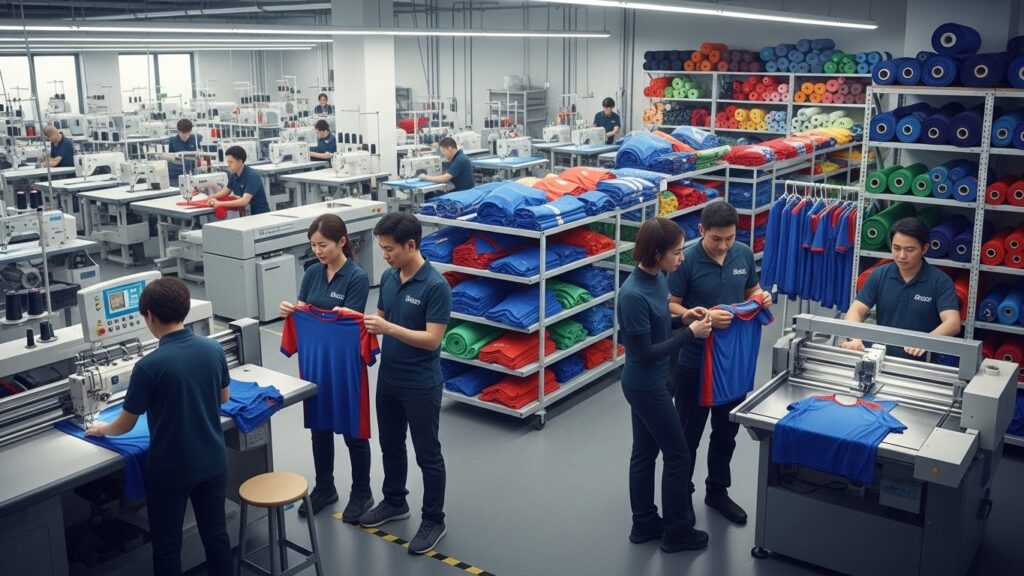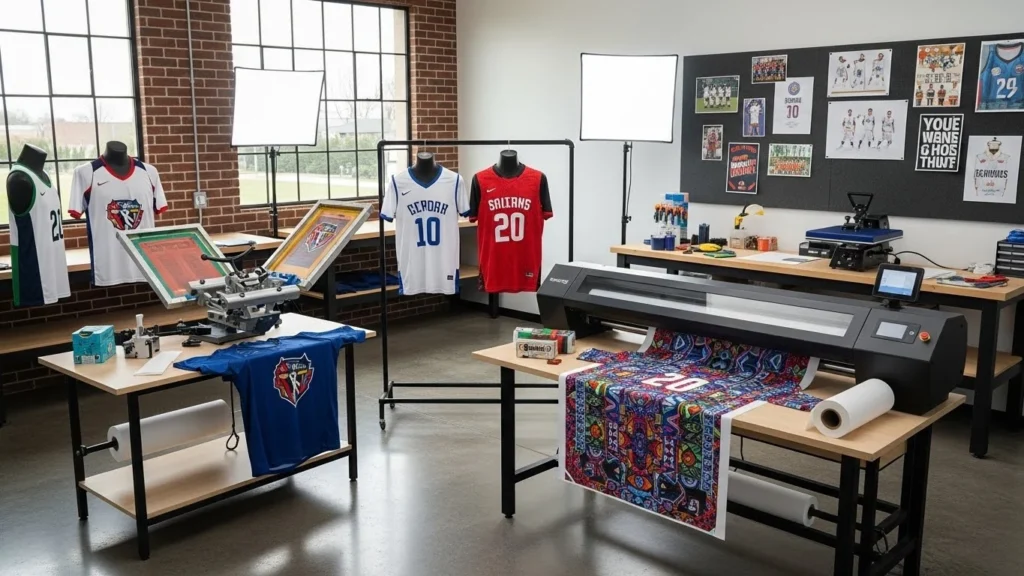
Sportswear care labels may look small, but they carry a serious responsibility. They tell the customer how to wash, dry, iron, bleach, and maintain a garment without damaging its fabric, print, seams, elastic, or fit. For sportswear brands, private-label buyers, clubs, teams, retailers, and distributors, these labels are not just inside tags. They are part of the product’s quality system.
A custom jersey, compression shirt, sports bra, tracksuit, glove, or pair of workout leggings may use technical fabrics, stretch yarns, sublimation prints, embroidery, heat transfers, mesh panels, elastic, padding, or specialty trims. Each of these parts can react differently to heat, detergent, washing speed, drying, ironing, or bleach.
That is why sportswear care labels should never be copied blindly from another garment. A general “machine wash cold” label may seem safe, but it may not be enough for sublimated teamwear, brushed fleece, compression fabrics, heat-transfer logos, or elastic waistbands.
For an OEM sportswear manufacturer, accurate care instructions help protect the product after it leaves the factory. For a brand, they reduce customer complaints and support a more professional retail experience.
“A care label is the final instruction a manufacturer gives to the customer after the garment leaves the factory.” — BUSHI Sports®
What Are Sportswear Care Labels?
Sportswear care labels are permanent or attached garment labels that explain how a sportswear product should be cleaned and maintained. They may include washing temperature, drying method, bleach restrictions, ironing guidance, professional cleaning instructions, fiber content, size, country of origin, brand identity, and other required information.
In custom manufacturing, sportswear care labels are usually placed inside the neckline, side seam, waistband, glove cuff, jacket lining, or another practical area depending on the product.
A care label is different from a hang tag. A hang tag is normally used for branding, pricing, barcode, collection information, or marketing. A care label stays with the product and gives the user practical care instructions throughout the garment’s life.
For private-label sportswear, the care label also supports brand identity. It may include the buyer’s logo, size, fabric composition, washing symbols, and country-of-origin information.
Why Sportswear Care Labels Matter
Sportswear is washed more frequently than many casual garments because it is exposed to sweat, body oils, deodorant, outdoor dust, grass, gym surfaces, and repeated athletic use. If the customer washes it incorrectly, the product may lose stretch, shrink, fade, pill, smell bad, crack at the print, or weaken at the seams.
This is where sportswear care labels become important. They guide the customer toward the safest routine for that specific product.
For example, high heat may damage elastane recovery. Chlorine bleach may affect colors and technical finishes. Strong tumble drying may harm heat-transfer graphics or elastic. Ironing directly over prints can melt or distort the decoration. Fabric softener may reduce moisture-management performance on some technical fabrics.
A good care label protects:
- Fabric color and hand feel
- Stretch and recovery
- Sublimation, screen print, and transfer graphics
- Embroidery and patches
- Elastic waistbands and cuffs
- Seams and stitching
- Shape and sizing
- Customer satisfaction
- Brand reputation
The BUSHI Sports® guide on sportswear stitching types explains how seams should also be tested after washing because thread, elastic, hems, and seam structure can change after laundering.
Care Label vs Wash Instruction: What Is the Difference?
Many people use these terms together, but they are not exactly the same.
A wash instruction tells the customer how to wash the garment. A care label may include the wash instruction plus several other details such as drying, ironing, bleaching, fiber content, size, country of origin, and brand labeling.
| Item | Main purpose | Example |
|---|---|---|
| Wash instruction | Explains how to wash the product | Machine wash cold, gentle cycle |
| Care instruction | Explains full cleaning and maintenance | Wash cold, do not bleach, tumble dry low |
| Care label | Physical label carrying the instructions | Sewn side-seam label or neck label |
| Composition label | Shows fiber content | 90% polyester, 10% spandex |
| Brand label | Shows brand identity | Private-label logo or woven neck label |
For a custom apparel manufacturer, these details should be finalized before bulk production. If the label is changed late, the manufacturer may need to update artwork, label layout, approval samples, packaging, and production instructions.
What Should Sportswear Care Labels Include?
A strong sportswear care label should be clear, practical, and suitable for the target market. The exact requirements depend on where the garment will be sold, but most sportswear labels include several common elements.
A useful label may include:
- Brand name or logo
- Size
- Fiber composition
- Country of origin
- Washing instruction
- Bleaching instruction
- Drying instruction
- Ironing instruction
- Professional cleaning instruction, if needed
- Special warning notes
- Batch, style, or RN information where applicable
The U.S. Federal Trade Commission explains that care labels help purchasers know regular care instructions for textile wearing apparel. The FTC also provides guidance on textile labeling, including fiber content, country of origin, and responsible company identification.
For global sportswear brands, the safest approach is to confirm care-label rules for the destination market before production. Requirements may vary between the United States, European Union, United Kingdom, Canada, Australia, and other regions.
This article gives manufacturing guidance, not legal advice. Brands should verify final legal wording with their importer, compliance consultant, or market-specific labeling expert.
The 5 Main Care Symbol Categories
Many care-label systems use symbols because they save space and make instructions easier to understand across languages. ISO and GINETEX-based care systems organize textile care around five major treatment categories.
| Symbol category | What it controls | Sportswear example |
| Washing | Water temperature and washing method | Machine wash cold or hand wash |
| Bleaching | Whether bleach is allowed | Do not bleach |
| Drying | Tumble or natural drying method | Line dry or tumble dry low |
| Ironing | Ironing temperature and restriction | Cool iron or do not iron |
| Professional cleaning | Dry cleaning or wet cleaning guidance | Do not dry clean |
These categories are useful for sportswear care labels because they help brands create complete instructions instead of only writing one wash line.
For example, “machine wash cold” is incomplete if the garment also needs “do not bleach,” “do not tumble dry,” or “do not iron decoration.”
Common Sportswear Wash Instructions
Sportswear wash instructions should be based on the garment’s actual fabric, trims, printing method, and test results. Still, many performance garments follow similar care principles.
A common sportswear care label may say:
Machine wash cold with like colors. Do not bleach. Do not use fabric softener. Do not tumble dry. Do not iron print. Line dry in shade.
This type of instruction is often suitable for printed or stretch performance garments, but it should not be used automatically. A fleece hoodie, sublimated jersey, boxing glove, compression tight, and padded riding vest may all require different care.
For B2B orders, the care instruction should be confirmed during sample development. The buyer should wash the sample, check measurements, inspect the print, review the seam condition, and confirm that the care wording still makes sense.
The BUSHI Sports® sportswear sample approval checklist is a useful internal reference because it connects sample approval with labels, care instructions, measurements, stitching, decoration, and packaging.
Care Instructions by Sportswear Product Type
Different sportswear products require different care-label thinking. A single label template cannot cover every garment.
1. Activewear and gym wear
Activewear often contains polyester, nylon, spandex, mesh, and moisture-management finishes. These fabrics are designed for movement and sweat, but heat and harsh chemicals can affect stretch recovery and surface performance.
For custom activewear manufacturing, wash instructions should protect stretch, color, and fabric hand feel.
Suggested direction:
- Wash cold or low temperature
- Wash with similar colors
- Avoid chlorine bleach
- Avoid high heat drying
- Do not iron printed areas
- Dry away from direct harsh sunlight where needed
2. Sports uniforms and teamwear
Custom teamwear may include sublimated graphics, screen printing, heat transfers, player names, numbers, sponsor logos, patches, and embroidery. The care label must protect both the fabric and the branding.
For custom sports uniforms, the main risk is often decoration damage. Heat-transfer numbers can crack if washed or dried aggressively. Embroidery may distort if the fabric shrinks. Sublimated garments are usually durable, but heat, abrasion, and harsh detergents can still affect fabric quality.
Suggested direction:
- Wash inside out
- Wash with similar colors
- Do not bleach
- Do not iron over logos or numbers
- Avoid high tumble drying
- Remove promptly after washing
3. Compression shirts and tights
Compression products need strong stretch and recovery. Elastane can be sensitive to high heat, harsh washing, and poor drying methods.
For compression shirts, compression tights, workout leggings, and sports bras, the care label should protect fit and elasticity.
The BUSHI Sports® article on two-way stretch vs four-way stretch fabric explains why stretch direction, heat, washing, and decoration can affect garment performance.
Suggested direction:
- Wash cold
- Gentle cycle
- Do not bleach
- Do not tumble dry high
- Do not dry clean unless tested
- Do not iron elastic or print areas
4. Casual sportswear and outerwear
Hoodies, sweatshirts, joggers, jackets, casual shorts, and outerwear may use fleece, cotton blends, polyester blends, rib, zippers, drawcords, and printed or embroidered branding.
For custom casual wear manufacturing, labels should consider shrinkage, color bleeding, pilling, zippers, rib recovery, and print durability.
Suggested direction:
- Wash inside out
- Wash with similar colors
- Close zippers before washing
- Avoid bleach
- Tumble dry low only if tested
- Do not iron directly on decoration
5. Sports gloves
Sports gloves may include synthetic leather, mesh, latex, foam, padding, hook-and-loop tape, grip materials, and multiple seam types. Many gloves cannot be washed like a normal T-shirt.
For custom sports gloves manufacturing, care labels must consider material layers, adhesives, padding, and grip performance.
Suggested direction:
- Wipe clean after use
- Air dry naturally
- Do not machine wash unless tested
- Do not bleach
- Do not tumble dry
- Keep away from direct heat
- Fasten closures before storage
Fabric-Specific Care Label Notes
Fabric composition strongly affects sportswear care labels. Even when two garments look similar, their care instructions may differ.
| Fabric or component | Common care concern | Label direction to consider |
| Polyester | Heat, odor retention, print protection | Wash cool, avoid high heat |
| Nylon | Heat sensitivity and surface shine | Wash cool, avoid hot ironing |
| Spandex/elastane | Loss of recovery under heat | Avoid high tumble drying |
| Cotton blends | Shrinkage and color fading | Wash with similar colors |
| Fleece | Pilling and lint transfer | Wash inside out |
| Mesh | Snagging and distortion | Gentle cycle or wash bag |
| Heat transfer | Cracking and peeling | Do not iron print |
| Embroidery | Shrinkage and puckering | Wash gently, avoid harsh rubbing |
| Elastic | Stretch loss | Avoid bleach and high heat |
| Padding or foam | Shape distortion | Air dry only if needed |
For a deeper material decision, BUSHI Sports® has covered polyester vs nylon for activewear, which is directly related to how different fibers behave during wear and washing.
What Makes a Bad Sportswear Care Label?
A weak care label is usually vague, copied, or untested. It may satisfy a quick production need but create problems after delivery.
Bad examples include:
- “Wash normally”
- “Use standard care”
- “Machine wash” without temperature or warnings
- “Dry clean only” without testing or reason
- No warning for printed logos
- No instruction for elastic or padded areas
- Wrong fiber composition
- Wrong country of origin
- Label ink that fades after washing
- Label that irritates the skin
- Label placed where it rubs during activity
A poor label can make a good garment look careless. Customers often notice bad care instructions only after something goes wrong, such as a cracked logo, shrunken fit, faded color, or loose seam.
Sportswear Care Labels and Branding
For private-label sportswear, care labels are part of the brand experience. The label should be functional, but it should also look professional.
A clean private-label care label may include the buyer’s logo, size, product code, fabric composition, wash symbols, written care instructions, and country of origin. For retail brands, SKU or barcode information may be added to packaging rather than the sewn label.
Label quality also matters. A rough woven label can irritate the neck. A low-quality printed satin label can fade. A poorly cut label can scratch the skin. Heat-transfer neck labels may improve comfort, but they must be tested for wash durability and skin feel.
BUSHI Sports® offers sportswear manufacturing services that include private-label support, custom labels, hang tags, packaging, sampling, quality control, and worldwide shipping.
Care Labels in a Sportswear Tech Pack
The care label should be included in the sportswear tech pack before sampling. Leaving it until the end can create delays, especially if the buyer needs custom woven labels, printed satin labels, heat-transfer neck labels, hang tags, barcode stickers, or private-label packaging.
A care-label section in a tech pack should include:
- Label type
- Label size
- Label material
- Placement
- Fold type
- Background color
- Text color
- Font size
- Logo file
- Fiber composition
- Care symbols
- Written instructions
- Country of origin
- Size range
- Legal or importer information
- Approval sample or reference image
For custom manufacturing, the tech pack should also state whether the care label is sewn into a side seam, placed at the neck, printed directly inside the garment, or added to packaging.
Care Label Placement in Sportswear
Care-label placement should consider both compliance and comfort. A label may contain the right information but still annoy the user if it scratches the skin during training.
Common placement areas include:
| Product | Common label placement |
| T-shirts and jerseys | Neck or side seam |
| Sports bras | Side seam or inner back area |
| Leggings | Inner waistband or side seam |
| Shorts | Inner waistband or side seam |
| Tracksuits | Neck, side seam, or inner waistband |
| Jackets | Neck, side seam, or lining |
| Gloves | Cuff or inner wrist area |
| Equestrian apparel | Side seam, waistband, or inner jacket area |
For fitted activewear, heat-transfer labels may be used to reduce irritation. However, they must be tested because low-quality transfers can crack, peel, or fade after washing.
Wash Testing Before Bulk Production
Sportswear care labels should be based on test results, not guesswork. A pre-production sample should be washed according to the proposed care instruction before the label is approved.
Wash testing should check:
- Shrinkage
- Color change
- Print cracking
- Heat-transfer peeling
- Embroidery puckering
- Seam twisting
- Elastic recovery
- Fabric pilling
- Odor retention
- Label readability
- Label attachment strength
- Overall garment shape
For products that use technical fabrics, finishing chemistry, sublimation, transfers, patches, padding, or elastic, testing becomes even more important.
BUSHI Sports® discusses washing and care risks in articles such as microfiber shedding in polyester sportswear and sportswear for extreme heat, where care depends on fabric, finish, construction, and testing.
Sample Care Label Templates
These templates are examples only. The final care wording should be confirmed after material and wash testing.
Template 1: Sublimated team jersey
Machine wash cold with similar colors. Wash inside out. Do not bleach. Do not tumble dry high. Do not iron decoration. Line dry in shade.
Template 2: Compression leggings
Machine wash cold on gentle cycle. Wash with similar colors. Do not bleach. Do not use fabric softener. Do not tumble dry. Do not iron. Line dry.
Template 3: Tracksuit
Machine wash cold inside out. Close zippers before washing. Do not bleach. Tumble dry low if needed. Do not iron print. Wash with similar colors.
Template 4: Sports gloves
Wipe clean after use. Air dry naturally. Do not machine wash unless tested. Do not bleach. Do not tumble dry. Keep away from direct heat.
Template 5: Fleece hoodie
Machine wash cold inside out. Wash with similar colors. Do not bleach. Tumble dry low or line dry. Do not iron decoration.
Copy-Paste Ready Quotes for the Article
“Sportswear care labels are not decoration. They are product instructions that protect the garment after the sale.” — BUSHI Sports®
“A wash instruction should be tested on the real fabric, real print, real stitching, and real trims before bulk production begins.” — BUSHI Sports®
“The best care label is simple for the customer, accurate for the product, and practical for the target market.” — BUSHI Sports®
Care Label Checklist for Sportswear Brands
Before approving sportswear care labels, confirm the following:
- Is the fabric composition correct?
- Is the country of origin correct?
- Are washing, drying, bleaching, ironing, and cleaning instructions complete?
- Has the label wording been checked for the target market?
- Has the sample been washed using the proposed instruction?
- Does the label remain readable after washing?
- Does the label placement feel comfortable?
- Does the instruction protect decoration and elastic?
- Are private-label requirements included?
- Is the final label approved in the tech pack?
How BUSHI Sports® Handles Care Labels for Custom Manufacturing
BUSHI Sports® is a Sialkot-based custom sportswear manufacturer supporting OEM, ODM, private-label, wholesale, and bulk production for sports brands, teams, clubs, gyms, retailers, distributors, schools, academies, and global buyers.
In custom manufacturing, sportswear care labels are planned according to the product type, fabric, decoration method, stitching, trims, packaging, and destination market. A sublimated jersey, compression tight, sports glove, hoodie, tracksuit, and equestrian garment may each require different care wording.
BUSHI Sports® supports custom labels, hang tags, brand packaging, sample development, fabric sourcing, printing, stitching, quality control, and worldwide delivery. Buyers can share their label artwork, care requirements, size chart, packaging instructions, and compliance details during the sampling stage.
For final approval, the care label should match the tech pack, physical sample, packaging instruction, and bulk production standard.
Frequently Asked Questions
What are sportswear care labels?
Sportswear care labels are garment labels that explain how to wash, dry, iron, bleach, and maintain activewear, uniforms, gloves, and performance apparel. They may also include fiber content, size, country of origin, and brand details.
Are care labels required on sportswear?
Care-label requirements depend on the target market. In the United States, the FTC Care Labeling Rule applies to many textile wearing apparel products. Brands should confirm exact legal requirements for each destination market before production.
What should sportswear wash instructions include?
Sportswear wash instructions should usually include washing temperature, bleach restriction, drying method, ironing warning, professional cleaning guidance if needed, and any special note for prints, elastic, padding, or technical finishes.
Can I use the same care label for every sportswear product?
No. A jersey, sports bra, compression tight, fleece hoodie, and sports glove may require different instructions because the fabrics, trims, decorations, and construction methods are different.
Should sportswear be washed inside out?
Many printed and decorated garments benefit from being washed inside out because it reduces direct abrasion on logos, numbers, prints, and surface finishes. The instruction should still be tested on the actual product.
Why do many activewear labels say do not use fabric softener?
Some activewear labels restrict fabric softener because it may affect moisture-management performance or leave residue on technical fabrics. This instruction should be confirmed based on the fabric finish and buyer requirements.
Where should care labels be placed in activewear?
Common locations include the side seam, inner waistband, neck area, or printed inside label. For close-fitting activewear, comfort should be considered because rough labels may irritate the skin.
Can BUSHI Sports® make custom private-label care labels?
Yes. BUSHI Sports® supports custom labels, private-label branding, hang tags, packaging, and related OEM/ODM manufacturing requirements for sportswear buyers.
Conclusion
Sportswear care labels are small, but they play a major role in product performance, customer satisfaction, and brand trust. They help customers wash and maintain garments correctly while protecting fabric, color, stretch, seams, elastic, printing, embroidery, padding, and overall fit.
A strong care label should not be copied from a random garment. It should be based on the actual fabric, construction, decoration method, product category, wash testing, and target market requirements.
For brands working with an OEM sportswear manufacturer, care labels should be finalized during sample development and included in the tech pack before bulk production.
BUSHI Sports® provides custom sportswear manufacturing, private-label sportswear, activewear, custom teamwear, sports uniforms, sports gloves, casual wear, outerwear, and equestrian gear for international B2B buyers.
To discuss custom labels, wash instructions, sampling, packaging, or bulk production, contact BUSHI Sports® through the contact page, send requirements by WhatsApp, or email info@bushisports.com.
You can also view the BUSHI Sports® location on Google Maps or connect with the company on LinkedIn.