
Custom sportswear lead time is one of the first questions buyers ask when planning a new order. Brands, clubs, teams, gyms, retailers, and distributors all want to know the same thing: “When will the final products be ready?”
The honest answer is that lead time depends on more than sewing speed. A custom sportswear order moves through several connected stages before it reaches the buyer. The design must be reviewed, materials must be sourced, artwork must be approved, samples may need to be developed, printing or embroidery must be planned, bulk fabric must be prepared, garments must be cut and stitched, quality control must be completed, and the shipment must move through freight and customs.
This is why two orders with the same quantity can have very different timelines. A simple team jersey using available polyester fabric and standard sublimation may move faster than a private-label activewear collection with custom dyed fabric, multiple colorways, branded packaging, size-set samples, heat-transfer logos, and special care labels.
Understanding custom sportswear lead time helps buyers plan launches, events, seasonal collections, tournament deadlines, and reorder schedules without rushing production at the last minute. For B2B buyers, realistic planning is not just convenient. It protects quality, cost, and delivery reliability.
What Does Custom Sportswear Lead Time Mean?
Custom sportswear lead time is the total time required to complete a custom sportswear order from confirmed requirements to final delivery. It may include product discussion, quotation, fabric sourcing, sample development, buyer approval, bulk material preparation, cutting, printing, stitching, finishing, inspection, packing, and shipping.
Some buyers count lead time from the first message to the factory. Manufacturers usually count production lead time from the point where key approvals are complete. This difference can create confusion.
A factory cannot accurately start bulk production if the buyer has not confirmed the final design, fabric, measurements, logo files, size breakdown, packaging, and payment terms. The timeline becomes realistic only when both sides agree on the final product specification.
A better way to understand custom sportswear lead time is to divide it into three parts:
| Lead time stage | What it includes | Who affects it most |
|---|---|---|
| Pre-production lead time | Design review, quotation, tech pack, fabric sourcing, sampling, approvals | Buyer and manufacturer |
| Production lead time | Cutting, printing, stitching, finishing, quality control and packing | Manufacturer |
| Delivery lead time | Freight booking, courier/cargo transit, customs and final delivery | Logistics provider and destination process |
When buyers ask for a delivery date, all three parts should be considered.
Average Custom Sportswear Lead Time
On the BUSHI Sports® service page, the company states that samples usually take around 7–10 days, while bulk orders usually take around 3–5 weeks depending on order size and customization. Shipping time varies by location.
This is a useful starting point, but the final schedule depends on product complexity.
A basic reorder with approved fabric, artwork, measurements, labels, and packaging can move faster than a first-time development order. A new product requiring multiple sample rounds, custom material development, revised measurements, and complex branding will naturally need more time.
A realistic sportswear production schedule may look like this:
| Order type | Typical situation | Timeline expectation |
| Repeat order | Same product, same fabric, same artwork, no changes | Shorter and more predictable |
| Simple custom teamwear | Standard fabric, confirmed artwork, limited size range | Moderate timeline |
| New activewear product | New fit, fabric testing, sample approval needed | Longer development stage |
| Private-label collection | Multiple styles, labels, packaging and size sets | More planning required |
| Gloves or padded products | More components, patterns, padding and testing | Longer sampling and production |
| Peak-season bulk order | High factory workload and freight demand | Extra buffer recommended |
The most important point is this: custom sportswear lead time should be confirmed after the manufacturer reviews the exact order details, not before.
12 Factors That Affect Custom Sportswear Lead Time
1. Clarity of the Product Brief
A clear product brief makes the entire process faster. A vague inquiry creates back-and-forth messages before sampling can even begin.
For example, “I need football uniforms” is not enough for accurate planning. The manufacturer needs to know the fabric, design, quantity, sizes, branding method, names and numbers, packaging, delivery country, and expected deadline.
A strong brief should explain:
- Product category
- Intended use
- Quantity
- Size breakdown
- Fabric preference
- Colorways
- Branding method
- Artwork files
- Label and packaging needs
- Target delivery date
- Destination country
A complete brief helps an OEM sportswear manufacturer quote and schedule the order more accurately.
2. Tech Pack and Specification Quality
A tech pack can shorten custom sportswear lead time because it reduces guesswork. It explains how the garment should be made, measured, stitched, decorated, labelled, packed, and inspected.
When a tech pack is missing, the factory must create assumptions. Those assumptions may lead to wrong samples, revisions, and delays.
A good specification should include:
- Flat sketches
- Measurement chart
- Size grading
- Fabric details
- Stitching instructions
- Artwork placement
- Color references
- Labels
- Packaging
- Quality requirements
If the buyer only sends a screenshot, the manufacturer may still develop the product, but the approval cycle can become slower.
3. Fabric Availability
Fabric is one of the biggest lead-time factors in custom sportswear manufacturing. Available stock fabric can reduce waiting time. Custom dyed, custom knitted, coated, brushed, compression-grade, recycled, or specialty performance fabrics can take longer.
A standard polyester interlock jersey fabric may be easier to source than a custom four-way stretch compression fabric with a specific GSM, opacity, hand feel, and color.
Fabric lead time may increase when the order requires:
- Custom colors
- Special GSM
- Recycled yarns
- Compression fabrics
- Brushed fleece
- Mesh combinations
- Waterproof or coated materials
- Lab dips
- Fabric testing
- Imported trims
For custom activewear manufacturing, fabric selection must balance performance and timing. The fastest material is not always the best material, but the most complicated material may require a longer plan.
4. Color Approval and Lab Dips
Color approval can affect custom sportswear lead time, especially when the buyer needs exact brand colors.
Digital screens do not show fabric color accurately. A color may look different on polyester, cotton blend, mesh, fleece, sublimation paper, embroidery thread, silicone badge, or woven patch.
For dyed fabrics, buyers may need lab dips. For sublimation, they may need print strike-offs. For embroidery, they may need thread color approval.
Color delays often happen when:
- Pantone codes are not supplied
- The buyer changes shades after sampling
- Fabric and print colors do not match
- Different materials absorb color differently
- Physical approvals are shipped internationally
For teamwear and retail collections, color consistency is important because all units must look like one approved batch.
5. Sampling and Revision Rounds
Sampling protects the buyer, but it also adds time. This is normal and necessary.
A sample allows the buyer to check fabric, fit, measurements, stitching, print quality, logo placement, comfort, finishing, labels, and packaging. If the first sample needs changes, a revision may be required before bulk production.
Common sample delays include:
- Late buyer feedback
- Unclear comments
- Multiple decision makers
- Design changes after sample review
- New fabric requests
- Artwork replacement
- Size chart changes
- Packaging changes
The BUSHI Sports® sportswear sample approval checklist explains why pre-production approval should include measurements, fabric, branding, construction, labels, packaging, test reports, and buyer comments before bulk cutting begins.
6. Product Complexity
A simple product can be produced faster than a complex one. The more operations a garment requires, the more scheduling and quality control it needs.
A basic sublimated jersey may involve fabric printing, cutting, stitching, finishing, and packing. A technical tracksuit may include zippers, rib, pockets, lining, embroidery, heat transfers, drawcords, labels, and private-label packaging.
Product complexity increases when the design includes:
- Multiple fabric panels
- Contrast mesh
- Custom collars
- Zippers
- Pockets
- Elastic waistbands
- Rib cuffs
- Padding
- Reflective transfers
- Embroidery
- Patches
- Individual names and numbers
- Custom packaging
This is why a custom sports gloves manufacturer may need a different timeline from a jersey manufacturer. Gloves often involve smaller components, curved stitching, grip materials, foam, padding, closures, and reinforcement.
7. Customization and Branding Method
Branding affects both production time and approval time. Sublimation, screen printing, embroidery, heat transfer, woven patches, silicone badges, labels, and packaging all follow different workflows.
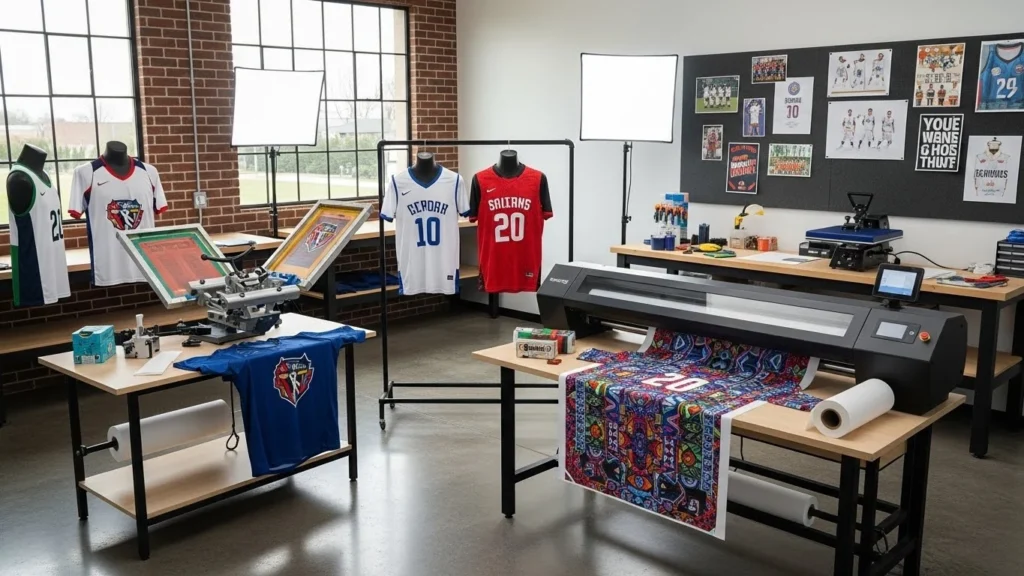
Sublimation may be efficient for polyester teamwear, especially when graphics cover the full garment. Embroidery can take longer when the logo is dense or placed on stretch fabric. Heat transfers may require artwork preparation, temperature testing, and placement accuracy. Patches or badges may need separate production before garment assembly.
BUSHI Sports® has related guides on direct embroidery versus embroidered patches and silicone badges versus woven patches that help buyers understand decoration decisions before production.
A late logo change can delay the order even if the garment pattern is already approved.
8. Stitching and Construction Requirements
Stitching also affects custom sportswear lead time. Different seams require different machines, operators, thread, tension settings, and inspection methods.
A simple overlock seam is usually faster than a garment requiring flatlock seams, coverstitch hems, bartacks, binding, reinforcement tape, elastic attachment, and multiple topstitching operations.
For compression wear, stitching must support stretch and recovery. For sports bras, elastic and support zones must be controlled. For tracksuits, pockets, zippers, and cuffs require additional operations.
The BUSHI Sports® article on sportswear stitching types explains how lockstitch, overlock, coverstitch, flatlock, zigzag, bartack, and elastic stitching affect sportswear construction.
9. Order Quantity and Size Breakdown
Quantity affects production time, but not always in a simple way. A larger order takes more cutting, printing, stitching, inspection, and packing. However, very small orders can also take time if they require custom setup, fabric sourcing, private labels, and special packaging.
The size breakdown matters too. A 500-piece order in one design and five sizes is easier to plan than a 500-piece order split across many designs, colors, names, numbers, and packaging combinations.
A complex size and personalization matrix can slow production because every piece must be checked carefully before packing.
For custom teamwear, the buyer should submit the final name-number-size list before production begins.
10. Factory Capacity and Season
Factory capacity affects custom sportswear lead time. During peak sports seasons, school seasons, tournament periods, retail launches, and holiday shipping windows, production lines may be more heavily booked.
Even a reliable manufacturer cannot always start immediately if the buyer confirms late. Production planning depends on machine availability, material arrival, printing schedules, stitching lines, QC team capacity, and packing space.
The safest approach is to book earlier, especially for:
- Team seasons
- Tournament uniforms
- Retail launch dates
- School or academy orders
- Event merchandise
- Christmas or holiday delivery
- Large distributor orders
- Multi-style private-label collections
A rush order can sometimes be arranged, but it may increase cost and reduce flexibility.
11. Quality Control and Inspection
Quality control takes time because it protects the buyer from bigger problems after delivery. Skipping inspection may save a few days, but it can create much larger losses if defects reach the customer.
Quality control may include fabric check, cutting check, measurement check, print or embroidery inspection, stitching review, finishing check, packing inspection, and final pre-shipment review.
The BUSHI Sports® services page lists quality-control steps including fabric check, cutting check, stitching inspection, measurement check, print/embroidery check, finishing check, packing inspection, and final pre-shipment check.
For bulk orders, the inspection standard should be agreed before production begins. ISO 2859-1 is commonly referenced for acceptance sampling by attributes, often connected with AQL-based inspection planning.
Quality control should not be treated as a delay. It is part of responsible custom manufacturing.
12. Packaging, Shipping, and Customs
Delivery time begins after production is finished, but it should be planned from the start.
Packaging can affect the timeline when the buyer requests custom poly bags, hang tags, barcode stickers, carton labels, size stickers, SKU sorting, retail folding, or individual name-number packing.
Shipping method also matters. Air courier is usually faster and more expensive. Sea freight is usually more economical for larger bulk orders but takes longer. DHL notes that air cargo is generally unloaded and moved into the terminal within hours, while ocean freight can involve longer unloading and port handling time.
Customs paperwork is another important factor. FedEx states that incomplete paperwork is the most common reason for customs delays. Buyers should therefore confirm commercial invoices, packing lists, HS codes, importer details, tax IDs, product descriptions, and destination requirements before shipment.
BUSHI Sports® supports worldwide shipping through DHL, FedEx, UPS, air cargo, sea freight for bulk orders, and buyer freight forwarders.
Production Timeline Example for Custom Sportswear
The table below shows how one custom sportswear lead time may be built. This is only a planning example. The final timeline should be confirmed after reviewing the actual product.
| Stage | Estimated time | What happens |
| Requirement review | 1–3 days | Buyer sends design, quantity, size range, deadline and destination |
| Quotation and confirmation | 1–3 days | Manufacturer confirms price, MOQ, production method and payment terms |
| Fabric and trim sourcing | 3–14+ days | Materials, colors, trims, labels and packaging are checked |
| Sample development | 7–10 days or more | Sample is made for buyer approval |
| Sample feedback | Buyer-dependent | Buyer checks fit, fabric, print, stitching, labels and packaging |
| Bulk preparation | 2–7 days | Final fabric, artwork, size breakdown and production file are frozen |
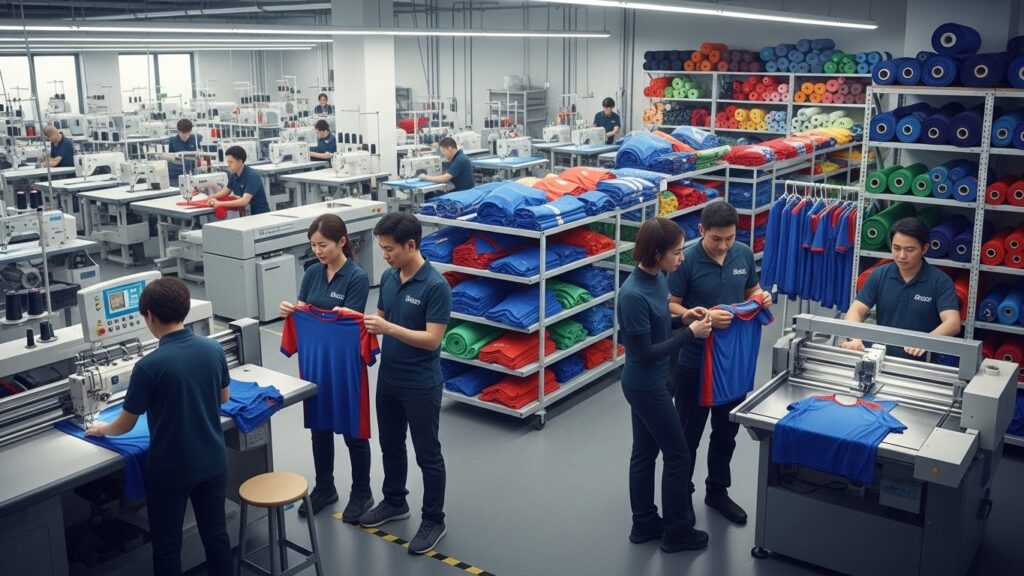
| Bulk production | 3–5 weeks on average | Cutting, printing, stitching, finishing, QC and packing |
| Shipping | Destination-dependent | Courier, air cargo, sea freight or buyer forwarder |
The key lesson is simple: the production schedule should not be calculated only from sewing time. Pre-production and shipping can be just as important.
What Delays Custom Sportswear Orders Most Often?
Most delays are not caused by one dramatic problem. They usually come from small issues that keep stacking up.
Common delay reasons include:
- Incomplete tech pack
- Missing size breakdown
- Low-quality artwork files
- Late logo approvals
- Fabric color changes
- Delayed sample feedback
- Changing the design after approval
- Unconfirmed payment terms
- Custom label delays
- Packaging not finalized
- Peak-season production pressure
- Customs paperwork errors
- Wrong consignee details
- Last-minute shipping method changes
The best way to reduce custom sportswear lead time is not to rush the factory. It is to remove uncertainty before production begins.
How Buyers Can Reduce Custom Sportswear Lead Time
Brands can shorten timelines by preparing better and approving faster. The manufacturer controls production, but the buyer controls many decisions before production starts.
To reduce delays:
- Send a clear product brief
- Provide a complete tech pack where possible
- Share vector artwork files
- Confirm fabric direction early
- Approve colors physically when needed
- Keep design changes before sampling
- Give sample feedback quickly
- Freeze the size breakdown before bulk production
- Confirm labels and packaging early
- Plan around peak seasons
- Choose shipping method before production ends
- Keep all approvals written and organized
For repeat orders, keeping the same approved fabric, size chart, artwork, labels, and packaging can significantly improve predictability.
Custom Sportswear Lead Time by Product Category
Different products require different planning.
Sports uniforms
Custom sports uniforms often involve sublimation, names, numbers, sponsor logos, club crests, matching shorts, and size sorting. The most common delays come from artwork approval and player list changes.
BUSHI Sports® provides custom sports uniforms manufacturing for teams, clubs, schools, academies, and sportswear brands.
Activewear
Activewear lead time depends heavily on fabric, stretch, opacity, fit, seams, elastic, and size-set approval. Leggings, sports bras, compression shirts, and gym wear require more fit control than loose teamwear.
Casual wear and outerwear
Hoodies, sweatshirts, joggers, jackets, and casual shorts may include heavier fabrics, rib, zippers, embroidery, pockets, lining, drawcords, and special packing. These details can add time compared with basic T-shirts.
Sports gloves
Sports gloves can involve palm materials, foam, grip, padding, finger patterns, hook-and-loop closures, reinforcement, and curved stitching. Sampling and testing are especially important because comfort and fit affect performance.
Equestrian gear
Equestrian apparel and riding gear may include stretch panels, reinforced areas, riding fit, closures, labels, and product-specific testing. Lead time should be confirmed by item type instead of using one general estimate.
Copy-Paste Ready Quotes
“Custom sportswear lead time is not only sewing time. It includes every approval, material, decoration, inspection, packing and shipping step before the product reaches the buyer.” — BUSHI Sports®
“The fastest production schedule begins with the clearest product specification.” — BUSHI Sports®
“A realistic delivery date protects both sides: the buyer gets better planning, and the manufacturer gets enough time to maintain quality.” — BUSHI Sports®
Buyer Checklist Before Asking for a Delivery Date
Before requesting a final delivery date, prepare:
- Product category
- Quantity
- Size breakdown
- Fabric preference
- Design mockup
- Logo files
- Branding method
- Label requirements
- Packaging requirements
- Destination country
- Required delivery date
- Shipping preference
- Sample approval status
- Previous reference sample, if available
A manufacturer can give a more accurate custom sportswear lead time when these details are available.
How BUSHI Sports® Manages Production and Delivery Time
BUSHI Sports® is a Sialkot-based custom sportswear manufacturer supporting OEM, ODM, private-label, wholesale, and bulk manufacturing for sportswear brands, teams, clubs, academies, gyms, retailers, distributors, schools, and global buyers.
The company supports product development, tech pack review, physical sample replication, fabric sourcing, custom printing and branding, cut-and-sew manufacturing, private-label production, bulk manufacturing, quality control, packaging, labeling, and international shipping.
For custom sportswear lead time, BUSHI Sports® reviews the product type, order quantity, fabric requirements, customization method, sample needs, packaging, destination, and shipping method before confirming the schedule.
Buyers can also read the existing BUSHI Sports® guide on understanding lead times in sportswear production for a broader explanation of production stages.
Frequently Asked Questions
What is custom sportswear lead time?
Custom sportswear lead time is the total time needed to develop, approve, produce, inspect, pack, ship, and deliver a custom sportswear order.
When does lead time start?
Production lead time usually starts after final approvals, not from the first inquiry. The design, fabric, size breakdown, artwork, labels, packaging, payment terms, and sample approval should be confirmed first.
How long do BUSHI Sports® samples take?
According to the BUSHI Sports® service page, samples usually take around 7–10 days, depending on product type and customization.
How long do bulk sportswear orders take?
BUSHI Sports® states that bulk orders usually take around 3–5 weeks depending on order size and customization. Shipping time varies by location.
What affects delivery time the most?
Fabric sourcing, sample approvals, customization method, product complexity, order quantity, factory capacity, quality control, packaging, shipping method, and customs paperwork all affect delivery time.
Can custom sportswear be made faster?
Sometimes, but faster production depends on available fabric, simple design, clear approvals, limited customization, factory capacity, and faster shipping. Rushing should not compromise quality.
Does sublimation take longer than embroidery?
Not always. Sublimation can be efficient for polyester teamwear, especially full-design jerseys. Embroidery may take longer for dense logos or complex placements. The actual timing depends on artwork, quantity, fabric, and machine capacity.
Why does sample approval affect lead time?
A sample confirms fabric, fit, measurements, stitching, branding, labels, and finishing before bulk production. Delayed feedback or repeated changes can extend the full timeline.
What is the fastest way to reduce lead time?
Send complete requirements, approve samples quickly, avoid late changes, use available fabrics, finalize artwork early, and confirm shipping details before production ends.
Conclusion
Custom sportswear lead time depends on more than factory speed. It is shaped by planning, documentation, fabric availability, sampling, customization, stitching, order quantity, quality control, packaging, freight, and customs.
A buyer who sends clear requirements and approves details quickly can avoid many delays. A manufacturer that gives realistic timelines, manages production carefully, and communicates clearly helps protect both quality and delivery.
For B2B sportswear buyers, the best approach is to plan backwards from the launch date, tournament date, retail drop, or team season. Add enough buffer for sampling, revisions, production, inspection, and shipping.
BUSHI Sports® provides custom sportswear manufacturing, private-label sportswear, custom teamwear, activewear, sports uniforms, sports gloves, casual wear, outerwear, and equestrian gear for international buyers.
To discuss your custom sportswear lead time, share your design, quantity, fabric preference, branding method, size breakdown, packaging needs, destination country, and target delivery date through the BUSHI Sports® contact page, by WhatsApp, or by email at info@bushisports.com.
You can also view the BUSHI Sports® location on Google Maps or connect with BUSHI Sports® on LinkedIn.