Jacquard vs Printed Sports Jerseys: How Patterns and Textures Differ
Jacquard vs printed sports jerseys comes down to how the pattern is made. In a knitted jacquard, the machine forms the pattern as it makes the fabric. The design may come from different stitches, yarn colors or both. In a printed jersey, the artwork is applied to an existing fabric. A jacquard can give a club motif real texture, while printing can reproduce fine lettering, gradients and changing sponsor artwork on a compatible base.
Choose jacquard when the pattern needs to be part of how the fabric feels or behaves. Choose printing when detail, color or individual names and numbers are the priority. You can also use both on one garment. In custom soccer uniform development, for example, a club could use a tonal jacquard body and keep the sponsor and player numbers as separate decorations.
Jacquard vs Printed Sports Jerseys at a Glance
| Decision | Knitted jacquard jersey | Printed jersey |
|---|---|---|
| When the design is made | During knitting | After the base fabric is made |
| How the design appears | Selected stitches, yarn colors or both | Artwork transferred or deposited onto the fabric |
| Where it excels | Tonal motifs, stitch relief and structural patterns | Gradients, detailed graphics and variable player numbers |
| What the wearer feels | Depends on the stitches, yarns and reverse construction | Depends on the base and the process; sublimation adds no separate film |
| What to approve | Knit sample, repeat, reverse, placement and shade | Print strike-off, artwork placement, contrast and fabric compatibility |
| What may affect reorders | Custom yarn, knitting setup and fabric minimums | Base fabric availability, repeat color matching and current artwork |
The jacquard vs printed sports jerseys comparison concerns the main pattern. A jacquard jersey can still carry a printed sponsor, and a printed jersey can use a textured base knit. Jacquard can also refer to woven textiles; this guide focuses on knitted jacquard used in sports jerseys.
7 Differences in Pattern, Texture and Production
1. When the pattern becomes part of the fabric
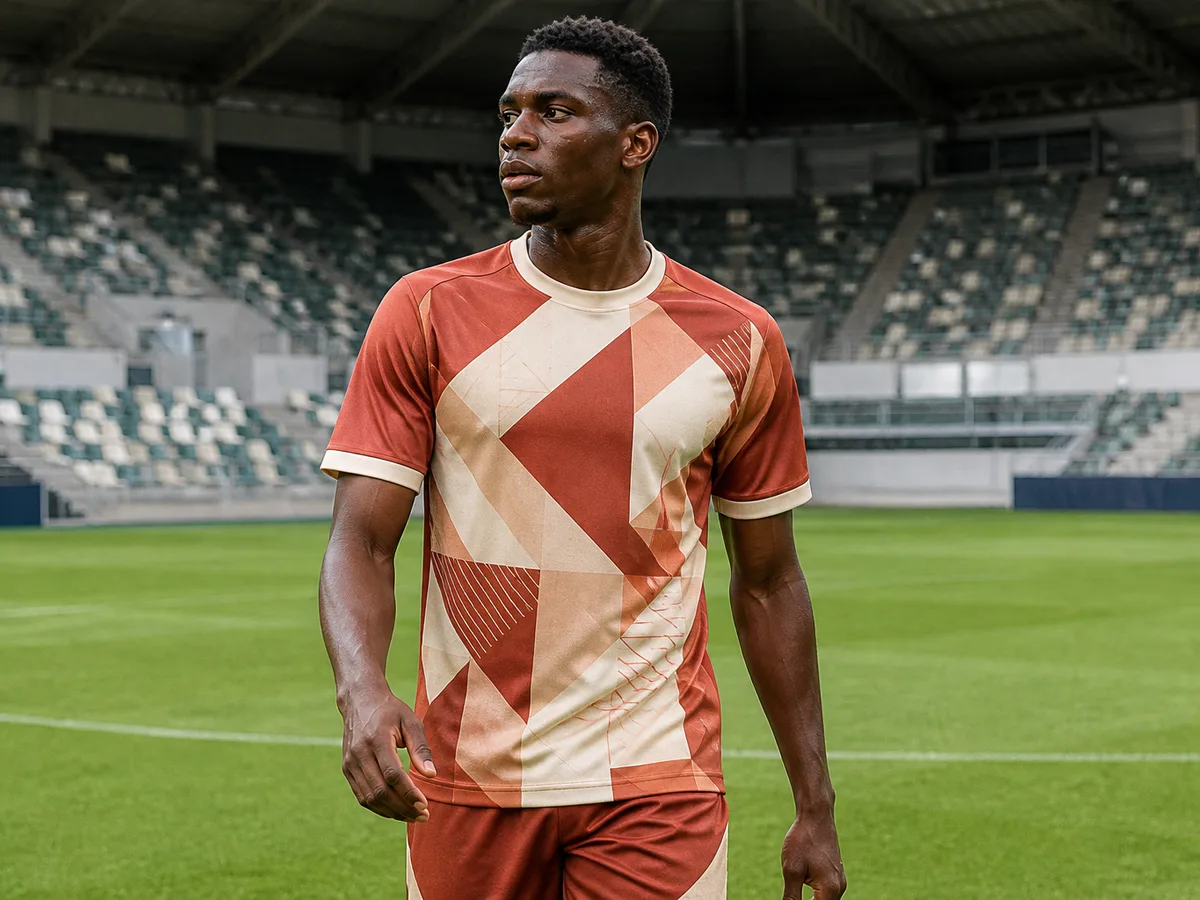
To compare jacquard vs printed sports jerseys, look at what creates the pattern. In circular jacquard knitting, controlled needle selection and yarn choices can change the stitches and colors across the fabric. There are also warp-knit jacquard techniques. Some designs are tonal and depend on stitch texture or reflected light; others use more than one yarn color. CottonWorks’ guide to designing knit textiles explains how programmed needle selection produces patterns in the knit.
With dye sublimation, artwork is typically printed onto transfer paper and transferred into a compatible polyester fabric using heat. The design follows the existing knit without adding a separate film. Screen printing and film transfers work differently and can leave a layer you can feel. Epson’s digital printing guide explains how sublimation and film transfer differ.
2. Texture under the hand and against the skin
The same diamond motif can look different on jacquard vs printed sports jerseys. In a jacquard, selected stitches might give the motif relief or make it catch the light. In a sublimated version, shading can make the motif look raised, but the effect is visual. Any actual relief comes from the base fabric or a separate finish.
Turn a jacquard swatch over during review. The back can have a different stitch structure or, in some constructions, visible strands that span multiple stitches. Check areas that touch the skin or rub against a base layer. On a printed shirt, feel the base fabric and any raised names, numbers or crests. If you’re comparing jacquard vs printed sports jerseys remotely, ask for close-ups of both faces and a short video of each fabric moving under the same light.
3. Fine detail, gradients and pattern repeats
Artwork often settles the choice between jacquard vs printed sports jerseys. A repeating geometric design, tonal club initials or a simple heritage stripe can be good candidates for a knit trial. A photographic image, soft gradient or sponsor logo with small lettering is usually easier to reproduce in print. A knit motif depends on the available stitch grid, yarns and machine setup, so a mark that reads clearly on a screen may need simplifying for knitting.
When sampling jacquard vs printed sports jerseys, approve the pattern scale on a finished shirt as well as a swatch. A large repeat may be cut differently on youth and adult sizes. For a centered motif or a stripe crossing a sleeve seam, mark the placement and alignment requirements. Printed panel artwork can control placement by size, but it still needs correct pattern templates and cutting allowances. Use production-ready artwork files to preserve the approved layout.
4. Airflow and stretch depend on garment construction
When comparing jacquard vs printed sports jerseys for match play, check the fabric and fit before making assumptions about airflow or stretch. A jacquard program can create zones with different structures, including more open areas where airflow is needed. KARL MAYER’s body-mapping example shows how a warp-knit jacquard can combine mesh, support and stretch zones. These features must be engineered into the fabric.
A printed jersey can use a ventilated base or combine mesh panels with a smoother interlock body. A mesh pattern printed on a closed knit does not create ventilation holes. Compare fabric weight, opacity under stretch and comfort through the shoulders. If airflow is a selling point, test the fabric zone intended to provide it.
5. Names, numbers and sponsors change at different times
The jacquard vs printed sports jerseys decision changes when player information varies. A club motif can stay in the knit for several seasons while sponsor marks or roster details change. Adding individual details separately keeps the body design available for future orders. Test those decorations on the actual textured surface: raised areas can affect how a transfer sits and adheres.
For all-over sublimated jerseys, player details can be included in the artwork before the panels are assembled. This avoids a separate surface layer for those details, but the roster must be correct before production. If players are assigned numbers after delivery, a compatible applied number may give the club more flexibility. Compare printing and transfer options for the order size before deciding how to handle late additions.
6. Wear and washing reveal different problems
When evaluating jacquard vs printed sports jerseys, look at how the garment will be worn and washed. A knitted motif has no separate print layer to peel away, but the fabric can still snag, pill, fade or distort. Sublimation also adds no film to peel. An applied logo or number can lift if the materials or press settings are unsuitable, so review the main pattern and each decoration separately.
In a wash trial for jacquard vs printed sports jerseys, use the intended care conditions and check shade, texture, seam alignment and decoration. ISO 105-C06 addresses colorfastness to laundering, and ISO 12945-2 covers pilling, fuzzing and matting by the modified Martindale method. A wash colorfastness result does not show whether a raised stitch will snag or a transfer edge will lift.
7. Cost depends on which parts must be custom
When quoting jacquard vs printed sports jerseys, distinguish stock jacquard from a design knitted to order. An existing patterned fabric may be practical if the repeat, color and weight already suit the brief. A custom knit can require machine programming, yarn sourcing, a development sample and a fabric minimum. Ask how many garments the minimum will yield across your actual size mix.
Printing on an available base may be more practical for a small run or for several colorways with different graphics. It still needs accurate proofs, color approval and panel alignment. To compare costs for jacquard vs printed sports jerseys, request quotes at the same quantities with the same logos, trims and personalization. For midseason reorders, ask how long the fabric will be available and whether the original minimum applies. These details affect sportswear production lead times.
How to Choose a Method for Your Jersey Program
| Jersey program | What to sample first | Why |
|---|---|---|
| Club heritage or anniversary shirt | Tonal jacquard with a separate crest | A repeat motif can add texture without competing with the crest |
| Academy or league kit with changing rosters | Sublimation on a proven polyester base | Artwork can be adapted by team, player or colorway |
| Fanwear with photography or illustrations | A print process matched to the fabric and artwork | Fine lines and color transitions are easier to preserve |
| Match shirt with airflow zones | Engineered jacquard or a printed body with separate mesh panels | Both routes can provide ventilation when the fabrics are chosen for that purpose |
| Match and supporter range | A textured match fabric and a printed supporter version | The designs can share a visual identity while serving different uses and price points |
When comparing jacquard vs printed sports jerseys for a two-tier range, decide what should look the same from a distance and what can change up close. Keep the crest, stripe proportions and team colors consistent. Then assess the practical differences between match jerseys, replicas and fanwear before specifying the same fabric for every shirt.
If you’re comparing jacquard vs printed sports jerseys because you want both texture and intricate artwork, sample a hybrid. For example, a club could print a detailed graphic on the front and back while using textured side panels. Keep the fabric, artwork and assembly decisions separate when planning sublimation and cut-and-sew production.
What to Approve Before Bulk Production
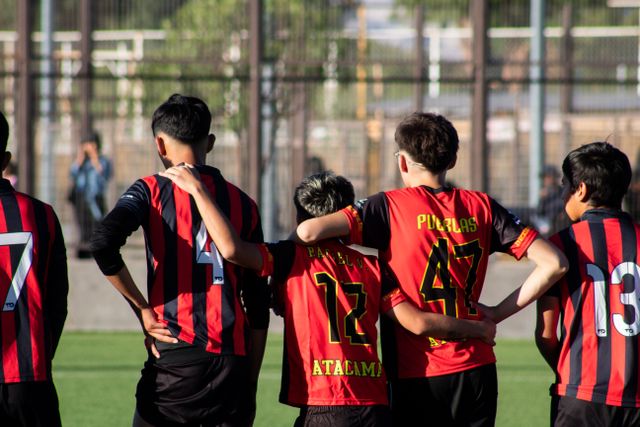
A useful jacquard vs printed sports jerseys trial uses the actual club colors, artwork and intended garment size. Review the knit sample and the print strike-off, which is a small print made on the production fabric. Use the same lighting and check both at a distance and up close. If one motif only shows clearly under strong directional light, check it under the conditions where players and supporters will see it.
- Approve the fabric and pattern. For jacquard, record the yarn colors, repeat size, intended face and motif placement. For print, approve the base fabric, artwork version and panel layout.
- Check the complete garment. Inspect neck, shoulder and side seams, sponsor contrast and number legibility. Wear the sample and look for changes in the pattern or color when the fabric stretches.
- Recheck after washing. Review shade, surface texture, seam alignment and applied decoration. Use physical color references to compare changes, and retain a signed reference through pre-production sample approval.
For a fair jacquard vs printed sports jerseys fit comparison, record any differences in the garment cut, fabric weight and stretch. A difference in shoulder mobility may come from the pattern even when the fabric and graphics are the most visible differences.
Frequently Asked Questions
Can you tell jacquard vs printed sports jerseys by looking at the inside?
The reverse can offer clues. A knitted motif may have a corresponding stitch or yarn pattern inside, while a printed design may be more visible on the face. Print penetration and knit backing vary, so use the fabric specification to confirm how the design was made.
Can you sublimate on jacquard fabric?
Yes, if the jacquard base is compatible with sublimation. A light polyester jacquard can be a useful starting point. Print a strike-off first: texture, sheen and the original yarn color can affect how the artwork looks.
Which is better for a small club order?
A printed option on an available base fabric is often a practical starting point, especially if the club needs player names or several colorways. Stock jacquard can also work if the club wants texture and the existing fabric fits the brief. When pricing jacquard vs printed sports jerseys, ask for a quote that includes any fabric minimum and likely reorder quantities.
Should care instructions differ for jacquard vs printed sports jerseys?
Set care instructions for the actual fabric, trims and decorations. A jacquard jersey and a sublimated jersey can have similar care instructions, while a heat-applied name or crest may need a different wash or drying setting. Confirm the instructions on the finished product.
Choosing the Right Jersey for Your Design
To decide between jacquard vs printed sports jerseys, identify the feature the design cannot lose. If it is a texture the wearer should feel, request a knit sample. If it is precise artwork or easy personalization, request a printed sample. If the jersey needs both, specify which details belong in the fabric and which can be added later. Share your artwork, quantities and a reference garment with BUSHI Sports® during fabric sourcing and sample development.
To discuss your sample or custom order, contact BUSHI Sports® through the contact page, send details by WhatsApp, or email info@bushisports.com. You can view the company location on Google Maps or connect on LinkedIn. Follow BUSHI Sports® on Instagram, Facebook, X, Threads, Pinterest, TikTok, YouTube and Medium for product and design updates.