Sublimation vs cut-and-sew is an important product-development decision for sportswear brands, clubs, retailers, and private label buyers. The two approaches can produce professional jerseys, activewear, tracksuits, training tops, shorts, and fanwear, but they solve different design and manufacturing problems.
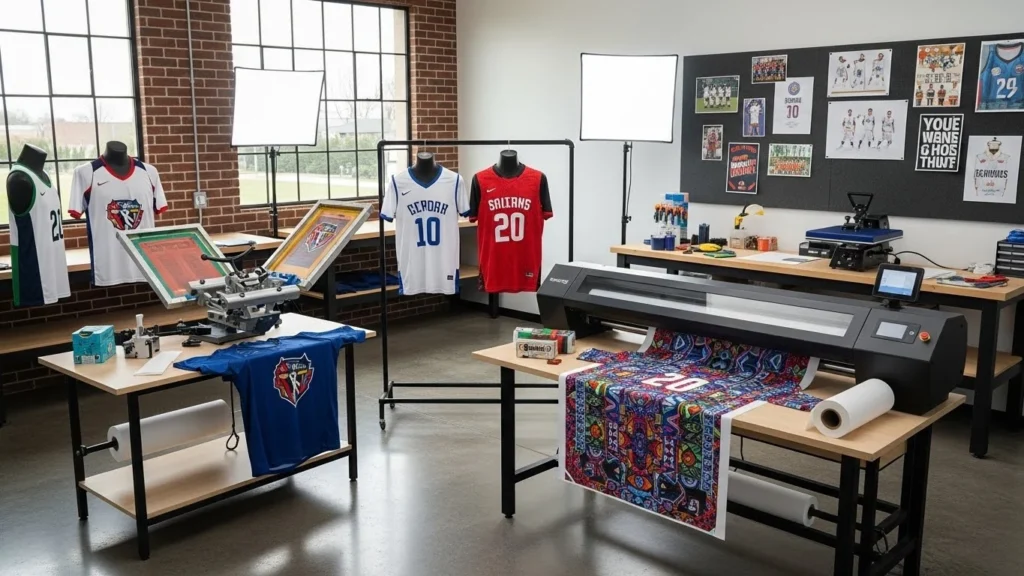
Sublimation uses heat to fix disperse dye into compatible polyester material. The artwork becomes part of the fabric, allowing gradients, photographs, tonal graphics, sponsor logos, names, numbers, and all-over patterns without adding a heavy surface layer.
Cut-and-sew describes a garment-construction approach rather than one printing process. Separate fabric panels are cut and sewn together to create colour blocking, texture changes, contrast sections, ventilation zones, or a mixed-material design. The panels may be solid dyed, sublimated, screen printed, embroidered, or decorated through heat transfer.
This distinction matters. Sublimation vs cut-and-sew is not always a strict either-or choice. A cut-and-sew jersey can include sublimated panels, while a largely sublimated garment still requires panels to be cut and assembled. In commercial sportswear, the real comparison is usually between a design created mainly through printed artwork and one created mainly through physically separate fabrics and panels.
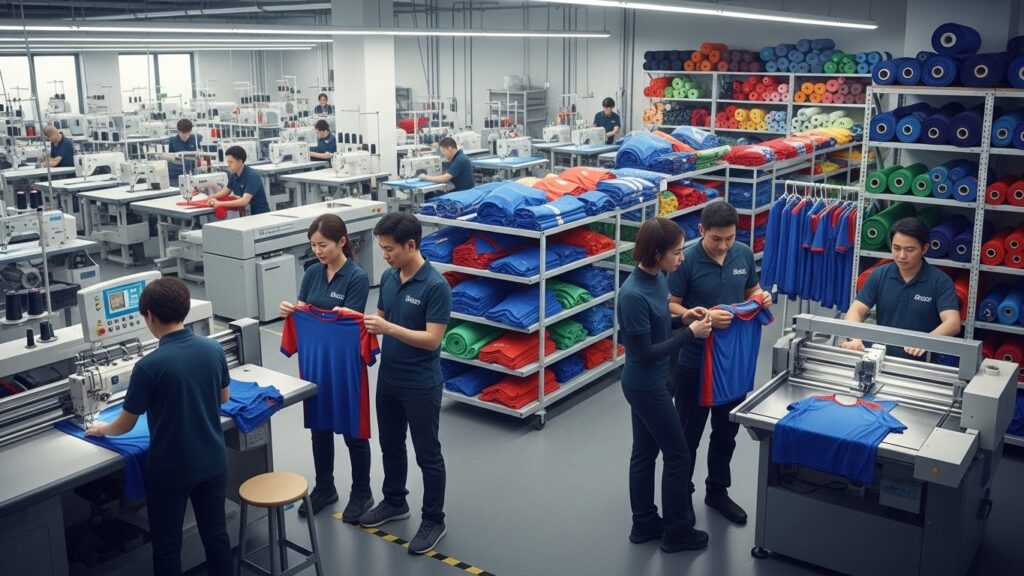
BUSHI Sports® supports custom sportswear manufacturing for brands, clubs, teams, academies, schools, retailers, wholesalers, distributors, and private label buyers. Projects can include fabric selection, sublimation, colour blocking, pattern development, samples, names and numbers, private labels, packaging, and bulk quality control.
This guide explains seven powerful differences that help buyers evaluate sublimation vs cut-and-sew before approving a custom sportswear collection.
“Printed design should control visual complexity, while physical panels should provide genuine performance, structure, or construction value.”
Quick Answer
Sublimation is usually better for complex all-over graphics, gradients, individual names and numbers, lightweight match jerseys, and designs requiring many colours without additional stitched panel lines.
Cut-and-sew is usually better when the garment needs physical colour blocks, different fabric textures, targeted mesh ventilation, contrast panels, premium structure, or branding that should remain consistent without relying entirely on printed artwork.
The strongest sublimation vs cut-and-sew strategy often combines both approaches. A jersey may use sublimated front and back panels, mesh side inserts, contrast shoulder fabric, an embroidered crest, and heat-applied sponsor marks.
Sublimation vs Cut-and-Sew Comparison
| Requirement | Sublimation-led construction | Cut-and-sew-led construction |
|---|---|---|
| Main design method | Printed colour and artwork on polyester panels | Separate fabric panels create physical design lines |
| Colour complexity | Strong for gradients, patterns, photographs, and many colours | Strong for defined colour blocks and mixed materials |
| Added seams | Standard garment seams | Additional design panels can increase seam count |
| Fabric flexibility | Best with compatible polyester or polyester-rich material | Can combine several compatible fabrics |
| Personalization | Names and numbers can be integrated into each print file | Usually requires separate transfer, embroidery, or printing |
| Ventilation mapping | Printed appearance does not create real airflow zones | Mesh and lighter fabrics can be positioned where needed |
| Minimum order impact | Digital printing can support smaller customised runs | Custom-dyed panels and multiple materials may raise minimums |
| Main quality risk | Shade, heat marks, ghosting, migration, and panel alignment | Panel mismatch, seam distortion, shade variation, and excess bulk |
Difference 1: Design Freedom in Sublimation vs Cut-and-Sew
The first sublimation vs cut-and-sew difference is how the visual design is created. This sublimation vs cut-and-sew choice determines whether visual complexity comes mainly from printed artwork or physical panel construction.
Sublimation can place almost unlimited printed detail across a polyester garment. Designers can use:
- Gradients
- Tonal patterns
- Photographic elements
- Camouflage
- Geometric graphics
- Cultural motifs
- Player names and numbers
- Multiple sponsor logos
- Colour transitions across panels
The number of printed colours usually does not create the same setup increase as traditional spot-colour printing. However, colour management, artwork preparation, strike-offs, printer profiles, transfer paper, ink, heat, and fabric selection still affect quality.
Cut-and-sew creates design through physical construction. A navy shoulder section, white side panel, red sleeve insert, or mesh back is a separate piece of fabric rather than a printed illusion. This gives the garment visible structure and can create a premium athletic appearance.
The trade-off is complexity. Every additional panel requires:
- Pattern development
- Grading
- Marker planning
- Cutting
- Notching
- Bundling
- Seam matching
- Sewing
- Inspection
Curved or narrow inserts can increase labour and make bulk consistency harder. Small panels may twist during sewing, and several colour-block sections can make alignment differences more visible.
For designs with complex visual storytelling, sublimation is often more efficient. For bold and simple colour blocking, cut-and-sew can create stronger physical definition.
The BUSHI Sports® guide on cultural soccer kit design explains how colours, symbols, patterns, and local identity can be translated into original teamwear graphics.
Difference 2: Fabric and Performance Options
The second sublimation vs cut-and-sew difference is material flexibility. A valid sublimation vs cut-and-sew comparison must identify every fabric used in the final garment.
Sublimation works primarily with compatible polyester because disperse dye is fixed into the fibre through heat. A sublimated garment can still use several polyester structures, including:
- Interlock
- Micro-mesh
- Bird-eye mesh
- Piqué
- Stretch polyester
- Polyester-spandex
- Brushed polyester
- Lightweight jersey knit
The artwork can continue across different polyester panels, but the same printed colour may not appear identical on every construction. Open mesh, compact interlock, brushed fabric, and stretch jersey reflect light differently.
Cut-and-sew offers broader visual and tactile combinations because different panels can use different compatible materials. A garment may include:
- Stable interlock across the chest
- Ventilated mesh across the back
- Stretch side panels
- Ribbed collars and cuffs
- Reinforced shoulder fabric
- Woven pockets
- Brushed internal panels
- Elastic or binding trims
The fabrics must work together. Differences in stretch, recovery, shrinkage, GSM, thickness, colour, and seam behaviour can create twisting, puckering, uneven hems, or distorted panels.
This is where sublimation vs cut-and-sew becomes a performance-engineering decision. Printed mesh graphics cannot replace actual open-knit ventilation. A printed shadow cannot create reinforcement. A physical stretch insert cannot be simulated through artwork.
Buyers choosing between stable and ventilated polyester constructions can review polyester mesh vs interlock fabric.
Difference 3: Weight, Seams, and Athlete Comfort
The third sublimation vs cut-and-sew difference is garment construction against the body. The sublimation vs cut-and-sew result should therefore be reviewed during movement, not only on a flat table.
Sublimation adds very little surface bulk because the colour is fixed into the polyester rather than attached as a thick layer. This makes it suitable for:
- Lightweight match jerseys
- Running tops
- Cycling apparel
- Basketball uniforms
- Training shirts
- Hot-weather sportswear
A sublimated design does not require extra seams simply to change colour. One panel can move from dark to light, include several patterns, or display multiple sponsor marks without being divided into separate pieces.
Cut-and-sew colour blocking can increase seam count. Additional seams may add:
- Thread and seam allowance
- Local thickness
- Friction points
- Sewing time
- Potential failure points
- Weight
- Inspection requirements
Those seams are not automatically negative. They can shape the garment, improve fit, hold pockets, create ventilation, support articulation, or strengthen high-stress areas.
A side panel can help shape the torso. A gusset can improve movement. A curved knee panel can support articulation. A mesh insert can provide genuine airflow rather than simply creating a ventilated appearance.
The correct seam type and placement matter. Flatlock, overlock, coverstitch, bonded seams, and standard lockstitch constructions create different bulk, extension, strength, and production requirements.
For extreme heat, printed appearance should not be confused with real ventilation. The BUSHI Sports® guide on sportswear for extreme heat explains why airflow, fabric structure, fit, moisture transfer, colour, and layering must be considered together.
Difference 4: Colour Accuracy and Bulk Consistency
Colour control is a major sublimation vs cut-and-sew difference. The sublimation vs cut-and-sew approval process should use physical printed and dyed references under consistent lighting.
In sublimation, shade depends on:
- Artwork colour values
- Printer profile
- Printer condition
- Ink
- Transfer paper
- Temperature
- Pressure
- Dwell time
- Fabric whiteness
- Fabric finish
- Production lot
The same digital colour may appear different on interlock and mesh because the surfaces reflect light differently.
Common sublimation defects include:
- Banding
- Ghosting
- Uneven saturation
- Heat marks
- White gaps near seams
- Incorrect gradients
- Colour migration
- Panel-to-panel mismatch
- Shade variation between batches
Cut-and-sew has a different colour challenge. Separate fabrics described as the same navy, green, red, or black may not match because they use different yarns, structures, dye lots, textures, and light reflection.
A rib collar, mesh panel, interlock body, elastic trim, and woven insert can all display one colour differently.
Physical approval is essential for both methods. Buyers should review:
- Printed strike-offs
- Dyed fabric swatches
- Main fabric to mesh shade
- Collar and cuff shade
- Elastic and drawcord colour
- Appearance under daylight-equivalent lighting
- Shade under stretch
- Wet appearance where relevant
- Colour after washing
A digital mockup is not a final colour standard. The approved pre-production garment should show the actual fabric combination and printing process.
Difference 5: Personalization and Reorder Flexibility
The fifth sublimation vs cut-and-sew difference is variable player and product information.
Sublimation can integrate each athlete’s name, number, initials, position, or sponsor directly into the print file. This reduces the need to apply separate number layers after sewing and can keep the garment smooth and lightweight.
This approach is useful for:
- Team uniforms
- Tournament jerseys
- School sports kits
- Esports-style jerseys
- Cycling teams
- Running events
- Limited personalised collections
However, every personalized panel must be connected to the correct player, size, colourway, and garment. A data error can become permanently printed into the fabric.
Names, numbers, and sizes should therefore be controlled through one approved player matrix. The file should clearly identify:
- Player name
- Printed name
- Number
- Jersey size
- Short size
- Sleeve option
- Position
- Goalkeeper or outfield status
- Quantity
- Approval status
Cut-and-sew garments usually add variable details through heat transfer, embroidery, patches, screen printing, or another decoration method. This creates an extra operation but can make late replacements or number changes easier.
A practical sublimation vs cut-and-sew decision should consider reorders. A sublimated replacement requires the correct artwork file, printer profile, fabric, colour standard, pattern version, and player details.
A cut-and-sew replacement requires the correct fabric lots, trims, panels, decoration, construction file, and placement instructions.
The sports uniform size guide explains how player names, numbers, top sizes, bottom sizes, and approvals should be controlled through a final order matrix.
Difference 6: Cost, MOQ, and Production Time
The sixth sublimation vs cut-and-sew difference is manufacturing economics. A fair sublimation vs cut-and-sew quotation must compare the complete approved specification rather than only the base fabric price.
Sublimation Cost Factors
Sublimation cost may include:
- Artwork preparation
- Colour profiling
- Strike-offs
- Ink
- Transfer paper
- Printing
- Heat fixation
- Printed-panel inspection
- Cutting
- Sewing
- Personalization data control
Complex graphics do not necessarily create a major unit-price increase for every extra colour, but artwork, file control, printing coverage, ink consumption, and rejection risk still matter.
Cut-and-Sew Cost Factors
Cut-and-sew cost may include:
- Additional fabric codes
- Custom dyeing
- Extra pattern panels
- Marker planning
- Cutting and bundling
- More sewing operations
- Panel matching
- Seam finishing
- Higher inspection time
- Greater material waste
Minimum order quantity can also change. Sublimation often begins with white polyester and creates the required colour through printing, which may support smaller custom colour runs.
Cut-and-sew may require separate dyed minimums for every fabric and shade. A garment using three custom colours and two fabric structures can require more material commitments than one printed polyester base.
Production time depends on capacity and approvals. Sublimation may require:
- Artwork
- Strike-offs
- Printing
- Fixation
- Cutting
- Sewing
Cut-and-sew may require:
- Lab dips
- Fabric dyeing
- Several material deliveries
- Cutting
- Panel sorting
- Additional assembly work
The BUSHI Sports® sportswear manufacturing cost breakdown and MOQ guide explain how materials, decoration, labour, testing, packaging, and quantities affect quotations.
Difference 7: Durability, Testing, and Quality Control
The seventh sublimation vs cut-and-sew difference is where failure is most likely to occur. The sublimation vs cut-and-sew quality plan should therefore define different checkpoints for printing, cutting, sewing, washing, and inspection.
A sublimated garment may fail through:
- Shade change
- Heat damage
- Migration
- Ghosting
- Incorrect panel printing
- White seam gaps
- Dimensional change
- Incorrect player information
The printed colour usually does not peel like an applied film, but the garment still requires wash, colourfastness, and dimensional testing.
A cut-and-sew garment may fail through:
- Open seams
- Puckering
- Mismatched panel lengths
- Fabric fraying
- Seam slippage
- Twisted construction
- Incompatible shrinkage
- Colour mismatch
- Incorrect panel placement
The quality plan should check:
- Fabric identity and GSM
- Printed or dyed shade
- Stretch and recovery
- Panel dimensions
- Pattern alignment
- Seam strength
- Stitch quality
- Dimensional change
- Colourfastness
- Pilling and snagging
- Names and numbers
- Labels and packaging
The BUSHI Sports® sportswear sample approval checklist provides a complete process for approving materials, measurements, branding, construction, tests, and packaging before bulk production.
Which Method Is Better for Each Product?
| Product | Practical starting point | Main reason |
| Fully customised soccer jersey | Sublimation-led | All-over graphics, sponsors, names, and numbers |
| Premium colour-block polo | Cut-and-sew-led | Physical contrast panels and structured appearance |
| Lightweight running top | Sublimation or hybrid | Low bulk with optional ventilation panels |
| Basketball uniform | Sublimation or mesh cut-and-sew | Depends on graphics and airflow |
| Tracksuit jacket | Cut-and-sew-led | Structure, pockets, ribs, and material combinations |
| Cycling jersey | Sublimation-led | Detailed sponsor graphics and low surface bulk |
| Compression top | Hybrid | Printed graphics plus stretch-mapped panels |
| Goalkeeper jersey | Sublimation-led or hybrid | Complex graphics with selected ventilation |
| Fanwear shirt | Either | Depends on design, price, and perceived value |
| Training jacket | Cut-and-sew-led | Fabric blocking, reinforcement, and functional details |
Practical Verdict
Sublimation is usually better for detailed graphics, gradients, all-over colour, variable player information, lightweight polyester garments, and smaller custom colour runs.
Cut-and-sew is usually better for physical colour blocking, mixed fabrics, premium structure, functional ventilation, reinforcement, pockets, and tactile design.
The strongest sublimation vs cut-and-sew product is often a hybrid. Brands should select each method according to what must be printed and what must be physically engineered into the garment.
Quality-Control Checklist
| Inspection area | Sublimation-led control | Cut-and-sew-led control |
| Artwork | Scale, bleed, colour profile, placement | Panel shape and colour-block proportion |
| Fabric | Polyester compatibility and heat response | Compatibility between all fabrics |
| Colour | Strike-off, saturation, and panel matching | Lab dip, dye lot, and trim matching |
| Cutting | Printed-panel registration | Grain direction, notches, and panel identity |
| Sewing | Pattern alignment and white-gap control | Seam matching, feed, and puckering |
| Fit | Heat-related dimensional change | Added seams and mixed-stretch behaviour |
| Washing | Colour, dimensions, and print stability | Shrinkage, seam shape, and shade |
| Personalization | Correct file, player, size, and number | Correct separate decoration and placement |
| Bulk control | Printer, heat settings, and retained sample | Fabric lots, operation sequence, and retained sample |
Questions to Ask a Manufacturer
Use these sublimation vs cut-and-sew questions before approving a quotation:
- Which design elements will be printed and which will be separate panels?
- What fabric is proposed for each panel?
- Are all fabrics compatible in stretch, shrinkage, and care?
- Will player names and numbers be integrated or applied later?
- What physical colour references will be approved?
- What MOQ applies to every fabric and colour?
- How will printed or colour-blocked panels align across sizes?
- Which seam-strength and wash tests will be performed?
- Will the PP sample use the final production materials?
- Can any fabric, print setting, or panel construction change without written approval?
Common Buying Mistakes
Treating Cut-and-Sew as a Printing Method
Cut-and-sew is a construction approach. The panels may still need dyeing, sublimation, embroidery, screen printing, or heat transfer.
Assuming Sublimation Removes Sewing
Sublimated panels still have to be cut and assembled into a garment.
Adding Too Many Physical Panels
Excessive colour blocking can add cost, weight, seams, and inconsistency without improving function.
Using Printed Mesh Effects Instead of Real Ventilation
A printed mesh pattern changes appearance, not fabric airflow.
Approving Only a Digital Mockup
The buyer must review actual fabric, colour, seams, fit, print, and washing performance.
Ignoring Reorder Requirements
Replacement products require retained artwork, pattern files, materials, colour standards, and process settings.
Why Work With BUSHI Sports®?
BUSHI Sports® supports sublimation vs cut-and-sew development for sports uniforms, activewear, tracksuits, running products, compression wear, jackets, shorts, and fanwear.
Support can include:
- Product and design review
- Fabric and mesh selection
- Sublimation artwork
- Colour-block pattern development
- Men’s, women’s, youth, and unisex patterns
- Names, numbers, sponsors, and crests
- Size sets and PP samples
- Testing coordination
- Private labels and packaging
- Bulk inspection
- International order management
A complete brief should include the product, design reference, sport, climate, fit, panel plan, fabrics, graphics, names and numbers, sizes, quantity, tests, target price, and delivery date.
Frequently Asked Questions
What is the main difference in sublimation vs cut-and-sew?
Sublimation creates colour and graphics by fixing dye into compatible polyester. Cut-and-sew creates the garment and its physical design through separately cut fabric panels that are sewn together.
Is a sublimated jersey still cut and sewn?
Yes. Sublimated fabric panels are normally printed, cut, and then sewn into the final garment. The comparison refers to whether the main design comes from printing or separate colour and material panels.
Which method is better for team jerseys?
Sublimation is usually better for complex all-over graphics, sponsors, names, and numbers. A hybrid construction can add real mesh or contrast panels where required.
Which option is more durable?
Both can be durable. Sublimation avoids surface peeling, while cut-and-sew can create robust physical colour blocking. Durability depends on fabric, heat, seams, thread, washing, and production control.
Which method costs less?
The answer depends on artwork, panel count, materials, quantities, custom colours, personalization, sewing operations, and testing. Sublimation is often efficient for complex printed designs, while simple cut-and-sew colour blocking can be economical at suitable quantities.
Can sublimation and cut-and-sew be combined?
Yes. A garment can use sublimated body panels, cut-and-sew mesh inserts, contrast sleeves, an embroidered patch, and heat-applied sponsor logos.
Which option is better for small custom orders?
Sublimation may support smaller custom-colour runs because designs can be printed onto compatible white polyester. The actual MOQ depends on the manufacturer, fabric, product, and order.
What should be approved before bulk production?
Approve every fabric code, panel, colour, artwork file, print setting, measurement, seam, name, number, label, test result, packaging detail, and final PP sample.
Conclusion
Sublimation vs cut-and-sew should be decided through design complexity, fabric performance, comfort, colour control, personalization, cost, MOQ, durability, and quality risk.
Sublimation is normally the stronger choice for all-over artwork, gradients, multiple sponsors, integrated names and numbers, and lightweight polyester garments. It creates visual complexity without adding separate design seams.
Cut-and-sew is normally the stronger choice for real colour blocking, mesh ventilation, stretch mapping, reinforcement, pockets, structured details, and mixed-fabric designs.
The most effective sublimation vs cut-and-sew strategy often combines both methods. Printed elements should handle visual storytelling and personalization, while physical panels should provide genuine performance or construction value.
BUSHI Sports® supports sublimation vs cut-and-sew projects through fabric sourcing, pattern development, sublimation, colour blocking, sampling, personalization, testing coordination, private labels, packaging, quality inspection, and international bulk manufacturing.
To discuss a custom sportswear project, email info@bushisports.com, message BUSHI Sports® on WhatsApp at +92 348 4018 578, or submit requirements through the contact page.