What Is Tricot Fabric? Properties and Sportswear Uses
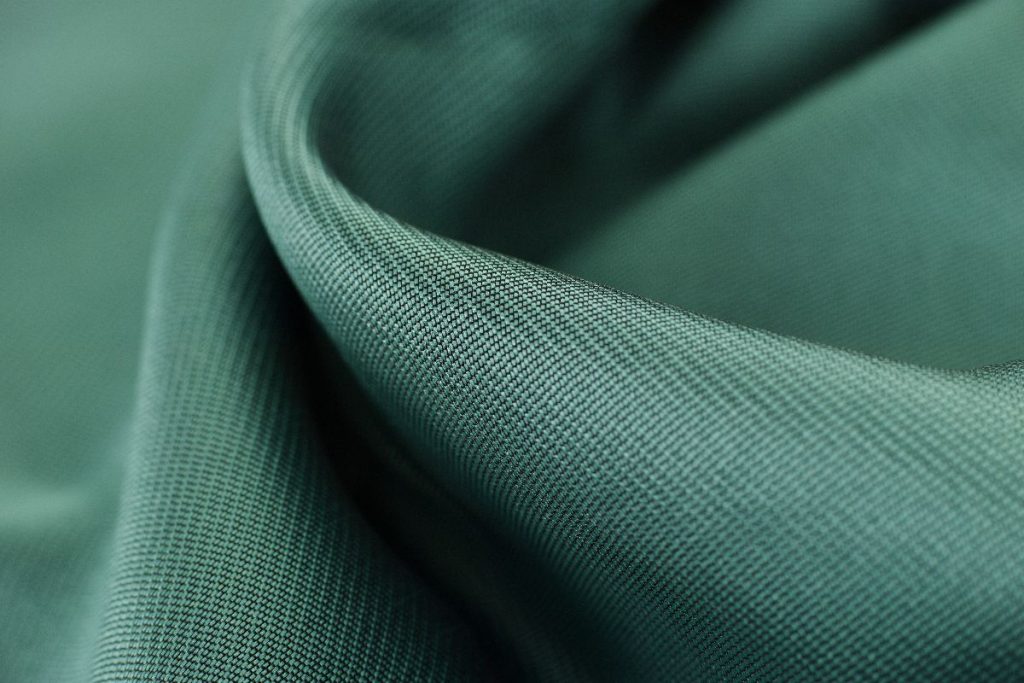
Tricot fabric is a warp knit commonly made from fine synthetic filament yarns such as polyester or nylon. A typical tricot has fine lengthwise columns of loops on its face and subtle crosswise ribs on the reverse. In sportswear, it can form the body of a track jacket, sit inside a running short as a lining or provide stretch and coverage in swimwear. Each application calls for a different fabric specification. CottonWorks’ definition of tricot and the Pratt Institute’s textile reference explain the structure and common uses.
If a supplier offers tricot fabric, start by asking what job it was designed to do. A stable polyester tricot for a team warm-up suit and an elastic nylon blend for a swimsuit may share the same construction family while differing in weight, stretch, coverage and feel.
How Tricot Fabric Is Made
Tricot fabric is knitted from multiple yarns fed lengthwise into the machine. Guide bars move the yarns across neighboring needles so the loops connect into a continuous sheet. The visible lengthwise columns of loops are called wales. On many tricots, the links between columns create a crosswise texture on the reverse. CottonWorks’ introduction to knitting explains how this differs from weft knitting, where yarn is fed across the fabric to form rows of loops.
The word “warp” refers to the direction in which the yarns are fed. Tricot fabric is still knitted: its yarns form connected loops, while woven fabrics interlace lengthwise and crosswise yarns. A smooth tricot and a stretch woven may look similar on a hanger but require different pattern allowances, seams and finishing. Confirm the construction and fabric code when ordering samples.
7 Essential Facts About Tricot Fabric
1. The face and reverse can serve different purposes
Tricot fabric often has a smooth face, but the reverse can be more textured or have a different finish. A track jacket may use a smooth outer face and a brushed inner surface for a warmer feel. A lining may need a smooth surface where it touches the wearer or another garment layer. Brushing, sheen and softness depend on the fabric and how it was finished.
Mark the approved face on the reference swatch. If the two surfaces look similar under factory lighting, include the face direction in the cutting instructions. For a coordinated set, compare the jacket and pants side by side. A change in panel orientation can affect how light reflects off the fabric, even when the pieces came from the same roll.
2. Fiber content and stretch are separate decisions
Polyester tricot fabric can be an option for team apparel, linings or printed garments. Nylon tricot fabric is another candidate for smooth linings and close-fitting products. Either fiber can be combined with elastane. For example, KARL MAYER’s elastic locknit sample uses nylon and elastane in a dense tricot developed for applications that include sportswear and swimwear.
Some tricot fabric has limited stretch. Other versions extend in both directions, with different levels of resistance and recovery. For a fitted garment, ask how far the material stretches lengthwise and crosswise, how much force is needed to reach the target extension and how well it returns to its original dimensions. Treat fiber selection for activewear and stretch in both fabric directions as separate decisions. The right fiber blend can still stretch in the wrong direction for the pattern.
3. Weight, airflow and drying need separate checks
GSM measures mass per square meter. It helps compare tricot fabric options, but it does not show how thick, opaque or open the material is. Two samples at a similar weight can feel different if one is compact and the other has a more open construction. A Hong Kong Polytechnic University study of moisture management in tricot shows how changes in the knit structure can affect air and liquid transport.
Use a wear trial to assess wet cling, heat buildup, coverage and drying. If you need to substantiate an airflow claim, ASTM D737 provides a method for measuring air permeability. AATCC TM195 addresses liquid moisture management. Assess the layers together in a lined garment: the airflow of one loose swatch does not tell you how the complete product will feel.
4. Track jackets and warm-up pants need enough body
A relatively stable tricot fabric can suit custom tracksuits when the design calls for a smooth exterior, defined panels and a soft interior. On the jacket, check how the knit behaves beside the front zipper and at pocket openings. On the pants, test knee and seat recovery after repeated bending. A fabric that hangs well on the jacket may still bag at the knee or show pocket outlines on the pants.
For an outdoor warm-up set, establish how much protection the team needs. If the brief calls for wind or rain resistance, compare the tricot option with a suitable woven shell and review how the outer fabric, lining and trims work together. The fabric name alone does not establish weather performance.
5. A good lining moves with the outer garment
Light tricot fabric can be used as a lining in jackets, shorts or selected fitted garments. In custom running shorts, for example, a lining can provide coverage with little bulk. A tight liner can still shorten the stride even when the outer short fits correctly. Run, lunge and sit in the sample, then check whether the liner pulls at the leg opening or catches under the outer fabric.
A smooth tricot lining may help a jacket slide over a base layer. If ventilation is the priority, compare it with a more open mesh liner. Consider where the lining sits, how much of the body it covers and which parts of the garment need to move independently.
6. Swimwear needs wet fit, recovery and coverage
Elastic tricot fabric is a candidate for swimwear shells and linings, but test the layers together. Check opacity when wet and stretched, whether the lining stays in position and how the straps, seams and leg openings recover. Light colors and areas under the most tension deserve separate attention.
For custom swimwear development, define whether the product is for regular pool training or occasional recreational use. AATCC TM162 addresses colorfastness in chlorinated pool water. If the product also needs to hold its fit after repeated pool exposure, assess stretch and recovery separately.
7. Smooth fabric still needs a decoration trial
A smooth polyester tricot fabric may suit sublimation if the exact material and finish are compatible with the process. Nylon blends and heat-sensitive finishes may need a different decoration method or different process settings. Check the approved design at full size on the production fabric, then review it after stretching and washing. Changes in sheen, press marks or print distortion may be more obvious on a complete garment than on a small test piece.
For a chest crest, try the actual logo and backing on the jacket before approval. On a light knit, dense embroidery can pull the fabric inward or add stiffness. When choosing between direct embroidery and embroidered patches, consider the weight of the finished logo as well as how it looks.
Choosing Tricot Fabric by Garment
| Garment | Tricot option to sample | What should decide |
|---|---|---|
| Track jacket | Stable polyester tricot with the intended inside finish | Zipper appearance, pocket stability and comfort over a base layer |
| Warm-up pants | Tricot with enough extension and recovery for the pattern | Knee bagging, seat coverage and pocket support |
| Running-short liner | Lightweight tricot with comfortable stretch and seams | Stride, wet cling and coverage |
| Swimwear shell or liner | Elastic tricot suited to the role of each layer | Wet opacity, recovery and performance after pool exposure |
| Fitted panel or insert | Tricot with measured stretch in the required directions | Seam extension, movement and compatibility with neighboring panels |
For a relaxed training T-shirt, a weft-knit jersey or interlock may offer the drape you want. If a specific panel needs more ventilation, compare open knits using airflow and coverage tests. The same reasoning applies when combining polyester mesh and interlock in a team jersey: a smooth body and an open panel can serve different purposes in one garment. Use tricot fabric where it meets a defined need.
How to Specify and Test Tricot Fabric
A tricot fabric specification should identify the exact supplier code, fiber percentages, finished weight and usable width. State whether the fabric is the shell, liner or insert, and mark the approved face and panel orientation. Record the expected hand feel, shade, finish and any measurable targets for extension, recovery or coverage. Put these details in the sportswear tech pack and retain a physical swatch.
For a measured stretch comparison, ISO 20932-1 describes strip tests for fabric elasticity and related properties. Agree on the direction and test conditions with the lab. In the garment sample, check whether the seam extends enough for the same movement, especially when elastic tricot fabric is joined to a less stretchy outer panel. Choose a sportswear stitching method suited to the seam location and the movement it must allow.
Before production, wash the complete sample and inspect zipper lines, cuffs, waistbands, pocket openings, logos and areas where two fabrics meet. For lined products, look for puckering or pulling where the layers may have changed dimensions differently. Record these checks during pre-production sample approval and request a revised sample if the proposed bulk fabric differs from the approved one.
Frequently Asked Questions
Is tricot fabric knitted or woven?
It is knitted. Tricot is a warp knit formed from connected loops. Some versions feel firm or resemble a woven textile, but their yarns form a different structure.
Is all tricot fabric four-way stretch?
No. Tricot can be engineered for low stretch or for substantial extension in both directions. For fitted sportswear, request measurements in the length and width and check recovery on the finished garment before approving the material.
Is tricot fabric the same as polyester?
No. Tricot describes how the fabric is knitted; polyester is a fiber. A supplier can offer polyester tricot, nylon tricot or a blend containing elastane. The specification should state both the knit structure and the fiber composition.
Can tricot fabric be cut without hemming?
Some tricots are engineered to be left with a raw edge. Check whether the proposed cut edge curls, distorts or deteriorates after stretching and laundering before approving a garment without a conventional edge finish.
Choosing Tricot for Your Next Sportswear Product
Start by defining what the tricot fabric needs to do: hold the shape of a track jacket, line a short comfortably or stretch with a swimsuit. Compare fabrics developed for that role and approve the one that performs in the complete sample. BUSHI Sports® can review material options and garment details through its fabric sourcing and sampling services.
To discuss a sample or custom order, contact BUSHI Sports® through the contact page, share your specifications by WhatsApp, or email info@bushisports.com. You can find the company on Google Maps or connect on LinkedIn. For product and collection updates, follow BUSHI Sports® on Instagram, Facebook, X, Threads, Pinterest, YouTube, TikTok and Medium.