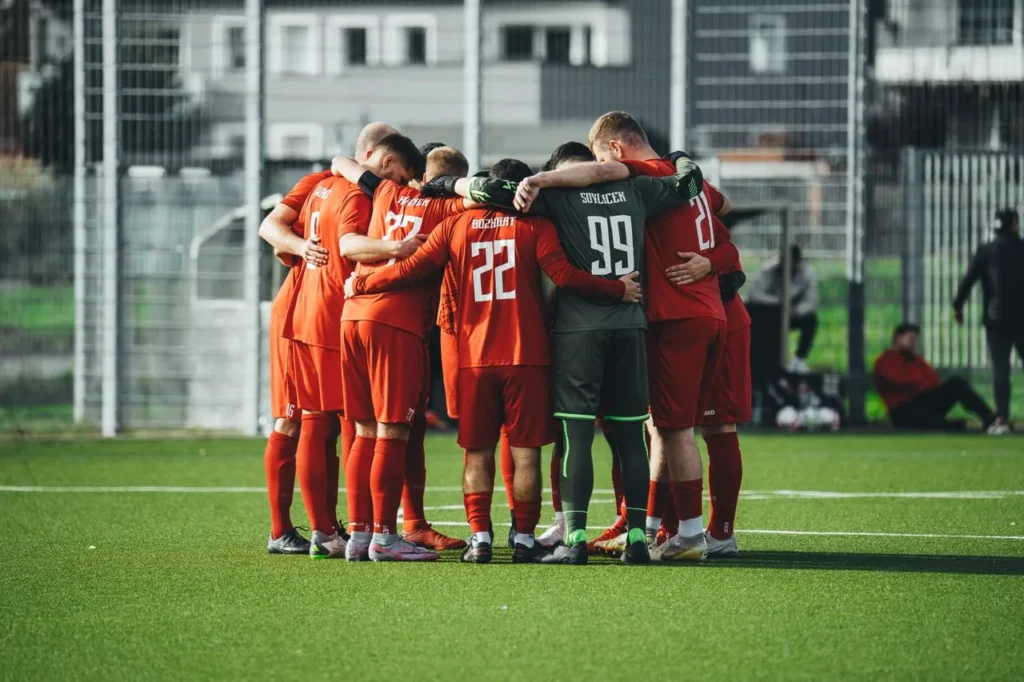
A strong sports club does not rely on one match jersey alone. Players need match kits, training apparel, warm-up gear, travel wear, staff clothing, and sometimes supporter merchandise. When all these items share the same colors, fit direction, logo placement, and quality standard, the club looks more organized and professional.
That is the real purpose of a teamwear collection. It turns separate clothing items into one complete apparel system for the club.
For growing clubs, academies, schools, universities, and teamwear businesses, a well-planned teamwear collection can improve brand identity, simplify ordering, support sponsor visibility, and make seasonal reorders easier. It also helps players feel part of one organized program, whether they are wearing a match kit, training top, tracksuit, or travel polo.
A complete teamwear collection should be practical, not complicated. The goal is to create the right product mix for the club’s sport, climate, budget, age groups, branding needs, and season schedule. A football club may need home and away kits, training tops, rain jackets, and tracksuits. A volleyball club may focus more on lightweight jerseys, shorts, warm-up tops, and staff polos. A multi-sport academy may need a full system that works across several teams.
BUSHI Sports® supports clubs, academies, brands, retailers, and distributors with custom sports uniforms, activewear, tracksuits, training apparel, gloves, casual wear, and private-label sportswear manufacturing. This guide explains how to build a complete teamwear collection from concept to production.
What Is a Teamwear Collection?
A teamwear collection is a coordinated range of custom sports apparel designed for a club, academy, team, or sports organization. It normally includes match uniforms, training wear, warm-up apparel, travel clothing, staff garments, and optional merchandise.
The difference between a single uniform order and a teamwear collection is planning. A single uniform order solves one need. A teamwear collection creates a consistent apparel identity across the whole club.
A good collection answers questions such as:
- What do players wear on match day?
- What do they wear during training?
- What do coaches and staff wear?
- What apparel is used for travel and presentations?
- Which items carry sponsor logos?
- Which items can be sold to supporters?
- How will sizes be collected and reordered?
- Which fabrics and colors must remain consistent?
A teamwear collection does not need to be large in the beginning. Many clubs start with four or five core products, then expand into staff wear, fan merchandise, and seasonal apparel once the design system is approved.
“A club uniform shows who is playing. A complete teamwear collection shows how organized the club is.” — BUSHI Sports®
Why Sports Clubs Need a Complete Teamwear Collection
Sports clubs are becoming more professional at every level. Even small clubs now think about branding, sponsor visibility, player presentation, social media content, and long-term apparel consistency.
Youth sports participation also shows why organized apparel planning matters. Project Play reports that in 2023, an estimated 27.3 million U.S. youth ages 6–17 participated on a sports team or took sports lessons after school or on weekends. That represented 55.4% of kids in that age group. More organized participation means more demand for clear, affordable, and repeatable teamwear systems.
At the same time, cost control is important. SFIA reported that 41% of parents cited increased costs as the primary barrier to children participating in sports in its 2025 mid-year participation update. This is why clubs should not build a random collection full of unnecessary products. They should build a smart teamwear collection that balances quality, performance, branding, and affordability.
A complete collection helps a club:
- Keep branding consistent across all teams
- Improve sponsor presentation
- Make players and staff look professional
- Reduce confusion during ordering
- Prepare for home, away, training, and travel needs
- Support future reorders
- Offer merchandise for parents and supporters
- Control sizing and product quality
- Improve visual identity on social media and event photos
The global sports apparel market also continues to expand. Research Nester valued the sports apparel market at USD 280.4 billion in 2025 and projected it to reach USD 572.5 billion by 2035. Clubs that plan their teamwear professionally are part of this wider movement toward better performance apparel and stronger sports branding.
Teamwear Collection Planning Table
| Collection level | Best for | Main products | Key benefit |
|---|---|---|---|
| Starter collection | Small clubs and new teams | Match jersey, shorts, socks, training top | Covers basic match and training needs |
| Standard club collection | Growing clubs and academies | Home kit, away kit, training wear, tracksuit, staff polo | Builds consistent club identity |
| Professional collection | Multi-team clubs and serious academies | Full kits, warm-ups, travel wear, jackets, bags, staff wear, supporter items | Creates a complete apparel system |
| Retail or fan collection | Clubs with supporters or online shops | Replica jerseys, hoodies, polos, caps, casual wear | Adds merchandise and revenue potential |
Step 1: Define the Club Identity Before Choosing Products
Before selecting jerseys, shorts, jackets, or tracksuits, the club should define its visual identity. This is where many teams make mistakes. They start by choosing products, then try to force the logo and colors later.
A better approach is to begin with the club’s identity. The teamwear collection should reflect the club’s colors, badge, history, playing style, and audience.
Important identity details include:
- Primary club colors
- Secondary and accent colors
- Club badge or crest
- Sponsor logos
- Typography style
- Pattern direction
- Home and away color rules
- Youth and adult team consistency
- Staff apparel style
- Supporter merchandise direction
If the club already has a strong identity, the teamwear should protect it. If the club is new, the collection is a good opportunity to build a visual system from the beginning.
For example, a club with red and black colors may use red as the home-kit base, black as the away-kit base, and white as the accent color across training wear, jackets, and staff apparel. This makes the collection look connected without making every product identical.
Step 2: Start With Match-Day Kits
Match-day uniforms are the heart of every teamwear collection. These are the garments players wear when representing the club in competition.
A basic match kit usually includes:
- Jersey
- Shorts
- Socks
- Optional compression base layer
- Optional goalkeeper or specialist kit
- Optional warm-up top
The match kit must be comfortable, durable, and suitable for the sport. A soccer uniform needs breathable fabric, freedom of movement, and clean number placement. A basketball uniform needs lightweight construction and armhole mobility. A cricket uniform may require longer wear comfort and discipline-specific design details. A volleyball uniform may need flexible construction for jumping, diving, and upper-body movement.
BUSHI Sports® manufactures sport-specific uniforms, including soccer uniforms, basketball uniforms, volleyball uniforms, cricket uniforms, and many other custom teamwear products.
For many clubs, sublimation is a strong option because club colors, sponsor logos, player names, and numbers can be integrated into the fabric design. The article on sublimation vs cut-and-sew explains how different production methods affect design, durability, seams, and customization.
Step 3: Add Training Wear That Players Actually Use
Training apparel is often worn more frequently than match kits. That makes it a major part of the teamwear collection, not an afterthought.
Training products may include:
- Training T-shirts
- Sleeveless training tops
- Training shorts
- Running shorts
- Compression shirts
- Compression tights
- Lightweight drill tops
- Warm-up tops
- Training tracksuits
The fabric should support movement and sweat management. Lightweight polyester, mesh, interlock, and stretch blends are commonly used depending on the sport and climate. Clubs training in hot weather may prefer breathable mesh panels and lighter GSM fabrics. Clubs training in cooler conditions may need tracksuits, sweatshirts, hoodies, or jackets.
A practical collection does not need every training product from day one. For most clubs, a training top and training short are enough to begin. Later, the collection can expand into custom tracksuits, running shorts, compression shirts, and compression tights.
The key is consistency. Training wear should look like part of the same club system, even if it uses simpler graphics than the match kit.
Step 4: Build Warm-Up and Sideline Apparel
Warm-up and sideline apparel helps players look organized before matches, during substitutions, and during travel to tournaments. This part of the teamwear collection is especially useful for clubs that care about presentation.
Common warm-up and sideline items include:
- Tracksuit jackets
- Tracksuit pants
- Hoodies
- Sweatshirts
- Lightweight jackets
- Rain jackets
- Polo shirts
- Jogger pants
These products should be comfortable enough for travel and durable enough for repeated use. They also offer strong sponsor and club-branding opportunities because they are often worn outside match play.
A custom outerwear manufacturing approach is helpful when clubs need jackets, warm-up layers, or travel apparel. For casual clubwear, BUSHI Sports® also manufactures custom casual wear such as T-shirts, polos, sweatshirts, joggers, hoodies, and jackets.
Warm-up apparel should not compete visually with the match kit. It should support the same identity in a simpler and more wearable way.
Step 5: Include Staff and Coach Apparel
Coaches, managers, trainers, physios, and club staff are part of the visual identity too. If players wear professional teamwear but staff wear random clothing, the club presentation becomes inconsistent.
Staff apparel can be simple but should look intentional.
Useful staff items include:
- Polo shirts
- Training tops
- Tracksuit jackets
- Lightweight jackets
- Hoodies
- Caps
- Travel pants
- Event T-shirts
Staff apparel usually needs a cleaner design than player uniforms. A polo shirt with the club crest and sponsor logo may work better than a heavily patterned jersey. Jackets and tracksuits are also useful because staff often spend long periods on the sideline.
For clubs with academies, consistent staff apparel also improves trust with parents and sponsors. It makes the organization look structured, serious, and reliable.
Step 6: Plan Sponsor Placement Early
Sponsor logos should never be added at the last minute. They affect layout, printing method, color contrast, garment balance, and approval timelines.
A teamwear collection may include sponsor placement on:
- Front chest
- Back upper panel
- Sleeve
- Shorts
- Tracksuit jacket
- Training top
- Staff polo
- Fan merchandise
- Warm-up top
Each sponsor logo should have a confirmed file format, color version, size, and placement. The club should also confirm whether sponsor logos need approval before production.
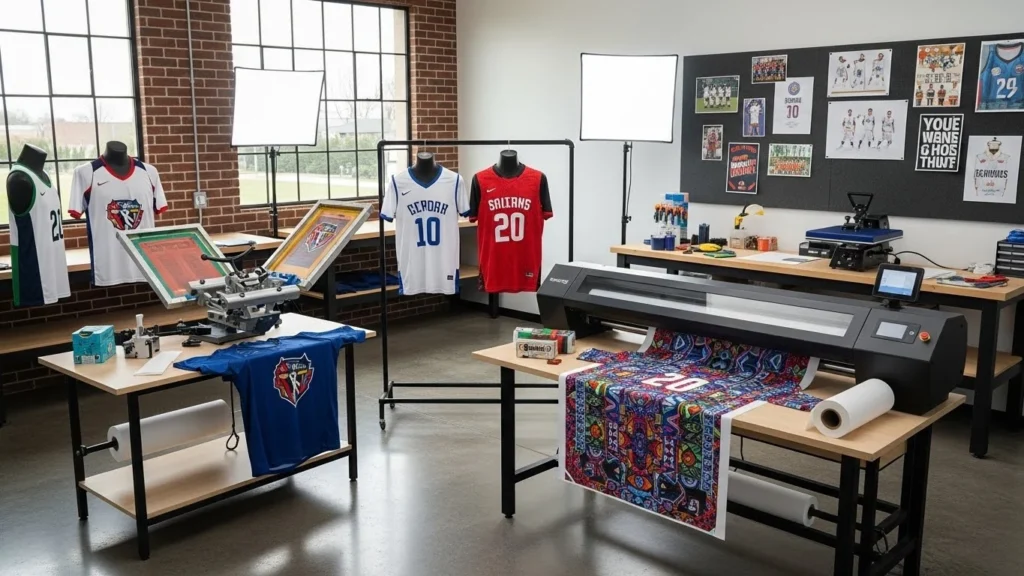
Sublimation, heat transfer, screen printing, embroidery, woven patches, and silicone badges can all be used depending on the product and fabric. For a deeper comparison, clubs can review screen printing vs heat transfer, sublimation vs embroidery, direct embroidery vs embroidered patches, and silicone badges vs woven patches.
A sponsor-ready collection protects both the club and the sponsor. Logos appear clearly, the apparel looks professional, and production does not stop because artwork is missing.
Step 7: Choose Fabrics According to Sport and Climate
Fabric selection shapes comfort, durability, printing quality, and price. A teamwear collection should not use the same fabric for every item unless the product requirements are genuinely similar.
Match jerseys usually need breathable, lightweight fabrics. Training apparel may need moisture-wicking performance fabric with good recovery. Tracksuits may use interlock, fleece, or woven shell fabric. Staff polos may use pique, interlock, or polyester blends. Winter jackets may need heavier construction.
Useful fabric decisions include:
- Polyester mesh for breathability
- Polyester interlock for smoother jersey structure
- Polyester-spandex blends for stretch apparel
- Fleece or French terry for hoodies and sweatshirts
- Woven fabric for jackets and some tracksuits
- Rib fabric for cuffs and collars
- Compression fabrics for base layers
The article on polyester mesh vs interlock fabric can help clubs understand common sportswear fabric choices. BUSHI Sports® also provides custom activewear manufacturing for fitness apparel, training wear, gym wear, and performance garments.
Good fabric planning prevents the collection from feeling inconsistent. The match jersey should not feel premium while the training top feels weak or uncomfortable.
Step 8: Control Sizing Before Bulk Production
Sizing is one of the biggest challenges in club apparel. Players often guess their size based on casual clothing, but sportswear fit depends on body shape, fabric stretch, garment cut, and intended use.
A proper teamwear collection should have a size plan before production.
The club should decide:
- Youth and adult size ranges
- Men’s, women’s, and unisex fits
- Slim, regular, or relaxed fit
- Measurement method
- Size chart approval
- Name and number list
- Player-by-player size sheet
- Extra stock for late joiners
- Replacement-size policy
A match jersey may fit differently from a hoodie or tracksuit jacket. Compression products need even more care because they are designed to sit close to the body.
The BUSHI Sports® sports uniform size guide explains how clubs can avoid size mistakes through body measurements, garment charts, sample approval, team-order management, and bulk inspection.
A smart club also orders a few extra common sizes. This helps with new players, damaged garments, or late sponsor changes.
Step 9: Create a Complete Teamwear Collection Plan
Once product types, branding, fabrics, and sizing are clear, the club can create a complete collection map.
| Product | Purpose | Branding level | Priority |
| Home match jersey | Main competition kit | Full club and sponsor branding | Essential |
| Away match jersey | Color alternative | Full club and sponsor branding | Essential for competitive clubs |
| Match shorts | Complete uniform | Club logo and number if needed | Essential |
| Training top | Daily training | Club logo and optional sponsor | Essential |
| Training shorts | Daily training | Club logo | Essential |
| Tracksuit jacket | Warm-up and travel | Club logo and sponsor | High |
| Tracksuit pants | Warm-up and travel | Club logo | High |
| Staff polo | Coaches and managers | Club logo | Medium |
| Hoodie or sweatshirt | Casual clubwear | Club logo or slogan | Medium |
| Fan jersey | Supporter merchandise | Club branding | Optional |
| Jacket | Travel and cold weather | Club logo | Optional |
| Bag or accessory | Club identity extension | Logo placement | Optional |
This table helps the club separate essential products from optional products. It also helps with budgeting because the club can launch in phases rather than ordering everything at once.
Step 10: Prepare a Clear Manufacturing Brief
A teamwear collection needs a clear manufacturing brief. Without it, the manufacturer must guess too many details, and the first sample may not match the club’s expectations.
A good brief should include:
- Club name and sport
- Product list
- Quantity by product
- Size range
- Club logo files
- Sponsor logo files
- Color references
- Fabric preferences
- Design inspiration
- Player names and numbers
- Required delivery date
- Packaging requirements
- Budget range
- Reorder expectations
If the club already has a tech pack, that is even better. If not, a professional manufacturer can often work from reference images, measurements, design ideas, and physical samples.
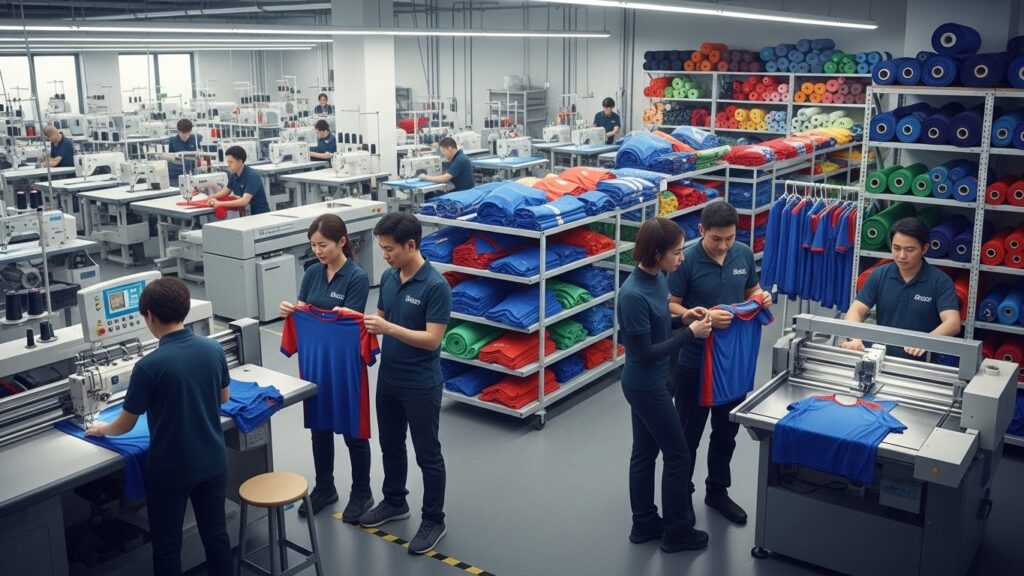
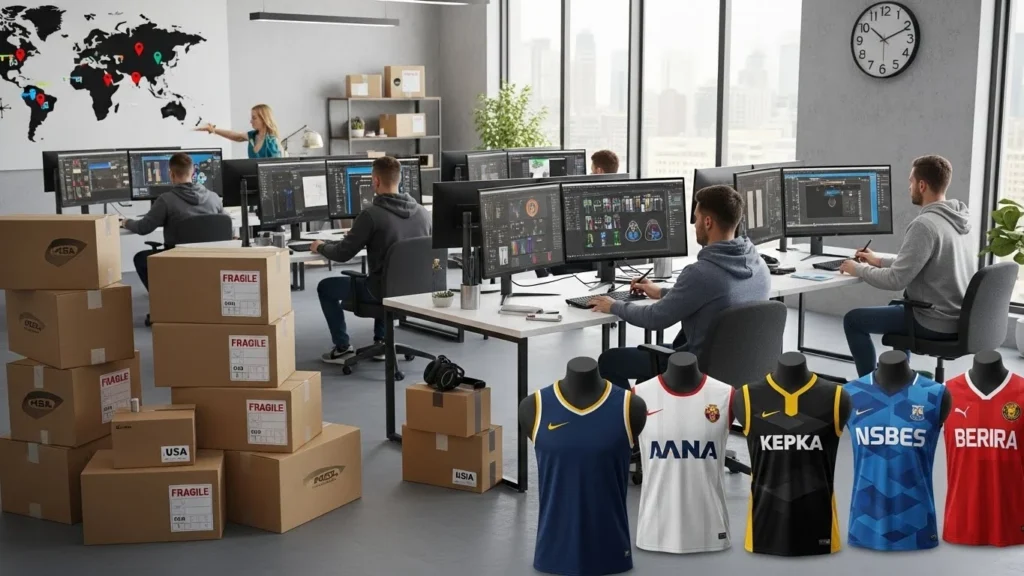
BUSHI Sports® provides sportswear manufacturing services including product development, tech pack and sample review, fabric sourcing, custom printing and branding, cut-and-sew manufacturing, OEM/private-label manufacturing, bulk production, quality control, packaging, and worldwide shipping.
Step 11: Approve Physical Samples Before Bulk Production
A physical sample is important because it shows how the collection will actually look and feel. Digital mockups are useful, but they cannot fully confirm fabric hand feel, fit, stitching, print clarity, logo size, or finishing quality.
Before approving bulk production, check:
- Fabric quality
- Color accuracy
- Fit and measurements
- Logo placement
- Sponsor logo clarity
- Stitching and seam strength
- Hem and collar finishing
- Number and name placement
- Comfort during movement
- Washing behavior
- Packaging details
The BUSHI Sports® sportswear sample approval checklist is useful for reviewing fabric, measurements, stitching, customization, trims, labels, packaging, and final approval notes before production.
For stitching decisions, the article on sportswear stitching types explains how overlock, coverstitch, flatlock, bartack, lockstitch, and other stitching methods affect comfort and durability.
“Approve the product you want repeated, not just the design you like on screen.” — BUSHI Sports®
Budget Planning for a Teamwear Collection
Cost is not only about price per jersey. A complete teamwear collection includes fabric, customization, sampling, printing, stitching, labels, packaging, shipping, and future reorders.
Clubs should plan three levels:
| Budget level | Best choice | Recommended product mix |
| Basic | New or small clubs | Match kit and training top |
| Balanced | Growing clubs | Home kit, away kit, training wear and tracksuit |
| Premium | Established clubs and academies | Full match kits, training range, warm-ups, staff wear, jackets and merchandise |
A club should avoid spending heavily on optional products before the essential items are correct. Match kits and training wear should come first. Warm-ups, staff apparel, casualwear, and supporter merchandise can follow once the club has a stable design system.
The BUSHI Sports® guide to sportswear manufacturing cost breakdown explains how fabric, customization, order quantity, production complexity, packaging, and shipping influence final cost.
Reorders and Seasonal Updates
A teamwear collection should be designed for more than one season. Clubs need extra sizes, replacement items, new-player kits, sponsor updates, and fresh designs for future campaigns.
A good reorder system keeps the following details saved:
- Approved design files
- Fabric references
- Color standards
- Logo placements
- Size chart
- Player-name format
- Number style
- Packaging instructions
- Previous quantity breakdown
- Revision history
This makes the next order faster and more consistent.
Seasonal updates do not always require a full redesign. A club may keep the same base identity and refresh sleeve graphics, accent colors, collar style, or warm-up apparel. This protects brand recognition while giving the club something new each season.
Common Mistakes When Building a Teamwear Collection
Many clubs make teamwear decisions under time pressure. That often leads to unnecessary cost, poor fit, or inconsistent branding.
Common mistakes include:
- Ordering only match kits and forgetting training wear
- Choosing products before confirming club colors
- Using low-resolution sponsor logos
- Not checking size charts properly
- Skipping physical samples
- Mixing too many unrelated fabrics
- Ignoring staff apparel
- Not planning reorders
- Adding sponsor logos too late
- Forgetting youth and adult fit differences
- Ordering no spare sizes
- Choosing price only and ignoring durability
The safest approach is to plan the collection as a system. Every product should have a reason, every logo should have a position, and every size should be recorded clearly.
How BUSHI Sports® Helps Clubs Build Teamwear Collections
BUSHI Sports® is a Sialkot, Pakistan–based custom sportswear manufacturer offering OEM, ODM, private-label, wholesale, and bulk production for global B2B buyers.
The company supports sports clubs, academies, schools, universities, sports brands, retailers, distributors, gyms, and teamwear companies with custom apparel manufacturing.
For a teamwear collection, BUSHI Sports® can support:
- Product development
- Design discussion
- Fabric selection
- Digital mockups
- Physical samples
- Sublimation printing
- Screen printing
- Heat transfer
- Embroidery
- Custom labels
- Private-label packaging
- Bulk production
- Quality inspection
- Worldwide shipping
- Repeat production support
A club can start with a match kit and training set, then expand into tracksuits, polos, jackets, hoodies, fan apparel, and accessories.
BUSHI Sports® also supports related categories such as sports gloves, casual wear, and equestrian gear where relevant for wider club or brand programs.
Copy-Paste Ready Quotations
“A complete teamwear collection should make every player, coach, and staff member look like part of one organized club.”
“Great teamwear is not only about the match jersey. It is about building a consistent apparel system for training, travel, competition, and club identity.”
“The best club apparel programs are built around three things: clear branding, practical product selection, and repeatable manufacturing.”
“A strong teamwear collection helps clubs control quality, improve presentation, protect sponsor visibility, and simplify future reorders.”
Frequently Asked Questions
What is a teamwear collection?
A teamwear collection is a coordinated range of custom apparel for a sports club. It can include match kits, training wear, tracksuits, warm-up tops, staff apparel, travel wear, and supporter merchandise.
What should a sports club order first?
Most clubs should start with match jerseys, shorts, socks, training tops, and training shorts. After that, they can add tracksuits, jackets, staff polos, hoodies, and supporter items.
How many products should be in a teamwear collection?
A starter collection may include 4–5 products. A professional club collection may include 10 or more items, including home kits, away kits, training apparel, travel wear, staff apparel, and fan merchandise.
Which fabric is best for club teamwear?
The best fabric depends on the sport and climate. Polyester mesh, polyester interlock, polyester-spandex blends, fleece, and woven fabrics are commonly used in custom sportswear manufacturing.
Should clubs choose sublimation or embroidery?
Sublimation is often suitable for full-color match kits with names, numbers, sponsor logos, and patterns. Embroidery is useful for polos, jackets, staff apparel, and premium badges. The choice depends on fabric, design, durability, and budget.
Why is sizing important for teamwear?
Incorrect sizing creates player discomfort, replacement costs, and order disputes. Clubs should use a proper size chart, collect player measurements, approve samples, and order extra common sizes.
Can one manufacturer produce the full collection?
Yes. Working with one teamwear supplier can improve color consistency, sizing control, branding alignment, production communication, and seasonal reorders.
Does BUSHI Sports® manufacture custom teamwear for clubs?
Yes. BUSHI Sports® manufactures custom sports uniforms, activewear, tracksuits, gloves, casual wear, outerwear, and private-label sportswear for clubs, academies, teams, brands, retailers, and distributors.
Conclusion
A complete teamwear collection gives a sports club more than uniforms. It creates a full apparel identity for players, coaches, staff, and supporters.
The best collections begin with clear branding, practical product planning, suitable fabrics, correct sizing, sponsor-ready artwork, physical sampling, and a reliable reorder system. Match kits may be the center of the collection, but training wear, warm-ups, travel apparel, staff clothing, and supporter merchandise complete the club’s professional image.
For clubs, academies, schools, universities, teamwear companies, and private-label brands, working with an experienced sports uniform manufacturer can make the process easier and more consistent.
BUSHI Sports® provides custom teamwear, custom sports uniforms, activewear, tracksuits, sports gloves, casual wear, outerwear, OEM sportswear manufacturing, ODM manufacturing, private-label sportswear, bulk production, quality control, packaging, and worldwide shipping.
To build a custom teamwear collection, contact BUSHI Sports® through the contact page, send requirements by WhatsApp, or email info@bushisports.com.
You can also view the BUSHI Sports® location on Google Maps or connect with BUSHI Sports® on LinkedIn, Instagram, and Facebook.