Screen printing vs heat transfer is a major production decision for sportswear brands and private label buyers. Both can decorate jerseys, training shirts, hoodies, jackets, shorts, and fanwear, but they differ in detail, surface feel, stretch, durability, cost, minimum order quantity, and production speed.
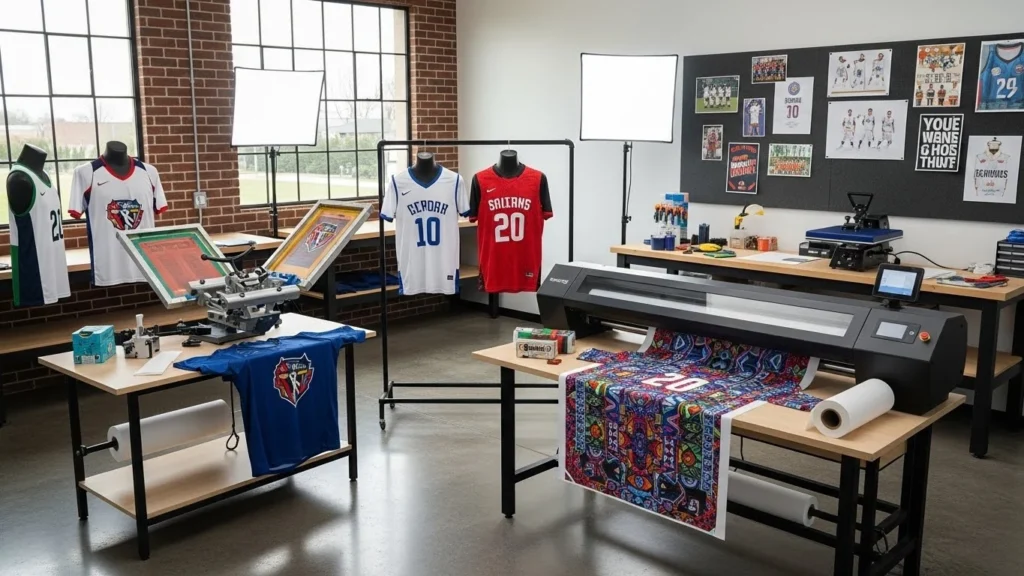
Screen printing pushes ink through a mesh stencil directly onto the garment. Each colour normally requires its own screen, registration, and curing control. Heat transfer places a separately produced design onto the garment through controlled temperature, time, and pressure. The category includes heat transfer vinyl, direct-to-film, digital, and screen-printed transfers.
The best screen printing vs heat transfer choice depends on the artwork, fabric, order volume, personalization, placement, performance needs, and repeat-order plan. A simple two-colour logo ordered in thousands may favour screen printing. A short run containing full-colour artwork, individual player names, and several sizes may favour heat transfer.
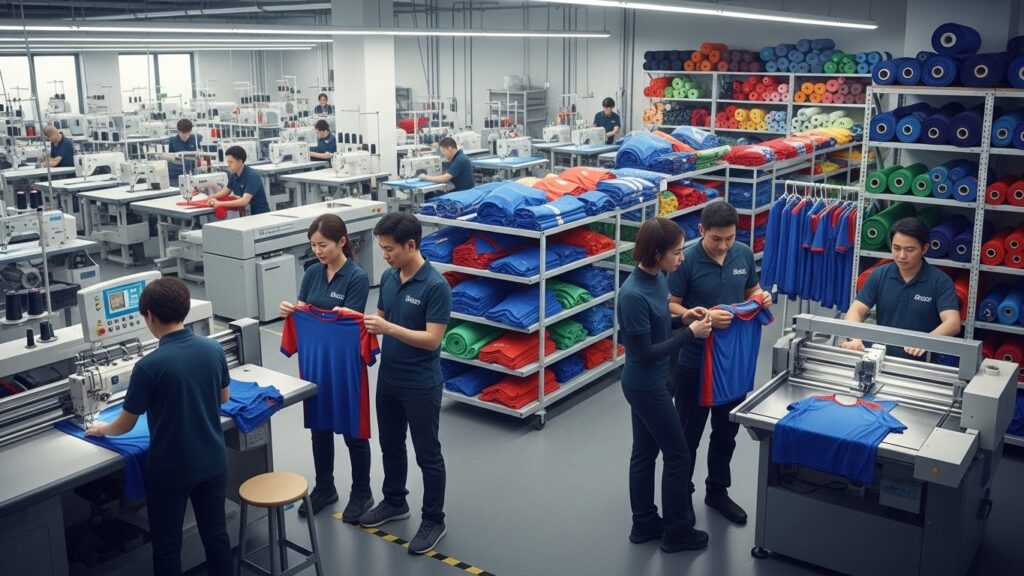
BUSHI Sports® supports custom sportswear manufacturing for brands, clubs, teams, retailers, distributors, and private label buyers through artwork, printing, personalization, sampling, labels, packaging, quality control, and bulk production.
This guide explains seven practical selection rules that help buyers compare screen printing vs heat transfer before approving custom sportswear.
Quick Answer
Screen printing is usually stronger for medium-to-large repeated orders with limited colours. Heat transfer is usually stronger for low quantities, detailed multicolour artwork, personalization, short deadlines, and print-on-demand production.
A screen printing vs heat transfer strategy may use both: screen printing for repeated branding and heat transfer for names, numbers, or short runs.
Screen Printing vs Heat Transfer Comparison Table
| Requirement | Screen printing | Heat transfer |
|---|---|---|
| Best order size | Medium and large repeated runs | Small runs, mixed designs, and personalization |
| Setup | Screens, colour separation, ink, registration, and curing | Transfer production plus heat-press setup |
| Colour complexity | Cost and setup rise with additional colours | Digital transfers can handle many colours and gradients |
| Surface feel | Depends on ink, mesh, underbase, and deposit | Depends on transfer film, adhesive, thickness, and coverage |
| Personalization | Requires additional setup or another method | Strong for names, numbers, and one-off details |
| Fabric range | Depends on ink system and curing temperature | Depends on transfer material, adhesive, and press settings |
| Main quality risk | Undercuring, overcuring, registration, and dye migration | Lifting, scorching, pressure marks, migration, and incorrect pressing |
| Reorder control | Efficient when screens and specifications are retained | Efficient when digital files and transfer specifications are retained |
First, Define What “Heat Transfer” Means
A useful screen printing vs heat transfer comparison must identify the transfer type. “Heat transfer” can mean cut or printable vinyl, direct-to-film, screen-printed transfers, reflective or silicone films, pre-cut names and numbers, or heat-applied emblems.
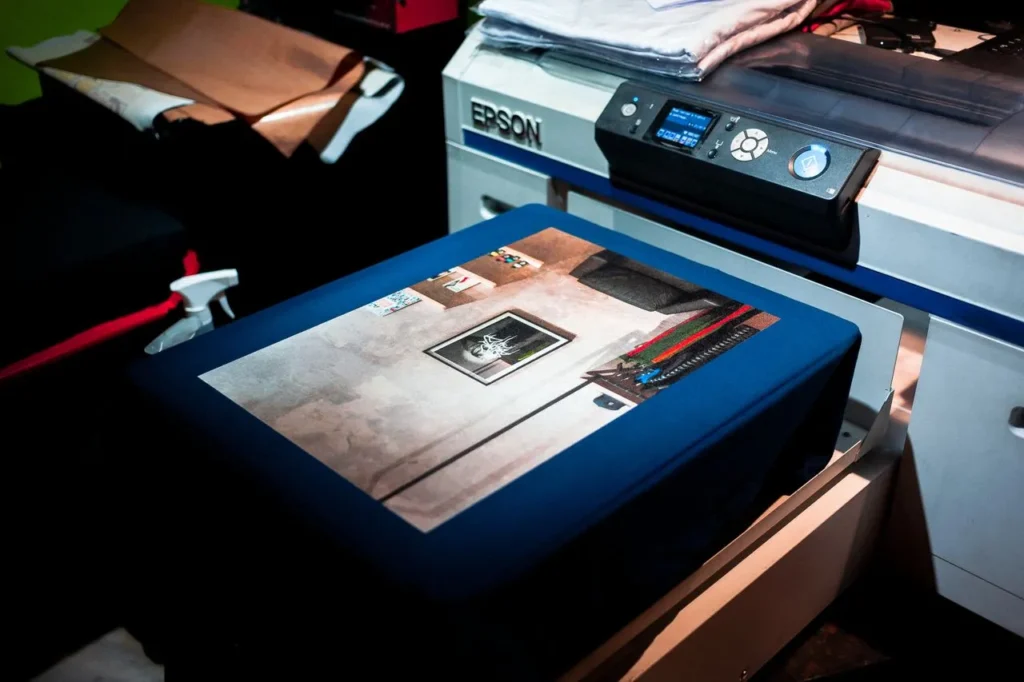
Direct-to-film uses digitally printed inks, adhesive powder, curing, and pressing. Heat transfer vinyl is cut, weeded, positioned, and pressed. Screen-printed transfers place screen-printing ink on a carrier before application.
The selected system changes the screen printing vs heat transfer result. A thin stretch transfer behaves differently from a thick vinyl number, while a high-density screen print behaves differently from a soft water-based print.
Rule 1: Match Screen Printing vs Heat Transfer to Order Quantity
The first screen printing vs heat transfer rule concerns setup and repeat volume.
Screen printing requires colour separation, screens, ink, press setup, registration, test prints, and dryer control. These fixed steps can make a small order expensive, but the cost is distributed across more garments as quantity rises.
Heat transfer normally has lower setup for small or mixed orders. Transfers can be applied individually, which suits startup collections, events, replacement jerseys, and personalized teamwear.
When Screen Printing Usually Makes Sense
Screen printing often becomes attractive when:
- One design repeats across many units
- The artwork contains a limited number of spot colours
- Garment placements remain identical
- Sizes and products use the same print dimensions
- The brand expects recurring orders
- The selected ink works with the fabric
When Heat Transfer Usually Makes Sense
Heat transfer often becomes attractive when:
- Quantities are low
- Artwork contains gradients or many colours
- Names and numbers change by player
- Several logos are ordered in small quantities
- The brand needs samples or limited releases
- Decoration is applied after orders are received
There is no universal quantity at which one method becomes cheaper. The crossover depends on colours, locations, print size, transfer type, labour, garment fabric, and factory equipment.
Rule 2: Compare Artwork Detail and Colour Requirements
The second screen printing vs heat transfer rule concerns the artwork itself.
Screen printing is effective for bold logos, spot colours, repeated graphics, and artwork prepared through accurate colour separation. Halftones can reproduce shading but require suitable mesh, ink, registration, and press control.
Digital heat transfers can reproduce gradients, photographs, and complex multicolour artwork without one garment screen per colour, making them useful for short-run graphics and detailed sponsor logos.
Screen-Printing Artwork Requirements
Screen-print artwork should use clean vector elements or high-resolution separations with confirmed colours, underbase, halftones, trapping, dimensions, placement, mesh, and ink.
Heat-Transfer Artwork Requirements
Heat-transfer artwork may require vector cut paths for HTV or high-resolution transparent files for DTF, plus clean edges, minimum line thickness, approved dimensions, mirroring, and white-underbase review.
BUSHI Sports® explains scalable files in why vector artwork is important for sportswear printing and how to prepare print-ready files.
A fair screen printing vs heat transfer comparison should use artwork prepared specifically for each process instead of forcing one unsuitable file into both.
Rule 3: Evaluate Fabric, Stretch, and Athlete Comfort
The third screen printing vs heat transfer rule is fabric compatibility. This screen printing vs heat transfer choice should begin with the exact production fabric.
Sportswear may use polyester mesh, interlock, polyester-spandex, nylon blends, fleece, cotton-rich fabric, or coated outerwear. Each reacts differently to ink, adhesive, heat, pressure, and stretching.
Lightweight Performance Tops
Large decoration areas can reduce flexibility and airflow regardless of the method. A thick screen-print deposit or large film transfer may feel heavy on a lightweight running top.
For breathable jerseys, review print coverage, thickness, ventilation placement, fabric stretch, skin contact, garment weight, and flexibility after washing.
Stretch Activewear
Leggings, compression tops, sports bras, and fitted shorts require decoration that can extend and recover with the fabric. The print should be tested at the intended garment stretch, not only when lying flat.
A rigid transfer can crack, lift, or restrict movement. A screen-print ink without enough elasticity can also crack or separate. Use stretch-compatible materials and approve the decorated garment through repeated extension and wash trials.
The BUSHI Sports® guides on 100% polyester vs polyester-spandex, two-way stretch vs four-way stretch fabric, and polyester mesh vs interlock fabric explain why stretch direction, structure, recovery, opacity, and heat stability must be considered together.
Heat-Sensitive Materials
Some polyester, nylon, coated, and stretch fabrics can change under excessive temperature or pressure. Possible failures include scorching, shine, pressure marks, shrinkage, adhesive staining, and lost recovery. Test the screen printing vs heat transfer choice on the exact production fabric and colour.
Rule 4: Control Polyester Dye Migration
Polyester dye migration is one of the most important technical risks in screen printing vs heat transfer for sportswear.
Heat can reactivate disperse dyes in polyester. The dye may move into a light-coloured ink or transfer, causing a white logo to become pink, grey, blue, or another unwanted shade. Migration may appear immediately or develop after the garment has been packed.
Screen-Printing Controls
Screen printing on migration-prone polyester may require:
- Low-cure or flexible-cure inks
- Low-bleed white inks
- Grey or black blocker underbases
- Controlled dryer temperature
- Correct dwell time
- Suitable ink deposit
- Fabric-specific testing
Avient’s screen-printing guidance recommends low-bleed or flexible-cure systems and appropriate blockers for difficult polyester. The complete ink film must still reach its specified cure requirement.
Heat-Transfer Controls
Heat-transfer decoration may require:
- Low-temperature transfer materials
- Dye-blocking layers
- Polyester-compatible adhesive
- Reduced application time where specified
- Correct pressure
- Post-press migration checks
- Testing on every fabric colour
Stahls identifies temperature, time, and pressure as the three essential application variables. A lower-temperature product can help on sensitive polyester, but the factory must follow the instructions for the selected transfer.
A screen printing vs heat transfer test should include dark polyester, sublimated fabric, and any colour known to have unstable dyes. Keep the sample for several days after pressing or curing because migration may develop later.
Rule 5: Compare Durability and Wash Performance
The fifth screen printing vs heat transfer rule is durability. Neither process is automatically permanent, so screen printing vs heat transfer claims should be confirmed through testing.
Screen-Print Failure Risks
A screen print may fail because of:
- Incomplete cure
- Excessive cure
- Poor ink-fabric compatibility
- Weak underbase
- Incorrect ink deposit
- Registration errors
- Fibrillation
- Cracking under stretch
- Dye migration
Conveyor-dryer profiling is important because plastisol and other ink systems must reach their specified cure conditions across the complete print area.
Heat-Transfer Failure Risks
A transfer may fail because of:
- Incorrect temperature
- Insufficient or excessive pressure
- Wrong pressing time
- Moisture in the garment
- Incompatible fabric coating
- Incorrect peel method
- Poor adhesive activation
- Edge lifting
- Cracking under stretch
- Repressing errors
The correct screen printing vs heat transfer durability comparison should use the exact decorated garment, not generic claims from an ink or transfer category.
Recommended Quality Tests
A sportswear test programme may include AATCC TM61 or ISO 105-C06 for laundering, AATCC TM8 or ISO 105-X12 for rubbing, and AATCC TM15 or ISO 105-E04 for perspiration, plus repeated washes, stretch, abrasion, adhesion, migration, and dimensional-change checks.
Wash testing should follow the proposed care label. A logo that survives a gentle cold cycle may not survive the warmer or more demanding process used by a club kit manager.
Rule 6: Compare Cost, Personalization, and Production Speed
The sixth screen printing vs heat transfer rule is total decoration cost rather than only ink or transfer price.
Decoration Cost Drivers
Screen-print cost is influenced by artwork separation, screens, ink mixing, colours, underbases, blockers, placements, registration, curing, cleanup, quantity, and rejects. A larger quantity can reduce setup cost per unit, while additional colours and placements add complexity.
Heat-transfer cost is influenced by transfer type, digital printing or vinyl cutting, weeding, dimensions, placements, personalization, press labour, peel method, quantity, and rejects. It can reduce setup for a small run, but every garment still requires positioning and pressing.
Personalization
Heat transfer is especially strong for variable player names, numbers, initials, staff roles, and event information. Screen printing is usually more efficient for information repeated across the entire order.
Many teamwear programmes use a hybrid process: screen printing for recurring sponsor or brand marks and heat transfer for individual names and numbers.
The BUSHI Sports® sportswear manufacturing cost breakdown explains how materials, decoration, labour, sampling, packaging, and freight affect the final quotation.
Rule 7: Select Screen Printing vs Heat Transfer by Product
The final screen printing vs heat transfer rule is product-specific selection. The screen printing vs heat transfer result should match the garment rather than a general preference.
| Product or order | Practical starting point | Main reason |
| Large repeated T-shirt order | Screen printing | Setup can be distributed across volume |
| Small full-colour brand launch | Digital heat transfer | Low quantity and complex artwork |
| Player names and numbers | Heat transfer | Variable information and replacement flexibility |
| Cotton-rich promotional shirt | Screen printing or transfer | Depends on quantity and detail |
| Polyester training shirt | Either after migration testing | Fabric and colour determine the system |
| Stretch legging | Stretch-compatible transfer or ink | Recovery and opacity must be preserved |
| Hoodie or sweatshirt | Screen printing or heat transfer | Both can work with correct material selection |
| Reflective running detail | Specialty heat transfer | Controlled reflective application |
| Large club crest on bulk fanwear | Screen printing | Repeated artwork and commercial volume |
| Short-run staff apparel | Heat transfer | Mixed roles, sizes, and low quantities |
| Highly detailed sponsor artwork | Digital heat transfer | Fine multicolour reproduction |
| Simple two-colour bulk logo | Screen printing | Efficient repeat production |
Practical Verdict
Screen printing is usually better for high-volume orders using simple or limited-colour artwork. It can provide efficient repeat production and a wide choice of ink effects when the press, mesh, curing, and fabric are controlled.
Heat transfer is usually better for short runs, personalization, many colours, detailed artwork, special effects, and on-demand production. Its success depends on the exact transfer, fabric, pressure, time, and temperature.
The strongest screen printing vs heat transfer decision may use both methods across a collection or even on one garment. Brands considering all-over polyester graphics and stitched crests can also review sublimation vs embroidery.
Quality-Control Checklist
| Inspection area | Screen-print control | Heat-transfer control |
| Artwork | Colour separation, trapping, dimensions | Resolution, cut path, white layer, dimensions |
| Placement | Screen and platen registration | Garment loading and transfer positioning |
| Colour | Ink mix and underbase | Transfer file, print, and film consistency |
| Fabric | Ink and cure compatibility | Adhesive and heat compatibility |
| Polyester | Low-bleed ink and blockers | Low-temperature or dye-blocking transfer |
| Stretch | Elastic ink and crack testing | Stretchable film and adhesion testing |
| Process | Mesh, squeegee, flash, and cure | Time, temperature, pressure, and peel |
| Wash result | Cure, colour, cracking, migration | Adhesion, lifting, cracking, migration |
| Bulk control | Dryer profile and retained print sample | Press calibration and retained transfer sample |
Use the sportswear sample approval checklist to confirm the final fabric, print method, artwork, colours, measurements, labels, wash results, and packaging before bulk production.
Questions to Ask a Manufacturer
Use these screen printing vs heat transfer questions before accepting a quotation:
- Which ink or transfer system will be used?
- Is it approved for the exact fabric and colour?
- Are underbases, blockers, names, and numbers included?
- What curing or pressing settings will be used?
- Can the decoration stretch and resist migration?
- What setup charges and quantity thresholds apply?
- Will physical samples and wash-test results be supplied?
- Can materials or process settings change without approval?
Common Buying Mistakes
Treating Every Heat Transfer as the Same
HTV, DTF, screen-printed transfers, and specialty films have different surfaces and fabric requirements.
Choosing by Quantity Alone
Artwork colours, personalization, fabric sensitivity, and placement can outweigh order size.
Ignoring Polyester Migration
White or pale decoration can change colour when unstable dyes are reactivated by heat.
Approving Only a Mockup
A mockup cannot prove feel, colour, stretch, adhesion, curing, or migration resistance.
Skipping Wash Tests
Test the decoration on the production fabric under the proposed care conditions.
Why Work With BUSHI Sports®?
BUSHI Sports® supports screen printing vs heat transfer selection for activewear, teamwear, casualwear, outerwear, and fanwear. Support can include fabric compatibility, logos, sponsors, names, numbers, artwork, mockups, size sets, PP samples, testing, private labels, packaging, bulk inspection, and international order management.
A complete project brief should include the garment, fabric, colours, artwork, print size, placements, quantity, personalization, testing, target price, and delivery date.
Frequently Asked Questions
What is the main difference in screen printing vs heat transfer?
Screen printing deposits ink directly through a mesh stencil onto the garment. Heat transfer applies a separately produced design to the garment using controlled temperature, time, and pressure.
Which method is better for large orders?
Screen printing is often more economical for large repeated orders using limited colours because setup costs can be distributed across more units.
Which method is better for small orders?
Heat transfer is often more practical for small quantities because it can reduce screen setup and handle mixed designs or personalization.
Which method is better for player names and numbers?
Heat transfer is normally the better choice because each name and number can change without preparing a complete direct screen-print setup for every player.
Is screen printing more durable?
Screen printing can be highly durable when the ink is compatible and correctly cured. Heat transfer can also be durable when the correct material is applied with accurate time, temperature, and pressure.
Can both methods be used on polyester?
Yes, but polyester dye migration and heat sensitivity must be controlled. Use polyester-compatible inks, blockers, transfers, and tested process settings.
Does heat transfer reduce breathability?
A large solid transfer can reduce airflow and flexibility in the covered area. The effect depends on design coverage, film thickness, fabric, and placement.
Which method supports photographs and gradients?
Digital heat transfers are usually more convenient for photographs, gradients, and complex multicolour graphics, particularly in low quantities.
Conclusion
Screen printing vs heat transfer should be selected through order size, artwork, fabric, personalization, comfort, durability, cost, and production control.
Screen printing is generally stronger for repeated orders with limited colours and consistent placements. Heat transfer is generally stronger for small runs, detailed graphics, personalization, reflective marks, replacements, and on-demand production.
Both processes can fail when polyester migration, stretch, wash conditions, curing, time, temperature, or pressure are ignored. Brands should approve a physical print sample, decorated pre-production garment, wash results, and final process specification before bulk production.
BUSHI Sports® supports screen printing vs heat transfer development through material review, artwork preparation, sampling, personalization, testing coordination, labels, packaging, quality inspection, and international bulk manufacturing.
To discuss a custom sportswear project, email info@bushisports.com, message BUSHI Sports® on WhatsApp at +92 348 4018 578, or submit requirements through the contact page.