How to Develop a Show Jumping Apparel and Gear Collection
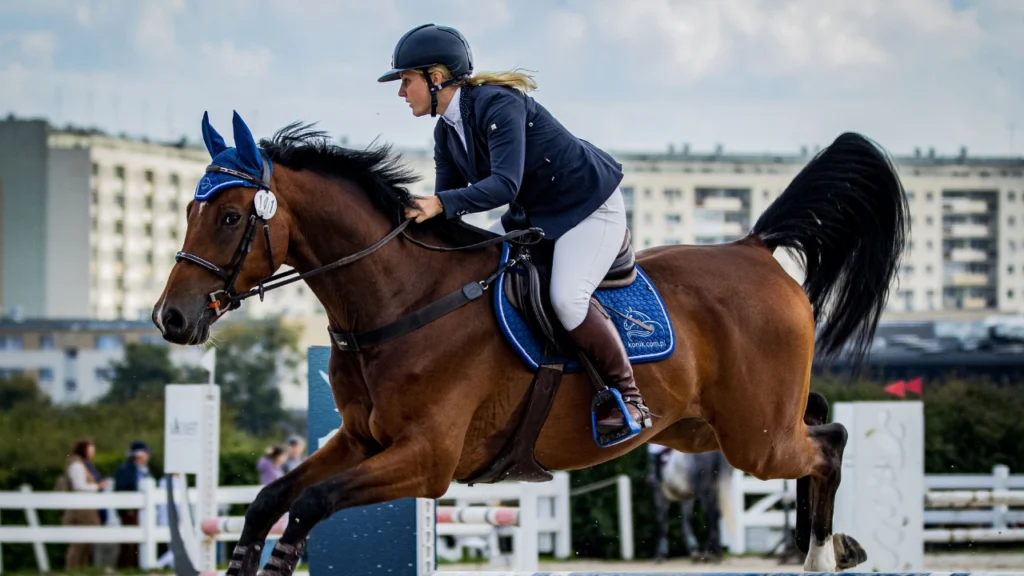
A show jumping collection should make sense both in the arena and on the shop floor. Riders move between schooling, warm-up, and competition, while their horses may need different textile accessories for each setting. The products must work independently, but they should also share a recognizable standard of fit, finish, and design.
For a private label brand, the challenge is deciding what to develop first. Launch too many styles and each size and color becomes harder to forecast. Focus only on appearance and the range may disappoint riders when they reach forward, rise out of the saddle, or use the products repeatedly. This guide explains how to build a coordinated show jumping collection around a defined customer, practical product specifications, careful sampling, and a manageable first order.
Table of Contents
- Define the rider and market
- Build a focused opening assortment
- Separate training and competition requirements
- Develop apparel for jumping movement
- Select coordinated horse gear
- Create a consistent design system
- Write measurable product specifications
- Test the range before bulk production
- Plan quantities and future releases
- Frequently asked questions
1. Define the Rider and Market
Begin with a specific customer rather than a long list of products. A show jumping collection for young riders at local shows may need accessible pricing and durable everyday items. A premium range for experienced competitors may place greater emphasis on tailored jackets, refined finishes, and detailed fit options. Riding clubs and retailers may prioritize consistent replenishment across common sizes.
Write down where the customer rides, how often they train, the climate they ride in, and the price they expect to pay. Consider whether the brand will sell directly to riders, supply equestrian stores, or offer coordinated products to teams and clubs. Each channel influences packaging, size depth, color choices, and reorder planning.
The Equestrian Collection Development Guide for Brands explains how to connect customer positioning with an assortment across horse and rider categories. Use that broader plan to give the show jumping collection a clear role within the brand, rather than treating it as a group of products that happen to share a logo.
2. Build a Focused Opening Assortment
The first release should cover a few useful combinations. A rider might buy breeches and a shirt together, then add gloves or a matching saddle pad. A retailer needs clear differences between those products and any alternative styles offered in the same category.
| Product group | Practical opening choice | Main development concern |
|---|---|---|
| Rider essentials | Breeches and training or show shirt | Movement, fit, opacity, and care |
| Competition layer | Show jacket | Shoulder mobility and clean appearance |
| Horse textile | Jumping saddle pad | Saddle shape, secure placement, and laundering |
| Accessories | Riding gloves and ear bonnet | Rein feel, comfort, fit, and color consistency |
This table is a starting point, not a requirement to launch every item at once. Breeches, shirts, and jumping saddle pads can establish the core of a show jumping collection. A jacket requires more involved pattern and fit work, so a brand should allow adequate time for it. Gloves and ear bonnets can follow when their construction and sizing have been properly developed.
Give every style a distinct job. Two breeches with the same cut, fabric, and grip placement but different names add stock complexity without giving customers much choice. A lightweight warm-weather shirt and a more substantial long-sleeve training shirt, on the other hand, answer different needs.
3. Separate Training and Competition Requirements
Training products usually allow more freedom in color and styling. Competition products need an additional review against the rules of the events where customers intend to use them. Requirements can differ by federation, division, rider category, and event, so a single claim of “competition approved” should not be applied across markets without checking it.
For international competition, consult the current FEI Jumping Rules and the relevant FEI Jumping Tack and Equipment Requirements. For United States customers, the US Equestrian rulebook provides the applicable national rules. Review the latest documents when finalizing products and again before making market-specific claims.
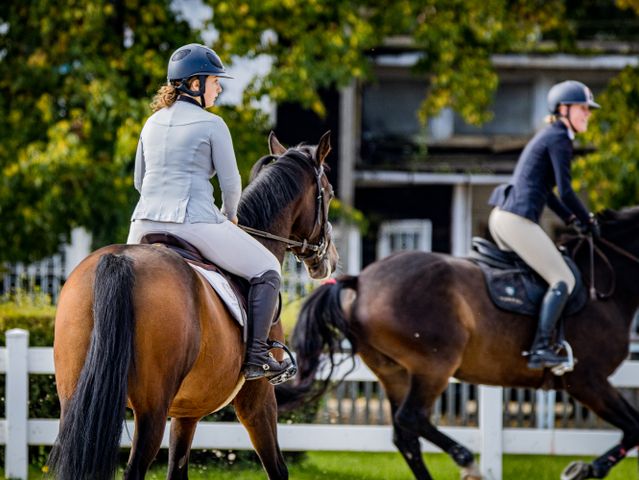 A useful show jumping collection can include both restrained show-day colors and expressive training colors. Keep those ranges clearly identified in product descriptions. For horse gear, pay particular attention to any rules affecting equipment use, dimensions, and decoration.
Helmets, body protectors, and other safety equipment require separate specialist development and applicable testing. Their presence in an assortment should never be used to imply certification that has not been independently established.
4. Develop Apparel for Jumping Movement
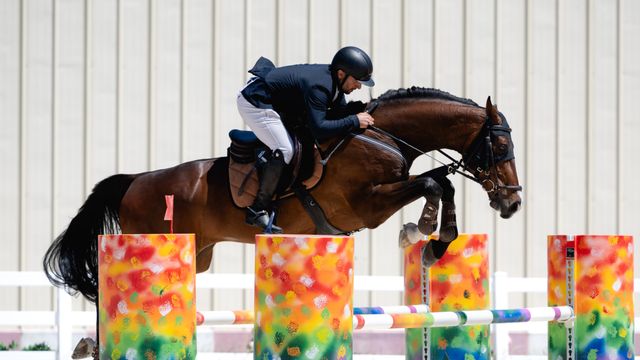
Jumping apparel must work when the rider folds forward, shortens the reins, changes seat, and moves through the hips and knees. Fit evaluation therefore needs more than a standing photograph or a brief walk in a sample garment.
For breeches, review waistband stability, seat comfort, leg positioning, stretch recovery, and how seams feel against the saddle and boot. Grip placement should be selected for the intended rider and tested in use. Excessive or poorly positioned grip can feel just as unsuitable as insufficient grip. The Bushi Sports® riding breeches design guide explains how fabric, pattern, and grip work together.
A show shirt needs comfortable reach through the shoulders and arms, a collar suitable for its intended use, and a hem that stays in place beneath a jacket. Evaluate opacity, breathability, and drying behavior on the finished garment rather than relying only on a fabric description. The equestrian show shirts guide covers those decisions in greater detail.
A jacket completes the competition outfit, but its tailored appearance should not restrict a rider reaching toward the horse’s neck. Assess sleeve pitch, shoulder construction, back length, and closure behavior in a riding position. For technical detail, use the Bushi Sports® show jacket construction guide.
5. Select Coordinated Horse Gear
A jumping saddle pad is a strong anchor for the horse side of a show jumping collection. Its outline should suit the more forward shape of a jumping saddle, while its spine, attachment points, quilting, binding, and layers should be developed as one construction. Test it with the intended saddle rather than approving the flat pattern alone.
The Bushi Sports® saddle pad construction guide explains how fabric, padding, lining, and quilting influence the result. A decorative outer fabric can look attractive but still be unsuitable if the finished pad shifts, dries slowly, or loses its shape after cleaning.
Ear bonnets provide another opportunity to coordinate colors and trims. They still need suitable ear dimensions, comfortable edges, and secure construction. Use the horse ear bonnet materials guide when comparing fabric, crochet, and finishing options.
Some brands may later add horse boots, wraps, girths, or bridles. Each brings different fit, fastening, material, and quality-control requirements. The horse gear materials and construction guide can help buyers compare those categories before expanding. Introducing them gradually gives the brand time to establish proper samples and specifications rather than relying on a matching color to make an unfamiliar product ready for sale.
6. Create a Consistent Design System
A coordinated show jumping collection needs a repeatable design language. Choose a small set of core colors, one or two accent colors, and a defined approach to logos, piping, hardware finishes, and packaging. These choices should connect the rider and horse products without forcing identical details onto very different materials.
A color approved on a stretch shirt may look different on a woven saddle pad or embroidery thread. Compare physical swatches together under consistent lighting. Specify approved color references and acceptable variation instead of relying on names such as “navy” or “forest green.”
Keep branding proportional to the product. A jacket may need a subtle mark, while a pad may support a larger emblem in a suitable location. Check whether embroidery, badges, or printed logos affect flexibility, comfort, washing, or permitted competition use. The goal is for customers to recognize the show jumping collection through its overall finish, not only its logo size.
Photograph complete outfits alongside clear individual product views. Customers should be able to see how the pieces coordinate and still inspect the garment silhouette, pad shape, closures, and useful construction details.
7. Write Measurable Product Specifications
A manufacturer needs more than reference photographs to reproduce an approved design. Prepare a technical pack for every style in the show jumping collection, including intended use, materials, finished measurements, size grading, color references, stitching, trims, logo placement, labels, packaging, and acceptable tolerances.
Separate body sizing from finished garment measurements. ISO 8559-1 provides definitions for taking body measurements in clothing development, while a brand must still choose and test a fit appropriate for its customers. For breeches, document such points as rise, waist, hip, thigh, inseam, and leg opening. Jacket specifications require their own shoulder, chest, sleeve, and length measurements.
For a saddle pad, define the finished outline, spine shape, drop, strap dimensions, quilting scale, binding width, and approved layer construction. For gloves, define finger proportions, palm material, rein-contact reinforcement, cuff, and closure. The horse riding gloves guide offers further detail on their development.
Care directions should be based on the complete approved product, not merely its main fabric. ISO 3758:2023 establishes textile care-label symbols; testing should determine which treatments the garment or textile accessory can actually withstand.
8. Test the Range Before Bulk Production
Sample each product individually, then review the show jumping collection as a group. Put the apparel through realistic riding movements, including reaching forward, sitting, rising, and bending. Check whether the shirt and jacket remain comfortable together and whether breech seams or grip areas become noticeable during use.

Test horse textiles with the intended tack and suitable horse sizes. Observe pad movement, strap placement, binding behavior, and any rubbing or interference. Review ear bonnets for fit and stable placement. If boots or wraps are included, examine fastening security and fit during movement without treating a visual inspection as proof of a protective claim.
Wash or care for samples according to the proposed label and inspect color change, shrinkage, shape, stitching, and trim attachment afterward. Compare colors across categories again after care. Record the results with photographs, measurements, and specific requested corrections.
A pre-production sample should represent the approved materials and construction for the order. Bushi Sports® provides a sample approval checklist that brands can adapt to document final decisions. Approving that reference before bulk production helps the team distinguish an agreed specification from an informal design suggestion.
9. Plan Quantities and Future Releases
Count every size and color combination before placing the first order. Four styles with several sizes and colors can quickly become dozens of individual stock units. Ask the manufacturer which minimum quantities apply by product, material, and color, and confirm whether sizes can be mixed within an order.
Keep the first show jumping collection commercially focused. Concentrate on the sizes, colors, and styles most relevant to the target buyer, then use initial sales and fit feedback to guide expansion. A reliable core breech or pad may be worth replenishing while a seasonal accent color changes.
Calculate the cost of the finished product, packaging, freight, and any development charges before setting retail prices. Leave room in the calendar for sample revisions and photography. The private label equestrian gear manufacturing guide offers a broader view of sampling and production decisions across categories.
Frequently Asked Questions
What products should a show jumping collection include at launch?
A focused launch might include breeches, a training or show shirt, and a jumping saddle pad. Gloves or an ear bonnet can add a coordinated accessory. Include a show jacket when there is enough development time to test its fit and movement carefully.
How is a jumping saddle pad different from a dressage pad?
A jumping pad generally has a more forward-cut outline to correspond with a jumping saddle, while a dressage pad usually has a straighter, longer drop. The exact spine, coverage, and attachment design should be assessed with the saddle for which the pad is intended.
Can training and competition products use the same design?
They can share colors and recognizable branding, but their specifications may differ. A training shirt may allow a different fabric or appearance from a show shirt. Check the rules for each intended competition market before describing an item as appropriate for that use.
What should be tested on jumping breeches?
Check fit and comfort in a riding position, fabric opacity when stretched, recovery, seam placement, grip behavior, wash results, and performance at areas exposed to saddle or boot contact. Evaluate the finished garment rather than assuming a fabric swatch represents its performance.
How can a brand keep repeat orders consistent?
Maintain approved samples, measurement charts, color standards, material specifications, artwork files, and construction notes. Compare repeat production with those references and approve any proposed material or trim change before it is used.
Develop Your Show Jumping Collection With Bushi Sports®
A dependable show jumping collection starts with a defined rider, a focused assortment, and product specifications that can be checked in real use. Coordinated colors make the range recognizable; fit, construction, and consistent production give customers a reason to return.
To discuss a sample or custom order, contact Bushi Sports® through the contact page, send your requirements by WhatsApp, or email info@bushisports.com. You can also view the company location on Google Maps and connect with Bushi Sports® on LinkedIn.
For product updates and collection ideas, follow Bushi Sports® on Instagram, Facebook, X, Threads, Pinterest, YouTube, TikTok, and Medium.