Equestrian Show Jackets: 9 Proven Construction Steps for Superior Fit and Performance
Equestrian Show Jackets must deliver a formal competition appearance without restricting the rider’s shoulders, elbows, torso or hips. This balance makes a riding show jacket significantly more technical than an ordinary fashion blazer. A garment may look correctly fitted while the wearer is standing but pull across the back, lift at the front or twist through the sleeves as soon as the rider assumes a competition position.
Successful Equestrian Show Jackets therefore require coordinated decisions about fabric, pattern balance, sleeve pitch, internal support, ventilation, closures and seam construction. Each element must support the rider’s movement while preserving the clean silhouette expected in dressage, show jumping and other equestrian disciplines.
For brands and wholesale buyers, these construction decisions influence product quality, customer satisfaction and repeat-order consistency. Bushi Sports® provides custom wholesale equestrian show jacket manufacturing for equestrian brands, tack retailers, riding clubs and distributors requiring OEM, ODM and private label production.
Table of Contents
- Why show jackets need specialized construction
- Developing the riding-specific pattern
- Selecting stretch performance fabrics
- Engineering the internal structure
- Improving shoulder and sleeve mobility
- Controlling ventilation and comfort
- Constructing collars, pockets and closures
- Adapting jackets for different disciplines
- Sampling and quality control
- Frequently asked questions
Why Equestrian Show Jackets Need Specialized Construction
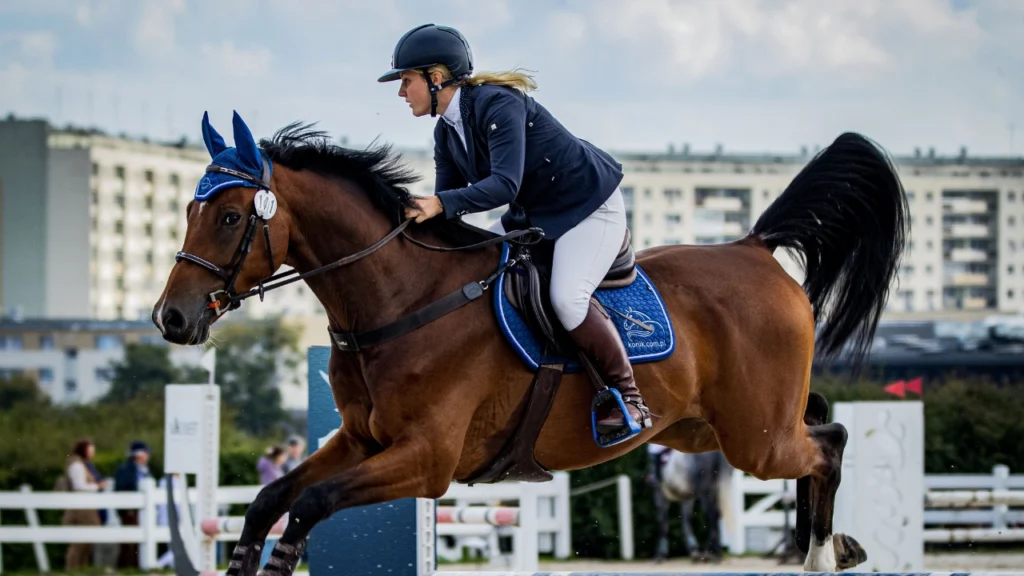
Equestrian Show Jackets sit between formal tailoring and technical sportswear. They require stable lapels, a controlled waist, clean shoulders and a polished overall appearance. At the same time, the garment must accommodate a forward arm position, flexed elbows, a seated hip angle and continuous upper-body movement.
A traditional blazer is normally developed around an upright standing posture. A riding jacket must stay balanced when the wearer sits in the saddle and reaches forward to hold the reins. If this posture is ignored during pattern development, the front hem may bunch, the collar may move away from the neck and the back can become tight across the shoulder blades.
A well-developed show jacket should provide:
- A collar that remains stable against the neck
- Lapels that retain their shape without becoming rigid
- Sufficient movement across the shoulders and upper back
- Sleeves shaped for a forward riding position
- A front length that remains comfortable in the saddle
- Vents that open smoothly around the rider’s seat
- Breathable construction for warm competition environments
- Reliable recovery after repeated movement
These requirements are part of the broader process explained in the Bushi Sports® guide to equestrian apparel manufacturing and design.
1. Develop Equestrian Show Jackets Around Riding Posture
The pattern block is the foundation of dependable Equestrian Show Jackets. Chest, waist and hip measurements remain important, but they do not fully explain how a jacket will behave during riding.
Pattern development should also consider shoulder slope, back width, armhole depth, sleeve rotation, waist suppression and the relationship between front and back length. The garment needs enough shaping to create a tailored silhouette without depending on excessive tightness.
Fit samples should be evaluated while the wearer stands, raises the arms, bends the elbows, leans forward and sits in a saddle or simulated riding position. The jacket should not lift sharply when the arms move forward. Its shoulder seams should remain close to their intended position, and the collar should not press against the neck.
Back vents must also be engineered around riding posture. Double vents are commonly used because they create saddle clearance and allow the jacket to fall around the rider’s seat. However, vent length and overlap must be controlled. Poorly balanced vents can spread too widely, twist outward or expose the lining.
2. Select Performance Fabrics With Controlled Stretch
Fabric selection affects the comfort, structure and service life of Equestrian Show Jackets. The material needs sufficient body for a tailored appearance while allowing the rider to move freely. It should also recover after stretching so the elbows, waist and back do not become permanently distorted.
Common options include polyester-elastane stretch wovens, nylon-elastane blends, lightweight technical weaves and softshell-inspired fabrics.
| Fabric Type | Main Advantages | Suitable Use |
|---|---|---|
| Polyester-elastane woven | Shape retention, durability and easy care | General competition jackets |
| Nylon-elastane woven | Soft feel, flexibility and abrasion resistance | Premium performance styles |
| Lightweight technical weave | Reduced weight and quicker drying | Summer competitions |
| Structured stretch woven | Formal shape with controlled mobility | Dressage collections |
| Lightweight softshell | Flexibility and mild weather resistance | Cooler conditions |
Four-way stretch can support multidirectional movement, but maximum stretch is not always the correct choice. Highly elastic fabric may lose the controlled drape required for tailored Equestrian Show Jackets. It can also sag under the weight of pockets, buttons and decorative trims.
Brands can compare stretch direction and recovery in the Bushi Sports® guide to two-way and four-way stretch fabrics.
Before approval, the fabric should be tested for stretch recovery, pilling, abrasion resistance, colorfastness, shrinkage, seam performance and compatibility with interfacing. Brands requiring independently evaluated textile components can also review OEKO-TEX® STANDARD 100, which covers testing for harmful substances. Certification should only be claimed when the selected material or finished product is supported by a valid certificate and applicable scope.
3. Engineer the Internal Structure Carefully
The internal construction gives Equestrian Show Jackets their formal shape. However, traditional blazer construction can become too heavy or restrictive when transferred directly into performance riding apparel.
Lightweight support may be applied around the collar, lapels, front opening, pocket edges and selected chest areas. The manufacturer should test the chosen fusible or sewn-in interfacing with the outer material. Excessive temperature, adhesive or pressure can create bubbling, stiffness or visible marks on technical stretch fabrics.
Shoulder pads should remain subtle. Heavy padding may produce a strong standing silhouette but can interfere with natural shoulder movement. Chest support should stabilize the front without making the entire garment rigid.
Lining options include:
- Full stretch lining for a traditional finished interior
- Partial lining to reduce weight and heat
- Mesh lining in selected ventilation areas
- Unlined construction with clean internal seam finishing
- Combination lining that supports the front while freeing the back
The lining must be compatible with the stretch of the shell. A non-stretch lining can restrict movement even when the outer fabric is highly flexible.
4. Improve Shoulder and Sleeve Mobility
The shoulder area is one of the most common sources of fit problems in Equestrian Show Jackets. Riders keep their arms forward for much of the competition, so the back, armhole and sleeve must be designed around this position.
An excessively low armhole may feel loose while the arms are resting, but it can pull the whole jacket upward when the rider reaches forward. A correctly shaped armhole generally provides better mobility while preserving a clean underarm line.
Sleeve pitch is equally important. A standard fashion sleeve is designed to hang beside the body. A riding sleeve needs to be rotated slightly forward so it follows the rider’s natural arm position without twisting.
During fit approval, buyers should check for:
- Pulling lines across the upper back
- Sleeve twisting near the elbow
- Cuffs rising excessively
- Pressure around the armhole
- Movement of the shoulder seam
- Lining tension during forward reach
- Permanent bagging after repeated bending
The sleeve should cover the wrist neatly while allowing the rider to hold the reins without restriction.
5. Control Heat and Moisture
Equestrian Show Jackets are often worn for extended periods in outdoor arenas, warm indoor venues or direct sunlight. Fabric weight is important, but effective warm-weather construction requires a complete ventilation strategy.
Breathability can be improved through partial lining, lightweight stretch mesh, moisture-managing materials and discreet laser-cut ventilation. Possible ventilation areas include the center back, side panels, underarms and selected lining sections.
Ventilation must not weaken the jacket’s structure or make undergarments visible. Highly open mesh may feel comfortable but can interrupt the formal appearance expected in competition wear. The placement and color of ventilation panels should therefore be integrated into the design rather than added after the sample has been developed.
Brands producing jackets for hot climates can also review Bushi Sports® guidance on sportswear manufacturing for extreme heat.
6. Construct Collars, Lapels, Closures and Pockets
Collars and lapels strongly influence the perceived quality of Equestrian Show Jackets. Their proportions should complement the rider’s body, jacket length, button placement and intended discipline.
The lapel roll should remain smooth and symmetrical. Interfacing must provide sufficient support without producing thick edges or a stiff front. Contrast piping, velvet collars and decorative stitching can be included where appropriate, but the styling should be checked against the relevant competition rules.
Front closures may use three or four visible buttons, concealed zippers behind decorative buttons or another discipline-appropriate system. Buttons should be inspected for attachment strength, surface durability and color consistency. A concealed zipper can improve security, but it must not create rippling down the center front.
Pockets may use flap, welt or zippered construction. The pocket bags should be lightweight and securely anchored so they do not sag or shift during movement.
A coordinated show collection can combine the jacket with properly developed equestrian show shirts and horse riding breeches. Consistent colors, trims, logos and hardware help the individual garments form one recognizable private label range.
7. Build Durable Seams and Reinforcements
The seams of Equestrian Show Jackets must tolerate repeated movement while maintaining a refined exterior. Lockstitch construction can be used for major assembly and visible tailoring, while internal edges may be overlocked, bound or enclosed according to the garment specification.
Important reinforcement points include:
- Vent openings
- Pocket ends
- Underarm junctions
- Button positions
- Zipper ends
- Sleeve openings
- Side seams
- Lining attachment points
Reinforcement should be selective. Heavy stitching across every seam can reduce flexibility and create visible impressions on lightweight fabric.
Thread type, stitch density, needle selection and seam allowance should suit the material. Excessive stitch density may cause puckering, while unsuitable thread can break at movement points. Additional construction guidance is available in the Bushi Sports® article about sportswear stitching types.
8. Adapt Equestrian Show Jackets to Each Discipline
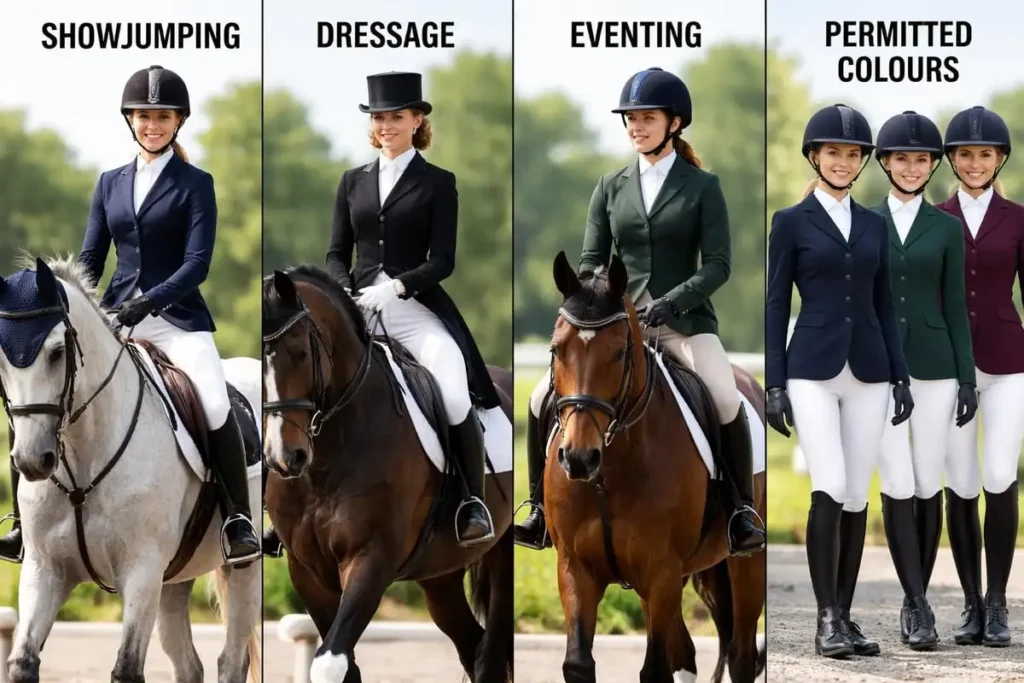
Dressage and show jumping jackets share a formal competition identity, but they do not always require identical proportions.
| Discipline | Main Design Priority | Construction Direction |
|---|---|---|
| Dressage | Formal and controlled silhouette | Stable lapels, structured front and refined shaping |
| Show jumping | Mobility and reduced bulk | Flexible shoulders, practical length and ventilation |
| Eventing show phase | Versatility and durability | Easy care, reliable movement and secure construction |
| Riding academies | Consistency and repeat use | Durable materials and standardized sizing |
Dressage Equestrian Show Jackets may use a more formal silhouette and controlled waist shaping. Show jumping styles frequently prioritize lighter construction, practical length and greater freedom through the shoulders. Jackets intended for more than one discipline require a carefully balanced specification rather than exaggerated styling.
Competition requirements vary according to federation, discipline, level and country. Brands should review the current FEI Dressage Rules and FEI Jumping Rules before finalizing colors, decorative features or competition claims. Products intended for the United States should also be checked against the current USEF Dressage Rules and Equipment resources.
These official resources should be reviewed regularly because competition rules can change. A manufacturer can produce the approved specification, but the brand remains responsible for confirming the requirements applying to its customers and destination markets.
9. Approve Samples Before Bulk Production
Sampling is essential for Equestrian Show Jackets because flat measurements and photographs cannot fully show how a tailored garment behaves during riding.
A structured development process can include:
| Development Stage | Main Approval |
|---|---|
| Product brief | Discipline, customer and design direction |
| Material approval | Fabric, lining, interfacing, buttons and trims |
| Prototype | Construction feasibility and basic structure |
| Fit sample | Measurements, balance, mobility and appearance |
| Revised sample | Corrections from the first fitting |
| Size set | Fit progression across the size range |
| Pre-production sample | Final materials, branding and packaging |
| Bulk inspection | Consistency with the approved specification |
The sample should be examined while standing and seated. Buyers should check shoulder movement, sleeve position, collar stability, front balance, vent behavior and lining tension. The fit test should ideally include the show shirt and breeches intended to accompany the jacket.
Bushi Sports® provides a detailed sportswear sample approval checklist covering fabrics, measurements, construction, branding and finishing.
Quality-Control Priorities
Bulk Equestrian Show Jackets should be compared with the approved sample and technical specification. Important checks include:
- Fabric shade and surface consistency
- Measurement tolerances
- Collar and lapel symmetry
- Sleeve matching and pitch
- Vent alignment
- Pocket position
- Button and zipper security
- Lining balance
- Logo placement
- Final pressing and packaging
Pressing deserves particular attention. Excessive heat can mark technical fabric or affect bonded interfacing, while weak pressing may leave lapels and seams looking unfinished.
Private Label Branding and Compliance
Private label options can include subtle embroidery, silicone logos, heat transfers, branded buttons, zipper pulls, woven labels, care labels, hang tags and custom packaging.
Decoration methods should be tested on the approved fabric. Dense embroidery can pucker lightweight stretch materials, while heavy badges can pull the jacket out of balance. Smaller silicone or heat-transfer logos may be more appropriate for flexible areas.
Brands selling textile products in Europe should review the official EU textile labelling requirements. Buyers developing restricted-substance policies can also consult the annually updated AFIRM Restricted Substances List. These resources help brands plan fiber-content labels, material documentation and chemical requirements before production.
The broader Bushi Sports® guide to private label equestrian gear manufacturing explains how show jackets can be coordinated with breeches, shirts, gloves, saddle pads and other equestrian products.
Frequently Asked Questions
What is the best fabric for Equestrian Show Jackets?
The best fabric combines controlled stretch, dependable recovery, breathability and sufficient body for tailored construction. Polyester-elastane and nylon-elastane stretch wovens are common options, but the correct choice depends on climate, discipline, care requirements and target price.
Should a riding show jacket be fully lined?
Full lining creates a traditional interior but can increase heat and weight. Partial, stretch or mesh linings may be more suitable for lightweight performance jackets. The lining should move with the outer fabric and should not restrict the rider.
How should Equestrian Show Jackets fit?
The collar should sit cleanly, the shoulders should remain balanced and the front should close without pulling. The rider should be able to raise the arms, bend the elbows and sit in riding posture without excessive lifting or tightness across the back.
Are dressage jackets different from show jumping jackets?
Dressage jackets may prioritize a formal silhouette and structured front, while show jumping jackets often emphasize lighter weight, ventilation and shoulder flexibility. Competition requirements should always be verified before confirming the design.
Can show jackets carry private label branding?
Yes. Branding options can include embroidery, silicone logos, heat transfers, custom buttons, woven labels, care labels, hang tags and branded packaging. Each method should be tested on the selected material.
Can buyers approve a sample before production?
Yes. Sample approval allows the buyer to inspect the fabric, fit, sleeve position, internal structure, lapels, vents, measurements, branding and finishing before bulk production begins.
What determines the MOQ?
MOQ depends on fabric sourcing, color, size range, construction complexity, custom trims, branding and packaging. Using available fabrics and standard components can sometimes support lower order quantities.
Can Bushi Sports® develop a complete equestrian collection?
Yes. Bushi Sports® supports fabrics, patterns, sampling, OEM, ODM, private labeling, quality control, packaging and bulk production across rider apparel and horse gear through its custom equestrian gear manufacturing service.
Conclusion
Equestrian Show Jackets perform best when tailoring and athletic function are developed together. The pattern must account for riding posture, while the fabric, lining, sleeve pitch, vents and internal support must preserve comfort without weakening the formal silhouette.
Brands should test Equestrian Show Jackets in motion, document every approved construction detail and use the final sample as the bulk-production reference. This disciplined process supports better fit, stronger quality consistency and a more professional private label collection.
To discuss your sample or custom order, contact Bushi Sports® through the contact page, send details by WhatsApp, or email info@bushisports.com.
You can also view the company location on Google Maps, connect with Bushi Sports® on LinkedIn, or follow the latest products and manufacturing updates on Instagram.