How to Build a Complete Horse and Rider Product Collection
A horse and rider product collection works when its pieces answer related customer needs. A rider may buy breeches for daily training, a pad that suits the same riding routine, and accessories that coordinate with both. The range feels complete because its products have clear functions, consistent design choices and reliable availability.
For a brand, “complete” does not mean offering every equestrian item immediately. It means selecting enough complementary products to serve a defined customer while keeping sizing, materials, sampling and inventory manageable. This horse and rider product collection guide turns that principle into an eight-step plan for a first release or a focused range expansion.
For the broader process, including technical packs, costing and production approval, read the Equestrian Collection Development Guide for Brands.
Table of Contents
- Define the Customer and Use Case
- Choose Anchor Products Before Accessories
- Build Coordinated Product Groups
- Limit Sizes and Colours Deliberately
- Align Materials, Fit and Branding
- Develop and Approve Samples as a Range
- Prepare Production and Product Information
- Launch, Learn and Expand
- Frequently Asked Questions
- Discuss a Custom Collection
1. Define the Customer and Use Case
When planning a horse and rider product collection, begin by describing the customer who would buy more than one item. Identify discipline, riding frequency, climate, preferred fit, typical budget and sales channel. A competition-focused range and an everyday schooling range may both contain a shirt and saddle pad, but their materials, styling and care priorities can differ.
A useful brief describes a specific situation. For example, riders who train several days each week may want easy-care apparel, dependable fit and horse accessories that coordinate without requiring delicate maintenance. Retailers serving that customer also need clear size information and replenishable core colours.
The horse and rider product collection should have a single understandable purpose. Write one sentence explaining whom it serves and why the chosen products belong together. If an item does not support that purpose or fill a known customer need, place it on a later-development list.
Look at existing customer feedback before expanding the range. Returns, frequently requested sizes and repeat purchases often reveal more useful gaps than a long list of attractive product ideas.
2. Choose Anchor Products Before Accessories
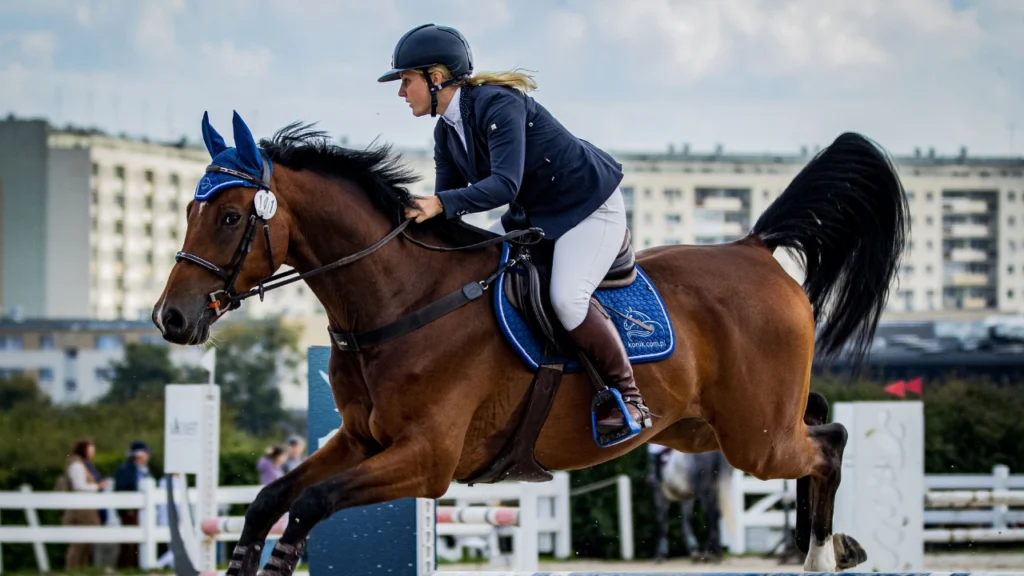
An anchor product gives customers a reason to discover the horse and rider product collection. It might be a well-fitting pair of breeches, a dependable saddle pad, a show shirt or a rug suited to a defined use. Select it according to your customer and the brand’s existing strengths.
Then choose complementary items that improve the buying experience. A training breech could be accompanied by a riding top and gloves; a saddle pad could be paired with an ear bonnet. These products should make sense together even if they are sold individually.
| Range role | Example | Reason to include it |
|---|---|---|
| Rider anchor | Breeches or show shirt | Establishes fit and apparel identity |
| Horse anchor | Saddle pad or rug | Addresses a clear horse-product need |
| Functional companion | Gloves or lightweight layer | Adds a useful purchase option |
| Coordinating accessory | Ear bonnet | Connects the range visually |
| Future extension | Another rug weight or apparel fit | Follows evidence from initial sales |
This is a framework, not a required shopping list. The first horse and rider product collection might contain only one strong apparel line and two accessories. Its quality depends on whether the products meet real needs and can be delivered consistently.
The horse gear materials and construction guide helps compare horse products, while the riding breeches design guide provides more detailed apparel considerations.
3. Build Coordinated Product Groups
Structure a horse and rider product collection around groups customers can understand: daily schooling, competition, travel or a specific season. Each group should have a practical relationship as well as a common visual direction.
A schooling group might pair breeches with a technical top, gloves, saddle pad and bonnet. A competition group could centre on a show shirt and jacket, with selected accessories that match the collection’s presentation. A seasonal horse range might include a rain sheet and related stable item, but each still requires its own construction specification.
The horse and rider product collection should not assume that matching colours make products functionally interchangeable. A pad and rug can share a palette while requiring different fabrics, linings, closures and care instructions. The saddle pad construction guide and horse rug guide explain these differences.
Choose a small set of shared design cues: perhaps one core colour, a contrasting binding, restrained logo placement and related packaging. Allow each product the materials and dimensions it needs. Customers should be able to recognise the collection without feeling that the same treatment has been forced onto every surface.
Photograph a complete group together, then photograph each item separately. The group image shows the relationship; the individual images help buyers evaluate product details.
4. Limit Sizes and Colours Deliberately
Every style, colour and size combination creates a distinct inventory decision. Three apparel styles offered in four colours and six sizes already create 72 variants. Horse accessories add their own size, shape or adjustment options.
Before expanding the horse and rider product collection, build a simple variant matrix. Place styles in rows and the proposed colour and size combinations in columns. Mark which options have proven demand and which are experiments.
Core colours can appear across several products. Introduce less certain colours on selected items first, then expand them if customers respond. There is little value in producing a full matching range in a shade that sells poorly.
Fit deserves separate planning. Apparel sizes should follow defined body and garment measurements, while horse accessory sizes need their own dimensions and fitting references. ISO 8559-1 provides body-measurement definitions for clothing development, but a brand still needs to establish its own finished garment measurements and fit.
When the range is intended for retail, assign each variant a clear internal stock code. If GS1 GTINs are used, GS1 explains that individual size and colour variations require their own identifiers. Good product data prevents confusion when customers reorder a specific item.
5. Align Materials, Fit and Branding
A horse and rider product collection needs consistent quality expectations, not identical materials. Decide which properties matter most for each product and record the approved component references.
Breeches may require appropriate stretch recovery and opacity; a show shirt needs mobility and coverage; a saddle pad needs a suitable relationship between its outer, padding, lining and attachments. Assess each component in its finished context.
The horse and rider product collection should share a controlled palette, but colours must be reviewed on physical samples. Smooth apparel fabric, quilted textile, mesh and embroidery thread can present the same shade differently. Decide where an exact match matters and where a tonal match is acceptable.
Place branding according to use. A large decoration on a stretch panel may affect its feel or movement. Embroidery backing or a rigid patch can add bulk where the item contacts the rider or horse. Test branding methods on the actual materials before approving their placement.
The same care label should not be copied across unrelated products. Review cleaning instructions for the complete construction, including trims, coatings and decoration. ISO 3758 describes a textile care-symbol system, while the appropriate instructions must reflect the article being sold.
6. Develop and Approve Samples as a Range
Sampling a horse and rider product collection should answer two questions: does each item work, and do the approved items form a coherent range? Keep these reviews distinct so an attractive collection photograph does not conceal a fit or construction issue.
Start with prototypes that establish design direction. Review garment movement and size, horse accessory dimensions, attachments, surface feel and cleaning needs. Then revise the styles that have not met the brief.
For the horse and rider product collection, assemble a complete sample set once the principal products are close to approval. Lay them together to compare colour, branding, trim finishes and presentation. Ask whether the products layer or coordinate as planned, and whether each still makes sense as a separate purchase.
Use a current specification for every style. The sample approval checklist provides a framework for identifying the sample stage, recording corrections and confirming final materials, measurements and packaging.
Approve bulk production against identified pre-production samples made with the intended materials and components. If a fabric, zipper, buckle or branding process changes after approval, assess the replacement before production continues.
7. Prepare Production and Product Information
A quotation for a horse and rider product collection should make product-level differences visible. Confirm material costs, decoration, labels, packaging, sample charges and any setup costs. Ask whether order minimums apply by style, fabric, colour or total quantity.
The horse and rider product collection also needs a realistic shared schedule. Different styles may have different material lead times and sampling needs. Track them separately, then decide which products must arrive together for the launch.
Technical packs should define drawings, materials, dimensions, tolerances, seams, attachments, artwork and packaging. Identify shared trims across styles so a change to one reference does not create accidental inconsistency elsewhere.
Prepare the sales information from approved samples. Product pages and wholesale line sheets should state the intended use, sizes, materials, features and care information. Show important details such as grips, pockets, pad attachments and closures clearly.
Describe each item according to its own construction and supporting evidence. Products in one branded range can have different performance properties and care requirements.
8. Launch, Learn and Expand
Present the horse and rider product collection as coordinated groups while allowing customers to buy individual pieces. A rider may want the breeches first and return later for a pad; another may buy only horse accessories. Clear links between relevant products make both journeys easy.
Track sales by style, colour and size rather than looking only at total revenue. Note fit questions, returns, repeat orders and feedback about durability or care. These observations show which combinations deserve replenishment and which need revision.
The next version of the horse and rider product collection should follow evidence. Add a new fit if customers repeatedly request it, extend a popular colour to another product, or improve a fastening when feedback reveals a consistent problem.
Retain the approved patterns, material references, artwork and physical samples. Before a reorder, confirm whether the same components remain available. Document any approved change so the new production run can be compared fairly with the original.
A collection becomes more valuable when customers can rely on its core products over time. Consistency gives a horse and rider product collection a stronger foundation for later seasonal additions.
Frequently Asked Questions
How Many Products Make a Collection Feel Complete?
There is no fixed number for a horse and rider product collection. A focused range can feel complete when its main products and complementary items serve the same customer. Five useful, well-developed styles can be more persuasive than many unrelated items.
Should the Rider and Horse Products Use the Same Fabric?
They should use materials suited to their separate functions. A shared colour, trim or branding system can connect them visually. Material selection should follow fit, movement, contact and care requirements.
Which Product Should a New Brand Develop First?
Start with the product that expresses the brand’s value most clearly and can be developed to a dependable standard. Use customer feedback, category knowledge and the available development budget to make that decision.
Can Different Sizes Be Mixed in a Bulk Order?
Size mixing depends on the agreed order structure, material sourcing and manufacturer requirements. Discuss the size breakdown for each style and colour before requesting a final quotation.
When Should Accessories Be Added?
Add an accessory to the horse and rider product collection when it supports an established product or answers a clear customer need. Confirm that its sampling, minimum quantity and inventory requirements fit the range plan.
Discuss a Custom Collection
A complete horse and rider product collection starts with a defined customer and a small group of products that work together. Clear specifications, coordinated samples and controlled variants help turn that group into a range that can be launched and reordered.
Bushi Sports® can discuss custom riding apparel and horse textile accessories for equestrian brands, retailers and wholesale buyers. Share your intended products, reference designs, materials, sizes and estimated quantities to start a focused development discussion.
To discuss your sample or custom order, use the contact page, send details through WhatsApp, or email info@bushisports.com. You can also view the company location on Google Maps and connect with Bushi Sports® on LinkedIn.
Follow company updates on Instagram, Facebook, X and Threads. Additional product content is available on Pinterest, YouTube, TikTok and Medium.