Equestrian Apparel Testing: Stretch, Pilling and Recovery
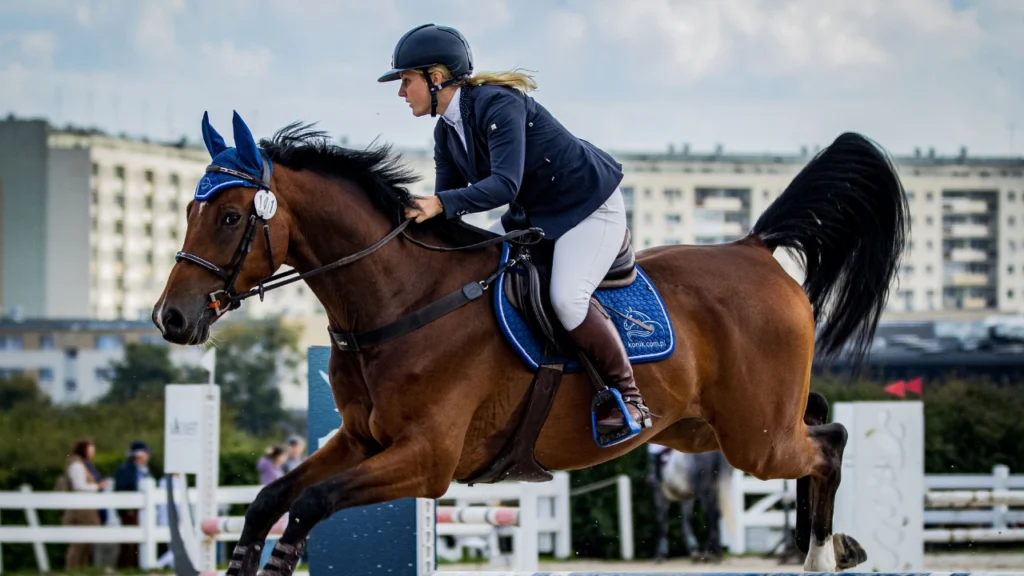
Equestrian apparel testing helps explain why a fabric that feels comfortable in a showroom may behave differently after riding, washing and repeated movement. Breeches can stretch easily yet become loose around the knees, while a show shirt can retain its shape but develop an uneven, worn-looking surface.
Stretch, recovery and pilling resistance answer different questions about material performance. Evaluating them together gives brands a clearer basis for selecting fabrics, approving samples and setting expectations for bulk production.
This guide focuses on six practical areas of equestrian apparel testing, from choosing the right procedure to checking finished garments. It builds on the equestrian apparel manufacturing and design guide, with particular attention to breeches, riding tights, base layers and competition clothing.
Table of Contents
- Plan Equestrian Apparel Testing Around the Garment
- Measure Stretch in the Required Directions
- Understand Recovery and Residual Growth
- Evaluate Pilling and Surface Appearance
- Check Performance After Washing and Garment Assembly
- Turn Test Results Into Production Requirements
- Frequently Asked Questions
- Discuss Your Next Equestrian Apparel Collection
1. Plan Equestrian Apparel Testing Around the Garment
A useful test plan begins with the intended fit, riding activity and care routine. Close-fitting riding tights, structured breeches and a lightweight show shirt do not need identical fabric behaviour.
Separate three basic properties before comparing suppliers. Stretch describes extension under defined conditions. Recovery describes how the material returns towards its original dimensions after extension. Pilling resistance concerns the formation of small fibre entanglements on the surface.

These properties should have separate acceptance criteria. A favourable result in one area does not establish performance in the others.
| Product | Stretch and recovery priorities | Surface areas worth reviewing |
|---|---|---|
| Riding breeches | Movement through the hip, seat and knee | Inner leg, seat and pocket surroundings |
| Riding tights | Comfortable extension with controlled shape retention | Seat, thighs and areas adjoining grip panels |
| Show shirts | Shoulder, elbow and torso mobility | Underarms, sleeve contact and areas beneath jackets |
| Base layers | Extension during movement and recovery after wear | Underarms, side body and sleeve surfaces |
| Show jackets | Coordinated movement of outer fabric and internal layers | Elbows, sleeves and contact with adjoining clothing |
Equestrian apparel testing should also reflect the actual construction. A fabric suitable for a relaxed shirt may not meet the requirements of a closely fitted riding tight.
Record the intended use and product features before requesting laboratory work. This allows the laboratory and manufacturer to discuss relevant methods rather than supplying a generic package that overlooks important requirements.
2. Measure Stretch in the Required Directions
Stretch should be measured under controlled conditions, not judged only by pulling a swatch between the hands. Manual handling is useful for initial comparison, but the applied force, measurement length and direction are rarely consistent.
In equestrian apparel testing, identify lengthwise and widthwise directions explicitly. Commercial descriptions such as “two-way stretch” and “four-way stretch” should be supported by directional measurements rather than treated as complete specifications.
The two-way versus four-way stretch fabric guide explains these descriptions in more detail. Pattern orientation must then place the available stretch where the garment needs it.
Choose a Suitable Test Method
ISO 20932-1 describes strip and loop approaches for measuring fabric elasticity and related properties, excluding narrow fabrics. The laboratory should identify the applicable procedure and amendment when preparing the test plan.
For fabrics woven wholly or partly from stretch yarns, ASTM D3107 covers stretch, growth and recovery under specified tension and extension. Its results should be interpreted within that method’s conditions rather than treated as universal fabric ratings.
Method selection matters in equestrian apparel testing because knitted and woven structures can behave differently. Waistband elastic also needs an assessment appropriate to its construction; a main-body fabric result does not establish elastic-band performance.
Consider the Force Required to Stretch
Two fabrics may reach similar extension while requiring different forces. The more resistant fabric may feel firmer, which could suit one product and restrict another.
Evaluate extension alongside the intended fit, seam construction and opacity. More stretch is not automatically better if the garment becomes overly transparent, unstable or difficult to size consistently.
3. Understand Recovery and Residual Growth
Recovery determines how well a fabric returns after being extended. Residual growth describes the enlargement remaining after a defined relaxation period. Both are relevant when investigating bagging at the knees, seat or elbows.
Equestrian apparel testing should specify how far or how forcefully a specimen is stretched, how long it remains loaded and when the relaxed measurement is taken. Without those details, two recovery claims may describe different conditions.
A Simple Measurement Example
Consider a hypothetical marked fabric length of 20 centimetres. Under an agreed load, it extends to 26 centimetres. The increase is 6 centimetres, equivalent to 30% of the original length.
After unloading and the agreed relaxation period, suppose it measures 20.4 centimetres. The remaining increase is 0.4 centimetres, or 2% residual growth relative to the original length.
That 2% growth should not automatically be described as 98% recovery. Recovery calculations can use a different denominator, including the extension originally imposed. Reports must identify the calculation used.
This example illustrates terminology rather than prescribing a standard procedure or acceptance target.
Relate the Result to Riding Fit
For breeches, review how the material behaves around repeatedly flexed areas and whether the completed garment retains its intended shape. The horse riding breeches design guide connects these material decisions with rise, seat, knee and waistband construction.
Equestrian apparel testing should also distinguish fabric recovery from fit problems. A waistband that slips may involve sizing, pattern balance or elastic attachment, even when the main fabric performs well.
Where repeated extension is relevant, agree on an appropriate cyclic assessment. A single pull and release cannot describe every aspect of prolonged use.
4. Evaluate Pilling and Surface Appearance
Pilling develops when surface fibres become entangled into small clusters. Fuzzing and matting describe other changes in surface appearance and should be identified separately where the assessment method requires it.
For equestrian apparel testing, review the surfaces exposed to repeated contact with the saddle, adjoining clothing and the garment itself. Laboratory results can support material selection, while finished-sample reviews help locate product-specific wear.
Pilling Methods for Equestrian Apparel Testing
ISO 12945-2 specifies a modified Martindale method for assessing resistance to pilling, fuzzing and matting. ISO 12945-4 addresses visual assessment of these changes.
Ask the laboratory to report the method, exposure stages, specimen preparation and assessment procedure. A grade without these details is incomplete.
Do not confuse a Martindale pilling result with a Martindale abrasion result. The shared equipment name does not make the procedures or endpoints interchangeable. Resistance to visible pilling is different from resistance to wearing through a material.
Review the Actual Fabric Surface
Equestrian apparel testing should cover the finish proposed for production. Brushing, printing or other finishing changes can make a previously tested reference less representative of the final material.
For a garment with a brushed inner face, decide whether both surfaces need assessment. The smooth outer and raised inner surface have different appearance requirements.
Avoid approving an “anti-pilling” claim solely from a supplier description. Ask what evidence supports it and whether the claim relates to an untreated specimen or one prepared using an agreed care procedure.
A favourable result supports a defined performance statement; it does not establish that a garment will never pill under any conditions.
5. Check Performance After Washing and Garment Assembly
Equestrian apparel testing becomes more useful when it considers the care routine intended for the finished garment. Testing only an unused swatch leaves uncertainty about how appearance, dimensions and material behaviour may change after cleaning.
Define Washing and Drying Clearly
ISO 6330 provides domestic washing and drying procedures for textile testing. It includes defined procedure options and notes that equipment and other parameters can affect results.
Agree on the appropriate wash procedure, detergent, drying method and number of repetitions. Record these details rather than describing a sample simply as “wash tested.”
Where required, reassess stretch, residual growth and surface appearance after preparation. Also measure garment dimensions separately: laundering-related shrinkage and residual growth after stretching describe different changes.
Assess the Complete Garment
A fabric may recover satisfactorily while the garment remains restricted by a seam, waistband, lining or decoration. Conversely, a garment can feel comfortable initially but show distortion around an attachment after repeated use.
Equestrian apparel testing should therefore include finished samples made with the planned trims and construction. Review bending, reaching and seated riding positions, then inspect the garment after the agreed wear and relaxation period.
For show shirts, pay attention to shoulder movement, sleeve extension and appearance beneath a jacket. The equestrian show shirts guide explains the relationship between these design features.
For tailored products, examine the outer fabric, lining and internal support together. The show jacket construction guide provides further context for coordinating these layers.
If grip printing or a bonded detail is included, review the treated area as well as the untreated fabric. Local additions can change how a panel extends and returns.
6. Turn Test Results Into Production Requirements
Equestrian apparel testing should produce clear purchasing decisions. A report has limited value if the tested specimen cannot be connected to the material delivered for production.
Identify the supplier reference, fabric construction, composition, weight, colour, finish and production lot where available. The report should also state the test method, specimen direction, preparation and relevant conditions.
Compare Materials Fairly
Compare results produced under equivalent procedures. For recovery, check loading and relaxation conditions; for pilling, check the method and assessment stage. Ask for individual results or their spread where this is needed to judge consistency.
Consider a hypothetical riding-tight development project. Fabric A extends further but retains more growth after the same agreed procedure. Fabric B extends less but returns more closely to its original dimensions. The right choice depends on the required fit and movement, together with surface appearance and garment trials.
Equestrian apparel testing should not reduce that decision to whichever material has the largest stretch percentage.
Write Requirements Before Bulk Approval
Set equestrian apparel testing requirements with the manufacturer and laboratory before testing the final candidates. Avoid treating a single pilling grade or recovery percentage as a universal requirement for every product.
Use the sample approval checklist to record the chosen material, test evidence, garment comments and authorised revisions. Retain an identified reference sample for comparison with production.
For repeat orders, review changes in yarn, fabric structure, finishing or supplier source. Previous results may no longer represent a changed material, even when the composition label remains the same.
Finally, use equestrian apparel testing evidence to support accurate product descriptions. Claims such as “shape-retaining” or “pilling-resistant” should correspond to documented performance and the intended application.
Frequently Asked Questions
Is Four-Way Stretch Enough to Establish Fabric Quality?
No. The description does not establish the amount of extension, the force required, recovery or pilling resistance. Equestrian apparel testing should assess these properties separately and connect them with the garment’s intended fit and movement.
Does More Elastane Always Improve Recovery?
No. Elastane percentage is one part of a material specification. Yarn construction, fabric structure, finishing and the complete garment also matter. Use equestrian apparel testing to compare measured results rather than ranking fabrics only by the percentage shown on their composition labels.
Can Pilling Resistance Predict Abrasion Durability?
Not by itself. Pilling concerns surface appearance, while abrasion testing can assess different forms of wear, including material breakdown. A product exposed to repeated rubbing may need both assessments, with suitable procedures and separate acceptance criteria.
Why Do Breeches Become Loose Around the Knees?
Residual fabric growth is one possible contributor, but pattern shape, sizing and construction should also be reviewed. Equestrian apparel testing helps investigate the material, while controlled garment trials show how the complete product behaves during movement.
Should Fabric Be Tested Before or After Washing?
Depending on the product requirements, both conditions may be useful. Agree on the care procedure and timing before testing. Comparing prepared and unprepared specimens can help identify changes relevant to the instructions supplied with the garment.
Discuss Your Next Equestrian Apparel Collection
Equestrian apparel testing gives buyers a clearer basis for balancing mobility, surface durability and shape retention. Combining laboratory evidence with finished-garment assessment helps resolve development questions before materials are committed to bulk production.
Bushi Sports® can discuss custom breeches, riding apparel and competition clothing for brands, retailers and wholesale buyers. Share your intended fit, fabric preferences, care requirements and existing test specifications so these can be considered during sample development.
To discuss your sample or custom order, use the contact page, send details through WhatsApp, or email info@bushisports.com. You can view the company location on Google Maps and connect with Bushi Sports® on LinkedIn.
Follow company and product updates on Instagram, Facebook, X and Threads. Explore additional content on Pinterest, watch videos on YouTube and TikTok, or read further articles on Medium.