Horse Rug and Blanket Guide: Materials, Weight and Seasonal Use
Horse Rug and Blanket Guide explains how shell fabrics, linings, insulation, closures and pattern construction change the purpose of an equestrian rug. A turnout rug, stable blanket, rain sheet, cooler and fly rug may share a similar outline, but they require different materials and performance priorities.
For equestrian brands and private-label buyers, these differences affect positioning, testing, care and repeat orders. This Horse Rug and Blanket Guide provides a framework for building seasonal collections without treating one rug as suitable for every horse or condition.
Table of Contents
- Main horse rug and blanket types
- Outer shell materials
- Linings and insulation
- Fill weight and seasonal use
- Pattern and construction details
- Fit and sizing
- Waterproofing and breathability claims
- Private-label development
- Testing and quality control
- Care and frequently asked questions
Why This Horse Rug and Blanket Guide Matters
A Horse Rug must be designed around a defined use. Stable products primarily need indoor comfort, easy care and suitable insulation. Turnout products face wind, rain, mud and repeated movement. Coolers need to manage moisture after exercise, while fly rugs require airflow, coverage and stable mesh construction.
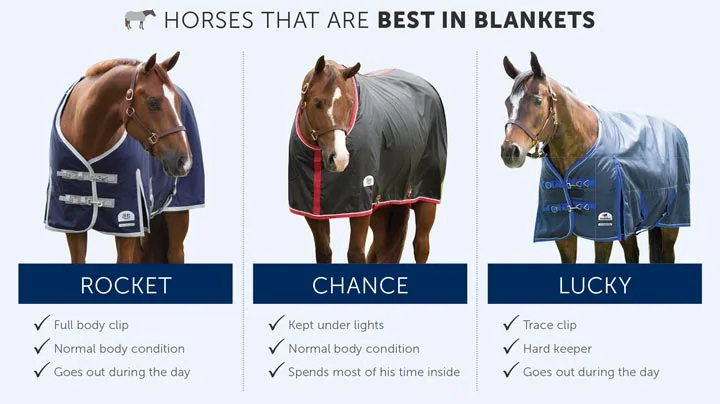
Material weight alone cannot define whether a rug is appropriate. The horse’s coat, clipping status, age, health, body condition, workload, shelter and local weather all matter. Wind and rain can also change conditions quickly.
Current World Horse Welfare rugging guidance advises owners who decide to use a rug to choose an appropriate size, fit and weight for the individual horse. A veterinarian or qualified equine professional should be consulted when health, weight or thermoregulation is a concern.
Bushi Sports® develops custom wholesale horse rugs and blankets with options for outer shells, linings, fill weights, neck styles, gussets, closures, straps, colors, branding, labels and packaging.
Horse Rug and Blanket Guide to Product Types
Each product type should have a separate technical specification. Changing only the fill weight does not automatically convert a stable blanket into a turnout rug because the outer, seams, closures and fit may also need to change.
| Horse Rug type | Primary use | Typical material priorities |
|---|---|---|
| Turnout rug | Outdoor weather exposure | Durable shell, weather protection, secure fit and movement |
| Rain sheet | Lightweight rain coverage | Low-bulk shell, water resistance and seam control |
| Stable blanket | Indoor or sheltered use | Comfort, insulation, breathability and easy cleaning |
| Cooler | After exercise, bathing or travel | Moisture handling, drying and controlled coverage |
| Fleece rug | Stable, travel or cooler use | Softness, warmth and moisture management |
| Fly rug | Insect coverage in warmer weather | Airflow, mesh stability, coverage and soft edges |
| Summer sheet | Lightweight coverage | Breathability, low weight and easy care |
| Travel rug | Transport and showground use | Stable fit, surface protection and manageable warmth |
A coordinated range does not need every category. Brands should select products that match their customers, climate and retail calendar. The wider Horse Gear Materials and Construction Guide explains how rug materials relate to other equestrian products.
Horse Rug Outer Shell Materials
The outer shell establishes surface durability, appearance, weather behavior and much of the product’s weight. Buyers should specify fibre composition, weave, yarn size, fabric weight, coating or lamination, color and required test results.
Polyester Shells
Woven polyester can provide consistent color and compatibility with coatings, printing and branded trims. Performance depends on the yarn, weave, density and finish rather than fibre name alone.
Recycled polyester may be considered for selected Horse Rug programs when traceability and performance are verified. The Bushi Sports® comparison of recycled polyester and virgin polyester explains sourcing and performance questions buyers should review.
Nylon Shells
Nylon may be selected for toughness, abrasion behavior or hand feel. It responds differently from polyester to moisture, UV exposure, heat and dyeing, so substitution requires approval.
Cotton and Poly-Cotton Materials
Cotton and poly-cotton may suit stable or summer sheets, but shrinkage, drying time and colorfastness must be checked using the planned care process.
Mesh Materials
Fly rugs often use mesh for airflow and insect coverage. Evaluate hole size, stiffness, snag resistance and recovery because more open structures provide different coverage and durability.
Understanding Denier and Fabric Strength
Denier describes yarn linear density; it does not independently prove the tear strength, waterproofness or service life of a finished Horse Rug. Fabric construction, yarn type, weave density, coating, finishing and seam design also influence performance.
A higher denier can indicate a heavier yarn within a comparable system, but two shells with the same denier may produce different test results.
The Horse Rug and Blanket Guide recommends recording:
- Fibre composition, yarn and fabric weight
- Weave, finish and coating reference
- Tear, tensile and abrasion requirements
- Water-resistance, breathability and colorfastness methods
Marketing descriptions should correspond with supplier documentation and finished-product testing.
Linings Used in Horse Rugs and Blankets
The lining influences surface feel, moisture behavior and cleaning and should remain smooth around seams and reinforcements.
Polyester and Nylon Linings
Smooth synthetic linings can reduce friction and dry relatively quickly. Check snagging, static, colorfastness and seam puckering.
Cotton and Poly-Cotton Linings
Cotton-rich linings provide softness and absorbency but can dry more slowly. Unequal shrinkage between lining and shell can distort the blanket.
Fleece and Brushed Linings
Fleece or brushed materials add warmth and softness. Check pile density, pilling, moisture retention and bulk around binding or strap attachments.
Mesh and Moisture-Managing Structures
Mesh or technical knits may support ventilation and drying, but breathability claims should apply to the finished layered system.
Textile documentation can form part of a material-safety program. OEKO-TEX® STANDARD 100 covers textiles tested for harmful substances, but any certification claim requires valid documents for the relevant component or article.
Horse Rug Fill Weight and Insulation
Insulated rugs often describe synthetic fill in grams per square metre, commonly written as g/m². This is a manufacturing specification for the fill layer, not a universal temperature rating.
Lightweight, medium-weight and heavyweight boundaries vary by brand. Publish the actual fill specification without promising suitability for every horse or climate.
| Fill construction | General product position | Development priorities |
|---|---|---|
| No fill | Rain sheet, summer sheet or lightweight stable layer | Shell, lining, drape and weather requirements |
| Light fill | Transitional or lightly insulated product | Even distribution and low bulk |
| Medium fill | General cold-season range | Loft, quilting stability and closure strength |
| Heavy fill | Higher-insulation collection | Fill migration, weight, drying and freedom of movement |
Check batting for loft, recovery, migration and stability. Quilting can control fill, but dense stitching may create compressed channels.
This Horse Rug and Blanket Guide avoids assigning fixed temperatures to fill weights. Rugging decisions should reflect the individual horse, real-time weather, access to shelter and professional advice rather than a product chart alone.
Seasonal Horse Rug Selection
Seasonal names help organize collections, but weather overlaps. Owners should monitor the horse and adjust rather than using one rug solely because of the month.
Spring and Autumn
Transitional conditions may call for rain sheets, lighter blankets or flexible layering. Products should remain manageable as temperatures change, and owners must remain alert to over-rugging.
Summer
Fly rugs prioritize airflow and coverage. Clearly specify mesh density, any supported UV claims, neck coverage, belly panels and tail flaps. Summer products still require monitoring.
Winter
Winter ranges may include stable blankets, turnout rugs and several fill options. Individual needs vary, so weather protection, fit and monitoring matter more than choosing the highest fill.
Travel and Recovery
Travel and cooler products require stable fit, moisture management and easy removal. Wet products should not remain in place after their purpose has ended.
Horse Rug Pattern and Construction
The pattern controls coverage, balance and freedom of movement. Rug shape should be reviewed on representative horse profiles rather than approved only from flat measurements.
Neck Styles and Toplines
Options include standard, high, combo and detachable necks. Seams, closures and overlaps should remain smooth, secure and correctly aligned.
Shoulder Gussets
Gussets can provide movement when correctly shaped and positioned. Check their seams, reinforcement and interaction with the front closure during trials.
Front Closures
Fronts may use buckles, clips or layered closures. Hardware needs smooth edges, suitable corrosion resistance, secure attachment and an appropriate adjustment range.
Surcingles and Leg Straps
Cross surcingles, belly straps and leg straps support stability. Define their position, length, elastic content, hardware and reinforcement by size.
Tail Flaps and Rear Details
Tail flaps provide coverage, while cords and rear straps require adequate clearance, secure attachment and easy cleaning.
The Bushi Sports® guide to sportswear stitching types provides a general seam overview. Horse Rug construction still requires equipment-specific thread, needle, reinforcement and seam testing.
Waterproofing, Breathability and Seam Claims
A water-resistant fabric does not automatically create a waterproof Horse Rug. Needle holes, panel joins, binding, closures and seam placement can allow water entry. Coatings and membranes can also lose performance through abrasion, contamination, incorrect washing or age.
Define the test method, threshold and whether results apply to fabric or finished product. If seams must resist water, specify the required sealing method.
Support breathability with a named method and result. Retain test reports, approved swatches and care requirements instead of using “waterproof and breathable” as an unverified phrase.
Horse Rug Fit and Size Grading
Sizing methods vary by market. Brands should publish one clear measurement method together with finished dimensions and tolerances.
A properly selected rug should remain balanced without restricting the shoulders, pressing at the withers or shifting excessively. Closures and rear coverage should align correctly.
Fit must be checked regularly because body condition, coat, clipping and layering can change. Any rug causing rubbing, hair loss, swelling, restricted movement or distress should be removed and reassessed.
Grade the neck, length, depth, gussets and straps together because increasing only overall length can distort larger sizes.
Private-Label Horse Rug Development
Bushi Sports® supports B2B buyers developing custom wholesale equestrian gear for retailers, brands, riding clubs and distributors. A complete Horse Rug brief should identify:
- Product type and intended season
- Outer fabric, weave, denier and coating
- Lining and fill specification
- Size range and grading method
- Neck, gusset and tail-flap design
- Front closures, surcingles and leg straps
- Waterproofness, breathability and strength tests
- Colors, piping, binding and branding
- Care labels, hang tags, barcodes and packaging
- Estimated quantity and delivery market
Branding may include embroidery, labels, badges, printed panels, webbing and packaging. Position rigid logos away from flexing and high-friction areas.
The private-label equestrian gear manufacturing guide explains collection planning, OEM, ODM and sourcing in more detail.
Sampling and Quality Control
The prototype confirms pattern direction and compatibility. The pre-production sample should represent final materials, dimensions, construction, branding and packaging.
This Horse Rug and Blanket Guide recommends checking:
- Shell, lining and fill against approved references
- Finished length, depth and neck dimensions
- Symmetry, balance and gusset movement
- Closure, surcingle and leg-strap placement
- Hardware edges, finish and attachment
- Seam security and reinforcement
- Fill distribution and quilting
- Waterproof and breathability claims where specified
- Branding, packaging and cleaning performance
The Bushi Sports® sample approval checklist can be expanded with these Horse Rug checks. Every approved correction should be recorded in the technical pack before bulk cutting begins.
Care and Storage
Remove loose dirt before washing, close fasteners where specified and use compatible detergent. Avoid treatments that may damage coatings, membranes, adhesives or finishes.
Rugs should be completely dry before storage to reduce odor, staining, coating damage and corrosion. Repair damaged straps, seams or closures before reuse.
Care labels should distinguish between washable stable blankets, coated turnout products, fleece coolers and other constructions. One generic care label may not be suitable for an entire collection.
Horse Rug and Blanket Guide FAQs
1. What is the difference between a horse rug and a horse blanket?
The terms often vary by region. “Horse rug” is common in the United Kingdom, Australia and related markets, while “horse blanket” is widely used in North America. Product specifications are more important than the regional name.
2. Does a higher denier always mean a stronger Horse Rug?
No. Denier describes yarn linear density. Tear strength and durability also depend on fibre, weave, fabric density, coating, finishing, seams and the complete construction.
3. What does fill weight mean?
Fill weight usually describes the mass of the insulation layer in grams per square metre. It helps compare products within a range but does not provide a universal temperature rating.
4. Are turnout rugs always waterproof?
No. Performance depends on the shell, coating or membrane, seams, closures, wear and care. Waterproof claims should be supported by a defined test method and threshold.
5. How should a Horse Rug fit?
It should remain balanced, allow shoulder movement and avoid tight pressure around the withers, chest and neck. Sizing methods vary, so buyers and owners should follow the relevant brand’s measurement guide.
6. Can Bushi Sports® customize rug fill and construction?
Yes. Custom programs can define the outer, lining, fill weight, neck style, gussets, closures, straps, colors, branding, labels and packaging, subject to development feasibility and order requirements.
7. Can recycled materials be used in horse rugs?
Verified recycled polyester may be considered when it meets the required performance. Textile Exchange explains how the Global Recycled Standard tracks recycled materials through the supply chain.
8. What is required for a custom quotation?
Provide the rug type, intended season, materials, fill, sizes, construction details, test requirements, branding, quantity, packaging and delivery destination.
Conclusion
A dependable Horse Rug combines an appropriate shell, lining, insulation, pattern, closures and care process. Denier and fill weight are useful specifications, but neither should be treated as a complete measure of quality or seasonal suitability.
This Horse Rug and Blanket Guide gives B2B buyers a clear method for comparing materials, reviewing samples and creating focused seasonal collections. Bushi Sports® supports equestrian brands, retailers, distributors and clubs with development, sourcing, customization, sampling, bulk production, quality control and private-label packaging.
To discuss a custom Horse Rug sample or wholesale order, contact Bushi Sports® through the contact page, send your requirements by WhatsApp, or email info@bushisports.com. You can also view the company location on Google Maps.
Follow Bushi Sports® on LinkedIn, Instagram, Facebook, X, Threads, Pinterest, TikTok, YouTube and Medium.