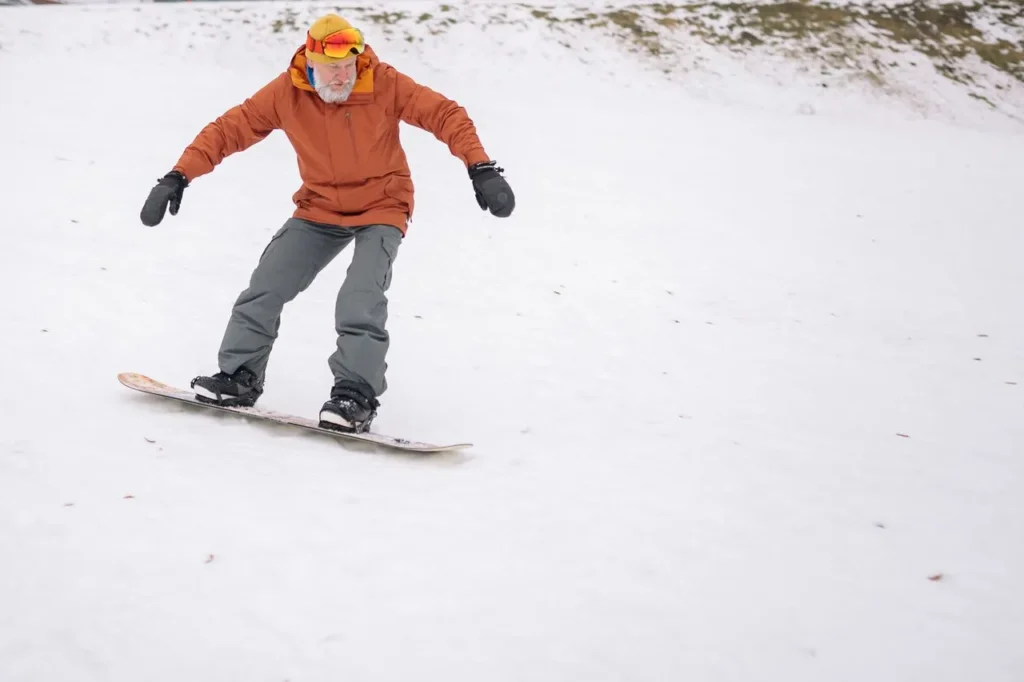
Snowboard gloves must protect the hands from cold, wind, snow, moisture, abrasion, and repeated contact while still allowing the rider to adjust bindings, operate zippers, carry a board, use lift bars, handle phones, and maintain balance.
That combination makes winter handwear difficult to engineer.
A thick glove may feel warm in a showroom but become clumsy when the rider tightens a boot or clears snow from a binding. A waterproof membrane may block external moisture yet trap perspiration if the lining and shell cannot move vapor effectively. A soft palm may provide excellent board feel but wear quickly against binding hardware and rough edges. A long gauntlet may improve snow protection while becoming uncomfortable under a jacket cuff.
For these reasons, choosing a snowboard gloves manufacturer involves much more than selecting insulation weight and adding a logo. Brands, resorts, retailers, distributors, winter-sports clubs, and private label buyers need a supplier that understands thermal systems, waterproof inserts, palm materials, pre-curved patterns, cuff architecture, moisture management, cold testing, labeling, and repeatable bulk manufacturing.
BUSHI Sports® provides custom wholesale snowboard gloves manufacturing for winter-sports brands, retailers, resorts, clubs, distributors, and private label businesses. Projects can include five-finger designs, mittens, trigger-finger constructions, insulated youth models, waterproof inserts, reinforced palms, touchscreen details, wrist leashes, custom colors, labels, packaging, sampling, and bulk production.
Buyers can also connect snowboard gloves with the wider custom sports gloves collection and BUSHI Sports® manufacturing services covering product development, sampling, customization, quality control, packaging, and international order coordination.
This guide explains twelve design and manufacturing decisions that influence warmth, dryness, dexterity, grip, durability, fit, and commercial performance.
“A dependable winter glove is not created by adding the most insulation. It is created by balancing insulation, moisture control, fit, grip, and movement around the conditions in which the rider will actually use it.”
Snowboard Gloves, Mittens, and Trigger Designs Are Different Products
The winter-sports market includes several handwear constructions:
- Five-finger snowboard gloves
- Snowboard mittens
- Trigger-finger or three-finger gloves
- Under-cuff gloves
- Over-cuff gauntlet gloves
- Lightweight spring-riding gloves
- Insulated resort gloves
- Technical backcountry gloves
- Youth snowboard gloves
- Removable-liner systems
- Leather and synthetic hybrid gloves
- Heated-compatible designs
A snowboard gloves manufacturer should not treat these products as cosmetic variations of one pattern.
Five-finger snowboard gloves offer the most individual finger movement. Mittens place the fingers together, which can support warmth but reduce independent dexterity. Trigger-finger constructions separate the index finger while keeping the remaining fingers together, creating a compromise between warmth and control.
| Product type | Main priority | Typical construction direction | Main development risk |
|---|---|---|---|
| Five-finger glove | Dexterity and equipment control | Pre-curved fingers, mapped insulation, articulated palm | Cold finger separation or bulky seams |
| Mitten | Warmth and simple construction | Shared finger chamber, broad insulation, reinforced palm | Reduced fine control |
| Trigger-finger glove | Balance of warmth and control | Separate index, grouped remaining fingers | Uneven fit or difficult grading |
| Spring glove | Low bulk and breathability | Light insulation or brushed lining | Insufficient warmth for cold days |
| Resort glove | Versatile weather protection | Waterproof insert, moderate insulation, durable shell | Moisture buildup during active riding |
| Backcountry glove | Moisture management and layered use | Breathable shell, removable liner, secure cuff | Complex fit and higher component count |
| Youth glove | Warmth, easy entry, secure retention | Wider opening, simple closure, soft insulation | Adult pattern scaled down incorrectly |
Secret 1: Define the Riding Environment Before Choosing Insulation
The first step is not selecting a fashionable shell fabric. It is defining where, when, and how the product will be used.
The buyer brief should identify:
- Resort, freestyle, freeride, splitboard, backcountry, or casual snow use
- Expected temperature range
- Dry-cold or wet-snow conditions
- Typical activity level
- Five-finger, mitten, or trigger construction
- Over-cuff or under-cuff preference
- Removable or fixed liner
- Palm durability requirement
- Touchscreen requirement
- Adult, women’s, junior, or unisex sizing
- Intended retail price
- Required performance claims
- Destination-market compliance needs
A rider standing in lift lines has different thermal needs from a splitboarder climbing uphill. The first may prioritize insulation and wind protection, while the second needs moisture management and a system that remains comfortable during high-output movement.
The same snowboard gloves cannot provide maximum insulation, minimum bulk, maximum breathability, complete waterproofness, high touchscreen sensitivity, and the lowest cost without trade-offs.
A capable snowboard gloves manufacturer should help the buyer prioritize the product rather than hiding those compromises behind vague phrases such as “all-weather performance.”
Build a Use-Case Matrix
| Use case | Thermal direction | Moisture direction | Dexterity direction |
| Cold resort riding | Higher insulation | Waterproof insert and controlled breathability | Moderate |
| Wet coastal snow | Water resistance and seam control | Strong finished-product leak management | Moderate |
| Spring park riding | Low insulation | High breathability and quick drying | High |
| Backcountry ascent | Layered or removable liner | Vapor management and drying | High |
| Youth resort use | Warm, forgiving insulation | Waterproof insert and easy cuff sealing | Simple operation |
| Rental or school program | Durable, easy-care materials | Reliable insert and reinforced shell | Straightforward fit |
The product brief should also define what the snowboard gloves are not intended to do. A light spring model should not be marketed for extreme cold. A highly insulated resort model should not be described as ideal for sustained uphill touring unless the moisture system has been evaluated for that use.
Secret 2: Treat Warmth as a Complete Thermal System
Warmth does not come from insulation alone.
The thermal performance of snowboard gloves depends on:
- Insulation type
- Insulation thickness
- Loft retention
- Wind resistance
- Waterproof insert
- Lining
- Fit
- Cuff seal
- Moisture accumulation
- Finger configuration
- Compression at the palm
- Rider activity
Insulation may be made from:
- Polyester fiberfill
- Microfiber synthetic insulation
- Fleece
- Brushed tricot
- Wool-blend materials
- Foam layers
- Multi-layer synthetic systems
- Down in selected premium applications
A snowboard gloves manufacturer should document the insulation by material type and measured mass or thickness rather than relying only on marketing names.
Insulation Mapping
The same amount of insulation should not automatically be placed everywhere.
More loft may be useful across:
- Back of the hand
- Finger backs
- Fingertips
- Thumb back
- Cuff transition
Less bulk may be preferred across:
- Palm
- Finger gripping surfaces
- Thumb-index junction
- Areas operating buckles and zippers
This approach protects dexterity while concentrating thermal material where compression is lower.
Compression Reduces Effective Loft
When the rider grips a bar, board, binding, or tool, palm insulation compresses. Excess padding in that area can reduce feel without maintaining its original thickness.
A useful construction may combine:
- Higher-loft backhand insulation
- Thinner palm insulation
- Wind-resistant outer shell
- Moisture-managing lining
- Waterproof insert
Fit Influences Warmth
Snowboard gloves that are too tight compress insulation and restrict movement. Gloves that are too loose allow the hand to shift, create air gaps in the wrong places, and make fine tasks difficult.
The fingers should reach near the ends without constant pressure. The palm should remain stable, and the cuff should close without restricting circulation.
“Insulation only performs as intended when the glove preserves loft, controls moisture, blocks wind, and fits without compression.”
Secret 3: Choose Between Fixed and Removable Liner Systems
The liner is the layer the hand touches, but it also influences moisture, drying, fit, and production complexity.
Fixed Liners
A fixed liner is attached inside the shell.
Advantages may include:
- Stable fit
- Easier hand entry when engineered correctly
- Lower risk of liner twisting
- Simpler consumer use
- Reduced component loss
Potential problems include:
- Slower drying
- Difficult repair
- Liner pull-out if attachment points fail
- Moisture trapped between layers
Removable Liners
A removable liner can be taken out for drying or used separately.
Advantages may include:
- Faster drying
- Layering flexibility
- Replaceable inner component
- Adaptation to different temperatures
Potential problems include:
- Increased bulk
- More complicated sizing
- Liner movement
- Lost components
- Higher production and packaging cost
A snowboard gloves manufacturer should define how the liner is anchored. Common attachment points include fingertips, thumb, and cuff. If those connections are too weak, the lining may invert when the glove is removed.
Lining Materials
Possible lining materials include:
- Brushed polyester
- Microfleece
- Tricot
- Jersey
- Wool-blend knit
- Moisture-managing synthetic fabric
The lining should be evaluated for:
- Skin comfort
- Moisture absorption
- Drying time
- Pilling
- Colorfastness
- Seam irritation
- Shrinkage
- Odor retention
Antimicrobial or anti-odor claims should only be used when the actual treated material and supporting evidence are available.
Secret 4: Engineer Waterproofing at Both Material and Product Level
Waterproof construction is one of the most misunderstood areas in winter glove manufacturing.
A shell fabric may resist water penetration while the finished glove still leaks through:
- Seams
- Needle holes
- Insert joins
- Finger construction
- Cuff opening
- Wrist adjustment
- Damaged membrane areas
ISO 811:2018 specifies a hydrostatic-pressure method for determining a fabric’s resistance to water penetration. It is useful for comparing shell fabrics, coated textiles, and laminates. However, it is a fabric test rather than proof that the assembled snowboard gloves are waterproof.
A complete waterproof-development plan should include:
- Shell-fabric testing
- Insert or membrane testing
- Seam and join review
- Finished-glove leak testing
- Flex conditioning
- Wet-use trials
- Drying assessment
Waterproof Inserts
A glove insert may be:
- Free-floating
- Partially anchored
- Fully bonded
- Laminated to another layer
Each method affects fit and production.
A free-floating insert can move independently but may wrinkle or pull out. A bonded insert can improve stability and reduce bulk but requires controlled lamination and may change breathability.
Insert Construction Risks
Common failure points include:
- Finger-tip welding
- Thumb joins
- Cuff opening
- Sharp seam allowances
- Damage during turning
- Needle puncture
- Incorrect adhesive temperature
The snowboard gloves manufacturer should inspect inserts before and after assembly.
Water-Resistant vs Waterproof
These terms should not be used interchangeably.
A water-resistant shell can repel light moisture for a limited period. A waterproof claim should be supported by a defined material and finished-product test method, acceptance level, and test report.
Secret 5: Balance Waterproofing With Breathability
Keeping external snow out is only half of moisture management. Perspiration created inside the glove must also be considered.
ISO 11092:2026 provides methods for measuring thermal resistance and water-vapor resistance of materials and multilayer assemblies. The standard also makes clear that the laboratory conditions do not represent a specific comfort situation and do not establish a universal comfort rating.
That distinction is important.
A low material-level water-vapor resistance may support moisture transfer, but finished snowboard gloves also contain seams, insulation, grip overlays, reinforcement, and cuffs that affect actual use.
Sources of Internal Moisture
Moisture can accumulate because of:
- High rider activity
- Over-insulation
- Low-vapor-transfer shell materials
- Non-breathable palm coatings
- Tight fit
- Damp liners
- Snow entering through the cuff
- Inadequate drying between uses
Breathability Trade-Offs
Increasing waterproofness can reduce vapor transfer. Increasing ventilation may create water-entry risks. Reducing insulation can improve drying but lower warmth.
A snowboard gloves manufacturer should test complete layer combinations rather than selecting each material independently.
Practical Moisture Trials
Product trials can include:
- High-activity wear
- Lift-line rest periods
- Repeated wet and dry cycles
- Liner removal
- Overnight drying
- Cold re-use after incomplete drying
The aim is not to claim that the glove will remain completely dry in every situation. The aim is to create a balanced system and communicate realistic care instructions.
Secret 6: Develop the Palm for Grip, Abrasion, and Binding Work
The palm faces repeated contact with:
- Snowboard edges
- Binding straps
- Ratchets
- Lift bars
- Zippers
- Poles used during access
- Rails and park surfaces
- Rough luggage and equipment
Common palm materials include:
- Goat leather
- Cowhide
- Sheep leather
- PU synthetic leather
- Microfiber
- Reinforced woven fabrics
- Rubberized textiles
- Silicone-printed materials
A snowboard gloves manufacturer should specify:
- Material composition
- Thickness
- Surface friction
- Abrasion resistance
- Tear strength
- Wet grip
- Cold flexibility
- Seam strength
- Colorfastness
- Coating adhesion
Leather Palms
Leather can provide flexibility, durability, and natural grip. Its quality depends on hide selection, thickness, tanning, finishing, and panel placement.
Leather may require:
- Water-repellent treatment
- Colorfastness testing
- Thickness sorting
- Grain inspection
- Care instructions
Synthetic Palms
Synthetic materials can offer consistent thickness, color, and bulk availability. Some synthetic coatings become stiff in cold conditions or crack after repeated flexing, so cold conditioning is important.
Reinforcement Zones
High-wear reinforcement may be added at:
- Thumb-index junction
- Heel of the palm
- Finger tips
- Outer edge
- Binding-contact areas
- Board-carrying zones
The overlay should not create a ridge that reduces grip or causes pressure.
Grip Printing
Silicone or rubberized prints can improve control on tools and equipment. The print should be tested for cold flexibility, adhesion, abrasion, snow contamination, and transfer.
Secret 7: Use Ergonomic Patterning to Preserve Dexterity
Dexterity is controlled by the pattern as much as by the insulation.
Important variables include:
- Finger length
- Finger circumference
- Pre-curvature
- Fourchette width
- Thumb angle
- Palm width
- Seam placement
- Insulation distribution
- Liner volume
- Material stretch
Pre-Curved Fingers
A pre-curved pattern places the hand closer to its natural gripping position. Too much curvature makes the snowboard gloves uncomfortable when the hand opens.
Finger Fourchettes
Fourchettes are the side panels between the palm and backhand finger sections. Their width influences finger volume and movement.
Fourchettes that are too narrow can compress the fingers. Fourchettes that are too wide create loose material and reduce control.
Fingertip Construction
Bulky seams at the fingertips can interfere with binding adjustments and touchscreen use. The snowboard gloves manufacturer should control seam allowance, insulation placement, and liner anchoring at every tip.
Thumb Engineering
The thumb needs enough rotation to:
- Tighten bindings
- Operate zippers
- Hold a board
- Adjust goggles
- Use lift restraints
- Handle a phone
The thumb pattern should be tested with the intended palm and insulation stack, not as an empty fabric shell.
Dexterity Testing
Useful tasks include:
- Opening and closing zippers
- Operating binding ratchets
- Fastening jacket snaps
- Picking up small items
- Adjusting helmet straps
- Handling lift passes
- Using a phone where claimed
A thick glove may still perform well when the pattern is accurate. A thin glove can feel clumsy when fingers are too long or seams are misplaced.
Secret 8: Select the Correct Cuff Architecture
The cuff controls snow entry, sleeve interaction, retention, and hand entry.
Common designs include:
- Long over-cuff gauntlet
- Short under-cuff wrist
- Hybrid mid-length cuff
- Drawcord gauntlet
- Hook-and-loop wrist tab
- Elastic wrist
- Dual-adjustment system
Over-Cuff Gauntlets
A gauntlet sits over the jacket sleeve.
Possible advantages:
- Broad snow coverage
- Easy adjustment while wearing a jacket
- Useful in deep snow
Potential issues:
- Bulk
- Snagging
- Interference with jacket cuffs
- Snow entry if the drawcord is weak
Under-Cuff Designs
An under-cuff glove sits beneath the jacket sleeve.
Possible advantages:
- Low-profile appearance
- Reduced snagging
- Cleaner wrist movement
Potential issues:
- Difficult entry under tight sleeves
- Less protection when snow enters the jacket cuff
- Greater dependence on jacket compatibility
Wrist Adjustment
The wrist system can include elastic, a strap, or both. It should keep the snowboard gloves stable without restricting circulation.
The snowboard gloves manufacturer should test cuff systems with winter-jacket sleeves rather than evaluating them on an uncovered wrist.
Secret 9: Add Retention, Leashes, and Utility Features Carefully
Winter gloves are frequently removed on lifts, during binding adjustment, or while using a phone. Retention systems reduce the chance of dropping them.
Common features include:
- Wrist leashes
- Pairing clips
- Cuff loops
- Nose-wipe panels
- Goggle-wipe materials
- Heat-pack pockets
- Touchscreen fingertips
- Zippered utility pockets
Wrist Leashes
A wrist leash should be:
- Securely attached
- Adjustable
- Comfortable against skin
- Long enough for removal
- Short enough to avoid uncontrolled tangling
Attachment points should be pull-tested.
Pairing Clips
Clips help keep snowboard gloves together during storage. They should not create hard pressure points or become brittle in cold conditions.
Touchscreen Features
Conductive materials may be added to selected fingertips. Performance depends on fit, device, screen protector, temperature, and moisture.
The feature should be tested after:
- Flexing
- Abrasion
- Washing
- Cold conditioning
- Wet use
Absolute compatibility with every device should not be claimed.
Heat-Pack Pockets
A pocket may hold a commercially available hand warmer. The design should avoid placing excessive localized heat directly against the skin and should include appropriate consumer instructions.
Secret 10: Create Separate Adult, Women’s, and Youth Patterns
Snowboard glove sizing should not rely only on palm circumference.
A technical size system should consider:
- Hand length
- Palm width
- Finger length
- Finger circumference
- Thumb length
- Thumb angle
- Wrist circumference
- Cuff opening
- Insulation volume
- Liner thickness
Women’s Patterns
Some users need narrower palms, shorter fingers, smaller wrists, or different thumb placement than a broad unisex block provides.
A dedicated pattern can improve:
- Finger-tip position
- Palm stability
- Cuff sealing
- Touchscreen contact
- Grip control
Youth Snowboard Gloves
Youth patterns should include:
- Shorter finger channels
- Smaller palm dimensions
- Easier hand entry
- Simple closures
- Wider gauntlet openings where required
- Secure leashes
- Clear left-right identification
- Lower component stiffness
Adult snowboard gloves reduced uniformly can create overly long cuffs, oversized palm pads, poor thumb position, and finger openings that are difficult for children to use.
Growth Allowance
A small amount of room may be useful, but excessively oversized gloves reduce dexterity and can allow the hand to move inside the product.
Size-Set Approval
A proper size set should check:
- Finger reach
- Thumb alignment
- Palm wrinkles
- Cuff overlap
- Wrist adjustment
- Liner position
- Insulation compression
- Leash length
- Logo scale
- Left-right symmetry
Secret 11: Use Standards and Testing Without Making Unsupported Claims
Ordinary snowboard gloves may be sold as winter sports accessories. If a brand markets them as protective gloves against cold or mechanical hazards, additional testing and regulatory obligations may apply.
BS EN 511:2006 is the current BSI-listed standard for protective gloves against cold. Its scope includes cold-related performance, thermal insulation, watertightness testing, marking, and test conditions.
ISO 21420:2020 sets general requirements and test procedures for protective-glove design, construction, innocuousness, comfort, efficiency, marking, and manufacturer information. ISO states that it does not address specific protective properties by itself and must be used with the appropriate hazard-specific standard.
This means a snowboard gloves manufacturer should not claim EN 511 or ISO 21420 compliance simply because the glove is insulated or because its materials resemble those in another product.
The exact finished model should be assessed under the relevant requirements.
Practical Test Plan
A development and quality program may include:
- Material thermal-resistance testing
- Water-vapor resistance testing
- Shell hydrostatic-pressure testing
- Finished-glove leak testing
- Cold flexibility
- Insulation compression and recovery
- Palm abrasion
- Seam strength
- Tear resistance
- Closure cycling
- Drawcord testing
- Leash pull strength
- Touchscreen testing
- Wash and drying trials
- Size-set fitting
- Field use in relevant weather
Mechanical-Risk Claims
Industrial mechanical-risk standards address hazards such as abrasion, cut, tear, puncture, and impact. Snowboard gloves should not borrow those ratings unless the exact product has been tested and the claim is relevant to its intended market.
Appropriate claims may include:
- Reinforced palm
- Water-resistant shell
- Waterproof insert, when supported
- Insulated construction
- Wind-resistant materials
- Pre-curved fingers
- Adjustable gauntlet
Claims requiring strong evidence include:
- Certified cold protection
- Guaranteed temperature rating
- Waterproof performance
- Impact protection
- Cut resistance
- Medical circulation benefits
“A test report supports a defined model and construction. It does not automatically cover future material substitutions, new factories, or visually similar products.”
Secret 12: Preserve the Approved Construction in Bulk Production
Snowboard gloves contain many layers and components. A small production change can affect warmth, waterproofing, dexterity, or fit.
The production file should include:
- Bill of materials
- Shell fabric specification
- Palm material
- Waterproof insert reference
- Insulation type and distribution
- Lining material
- Pattern set by size
- Finger and thumb construction
- Cuff architecture
- Wrist adjustment
- Leash and clip details
- Touchscreen component
- Reinforcement map
- Artwork placement
- Color standards
- Label content
- Test requirements
- Approved pre-production sample
- Measurement tolerances
- Packaging standard
Snowboard Glove Manufacturing Process
1. Product Brief
The buyer defines the glove type, climate, activity, insulation, waterproofing, palm, fit, sizes, colors, branding, quantity, testing, and packaging.
2. Material Selection
The snowboard gloves manufacturer proposes shell fabrics, insulation, waterproof inserts, linings, palm materials, reinforcements, closures, drawcords, leashes, thread, labels, and packaging.
3. Layer-System Development
The factory compares material combinations for warmth, bulk, vapor transfer, flexibility, and cost.
4. Pattern Development
Patterns are created for palm, backhand, fingers, thumb, fourchettes, cuff, reinforcement, insert, insulation, and lining.
5. Prototype Sample
The first sample is evaluated for fit, dexterity, cuff interaction, palm grip, liner stability, and manufacturing feasibility.
6. Cold and Wet Trials
The prototype is conditioned and used in the intended environment or controlled test program.
7. Size Set
Selected sizes confirm finger grading, insulation volume, wrist fit, cuff opening, feature placement, and artwork scale.
8. Laboratory or Compliance Testing
Required material and product tests are completed on the final construction.
9. Pre-Production Sample
The buyer approves final materials, stitching, fit, colors, logos, labels, and packaging.
10. Cutting
Shell, palm, lining, insulation, insert, reinforcement, and cuff pieces are cut using controlled templates.
11. Printing and Applications
Logos, transfers, embroidery, grip prints, reflective details, and labels are applied at the correct stage.
12. Insert and Insulation Assembly
Waterproof inserts are welded, bonded, or prepared. Insulation is cut and positioned according to the approved map.
13. Sewing and Joining
Palm, backhand, fingers, thumb, cuff, closures, leashes, and utility features are assembled with in-line inspection.
14. Liner Installation
The lining is attached at controlled points to prevent twisting or pull-out.
15. Turning and Finishing
The snowboard gloves are turned, shaped, cleaned, and checked for internal seam comfort and component alignment.
16. Leak and Functional Inspection
Selected products are checked for water entry, cuff function, dexterity, closure, leash strength, and touchscreen performance where applicable.
17. Pairing and Packaging
Left and right snowboard gloves are matched by size, model, color, insulation, palm, artwork, and construction before packing.
Quality-Control Table
| Inspection area | What to check | Common failure |
| Shell | Coating, color, defects, seam performance | Leakage, delamination, shade mismatch |
| Waterproof insert | Welds, joins, punctures, alignment | Finger-tip or cuff leakage |
| Insulation | Type, mass, placement, loft | Cold zones, excessive bulk, migration |
| Lining | Attachment, comfort, drying | Pull-out, twisting, rough seams |
| Palm | Grip, abrasion, reinforcement | Cracking, slipping, holes |
| Fingers | Length, curvature, seam bulk | Loose tips, pressure, poor dexterity |
| Thumb | Angle, movement, reinforcement | Binding difficulty or seam stress |
| Cuff | Opening, drawcord, sleeve interaction | Snow entry or difficult adjustment |
| Wrist system | Elastic and strap function | Loose glove or restricted circulation |
| Leash | Length, attachment, adjustment | Detachment or tangling |
| Touchscreen tip | Position and basic operation | Inconsistent response |
| Pairing | Size, hand, color, components | Mismatched pairs |
| Labels | Composition, care, claims, traceability | Incorrect or unsupported information |
| Packaging | Dryness, shape, barcode, ventilation | Compressed insulation or trapped moisture |
BUSHI Sports® explains wider inspection principles in how quality control works in sportswear manufacturing.
Custom Branding Without Damaging Winter Performance
Snowboard gloves offer branding space across:
- Backhand
- Cuff
- Wrist strap
- Thumb
- Finger panels
- Palm print
- Leash
- Woven labels
- Packaging
Customization methods may include:
- Screen printing
- Heat transfers
- Sublimated textile panels
- Silicone or rubber logos
- TPU applications
- Embroidery
- Debossed leather marks
- Reflective graphics
- Custom zipper pulls
Keep Branding Away From Critical Flex Zones
Rigid decorations should not bridge:
- Knuckle movement lines
- Finger joints
- Thumb base
- Cuff folds
- Palm grip areas
Control Embroidery Density
Heavy embroidery can puncture waterproof layers, stiffen the shell, and create cold or leakage points. The manufacturing sequence should prevent decoration from damaging the finished insert.
Palm Graphics Become Performance Components
A silicone palm logo can change grip. It should therefore be included in abrasion, cold-flex, and adhesion testing.
Scale Artwork by Size
A logo approved on an adult large may become crowded on youth snowboard gloves. Size-specific templates preserve balance and keep decoration away from seams.
BUSHI Sports® provides related guidance in why vector artwork matters and how to prepare print-ready files.
Cost Breakdown: Why Snowboard Glove Quotations Differ
The price of snowboard gloves depends on the complete material and construction system.
Major cost drivers include:
- Five-finger, mitten, or trigger pattern
- Shell fabric
- Waterproof insert
- Insert construction method
- Insulation material and quantity
- Fixed or removable liner
- Leather or synthetic palm
- Reinforcement panels
- Gauntlet and wrist system
- Touchscreen components
- Leashes, clips, and pockets
- Adult, women’s, and youth patterns
- Branding method
- Laboratory testing
- Labels and packaging
- Order quantity
A light spring model with a synthetic palm, brushed lining, and simple cuff will generally cost less than technical snowboard gloves with a waterproof insert, mapped insulation, leather reinforcement, removable liner, long gauntlet, touchscreen fingertips, leash, utility pocket, and branded retail packaging.
The quotation should identify:
- Shell material
- Palm material
- Insert
- Insulation
- Lining
- Cuff
- Features
- Size range
- Branding
- Testing
- Packaging
- Freight basis
Terms such as “premium waterproof,” “maximum warmth,” or “high-tech insulation” are not detailed enough for supplier comparison.
BUSHI Sports® explains broader cost development in its sportswear manufacturing cost breakdown.
MOQ Considerations
Minimum order quantity may be affected by:
- Custom shell colors
- Waterproof insert minimums
- Insulation sourcing
- Leather color minimums
- Number of patterns
- Adult and youth size ranges
- Custom molds or rubber logos
- Touchscreen materials
- Printed labels
- Retail packaging
- Testing setup
A smaller launch may be possible when the buyer uses an existing pattern, available materials, standard colors, established insert construction, limited sizes, and simple packaging.
Brands can review what MOQ means in sportswear manufacturing before requesting multiple glove formats and colorways at a very small quantity.
Packaging, Care, and Storage
Snowboard gloves should be fully dry before sealed packaging.
Packaging options include:
- Printed polybags
- Recyclable paper sleeves
- Hanging cards
- Branded boxes
- Mesh storage bags
- Size stickers
- Barcodes
- Care cards
Packaging Risks
Poor packaging can cause:
- Compressed insulation
- Creased inserts
- Trapped moisture
- Odor
- Coating transfer
- Hook-and-loop damage
- Mixed pairs
- Misshapen cuffs
Consumer Care Guidance
- Follow the model-specific care instructions.
- Close hook-and-loop tabs before washing.
- Remove detachable liners before drying.
- Dry naturally away from direct heaters.
- Do not store damp snowboard gloves in a sealed bag.
- Reshape fingers and insulation during drying.
- Treat leather only with compatible products.
- Avoid harsh solvents and fabric treatments that may damage inserts or coatings.
- Inspect seams, palms, cuffs, leashes, and liners before use.
BUSHI Sports® discusses presentation and protection in how packaging influences perceived value.
How to Evaluate a Snowboard Gloves Manufacturer
Thermal Questions
- Which insulation material is used?
- How is insulation mapped across palm and backhand?
- What mass or thickness is specified?
- How is loft recovery evaluated?
- Is a temperature claim supported by testing?
Waterproofing Questions
- Which insert or membrane is used?
- Is it free-floating, anchored, or bonded?
- Is the finished glove leak-tested?
- How are finger-tip joins checked?
- Can test reports be supplied?
Fit and Dexterity Questions
- Are five-finger, mitten, and trigger patterns separate?
- Are women’s and youth patterns dedicated?
- How are finger length and thumb angle graded?
- Can a size set be produced?
- Are binding-adjustment tasks included in trials?
Material Questions
- Which palm materials are available?
- How do they behave in cold and wet conditions?
- Are high-wear areas reinforced?
- How are coating adhesion and abrasion checked?
- Can materials change without written approval?
Quality Questions
- How are insulation and liner attachment controlled?
- Are inserts inspected before and after assembly?
- How are leashes and drawcords tested?
- Are pairs functionally matched?
- Can inspection records be provided?
Commercial Questions
- What is the MOQ per model and color?
- Can quantity be divided by size?
- Are samples and testing charged separately?
- Is custom packaging included?
- What is the lead time after approval?
- Which shipping term is quoted?
A reliable snowboard gloves manufacturer should explain the trade-offs between insulation, breathability, waterproofing, dexterity, durability, and cost.
Common Product-Development Mistakes
Selecting Insulation by Thickness Alone
Material type, loft, compression, wind resistance, and moisture affect actual performance.
Calling a Glove Waterproof Because the Fabric Passed a Test
The finished product can still leak through seams, insert joins, or the cuff.
Adding Equal Insulation Everywhere
Excess palm and fingertip bulk can reduce equipment control.
Ignoring Internal Moisture
Waterproof construction can still become damp from perspiration.
Using One Pattern for Gloves and Mittens
Finger grouping changes volume, insulation, movement, and grading.
Scaling Adult Patterns Directly Into Youth Sizes
Children require different finger, palm, cuff, closure, and feature proportions.
Placing Embroidery Through Waterproof Layers
Poor decoration sequencing can create punctures and leak paths.
Adding Touchscreen Material Without Wear Testing
Conductive components may fail after flexing, washing, or cold exposure.
Making Unsupported Temperature Claims
Comfort depends on activity, circulation, moisture, fit, wind, and personal tolerance.
Replacing Materials After Testing
A new insert, insulation, palm, or shell may change the product’s performance.
Why Work With BUSHI Sports®?
BUSHI Sports® is a custom sportswear and sports gloves manufacturer based in Sialkot, Pakistan. The company supports winter-sports brands, resorts, clubs, retailers, wholesalers, distributors, and private label buyers through OEM, ODM, sampling, customization, and bulk manufacturing.
As a snowboard gloves manufacturer, BUSHI Sports® supports customization involving:
- Five-finger snowboard gloves
- Snowboard mittens
- Trigger-finger designs
- Spring, resort, and technical winter concepts
- Adult, women’s, and youth sizing
- Waterproof inserts
- Synthetic and leather palms
- Mapped insulation
- Fixed and removable liners
- Pre-curved fingers
- Under-cuff and gauntlet systems
- Wrist straps, drawcords, and leashes
- Touchscreen fingertips
- Reflective and grip prints
- Colors and private label branding
- Sample development
- Bulk production
- Quality inspection
- Custom packaging
- International order coordination
Buyers can develop snowboard gloves through the wider custom sports gloves category.
Relevant BUSHI Sports® glove-engineering resources include:
- Cycling glove ergonomic manufacturing
- Golf glove precision manufacturing
- Field hockey glove manufacturing
- Lacrosse glove protection manufacturing
- American football glove grip technology
- Cricket glove safety design
- Goalkeeper glove grip technology
- Baseball glove manufacturing
Each product uses different materials, performance targets, standards, and fit principles. Specifications should not be copied directly between sports.
Learn more through the BUSHI Sports® About Us page or submit product requirements through the contact page.
For snowboard gloves manufacturing inquiries:
- Message BUSHI Sports® on WhatsApp
- Email info@bushisports.com
- Call +92 348 4018 578
- View the BUSHI Sports® location on Google Maps
- Follow BUSHI Sports® on LinkedIn
- Follow BUSHI Sports® on Instagram
- Follow BUSHI Sports® on Facebook
- Follow BUSHI Sports® on X
- Follow BUSHI Sports® on Threads
- View product inspiration on Pinterest
- Watch company content on YouTube
Frequently Asked Questions
What does a snowboard gloves manufacturer do?
A snowboard gloves manufacturer develops and produces winter handwear according to a buyer’s requirements for glove format, shell material, waterproof insert, insulation, palm, liner, cuff, sizing, colors, logos, labels, packaging, quantity, and destination market.
Are snowboard gloves or mittens warmer?
Mittens can retain warmth efficiently because several fingers share one chamber. Five-finger snowboard gloves generally provide greater individual finger movement. Actual warmth still depends on insulation, fit, wind resistance, moisture, and construction.
What insulation is used in snowboard gloves?
Common options include polyester fiberfill, microfiber synthetic insulation, fleece, brushed tricot, foam, wool-blend materials, and multilayer systems. The correct choice depends on temperature, activity, bulk, drying, and cost.
Are all snowboard gloves waterproof?
No. Some products use water-resistant shells, while others use waterproof inserts. A waterproof fabric or membrane does not alone prove the finished glove is waterproof because seams, joins, and cuffs also affect water entry.
What is EN 511?
EN 511 is a standard for protective gloves against cold. Brands claiming conformity should test the exact finished model and meet the applicable marking and information requirements.
Does ISO 21420 prove cold protection?
No. ISO 21420 covers general protective-glove requirements such as design, construction, comfort, innocuousness, marking, and manufacturer information. It does not establish specific cold protection by itself.
What palm material is best?
There is no universal best palm. Leather can provide natural grip and durability, while synthetic materials can offer consistency and easier color control. The correct material depends on cold flexibility, abrasion, wet grip, feel, care, and price.
Should snowboard gloves fit tightly?
They should fit securely without compressing the fingers or insulation. Excessively tight gloves can reduce loft and dexterity, while oversized gloves can shift and make equipment adjustment difficult.
What is the difference between under-cuff and gauntlet gloves?
Under-cuff snowboard gloves sit beneath the jacket sleeve and offer a low-profile fit. Gauntlet styles extend over the sleeve and use a broader closure to help block snow.
Can snowboard gloves use touchscreen fingertips?
Yes. Conductive materials can be added to selected fingertips, but performance varies by device, screen condition, moisture, cold, and glove fit. The feature should be tested after wear and washing.
Can junior snowboard gloves use adult patterns?
Adult patterns can provide an initial reference, but junior products need dedicated finger lengths, palm widths, cuff openings, closures, leash dimensions, insulation volume, and artwork scale.
How are snowboard gloves tested for waterproofing?
Testing can include shell hydrostatic-pressure tests, membrane checks, insert inspection, finished-product leak testing, flex conditioning, wet-use trials, and drying assessment.
Can snowboard gloves have temperature ratings?
A brand should only use a temperature rating when it has a defined test method and enough evidence to support the claim. Comfort varies with activity, wind, moisture, circulation, fit, and individual tolerance.
What affects the MOQ?
MOQ may depend on shell fabrics, waterproof inserts, insulation, leather colors, pattern count, size range, touchscreen components, molded logos, labels, packaging, and testing.
How should snowboard gloves be dried?
They should be opened, detachable liners removed, and all components dried naturally away from direct heaters. Excessive heat can damage coatings, inserts, adhesives, leather, and insulation.
Conclusion
Snowboard gloves are layered winter-sports equipment built around a difficult balance. They must preserve warmth and dryness while allowing the rider to control bindings, clothing, equipment, and everyday objects.
Their performance depends on the complete system: shell fabric, waterproof insert, insulation mapping, lining, palm material, ergonomic patterning, cuff architecture, fit, testing, and production consistency.
A dependable snowboard gloves manufacturer begins by defining the activity, climate, glove format, user, and performance claims. The manufacturer then develops and tests a construction appropriate for those conditions rather than simply adding more insulation.
Brands should compare snowboard gloves through physical samples, layer specifications, cold and wet trials, palm abrasion, finished-product leak testing, size-set approval, dexterity tasks, and documented quality controls. They should also avoid unsupported waterproof, temperature, or protection claims.
BUSHI Sports® supports custom snowboard gloves through material selection, pattern development, insulation and insert sourcing, sampling, private labeling, quality inspection, packaging, and international order coordination.
Explore the custom wholesale snowboard gloves manufacturer page or contact BUSHI Sports® to discuss glove formats, insulation, waterproofing, palms, liners, cuffs, sizes, colors, branding, quantities, packaging, and delivery requirements.