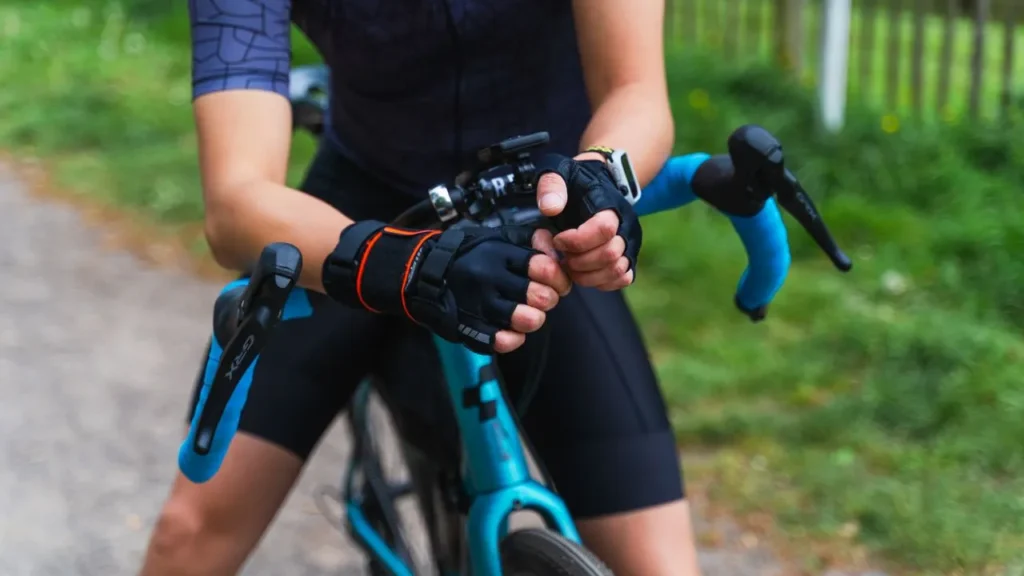
Cycling gloves sit at one of the most important contact points on a bicycle. The rider’s hands steer, brake, shift, absorb vibration, support upper-body weight, and react during a loss of balance. A small change in palm thickness, padding position, finger length, seam placement, cuff tension, or surface grip can influence comfort and control over an entire ride.
This is why cycling gloves cannot be developed by adding generic foam to a standard hand pattern. Road riders move between the tops, hoods, and drops. Mountain-bike riders need secure control on wide handlebars while operating brake levers over rough ground. Gravel riders combine long-duration pressure with vibration and changing weather. Commuters may prioritize visibility, touchscreen use, and simple care. Winter riders need insulation without losing braking and shifting sensitivity.
A capable cycling gloves manufacturer must balance pressure distribution, grip, tactile feedback, crash-related abrasion, ventilation, weather protection, dexterity, fit, durability, and cost. Improving one feature can weaken another. Thick gel may feel protective in a sample but create pressure ridges. A highly reinforced palm may last longer but reduce handlebar feel. A waterproof insert can block rain while trapping sweat. A loose fingerless mitt can bunch at the palm and undermine the benefit of its padding.
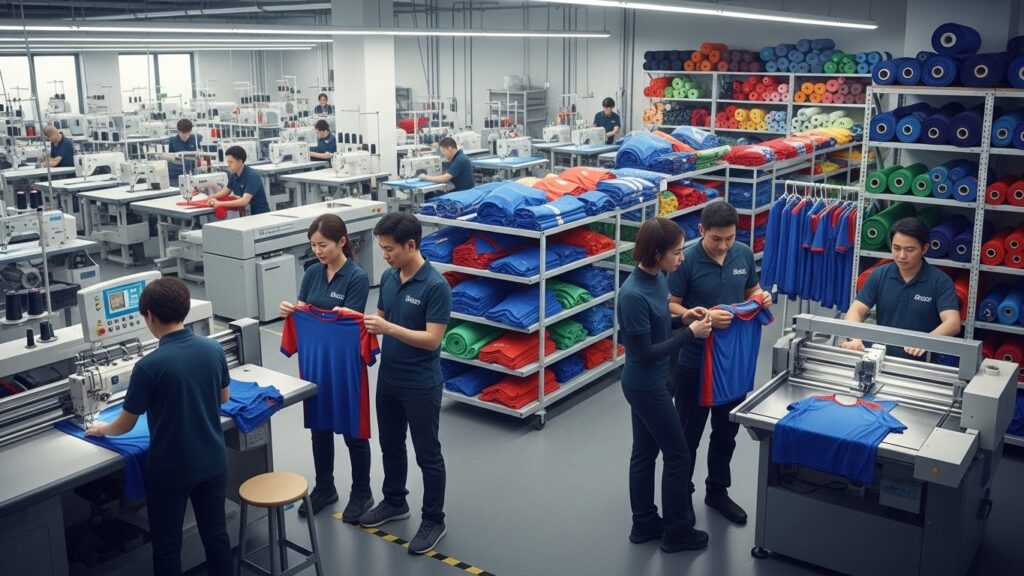
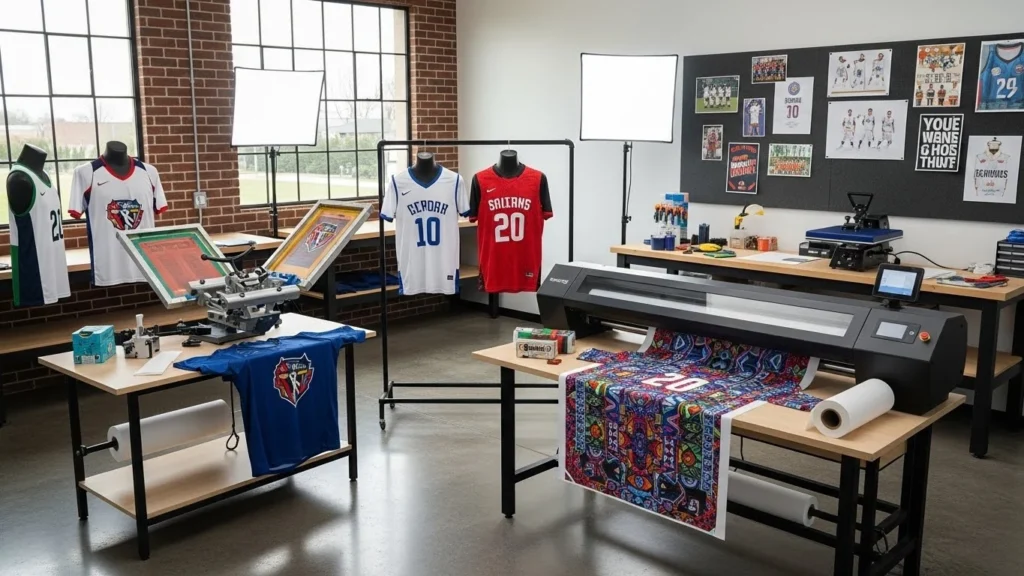
BUSHI Sports® provides custom wholesale cycling gloves manufacturing for cycling brands, clubs, teams, academies, retailers, distributors, events, and private label buyers. Projects can include fingerless road mitts, full-finger mountain-bike models, gravel gloves, thermal winter products, commuter styles, junior sizing, custom colors, logos, labels, packaging, sampling, and scalable bulk production.
Buyers can also combine cycling gloves with the wider custom sports gloves collection or coordinate them with custom cycling uniforms for a complete performance range.
This guide explains twelve engineering decisions that influence ergonomic performance, hand comfort, control, durability, and commercial quality.
“A cycling glove should manage pressure without hiding the handlebar, create grip without restricting movement, and protect the hand without pretending to solve problems caused by poor bicycle fit.”
Cycling Glove Categories Need Different Specifications
The market includes several distinct product types:
- Fingerless road cycling mitts
- Full-finger road cycling gloves
- Mountain-bike gloves
- Gravel and endurance gloves
- BMX and downhill gloves
- Commuter and urban gloves
- Aero or time-trial gloves
- Rain gloves
- Winter insulated gloves
- Junior cycling gloves
- High-visibility and reflective models
- Padded touring gloves
Each category needs a separate product brief.
| Product type | Main performance priority | Common construction direction | Main development risk |
|---|---|---|---|
| Road mitt | Pressure management and ventilation | Fingerless design, mapped palm padding, light backhand | Palm bunching or poorly positioned pads |
| Full-finger road | Control with extra coverage | Thin fingers, low-bulk seams, light palm | Reduced lever feel |
| Mountain bike | Grip, abrasion, and dexterity | Full fingers, durable palm, reinforced thumb | Excess heat or stiff reinforcement |
| Gravel or touring | Long-duration comfort and durability | Moderate padding, breathable palm, stable cuff | Pressure concentration on long rides |
| Downhill or BMX | Control with additional contact coverage | Full fingers, reinforced palm, optional knuckle zones | Excessive bulk or unsupported protection claims |
| Rain glove | Wet control and fast drying | Textured synthetic palm, close cuff | Slippery saturated material |
| Winter glove | Warmth and weather resistance | Insulation, wind barrier, extended cuff | Poor braking and shifting sensitivity |
| Commuter glove | Practical protection and visibility | Durable palm, reflective details, touchscreen tips | Decorative features reducing function |
| Junior glove | Correct fit and easy use | Dedicated hand proportions, soft materials | Adult geometry scaled down badly |
Secret 1: Start With the Bicycle, Hand Position, and Riding Discipline
A cycling gloves manufacturer should begin with how the rider contacts the bicycle.
Road handlebars create several hand positions. The rider may place the hands on the hoods, tops, drops, or bends. Each position moves pressure across the palm and changes wrist angle. Flat handlebars concentrate contact differently, while mountain-bike grips require continuous control of brake levers and often place the hands in one main position for extended periods.
The development brief should identify:
- Road, track, gravel, mountain bike, BMX, downhill, cyclocross, touring, or commuting use
- Fingerless or full-finger construction
- Typical ride duration
- Handlebar and grip type
- Primary hand positions
- Expected temperature and rainfall
- Required crash-abrasion direction
- Padding preference
- Touchscreen requirements
- Cuff length
- Adult, women’s, youth, or unisex sizing
- Target price
- Destination and product-claim requirements
A road mitt designed around the hoods may use a different pressure map from a touring model developed for flat bars. A downhill product may prioritize full-finger coverage and abrasion-resistant materials, while an aero model may minimize seams and surface disruption.
The buyer should also define what the product is not expected to do. Cycling gloves cannot correct an unsuitable reach, excessive handlebar drop, incorrect saddle position, poor wrist posture, or a rider who never changes hand position.
Research supports this broader ergonomic approach. A controlled study involving 36 experienced cyclists measured pressure over the hypothenar region while riders used the tops, drops, and hoods. Without gloves, average peak pressure ranged from 134 to 165 kPa. Padded cycling gloves reduced pressure by 10% to 28%, and thin foam performed slightly better than gel in that particular test. The drops created the highest pressure and greatest wrist extension. The researchers concluded that padding and changing hand position can both reduce loading associated with cyclist’s palsy. The study is available through PubMed.
That finding does not mean every foam pad prevents nerve symptoms. It shows why padding position, hand posture, and fit should be evaluated together.
Secret 2: Map Pressure Zones Instead of Padding the Entire Palm
More padding is not automatically more comfortable.
The palm contains areas that contact the handlebar strongly and areas that need flexibility. A uniform foam sheet can create bulk, interfere with grip closure, retain heat, and form hard edges when compressed.
Common pressure and wear zones include:
- Hypothenar region below the little finger
- Thenar region below the thumb
- Heel of the hand
- Base of the fingers
- Thumb-index junction
- Main brake-hood contact line
- Outer palm on flat handlebars
A cycling gloves manufacturer should create a palm map showing:
- Pad position
- Pad footprint
- Thickness
- Density
- Edge shape
- Gap between pads
- Stitch or bonding method
- Relationship with palm seams
- Intended handlebar position
Foam Padding
Foam can spread pressure while remaining light. Relevant variables include:
- EVA, PU, or another foam family
- Density
- Thickness
- Compression resistance
- Recovery
- Open-cell or closed-cell structure
- Moisture absorption
- Temperature behavior
Thin foam can sometimes perform better than thicker padding because it remains stable and creates fewer pressure ridges. This is one reason a cycling gloves manufacturer should not describe padding only by millimeters.
Gel Padding
Gel can conform to the palm and is widely used in comfort-oriented cycling gloves. Poorly contained gel may migrate, create heavy zones, or form edges around its pocket. The carrier, sealing method, thickness, and pad shape require careful control.
Hybrid Padding
A hybrid system can combine foam with gel or use multiple foam densities. The softer layer may improve initial comfort while a denser layer resists bottoming out.
Pad Edges Matter
Abrupt pad edges can create localized pressure. Tapered or skived edges usually transition more smoothly into the palm.
Padding Gaps Matter
Channels between pads can support palm flexion and airflow. Gaps that are too wide can expose high-pressure regions, while gaps placed incorrectly may create ridges exactly where the hand meets the bar.
“The purpose of palm padding is to redistribute load, not to create the thickest possible barrier between the rider and bicycle.”
Secret 3: Engineer the Palm for Grip, Wear, and Bar Feel
The palm must remain stable against handlebar tape or grips while allowing controlled repositioning.
Common materials include:
- Synthetic suede
- Microfiber
- PU synthetic leather
- Polyester or nylon composites
- Natural leather in selected products
- Silicone-printed textiles
- Clarino-style microfiber materials
- Reinforced woven or knitted fabrics
A cycling gloves manufacturer should specify:
- Base material
- Thickness
- Stretch direction
- Dry friction
- Wet friction
- Abrasion resistance
- Tear strength
- Perspiration behavior
- Drying time
- Colorfastness
- Seam strength
- Surface treatment
Thin Palm Construction
A thin palm improves brake, shift, and terrain feedback. It can also wear faster if the material is weak or high-friction zones are not reinforced.
Reinforced Palm Construction
Reinforcement may be placed at:
- Thumb-index junction
- Heel of the hand
- Outer palm
- Base of the fingers
- Thumb wrap
- Areas contacting bar-end plugs or rough grips
The overlay should not create a stiff ridge or interfere with the padding map.
Silicone Grip Prints
Silicone patterns can increase surface friction while adding little weight. They may be applied as dots, lines, logos, or directional zones.
The application should be tested for:
- Adhesion
- Flex cracking
- Abrasion
- Wet performance
- Transfer to handlebar tape
- Dirt attraction
- Effect on palm stretch
A grip print should support control rather than lock the hand in place. Riders must still reposition safely.
Palm Perforations
Perforations can increase airflow and drying but may reduce tear resistance. Hole diameter, spacing, and distance from seams should be controlled.
Secret 4: Treat Pressure Relief as an Ergonomic System
Cycling-related hand numbness is not a simple glove-material problem.
Long-duration pressure can affect the ulnar or median nerve, especially when wrist posture, bicycle fit, grip tension, or hand position increases loading. A prospective study of 25 cyclists before and after a 600-kilometer ride reported motor or sensory symptoms in 23 participants. The authors recommended cycling gloves, correct bicycle fit, and frequent hand-position changes as possible risk-reduction measures. The study is available through PubMed.
A cycling gloves manufacturer should use this evidence carefully.
Appropriate claims may include:
- Strategically positioned palm padding
- Pressure-distribution design
- Ergonomic pad mapping
- Multiple-density cushioning
- Low-profile foam zones
Inappropriate claims include:
- Prevents cyclist’s palsy
- Eliminates hand numbness
- Guaranteed nerve protection
- Corrects poor bike fit
- Medical-grade pressure relief without clinical evidence
Why Padding Can Increase Discomfort
A pad can make a problem worse when it:
- Sits directly over a sensitive region
- Creates a hard edge
- Is too thick for the rider’s hand position
- Moves inside a loose glove
- Forces wrist extension
- Bunches when the hand closes
- Becomes rigid in cold weather
Fit and Position Testing
Prototype trials should include:
- Hoods
- Tops
- Drops
- Flat grips
- Bar ends where relevant
- Climbing posture
- Braking posture
- Standing efforts
- Long static holds
The test should record both comfort and visible glove movement.
Secret 5: Build Fingerless Mitts Without Loose Openings
Fingerless cycling gloves need accurate openings at the fingers.
The cut edge must remain comfortable while the rider bends and straightens the hand. Poorly designed openings can roll, restrict circulation, fray, or create pressure between the fingers.
A cycling gloves manufacturer should control:
- Finger-opening circumference
- Binding elasticity
- Opening angle
- Length of each finger section
- Seam placement
- Pull-tab position
- Edge softness
Pull-Off Tabs
Fingerless cycling gloves can be difficult to remove when damp. Pull tabs or loops may be placed between fingers or at the cuff.
They should be:
- Large enough to use
- Strongly attached
- Positioned away from pressure zones
- Flexible enough not to irritate the hand
- Designed not to catch on controls
Open-Finger Length
Very short fingers improve airflow but reduce coverage. Longer sections provide more protection and stability but may restrict knuckle movement.
Binding Tension
Tight binding can create numbness or discomfort. Loose binding can allow the opening to curl and shift.
A size set should verify every finger opening because proportional grading can fail on smaller and larger hands.
Secret 6: Develop Full-Finger Models Around Brake and Shift Control
Full-finger cycling gloves must preserve fingertip sensitivity.
The rider needs to feel brake levers, shifters, electronic buttons, dropper-post controls, and sometimes suspension remotes. Excess fabric at the fingertips reduces precision.
The pattern should control:
- Finger length
- Finger circumference
- Tip shape
- Seam direction
- Fourchette width
- Pre-curvature
- Material stretch
- Touchscreen insert position
Finger Seams
Common defects include:
- Twisted fingertips
- Bulky internal seams
- Uneven finger length
- Skipped stitches
- Palm material caught incorrectly
- Rough thread ends
Pre-Curved Fingers
A slight curve can match the hand’s riding posture. Too much curvature makes the glove uncomfortable when the hand opens.
Brake-Finger Grip
Mountain-bike cycling gloves may use silicone print on one or two fingers. The print should remain thin and flexible.
Touchscreen Compatibility
Conductive yarn, fabric, or printed components may be added to selected fingertips. The feature should be tested after abrasion, washing, and repeated flexing. Touchscreen performance varies by device, screen protector, moisture, and glove fit, so absolute compatibility claims should be avoided.
Secret 7: Balance Backhand Stretch, Ventilation, and Crash Coverage
The backhand controls fit, airflow, visibility, and graphics.
Common materials include:
- Polyester-spandex knit
- Nylon-spandex knit
- Mesh
- Aero-textured fabric
- Neoprene-style material
- Softshell
- Windproof laminate
- Waterproof-breathable laminate
- Synthetic leather overlays
- Flexible TPU or silicone details
Stretch Recovery
A highly elastic backhand should return toward its original dimensions. Poor recovery allows the palm to shift and padding to move away from its intended position.
Ventilation
Ventilation can be created through:
- Open mesh
- Laser-cut holes
- Perforated overlays
- Lightweight knits
- Finger-side panels
- Unlined zones
Crash-Related Coverage
Cyclists often extend their hands during a fall, but the direction and force are unpredictable. Palm and outer-hand materials can provide a barrier against minor abrasion, yet ordinary cycling gloves should not be marketed as certified crash protection without applicable test evidence.
The backhand may include light reinforcement over:
- Knuckles
- Outer fingers
- Thumb
- Side of the hand
These additions should not be described using motorcycle-glove certification language unless the product has genuinely been developed and tested for that separate application.
The current BS EN 13594 standard applies to motorcycle gloves for on-road use. It addresses motorcycle-specific hazards, mechanical properties, impact protection, cuff length, restraint, marking, and information. It is not a general certification for pedal-cycling gloves.
Secret 8: Create Dedicated Mountain-Bike and Downhill Constructions
Mountain-bike cycling gloves experience different wear from lightweight road mitts.
Common demands include:
- Full-finger control
- Continuous brake-lever use
- Rough grip surfaces
- Dirt and mud
- Branch contact
- Frequent washing
- Higher palm abrasion
- Strong cuff retention
A mountain-bike model may use:
- Durable synthetic palm
- Reinforced thumb crotch
- Silicone brake-finger print
- Flexible knuckle overlays
- Mesh finger gussets
- Low-profile cuff
- Touchscreen fingertips
Knuckle Protection
Some cycling disciplines use additional hand coverage. UCI reporting for the 2025 Snow Bike World Championships stated that full-finger gloves, full-face helmets, and several body protectors were mandatory for that event. Requirements vary by discipline and competition, so the buyer should verify the current rulebook rather than making one claim for all cycling.
Light knuckle components may provide coverage, but impact-protection claims require defined testing. Decorative rubber should not be marketed as armor simply because it looks protective.
Thumb-Crotch Reinforcement
The area between the thumb and index finger can rub against grips and controls. Reinforcement should wrap smoothly without creating a seam ridge.
Mud and Cleaning
Materials should be evaluated after dirt contamination and washing. Adhesives, prints, padding, and touchscreen components must remain stable.
Secret 9: Build Weather-Specific Products Instead of One Universal Glove
Temperature and moisture change glove performance.
Rain Cycling Gloves
A rain product needs:
- Wet grip
- Secure cuff
- Low water absorption
- Fast drying or controlled waterproofing
- Stable fingertip fit
- Brake and shift sensitivity
A waterproof membrane can block external moisture but may reduce breathability. Seam construction and cuff overlap matter because water can enter through openings even when the main fabric is waterproof.
Winter Cycling Gloves
Winter cycling gloves may use:
- Thermal insulation
- Wind-resistant outer fabric
- Waterproof-breathable membrane
- Brushed lining
- Extended cuff
- Reflective details
- Reinforced wet-grip palm
Insulation should be mapped rather than applied at maximum thickness everywhere. Excess material at the fingertips can reduce control.
Summer Cycling Gloves
Warm-weather cycling gloves may prioritize:
- Mesh
- Thin palm material
- Limited padding
- Perforation
- Light colors
- Moisture transfer
- Short cuffs
Transitional-Season Gloves
Spring and autumn products can use light wind protection with moderate breathability. They should not be marketed as deep-winter products unless thermal performance supports the claim.
A cycling gloves manufacturer can help the buyer create a product family rather than forcing one model to serve every climate.
Secret 10: Create Hand-Specific, Women’s, and Junior Patterns
Glove sizing should not rely on palm circumference alone.
The pattern should account for:
- Hand length
- Palm width
- Finger length
- Finger circumference
- Thumb length
- Thumb angle
- Wrist circumference
- Cuff opening
- Material stretch
- Padding location
Women’s Cycling Gloves
Some women need narrower palms, shorter fingers, smaller wrists, or different thumb placement than a unisex pattern provides. A dedicated block can improve fit and keep padding aligned.
Junior Cycling Gloves
Junior cycling gloves should use:
- Shorter fingers
- Narrower palms
- Smaller padding zones
- Easy closures
- Soft bindings
- Low weight
- Simple pull tabs
An adult pattern reduced uniformly may create finger openings that are too tight, padding that is too large, or a cuff that is difficult to use.
Left and Right Patterns
Padding and reinforcements should be mirrored accurately. Branding may not be perfectly mirrored when logo orientation must remain readable, so production files should distinguish graphic placement from structural mirroring.
Size-Set Approval
A size set should check:
- Fingertip position
- Palm wrinkles
- Pad alignment
- Thumb movement
- Cuff overlap
- Finger-opening tension
- Logo scale
- Pull-tab access
- Left-right symmetry
Secret 11: Test Materials and Finished Gloves Under Realistic Conditions
There is no single test that defines a good cycling glove.
A development program should combine material tests, factory checks, and rider trials.
Palm Abrasion
Compare materials after controlled rubbing. Inspect:
- Surface wear
- Holes
- Pilling
- Coating loss
- Seam exposure
- Silicone-print loss
- Changes in grip
Seam Strength
Test high-stress areas including:
- Thumb crotch
- Palm-backhand join
- Finger openings
- Pull tabs
- Cuff
- Hook-and-loop tab
Padding Compression
Measure:
- Initial thickness
- Thickness under load
- Recovery
- Permanent set
- Migration
- Edge stability
Grip Trials
Evaluate the palm with:
- Cork-style handlebar tape
- Synthetic tape
- Rubber grips
- Foam grips
- Wet and dry surfaces
- Gloves contaminated with sweat or dust
Environmental Conditioning
Samples may be assessed after:
- Heat
- Cold
- Moisture
- Perspiration
- Washing
- Drying
- UV exposure where relevant
- Repeated flexion
Rider Trials
Road riders should use the tops, hoods, and drops. Mountain-bike riders should test braking, climbing, descending, and rough-surface control. Commuters should test repeated removal, touchscreen use, visibility, and care.
Feedback should distinguish preference from defect. One rider may prefer no padding while another needs moderate cushioning. The approved product brief should determine the target.
Secret 12: Preserve the Approved Specification During Bulk Production
Cycling gloves contain small pieces, stretch materials, padding, prints, and close fit tolerances. A minor substitution can change the finished product significantly.
The production file should include:
- Bill of materials
- Palm specification
- Padding map
- Foam or gel details
- Backhand fabric
- Stretch direction
- Pattern set by size
- Finger and thumb construction
- Reinforcement map
- Cuff and closure details
- Pull-tab dimensions
- Touchscreen component
- Artwork placement
- Color standards
- Label content
- Care instructions
- Approved pre-production sample
- Measurement tolerances
- Packaging standard
Cycling Glove Manufacturing Process
1. Product Brief
The buyer defines discipline, season, finger length, padding, grip, fit, sizes, colors, branding, quantity, target price, testing, and packaging.
2. Material Selection
The cycling gloves manufacturer proposes palm materials, foam or gel, backhand fabrics, mesh, membranes, insulation, elastic, closures, thread, prints, labels, and packaging.
3. Pattern Development
Patterns are developed for palm, backhand, fingers, thumb, gussets, cuff, padding, and reinforcement.
4. Palm and Padding Prototype
The first development stage can compare multiple pad maps and palm materials before completing all artwork.
5. Fit Sample
The prototype is checked for finger length, palm width, thumb movement, cuff fit, seam comfort, and pad alignment.
6. Rider Trial
The intended users test the gloves on the relevant bicycle and handlebar system.
7. Material and Wear Testing
Palm abrasion, seam strength, padding recovery, wet grip, print adhesion, and washing performance are reviewed.
8. Size Set
Selected sizes confirm grading and feature placement.
9. Pre-Production Sample
The buyer approves final materials, construction, colors, branding, labels, and packaging.
10. Cutting
Palm, backhand, finger, mesh, insulation, membrane, reinforcement, and padding components are cut using controlled templates.
11. Printing and Applications
Sublimation, screen printing, heat transfers, silicone grip, reflective details, embroidery, and logos are applied at the correct stage.
12. Padding Assembly
Foam or gel components are positioned according to the approved map.
13. Sewing and Joining
The palm, backhand, fingers, thumb, cuff, pull tabs, and closure are assembled with in-line inspection.
14. Turning and Finishing
The cycling gloves are turned, shaped, trimmed, cleaned, and checked internally.
15. Pairing and Functional Inspection
Left and right cycling gloves are paired by size, color, palm, padding, print, and construction.
16. Packing and Shipment
The products are dried, labeled, protected from compression and moisture, carton-assorted, and prepared for international delivery.
Quality-Control Table
| Inspection area | What to check | Common failure |
| Palm | Thickness, grip, abrasion, reinforcement | Holes, slipping, delamination |
| Padding | Position, density, thickness, edge shape | Migration, pressure ridges, mismatch |
| Fingers | Length, alignment, seam comfort | Twisting, loose tips, restricted control |
| Thumb | Angle, crotch reinforcement, movement | Pulling, seam wear, grip interference |
| Backhand | Stretch, recovery, ventilation | Bagging, overheating, cracked graphics |
| Finger openings | Binding tension and finish | Restriction, rolling, fraying |
| Cuff | Entry, retention, comfort | Loose fit or difficult removal |
| Pull tabs | Position and attachment | Tearing or hand irritation |
| Grip print | Adhesion and placement | Peeling, transfer, stiffness |
| Touchscreen tips | Construction and basic function | Nonresponsive or fast wear |
| Pairing | Size, color, padding, left-right match | Mismatched pairs |
| Labels | Size, care, composition, claims | Incorrect or unsupported information |
| Packaging | Dryness, shape, barcode, presentation | Compressed pads or trapped moisture |
BUSHI Sports® explains broader inspection practices in how quality control works in sportswear manufacturing.
Standards, Compliance, and Responsible Claims
Ordinary pedal-cycling gloves do not automatically fall under motorcycle or industrial glove standards.
BS EN 13594 applies to motorcycle gloves for on-road use. ISO 23388 covers protective gloves against mechanical risks such as abrasion, blade cut, tear, puncture, and impact where applicable. These standards address hazards and test systems that may not match ordinary cycling use.
ISO 21420:2020 provides general requirements for protective-glove design, construction, innocuousness, comfort, efficiency, marking, and manufacturer information. ISO explicitly states that it does not address protective performance by itself and must be used with an appropriate specific standard.
This means a cycling gloves manufacturer and brand should define the intended claim carefully.
Appropriate claims may include:
- Abrasion-resistant palm material
- Padded pressure zones
- Reinforced thumb crotch
- Wind-resistant backhand
- Water-resistant outer material
- Reflective details
- Full-finger coverage
Claims requiring stronger evidence include:
- Certified impact protection
- Medical pressure relief
- Crash-proof construction
- Guaranteed nerve protection
- Waterproof performance
- Standard compliance
A brand placing protective equipment on a regulated market should obtain qualified compliance advice and test the actual finished model.
Custom Branding Without Compromising Ergonomics
Cycling gloves provide branding space across the backhand, cuff, fingers, pull tabs, and packaging.
Options include:
- Sublimated backhand graphics
- Screen printing
- Heat transfers
- Silicone logos
- TPU applications
- Reflective prints
- Embroidery in suitable areas
- Woven labels
- Custom cuff tabs
- Branded packaging
Avoid Rigid Graphics Across Flex Zones
A large transfer crossing the knuckles can reduce stretch and crack. Graphics should follow the pattern and material behavior.
Keep Palm Decoration Functional
Decorative palm print should not create uncontrolled grip, hard edges, or reduced flexibility. If the print contributes to traction, it becomes part of the performance specification and should remain consistent in bulk.
Scale Artwork by Size
A logo approved on an adult large can become crowded on a junior model. Size-specific templates maintain visual balance and avoid crossing seams.
BUSHI Sports® provides related guidance in why vector artwork matters and how to prepare print-ready files.
Cost Breakdown: Why Cycling Glove Quotations Differ
The cost of cycling gloves depends on the complete specification.
Major cost drivers include:
- Fingerless or full-finger pattern
- Palm material
- Foam, gel, or hybrid padding
- Number of padding zones
- Backhand fabric
- Waterproof or windproof membrane
- Insulation
- Reinforcement panels
- Silicone grip printing
- Touchscreen components
- Pull tabs and closures
- Adult, women’s, and junior size ranges
- Branding method
- Reflective details
- Testing requirements
- Packaging
- Order quantity
A simple summer road mitt with a synthetic palm, light foam, mesh backhand, and standard logo will generally cost less than a winter full-finger model with membrane construction, insulation, reinforced palm, touchscreen fingertips, reflective print, and extended cuff.
The quotation should identify:
- Palm material and thickness
- Padding material and map
- Backhand fabric
- Membrane or insulation
- Closure
- Reinforcement
- Printing
- Labels
- Packaging
- Sample cost
- Testing cost
- Freight basis
Terms such as “premium gel,” “professional grip,” or “maximum comfort” are not precise enough for supplier comparison.
BUSHI Sports® explains broader cost development in its sportswear manufacturing cost breakdown.
MOQ Considerations
Minimum order quantity may be influenced by:
- Custom palm colors
- Foam or gel tooling
- Number of sizes
- Women’s and junior pattern blocks
- Waterproof membranes
- Insulation minimums
- Silicone-print setup
- Reflective components
- Labels
- Printed packaging
A smaller launch may be possible when the buyer uses an existing pattern, available materials, limited colors, standard padding, and simple packaging.
Brands can review what MOQ means in sportswear manufacturing before requesting multiple seasonal models at a very small quantity.
Packaging, Care, and Storage
Cycling gloves should be clean and fully dry before packing.
Packaging options include:
- Printed polybags
- Recyclable paper sleeves
- Hanging cards
- Branded boxes
- Mesh storage bags
- Size stickers
- Barcodes
- Care cards
Packaging Risks
Poor packing can cause:
- Compressed or displaced padding
- Trapped moisture
- Creased membranes
- Hook-and-loop damage
- Transfer between silicone prints
- Mixed sizes
- Incorrect pairs
Consumer Care Guidance
- Follow the material-specific washing instructions.
- Close hook-and-loop tabs before washing.
- Avoid fabric softener when it may affect grip, wicking, or membrane performance.
- Dry naturally away from direct heaters.
- Do not store damp cycling gloves in a closed bag.
- Reshape padding and fingers during drying.
- Inspect worn palms, seams, closures, and padding before use.
- Replace cycling gloves when damage interferes with grip, fit, or coverage.
BUSHI Sports® discusses presentation and protection in how packaging influences perceived value.
How to Evaluate a Cycling Gloves Manufacturer
Ergonomic Questions
- Which riding discipline is the pattern developed for?
- How is the padding map created?
- Can multiple palm maps be sampled?
- How are road and flat-bar hand positions tested?
- Are women’s and junior patterns separate?
Material Questions
- What palm materials are available?
- What are their thickness and abrasion differences?
- Which foam or gel specification is used?
- How does the material behave when wet?
- Can test reports be supplied?
Fit Questions
- How are finger length and palm width graded?
- Is the glove designed with negative ease?
- How are pull tabs and finger openings tested?
- Can a complete size set be produced?
- How is pad alignment checked across sizes?
Weather Questions
- Is the product water-resistant or waterproof?
- Which membrane or insulation is used?
- How is wet grip assessed?
- What cleaning method is approved?
- How is drying time evaluated?
Quality Questions
- How are padding pieces positioned consistently?
- Can materials change without written approval?
- How are palm abrasion and seam strength checked?
- Are left and right cycling gloves paired functionally?
- Can inspection records be provided?
Commercial Questions
- What is the MOQ per style and color?
- Can quantity be divided by size?
- Are samples and testing charged separately?
- Is custom packaging included?
- What is the lead time after approval?
- Which shipping term is quoted?
A reliable cycling gloves manufacturer should explain the trade-offs between pressure management, grip, feel, weather protection, durability, weight, and cost.
Common Product-Development Mistakes
Adding Padding Without Pressure Mapping
Generic pads can create new pressure ridges instead of improving comfort.
Assuming Gel Is Always Better Than Foam
Material type, thickness, placement, and stability matter more than the label alone.
Using One Palm for Road and Mountain-Bike Products
Handlebar contact, abrasion, finger coverage, and controls differ.
Ignoring Bike Fit
Cycling gloves cannot compensate for every positioning or setup problem.
Making Fingerless Openings Too Tight
Binding pressure can cause discomfort and make removal difficult.
Leaving Full-Finger Tips Too Long
Loose material reduces brake and shift precision.
Over-Reinforcing the Palm
Heavy overlays can reduce handlebar feel and interfere with the padding map.
Claiming Motorcycle Certification
Motorcycle-glove standards apply to a different product category and hazard profile.
Scaling Adult Patterns Directly Into Junior Sizes
Children require separate finger, palm, wrist, and padding proportions.
Approving a Dry Sample Only
Grip, fit, padding, and seams should be evaluated after sweat, rain, abrasion, washing, and repeated use.
Why Work With BUSHI Sports®?
BUSHI Sports® is a custom sportswear and sports gloves manufacturer based in Sialkot, Pakistan. The company supports cycling brands, teams, clubs, academies, retailers, wholesalers, distributors, events, and private label buyers through OEM, ODM, and bulk manufacturing.
As a cycling gloves manufacturer, BUSHI Sports® supports customization involving:
- Fingerless road mitts
- Full-finger road cycling gloves
- Mountain-bike and gravel concepts
- Touring and commuter products
- Rain and winter cycling gloves
- Adult, women’s, and junior sizing
- Synthetic, microfiber, and reinforced palms
- Foam, gel, and hybrid padding directions
- Grip printing
- Touchscreen fingertips
- Reflective details
- Cuffs, pull tabs, and closures
- Colors and graphics
- Team and private label branding
- Sample development
- Bulk production
- Quality inspection
- Custom packaging
- International order coordination
Buyers can develop cycling gloves through the wider custom sports gloves category and combine them with custom cycling uniforms.
Relevant BUSHI Sports® glove-engineering resources include:
- Field hockey glove manufacturing
- Lacrosse glove protection manufacturing
- American football glove grip technology
- Cricket glove safety design
- Goalkeeper glove grip technology
- Baseball glove manufacturing
These products use different grip systems, protection levels, standards, and fit principles. Their specifications should not be copied directly into cycling gloves.
Learn more through the BUSHI Sports® About Us page or submit product requirements through the contact page.
For cycling gloves manufacturing inquiries:
- Message BUSHI Sports® on WhatsApp
- Email info@bushisports.com
- Call +92 348 4018 578
- View the BUSHI Sports® location on Google Maps
- Follow BUSHI Sports® on LinkedIn
- Follow BUSHI Sports® on Instagram
- Follow BUSHI Sports® on Facebook
- Follow BUSHI Sports® on X
- Follow BUSHI Sports® on Threads
- View product inspiration on Pinterest
- Watch company content on YouTube
Frequently Asked Questions
What does a cycling gloves manufacturer do?
A cycling gloves manufacturer develops and produces gloves according to a buyer’s requirements for riding discipline, palm material, padding, finger coverage, fit, weather performance, grip, ventilation, colors, logos, labels, packaging, quantity, and destination.
Do padded cycling gloves reduce hand pressure?
A controlled study of 36 experienced cyclists found that padded cycling gloves reduced measured hypothenar pressure by 10% to 28% under the tested conditions. Thin foam performed slightly better than gel in that study. Results depend on pad design, hand position, bicycle fit, and rider anatomy.
Can cycling gloves prevent hand numbness?
They may help manage pressure, but no glove can guarantee prevention. Hand numbness can also relate to bicycle fit, wrist posture, grip pressure, ride duration, and hand position. Persistent symptoms should be assessed by a qualified medical professional.
Is gel padding better than foam?
Not automatically. Performance depends on placement, thickness, density, containment, edge design, fit, and riding position. A thin stable foam can outperform a thick gel pad in some applications.
Are fingerless or full-finger cycling gloves better?
Fingerless cycling gloves offer ventilation and direct finger contact, making them common for warm-weather road riding. Full-finger products provide more coverage and are common in mountain biking, cold weather, and disciplines requiring additional hand protection.
What palm material is best?
There is no universal best material. Microfiber and synthetic suede can provide grip and consistency, while reinforced composites can improve durability. The correct choice depends on handlebar type, weather, abrasion, feel, and cost.
Are ordinary cycling gloves certified as motorcycle gloves?
No. BS EN 13594 applies to motorcycle gloves for on-road use. Ordinary pedal-cycling gloves should not claim this certification unless the exact product has been developed, tested, and certified for that separate scope.
Can cycling gloves be waterproof?
They can use waterproof membranes and seam constructions, but performance depends on material, seams, cuff design, and testing. Water-resistant and waterproof are not interchangeable claims.
How should cycling gloves fit?
They should fit closely without loose palm folds or excess fingertip material. The rider should be able to grip, brake, shift, open the hand, and remove the gloves without uncomfortable restriction.
Can junior cycling gloves use adult patterns?
Adult blocks may provide a starting reference, but junior cycling gloves should use dedicated finger lengths, palm widths, padding footprints, wrist openings, closures, and pull tabs.
What affects the MOQ?
MOQ may depend on palm material, custom colors, foam or gel components, size range, women’s and junior patterns, membranes, insulation, printing, reflective details, labels, and packaging.
Can custom logos be added?
Yes. Logos can be sublimated, printed, transferred, embroidered in suitable areas, molded, or incorporated through labels. Decoration should not reduce stretch, ventilation, grip, or seam durability.
How should cycling gloves be tested?
Development can include palm abrasion, seam strength, padding compression, wet and dry grip, wash testing, environmental conditioning, touchscreen checks, size-set fitting, and road or trail trials.
How should cycling gloves be washed?
The care method depends on the palm, padding, membrane, insulation, prints, and adhesives. Buyers should provide model-specific instructions and avoid generic care claims that have not been tested.
When should cycling gloves be replaced?
Replace them when holes, torn seams, displaced padding, weak closures, damaged grip surfaces, or poor fit interfere with safe control or the intended coverage.
Conclusion
Cycling gloves are ergonomic performance products built around one of the bicycle’s main contact points. Their quality depends on much more than foam thickness or exterior graphics.
A dependable cycling gloves manufacturer begins by identifying the discipline, handlebar, hand positions, weather, ride duration, fit, and target user. The manufacturer then develops a pressure map, palm system, finger pattern, backhand, cuff, reinforcement, and testing plan around those requirements.
Brands should compare cycling gloves through physical samples, pressure-zone logic, material specifications, rider trials, wet and dry grip, palm abrasion, seam testing, size-set approval, and documented production controls. They should also avoid medical or crash-protection claims that exceed the available evidence.
BUSHI Sports® supports custom cycling gloves through product consultation, ergonomic pattern development, palm and padding selection, seasonal materials, sampling, private labeling, quality inspection, packaging, and international order coordination.
Explore the custom wholesale cycling gloves manufacturer page or contact BUSHI Sports® to discuss road, mountain-bike, gravel, commuter, rain, winter, adult, women’s, or junior cycling gloves.