American Football Gloves Manufacturer: 11 Proven Grip Technology Secrets
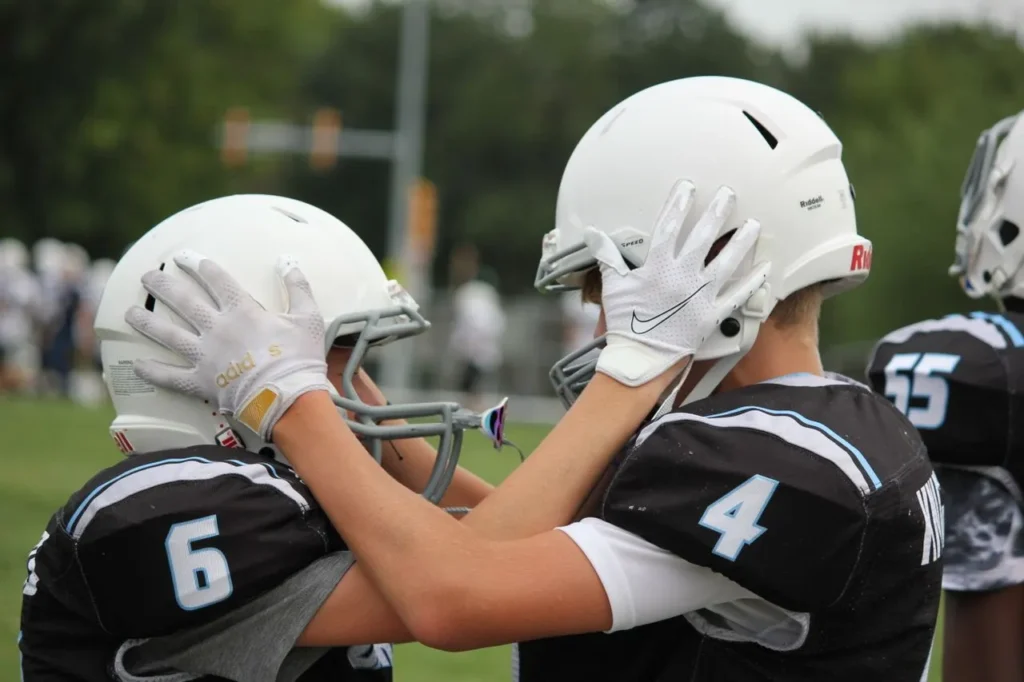
American football gloves appear simple from a distance: a stretch textile shell, a tacky palm, a wrist closure, and a bold graphic. In practice, they are highly sensitive performance products. A small change in palm coating, finger length, seam location, stretch recovery, cuff tension, or surface texture can change how securely a player catches, carries, blocks, or controls the football.
Grip is also regulated. A palm cannot simply be made as sticky as possible. The surface must create useful friction without transferring material to the ball or exceeding the limits accepted by the intended competition. The glove must also remain flexible, breathable, correctly sized, durable under repeated flexion, and consistent across every production batch.
This is why selecting an American football gloves manufacturer involves more than submitting artwork and choosing a color. Brands, teams, schools, academies, distributors, and private label businesses need a manufacturing partner that understands grip chemistry, palm geometry, hand anatomy, receiver and lineman requirements, weather behavior, testing, labeling, and bulk quality control.
BUSHI Sports® provides custom wholesale American football gloves manufacturing for sports brands, teams, clubs, retailers, and distributors. Buyers can customize palm patterns, fabrics, padding, wrist systems, colors, sizes, logos, labels, and packaging while using the broader OEM, ODM, sampling, quality-control, and international delivery services offered by BUSHI Sports®.
This guide explains eleven development decisions that shape legal grip, fit, control, durability, and commercial value in American football gloves.
“The best football-glove palm is not the one that feels most adhesive in a showroom. It is the one that delivers controlled friction, clean ball release, legal performance, and repeatable durability in real playing conditions.”
Understand the Product Architecture First
| Component | Primary function | Main development risk |
|---|---|---|
| Palm grip surface | Friction and ball control | Excess tack, transfer, cracking, poor wet grip |
| Palm carrier | Supports coating and hand movement | Stretch mismatch, delamination, tearing |
| Finger pattern | Controls fit and contact | Long fingertips, twisted seams, excess material |
| Thumb construction | Supports catching and ball security | Restricted spread, seam pressure, weak crotch |
| Backhand fabric | Stretch, ventilation, graphics | Poor recovery, overheating, snagging |
| Fourchettes or finger gussets | Shape and side ventilation | Seam irritation, weak joins, incorrect width |
| Padding | Contact protection for selected positions | Excess bulk, restricted movement, shifting foam |
| Cuff | Hand entry and wrist transition | Loose opening, overstretching, seam failure |
| Wrist closure | Retention and adjustment | Weak hook-and-loop, restricted range, palm contact |
| Branding | Team and product identity | Grip interference, cracking, illegal placement |
| Certification mark and labels | Product identification and rule compliance | Missing, hidden, inaccurate, or nonpermanent information |
A capable American football gloves manufacturer treats these components as one system. Changing palm material may require different seam settings. Adding backhand padding can alter finger flexion. Extending the cuff changes hand entry and size grading. Grip technology cannot be developed separately from fit and construction.
Secret 1: Define the Player Position Before the Palm
Not every player needs the same glove. Receiver-focused American football gloves prioritize ball contact, low bulk, flexibility, and palm coverage. Lineman models prioritize hand contact, abrasion resistance, and backhand padding. Defensive backs often use receiver-style grip with slightly different preferences for durability or hand protection. Quarterbacks may use one glove, two gloves, or no gloves depending on weather and personal preference.
A useful buyer brief should identify:
- Player position or position group
- Youth, high school, collegiate, professional, flag, or recreational market
- Match, training, or all-purpose use
- Expected weather and temperature range
- Natural grass, artificial turf, indoor, or mixed use
- Required palm coverage
- Desired padding level
- Cuff and closure preference
- Target retail price
- Required certification or competition market
- Quantity by color and size
Receiver and Skill-Position Gloves
Receiver-style American football gloves usually require:
- High palm contact area
- Thin, flexible palm construction
- Close finger fit
- Low-profile seams
- Lightweight backhand fabric
- Reliable wrist retention
- Strong stretch recovery
The aim is to support catching without making the hand feel disconnected from the football.
Padded Hybrid Gloves
Running backs, linebackers, tight ends, and other contact-heavy positions may need a hybrid structure. These American football gloves combine a tackified palm with selective padding over the knuckles, fingers, or back of the hand.
The challenge is to place padding where contact is likely without restricting catching, tackling, or ball carrying.
Lineman Gloves
Lineman American football gloves often use:
- Reinforced palm or high-wear zones
- Heavier backhand padding
- Finger and knuckle protection
- More substantial wrist closure
- Abrasion-resistant shell materials
- Controlled grip rather than the thinnest possible palm
A lineman model should not be created by simply adding foam to a receiver pattern. The hand posture, finger spread, blocking contact, and closure requirements are different.
Flag Football Gloves
Flag football emphasizes catching, ball carrying, and open-space movement. Lightweight receiver-style American football gloves may be suitable, but league-specific uniform and equipment rules should still be checked.
Secret 2: Engineer Legal Tack, Not Maximum Stickiness
The grip surface is the defining feature of most American football gloves, but greater adhesion is not automatically better or legal.
The 2025 NFL Rulebook permits gloves with a tackified surface only when the tacky substance does not adhere to the football or create handling problems. It separately prohibits adhesive or slippery substances added to player equipment.
The NOCSAE ND019 standard was created specifically to evaluate friction and adhesion properties and to limit the potential aid provided by overly tacky hand coverings.
The SFIA Football Glove Specification Program also identifies models that meet its football-glove performance specification and explains the certification mark used on approved products and packaging.
These requirements change the development goal. A responsible American football gloves manufacturer should optimize:
- Controlled surface friction
- Clean release from the ball
- No visible palm-material transfer
- Stable tack after flexing
- Consistency across sizes and production lots
- Compliance with the intended playing level
The manufacturer should never use unauthorized surface treatments to make a sample feel unusually sticky. The approved bulk glove must use the same palm formulation and construction as the tested or certified model.
Grip Performance Is a Range
A palm that is too smooth may not provide the product experience expected by receivers. A palm that is too adhesive may create illegal performance, attract dirt, slow ball release, or transfer material.
The correct target is a controlled range, not the highest possible number.
“Legal grip enhancement is a calibration problem. The manufacturer must create enough friction to support control while preventing transfer, excessive adhesion, and inconsistent release.”
Secret 3: Build the Palm as a Layered Material System
The visible grip pattern is only the top layer. American football gloves may use a palm system made from:
- A tackified surface layer
- A flexible polymer or silicone-based grip compound
- A textile or synthetic carrier
- Optional reinforcement in high-wear zones
- Seam and edge construction joining the palm to the backhand
Material names vary between suppliers, and branded palm technologies are often proprietary. A private label buyer should focus on measurable behavior rather than asking for a competitor’s named compound.
A palm specification should cover:
- Base material
- Coating or compound family
- Nominal thickness
- Surface pattern
- Stretch direction
- Recovery
- Friction target
- Peel adhesion behavior
- Abrasion target
- Wet and dry performance
- Cleaning limitations
- Color
- Batch reference
Thin Palm Systems
A thin palm can improve direct ball feel and finger movement. It may also show abrasion, puncture, or coating wear sooner if the carrier and compound are not properly balanced.
Reinforced Palm Systems
Reinforcement can be placed at the heel, thumb, index area, or other high-wear zones. The extra material should not create a ridge that interferes with ball contact.
Full-Palm and Partial-Palm Designs
Full-palm grip provides a continuous catching surface. Partial or strategically mapped grip can reduce material, improve ventilation, or support a different aesthetic. However, uncovered zones may reduce useful contact during off-center catches.
The American football gloves manufacturer should map the likely contact points created by fingertip catches, body catches, one-handed catches, ball carrying, and hand placement during blocking.
Secret 4: Design Grip Geometry Around the Football
Palm chemistry creates friction, but surface geometry controls how the hand meets the ball.
Grip patterns may include:
- Continuous smooth tackified surfaces
- Micro-textured surfaces
- Raised dots
- Directional ridges
- Hexagonal or geometric cells
- Segmented grip islands
- Finger-specific patterns
- Thumb-wrap grip
The pattern should follow the hand’s catching zones rather than acting only as decoration.
Finger and Fingertip Coverage
The fingertips are critical during extended catches. American football gloves with a large uncoated fingertip seam may lose contact in the exact area where the player first touches the ball.
The pattern should control:
- Grip extension to fingertips
- Seam location
- Finger-side coverage
- Coating edge durability
- Wrinkling when the finger bends
Thumb Coverage
The thumb helps secure the ball during catches and carrying. A wrapped or extended grip surface can improve contact, but too much coating at the thumb joint may restrict movement or crack during repeated flexion.
Ball-Release Behavior
Receivers must catch the ball, but quarterbacks, returners, and ball carriers also need clean release. A surface that creates delayed separation can feel impressive during a static palm test but perform poorly during rapid play.
A good American football gloves manufacturer evaluates both acquisition and release.
Secret 5: Create a Second-Skin Fit Without Restricting Circulation
Loose American football gloves can create folds between the palm and the ball. Overly tight gloves can restrict movement, stress seams, and make the hands fatigue.
The pattern should control:
- Hand length
- Palm width
- Finger length
- Finger circumference
- Thumb angle
- Thumb length
- Wrist circumference
- Cuff opening
- Intended negative ease
- Material stretch and recovery
Negative Ease
Many performance American football gloves are designed slightly smaller than the hand so stretch materials create a close fit. The amount of negative ease must match the fabric. A highly elastic knit needs a different pattern from a stable woven backhand.
Finger Length
Extra material at the fingertip can fold and reduce control. Fingers that are too short create seam pressure and may pull the palm away from the hand.
Palm Width
A narrow palm can restrict opening. A wide palm can wrinkle. Fit trials should include catching positions, full finger spread, fist closure, and ball carrying.
Youth Sizing
Youth American football gloves should not be reduced adult patterns. Younger players may have different finger-to-palm proportions, smaller wrists, and lower hand-entry strength.
A dedicated youth size set should verify:
- Shorter finger channels
- Narrower palm and wrist
- Easier cuff entry
- Correct logo scaling
- Appropriate closure length
- Lightweight construction
Secret 6: Engineer Finger Gussets, Seams, and Pre-Curvature
The fingers are assembled from curved, narrow components. Small errors can create twisted fingertips, pressure points, loose side panels, or inconsistent grip alignment.
American football gloves may use:
- Fourchettes between palm and backhand
- Wrapped palm edges
- Internal seams
- External seams
- Seamless or bonded zones
- Pre-curved finger patterns
Fourchette Materials
Finger-side gussets can use stretch knit, mesh, or a continuation of the palm carrier. Breathable textile gussets reduce heat but may reduce side grip. Grip-wrapped sides increase contact but can feel heavier or less ventilated.
Seam Placement
Seams should be kept away from high-pressure catching areas when possible. Internal seam allowances must remain low profile and smooth.
Common finger defects include:
- Skipped stitches
- Uneven seam allowance
- Twisted finger channels
- Palm coating caught in the seam
- Broken stitches after flexing
- Rough thread ends
- Misaligned fingertips
Pre-Curved Patterns
A slight pre-curve can place the hand closer to a catching posture. Excess curvature can make the glove uncomfortable when the hand opens for blocking or balance.
The American football gloves manufacturer should test repeated open-close cycles and inspect whether the palm wrinkles, coating cracks, or seams rotate.
Secret 7: Balance Backhand Stretch, Ventilation, and Support
The backhand does not grip the football, but it controls fit, heat, graphics, and structural support.
Common materials include:
- Polyester-spandex knit
- Nylon-spandex knit
- Mesh
- Compression textile
- Neoprene-style material
- Synthetic leather overlays
- TPU or silicone graphic elements
- Foam-backed panels
A lightweight receiver glove may use a highly elastic backhand. A padded hybrid or lineman model may combine stretch zones with foam, synthetic overlays, or molded components.
Stretch Recovery
The backhand must return toward its original dimensions after repeated use. Poor recovery makes American football gloves feel loose and allows the palm to shift.
Ventilation
Ventilation can come from:
- Open knit structures
- Mesh finger sides
- Perforations
- Uncoated zones
- Lightweight lining
- Air channels between padded sections
Ventilation should not create weak seams or expose the hand in a product marketed for contact-heavy positions.
Graphic Integration
Large backhand graphics should stretch with the fabric. A rigid transfer may crack or reduce elasticity. Silicone and TPU applications should be segmented around flex zones.
Secret 8: Add Padding According to Contact, Not Appearance
Padded American football gloves are often used by linemen and other players who experience frequent hand contact. Padding may be positioned over:
- Knuckles
- Finger backs
- Metacarpal area
- Thumb
- Side of the hand
- Wrist transition
Materials may include EVA, PU foam, molded foam, or flexible protective overlays.
The design must balance:
- Coverage
- Thickness
- Density
- Segment size
- Flex grooves
- Weight
- Ventilation
- Stitch security
Why More Padding Can Perform Worse
Excessive padding can:
- Restrict finger spread
- Reduce fist closure
- Increase heat
- Shift during impact
- Catch on opposing equipment
- Increase glove weight
- Reduce ball feel
Padding should be segmented around natural joints. The edges should be tapered or covered so they do not create hard pressure points.
An American football gloves manufacturer should not describe padding as certified protection unless a relevant test and certification support that claim. Receiver-grip compliance standards focus on tack and adhesion, not a universal impact-protection rating for every padded glove.
Secret 9: Build a Wrist System That Supports Entry and Retention
The wrist area must allow the hand to enter the glove and then hold the glove in position during catches, blocking, and contact.
Common systems include:
- Elastic cuff
- Short hook-and-loop strap
- Full wrap strap
- Extended compression cuff
- Strapless knit cuff
- Hybrid elastic and strap closure
Hook-and-Loop Closures
The closure should provide sufficient adjustment without exposing rough hook material to the palm or skin. Attachment stitching must withstand repeated opening and closing.
Strapless Cuffs
Strapless American football gloves create a clean appearance and reduce hardware. Entry stretch and recovery become critical. A cuff that is too tight may tear when players pull the gloves on.
Pull Tabs
Pull tabs should be placed where players can use them without pulling directly on delicate seams or grip material.
The factory should complete repeated donning, removal, and closure-cycle tests. It should also inspect cuff recovery after stretching and moisture exposure.
Secret 10: Test Grip Across Weather, Wear, and Contamination
New American football gloves are commonly evaluated when clean and dry. Real play introduces sweat, rain, dirt, turf particles, dust, cold, and repeated abrasion.
A serious test plan should compare performance under controlled conditions.
Dry Grip Test
Use the same football model, inflation range, catching protocol, and operator method when comparing samples.
Damp and Wet Conditions
Test light moisture separately from full wetting. Some surfaces retain useful friction when damp but become inconsistent when saturated.
Abrasion Conditioning
The palm should be evaluated when new and after controlled rubbing or repeated use. Abrasion testing helps reveal:
- Surface polishing
- Coating loss
- Cracks
- Delamination
- Exposed carrier fabric
- Reduced friction
Dirt and Turf Contamination
Tacky palms can attract particles. The test should assess how easily the surface is cleaned and whether approved cleaning restores expected performance without altering certification.
Temperature
Cold can change material flexibility, while heat can soften some coatings or adhesives. American football gloves intended for broad climates should be conditioned and inspected at relevant temperatures.
Wash and Cleaning Trials
Care instructions must match the tested material. Unsupported cleaners or grip-restoring products can alter tack and may affect certification. The SFIA specification program emphasizes that certified products must retain the approved construction and that cleaning guidance should not alter performance.
“A grip claim based only on a fresh, clean palm is incomplete. The product should be evaluated after the conditions that actually reduce grip.”
Secret 11: Protect Certification, Labels, and Bulk Consistency
Compliance is not a one-time sample event. If the palm material or construction changes, the product may become a different model for testing purposes.
A private label buyer should confirm:
- Which standard applies
- Who owns the certified model
- Which laboratory or program is involved
- Whether the exact palm material and construction were tested
- Which sizes and variants are covered
- Which certification mark may be used
- Required product and packaging labels
- Retesting requirements after material changes
The SFIA program explains that certified football gloves carry an approved mark on the glove and packaging. Brands should not print that mark without authorization and documented compliance.
Production Traceability
Each bulk order should record:
- Model designation
- Size
- Production period
- Palm batch
- Backhand fabric lot
- Coating or compound reference
- Artwork version
- Inspection record
- Packaging version
Manufacturing Route
1. Product Brief
The buyer defines player position, market, grip level, padding, weather, size range, colors, branding, quantity, certification needs, and packaging.
2. Material Selection
The American football gloves manufacturer proposes palm compounds, carrier materials, backhand fabrics, padding, elastic, closures, labels, and packaging.
3. Pattern Development
Palm, backhand, thumb, fingers, fourchettes, cuff, strap, and padding patterns are developed around the intended fit.
4. Grip Sample and Material Test
Palm materials are compared for friction, adhesion, transfer, stretch, abrasion, and weather behavior.
5. Prototype Sample
The first American football gloves sample checks fit, grip placement, seams, cuff, branding, and construction feasibility.
6. Player Trial
Receivers, defensive backs, linemen, or the intended users test catching, carrying, blocking, entry, heat, and comfort.
7. Size Set
Selected youth and adult sizes confirm finger length, palm width, cuff fit, graphic scaling, and pattern grading.
8. Compliance Testing
The final palm material and construction are submitted through the applicable NOCSAE or SFIA pathway when required.
9. Pre-Production Sample
The buyer approves the complete glove with final materials, labels, certification mark where authorized, artwork, and packaging.
10. Cutting and Palm Preparation
Palm and textile components are cut according to controlled patterns. Grip surfaces are protected from contamination.
11. Printing, Molding, and Padding
Backhand graphics, overlays, padding, and labels are applied at the approved stage.
12. Sewing and Assembly
Palm, backhand, fingers, thumb, cuff, and closure are assembled with in-line inspection.
13. Pairing and Functional Inspection
Left and right American football gloves are paired by model, size, color, grip surface, and construction.
14. Packing and Shipment
Products are labeled, protected from heat and compression, assorted, carton-marked, and prepared for delivery.
Quality-Control Table
| Inspection area | What to check | Common failure |
| Palm surface | Coverage, cleanliness, tack consistency | Contamination, smooth spots, excessive tack |
| Material transfer | No visible transfer during approved test | Coating deposits on test surface or ball |
| Palm bond | Edge and layer adhesion | Peeling or bubbling |
| Fingers | Length, symmetry, seam rotation | Loose tips, twisted fingers, pressure points |
| Thumb | Spread, wrap, seam security | Restricted movement or weak crotch |
| Backhand | Stretch, recovery, graphics | Bagging, cracked print, poor ventilation |
| Padding | Position, density, flex | Shifting foam or restricted joints |
| Cuff | Entry, recovery, attachment | Tearing or loose fit |
| Closure | Range, peel strength, skin comfort | Weak hold or exposed hook material |
| Pairing | Model, size, color, left-right match | Mismatched pairs |
| Labels | Brand, model, size, production data | Missing or inaccurate information |
| Certification mark | Authorized, permanent, visible | Hidden, incorrect, or unauthorized mark |
| Packaging | Product protection and correct identification | Heat exposure, crushed gloves, wrong barcode |
BUSHI Sports® explains wider inspection practices in how quality control works in sportswear manufacturing.
NFL, High School, and Market Compliance
Rules vary by playing level, so brands should identify the destination market before approving American football gloves.
NFL Considerations
The current NFL rulebook permits tackified gloves only when material does not adhere to the football or create handling problems. It also restricts glove colors to white, black, or an official team uniform color and requires league approval for commercial identification used on game-day equipment.
A private label product intended for general retail should not claim NFL approval merely because it follows similar construction principles.
High School Considerations
NFHS materials state that football gloves must meet an accepted SFIA specification or NOCSAE test standard at the time of manufacture. The SFIA certified-product listing allows buyers, schools, and officials to check listed brands and models.
Collegiate and Other Competitions
NCAA, youth, flag, and private leagues may apply their own equipment, color, logo, or certification rules. The buyer should verify the current rulebook for the intended competition before bulk production.
Custom Branding Without Reducing Grip
American football gloves offer strong visual space across the backhand, wrist, cuff, and selected palm areas.
Customization can include:
- Team colors
- Printed backhand graphics
- Silicone or TPU details
- Wrist logos
- Player names or numbers
- Sublimated textile panels
- Woven labels
- Custom cuffs
- Branded packaging
Keep Decorative Ink Off Critical Grip Zones
Palm artwork can be attractive, but decorative layers should not interrupt the tested contact surface unless they are part of the approved palm construction.
Use Size-Specific Artwork
A backhand logo should be scaled and positioned for each size. A design approved on an adult large may become crowded on youth American football gloves.
Test Stretch Graphics
Backhand graphics should be flexed and stretched after application. Inspect for:
- Cracking
- Edge lifting
- Color distortion
- Fabric restriction
- Heat marks
- Adhesive migration
BUSHI Sports® provides further guidance through why vector artwork matters and how to prepare print-ready files.
Cost Breakdown: Why Football-Glove Prices Differ
The quotation for American football gloves depends on the complete specification.
Major cost drivers include:
- Palm compound and coating
- Palm coverage
- Carrier material
- Backhand fabric
- Grip testing and certification
- Padded or unpadded construction
- Number of pattern pieces
- Youth and adult size range
- Wrist closure
- Molded or silicone graphics
- Printing and branding
- Labels and traceability
- Packaging
- Inspection requirements
- Quantity per design and color
A lightweight receiver model with a standard backhand and available palm may cost less than padded lineman American football gloves with molded protection, reinforced palms, custom cuffs, complex artwork, and certified retail packaging.
The American football gloves manufacturer should link every quotation to a bill of materials. Terms such as “super grip,” “premium silicone,” or “professional quality” are not enough for supplier comparison.
BUSHI Sports® explains the wider cost structure in its sportswear manufacturing cost breakdown.
MOQ Considerations
MOQ can be affected by:
- Custom palm colors
- New grip compounds
- Molded backhand components
- Certification testing
- Number of sizes
- Youth and adult patterns
- Artwork setup
- Labels
- Printed packaging
- Quantity per colorway
Using an existing tested palm construction, available fabrics, standard cuffs, and limited colorways can support a smaller launch.
Brands can review what MOQ means in sportswear manufacturing before requesting a fully new certified glove at a very small quantity.
How to Evaluate an American Football Gloves Manufacturer
Grip Questions
- Which palm compounds are available?
- Is the palm construction already tested or certified?
- Does the surface transfer material?
- How does grip change when wet, dirty, cold, or abraded?
- Which cleaning methods are approved?
- Will any material substitution require retesting?
Fit Questions
- Are youth and adult patterns separate?
- How are hand length and palm width graded?
- Is the pattern pre-curved?
- Can slim and regular fits be developed?
- How is cuff entry tested?
Position Questions
- Is the model intended for receivers, defensive backs, hybrid players, or linemen?
- Which zones are padded?
- How is grip maintained around padding?
- Are high-wear palm areas reinforced?
Quality Questions
- How are palm batches controlled?
- How are transfer and adhesion checked?
- How are seam and closure cycles tested?
- Are left and right gloves paired functionally?
- Can inspection records be supplied?
Commercial Questions
- What is the MOQ per design?
- Can the quantity be divided by size?
- Are testing and certification fees included?
- Who owns the molds, pattern, and certification?
- What packaging is included?
- What is the production timeline after approval?
A dependable American football gloves manufacturer should explain the limits of grip technology, not promise unlimited stickiness.
Common Development Mistakes
Choosing the Palm by Touch Alone
A static showroom test does not measure transfer, ball release, abrasion, wet performance, or legality.
Copying a Competitor’s Named Technology
Proprietary names do not define a reproducible technical specification. Develop a measurable private label target.
Ignoring Finger Length
Extra fingertip material can reduce control even when the palm compound is excellent.
Using One Pattern for Receivers and Linemen
Padding, hand posture, abrasion, and movement needs differ by position.
Adding Grip-Restoring Chemicals
Unapproved treatments can change tack, transfer material, and invalidate certification.
Changing Palm Material After Testing
A new material or construction may require separate compliance evaluation.
Placing Hook-and-Loop Against the Palm
Rough closure material can damage the grip surface during storage and use.
Approving Graphics Only on One Size
Artwork must remain balanced and flexible throughout the size range.
Packaging Gloves in Excessive Heat
Heat and pressure can change coatings, adhesives, shape, and surface appearance.
Making Unsupported Approval Claims
Meeting one test does not mean a product is approved by every league or professional organization.
Why Work With BUSHI Sports®?
BUSHI Sports® is a custom sportswear and sports gloves manufacturer based in Sialkot, Pakistan. The company supports sports brands, teams, clubs, academies, wholesalers, retailers, and distributors through OEM, ODM, private label, and bulk production.
As an American football gloves manufacturer, BUSHI Sports® supports customization involving:
- Receiver and skill-position glove concepts
- Padded hybrid and lineman concepts
- Palm grip patterns
- Backhand fabrics
- Finger and thumb construction
- Wrist cuffs and closures
- Adult and youth sizing
- Colors and graphics
- Team logos and private labels
- Development samples
- Bulk manufacturing
- Quality inspection
- Custom packaging
- International order coordination
Buyers can develop American football gloves as part of the broader custom sports gloves collection or coordinate them with custom American football uniforms.
Relevant glove-development resources include the BUSHI Sports® guides to goalkeeper glove grip technology and baseball glove manufacturing. Each product uses different grip, fit, and construction principles, so one specification should not be copied across sports.
Learn more through the BUSHI Sports® About Us page or submit project details through the contact page.
For American football gloves manufacturing inquiries:
- Message BUSHI Sports® on WhatsApp
- Email info@bushisports.com
- Call +92 348 4018 578
- View the BUSHI Sports® location on Google Maps
- Follow BUSHI Sports® on LinkedIn
- Follow BUSHI Sports® on Instagram
- Follow BUSHI Sports® on Facebook
- Follow BUSHI Sports® on X
- Follow BUSHI Sports® on Threads
- View product inspiration on Pinterest
- Watch company content on YouTube
Frequently Asked Questions
What does an American football gloves manufacturer do?
An American football gloves manufacturer develops and produces gloves according to a buyer’s requirements for palm grip, fit, player position, backhand fabric, padding, wrist closure, sizes, colors, branding, labels, packaging, quantity, and destination market.
How do American football gloves improve grip?
American football gloves use a tackified palm surface engineered to increase controlled friction between the hand and football. Performance also depends on fit, palm coverage, surface condition, weather, ball material, and catching technique.
Are the stickiest American football gloves always the best?
No. Excessive tack can transfer material, attract contamination, delay release, or violate competition requirements. Grip should remain within the applicable friction and adhesion limits.
What is the NOCSAE football-glove standard?
NOCSAE ND019 is a performance specification for the friction and adhesion properties of newly manufactured football hand coverings. Its purpose is to limit the competitive aid created by excessive stickiness.
What does the SFIA mark mean on football gloves?
The mark identifies a model listed through the SFIA Football Glove Specification Program as meeting its applicable performance requirements. The mark should only be used on authorized products and packaging.
Can palm material be changed after certification?
A material or construction change can create a new model for testing purposes. The brand should confirm whether retesting or a new certification is required before production.
Are receiver gloves and lineman gloves different?
Yes. Receiver American football gloves prioritize thin grip, close fit, flexibility, and ball feel. Lineman gloves generally use more padding, reinforcement, and abrasion resistance.
Can youth American football gloves use adult patterns?
Adult patterns may provide an initial reference, but youth products should be adjusted for finger length, palm width, wrist size, cuff entry, weight, and artwork scale.
Do American football gloves work in rain?
Performance varies by palm compound, water level, contamination, and glove condition. Samples should be tested under dry, damp, and wet conditions before making all-weather claims.
Can custom logos be added?
Yes. Logos can be printed or applied to the backhand, wrist, cuff, labels, and packaging. Decoration should not change the tested palm surface or restrict stretch.
How should football gloves be cleaned?
Use only the cleaning method approved for the specific material and certified model. Harsh chemicals, high heat, and unauthorized grip-restoring products can damage the surface or alter performance.
What affects the MOQ?
MOQ can depend on palm compound, custom colors, padding, molds, size range, certification, artwork, labels, packaging, and production setup. Existing tested constructions generally support lower starting quantities than completely new systems.
How can a buyer test American football gloves before bulk production?
The buyer should complete fit trials, catching and ball-release tests, dry and wet grip comparisons, abrasion conditioning, seam and closure cycling, size-set approval, and required compliance testing.
Can American football gloves prevent hand injuries?
Padded models can provide coverage and cushioning in selected contact zones, but no glove can eliminate injury risk. Protection claims should be specific, qualified, and supported by relevant evidence.
How long does production take?
The timeline depends on material sourcing, pattern development, palm testing, samples, size sets, certification requirements, artwork, order quantity, packaging, and shipping. Bulk production should begin only after the pre-production sample is approved.
Conclusion
American football gloves combine friction engineering, hand anatomy, stretch textiles, seam construction, weather performance, position-specific design, and regulated equipment requirements. Their performance cannot be judged by initial stickiness alone.
A reliable American football gloves manufacturer begins with the player position and competition market. The manufacturer then develops a legal palm surface, close ergonomic fit, durable finger structure, breathable backhand, appropriate padding, secure wrist system, and documented bulk quality plan.
Brands should compare American football gloves through physical samples, controlled ball tests, weather trials, material specifications, certification status, player feedback, and production traceability. This approach provides a stronger foundation than selecting a glove from a visual mockup or vague “maximum grip” claim.
BUSHI Sports® supports custom American football gloves through material sourcing, pattern development, sampling, private labeling, grip customization, quality control, packaging, and international order coordination.
Explore the custom wholesale American football gloves manufacturer page or contact BUSHI Sports® to discuss palm grip, player position, padding, fit, sizes, colors, certification requirements, branding, quantities, packaging, and delivery.