How to Start a Private Label Equestrian Brand
Starting a Private Label Equestrian Brand requires more than finding attractive riding products and placing a logo on them. Equestrian customers understand fit, fabrics, saddle contact, grip, durability and comfort. Many riders can quickly recognize the difference between a product developed for equestrian use and a generic garment that has simply been marketed toward horse riders.
A successful Private Label Equestrian Brand therefore begins with a clear market position, a focused product range and a reliable manufacturing process. Product development, materials, sizing, branding, sampling, minimum order quantities, compliance, pricing and inventory all need to work together before the first collection goes on sale.
New brands do not need to launch twenty products immediately. In many cases, a smaller and carefully designed range gives the business a better opportunity to test demand, collect customer feedback and identify products that deserve larger reorders.
This guide explains how to move from an initial idea to an organized equestrian collection that can be manufactured and scaled professionally.
Brands that want a deeper understanding of the factory side should also read the BUSHI Sports® Complete Guide to Private Label Equestrian Gear Manufacturing, which covers materials, OEM and ODM development, sampling, quality control, compliance, packaging and bulk production in greater technical detail.
Table of Contents
- Define the Purpose of Your Equestrian Brand
- Choose a Clear Market Niche
- Protect Your Brand Name and Identity
- Build a Focused First Product Collection
- Decide Between Private Label, OEM and ODM
- Prepare Product Specifications
- Find the Right Equestrian Manufacturer
- Develop and Test Physical Samples
- Plan MOQ, Cost and Retail Pricing
- Build Labels, Packaging and Compliance
- Launch, Measure and Plan Reorders
- Common Startup Mistakes
- Frequently Asked Questions
Step 1: Define What Your Private Label Equestrian Brand Stands For
Before requesting samples, decide why the brand should exist.
A Private Label Equestrian Brand needs a recognizable position in the market. Trying to sell products for every rider, discipline, age group, climate and price category from the first collection usually creates an unclear identity.
Start by defining your target customer.
A brand may focus on competitive dressage riders, show jumping, everyday schooling, youth riders, riding clubs, premium show wear, affordable training apparel, warm climate riding, modest equestrian clothing or technically focused products.
These choices affect almost every manufacturing decision.
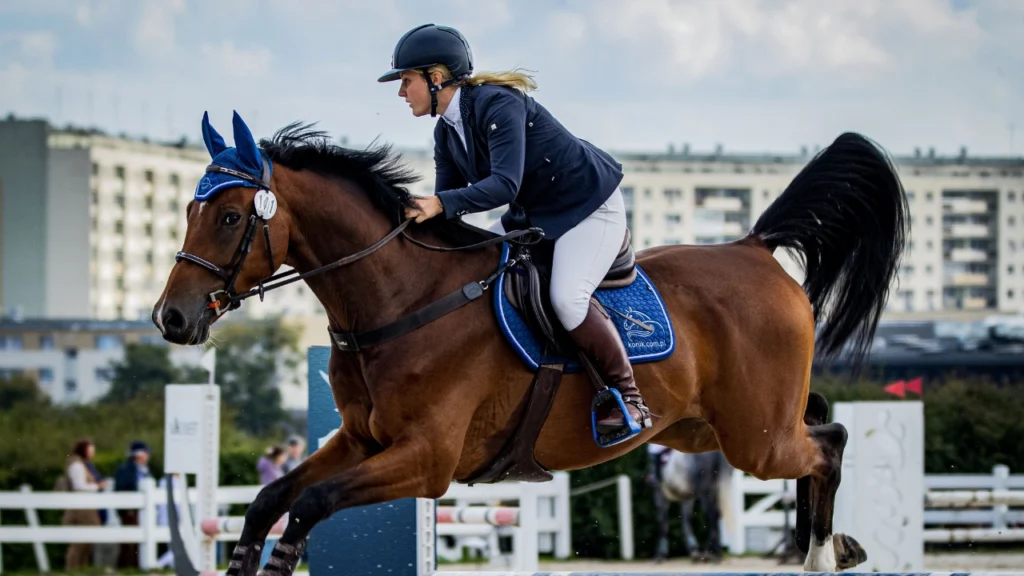
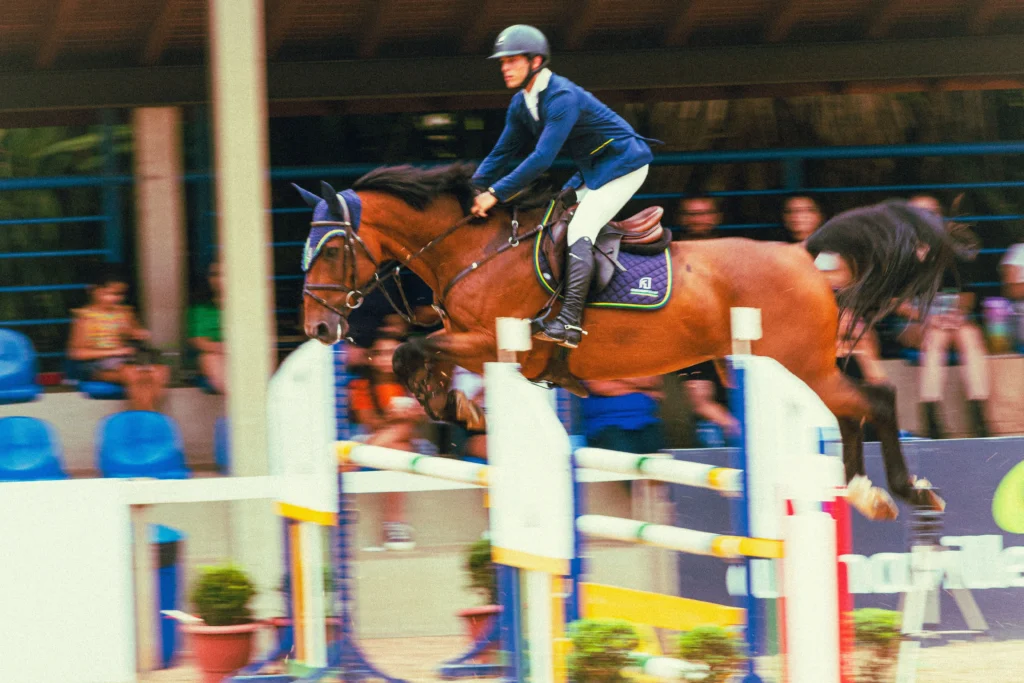
A premium competition brand may prioritize structured show jackets, technical show shirts and highly refined breeches. A training focused Private Label Equestrian Brand may place greater emphasis on durable riding tights, comfortable shirts, gloves and easy care saddle pads.
Write a short positioning statement before designing products.
For example:
“Our brand develops functional riding apparel for female recreational and competitive riders who want technical performance, understated styling and accessible premium pricing.”
That one sentence already provides direction for fit, fabric, branding, colors and retail pricing.
Step 2: Choose a Profitable Niche Before Expanding
Equestrian is already a specialist market, but it can still be segmented further.
Your Private Label Equestrian Brand does not need to compete in every possible category.
A useful niche can be based on discipline, demographic, product problem or price level.
Possible directions include:
- Dressage apparel
- Show jumping clothing
- Youth equestrian wear
- Riding school apparel
- Premium competition clothing
- Everyday training wear
- Women’s equestrian apparel
- Men’s equestrian clothing
- Equestrian lifestyle products
- Matching rider and horse collections
- Warm weather riding apparel
- Winter equestrian clothing
The strongest niche is one where the brand understands the customer’s real problems.
Speak with riders. Ask what they dislike about current products. Study reviews carefully. Look for repeated complaints involving breeches slipping at the waist, weak silicone grip, uncomfortable seams, poor phone pockets, transparent fabrics, restrictive show jackets or gloves that wear too quickly.
Those problems can become your product development brief.
A Private Label Equestrian Brand with a clear reason for each product is easier to market than one built from whichever catalogue products were easiest to source.
Step 3: Protect the Name of Your Private Label Equestrian Brand
Choose the brand name early, but do not invest heavily in labels, packaging and product artwork before checking whether the name can actually be used.
Search company names, domains, social media handles and relevant trademark databases.
The World Intellectual Property Organization explains that trademarks distinguish the goods or services of one enterprise from those of another and that trademark protection is generally obtained through registration at national or regional level. WIPO also provides its Global Brand Database and the Madrid System for international trademark protection.
A serious Private Label Equestrian Brand should consider professional legal advice when selecting and protecting a trademark, particularly if it expects to sell in several countries.
Also secure the practical brand assets:
- Domain name
- Instagram handle
- Facebook name
- TikTok handle
- Marketplace seller names
- Brand email
- Logo files
- Brand colors
- Font licenses
- Product naming system
Prepare the logo in vector format so it can be resized for embroidery, silicone logos, heat transfer, woven labels and packaging without losing quality.
Step 4: Build a Focused First Equestrian Collection
Do not launch too many products simply because the manufacturer can produce them.
A first Private Label Equestrian Brand collection should be manageable enough to sample properly, photograph professionally, stock sensibly and reorder confidently.
A practical starter collection could look like this:
| Product | Role in Collection | Why It Works |
|---|---|---|
| Riding Breeches | Hero product | Strong equestrian identity and repeat potential |
| Show or Training Shirt | Coordinating apparel | Creates an outfit with breeches |
| Riding Gloves | Accessible accessory | Lower entry price and broad rider use |
| Saddle Pad | Horse product | Extends the brand beyond apparel |
| Ear Bonnet | Coordinating accessory | Supports matching horse collections |
This creates opportunities for product bundles.
A rider could purchase breeches and a shirt. The same customer could purchase a saddle pad and matching ear bonnet for the horse.
Once demand is established, the Private Label Equestrian Brand can expand into show jackets, chaps, riding boots, horse rugs, fly masks and other categories.
BUSHI Sports® manufactures a broader range through its custom equestrian gear manufacturing program, including products for both riders and horses.
Step 5: Choose Between Private Label, OEM and ODM
These terms are often mixed together.
Understanding them can make supplier discussions much easier.
| Model | Starting Point | Development Level |
|---|---|---|
| Private Label | Existing or adaptable product concept | Branding and selected customization |
| OEM | Brand provides detailed design or approved sample | Manufacturer produces to buyer specification |
| ODM | Brand provides concept or direction | Manufacturer assists with product development |
A startup Private Label Equestrian Brand may use more than one model.
For example, the brand may adapt an existing saddle pad construction with its own colors, quilting and logo while developing completely original riding breeches from a reference sample and technical specifications.
Neither approach is automatically better.
The correct choice depends on differentiation, budget, development experience, order volume and launch schedule.
Your manufacturer should clearly explain which elements can be customized and which require new patterns, molds, hardware or minimum material quantities.
Step 6: Turn Product Ideas Into Manufacturing Specifications
A mood board is useful for communicating style.
It is not enough for manufacturing.
Each product in a Private Label Equestrian Brand should eventually have a controlled specification covering dimensions, fabrics, trims, colors, construction, logos and packaging.
For apparel, that information normally belongs in a tech pack.
BUSHI Sports® explains the process in its sportswear tech pack guide.
A riding breeches specification might include:
- Fabric composition
- Fabric GSM
- Four way stretch requirement
- Stretch recovery
- Waistband height
- Rise
- Inseam
- Pocket dimensions
- Silicone grip pattern
- Knee grip or full seat construction
- Seam placement
- Logo dimensions
- Label position
- Size range
- Packaging
Brands developing breeches can also use the BUSHI Sports® Horse Riding Breeches Fabric Guide to compare stretch, grip, comfort and fabric performance.
A detailed specification gives both the manufacturer and the Private Label Equestrian Brand a common production reference.
Step 7: Find the Right Manufacturer for Your Private Label Equestrian Brand
A supplier should be evaluated on more than price.
Ask whether the manufacturer actually understands equestrian products.
Can the factory develop stretch breeches correctly?
Can it source silicone grip?
Can it work with leather and synthetic materials where required?
Can it produce custom saddle pads, rugs or riding gloves?
Can it work from a physical sample?
Does it provide samples before bulk production?
Can it handle custom woven labels, care labels, hang tags and packaging?
Does it have a structured quality control process?
The cheapest quotation can become expensive if repeated sample failures, poor sizing, wrong materials or inconsistent bulk production delay the launch.
Before choosing a production partner for a Private Label Equestrian Brand, request:
- Product capability information
- Material options
- Sample process
- MOQ
- Estimated production schedule
- Custom branding options
- Packaging capabilities
- Quality control process
- Payment terms
- Shipping terms
If you have an existing product that represents the quality you want, ask whether the manufacturer can review a physical sample.
Physical samples allow the factory to inspect material thickness, construction, measurements, sewing, grip, hardware and finishing much more accurately than photographs alone.
Step 8: Develop Physical Samples Before Bulk Production
Never treat sampling as an unnecessary expense.
The sample is where your Private Label Equestrian Brand moves from an idea to a physical product.
A digital mockup can show color and branding, but it cannot prove fit, fabric feel, stretch recovery, saddle comfort or seam quality.
For riding apparel, test the garment during realistic movement.
Put the breeches on a rider.
Walk in them.
Sit.
Bend.
Ride where possible.
Check the waistband, knees, seat, ankle and pocket placement.
If silicone grip is used, evaluate whether the pattern gives the desired level of contact without making movement uncomfortable.
For riding gloves, check finger mobility, rein feel, palm grip, closure security and high wear zones. BUSHI Sports® provides additional material guidance in its Horse Riding Gloves Manufacturer Guide.
Before approving bulk production, use a structured sample approval checklist covering measurements, construction, branding, labels and packaging.
The approved sample should become the reference standard for the Private Label Equestrian Brand production order.
Step 9: Understand MOQ Before Creating Too Many SKUs
MOQ means minimum order quantity, but one number rarely tells the complete story.
A Private Label Equestrian Brand needs to understand whether minimums apply by product, fabric, color, logo, component or total order.
Consider a launch containing five products.
If every product comes in four colors and six sizes, the business already has 120 product, color and size combinations.
Inventory becomes complicated very quickly.
Keep the first collection controlled.
Use core colors across several products. Limit custom hardware where possible. Avoid launching too many separate fabrics.
BUSHI Sports® explains the broader manufacturing concept in What MOQ Means in Sportswear Manufacturing.
A lower MOQ can reduce inventory exposure, but it does not automatically mean a lower unit cost. Smaller production quantities can spread sampling, printing, label, material and setup costs across fewer pieces.
Step 10: Calculate the Real Cost of Your Private Label Equestrian Brand
Do not build retail pricing from the factory price alone.
The real landed cost may include:
| Cost Area | Example |
|---|---|
| Product manufacturing | Fabric, labor, trims, branding |
| Product development | Samples and revisions |
| Packaging | Labels, tags, bags, boxes |
| Freight | Courier, air or sea shipping |
| Import costs | Duties, taxes and customs fees |
| Inspection | Third party inspection if required |
| Payment costs | Banking or processing charges |
| Warehousing | Receiving and storage |
| Fulfilment | Picking, packing and shipping |
| Returns | Exchanges and customer returns |
Once these costs are understood, the Private Label Equestrian Brand can determine whether its planned retail price leaves enough margin for marketing, discounts, wholesale accounts and operational expenses.
Avoid using a simple markup copied from another brand.
Your cost structure and sales channels may be completely different.
If wholesale is part of the plan, leave enough room between landed cost, wholesale price and recommended retail price for both your company and the retailer to operate sustainably.
Step 11: Create Professional Branding and Packaging
Packaging does not need to be extravagant.
It does need to be consistent.
A Private Label Equestrian Brand can create a premium impression through small details such as a clean woven label, accurate care label, branded hang tag, carefully folded product and consistent packaging.
Possible brand elements include:
- Woven main label
- Heat transfer neck label
- Size label
- Care label
- Silicone logo
- Embroidery
- Woven patch
- Custom zipper pull
- Hang tag
- Barcode label
- Branded polybag
- Mailer or retail box
BUSHI Sports® has already explained how presentation affects brand positioning in How Packaging Influences Perceived Value in Sportswear Brands.
The packaging should match the customer’s expectations and the product’s price level.
Labeling and Compliance Cannot Be Added at the Last Minute
A Private Label Equestrian Brand selling internationally needs to understand the requirements of each destination market.
In the European Union, textile products sold to consumers generally need labels identifying fibre composition. EU guidance also explains that the information may need translation into the official languages of the countries where the product is offered. EU textile labeling guidance
In the United States, the FTC states that most textile and wool products require information including fibre content, country of origin and the identity of the manufacturer or another responsible business. The FTC also maintains care labeling requirements for covered textile wearing apparel. FTC apparel labeling guidance and FTC Care Labeling Rule provide official information.
BUSHI Sports® also provides a practical sportswear care labels guide for custom apparel development.
Brands should verify the regulations applying to their products and sales markets instead of copying another company’s label.
Be Especially Careful With Protective Equestrian Products
A new Private Label Equestrian Brand may be tempted to launch helmets, protective vests or other safety related products immediately because of their higher perceived value.
These categories require greater caution.
General consumer products sold in the EU must meet applicable product safety rules, and businesses involved in making, importing or selling products have responsibilities for product safety. European Commission product safety guidance and Your Europe product safety guidance provide official information.
Do not market a product as certified, impact protective or compliant with a particular standard without appropriate evidence.
For many startup brands, beginning with ordinary equestrian apparel and nonprotective accessories can provide a more manageable first development program.
Build the Launch Around a Collection, Not Individual Products
When the products are approved, plan how they will appear together.
A Private Label Equestrian Brand becomes stronger when customers can recognize a visual system across the collection.
Use coordinated colors.
Repeat logo treatments.
Match saddle pads with ear bonnets.
Coordinate breeches with show shirts.
Photograph complete rider and horse combinations.
Create bundles where appropriate.
Instead of posting ten unrelated product photographs, create stories around a rider’s needs.
One campaign may focus on schooling.
Another may show competition preparation.
Another can highlight warm weather riding or stable routines.
This makes the Private Label Equestrian Brand easier to understand and gives each product a commercial context.
Plan Reorders Before the First Collection Sells Out
Do not wait until inventory reaches zero before thinking about production again.
Maintain an approved product file for every style.
Record:
- Final tech pack
- Approved physical sample
- Fabric supplier reference
- Color reference
- Logo dimensions
- Grip artwork
- Size chart
- Labels
- Packaging
- Carton details
- Final production comments
A growing Private Label Equestrian Brand should be able to reorder its bestselling breeches six months later without rebuilding the specification from old messages.
Track sales by product, size and color.
A style may appear successful overall while one color or size sells much faster than the rest.
Use that information when planning the next manufacturing order.
Common Mistakes When Starting a Private Label Equestrian Brand
Launching Too Many Products
A large first collection increases sampling expense, inventory and management complexity.
Copying Existing Brands
Market research is useful, but the Private Label Equestrian Brand still needs its own product position and design identity.
Choosing a Manufacturer Only by Price
Poor fit or inconsistent bulk quality can cost far more than a small difference in unit price.
Skipping Physical Samples
This removes the best opportunity to identify construction, material and sizing problems before bulk production.
Using Vague Specifications
Descriptions such as “premium fabric” or “best silicone grip” cannot function as controlled production standards.
Ignoring Compliance
Fiber labels, care instructions, product safety and destination market rules should be addressed during development.
Ordering Too Many Colors
Color expansion multiplies SKUs and ties more cash into inventory.
Forgetting Reorders
A successful launch still needs a reliable method to reproduce the same product.
Frequently Asked Questions
How much money is needed to start a Private Label Equestrian Brand?
There is no universal startup figure. The required investment depends on product count, sampling, MOQ, materials, branding, packaging, freight, import charges, photography, website costs and marketing. A focused first collection usually makes budgeting easier than launching many categories simultaneously.
What products should a new equestrian brand start with?
Riding breeches, show or training shirts, riding gloves, saddle pads and ear bonnets can create a practical starting assortment. The correct mix depends on the target rider and market.
Do I need my own designs?
Not always. A Private Label Equestrian Brand may begin with adaptable manufacturer products, OEM designs, physical reference samples or ODM development. Greater customization usually requires more product development.
Can I start with a low MOQ?
Possibly. MOQ depends on product, material, colors, custom trims, packaging and manufacturing complexity. Discuss the complete collection with the manufacturer before finalizing designs.
Should I trademark my equestrian brand?
Trademark protection should be considered before investing significantly in a name. WIPO recommends registration as the usual means of obtaining trademark protection, although legal systems vary by country. Consult an appropriate trademark professional for your markets.
Do I need a tech pack?
A detailed tech pack is strongly recommended for custom products. It reduces ambiguity around measurements, fabrics, construction, branding and packaging.
Should every product have a sample?
Yes. Every distinct custom product should have an approved sample before bulk manufacturing. More complicated products may require several revisions.
How long does equestrian product development take?
Timing depends on the number of products, fabric sourcing, custom components, sample revisions, testing and approval speed. Confirm sampling and bulk lead times with the manufacturer before setting a public launch date.
Can my manufacturer create custom labels and packaging?
Many private label manufacturers can produce woven labels, care labels, hang tags and packaging according to the buyer’s artwork and specifications. These details should be approved during sampling.
Can BUSHI Sports® help develop a Private Label Equestrian Brand?
Yes. BUSHI Sports® supports B2B equestrian brands with product development, sample review, physical sample replication, fabric and material sourcing, custom branding, OEM and ODM manufacturing, private labeling, packaging, quality control and bulk international production.
Conclusion
A Private Label Equestrian Brand should be built around clear products and a defined customer rather than around the largest possible catalogue.
Choose your niche first.
Develop a controlled starting collection.
Protect the brand identity.
Create detailed specifications.
Work with a manufacturer that understands equestrian products.
Approve physical samples.
Plan MOQ and landed costs carefully.
Prepare compliant labels and professional packaging.
Then launch, measure customer response and use real sales data to decide what should be reordered or expanded.
Building a Private Label Equestrian Brand this way requires more planning at the beginning, but it creates a much stronger foundation for consistent manufacturing and long term growth.
For brands ready to move from business planning into product development, the BUSHI Sports® Complete Guide to Private Label Equestrian Gear Manufacturing explains the manufacturing process in greater depth.
To discuss your sample or custom order, contact BUSHI Sports® through the contact page, send details by WhatsApp, or email info@bushisports.com.
You can also view the company location on Google Maps or connect with BUSHI Sports® on LinkedIn.