A pre-production sample, size set sample, and salesman sample may look similar at first, but they do not serve the same purpose in custom sportswear manufacturing. Confusing these three samples can create serious problems for brands, teams, clubs, retailers, and private-label buyers.
A salesman sample may look polished enough for a buyer meeting, but it is not always the final production approval. A size set sample may confirm grading across sizes, but it may not be the complete production standard. A pre-production sample is usually the final checkpoint before bulk manufacturing begins.
This difference matters because sportswear is not just about appearance. A custom jersey must fit correctly across the full size range. A legging must stretch and recover properly. A tracksuit must maintain shape after washing. A sports glove must allow movement while protecting stress points. If the wrong sample is approved for the wrong reason, bulk production can move forward with hidden mistakes.
This guide explains the difference between a pre-production sample, size set sample, and salesman sample so buyers can approve custom sportswear with more confidence.
What Is a Pre-Production Sample?
A pre-production sample, often called a PP sample or PPS, is the final sample made before bulk production starts. It should represent the approved production standard as closely as possible.
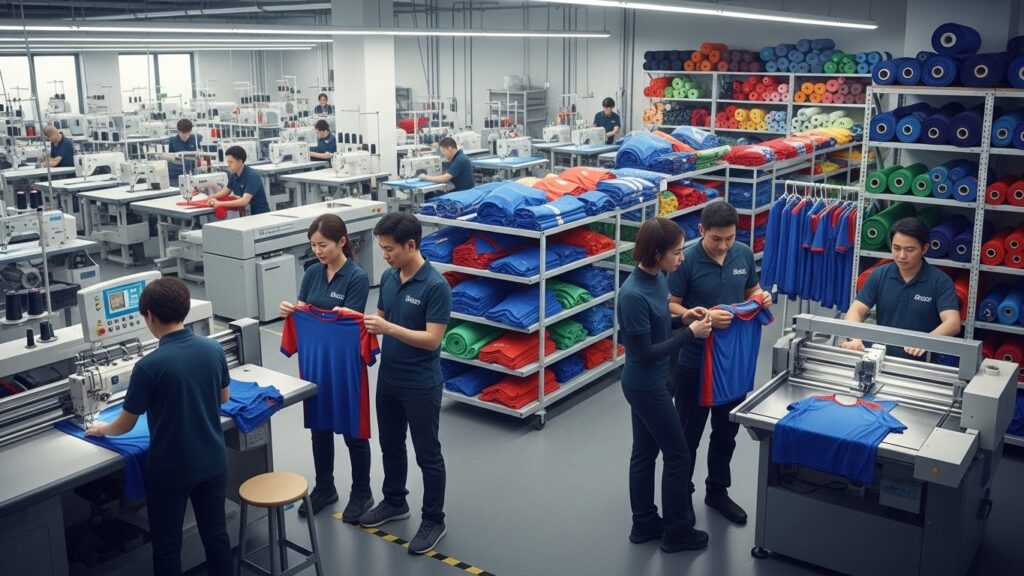
In sportswear manufacturing, the pre-production sample should use the final fabric, final trims, final stitching, final branding method, final measurements, final labels, and final finishing details. It is not just another development sample. It is the sample that tells the factory, “This is what bulk production must follow.”
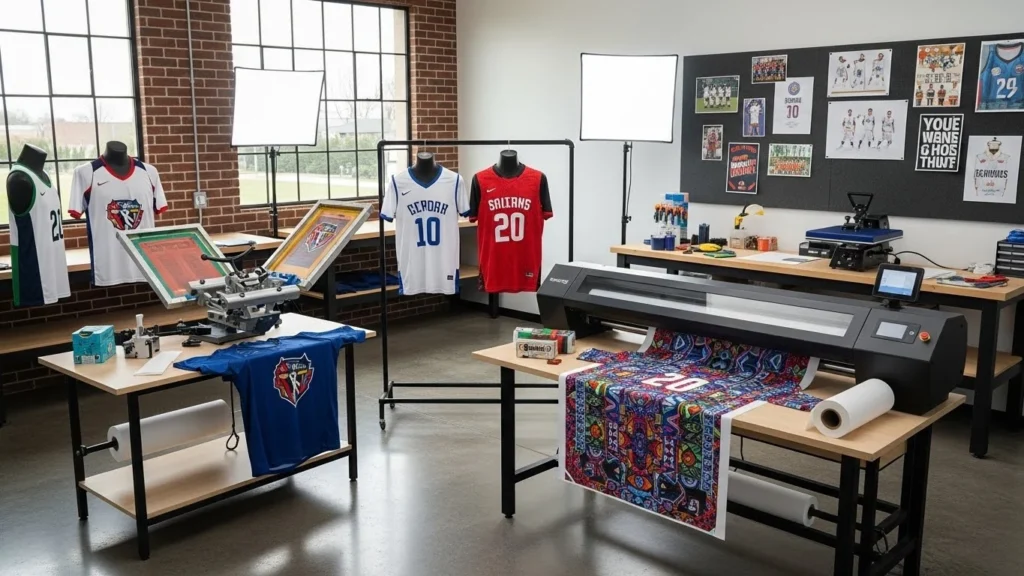
A pre-production sample is especially important when the product includes performance fabrics, sublimation printing, embroidery, patches, elastic, compression panels, custom labels, or private-label packaging.
For example, if a buyer approves a custom football jersey as a pre-production sample, that sample should show the final fabric quality, neckline shape, sleeve length, name and number placement, sponsor logos, stitching, hem finish, label position, and packaging direction.
“A pre-production sample is the final production recipe, not just a nice-looking garment.” — BUSHI Sports®
A pre-production sample is usually reviewed after the design, fit, size chart, fabric, artwork, and construction have already been refined. Once approved, the manufacturer can use it as the main reference for cutting, stitching, printing, finishing, packing, and quality control.
What Is a Size Set Sample?
A size set sample is made to check how the approved design fits across different sizes. Instead of reviewing only one base size, the buyer checks several sizes from the full size range.
For sportswear, this is extremely important because fit does not always grade perfectly from one size to another. A medium sample may look good, but the 2XL may become too short, the youth size may have a wrong sleeve length, or the waistband may become too tight in smaller sizes.
A size set sample helps confirm that the pattern grading is correct.
In custom teamwear, size set samples may be used to check adult, youth, men’s, women’s, and unisex blocks. In activewear, they may be used to check compression level, waistband stretch, leg opening, sports bra support, and body length. In sports gloves, size set samples help verify palm width, finger length, thumb shape, wrist closure, and grip placement.
A size set sample is not mainly made for marketing. It is made for fit control.
A good size set review should check:
- Finished garment measurements
- Tolerance across sizes
- Pattern grading
- Sleeve, inseam, and body length
- Neck, armhole, waist, and hip fit
- Elastic recovery
- Movement comfort
- Size labels
- Player or customer size range
- Fit consistency between top and bottom garments
The BUSHI Sports® sports uniform size guide explains why body measurements, finished garment measurements, ease, size charts, and sample trials must be managed carefully before final team orders.
What Is a Salesman Sample?
A salesman sample, often called an SMS sample, is made for sales, marketing, showroom display, buyer meetings, trade shows, catalogues, and order collection.
This sample needs to look presentable because it helps brands sell the product before bulk production. It may be used by sales representatives, distributors, retailers, teamwear companies, or private-label brands to show customers what the product will look like.
A salesman sample is usually made in a common sample size, such as medium or large, depending on the market. It may use final fabric and trims, but its main job is not to approve the full production process. Its main job is to present the product commercially.
For example, a teamwear company may use a salesman sample of a volleyball uniform to show a club the design, fabric feel, sublimated graphics, collar style, and general workmanship. A gymwear brand may use a salesman sample of leggings and sports bras for retail buyers or content shoots.
A salesman sample should be close to the final product, but buyers should not treat it as the same as a pre-production sample unless it has been checked and approved against the final tech pack.
A salesman sample helps with:
- Buyer presentations
- Wholesale meetings
- Showroom displays
- Trade shows
- Collection launches
- E-commerce photography
- Sales team training
- Distributor approvals
- Retail range planning
- Club or team decision-making
The risk is simple: a salesman sample can be visually attractive but still not production-approved.
Quick Comparison: PP Sample vs Size Set Sample vs Salesman Sample
| Sample type | Main purpose | Timing | Key focus | Approval meaning |
|---|---|---|---|---|
| Pre-production sample | Confirm final production standard | Just before bulk production | Fabric, trims, fit, stitching, branding, labels, packing | Bulk production can begin if approved |
| Size set sample | Confirm fit and grading across sizes | After fit approval or before final bulk approval | Measurements, size grading, fit consistency | Size range is acceptable if approved |
| Salesman sample | Support selling and marketing | Before market launch, buyer meeting, or order collection | Appearance, presentation, commercial appeal | Product can be shown to buyers, not always bulk-approved |
A simple way to remember the difference is this: the size set sample checks sizing, the salesman sample supports selling, and the pre-production sample controls production.
Why These Samples Are Often Confused
These samples are often confused because they may be made from the same design and may look almost identical in photos. A buyer may receive a sample, like the appearance, and assume it is ready for bulk production.
But sample approval depends on purpose.
A salesman sample can be approved for presentation but still require fit or construction changes. A size set sample can confirm measurements but may not include final packaging or complete decoration. A pre-production sample can only be approved when it represents the final production standard.
This is why buyers should label every sample clearly.
The label should include:
- Sample type
- Style number
- Size
- Color
- Date
- Version number
- Fabric reference
- Buyer comments
- Approval status
A sample without proper labeling can create confusion later. The factory may follow one version while the buyer expects another.
Where These Samples Fit in the Sportswear Development Process
Sportswear sampling usually moves through several stages. The exact order can change depending on the buyer, product, deadline, and order complexity, but a common process looks like this:
- Reference image or concept
- Tech pack or specification review
- Prototype or development sample
- Fit sample
- Size set sample
- Salesman sample, if needed
- Pre-production sample
- Top of production sample
- Shipment sample
Not every order needs every sample. A small repeat order may not require a salesman sample. A complex private-label activewear collection may require multiple fit, size set, and pre-production samples. A team order with many player sizes may require stronger size set control.
The BUSHI Sports® sportswear sample approval checklist is useful because it covers fabric, measurements, stitching, logo placement, color, finishing, labels, packaging, and written approval before bulk manufacturing.
Pre-Production Sample: What Buyers Should Inspect
A pre-production sample should be inspected carefully because it becomes the main production reference. This is the wrong stage for casual approval.
Buyers should check whether the garment matches the final tech pack, artwork, measurement chart, and approved material references.
Key inspection points include:
- Correct fabric composition and GSM
- Final color or Pantone approval
- Correct size and measurement tolerance
- Approved stitching and seam construction
- Final logo size and placement
- Sublimation, embroidery, heat transfer, or patch quality
- Correct labels and tags
- Correct trims, zippers, elastic, drawcords, or closures
- Wash and shrinkage performance
- Packaging and folding standard
- Overall workmanship
- Fit and movement comfort
- Final buyer comments
For sportswear, movement testing is very important. A sample may look correct on a table but fail when the wearer stretches, squats, runs, jumps, or raises the arms.
The BUSHI Sports® article on sportswear stitching types explains why seams, stitch type, thread, and construction must be matched with stretch, comfort, and durability.
Size Set Sample: What Buyers Should Inspect
A size set sample should be reviewed differently from a pre-production sample. The main purpose is to check whether the approved fit works across the size range.
A buyer should not only inspect the base size. Every submitted size should be measured and compared with the graded size chart.
Important size set checks include:
- Chest, waist, hip, and body length
- Sleeve length and opening
- Shoulder width and armhole
- Inseam, outseam, rise, and leg opening
- Waistband height and elastic recovery
- Neckline measurement
- Size label accuracy
- Fit balance between sizes
- Pattern proportion
- Movement comfort
- Matching top and bottom sizing
For example, a tracksuit size set must check both jacket and trouser sizes. A football uniform size set should confirm jersey length, short length, shoulder width, sleeve opening, and player comfort. A leggings size set should check waistband pressure, hip coverage, inseam, opacity, and compression.
A size set sample is not only about measurements. It is also about fit logic. The product should grow or reduce naturally across sizes.
Salesman Sample: What Buyers Should Inspect
A salesman sample must be attractive, accurate, and commercially useful. It should show the product in a way that helps buyers understand what they are ordering.
For B2B sportswear, a salesman sample may be used by:
- Teamwear suppliers
- Sports clubs
- Retail buyers
- Wholesale distributors
- Gymwear brands
- School uniform buyers
- Academy directors
- Private-label brand owners
- E-commerce teams
- Sales representatives
A good salesman sample should show the correct design direction, fabric hand feel, logo placement, decoration quality, color story, fit type, and overall finish.
However, the buyer should also ask one important question: “Is this sample only for sales presentation, or is it also approved for production?”
If the salesman sample does not include final measurements, final labels, final fabric lot, final trims, or final packaging, it should not be treated as the pre-production sample.
Sample Approval Mistakes That Cause Bulk Problems
Many sportswear production problems start before bulk cutting begins. The sample was approved too quickly, or the wrong sample was treated as final.
Common mistakes include:
- Approving a salesman sample as if it were a pre-production sample
- Skipping size set samples for full team orders
- Approving photos instead of physical samples
- Not checking measurements against tolerance
- Not testing movement and stretch
- Ignoring fabric substitution
- Not checking logo placement across sizes
- Missing wash and shrinkage testing
- Forgetting packaging and label approval
- Not recording sample comments clearly
- Using old artwork files
- Approving one size for a wide size range
- Not sealing the approved sample
These mistakes can cause wrong sizing, mismatched colors, poor logo placement, uncomfortable seams, packaging errors, and delayed delivery.
Sample Cost and Timeline Considerations
Samples are not just small versions of bulk production. They require pattern work, fabric sourcing, cutting, stitching, printing, finishing, checking, packing, and communication.
A pre-production sample can take longer than a basic development sample because it should use final materials and final construction. A size set sample may cost more because multiple sizes are made. A salesman sample may require higher presentation quality because it is used to sell the product.
For brands comparing production expenses, the BUSHI Sports® sportswear manufacturing cost breakdown explains how fabric, trims, customization, labor, sampling, packaging, and shipping affect final pricing.
At BUSHI Sports®, sample timing may depend on design complexity, fabric availability, customization method, and buyer revisions. The service information on the website indicates that samples commonly average 7–10 days, while bulk production can average 3–5 weeks depending on order size and customization.
Which Sample Do You Need First?
The right sample depends on where your product is in development.
If you are still testing the design, you may need a prototype or development sample first. If the base fit is not approved, you need a fit sample. If the base fit is approved but you need to check the full size range, you need a size set sample. If you need to show the product to buyers or clubs, you may need a salesman sample. If everything is finalized and production is ready, you need a pre-production sample.
Here is a practical decision guide:
| Situation | Best sample |
| You want to see the first physical version of an idea | Prototype or development sample |
| You need to correct fit before grading | Fit sample |
| You need to check all sizes | Size set sample |
| You need to present to buyers or clubs | Salesman sample |
| You are ready to approve bulk production | Pre-production sample |
| Bulk has started and you need line confirmation | Top of production sample |
| Shipment is packed and ready | Shipment sample |
For custom sportswear, skipping steps may save time in the beginning but create bigger issues later.
Product-Specific Examples
Custom sports uniforms
For custom sports uniforms, the size set sample is very important because teams may order many sizes for different players. The pre-production sample confirms fabric, print, names, numbers, sponsor logos, stitching, and final approval.
Activewear
For custom activewear, samples must check stretch, recovery, opacity, seam comfort, waistband behavior, and fabric hand feel. A size set sample is useful for leggings, sports bras, tank tops, and compression garments.
Sports gloves
For custom sports gloves, size set samples help check finger length, palm width, grip placement, wrist closure, and comfort. A salesman sample may be useful for retail or distributor presentations.
Tracksuits and outerwear
Tracksuit samples must check jacket and trouser fit together. A salesman sample may show the collection to buyers, but the pre-production sample should confirm zippers, rib, pockets, embroidery, lining, labels, and final packing.
How to Give Clear Sample Feedback
Sample feedback should be specific, written, and attached to the correct sample version. Vague comments create confusion.
Instead of writing “make it better,” write:
- Increase body length by 2 cm
- Move chest logo 1.5 cm higher
- Change collar rib to approved navy reference
- Reduce sleeve opening by 1 cm
- Use softer elastic for waistband
- Confirm four-thread overlock on side seams
- Increase inseam by 1.5 cm for sizes XL–3XL
- Match packaging to approved poly bag sample
Good feedback helps the manufacturer improve the next sample quickly.
How BUSHI Sports® Handles Sportswear Samples
BUSHI Sports® supports sportswear brands, private-label clothing brands, teamwear companies, clubs, gyms, retailers, wholesalers, distributors, academies, schools, universities, equestrian brands, importers, and sourcing companies.
As a global custom sportswear manufacturer, BUSHI Sports® uses samples to confirm fabric, fit, stitching, decoration, labels, packaging, and production quality before bulk manufacturing.
The company’s sportswear manufacturing services include product development, tech pack and sample review, physical sample replication, sample development, fabric sourcing, custom printing and branding, cut-and-sew manufacturing, OEM and private-label manufacturing, bulk production, quality control, packaging, and worldwide shipping.
For buyers, the best process is to share a tech pack, reference sample, design file, size chart, order quantity, branding method, and target delivery date before sample development begins.
Frequently Asked Questions
What is the main difference between a pre-production sample and a size set sample?
A pre-production sample confirms the final production standard before bulk manufacturing. A size set sample checks whether the product fits correctly across the size range.
Is a salesman sample the same as a pre-production sample?
No. A salesman sample is mainly used for sales and marketing. A pre-production sample is used to approve final bulk production.
Can a salesman sample become a pre-production sample?
Yes, but only if it matches the final tech pack, fabric, measurements, trims, stitching, branding, labels, and packaging. It should be checked and approved as a PP sample.
Do all custom sportswear orders need size set samples?
Not always. Simple repeat orders may not need a new size set. New products, wide size ranges, youth/adult orders, compression apparel, sports bras, leggings, and gloves benefit strongly from size set approval.
Why is a pre-production sample important?
A pre-production sample reduces the risk of bulk production errors. It confirms the final product standard before the manufacturer cuts and produces the full order.
What is checked in a size set sample?
Measurements, grading, fit, size labels, proportions, movement comfort, and consistency across sizes are checked in a size set sample.
What is checked in a salesman sample?
A salesman sample is checked for visual presentation, fabric feel, design accuracy, logo placement, color, finishing, and commercial appeal.
Should buyers approve samples from photos?
Photos can help with quick communication, but physical approval is safer for fabric hand feel, fit, stretch, color, stitching, trims, and packaging.
Conclusion
A pre-production sample, size set sample, and salesman sample each plays a different role in custom sportswear manufacturing.
The size set sample protects sizing and grading. The salesman sample supports selling, showroom display, buyer meetings, and order collection. The pre-production sample protects bulk production by confirming the final standard before manufacturing begins.
The safest approach is to label every sample clearly, inspect it according to its purpose, record feedback in writing, and approve the final production sample before bulk cutting starts.
BUSHI Sports® helps B2B buyers develop custom sportswear, private-label sportswear, custom teamwear, activewear, sports uniforms, sports gloves, casual wear, outerwear, and equestrian gear through sampling, customization, quality control, packaging, and worldwide delivery.
To discuss your sample or custom order, contact BUSHI Sports® through the contact page, send details by WhatsApp, or email info@bushisports.com.
You can also view the company location on Google Maps or connect with BUSHI Sports® on LinkedIn.