Sublimation vs embroidery is one of the most important branding decisions in custom sportswear. Both methods can produce professional team logos, sponsor marks, names, numbers, and private label details, but they create different results in weight, texture, durability, design freedom, fabric compatibility, cost, and production time.
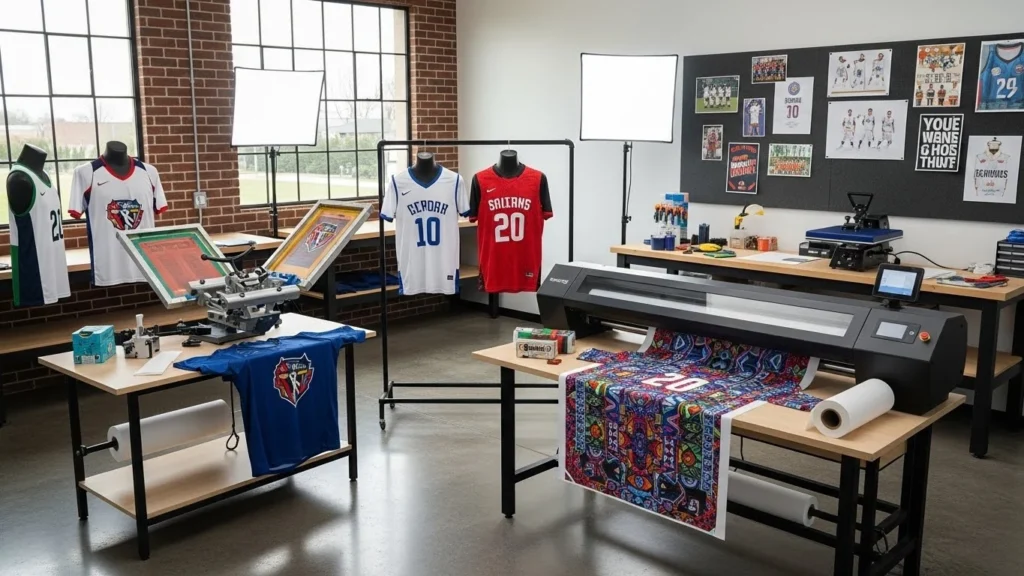
Sublimation uses heat to fix disperse dye into compatible polyester material. The design becomes part of the printed fabric rather than sitting as a thick layer on top. This makes it especially suitable for all-over jersey graphics, gradients, repeated patterns, player names, numbers, and complex colour combinations.
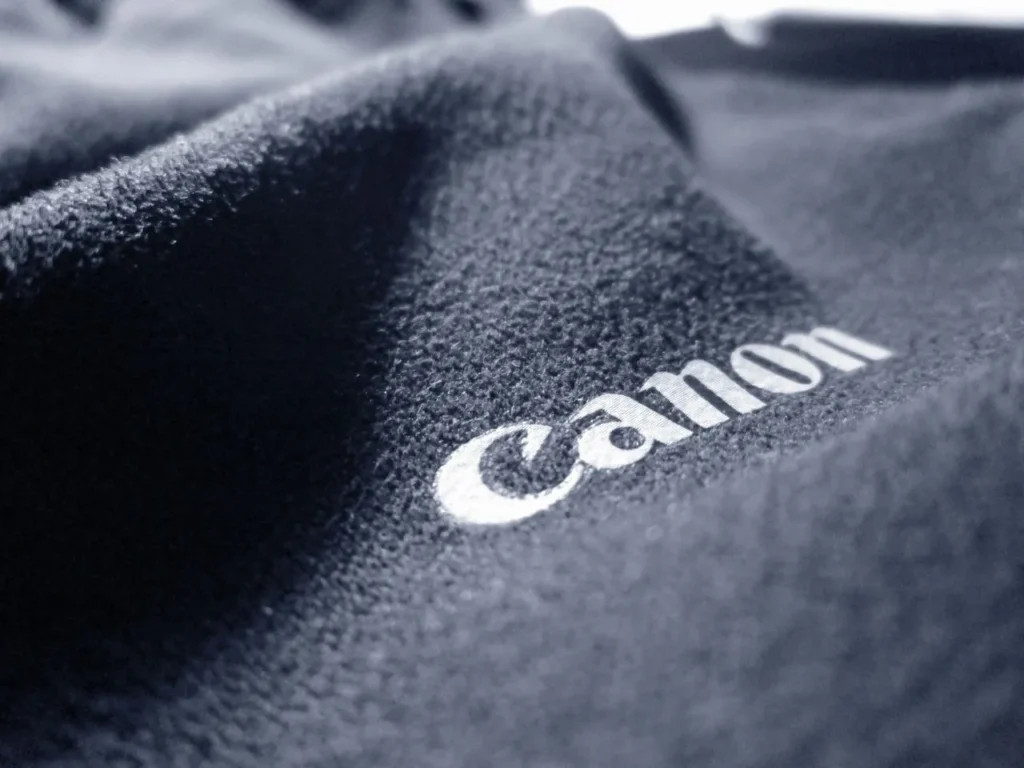
Embroidery builds a design with thread and stitches. It creates a raised, tactile finish that is often associated with premium club crests, polo shirts, tracksuits, jackets, caps, and selected fanwear. The finished result depends on digitizing, stitch density, thread, backing, needle choice, fabric stability, and placement.
The correct sublimation vs embroidery decision depends on the product rather than the logo alone. A lightweight match jersey has different needs from a structured team jacket. A detailed full-front graphic cannot be produced efficiently through dense embroidery, while a small premium crest may gain depth and perceived value from thread.
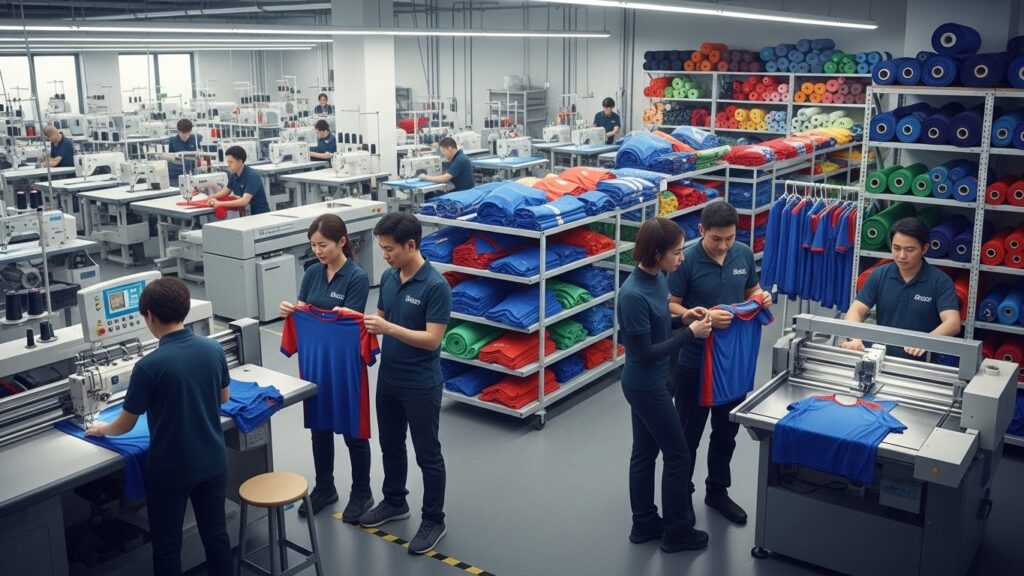
BUSHI Sports® supports custom sportswear manufacturing for brands, clubs, teams, academies, retailers, distributors, and private label buyers. Services can include fabric selection, decoration, patterns, personalization, samples, labels, packaging, and bulk production.
This guide explains seven practical decisions that help buyers compare sublimation vs embroidery before approving custom sportswear.
Quick Answer
Sublimation is usually better for polyester jerseys, running tops, shorts, and all-over printed sportswear because it adds little surface bulk.
Embroidery is usually better for small crests, polos, tracksuits, jackets, caps, and premium fanwear where texture and dimension matter.
A practical sublimation vs embroidery strategy may use both methods: sublimation for match kits and embroidery for travel jackets, polos, or fanwear.
Sublimation vs Embroidery Comparison Table
| Requirement | Sublimation | Embroidery |
|---|---|---|
| Best fabric direction | Polyester or compatible polyester-rich material | Stable knits, woven fabrics, fleece, polos, jackets, and selected performance fabrics |
| Design coverage | Small logos to complete all-over graphics | Usually small or medium localized designs |
| Colour complexity | Gradients, photographs, patterns, and many colours | Thread colours and stitch structure limit some detail |
| Added weight | Very low surface weight | Adds thread and backing |
| Texture | Flat and integrated into the material | Raised and tactile |
| Airflow effect | Minimal when the printed fabric remains open | Dense stitching can reduce flexibility and airflow locally |
| Fine text | Strong when artwork and print resolution are suitable | Limited by letter size, digitizing, thread, and fabric |
| Durability risk | Shade, migration, heat, and wash performance | Thread abrasion, puckering, backing discomfort, and stitch damage |
| Cost structure | Often efficient for complex multicolour graphics | Influenced by stitch count, design size, locations, and thread changes |
| Typical products | Jerseys, running wear, training kits, printed shorts | Polos, jackets, tracksuits, caps, crests, and fanwear |
Decision 1: Match Sublimation vs Embroidery to the Product
The first sublimation vs embroidery decision is the garment category. Decoration should support the product’s movement, fabric, fit, wash frequency, and commercial tier.
A match jersey may prioritize low weight, ventilation, stretch, and smooth skin contact. A travel polo may prioritize structured branding and a premium appearance. A team jacket may need a durable crest that remains visible across several seasons.
Products Commonly Suited to Sublimation
Sublimation is commonly used for:
- Soccer, basketball, rugby, and volleyball jerseys
- Running shirts and singlets
- Cycling jerseys
- Team training tops
- Printed shorts
- Leggings made from compatible polyester blends
- Goalkeeper jerseys
- Esports-style polyester jerseys
- All-over patterned fanwear
Products Commonly Suited to Embroidery
Embroidery is commonly used for:
- Polo shirts
- Tracksuit jackets
- Warm-up jackets
- Hoodies and sweatshirts
- Caps
- Structured fanwear
- Staff clothing
- Small chest crests
- Premium private label marks
The match jersey vs replica jersey guide explains why performance and supporter products may require different decoration.
Decision 2: Compare Design Detail in Sublimation vs Embroidery
The second sublimation vs embroidery decision is artwork complexity. Sublimation supports gradients, shadows, tonal patterns, photographs, camouflage, geometric graphics, fine lines, and repeated motifs across large garment panels.
Embroidery converts artwork into stitches through digitizing. The digitizer defines stitch type, direction, density, sequence, underlay, pull compensation, and colour changes. A logo that looks simple on screen may become difficult when it contains tiny letters, narrow gaps, several outlines, or close colour boundaries.
Design Size and Placement
Sublimation can cover complete garment panels without increasing stitch count. Embroidery cost and weight normally rise with design size and density.
Large dense embroidery on lightweight sportswear can:
- Add weight
- Reduce flexibility
- Trap heat locally
- Distort stretch
- Create puckering
- Require heavier backing
- Feel rough against the skin
Small embroidery can work successfully when the fabric, backing, thread, and digitizing are correctly selected.
Fine Text and Small Details
Very small embroidered letters can close up because thread has physical thickness. Sublimation can preserve finer details when artwork and production settings are controlled.
BUSHI Sports® explains scalable artwork preparation in why vector artwork is important for sportswear printing and how to prepare print-ready files.
For a fair sublimation vs embroidery comparison, prepare an embroidery-ready logo and a full-detail sublimation file instead of forcing unsuitable artwork into both methods.
Decision 3: Compare Performance, Weight, and Comfort
The third sublimation vs embroidery decision is athlete comfort. Sublimation adds no raised stitch surface, so the printed zone can retain the fabric’s flexibility and ventilation when processing is controlled.
Embroidery introduces thread, underlay, and backing. These elements can create a premium structure, but they also add localized thickness.
Lightweight Match Sportswear
For high-intensity jerseys, sublimation often offers practical advantages:
- Low added weight
- Smooth inner surface
- Large design coverage
- No rigid surface film
- Minimal interference with ventilation zones
- Easy integration of names and numbers
Embroidery can still be used for a small crest, but it should be tested for weight, skin comfort, stretch distortion, and airflow.
Stretch Fabrics
A dense crest can restrict polyester-spandex or four-way-stretch material. The fabric may stretch around the embroidered area while the stitched zone remains comparatively stable, causing rippling or tension.
The published BUSHI Sports® guides on 100% polyester vs polyester-spandex and two-way stretch vs four-way stretch fabric explain why stretch direction and recovery must be approved before decoration.
Hot-Weather Sportswear
Large embroidered areas can reduce air exchange and add backing against the skin. Sublimation is often more suitable for hot-weather match jerseys, although fabric weight, knit structure, colour, humidity, and fit remain important.
The BUSHI Sports® guide on sportswear for extreme heat provides a wider heat-management framework.
Decision 4: Compare Durability in Sublimation vs Embroidery
The fourth sublimation vs embroidery decision is durability after sweat, abrasion, washing, and repeated use. Neither method is automatically permanent under every condition.
Sublimation Durability
A correctly sublimated polyester design does not normally crack or peel like a poorly applied surface transfer. Potential failures include:
- Weak colour saturation
- Ghosting
- Banding
- Heat marks
- Colour migration
- Incorrect shade
- Dimensional change
- Loss of definition
- Inconsistent panel colour
Check the print before and after washing, rubbing, perspiration, and relevant light exposure.
Embroidery Durability
Embroidery can provide strong long-term appearance, but failures may include:
- Broken stitches
- Thread abrasion
- Looping
- Puckering
- Fraying
- Colour change
- Backing separation
- Needle damage
- Skin irritation
- Distortion around the design
Polyester embroidery thread is commonly selected for sportswear because suitable products can resist abrasion, sunlight, chlorine exposure, and demanding laundering.
Relevant Testing
A useful sublimation vs embroidery testing programme may include:
- AATCC TM61 or ISO 105-C06 for laundering colourfastness
- ISO 105-E04 or AATCC TM15 for perspiration
- AATCC TM8 for dry and wet rubbing
- Dimensional-change testing
- Embroidery stitch and backing inspection
- Repeated stretch testing
- Abrasion checks
- Finished-garment wash trials
Testing should use the complete decorated sample. This makes the sublimation vs embroidery result relevant to the actual garment rather than isolated materials.
Decision 5: Compare Fabric Compatibility
The fifth sublimation vs embroidery decision is material compatibility. Sublimation primarily suits polyester because disperse dyes are fixed into the fibre under heat. Cotton and many natural fabrics require different systems.
Mimaki’s official textile guidance describes sublimation ink as being fixed on polyester fabric at high temperature and identifies transfer and direct sublimation options for polyester applications.
Polyester Content and Sublimation
Higher polyester content generally supports stronger sublimation colour. Blends may appear softer or less saturated when part of the material does not accept the dye.
Polyester-spandex can be sublimated when the exact blend is approved for heat, pressure, width change, surface shine, stretch, and recovery.
Embroidery Fabric Stability
Embroidery can be used on a wider variety of materials, but lightweight, slippery, knitted, or highly elastic sportswear needs careful stabilization.
Backing selection should reflect:
- Fabric weight
- Knit or woven structure
- Stretch
- Design size
- Stitch density
- Placement
- Skin-contact requirements
- Care conditions
Machine-embroidery guidance from Madeira identifies backing as the foundation that stabilizes fabric during stitching and recommends that backing weight and type be matched to the fabric and design.
The practical sublimation vs embroidery difference is integrated dye printing on compatible polyester versus stitched decoration engineered for the selected fabric.
Decision 6: Compare Cost, MOQ, and Production Time
The sixth sublimation vs embroidery decision is commercial. Unit price depends on design, quantity, garment, locations, setup, and production route.
Sublimation Cost Factors
Sublimation cost may include:
- Artwork preparation
- Colour profiling
- Transfer paper and ink
- Printing
- Heat transfer or direct-print fixation
- Pattern placement
- Cutting after printing
- Print inspection
- Sample and strike-off approval
Complex multicolour artwork may not add the same labour increase seen in embroidery because the image is digitally printed.
Embroidery Cost Factors
Embroidery cost may include:
- Digitizing
- Stitch count
- Design dimensions
- Number of locations
- Thread changes
- Backing and topping
- Hooping
- Machine running time
- Trimming and finishing
- Rejection and repair risk
A small one-colour logo can be economical. A large dense multicolour crest can require substantial machine time.
MOQ and Personalization
Sublimation can integrate individual names and numbers into the garment artwork without attaching separate layers. This is valuable for personalized team orders.
Embroidery can also personalize products, but individual names increase programming, handling, and machine time. It is usually better suited to small names or premium applications than large player numbers.
The BUSHI Sports® sportswear manufacturing cost guide explains decoration, labour, sampling, packaging, and freight costs.
Decision 7: Choose Sublimation vs Embroidery by Application
The final sublimation vs embroidery decision should match the branding method to the product and user.
| Application | Recommended direction | Main reason |
| Elite match jersey | Sublimation-dominant | Low weight, ventilation, and integrated graphics |
| Standard club jersey | Sublimation | Names, numbers, sponsors, and colour consistency |
| Goalkeeper jersey | Sublimation with optional small crest | All-over graphics and personalization |
| Training T-shirt | Sublimation or small embroidery | Depends on design and product tier |
| Polo shirt | Embroidery | Structured premium chest branding |
| Tracksuit jacket | Embroidery or combination | Durable crest and premium presentation |
| Running singlet | Sublimation | Low bulk and smooth skin contact |
| Compression top | Sublimation or very light embroidery | Stretch and comfort must be protected |
| Hoodie or sweatshirt | Embroidery | Fabric supports dimensional thread branding |
| Fanwear | Either or both | Depends on price, style, and perceived value |
| Cap | Embroidery | Structured local branding |
| Cycling jersey | Sublimation | Large graphics, sponsors, and low weight |
The Practical Verdict
For fully customized team uniforms, sublimation is usually the stronger primary method because it supports detailed artwork, all-over colour, names, numbers, low surface weight, and scalable personalization.
For polos, jackets, caps, hoodies, and premium supporter products, embroidery often provides stronger texture and perceived value.
Many collections should use sublimation for performance garments and embroidery for travel, staff, and retail products.
Quality-Control Checklist
Use this sublimation vs embroidery checklist during sample approval:
| Inspection point | Sublimation check | Embroidery check |
| Artwork | Scale, resolution, colour, and panel position | Digitizing, stitch direction, and detail |
| Fabric | Polyester compatibility and heat stability | Stability, weight, stretch, and backing |
| Colour | Strike-off and wash consistency | Thread shade and lot consistency |
| Surface | Ghosting, banding, shine, or heat marks | Puckering, loops, gaps, or thread damage |
| Placement | Panel registration and graded position | Reference-point measurement and symmetry |
| Comfort | Original fabric hand and breathability | Backing, thickness, and skin contact |
| Wash result | Colour, dimensions, and migration | Thread, backing, shape, and fraying |
| Bulk control | Printer profile, heat settings, and fabric lot | Digitizing file, thread, needle, and backing |
The BUSHI Sports® sportswear sample approval checklist covers decoration, measurements, materials, labels, testing, and packaging before bulk cutting.
Questions to Ask a Manufacturer
Use these sublimation vs embroidery questions before approving a quotation:
- Is the fabric compatible with the proposed method?
- What polyester percentage is needed for the intended sublimation result?
- Will polyester-spandex retain its dimensions after heat?
- What is the embroidery stitch count?
- Which thread, needle, and backing will be used?
- Can the crest be simplified without weakening the identity?
- Will names and numbers be printed or stitched?
- Are physical strike-offs or stitch-outs available?
- How will colourfastness and wash durability be tested?
- Is the decoration included in the PP sample?
- What MOQ and setup charges apply?
- Can artwork, thread, backing, or print settings change without approval?
Common Buying Mistakes
A reliable sublimation vs embroidery decision should avoid the following sourcing errors.
Selecting by Appearance Alone
A crest may look premium while being too heavy for the garment.
Using Embroidery for Large Player Numbers
Large stitched numbers add weight, stiffness, cost, and machine time.
Expecting Sublimation on Any Fabric
Standard sublimation is designed primarily for compatible polyester materials.
Ignoring Backing
Backing affects stability, puckering, comfort, and long-term appearance.
Approving Only Digital Mockups
Mockups cannot prove colour, stitch detail, hand feel, heat response, or wash performance.
Using One Method Across Every Product
Performance jerseys, polos, jackets, caps, and fanwear have different decoration needs.
Why Work With BUSHI Sports®?
BUSHI Sports® helps buyers turn a sublimation vs embroidery decision into an approved production specification.
BUSHI Sports® supports brands, clubs, academies, teams, retailers, distributors, and private label buyers with:
- Sublimation and embroidery comparison
- Custom sports uniforms
- Activewear and training apparel
- Polos, tracksuits, jackets, and fanwear
- Artwork preparation and mockups
- Names, numbers, sponsors, and crests
- Fabric and backing selection
- Size sets and pre-production samples
- Testing coordination
- Private labels and packaging
- Bulk quality inspection
- International order management
A complete brief should include the garment, fabric, logo size, colours, artwork, placement, personalization, sizes, quantity, tests, price target, and delivery date.
Frequently Asked Questions
What is the main difference in sublimation vs embroidery?
Sublimation fixes dye into compatible polyester fabric, creating a flat printed result. Embroidery uses thread and stitches to create a raised, textured design.
Which method is better for sports jerseys?
Sublimation is generally better for fully customized jerseys because it supports all-over graphics, names, numbers, sponsors, and low added weight.
Is embroidery more durable than sublimation?
Both can be durable when correctly engineered. Sublimation avoids peeling and cracking, while embroidery can provide a long-lasting crest. Each method has different failure risks and should be wash tested.
Can sublimation be used on cotton?
Standard dye sublimation is mainly suitable for polyester or polyester-coated materials. Cotton normally requires a different printing method or a special coating system.
Does embroidery make sportswear hotter?
A small crest may have limited effect, but large dense embroidery and backing can reduce flexibility and airflow locally and add weight.
Which method is cheaper?
Cost depends on quantity and design. Sublimation is often efficient for complex multicolour graphics and personalization. Embroidery cost increases with stitch count, size, locations, and machine time.
Can both methods be used in one collection?
Yes. Brands commonly use sublimation for match and training garments and embroidery for polos, tracksuits, jackets, caps, and fanwear.
What should be approved before production?
Approve the fabric, artwork, print or stitch sample, colours, placement, size grading, backing, thread, heat settings, wash results, labels, packaging, and PP sample.
Conclusion
Sublimation vs embroidery should be decided by product function, fabric, design scale, comfort, durability, cost, and customer expectations.
Sublimation is normally the stronger option for all-over printed jerseys, running wear, cycling jerseys, training tops, names, numbers, sponsors, gradients, and complex multicolour graphics. It preserves a flat surface and adds little weight when the fabric and heat process are controlled.
Embroidery is normally the stronger option for small premium crests, polos, tracksuits, jackets, hoodies, caps, staff apparel, and structured fanwear. It creates texture and depth but requires correct digitizing, thread, backing, needle selection, and placement.
The strongest sublimation vs embroidery strategy may combine both methods across the collection rather than forcing one method onto every garment. Buyers should approve physical print strike-offs, embroidery stitch-outs, decorated samples, wash tests, and final production specifications before bulk manufacturing.
BUSHI Sports® supports sublimation vs embroidery development through material selection, artwork preparation, sampling, printing, stitching, personalization, labels, packaging, testing coordination, quality inspection, and international bulk production.
To discuss a custom sportswear project, email info@bushisports.com, message BUSHI Sports® on WhatsApp at +92 348 4018 578, or submit requirements through the contact page.