Horse Tack Design and Manufacturing Guide
Horse tack manufacturing brings together products that have very different jobs. A saddle carries and positions the rider. A bridle connects several adjustable parts around the horse’s head. A girth secures the saddle, while a bit is a separate component with its own dimensions and finish requirements. Each product needs a design and approval process suited to its use.
For equestrian brands, tack shops and distributors, developing a collection involves more than selecting leather and placing a logo. Material quality matters, but so do pattern measurements, hardware attachment, contact surfaces, fit, instructions for care and consistency between production runs. A product may look convincing in a photograph while still requiring significant work before it is suitable for its intended market.
This pillar guide explains the main decisions in horse tack manufacturing, from the initial brief through sampling, fit review and bulk inspection. It focuses on practical questions wholesale buyers should resolve with their manufacturing partner, while recognizing that individual horses may also need assessment by qualified saddle or bridle fitters.

Table of Contents
- What counts as horse tack?
- Define the rider, horse and intended use
- Select leather, synthetics and contact materials
- Specify hardware and load-bearing connections
- Develop saddles around structure and fit
- Design bridles and reins for adjustment
- Build girths with controlled shape and fastening
- Treat bits as a separate technical product
- Create measurements and size ranges
- Move from brief to approved sample
- Set product-specific quality checks
- Review competition and market requirements
- Plan private label production and reorders
- Care, packaging and buyer information
- Frequently asked questions
What Counts as Horse Tack?
Horse tack generally refers to equipment used on the horse for riding, handling or related activities. Saddles, bridles, reins, girths, bits, stirrup leathers and some other fittings fall within this broad category. Horse rugs, fly masks and saddle pads are often sold alongside tack, but their materials and construction need separate specifications.
For a manufacturer, “tack” is therefore a product family rather than a single production method. The processes used to cut and stitch a leather bridle are different from those needed to assemble a saddle or finish a metal bit. A buyer planning horse tack manufacturing should divide the collection into distinct product programs before asking for samples or prices.
| Product | Main development concern | Useful approval check |
|---|---|---|
| Saddle | Structure, panels, rider position and horse fit | Assessment of the completed saddle by a qualified fitter |
| Bridle | Strap dimensions, adjustment and contact points | Fit across the intended head-size range |
| Reins | Hand feel, length and secure connections | Material, buckle and stitching review |
| Girth | Shape, contact surface and buckle placement | Fit with the intended saddle and horse |
| Bit | Dimensions, geometry and surface finish | Technical inspection and suitable fit assessment |
| Stirrup leathers | Length adjustment and load-bearing construction | Material and connection checks |
A strong collection can coordinate these products visually without treating them as identical. The leather color and hardware finish may match across a bridle and girth, while the materials, dimensions and tests remain specific to each item.
1. Define the Rider, Horse and Intended Use
The first stage of horse tack manufacturing is a useful product brief. Identify who will use the item, how it will be used and the market in which it will be sold. A general-purpose saddle for a riding school, for example, has different commercial and maintenance needs from a premium dressage saddle. A bridle intended for everyday training may require a different finish from one designed as part of a show collection.
The brief should describe the intended riding discipline, customer price range, preferred appearance, size range and expected frequency of use. It should also state whether the buyer has an existing physical sample, a technical drawing or an original design concept. These starting points involve different amounts of development.
For horse tack manufacturing, fit must be considered at both the product-range and individual-horse level. A manufacturer can produce controlled sizes and repeat an approved specification. It cannot guarantee that one saddle or bridle will fit every horse within a broad label such as “full size.”
The University of Minnesota Extension’s saddle guidance identifies wither and spine clearance, even panel contact and front-to-back balance as considerations. It also notes that fit may change when a horse’s body condition changes and recommends expert help with saddle selection. Those points are valuable for brands writing product descriptions: a size chart supports selection, while an individual fit assessment remains necessary.
2. Select Materials According to the Product
Leather remains an important option in horse tack manufacturing because it can be cut, shaped, stitched and finished for many traditional tack designs. Yet “genuine leather” is not a sufficient material specification. Buyers need to know the intended thickness, firmness, surface finish, color, consistency and application within the product.
A bridle strap, padded noseband and saddle panel do different work. They may require different material properties even when they share a similar visible finish. The buyer should approve samples of the actual leather or alternative material proposed for each component, not simply a single swatch for the entire collection.
Synthetic leather and technical textiles can also be appropriate where the product design, care requirements and target price support their use. A synthetic option should be assessed for flexibility, finish retention and behavior around stitched holes or folds. Its appearance in a showroom sample may not reveal how it performs after repeated adjustment and cleaning.
Padding and lining need the same attention. A soft contact surface can improve the feel of a product, but excessive bulk may change its fit or trap dirt. The layers beneath a visible outer material should therefore be recorded in the product specification. Buyers developing a broader horse-product range can use the horse gear materials and construction guide to compare how material priorities change across tack, rugs, pads and protective equipment.
What should a material approval record include?
A useful horse tack manufacturing record identifies the supplier material code, color, thickness or weight where relevant, finish and intended component. It should note which substitutions are permitted and which require fresh approval. This helps prevent a visually similar but mechanically different material from entering a reorder without review.
If a buyer needs laboratory evidence for a leather specification, ISO 3376:2020 describes a method for measuring leather tensile strength and elongation, while ISO 3377-2:2025 covers a leather tear-strength method. These are test methods; a reference to them is not proof that an untested finished product meets a particular performance level.
3. Specify Hardware and Load-Bearing Connections
Buckles, rings, studs and other fittings can have a disproportionate effect on product reliability. Their dimensions must match the straps and their finish must be suitable for the intended use. A buckle that looks attractive but leaves too little room for a strap can make adjustment difficult; an oversized fitting may add unnecessary movement or bulk.
In horse tack manufacturing, hardware approval should cover more than a catalog photograph. Ask for the material specification, dimensions, finish and an assembled sample. Inspect edges and surfaces that might contact the horse or rider, and check whether paired components align correctly.
The connection between leather or textile and hardware also matters. Buyers should review the position of stitch lines, folded sections, reinforcements and any rivets according to the actual product. The factory should have a documented method for inspecting these points during production, especially on components subject to regular adjustment or loading.
A product specification should identify the approved hardware supplier or equivalent approved part. If a buckle changes on a later production run, the new component should be checked for fit and function before it is treated as a routine replacement.
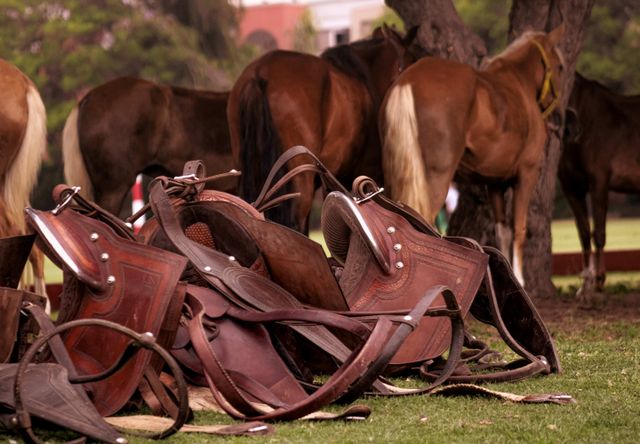
4. Develop Saddles Around Structure, Panels and Fit
Saddles are among the most complex products in horse tack manufacturing. Seat shape, underlying structure, panels, flaps, girth attachments, stitching and hardware all interact. A buyer should decide whether a proposed saddle is intended for general-purpose riding, jumping, dressage or another defined use before discussing surface styling.
The saddle must be considered for both horse and rider. The rider’s seat and leg position affect the experience of the product; the underside and panels affect how it contacts the horse. A saddle that appears symmetrical on a display stand still needs a suitable fit review on a horse.
For saddle development, ask the manufacturer to document:
- The agreed structural design and approved components.
- Seat size and other product measurements.
- Panel shape, construction and filling specification.
- Flap shape and intended riding application.
- Girth-attachment construction and hardware.
- Left-to-right symmetry and finishing requirements.
A physical saddle sample is especially important because drawings cannot fully communicate panel feel, balance or the interaction between its components. The Bushi Sports® custom horse saddle page outlines buyer-specified materials, panels, seat dimensions and sampling for wholesale orders.
Saddle approval should include a qualified fit assessment for the horses and riders the product is designed to serve. The University of Minnesota Extension’s guidance on equine back pain lists poor saddle fit among possible contributors to discomfort and recommends consulting a professional saddle fitter when equipment fit is uncertain. This is a reason to include fit assessment in the development plan, rather than treating the sample’s appearance as final approval.
5. Design Bridles and Reins for Adjustment and Contact
Bridles bring together a headpiece, cheekpieces, browband, noseband and other components according to the chosen configuration. Each part must sit in the right place and provide a useful range of adjustment. A brand should specify the configuration it wants rather than relying on the general word “bridle.”
Horse tack manufacturing for bridles begins with a clear size chart: strap lengths, widths, hole spacing and adjustment range. Buyers should also identify padding locations, edge finishing, buckle positions and rein-attachment details. A padded part can feel pleasant in the hand but still sit poorly if its underlying strap or seam is misplaced.
Fit is particularly important around the horse’s head. In a published study of eight dressage horses, measured pressures under several noseband types increased as the nosebands were tightened. That finding does not establish one universal bridle design, but it supports careful attention to adjustment and contact points in product development.
A custom bridle program can cover dimensions, padding, noseband style, browband design and fittings. For a private label buyer, the important step is to record the approved combination. Changing a noseband shape or headpiece padding may alter the fit even if the leather color and logo remain the same.
Reins should also receive a separate specification. Define length, width, material, grip or texture where relevant, and the connection to the bridle. Examine how the stitching and hardware feel in the rider’s hands. Coordinating a rein with a bridle does not remove the need to approve it as its own functional product.

6. Build Girths With Controlled Shape and Fastening
A girth is a connection between saddle and horse, so its length, contour, contact surface and fastening must be developed together. A straight, shaped or padded style may suit different briefs. The design should be selected for its intended saddle configuration and target use, not because one outline appears more advanced.
Horse tack manufacturing for girths can involve leather, synthetic surfaces, padded textiles, webbing, elastic sections and metal buckles. The choice and placement of each component affect the finished product. A buyer should check whether elastic sections extend as intended, whether padding remains consistent and whether buckles are aligned.
Research on girth design continues to examine how shape and tension affect the saddle–horse interface. A 2025 study of girth design and tension used pressure measurements on six regularly ridden horses. Its small study setting should not be used to promise a specific benefit from every “anatomical” girth; instead, it reinforces the need to assess the chosen design and its fit.
Bushi Sports® describes options for length, contour, lining, elastic placement, buckles and materials on its custom horse girth page. A buyer should approve these details together in a finished sample, fitted with the saddle type for which the girth is intended.

7. Treat Bits as a Separate Technical Product
A bit is not simply a metal accessory added at the end of bridle production. Mouthpiece dimensions, ring design, joints, connections, finish and surface smoothness need their own technical review. Small differences in geometry may matter to how a bit fits and functions.
For horse tack manufacturing that includes bits, the buyer should provide a detailed drawing or approved reference sample. Specify the intended configuration, measurable dimensions, material and finish. The manufacturer should check the assembled sample against those instructions and inspect surfaces for defects, rough edges and inconsistent connections.
Bushi Sports® outlines specification-based development on its custom horse bits page. Brands considering a new bit design should arrange appropriate technical and equestrian review before making comfort, performance or welfare claims. The suitability of a bit for a particular horse is also a separate fitting decision.

8. Create Measurements That Can Be Repeated
A size label is useful for customers, but measurements are what make horse tack manufacturing repeatable. For each product, define the points to be measured, the method of measuring and the acceptable production tolerance. Record the approved measurement set for every size.
A bridle specification might include strap length, width, hole spacing and adjustment range. A girth needs length and width measurements taken in a consistent way. A saddle has a much more extensive set of dimensions related to its approved structure and components.
Buyers should distinguish between product sizing and individual fitting. A factory can control a bridle strap to an approved length. It cannot assume that this length will sit identically on every horse labeled “cob.” Product information should help customers choose a likely starting size and explain when professional fitting is appropriate.
Grading from one size to another also requires a deliberate decision. Adding the same amount to every bridle strap may change the proportions of the product. Sample at least the sizes needed to confirm that the approved design and adjustment ranges remain sensible across the intended collection.
9. Move From Product Brief to Approved Sample
The production process becomes more reliable when each decision is recorded before bulk cutting or assembly. For horse tack manufacturing, a useful sequence begins with a written brief and ends with a signed-off reference sample.
- Define the product. State its intended use, customer, size range and target market.
- Review references. Supply drawings, photographs, a technical pack or a physical sample.
- Select components. Approve leather or synthetic material, padding, thread, hardware and finishes.
- Confirm the design. Record patterns, dimensions, construction and branding positions.
- Build a prototype. Inspect the complete product rather than individual material swatches alone.
- Assess fit and function. Use suitable horses, riders and qualified professionals where relevant.
- Revise and approve. Document changes and retain the final production reference.
A buyer should avoid combining several unapproved changes into a bulk order. Changing the leather thickness, buckle design and padding at once makes it difficult to identify which choice caused a later fit or production issue.
The private label equestrian gear manufacturing guide explains the wider OEM, ODM and sampling process. In a tack program, that process should produce a separate approved specification for each saddle, bridle, girth or bit style.
10. Set Product-Specific Quality Checks
Quality control in horse tack manufacturing should be tied to the agreed specification, not a generic statement that the product has been “inspected.” A saddle, bridle and bit have different likely failure points. The inspection plan should identify which details matter for each one.
At incoming-material inspection, check material identity, color and visible defects. During cutting and assembly, confirm component dimensions and placement. At final inspection, compare the finished product with the approved sample and verify packaging, labels and quantities.
| Product | Examples of checks before dispatch |
|---|---|
| Saddle | Structural consistency, panels, symmetry, stitching, fittings and finish |
| Bridle | Strap dimensions, holes, stitching, edges, buckles and component alignment |
| Girth | Length, contour, padding, elastic placement, buckle attachment and finish |
| Bit | Dimensions, ring alignment, connections and surface smoothness |
Testing requirements should be specified before sampling. A leather strength test cannot by itself confirm that a finished bridle is suitable for use; the assembly and connections also need review. Likewise, a smooth metal sample does not replace control of subsequent production pieces.
Keep an approved sample, a measurement sheet and a record of permitted material substitutions. These make it easier to investigate discrepancies and protect the consistency of repeat orders. The Bushi Sports® sample approval checklist provides a general framework that tack buyers can extend with product-specific fit and hardware checks.
11. Review Competition and Destination-Market Requirements
If a collection is marketed for competition, design choices should be checked against the current rules for the intended discipline and event level. A style accepted in one setting should not automatically be described as approved everywhere.
The FEI TackApp provides information on allowed and prohibited equipment in FEI competitions. The FEI’s 2026 changes also place tack and equipment requirements in dedicated documents rather than relying solely on the sport rulebooks. Buyers should check the applicable current source while developing and describing a competition product.
Horse tack manufacturing for different destination markets may also require decisions about material testing, labeling, documentation and import information. Identify the destination country early and request the evidence relevant to the actual product. Do not assume that one certificate covers a saddle, bridle, bit and accessory equally.
For leather components, ISO 17075-1:2017 provides a method for determining chromium(VI) content in extracts from leather. Whether a particular test or limit applies to a product depends on the destination market and the buyer’s specification; the existence of a standard does not establish that a batch has been tested.
12. Plan Branding Without Disrupting Function
Private label horse tack manufacturing can include logos, stamped details, decorative stitching, branded fittings, woven labels and retail packaging. These elements should be placed where they remain legible and do not interfere with adjustment, contact or cleaning.
A logo on a bridle should be judged on the completed component, not only on a flat artwork mockup. The same is true of decorative stitching near a padded edge or branding on a girth. If a metal component will carry a marking, review its location and finish on the assembled item.
Collections can connect tack with related products. Matching a bridle and girth through leather tone and hardware may make sense; a coordinating saddle pad or ear bonnet will use different textiles and construction. Approve the colors side by side, while keeping the material choice appropriate for each product.
Packaging deserves early attention as well. A saddle needs a different protection plan from a boxed bit or a folded rein. Individual labels should accurately identify the style, size, materials and care instructions required for that item.
13. Understand MOQ, Cost and Reorders
Minimum order quantity in horse tack manufacturing is influenced by the product and its components. A standard buckle and an available leather color may support a different production plan from custom metalwork, unique tooling or a material developed for one buyer.
Ask for quotations by product, size and color. A collection-wide total can conceal small quantities across many variants. Ten styles in several leather colors and sizes create more sourcing and assembly complexity than one established style in a focused range.
A useful quotation request includes the design or reference sample, materials, hardware, sizes, estimated quantity, branding, packaging and delivery location. Buyers can review these factors in the custom equestrian gear MOQ guide before deciding how many styles to launch.
Reorder planning begins with the first approved sample. Keep records of component suppliers, material codes, color references, measurements and packaging artwork. If a material becomes unavailable, agree on a replacement sample before the next bulk run. Consistency is particularly important when a customer expects a new bridle or girth to match an earlier purchase.
Care Instructions Are Part of the Product
A tack collection should tell buyers how to inspect, clean and store each item according to its actual materials. Leather, coated synthetic surfaces, textile padding and metal fittings do not necessarily have the same care requirements. General advice copied from another product may be misleading.
Encourage customers to check stitching, straps, buckles and contact surfaces during ordinary use. A damaged load-bearing connection or an uncomfortable fit calls for attention before the item is used again. Saddles need periodic condition and fit review as the horse and equipment change over time.
For horse tack manufacturing, care information also informs material development. If a proposed finish cannot tolerate the cleaning routine expected by the customer, the issue should be resolved in sampling rather than left for the retail label.
Frequently Asked Questions
What products are included in horse tack manufacturing?
The category can include saddles, bridles, reins, girths, bits, stirrup leathers and related equipment. Each has distinct materials, fit requirements and production checks, so buyers should request a specification and sample for every style.
Can a manufacturer develop tack from an existing sample?
A physical sample can help communicate dimensions, construction and material feel. The buyer should identify what may be reproduced and what should change, then approve a new sample made to the agreed specification.
Is leather always better than synthetic material?
Material suitability depends on the item, design, intended use, care requirements and price position. Compare finished samples and the documented material properties rather than judging solely by whether a component is leather or synthetic.
Can one saddle size fit every horse in a category?
No. A manufactured size provides defined product dimensions, while fit also depends on the individual horse and rider. Saddle selection and adjustment should involve a qualified professional when needed.
What should be checked on a bridle sample?
Review strap dimensions, adjustment range, padding, edge finish, stitching, hardware and how the complete bridle sits on a suitable horse. Check each intended size and configuration separately.
How are custom tack products branded?
Options may include suitable logo applications, labels, decorative stitching, selected hardware finishes and branded packaging. Approve branding on the finished sample to make sure it does not interfere with function or comfort.
What determines the minimum order quantity?
MOQ depends on the product, material sourcing, hardware, sizes, colors, branding and packaging. Send the exact product brief and expected quantity to obtain a quotation specific to your collection.
Can Bushi Sports® supply a coordinated equestrian range?
Bushi Sports® supports custom and private label development across horse tack and related equestrian products. Buyers can discuss coordinating colors and branding across the range while approving the fit and construction of each item individually.
Conclusion
Good horse tack manufacturing starts with a precise brief and ends with a product that matches its approved sample. Between those points, buyers need to control materials, measurements, hardware, fit, construction and inspection. Saddles, bridles, girths and bits should each have their own technical review, even when they share one brand identity.
Bushi Sports® works with equestrian brands, retailers and distributors on buyer-specified custom equestrian gear, including OEM, ODM and private label development. To discuss a sample or wholesale order, use the contact page, send your brief by WhatsApp, or email info@bushisports.com.
You can view the company’s location on Google Maps and connect with Bushi Sports® on LinkedIn, Instagram, X, Threads, Facebook, Pinterest, TikTok and YouTube.