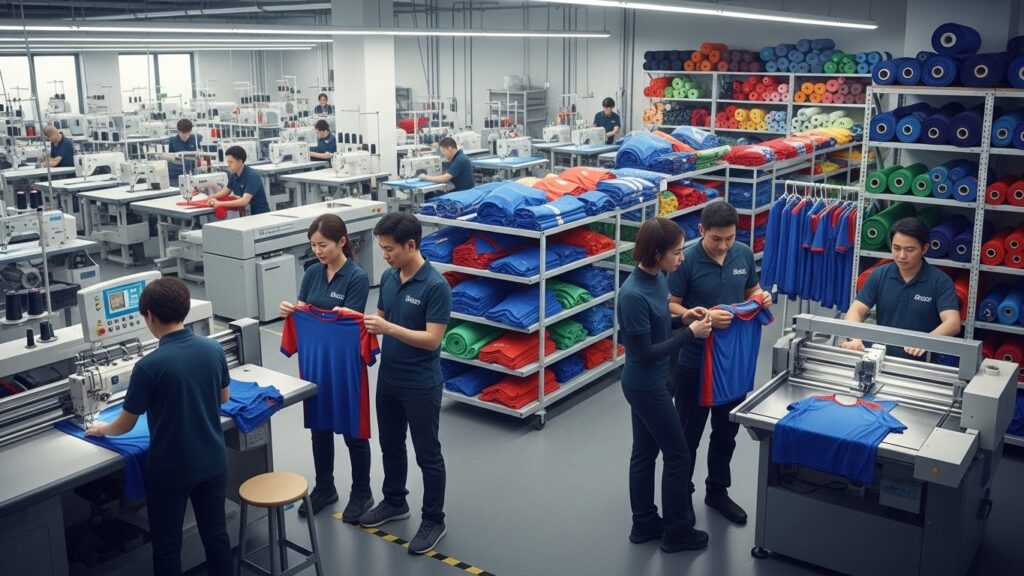
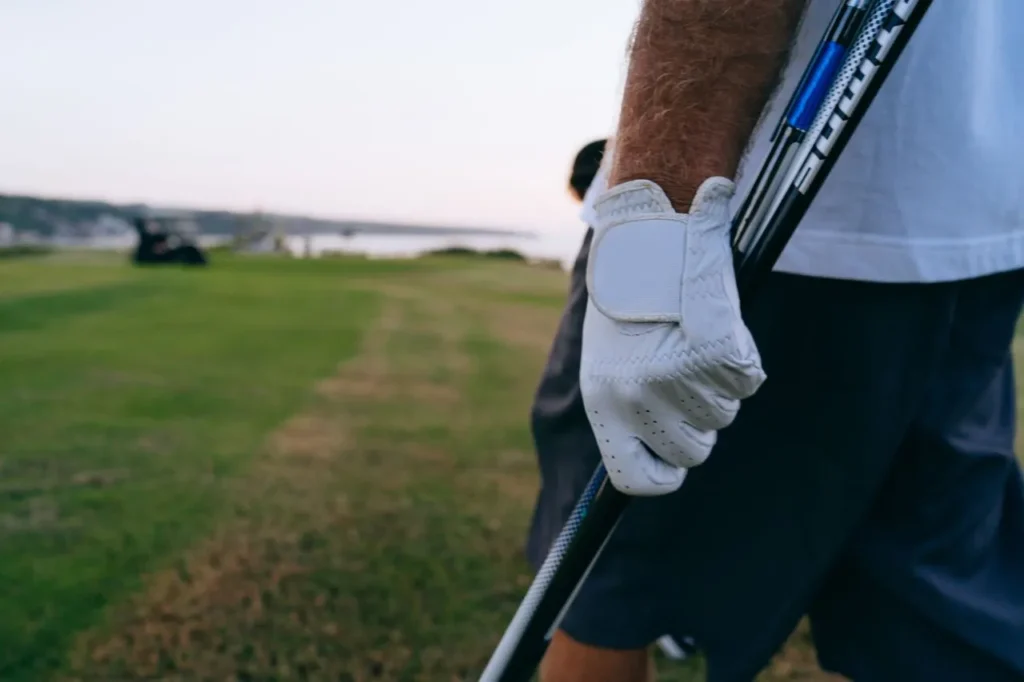
Golf gloves create the main material connection between a player’s lead hand and the club. The product may be thin and lightweight, but small manufacturing differences can change grip consistency, comfort, durability, and control throughout a round.
A palm that is too thick can reduce feel. Leather that is too soft may stretch out quickly. A synthetic palm may remain stable in changing weather but feel less natural if the surface and pattern are poorly selected. Extra material at the fingertips can fold around the grip. A closure positioned incorrectly can create pressure or loosen during the swing.
This is why choosing a golf gloves manufacturer is not simply a matter of selecting white leather and adding a logo. Brands, clubs, resorts, academies, retailers, distributors, corporate buyers, and private label businesses need a supplier that understands hand anatomy, leather grading, palm friction, stretch recovery, seam placement, ventilation, closure geometry, rule compliance, testing, packaging, and repeat manufacturing.
BUSHI Sports® provides custom wholesale golf gloves manufacturing for sports brands, golf clubs, academies, retailers, wholesalers, promotional programs, and private label buyers. Projects can include cabretta-style leather, synthetic and hybrid materials, regular and cadet fits, left- and right-hand models, rain and winter constructions, colors, logos, labels, packaging, samples, and bulk production.
Buyers can also connect golf gloves with a wider custom sports gloves collection or coordinate them with custom golf uniforms for a complete apparel and accessories program.
This guide explains twelve manufacturing decisions that influence precision grip, fit, feel, durability, weather performance, legality, and commercial value.
“A precision golf glove does not create control through aggressive tack. It creates control through smooth material, accurate fit, low bulk, reliable friction, and consistent contact with the club.”
Golf Glove Types Require Different Engineering
The term golf gloves includes several product directions:
- Premium leather gloves
- Synthetic gloves
- Leather-synthetic hybrid gloves
- Rain gloves
- Winter gloves
- Regular-fit gloves
- Cadet-fit gloves
- Women’s gloves
- Junior gloves
- Left-hand and right-hand gloves
- Paired weather gloves
- Promotional and corporate golf gloves
These products should not be developed from one universal pattern.
A premium leather model may prioritize thinness, softness, and a close fit. A synthetic model may prioritize consistency and durability. Rain golf gloves may be sold as a pair and use materials designed to maintain friction when wet. Winter golf gloves may add insulation and extended cuffs while preserving club control.
A golf gloves manufacturer should define the playing condition, buyer segment, hand proportions, target price, and required performance before selecting materials.
Golf Glove Construction Map
| Component | Main function | Common manufacturing risk |
|---|---|---|
| Palm | Club friction, feel, wear resistance | Slipping, stretching, holes, excess thickness |
| Fingers | Fit and grip continuity | Loose tips, twisted seams, restricted bending |
| Thumb | Supports club contact and hand rotation | Poor angle, seam pressure, premature wear |
| Backhand | Fit, ventilation, branding | Bagging, restricted stretch, overheating |
| Finger gussets | Shape and side flexibility | Weak seams, twisting, poor ventilation |
| Knuckle opening or stretch panel | Allows hand flexion | Excess exposure or weak recovery |
| Elastic | Maintains second-skin fit | Uneven tension, discomfort, early relaxation |
| Closure tab | Wrist and backhand adjustment | Wrong overlap, weak hook-and-loop, pressure |
| Cuff | Finishes wrist opening | Stretch failure, rough edge, incorrect depth |
| Reinforcement | Controls wear in selected areas | Added bulk or nonconforming padding |
| Branding | Identifies brand, team, or event | Stiffness, cracking, poor placement |
| Labels and packaging | Size, care, traceability, presentation | Incorrect hand, wrong size, trapped moisture |
Secret 1: Begin With a Precise Product Brief
A useful manufacturing brief should define more than “premium golf glove.” That phrase has no measurable meaning unless the buyer and golf gloves manufacturer agree on the user, fit, material, weather, price, and rules.
The brief should answer:
- Is the product premium leather, synthetic, hybrid, rain, or winter?
- Will it be worn on the left hand, right hand, or both?
- Is the target golfer an adult, woman, junior, or cadet-fit user?
- Is the glove for tournament play, recreational use, coaching, corporate gifting, or retail?
- Is maximum feel, durability, wet grip, warmth, or price the main priority?
- What color range is required?
- What closure style is preferred?
- Are perforations or mesh panels required?
- Which logo method will be used?
- What is the target retail price?
- Which sizes and quantities are required?
- Does the buyer intend to claim conformance with the Rules of Golf?
A premium leather glove and a durable synthetic glove can both be high-quality products, but they solve different commercial problems.
Product Direction Matrix
| Product direction | Main priority | Typical construction strategy |
| Premium leather | Feel, close fit, softness | Thin selected leather, precise seams, minimal overlays |
| Durable synthetic | Shape retention and value | Stable microfiber or synthetic palm, reinforced wear zones |
| Hybrid | Balance of feel, stretch, and durability | Leather contact zones with synthetic or mesh backhand |
| Rain | Wet-condition friction and quick drying | Textured knit or synthetic palm, paired construction |
| Winter | Warmth with club control | Insulated backhand, weather-resistant palm, extended cuff |
| Junior | Easy fit, light weight, affordable durability | Dedicated proportions, flexible materials, simple closure |
| Corporate or promotional | Brand visibility and dependable value | Standard pattern, controlled logo area, efficient packaging |
The buyer should not request one golf gloves model to provide the thinnest leather feel, maximum all-weather durability, heavy insulation, lowest cost, and identical performance in every climate. Separate products often produce better outcomes.
Secret 2: Follow the Equipment Rules Before Enhancing Grip
Golf gloves may be worn to assist the player in gripping the club, but competition-legal products must remain plain.
The USGA Equipment Rules for gloves state that a plain glove must be a fitted hand covering with a separate opening or sheath for each finger and thumb. The full palm and gripping surfaces of the digits must be made from smooth materials.
The rules prohibit features including:
- Excessive padding on the gripping surface or inside the glove
- Straps designed to prevent the club from slipping or attach the hand to the club
- Features that bind fingers together
- Material that adheres to the club grip
- Features designed to position the hands consistently by feel
- Added weight intended to assist the stroke
- Features that restrict joint movement
- Other construction intended to provide an abnormal playing advantage
The equipment specification defines padding as an area more than 0.025 inches, or 0.635 mm, thicker than the adjacent glove material. Material may still be added for wear resistance, moisture absorption, or another functional reason when it remains within the permitted definition.
This limit matters when developing reinforced golf gloves. A thumb patch, heel overlay, or wear-resistant insert should improve product life without becoming a padded gripping aid.
The broader Rules of Golf Rule 4.3 prevents players from using equipment in a way that artificially eliminates or reduces the need for an essential skill or judgment.
A golf gloves manufacturer should therefore avoid:
- Adhesive palm compounds
- Hook-like grip elements
- Molded hand-position guides
- Club-retaining straps
- Excessively thick pressure pads
- Claims that the glove locks the player to the club
Smooth leather, synthetic suede, microfiber, and compliant textile palms can provide useful friction through fit, surface selection, and moisture management without relying on prohibited assistance.
“Golf-glove grip should come from precision contact and material friction—not adhesion, attachment, or artificial hand positioning.”
Conformance Claims Require Care
A brand should not print “USGA approved,” “R&A approved,” or “conforms with the Rules of Golf” without appropriate confirmation.
The USGA equipment-submission guidance recommends submitting products when the manufacturer has doubts about conformance or wishes to make an official Rules of Golf conformance statement in advertising.
The golf gloves manufacturer should preserve the tested or reviewed construction. A change in palm material, reinforcement, closure, internal feature, or grip surface can affect the basis of an earlier decision.
Secret 3: Select Leather by Thickness, Grain, Stretch, and Feel
Leather remains central to premium golf gloves because it can provide softness, flexibility, conformability, and direct club feel. However, the word “leather” is not a complete specification.
Commercial options may include:
- Cabretta-style leather
- Sheep leather
- Goat leather
- Selected thin cow leather
- Full-grain leather
- Corrected-grain leather
- Split leather for lower-cost uses
The golf gloves manufacturer should specify:
- Animal source or leather category
- Grain quality
- Thickness range
- Temper or softness
- Stretch direction
- Color
- Finish
- Dye performance
- Surface friction
- Tear resistance
- Lot consistency
Cabretta-Style Leather
Cabretta is widely associated with premium golf gloves because selected sheepskin can be processed to create a thin, soft, flexible palm. The value comes from careful hide selection and preparation rather than from the name alone.
A premium leather should offer:
- Fine grain
- Uniform thickness
- Limited loose areas
- Controlled stretch
- Soft hand feel
- Smooth club contact
- Clean cutting yield
- Stable color
Very soft leather can feel excellent initially but may stretch if the pattern, grain direction, or thickness is poorly controlled. Leather that is too firm may reduce comfort and require a longer break-in.
Thickness Control
Thickness influences feel, durability, seam bulk, and fit. The palm, finger, thumb, and reinforcement pieces may require different ranges.
A golf gloves manufacturer should measure leather at several points because natural hides vary. The factory should define an acceptable range for each component rather than using one average number for the entire hide.
Uneven thickness can create:
- Different feel between pairs
- One loose finger and one tight finger
- Bulky seams
- Weak wear zones
- Uneven closure
- Inconsistent stretching
Grain and Stretch Direction
Pattern placement affects how the glove forms around the hand. Excess stretch across the palm can cause bagging. Insufficient stretch can restrict opening.
Cutting plans should control:
- Palm stretch direction
- Finger length direction
- Thumb movement
- Backhand give
- Cuff stability
Leather Testing
Useful leather checks may include:
- Thickness
- Tear strength
- Tensile strength
- Elongation
- Stitch-tear resistance
- Flex resistance
- Dry and wet rubbing
- Perspiration colorfastness
- Water spotting
- Finish adhesion
The ISO leather standards catalogue includes methods for colorfastness to rubbing, perspiration, water, and related material behavior. ISO 11640 addresses leather surface behavior during repeated rubbing with felt.
These tests do not independently define a high-performance golf glove. They help the buyer and golf gloves manufacturer identify whether the material is stable enough for the intended product.
Secret 4: Use Synthetic and Hybrid Materials Strategically
Synthetic golf gloves can provide consistent thickness, color, shape retention, weather resistance, and cost control. Their quality depends on the polymer, textile base, surface treatment, stretch, and finishing.
Possible materials include:
- PU microfiber
- Synthetic suede
- Polyester-backed synthetic leather
- Nylon-backed synthetic leather
- Textured knit
- Elastic mesh
- Coated performance textiles
Synthetic Palm Advantages
A synthetic palm may offer:
- More consistent thickness
- Efficient cutting yield
- Stable color matching
- Better resistance to repeated moisture exposure
- Easier bulk repeatability
- Lower cost in selected specifications
Possible limitations include:
- Less natural hand feel
- Surface cracking
- Poor breathability
- Slipperiness when wet
- Heat retention
- Reduced conformability
The material should be tested rather than judged from a swatch name.
Hybrid Construction
Hybrid golf gloves may use leather across the palm, thumb, and gripping fingers while using synthetic material, mesh, or knit across the backhand and knuckles.
This approach can balance:
- Palm feel
- Backhand stretch
- Ventilation
- Shape retention
- Cost
- Durability
The seams joining leather and synthetic sections must accommodate different stretch rates. A highly elastic backhand attached to a stable palm can distort the glove if the pattern and seam tension are not balanced.
Rain and Wet-Weather Palms
Wet-condition golf gloves commonly use textile or synthetic palm materials whose friction improves or remains stable with moisture. These models are often sold in pairs because both hands benefit from consistent wet-weather grip.
The material should be tested when:
- Dry
- Lightly damp
- Saturated
- Dirty
- Drying after use
- Repeatedly wetted
A golf gloves manufacturer should avoid vague “all-weather” claims unless the product has been tested across the intended conditions.
Secret 5: Engineer a Second-Skin Fit
Fit is one of the most important performance variables in golf gloves.
Loose material can fold between the hand and the club. Fingers that are too long can bunch at the tips. A palm that is too wide can wrinkle. A glove that is too tight can restrict movement, stress seams, and become uncomfortable during a full round.
The FootJoy glove-fitting guide describes the desired fit as similar to a second skin: snug across the palm and fingers without loose material at the fingertips.
A golf gloves manufacturer should develop the pattern from hand measurements including:
- Hand circumference
- Hand length
- Palm width
- Middle-finger length
- Individual finger lengths
- Finger circumferences
- Thumb length
- Thumb angle
- Wrist circumference
- Closure overlap
Negative Ease
Golf gloves are often designed with slight negative ease so the material stretches into a close fit. The amount depends on the leather or synthetic material.
Too much negative ease can cause:
- Finger pressure
- Restricted hand opening
- Seam strain
- Closure misalignment
- Fast stretching
Too little negative ease can cause:
- Palm wrinkles
- Loose fingertips
- Hand movement inside the glove
- Reduced club feel
Regular and Cadet Fits
Cadet golf gloves are designed for different proportions, commonly combining a relatively wider palm with shorter fingers. They are not simply smaller regular gloves.
The golf gloves manufacturer should create separate cadet pattern blocks rather than shortening finger tips after the regular pattern is complete.
Women’s Patterns
Women’s sizes may require changes to:
- Palm width
- Finger length
- Wrist opening
- Closure position
- Thumb angle
- Logo scale
A unisex pattern relabeled with smaller sizes can produce poor fit.
Junior Patterns
Junior golf gloves need:
- Shorter fingers
- Smaller palms
- Easier closures
- Flexible materials
- Low seam bulk
- Clear hand labeling
A glove purchased excessively large for future growth can wrinkle and move during the swing.
Secret 6: Design the Thumb as a Primary Wear and Control Zone
The thumb wraps around the club and moves during grip changes, setup, backswing, impact, and release. It also experiences repeated friction.
A golf gloves manufacturer should define:
- Thumb angle
- Thumb length
- Base width
- Tip shape
- Seam placement
- Palm connection
- Reinforcement area
- Elasticity
Thumb Seam Position
A seam placed directly under the main club-contact line can become uncomfortable and wear quickly. The pattern should place seams away from the highest-pressure areas where possible.
Thumb Reinforcement
A thin reinforcement may improve durability around the thumb without exceeding the permitted padding limit.
The reinforcement should be checked for:
- Edge bulk
- Flexibility
- Stitch security
- Surface friction
- Material compatibility
- Rules compliance
Thumb Movement Trial
During fitting, the golfer should:
- Open the hand fully
- Form a normal grip
- Use overlapping, interlocking, or ten-finger grips
- Rotate the wrists
- Simulate the backswing and release
- Remove and replace the glove
The thumb should remain stable without pulling the palm or creating pressure at the base.
Secret 7: Position Seams Away From High-Pressure Contact Areas
Golf gloves contain narrow curved pieces that must fit closely around the fingers and thumb. Seam accuracy directly affects comfort and durability.
Possible constructions include:
- Inseam fingers
- Outseam or external-seam details
- Fourchette finger gussets
- Wrapped palm edges
- Separate thumb inserts
- Bonded or low-seam zones in selected synthetic designs
Finger Seams
The golf gloves manufacturer should control:
- Seam allowance
- Stitch density
- Needle size
- Thread type
- Tension
- Finger alignment
- Tip closure
Common defects include:
- Twisted fingers
- Rough internal allowances
- Skipped stitches
- Puckering
- Palm caught in the seam
- Uneven finger lengths
- Loose fingertip material
Palm Seams
The palm should remain as smooth as practical. Large seam ridges under the club grip can create pressure and affect feel.
Cuff and Closure Seams
The closure area experiences repeated pulling. Reinforcement should be strong but low profile.
A premium golf gloves manufacturer should inspect the inside of the glove, not only the exterior. Internal thread ends, seam ridges, and folded edges can cause irritation during a long round.
Secret 8: Use Elastic and Closures to Stabilize the Fit
The backhand and closure maintain the glove’s second-skin fit as the hand moves and materials stretch.
Common fit-control elements include:
- Backhand elastic
- Wrist elastic
- Knuckle stretch panels
- Elastic finger inserts
- Hook-and-loop closure tabs
- Shaped cuffs
Closure Geometry
The tab should provide adjustment without closing completely across the backhand when new. A small adjustment range allows the player to compensate for hand swelling, moisture, and material relaxation.
The golf gloves manufacturer should control:
- Tab length
- Hook-and-loop area
- Tab angle
- Edge softness
- Stitch reinforcement
- Logo position
- Adjustment range
Hook-and-Loop Quality
Low-quality closure material can lose holding strength, collect fibers, or scratch the skin.
Testing should include repeated opening and closing, moisture exposure, and peel-strength comparison.
Elastic Recovery
Elastic should return toward its original size after repeated stretching. Weak recovery causes the backhand to bag and the palm to move.
A fit trial should be repeated after the glove has been worn, flexed, and exposed to moisture. New-sample fit alone does not show long-term stability.
Secret 9: Add Ventilation Without Weakening the Glove
Golf gloves can retain sweat during warm rounds. Moisture affects comfort, grip, material stretch, odor, and drying.
Ventilation may be introduced through:
- Leather perforations
- Mesh finger gussets
- Stretch knit backhand panels
- Knuckle openings
- Moisture-managing linings
- Perforated closure areas
Perforated Leather
Perforations can improve airflow but also remove material. Hole diameter, spacing, and location should be controlled to prevent tearing.
Mesh and Stretch Panels
Mesh can improve flexibility and drying. It should be placed where it does not destabilize the palm or create excessive stretch.
Moisture Management
The glove should be evaluated for:
- Sweat absorption
- Grip while damp
- Drying speed
- Dye transfer
- Odor retention
- Shrinkage
- Material hardening
- Delamination
Antimicrobial or anti-odor claims should only be used when the specific treated component and supporting evidence are available.
Drying Behavior
Leather golf gloves can become stiff or distorted when dried under excessive heat. Care instructions should recommend natural drying and should match the actual leather finish and construction.
Secret 10: Test Precision Grip Without Using Adhesive Surfaces
Golf-glove grip comes from the interaction between the palm, club grip, hand pressure, fit, moisture, and movement.
A useful test plan should compare golf gloves under controlled conditions.
Dry Friction Trial
Use the same club grip material, hand position, pressure range, and movement when comparing samples.
The trial can evaluate:
- Initial friction
- Club rotation resistance
- Palm movement
- Finger movement
- Release after the swing
Damp and Wet Trials
A palm may behave differently when slightly damp and fully wet. Test separately under:
- Perspiration-like moisture
- Light rain
- Saturation
- Drying and reuse
Abrasion Conditioning
The glove should be evaluated when new and after repeated rubbing or simulated play.
Inspect:
- Thinning
- Holes
- Surface polishing
- Coating loss
- Pilling
- Stretch
- Seam exposure
- Reduced friction
Grip Compatibility
Golf club grips vary. Samples can be assessed with:
- Rubber grips
- Corded grips
- Hybrid grips
- Wrap-style grips
- Smooth and textured surfaces
A palm that performs well on one grip may feel different on another.
Material Transfer
The glove should not leave undesirable dye, coating, or particles on the club grip or hand.
Testing should include dry and wet rubbing. ISO leather methods for rubbing and perspiration colorfastness can support this assessment.
Secret 11: Build Weather-Specific Models Instead of One Compromise Glove
Weather changes the requirements for golf gloves.
Rain Golf Gloves
Rain models often use paired construction and textile or synthetic palms that maintain friction when wet.
Important development points include:
- Wet grip
- Quick drying
- Stretch stability
- Paired sizing
- Water-related dye transfer
- Cuff security
- Packaging ventilation
Winter Golf Gloves
Winter models may include:
- Insulated backhand
- Wind-resistant materials
- Extended cuffs
- Paired construction
- Weather-resistant palms
- Thermal lining
The challenge is maintaining feel and joint mobility.
Hot-Weather Gloves
Warm-climate golf gloves may prioritize:
- Thin leather
- Perforation
- Mesh
- Quick drying
- Light colors
- Stable fit under perspiration
All-Purpose Hybrid Gloves
A hybrid can balance several conditions but should not be marketed as providing identical performance in heat, heavy rain, cold, and dry weather unless supported by testing.
A golf gloves manufacturer may recommend a product family rather than one universal model:
- Premium dry-weather leather
- Durable everyday hybrid
- Rain pair
- Winter pair
- Junior or academy model
This approach gives buyers clearer product positioning and reduces conflicting material requirements.
Secret 12: Protect the Approved Specification During Bulk Production
Golf gloves use thin materials, narrow seams, multiple sizes, two hand orientations, and close tolerances. Small production drift can create noticeable fit differences.
The technical file should include:
- Bill of materials
- Leather or synthetic material references
- Thickness ranges
- Color standards
- Stretch direction
- Pattern set by size and fit
- Left- and right-hand patterns
- Regular and cadet patterns
- Thumb construction
- Reinforcement map
- Seam specifications
- Elastic length and tension
- Closure dimensions
- Artwork placement
- Label content
- Packaging standard
- Approved pre-production sample
- Measurement tolerances
Golf Glove Manufacturing Process
1. Product Brief
The buyer defines product type, materials, fit, sizes, hand orientation, weather use, colors, branding, target price, quantity, rules, and packaging.
2. Material Sourcing
The golf gloves manufacturer sources leather or synthetic palm material, mesh, stretch fabric, elastic, thread, hook-and-loop, labels, reinforcement, and packaging.
3. Material Inspection
Leather is graded for grain, thickness, stretch, scars, shade, and cutting suitability. Synthetic materials are checked for thickness, coating, stretch, color, and defects.
4. Pattern Development
Separate patterns are created for palm, backhand, fingers, fourchettes, thumb, cuff, closure, reinforcement, and fit category.
5. Prototype Sample
The first sample checks fit, feel, material behavior, seam position, closure, and branding feasibility.
6. Grip and Wear Trial
The golfer tests club contact, finger fit, thumb movement, moisture response, and wear.
7. Size Set
Selected sizes confirm finger grading, palm width, thumb position, closure overlap, and artwork scaling.
8. Rules Review
Palm smoothness, reinforcement thickness, closure, and internal features are reviewed for the intended competition market.
9. Pre-Production Sample
The buyer approves the final material, fit, stitching, logo, labels, and packaging.
10. Cutting
Components are cut with controlled grain or stretch direction. Left- and right-hand models are separated carefully.
11. Branding and Perforation
Logos, embroidery, printing, embossing, perforations, and labels are applied at the correct stage.
12. Sewing and Assembly
Finger pieces, thumb, palm, backhand, cuff, elastic, and closure are assembled with in-line inspection.
13. Turning and Finishing
The glove is turned, shaped, cleaned, and checked internally for seam comfort.
14. Pairing or Individual Packing
Single lead-hand gloves and paired weather gloves are matched correctly by hand, size, model, and color.
15. Final Inspection
Inspectors check fit measurements, finger length, seam alignment, palm smoothness, closure, branding, labels, and appearance.
16. Packaging and Shipment
The product is dried, shaped, labeled, packed, carton-assorted, and prepared for delivery.
Quality-Control Table
| Inspection area | What to check | Common failure |
| Palm material | Thickness, grain or coating, stretch, friction | Loose grain, slippery finish, cracking |
| Fingers | Length, shape, symmetry, seam alignment | Loose tips, twisting, pressure |
| Thumb | Angle, length, seam, reinforcement | Pulling, bulk, early wear |
| Backhand | Stretch and recovery | Bagging or restriction |
| Elastic | Placement, length, tension | Uneven fit or discomfort |
| Closure | Position, overlap, holding strength | Weak retention or excessive closure |
| Reinforcement | Thickness and placement | Bulk or nonconforming padding |
| Ventilation | Hole and mesh placement | Tears or unstable fit |
| Branding | Position, flexibility, finish | Cracking, distortion, stiffness |
| Hand labeling | Left or right hand | Incorrect customer selection |
| Size labeling | Regular, cadet, women’s, junior | Returns caused by wrong fit |
| Internal finish | Seam allowances and thread ends | Irritation or blisters |
| Packaging | Dryness, shape, barcode, presentation | Stiff leather, wrong item, trapped moisture |
BUSHI Sports® explains wider inspection principles in how quality control works in sportswear manufacturing.
Custom Branding Without Reducing Fit or Flexibility
Private label golf gloves can carry branding through:
- Embroidered closure logos
- Printed closure tabs
- Debossed leather marks
- Embossed logos
- Heat-transfer backhand graphics
- Silicone or TPU logos
- Woven labels
- Cuff branding
- Custom packaging
- Corporate names or event marks
Closure Branding
The closure tab provides a visible branding area. The logo should not make the tab too rigid or reduce hook-and-loop contact.
Embroidery
Embroidery should remain controlled in density. Heavy stitching can stiffen thin materials or create roughness inside the glove.
Debossing and Embossing
Leather can support subtle pressure-based branding. The process should be tested for heat, depth, grain damage, and flexibility.
Printed Graphics
Ink or transfer films should stretch with the backhand. Inspect for cracking, edge lifting, and color transfer.
Size-Specific Artwork
Artwork should be scaled for each size. A logo approved on an adult large closure may not fit a junior or women’s small model.
BUSHI Sports® provides artwork guidance in why vector artwork matters and how to prepare print-ready files.
Responsible Leather and Material Sourcing
Brands seeking greater supply-chain transparency can request tannery and material documentation.
The Leather Working Group operates an audit standard for leather manufacturers and provides a directory of certified suppliers. LWG states that more than one-third of global finished-leather production is assessed through its audit system.
This does not mean every leather golf glove is certified or traceable. Claims should be based on documentation for the actual leather batch and supplier.
A responsible material file may include:
- Leather origin information where available
- Tannery name
- Audit or certification documents
- Chemical test reports
- Restricted-substance requirements
- Material composition
- Synthetic carrier composition
- Packaging materials
- Care instructions
A golf gloves manufacturer should avoid making environmental claims that cannot be traced to the specific order.
Material Longevity Matters
A very thin premium glove and a durable synthetic glove may have different life spans and intended uses. Sustainability comparisons should consider:
- Material yield
- Product life
- Care
- Packaging
- Repair feasibility
- Replacement frequency
- Shipping efficiency
A low-impact claim based only on one material name may overlook actual durability and waste.
Cost Breakdown: Why Golf Glove Quotations Differ
The cost of golf gloves depends on materials, cutting yield, fit complexity, labor, customization, inspection, and quantity.
Major cost drivers include:
- Leather or synthetic material type
- Leather selection grade
- Thickness tolerance
- Cutting yield and defect allowance
- Regular, cadet, women’s, and junior pattern range
- Left- and right-hand quantities
- Palm reinforcement
- Mesh and stretch panels
- Perforations
- Closure quality
- Branding method
- Number of colors
- Rain or winter paired construction
- Testing and rules review
- Labels and packaging
- Order quantity
A premium selected-leather model with narrow thickness tolerances, complex sizing, perforations, precise seams, and branded retail packaging will generally cost more than a standard synthetic promotional glove.
The golf gloves manufacturer should connect the quotation to a bill of materials and pattern range. “Premium leather” is not enough information for supplier comparison.
BUSHI Sports® provides a wider explanation in its sportswear manufacturing cost breakdown.
MOQ Considerations
Minimum order quantity may be affected by:
- Custom leather colors
- Tannery minimums
- Synthetic material minimums
- Number of hand orientations
- Number of fit blocks
- Size assortment
- Logo setup
- Packaging print minimums
- Rain or winter pair requirements
- Production efficiency
A smaller launch may be possible when the buyer uses available white or black materials, an established pattern, a limited size range, standard closure components, and simple packaging.
Brands can review what MOQ means in sportswear manufacturing before requesting fully customized golf gloves in many colors, fits, sizes, and hand orientations at a very small quantity.
Packaging, Storage, and Care
Golf gloves should reach the customer flat, dry, correctly shaped, and clearly labeled.
Packaging options include:
- Individual printed sleeves
- Resealable bags
- Cardboard retail packs
- Hanging packs
- Branded boxes
- Paired weather-glove packaging
- Size and hand-orientation stickers
- Barcodes
- Care cards
Packaging Risks
Poor packaging can cause:
- Leather creasing
- Trapped moisture
- Dye transfer
- Closure damage
- Incorrect hand labeling
- Mixed sizes
- Flattened logos
- Odor
Consumer Care Guidance
- Allow the glove to dry naturally after play.
- Keep it away from direct heaters and prolonged strong sunlight.
- Smooth it back into shape before storage.
- Follow the approved cleaning method for the actual material.
- Avoid harsh solvents or grip-enhancing chemicals.
- Store leather gloves flat or gently shaped.
- Rotate gloves during frequent play when practical.
- Replace a glove when holes, stretched material, or seam failure reduce control.
Care instructions should match the tested leather finish, synthetic coating, adhesives, and decoration.
BUSHI Sports® discusses presentation and protection in how packaging influences perceived value.
How to Evaluate a Golf Gloves Manufacturer
Material Questions
- Which leather or synthetic materials are available?
- What thickness range is specified?
- How is leather graded?
- How are stretch and grain direction controlled?
- Which wet and dry tests are used?
- Can material reports be supplied?
Fit Questions
- Are regular and cadet blocks separate?
- Are women’s and junior patterns dedicated?
- How are finger lengths graded?
- How is thumb angle developed?
- Can a size set be produced?
Grip Questions
- How is club friction evaluated?
- How does the palm behave with sweat or rain?
- Is the surface smooth and competition legal?
- Are reinforcements within permitted thickness limits?
- Does the material transfer color or coating?
Quality Questions
- How are left- and right-hand products controlled?
- How is leather thickness checked?
- Are internal seams inspected?
- How is closure cycling tested?
- Can inspection reports be provided?
- Can materials change without written approval?
Commercial Questions
- What is the MOQ per material and color?
- Can quantity be divided by size and hand?
- Are patterns and samples charged separately?
- Is custom packaging included?
- What is the production lead time after approval?
- Which shipping term is quoted?
A dependable golf gloves manufacturer should explain the trade-offs between feel, fit, durability, weather performance, and price rather than calling every material the highest grade.
Common Development Mistakes
Selecting Leather by Softness Alone
Very soft leather may stretch or wear if thickness, grain, and pattern are not controlled.
Making the Palm Too Thick
Extra thickness can reduce feel and may create a Rules of Golf issue when it functions as padding.
Adding Adhesive Grip Features
Golf gloves should use smooth gripping surfaces rather than material designed to adhere to the club.
Using One Pattern for Regular and Cadet Fits
Shorter fingers and wider palms require a separate proportion system.
Scaling Adult Patterns Directly Into Junior Sizes
Junior hands need dedicated finger, palm, thumb, wrist, and closure dimensions.
Ignoring Hand Orientation
A right-handed golfer usually wears the glove on the left hand, but the product should be labeled by the hand on which it is worn.
Placing Seams Under Major Pressure Points
Poor seam position can cause irritation and early wear.
Approving Only a Fresh, Dry Sample
Grip, fit, and material stability should be checked after moisture, flexing, and abrasion.
Adding Heavy Branding
Dense embroidery or rigid badges can reduce flexibility and distort fit.
Making Unsupported Conformance Claims
A glove should not be marketed as officially conforming without appropriate confirmation.
Why Work With BUSHI Sports®?
BUSHI Sports® is a custom sportswear and sports gloves manufacturer based in Sialkot, Pakistan. The company supports golf brands, clubs, academies, resorts, wholesalers, retailers, distributors, promotional buyers, and private label businesses through OEM, ODM, and bulk manufacturing.
As a golf gloves manufacturer, BUSHI Sports® supports customization involving:
- Premium leather concepts
- Synthetic and hybrid golf gloves
- Rain and winter gloves
- Adult, women’s, cadet, and junior fits
- Left- and right-hand models
- Palm materials and reinforcement
- Perforations and ventilation panels
- Thumb and finger patterning
- Closures and elastic systems
- Colors and graphics
- Club, corporate, and private label branding
- Sample development
- Bulk production
- Quality inspection
- Custom packaging
- International order coordination
Buyers can develop golf gloves through the wider custom sports gloves category and coordinate them with custom golf uniforms.
Relevant BUSHI Sports® glove-engineering resources include:
- Field hockey glove manufacturing
- Lacrosse glove protection manufacturing
- American football glove grip technology
- Cricket glove safety design
- Goalkeeper glove grip technology
- Baseball glove manufacturing
These products use different materials, rules, grip systems, protection requirements, and fit principles. Specifications should not be copied directly between sports.
Learn more through the BUSHI Sports® About Us page or submit project specifications through the contact page.
For golf gloves manufacturing inquiries:
- Message BUSHI Sports® on WhatsApp
- Email info@bushisports.com
- Call +92 348 4018 578
- View the BUSHI Sports® location on Google Maps
- Follow BUSHI Sports® on LinkedIn
- Follow BUSHI Sports® on Instagram
- Follow BUSHI Sports® on Facebook
- Follow BUSHI Sports® on X
- Follow BUSHI Sports® on Threads
- View product inspiration on Pinterest
- Watch company content on YouTube
Frequently Asked Questions
What does a golf gloves manufacturer do?
A golf gloves manufacturer develops and produces gloves according to a buyer’s requirements for leather or synthetic material, hand orientation, fit, sizes, palm construction, thumb pattern, ventilation, closure, colors, logos, labels, packaging, quantity, and destination market.
Which hand wears a golf glove?
Most right-handed golfers wear a glove on the left hand, while most left-handed golfers wear one on the right hand. Packaging should identify the hand on which the glove is worn to prevent ordering confusion.
What is cabretta leather?
Cabretta is a commercial term commonly associated with fine sheepskin leather selected and processed for softness, flexibility, and close feel. Quality still depends on hide selection, thickness, tanning, grain, and finishing.
Are leather golf gloves better than synthetic gloves?
Leather often provides a softer and more natural feel. Synthetic materials may provide greater consistency, shape retention, weather resistance, or value. Hybrid golf gloves combine selected advantages from both.
How should golf gloves fit?
They should fit closely across the palm and fingers without loose material at the fingertips. The player should still be able to open the hand, bend the fingers, and close the adjustment tab comfortably.
What is a cadet golf glove?
A cadet fit generally serves golfers with relatively shorter fingers and a wider palm compared with a regular-fit hand of similar overall size.
Can golf gloves have sticky palms?
Competition-legal golf gloves must use smooth materials across the gripping surfaces. Materials designed to adhere to the club or other artificial grip-assistance features are prohibited.
Can a golf glove have palm padding?
The Equipment Rules restrict padding. An area more than 0.025 inches, or 0.635 mm, thicker than adjacent glove material is defined as padding. Wear-resistant or moisture-management material may be added when it remains within the permitted limit and does not provide an artificial advantage.
Can logos be added to golf gloves?
Yes. Logos can be embroidered, printed, debossed, embossed, transferred, or incorporated through labels. The decoration should not reduce flexibility, irritate the hand, or add a nonconforming performance feature.
Are rain golf gloves sold in pairs?
Many rain golf gloves are sold as a pair so both hands maintain consistent control in wet conditions. The exact product format depends on the brand and intended use.
How are golf gloves tested?
Development may include fit trials, dry and wet friction testing, palm abrasion, leather rubbing tests, perspiration colorfastness, seam strength, closure cycling, drying trials, material inspection, and size-set approval.
Can golf gloves prevent blisters?
A well-fitting glove can reduce direct friction between the hand and club, but no product can guarantee that blisters will not occur. Fit, moisture, grip pressure, swing volume, material condition, and skin sensitivity all matter.
What affects golf glove MOQ?
MOQ may depend on leather color, material minimums, size range, regular and cadet patterns, left- and right-hand quantities, logo setup, packaging, rain-pair construction, and production efficiency.
Can startups order private label golf gloves?
Yes. A startup can reduce development cost by selecting an existing pattern, available material and color, limited size range, standard closure, and simple packaging before expanding into custom leather colors or multiple weather models.
How should golf gloves be stored?
They should be dried naturally after use, gently reshaped, and stored away from direct heat, prolonged sunlight, and trapped moisture. Leather models should not be crushed inside a bag while damp.
Conclusion
Golf gloves are precision sports equipment built around material friction, second-skin fit, low seam bulk, hand-specific patterning, moisture management, and controlled flexibility.
Their performance cannot be judged from leather softness or initial grip alone. A dependable product requires correct palm thickness, grain direction, finger length, thumb angle, seam placement, elastic recovery, closure geometry, ventilation, weather testing, and bulk consistency.
A responsible golf gloves manufacturer must also understand the equipment rules. A glove can assist with normal club grip, but it should not use adhesive surfaces, club-retaining straps, excessive padding, joint restrictions, or artificial hand-positioning features.
Brands should compare golf gloves through physical samples, material specifications, size sets, club trials, moisture testing, abrasion, inspection standards, and clearly documented quotations. This approach provides a stronger foundation than selecting a product from a photograph or relying on vague descriptions such as “premium grip.”
BUSHI Sports® supports custom golf gloves through material selection, pattern development, regular and cadet sizing, leather and synthetic options, sampling, private labeling, quality control, packaging, and international order coordination.
Explore the custom wholesale golf gloves manufacturer page or contact BUSHI Sports® to discuss materials, fit, sizes, hand orientation, weather use, colors, logos, quantities, packaging, and delivery requirements.