Casual Shorts Manufacturer: 9 Proven Lightweight Apparel Manufacturing Secrets
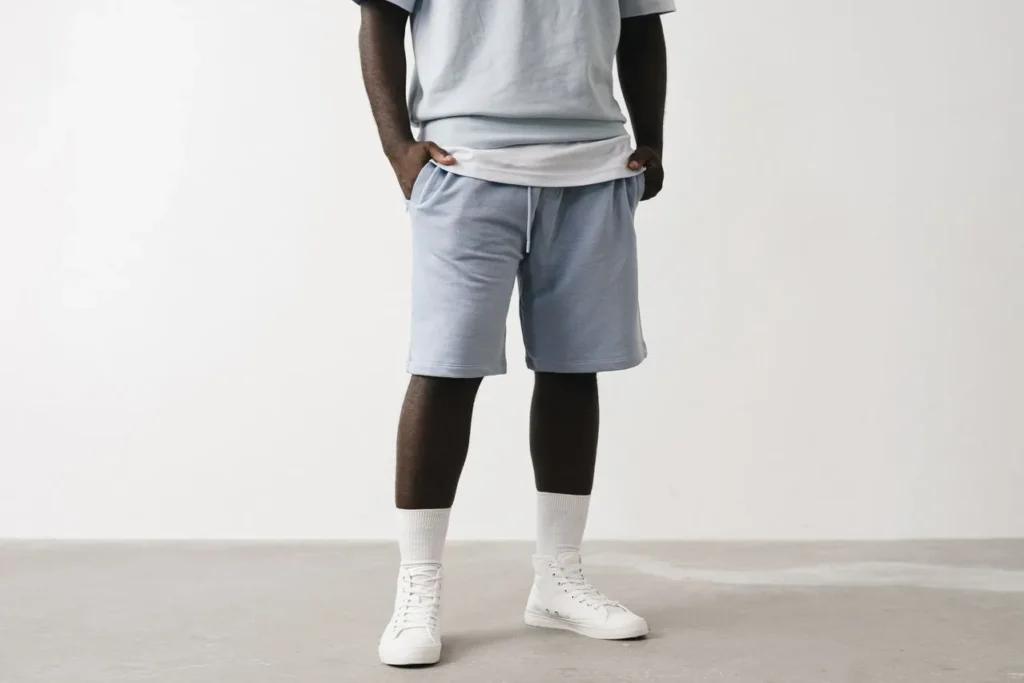
Casual shorts may use less fabric than jackets, sweatshirts, or full-length pants, but they are not automatically easier to manufacture. A small change in fabric weight, rise, inseam, pocket depth, waistband tension, or leg opening can alter comfort and appearance. Lightweight materials also expose problems that heavier fabrics can conceal, including seam puckering, pocket-bag show-through, poor opacity, unstable hems, and visible reinforcement.
For this reason, selecting a casual shorts manufacturer is not simply about finding a factory that can cut and sew a basic garment. Brands need a partner that understands fabric behavior, warm-weather comfort, pattern balance, waistband engineering, pocket construction, decoration, labeling, quality control, packaging, and repeat production.
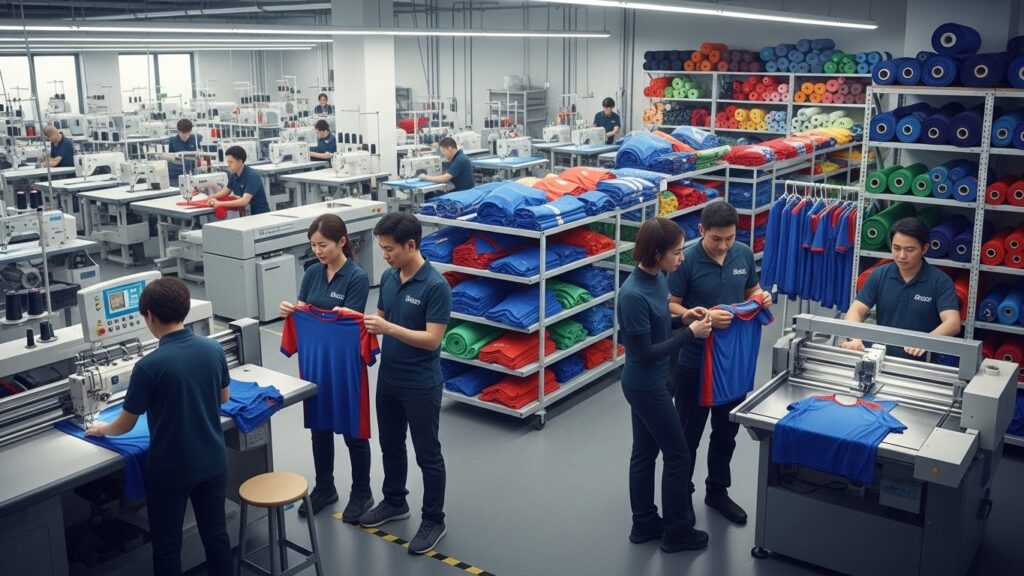
BUSHI Sports® provides custom casual shorts manufacturing for brands, wholesalers, retailers, distributors, clubs, and private label businesses. Buyers can customize fabric, color, fit, size range, pockets, waistbands, artwork, labels, and packaging while using the company’s broader OEM, ODM, sampling, branding, quality-control, and global delivery services.
This guide follows a pair of shorts from the initial commercial idea to packed bulk production. It explains the nine checkpoints a casual shorts manufacturer should control and gives buyers a practical framework for comparing materials, samples, quotations, and production partners.
“Lightweight apparel should remove unnecessary weight, not necessary strength, coverage, or construction quality.”
The Buyer Brief Comes Before the Fabric
Before a casual shorts manufacturer recommends cotton twill, stretch woven polyester, nylon, French terry, or interlock, the buyer should define the product’s purpose.
The same garment cannot be optimized equally for beachwear, city wear, gym travel, school programs, premium streetwear, resort retail, and outdoor activity. Each market expects a different balance of softness, airflow, structure, stretch, drying speed, opacity, durability, and price.
A useful buyer brief answers the following questions:
- Who is the intended customer?
- In which climate and season will the shorts be sold?
- Are the shorts primarily casual, athletic, travel, work, or hybrid apparel?
- Will they be worn against the skin or over compression garments?
- What items will customers carry in the pockets?
- Is a relaxed, athletic, straight, oversized, or tailored fit required?
- What is the target retail price and target manufacturing cost?
- How frequently are the shorts expected to be washed?
- Which countries will receive the product?
- What is the planned quantity by style, color, and size?
When these details are missing, a casual shorts manufacturer must make assumptions. Assumptions may create a sample that looks acceptable but does not match the target customer or commercial plan.
A Fast Specification Map for Casual Shorts
| Product decision | Common options | Commercial effect |
|---|---|---|
| Fabric family | Woven, knit, stretch woven, mesh-lined, or hybrid | Controls drape, movement, structure, drying, and sewing method |
| Fiber direction | Cotton, polyester, nylon, blends, recycled content, elastane | Influences hand feel, durability, shrinkage, care, and price |
| Weight | Ultralight, lightweight, medium, or structured | Affects opacity, warmth, drape, freight, and perceived quality |
| Fit | Athletic, regular, relaxed, tailored, oversized, or unisex | Determines pattern shape and target customer |
| Length | Short, mid-thigh, above-knee, knee-length | Changes movement, fashion position, and material consumption |
| Waistband | Encased elastic, exposed elastic, rib, fixed waist, or hybrid | Controls comfort, recovery, adjustability, and appearance |
| Pockets | Slash, welt, patch, cargo, zip, back, or hidden | Adds function, cost, bulk, and construction risk |
| Branding | Embroidery, screen print, transfer, patch, badge, or label | Influences visual identity, minimums, and durability |
| Finish | Garment wash, water repellent, peached, brushed, or untreated | Changes hand feel, appearance, performance, and care |
| Packaging | Bulk fold, individual bag, retail hangtag, barcode, e-commerce pack | Affects presentation, handling, freight, and fulfillment |
A reliable casual shorts manufacturer converts this commercial direction into a bill of materials, measurement chart, sample plan, testing plan, and quotation. The casual shorts manufacturer should also identify which product claims require physical testing before those claims appear in sales material.
Checkpoint 1: Decide Whether the Shorts Should Be Woven or Knitted
The first technical decision is the fabric structure. Woven and knitted fabrics behave differently during wear and production.
Woven fabric is created by interlacing warp and filling yarns. It can provide a crisp appearance, controlled stretch, stable pockets, and a tailored or utility character. Woven shorts may use plain weave, twill, ripstop, poplin, canvas, microfiber, taslan, or stretch constructions.
Knitted fabric is formed through interlooped yarns. It generally provides more natural flexibility and may create a softer, more relaxed appearance. Knit casual shorts often use jersey, French terry, fleece, interlock, or double-knit structures.
A casual shorts manufacturer should explain not only the fiber composition but also the structure because “100% polyester” or “cotton blend” does not describe how the fabric will feel or perform.
Woven Shorts
Woven casual shorts can be suitable for:
- Resort and travel collections
- Clean city or lifestyle products
- Outdoor-inspired designs
- Utility and cargo shorts
- Lightweight summer apparel
- Uniform and staff programs
- Hybrid casual-performance collections
Potential advantages include stable shape, clean pocket construction, lower edge curling, and a structured appearance. Potential concerns include restricted movement when a non-stretch fabric is selected, seam slippage, wrinkling, and reduced softness compared with some knitted fabrics.
Knit Shorts
Knit casual shorts can be suitable for:
- Loungewear
- Streetwear
- Travel sets
- Casual sportswear
- Gym-to-street collections
- Coordinated sweatshirt and hoodie ranges
Potential advantages include comfort, flexibility, softness, and familiar athletic styling. Potential concerns include growth, twisting, seam stretching, pocket sagging, and shape loss when fabric recovery is weak.
Brands building coordinated ranges can connect casual shorts with custom sweatshirts, pullover hoodies, zip-up hoodies, and T-shirts.
Woven vs Knit Comparison
| Requirement | Woven direction | Knit direction |
| Structured appearance | Usually stronger | Usually softer and more relaxed |
| Natural stretch | Limited unless engineered | Generally higher |
| Tailored pockets | Easier to stabilize | May require reinforcement |
| Athletic comfort | Requires stretch, gusset, or generous pattern | Often naturally comfortable |
| Wrinkle resistance | Depends on fiber and finish | Often good in synthetic knits |
| Print surface | Depends on texture and coating | Can be smooth but may stretch |
| Hem stability | Generally stable | May curl or wave without control |
| Typical brand position | Resort, utility, outdoor, fashion | Athleisure, streetwear, lounge, casual sport |
The correct direction depends on the buyer’s market rather than a universal rule. An experienced casual shorts manufacturer can prepare comparable woven and knit options when the brand has not yet selected a final direction.
Checkpoint 2: Match Fiber Composition to the Use Case
After choosing woven or knit construction, the casual shorts manufacturer must help the buyer select a fiber composition that supports comfort, strength, care, and branding.
Cotton
Cotton can provide a soft, natural hand and familiar casual appearance. It is common in twill, poplin, canvas, jersey, and French terry shorts.
Cotton-based casual shorts may suit:
- Lifestyle collections
- Resortwear
- Streetwear
- Loungewear
- Natural-feel basics
- Garment-dyed programs
The development team should control shrinkage, colorfastness, wrinkling, and drying behavior. Cotton may also become heavier when wet and usually dries more slowly than many synthetic options.
Polyester
Polyester is widely used because it can be engineered into lightweight woven shells, microfiber, mesh, interlock, tricot, and stretch fabrics. It can support quick-drying products, strong color consistency, frequent washing, and performance-inspired styling.
The Textile Exchange Materials Market Report 2025 reported that global fiber production reached approximately 132 million tonnes in 2024. Polyester represented 59% of global fiber output, with production increasing to roughly 78 million tonnes. These figures help explain why polyester remains central to mass-market, performance, and casual apparel supply chains.
Polyester quality still varies considerably. Yarn type, density, texture, finishing, and fabric structure influence comfort and durability.
Nylon
Nylon can provide a smooth surface, low weight, and useful abrasion performance. It is popular for travel, outdoor-inspired, swim-adjacent, and technical casual shorts.
The casual shorts manufacturer should evaluate heat sensitivity, color behavior, coating, noise, and the intended decoration method. A heat transfer developed for polyester should not automatically be approved for nylon without testing.
Cotton-Polyester Blends
Blends can combine cotton’s familiar hand with polyester’s stability and drying performance. The balance should be selected according to the brand’s target rather than copied from another product.
Elastane and Mechanical Stretch
Elastane can improve mobility and recovery, especially in fitted, active, or travel-oriented products. Mechanical stretch can also be created through yarn and fabric engineering without relying on a high elastane percentage.
Stretch changes cutting, seam selection, pressing temperature, waistband behavior, and finished measurements. BUSHI Sports® explains this topic further in its guide to four-way stretch sportswear fabrics.
Recycled Content
Recycled polyester or recycled cotton can be considered when supported by proper documentation. Textile Exchange reported that recycled fibers represented about 7.6% of the global fiber market in 2024. Brands should specify the type and source of recycled content instead of using broad environmental claims.
“Fiber content is only the starting point. The finished performance comes from the yarn, construction, finish, pattern, and care system working together.”
Checkpoint 3: Set Weight, Opacity, and Airflow Together
Lightweight does not mean transparent, weak, or unstable. A casual shorts manufacturer must balance low mass with coverage, durability, and sewing performance.
Fabric weight is often expressed in grams per square meter, or GSM. GSM helps compare material mass, but it does not independently measure quality, thickness, airflow, opacity, or strength.
The following ranges are practical development references rather than universal standards:
| Approximate fabric weight | Possible product direction | Main development concern |
| 70–110 GSM | Ultralight woven travel or shell shorts | Opacity, seam strength, pocket show-through |
| 110–160 GSM | Lightweight woven casual or performance shorts | Balance of airflow, structure, and durability |
| 160–220 GSM | Mid-weight woven twill or stable knit shorts | Drape, warmth, and seasonal positioning |
| 180–260 GSM | Jersey, interlock, or light French terry shorts | Recovery, pocket stability, and growth |
| 260–340 GSM | Structured French terry or heavyweight casual shorts | Bulk, warmth, freight, and waistband construction |
A low-GSM woven fabric may be dense and wind resistant, while a heavier open structure may allow more air movement. The casual shorts manufacturer should therefore evaluate GSM with:
- Fabric thickness
- Yarn density
- Air permeability
- Light transmission and opacity
- Tear and breaking strength
- Abrasion resistance
- Surface texture
- Pocket-bag visibility
- Color
- Stretch and recovery
White, cream, and pastel colors often require closer opacity review than dark colors. The casual shorts manufacturer should approve opacity by color because one fabric specification may provide different visual coverage across a collection. Pocket bags can also become visible through lightweight shells. The sample should be assessed in natural and strong indoor lighting.
The relationship between airflow and durability is explored in BUSHI Sports®’s article on breathability versus durability.
Checkpoint 4: Engineer Fit Through Rise, Inseam, and Leg Opening
Shorts fit is not defined by waist measurement alone. A casual shorts manufacturer must balance rise, hip ease, seat shape, crotch extension, thigh width, inseam, outseam, and leg opening.
The Rise
The front and back rise affect where the shorts sit and how they move. Insufficient back rise can create pulling when sitting or bending. Excessive rise can produce unwanted bulk or a dropped-crotch appearance.
Hip and Seat Ease
The pattern must allow movement without creating excessive fabric. The correct ease depends on the fabric stretch, fit direction, pocket construction, and target consumer.
Inseam and Outseam
Length changes the style and function of the garment. A shorter inseam may support warm-weather movement but exposes more leg. A longer short can provide greater coverage but may restrict movement if the leg is narrow or the fabric is rigid.
Leg Opening
Leg opening controls airflow, silhouette, and mobility. An athletic product may need room for movement, while a tailored casual short may use a more controlled opening.
Crotch Shape and Gussets
A gusset can improve mobility and reduce concentrated seam stress in activity-oriented products. It also adds pattern pieces and sewing operations. The casual shorts manufacturer should recommend a gusset only when the use case and fabric justify it.
Core Measurement List
A production-ready measurement chart may include:
- Relaxed waistband
- Extended waistband
- Hip width
- Front rise
- Back rise
- Inseam
- Outseam including waistband
- Thigh width
- Leg opening
- Waistband height
- Drawcord length
- Front pocket opening
- Front pocket depth
- Back pocket position
- Cargo pocket dimensions where applicable
Patterns should be evaluated on the intended body type and in the intended fabric. A fit approved in a rigid sample fabric may change when produced in a soft stretch woven or unstable knit.
Checkpoint 5: Build a Waistband That Recovers
The waistband is one of the most stressed areas of casual shorts. It stretches during dressing, supports the garment during wear, carries drawcord tension, and undergoes repeated laundering.
A casual shorts manufacturer may develop:
- Fully encased elastic waistbands
- Exposed branded elastic
- Elastic with internal drawcord
- Elastic with external drawcord
- Rib-knit waistbands
- Fixed woven waistbands with button or snap closure
- Hybrid elastic and flat-front waistbands
The correct system depends on fit, styling, order quantity, and customer use.
Elastic Quality
Elastic should be evaluated for:
- Finished width
- Extension
- Recovery
- Hand feel
- Heat resistance
- Wash durability
- Needle damage
- Colorfastness
- Compatibility with the fabric
The ASTM textile standards collection includes methods for evaluating elastic-fabric tension and elongation, alongside broader fabric strength, weight, abrasion, and air-permeability tests.
Waistband Tension
A waistband can match the specification while still feeling uncomfortable if the elastic tension is too high. The casual shorts manufacturer should check relaxed and extended measurements and conduct a practical wear test.
Drawcord Construction
Drawcord decisions include:
- Flat or round profile
- Cotton, polyester, or blended material
- Tipped or knotted ends
- Internal or external position
- Eyelets or buttonholes
- Branded or standard cord
- Security requirements for children’s products
Eyelets and buttonholes should be reinforced. Drawcord length should be controlled so that it remains functional without creating an untidy or unsafe presentation.
“Customers notice waistband quality immediately because it determines whether the shorts feel secure, restrictive, or unreliable.”
Checkpoint 6: Design Pockets Around Real Loads
Pockets are among the most common sources of customer complaints. They may gape, tear, sag, show through the shell, collect moisture, or allow phones and keys to fall out.
A casual shorts manufacturer should ask what the wearer is expected to carry.
Common Pocket Types
Slash Pockets
Slash pockets create easy access and a clean casual appearance. The opening angle, pocket depth, reinforcement, and pocket-bag material should be tested with a phone and wallet.
Side-Seam Pockets
These can create a minimal appearance but may be less secure depending on the angle and depth.
Zippered Pockets
Zippers improve security for travel or active use. They add cost, weight, and potential skin-contact or wash concerns.
Patch Pockets
Patch pockets can support casual, utility, and workwear styling. Corner reinforcement and placement symmetry are important.
Welt Pockets
Welt pockets can create a refined appearance but require accurate sewing, reinforcement, and consistent opening dimensions.
Cargo Pockets
Cargo pockets add storage and visual identity. Bellows, pleats, flaps, snaps, hook-and-loop closures, and drainage details increase development and production time.
Pocket-Bag Materials
Pocket bags may use self fabric, lightweight woven fabric, jersey, or mesh. The material should be selected for strength, bulk, softness, drying, and visibility through the shell.
The casual shorts manufacturer should reinforce high-stress pocket openings with bartacks or another approved method. A pocket should also be tested under realistic loading rather than inspected empty.
Checkpoint 7: Select Seams for Movement and Low Bulk
Lightweight shorts require careful seam selection because bulky or rigid construction can defeat the purpose of a light garment.
Common operations include:
- Overlock seams for joining and edge control
- Lockstitch seams for stable areas and topstitching
- Coverstitching for selected knit hems
- Twin-needle topstitching for visual reinforcement
- Flatlock seams for low-profile athletic applications
- Bartacks at pockets, drawcord points, and high-stress locations
- Binding for selected internal finishes
A casual shorts manufacturer should match thread, needle, stitch density, and seam type to the fabric. Fine lightweight materials can pucker when thread tension is too high or needles are too large. Stretch fabrics can experience seam popping when the stitch does not extend with the material.
Hem Construction
The hem controls leg-opening weight and appearance. Options include:
- Turned and stitched hem
- Coverstitched knit hem
- Bound edge
- Side split with reinforcement
- Curved athletic hem
- Laser-cut or bonded edge for technical products
A curved or split hem can improve movement, but it requires accurate pattern shaping and reinforcement.
Seam Allowance and Fraying
Some lightweight woven fabrics fray easily. Seam allowances and edge finishing should be confirmed during sampling. A casual shorts manufacturer should not reduce seam allowance simply to save fabric when that change creates weak construction.
Checkpoint 8: Approve Branding on the Actual Fabric
Decoration should be tested on the selected bulk fabric because lightweight shells can react differently to heat, pressure, ink, embroidery, and adhesive.
Screen Printing
Screen printing can suit logos and larger graphics. The buyer should confirm ink type, hand feel, curing, opacity, and stretch requirements.
Heat Transfers
Heat transfers can support detailed artwork, small quantities, names, and multicolor designs. Application temperature and pressure must be compatible with the fabric. Lightweight synthetic materials may show press marks, color migration, or surface change.
Embroidery
Embroidery can create a premium logo, but dense stitching may pucker or stiffen lightweight fabric. A backing or reinforcement layer may be required.
Woven and Rubber Badges
Woven patches, silicone labels, rubber badges, and heat-applied marks can create distinct brand identity. Weight and attachment should remain appropriate for the garment.
Sublimation
Sublimation may work on suitable polyester panels and can produce permanent full-color graphics. It requires compatible material and a design planned around panel placement.
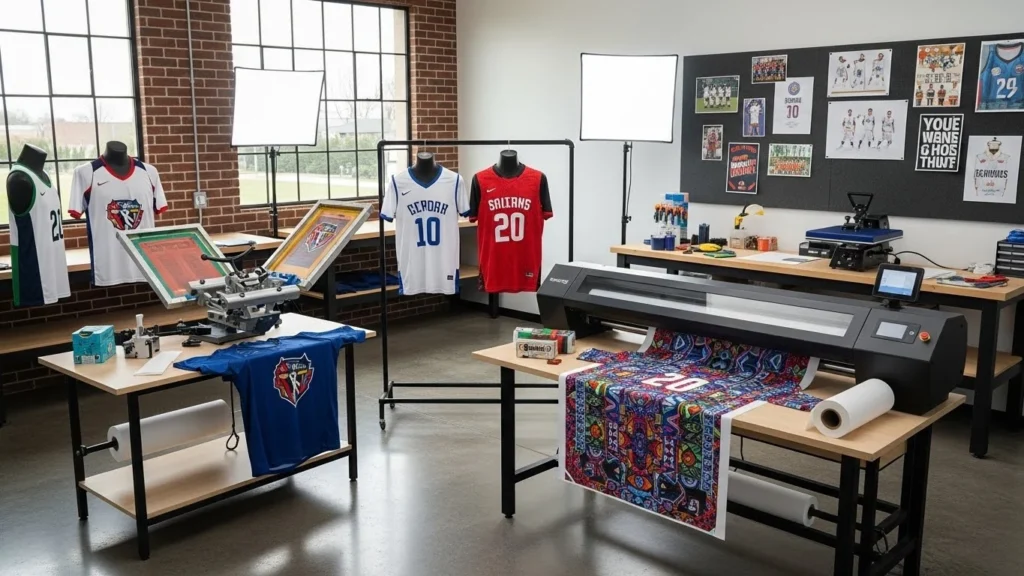
BUSHI Sports® explains decoration selection in its guide to choosing a printing method for MOQ and budget and covers artwork preparation in why vector artwork matters for sportswear printing.
A casual shorts manufacturer should produce a decoration strike-off or sample before bulk application. The approval should record dimensions, color references, position from seams, and acceptable appearance.
Checkpoint 9: Test the Product, Not Just the Fabric
A fabric report does not automatically prove that the completed shorts will perform correctly. Garment construction, pockets, waistbands, seams, decoration, and care instructions influence the finished result.
A casual shorts manufacturer should create a testing plan based on the product claim, destination market, and risk level.
Fabric Weight
ASTM D3776/D3776M covers mass per unit area of fabric. Confirming weight helps control bulk consistency but does not independently confirm quality.
Air Permeability
ASTM D737 addresses air permeability of textile fabrics. It can help compare how readily air passes through materials, which is useful when evaluating warm-weather products.
Moisture Management and Drying
The AATCC standards list includes AATCC TM195 for liquid moisture management properties and methods such as AATCC TM199, TM200, and TM201 for drying behavior under defined procedures.
These tests should be selected when the product is marketed with moisture or quick-drying claims. BUSHI Sports® also explains how these materials behave in its article on moisture-wicking fabrics.
Abrasion and Strength
Lightweight fabric should still survive normal wear. ASTM’s textile standards include methods for abrasion, tearing, breaking strength, and pilling. The correct method depends on the fabric and product.
Dimensional Change
ISO 5077 specifies a method for determining dimensional change after specified washing and drying procedures. Finished shorts should be measured before and after the intended care cycle.
Colorfastness
Testing may be required for washing, rubbing, perspiration, water, and light, depending on the product. Contrast trims and pocket bags deserve close review because color transfer can damage lighter components.
Functional Checks
The casual shorts manufacturer should also perform practical checks that laboratory fabric testing may not cover:
- Sit, squat, walk, and step movement
- Waistband recovery
- Drawcord function
- Pocket loading
- Zipper and snap operation
- Bartack security
- Hem stability
- Artwork adhesion
- Lining or brief comfort where applicable
- Transparency under movement and stretch
BUSHI Sports® provides a broader overview of fabric testing methods used by manufacturers.
From Tech Pack to Carton: The Manufacturing Route
A professional casual shorts manufacturer usually follows a controlled route rather than moving directly from a reference image to bulk sewing.
1. Product Review
The factory reviews intended use, fabric, styling, quantity, sizes, colors, artwork, labels, packaging, target cost, and deadline.
2. Tech Pack Development
The technical package should include drawings, measurements, grading, fabric references, trim details, pocket dimensions, stitching, artwork, labels, and packing instructions.
3. Material Sourcing
Shell fabric, pocket bags, mesh, elastic, drawcord, thread, zippers, snaps, labels, and packaging are sourced and submitted for approval.
4. Pattern Making
The pattern maker develops the base size around the required fit, rise, inseam, leg opening, and fabric behavior.
5. Prototype Sample
The first sample checks concept interpretation and construction feasibility.
6. Fit and Wear Review
The buyer evaluates measurements and movement. Pocket loading, sitting comfort, waistband tension, and opacity should be checked.
7. Size Set and Grading
Selected sizes confirm that the grade remains balanced. The pocket and rise should not become disproportionate in larger or smaller sizes.
8. Pre-Production Sample
The pre-production sample should represent the approved bulk product with confirmed fabric, trims, colors, labels, artwork, and construction.
9. Fabric Relaxation and Cutting
Materials are inspected, relaxed where necessary, spread, and cut. Shade groups should be controlled to prevent visible panel variation.
10. Decoration and Sewing
Printing or embroidery may be completed before assembly, depending on placement. The shorts then move through organized sewing operations.
11. In-Line Quality Checks
Inspectors check waistband attachment, pocket construction, seams, measurements, artwork, and workmanship during production.
12. Finishing and Final Inspection
Garments are trimmed, pressed or steamed appropriately, measured, functionally checked, labeled, and prepared for packing.
13. Packing and Shipping
The order is folded, bagged, stickered, assorted, placed into cartons, and prepared for the agreed shipping method.
This workflow allows a casual shorts manufacturer to identify problems before they affect the full order. It also gives the casual shorts manufacturer a documented production standard for reorders.
Product Directions a Casual Shorts Manufacturer Can Develop
Casual shorts cover a wide market. The same factory may produce different categories when its machinery, pattern team, and material network support them.
Lightweight Travel Shorts
These may use stretch woven polyester or nylon, secure pockets, quick-drying fabric, and compact packing. The focus is mobility, low weight, and practical storage.
Cotton Twill Lifestyle Shorts
These may use a fixed or hybrid waist, structured pockets, garment washing, and a more tailored appearance. The focus is shape, comfort, color, and casual versatility.
French Terry Shorts
These can coordinate with hoodies or sweatshirts and may use a rib or elastic waistband. The focus is softness, recovery, pocket stability, and controlled shrinkage.
Streetwear Shorts
Streetwear products may use oversized proportions, heavyweight knits, cargo pockets, bold branding, appliqué, or garment dyeing. The casual shorts manufacturer must control garment balance so the style looks intentional rather than incorrectly sized.
Resort and Summer Shorts
These may use lightweight cotton, blends, or synthetic woven fabrics with relaxed fits and seasonal prints. Opacity, colorfastness, and pocket show-through are important.
Hybrid Casual-Performance Shorts
These combine everyday styling with stretch, moisture management, secure pockets, or an internal liner. Buyers comparing more athletic categories can also review BUSHI Sports® custom gym shorts and custom running shorts.
Cost Architecture: Why Quotations Differ
A casual shorts manufacturer calculates cost from the approved specification. The casual shorts manufacturer should state whether sampling, testing, labels, packaging, and freight are included or charged separately. Two quotations cannot be compared accurately when they use different fabric, elastic, pockets, artwork, labels, or delivery terms.
Major cost drivers include:
- Shell-fabric price and consumption
- Fabric dyeing or printing minimums
- Pocket-bag and lining materials
- Elastic and drawcord quality
- Zippers, snaps, eyelets, and other hardware
- Number and complexity of pockets
- Pattern development and sampling
- Printing, embroidery, patches, or badges
- Garment washing or special finishing
- Testing and inspection
- Labels, hangtags, barcodes, and packaging
- Quantity by style and color
- Freight and agreed Incoterm
A simple knit short with two side pockets and a standard elastic waist generally requires fewer operations than a stretch woven cargo short with multiple zip pockets, a gusset, branded drawcord, reflective transfers, and individual retail packaging.
BUSHI Sports® explains the wider costing structure in its sportswear manufacturing cost breakdown.
MOQ Considerations
MOQ may be affected by:
- Fabric availability
- Minimum dye or print quantities
- Number of colorways
- Custom elastic or drawcords
- Hardware minimums
- Artwork setup
- Label and packaging minimums
- Production efficiency
A casual shorts manufacturer may support a smaller launch when the brand uses available materials, standard trims, limited colors, and a focused size range. Fully custom textiles and hardware usually require higher commitments.
Brands can review what MOQ means in sportswear manufacturing before setting an unrealistic quantity or unit-cost target.
Labeling and International Market Preparation
Private label shorts need accurate labels as well as attractive branding.
For products sold in the United States, the Federal Trade Commission explains that most covered textile products require disclosure of fiber content, country of origin, and the identity of the manufacturer or another responsible business. The FTC’s Care Labeling Rule guidance also addresses care instructions for covered textile wearing apparel.
A brand should confirm:
- Fiber-content wording
- Country-of-origin wording
- Company name or required identification
- Care instructions
- Size designation
- Required languages
- Traceability references
- Warning information when applicable
- Barcode and retailer ticket requirements
- Packaging and recycling marks
The casual shorts manufacturer can attach labels according to the approved artwork, but the brand or importer remains responsible for confirming the requirements of its destination market.
BUSHI Sports® offers a practical overview of sportswear labeling requirements for the USA, UK, and EU.
Sustainability Without Vague Claims
Lightweight products use less material than some heavier garments, but low weight alone does not make a product sustainable.
A more responsible development plan may consider:
- Durability and expected product life
- Verified recycled or preferred-fiber content
- Efficient marker utilization
- Fewer unnecessary sample rounds
- Reduced material complexity
- Repairable hardware where practical
- Accurate care instructions
- Packaging matched to actual transport risk
- Avoidance of unsupported environmental claims
The casual shorts manufacturer should be able to identify the shell, pocket bag, elastic, drawcord, labels, and packaging components. A recycled shell does not make the entire product recycled, and a performance finish should not be described as environmentally preferable without evidence.
Textile Exchange’s 2025 report noted that 88% of polyester production in 2024 remained fossil-based. This reinforces the need for precise sourcing and communication rather than broad marketing language.
A Supplier Scorecard for Global Buyers
Use this scorecard when comparing a casual shorts manufacturer. The best casual shorts manufacturer for a project is the supplier whose technical process matches the product’s complexity and commercial risk.
| Evaluation area | Questions to ask | Warning sign |
| Product experience | Which casual, travel, knit, woven, and performance shorts are produced regularly? | Supplier cannot explain differences between constructions |
| Fabric knowledge | Can the supplier explain structure, weight, opacity, stretch, and finish? | Recommendations are based only on fiber percentage |
| Pattern capability | Can it develop rise, inseam, gusset, pocket, and grading requirements? | One generic pattern is offered for every market |
| Sampling | Are fit, size-set, decoration, and pre-production approvals available? | Bulk production is encouraged before final approval |
| Waistband control | How are elastic recovery and extended measurements checked? | Only relaxed waist is measured |
| Pocket engineering | Are pocket load and reinforcement tested? | Pocket depth and opening are not documented |
| Decoration | Is artwork tested on the actual fabric? | Transfer or embroidery is approved from a digital mockup only |
| Quality control | Are incoming, in-line, and final checks documented? | Inspection depends only on the final visual check |
| Compliance | Can approved labels and packing instructions be followed? | Supplier treats market labels as an afterthought |
| Commercial clarity | Are MOQ, inclusions, exclusions, lead time, and Incoterm written clearly? | Quotation lacks material and service details |
BUSHI Sports® provides more sourcing questions in its article on choosing the right manufacturer for bulk orders.
Common Mistakes When Ordering Casual Shorts
Choosing Fabric From a Photograph
A photograph cannot show hand feel, opacity, weight, noise, stretch, airflow, or recovery. Review physical swatches and an actual garment sample.
Ignoring Pocket Load
An empty pocket may look correct but sag or tear when holding a phone. Test realistic items.
Measuring Only the Waist
Rise, seat, thigh, inseam, and leg opening determine comfort and appearance.
Approving Artwork Before the Pattern
Logos can become too close to pockets, hems, seams, or cargo components after the pattern changes.
Assuming Lower GSM Means Better Summer Comfort
Air permeability, color, fit, fabric structure, and moisture behavior also matter.
Skipping Wash Testing
Waistband recovery, twisting, shrinkage, print adhesion, and color can change after laundering.
Comparing Incomplete Quotations
A low price may exclude custom labels, premium elastic, testing, packaging, or delivery.
Changing Specifications During Bulk Production
Late changes create waste, delays, mixed production, and disputes. Freeze the approved specification before cutting.
Why Work With BUSHI Sports®?
BUSHI Sports® is a custom sportswear and apparel manufacturer based in Sialkot, Pakistan. The company supports brands, wholesalers, retailers, distributors, teams, academies, gyms, and corporate buyers with OEM, ODM, private label, and bulk apparel production.
As a casual shorts manufacturer, BUSHI Sports® supports:
- Design and requirement review
- Woven and knit fabric selection
- Custom patterns and size ranges
- Athletic, regular, relaxed, and brand-specific fits
- Waistband, drawcord, pocket, and trim customization
- Printing, embroidery, transfers, patches, and labels
- Development and pre-production sampling
- Low-MOQ and bulk-production pathways
- Quality inspection
- Custom packaging
- Global shipping coordination
- Reorder and after-sales communication
Buyers can expand the product into a wider custom casualwear collection or combine it with active products from the custom activewear manufacturing range.
Learn more on the BUSHI Sports® About Us page or submit a design and order brief through the contact page.
To discuss a casual shorts manufacturing project:
- Message BUSHI Sports® on WhatsApp
- Email info@bushisports.com
- Call +92 348 4018 578
- View the BUSHI Sports® location on Google Maps
- Follow BUSHI Sports® on LinkedIn
- Follow BUSHI Sports® on Instagram
- Follow BUSHI Sports® on Facebook
- Follow BUSHI Sports® on Threads
- View product inspiration on Pinterest
- Watch company content on YouTube
Frequently Asked Questions
What does a casual shorts manufacturer do?
A casual shorts manufacturer develops and produces shorts according to a buyer’s requirements for fabric, fit, color, size, waistband, pockets, branding, labels, packaging, quantity, and destination. Services may include material sourcing, pattern making, sampling, cutting, decoration, sewing, inspection, and shipping.
Which fabric is best for casual shorts?
The best fabric depends on the product. Cotton twill can suit structured lifestyle shorts, stretch woven polyester or nylon can suit travel products, and French terry or interlock can suit relaxed casual sportswear. A casual shorts manufacturer should recommend fabric after reviewing climate, customer, fit, price, care, and branding requirements.
What GSM should lightweight casual shorts use?
There is no universal GSM. Lightweight woven products may use lower weights than knit lounge shorts, but opacity, strength, density, and airflow must also be considered. The casual shorts manufacturer should test the actual fabric rather than approving it by GSM alone.
Can casual shorts include custom pockets?
Yes. Buyers can request slash, welt, zip, patch, cargo, back, hidden, phone, or mesh pockets. The casual shorts manufacturer should document dimensions, reinforcement, pocket-bag material, closure, and placement.
Can shorts be produced with an adjustable waistband?
Yes. Options include encased elastic, exposed elastic, internal or external drawcords, rib waistbands, fixed woven waists, and hybrid systems. The correct option depends on styling, fit, and intended use.
What is the difference between casual shorts and gym shorts?
Casual shorts usually prioritize everyday styling and versatile comfort, while gym shorts more directly prioritize movement, sweat management, and training performance. Categories can overlap. A casual shorts manufacturer may develop hybrid products that combine lifestyle appearance with stretch or quick-drying performance.
Which branding method is suitable for lightweight shorts?
Heat transfers, screen printing, embroidery, woven patches, rubber badges, and sublimation may all be used when compatible with the selected fabric. Dense embroidery or high heat can damage lightweight materials, so the casual shorts manufacturer should test the method before bulk production.
How is opacity checked?
Opacity should be reviewed using the actual color, fabric, pocket bags, underwear contrast, and intended stretch. Testing under daylight and strong indoor lighting is useful. Light colors generally require closer review.
Why do lightweight seams pucker?
Puckering can result from excessive thread tension, unsuitable needles, unstable fabric, differential feeding, heat, shrinkage, or incorrect seam construction. The casual shorts manufacturer should correct the machine settings and construction during sampling.
What affects the MOQ for custom casual shorts?
MOQ depends on fabric availability, dyeing or printing minimums, number of colors, custom elastic, hardware, artwork, labels, packaging, and production efficiency. A casual shorts manufacturer may support smaller orders when the buyer uses available materials and limits variations.
How long does casual shorts production take?
The timeline includes requirement review, material sourcing, pattern development, sampling, approvals, bulk-material preparation, cutting, decoration, sewing, quality control, packing, and shipping. The casual shorts manufacturer should provide a milestone schedule after reviewing the final specification.
Can a startup order private label casual shorts?
Yes. A startup can begin with one fabric, a limited color range, a focused size assortment, and one well-tested fit. This reduces development cost and inventory complexity while giving the casual shorts manufacturer a stable base for future reorders.
How can overseas buyers control production quality?
Use a complete tech pack, approve physical materials, confirm a pre-production sample, define measurement tolerances, review test requirements, request inspection records, and document every change. Clear approvals help the casual shorts manufacturer reproduce the intended product.
Conclusion
Lightweight casual shorts require disciplined development. Low fabric weight increases the importance of opacity, seam stability, pocket design, waistband recovery, and precise handling. The product must feel easy to wear without becoming weak, transparent, restrictive, or visually unfinished. A casual shorts manufacturer must therefore balance minimal weight with dependable construction.
A capable casual shorts manufacturer begins with the target customer and builds the specification around the actual use case. Fabric structure, fiber content, GSM, fit, rise, inseam, leg opening, pockets, elastic, branding, testing, labels, packaging, and delivery should be treated as one connected system.
Brands should not compare a casual shorts manufacturer only by unit price. The more useful comparison is whether the supplier can explain materials, engineer the pattern, control lightweight construction, document approvals, test realistic risks, and repeat the same product across bulk orders and future seasons.
BUSHI Sports® supports custom casual shorts through product consultation, fabric sourcing, sampling, private labeling, OEM and ODM production, branding, quality control, packaging, and international delivery.
Explore the custom wholesale casual shorts manufacturer page or contact BUSHI Sports® to discuss your design, fabric, fit, quantity, artwork, labels, packaging, and shipping requirements.