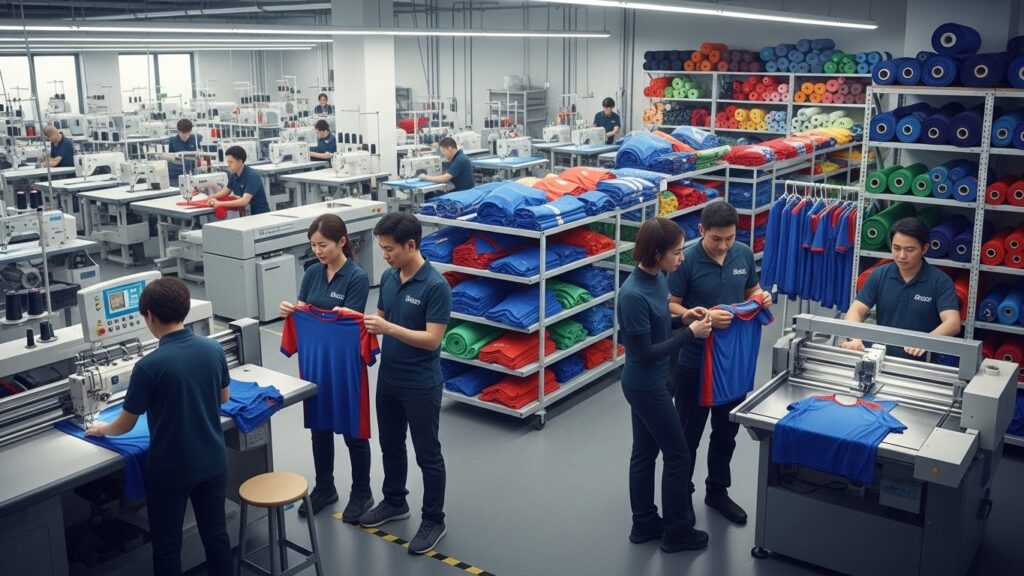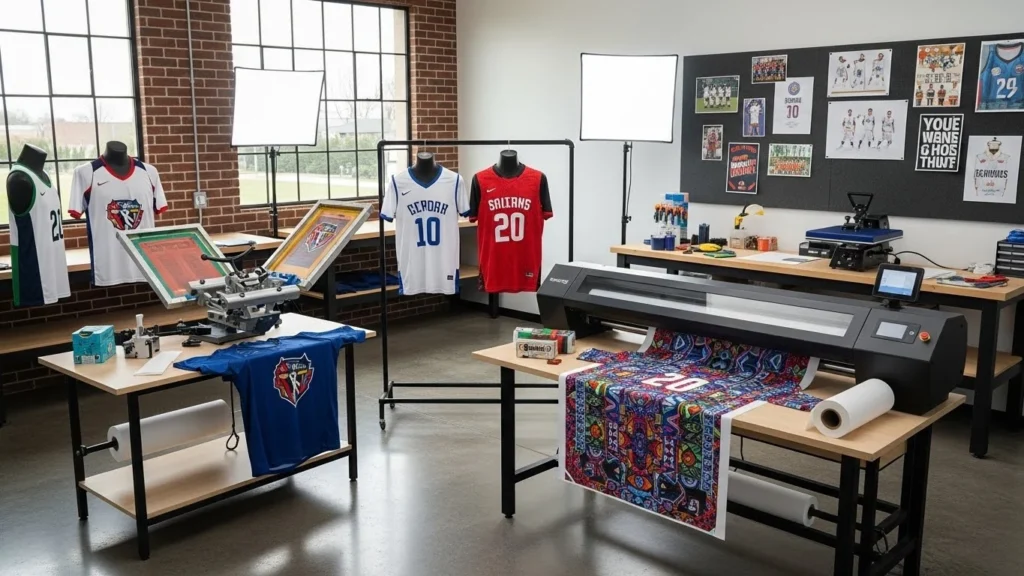

Sweatshirt Manufacturer: 11 Proven Fabric and Production Decisions for Premium Casual Sportswear
A sweatshirt may look like one of the simplest products in a casual sportswear collection, but its commercial success depends on many connected decisions. Fabric weight, knit construction, surface finish, rib recovery, pattern balance, shoulder shape, shrinkage, stitching, branding, colorfastness, and packaging all influence how the finished garment looks and performs.
A professional sweatshirt manufacturer does more than join sleeves to a body panel. The manufacturer converts a design concept into a repeatable product that must remain consistent across sizes, colorways, production batches, and future reorders.
For clothing brands, sports organizations, retailers, distributors, gyms, clubs, and private label businesses, choosing the right sweatshirt manufacturer is therefore a product-development decision as much as a purchasing decision.
BUSHI Sports® provides custom wholesale sweatshirt manufacturing for businesses requiring customized fabrics, colors, patterns, fits, sizes, labels, branding, packaging, and bulk production. The company also supports buyers through product development, sampling, OEM and ODM manufacturing, customization, quality control, and international delivery.
This guide explains eleven important decisions that shape casual sportswear production, from selecting French terry or brushed fleece to approving samples, testing shrinkage, choosing printing methods, and preparing sweatshirts for global distribution.
“A sweatshirt becomes commercially valuable when comfort, fit, durability, branding, and production consistency are designed together.”
A Quick Buyer’s Snapshot
Before discussing the technical details, this table summarizes the main decisions a buyer should make before contacting a sweatshirt manufacturer.
| Production question | What the buyer must decide | Why it matters |
|---|---|---|
| Product position | Budget, mid-market, premium, streetwear, teamwear, or performance casualwear | Determines fabric, construction, finishing, and target cost |
| Fabric structure | French terry, two-end fleece, three-end fleece, interlock, or specialty knit | Controls warmth, texture, weight, stability, and season |
| Fiber composition | Cotton, polyester, cotton-polyester blend, recycled fiber, or stretch blend | Affects comfort, durability, shrinkage, printing, and care |
| Fabric weight | Lightweight, medium-weight, heavyweight, or extra-heavyweight | Influences drape, warmth, cost, and perceived quality |
| Fit | Regular, athletic, relaxed, boxy, cropped, oversized, or unisex | Shapes customer appeal and size development |
| Branding | Embroidery, screen printing, transfer, patch, appliqué, or woven label | Affects appearance, durability, and production cost |
| Quantity | Units per style, color, and size | Influences MOQ, material sourcing, and unit price |
| Market | USA, UK, EU, Middle East, Australia, or another region | Affects fit, labeling, climate, and packaging requirements |
| Quality target | Commercial basic, premium casualwear, or technical sportswear | Determines testing and tolerance standards |
| Delivery | Air, sea, courier, or mixed freight | Affects timeline, carton planning, and landed cost |
The more clearly these points are defined, the more accurately a sweatshirt manufacturer can recommend materials, estimate costs, and prepare a development schedule.
Sweatshirt, Sweater, Hoodie, or Crewneck?
Product terminology can create confusion during international sourcing. Buyers should define the garment technically instead of depending only on regional product names.
A sweatshirt is generally a knitted casual garment made from fleece, French terry, interlock, or a related fabric. It normally has long sleeves and may include ribbed cuffs, a ribbed waistband, and a ribbed neckline.
A crewneck sweatshirt has a round neck and no hood. A hoodie includes a hood and may have a pullover or zip-up construction. A sweater is often associated with knitted yarn constructions rather than cut-and-sew fleece, although terminology differs between markets.
A clear tech pack should state whether the product includes:
- A crew neckline
- A hood
- A full or partial zipper
- A kangaroo pocket
- Side-entry pockets
- Ribbed cuffs and waistband
- Raglan or set-in sleeves
- A dropped shoulder
- Side seams or tubular construction
- Brushed or unbrushed interior fabric
Clear terminology allows the sweatshirt manufacturer to develop the correct pattern and bill of materials from the beginning.
Brands planning coordinated collections may combine sweatshirts with pullover hoodies, zip-up hoodies, sweatpants, jogger pants, and casual shorts.
Decision 1: Define the Customer Before Selecting the Fabric
A successful sweatshirt starts with the person who will wear it. Fabric should not be selected only because it feels soft in a swatch book or appears popular in another brand’s collection.
The sweatshirt manufacturer should know:
- The intended customer’s age range
- The target retail price
- The climate and season
- Whether the garment is for training, travel, streetwear, work, team use, or daily casualwear
- Whether it will be worn directly over a T-shirt or used as a heavier outer layer
- The expected washing frequency
- The required size range
- The desired fit
- The planned branding method
A lightweight French terry sweatshirt may suit transitional weather and indoor training. A heavy brushed fleece sweatshirt may be more appropriate for winter streetwear, outdoor teams, or premium heavyweight collections.
An oversized fashion product needs different shoulder shaping and fabric drape from an athletic warm-up sweatshirt. Similarly, a school or club sweatshirt may prioritize durability and repeat washing, while a premium lifestyle brand may prioritize hand feel, garment dyeing, and visual structure.
A sweatshirt manufacturer can give better recommendations when the buyer provides a customer profile instead of simply asking for “the best fabric.”
“The best sweatshirt fabric is not universal. It is the fabric that matches the customer, climate, price point, care routine, and brand position.”
Decision 2: Choose the Correct Sweatshirt Fabric Structure
The knit structure determines how a sweatshirt feels, stretches, drapes, retains warmth, and behaves during cutting and sewing.
The main options include French terry, two-end fleece, three-end fleece, and interlock.
French Terry
French terry has a smooth technical face and visible loops or floats on the inside. It is generally not brushed, making it less insulating than fleece and suitable for layering, transitional weather, travel, and year-round casualwear.
Cotton Incorporated’s textile education platform, CottonWorks™, explains that two-end fleece without napping is commonly referred to as French terry. The resource also describes French terry as a versatile option for sweatshirts, sweatpants, and sporty layering garments.
French terry can provide:
- A smooth outer surface for printing
- Moderate warmth
- Better airflow than heavily brushed fleece
- A recognizable looped interior
- Comfortable drape
- Year-round versatility
A sweatshirt manufacturer may recommend French terry for premium basics, spring collections, travel sets, lightweight teamwear, and coordinated athleisure products.
Two-End Fleece
Two-end fleece uses two yarn systems. The interior yarn is brushed or napped to create a soft, fuzzy surface. It can provide more warmth than unbrushed French terry, although stability and surface quality depend on yarn, knitting, finishing, and brushing control.
Two-end fleece may suit:
- Promotional sweatshirts
- Casual sportswear
- Mid-weight winter products
- School and club apparel
- Affordable private label collections
The buyer should inspect whether the interior brushing is even and whether loose fibers transfer excessively to other clothing.
Three-End Fleece
Three-end fleece uses a face yarn, a tie-in yarn, and a pile yarn. This construction can produce a fuller, more stable fabric with a cleaner exterior and a substantial brushed interior.
A sweatshirt manufacturer may recommend three-end fleece for:
- Premium streetwear
- Heavyweight crewnecks
- Structured oversized products
- Winter casualwear
- High-density embroidery
- Garment-washed collections
Three-end fleece often costs more because of its yarn consumption, weight, knitting structure, and finishing requirements. However, it can provide greater stability and a more premium hand when developed correctly.
Interlock and Double-Knit Options
Interlock has a smooth appearance on both sides and typically feels more stable than basic single jersey. It may be used for polished sportswear, warm-up tops, corporate casualwear, and modern minimalist sweatshirts.
It does not have the traditional looped or brushed interior associated with French terry or fleece, but it can create a clean, technical appearance.
Fabric Structure Comparison
| Fabric structure | Interior | Warmth | Stability | Common positioning |
| French terry | Visible unbrushed loops | Light to moderate | Moderate | Year-round athleisure and premium basics |
| Two-end fleece | Brushed interior | Moderate to warm | Moderate | Commercial casualwear and team products |
| Three-end fleece | Fuller brushed interior | Warm to very warm | High | Premium, heavyweight, and streetwear |
| Interlock | Smooth on both sides | Light to moderate | High | Clean technical or polished sportswear |
| Stretch French terry | Looped interior with elastane | Light to moderate | Moderate to high | Movement-focused casual sportswear |
A reliable sweatshirt manufacturer should provide physical swatches and explain the construction instead of describing every option simply as “cotton fleece.”
Decision 3: Select the Right Fiber Composition
Fabric structure and fiber composition are separate decisions. French terry, fleece, and interlock can be made from different fibers and blends.
Cotton Sweatshirt Fabric
Cotton is commonly selected for softness, breathability, familiarity, natural hand feel, and print compatibility. It can be used in both French terry and fleece constructions.
Potential considerations include:
- Greater shrinkage risk than many synthetic fabrics
- Longer drying time
- Possible color change after repeated washing
- Surface pilling depending on yarn and finishing
- Variation in hand feel between cotton qualities
A sweatshirt manufacturer should account for relaxation and shrinkage before finalizing patterns and bulk measurements.
Polyester Sweatshirt Fabric
Polyester can improve dimensional stability, drying speed, strength, and resistance to wrinkling. It may also reduce cost depending on the fabric and market.
However, a polyester-rich fabric can feel different from cotton and may require specific printing, dyeing, brushing, and heat-control procedures.
Polyester is particularly useful for:
- Team and school sweatshirts
- Performance casualwear
- Frequent-wash products
- Sublimated panels
- Durable commercial collections
- Lightweight technical sweatshirts
Cotton-Polyester Blends
Cotton-polyester blends are widely used because they combine characteristics of both fibers. Cotton contributes softness and comfort, while polyester can improve stability, strength, drying, and shape retention.
Common blend directions may include:
- Cotton-rich blends for a natural hand feel
- Balanced blends for commercial durability
- Polyester-rich blends for performance and cost control
The exact percentage should be selected according to the required hand feel, printing method, shrinkage target, price, and legal fiber-content declaration.
Elastane Blends
A small elastane percentage may be added where greater stretch and recovery are required. This can support movement-focused sweatshirts, fitted silhouettes, rib components, and performance casualwear.
Elastane also changes cutting, stitching, heat application, and dimensional behavior. The sweatshirt manufacturer must control seam stretch and pressing temperature accordingly.
Recycled Fiber Options
Recycled polyester and recycled cotton may be considered for selected collections, but claims should be supported by accurate documentation.
The Textile Exchange Materials Market Report 2025 reported that global fiber production reached approximately 132 million tonnes in 2024. Polyester represented 59% of total global fiber output, while cotton represented approximately 19%.
The same report stated that recycled fibers accounted for 7.6% of the global fiber market in 2024, but less than 1% came from pre- and post-consumer recycled textiles. It also reported that 34% of global cotton production came from certified sources.
These figures show why brands should use precise claims. “Recycled” does not automatically mean textile-to-textile recycled, and “sustainable” should not be used without explaining the evidence.
“The challenge now is to take this progress to scale.” — Claire Bergkamp, Textile Exchange CEO
Fiber Comparison for Sweatshirt Production
| Fiber direction | Main advantages | Potential limitations | Suitable use |
| 100% cotton | Soft, familiar, breathable, print-friendly | Greater shrinkage and slower drying | Premium casualwear and natural-feel basics |
| Cotton-rich blend | Comfortable with improved stability | Still requires shrinkage control | Retail basics, streetwear, team collections |
| Balanced cotton-poly blend | Durable, versatile, practical | Less natural hand than high-cotton fabric | Commercial casualwear and repeat-wash products |
| Polyester-rich blend | Stable, quick-drying, durable | May feel more synthetic | Performance casualwear and uniforms |
| Cotton-elastane | Comfortable with added flexibility | More sensitive to heat and dimensional control | Fitted or movement-focused sweatshirts |
| Recycled blend | Supports verified recycled-content programs | Documentation and consistency must be checked | Responsible material collections |
Decision 4: Set the Correct GSM Instead of Asking for “Thick Fabric”
GSM means grams per square meter. It describes fabric mass, not overall quality.
A high-GSM fabric can still have weak recovery, poor brushing, unstable dyeing, excessive shrinkage, or low-quality yarn. A lower-GSM fabric can perform well when it is engineered for a lightweight use case.
The sweatshirt manufacturer should evaluate GSM together with:
- Knit density
- Yarn count
- Fiber composition
- Brushing level
- Compactness
- Stretch
- Recovery
- Thickness
- Air permeability
- Hand feel
The following ranges are useful as a development reference, but they are not universal standards.
| Approximate GSM | Typical product direction | Expected feel |
| 200–240 GSM | Lightweight French terry or warm-up sweatshirt | Light, flexible, suitable for layering |
| 240–290 GSM | Mid-light casual sweatshirt | Balanced comfort and year-round use |
| 290–340 GSM | Standard mid-weight fleece or French terry | More structure and warmth |
| 340–400 GSM | Heavyweight casualwear or streetwear | Substantial, structured, warm |
| 400 GSM and above | Extra-heavy premium or specialty styles | Dense, bold, and highly structured |
Two fabrics with the same GSM can feel different because weight is distributed through different yarns and knit structures.
BUSHI Sports® explains the broader relationship between weight and performance in its guide to how GSM affects sportswear.
A sweatshirt manufacturer should help the buyer balance fabric weight with:
- Shipping cost
- Climate
- garment drape
- Printing method
- Embroidery density
- Drying time
- Retail price
- Customer expectations
Decision 5: Engineer the Fit Around the Brand
Generic sizing is one of the fastest ways to make a custom sweatshirt feel generic.
The sweatshirt manufacturer should develop the pattern around the target customer, fit direction, fabric behavior, and expected layering.
Regular Fit
A regular fit provides balanced ease through the chest, waist, sleeve, and hem. It is suitable for broad commercial collections, corporate apparel, schoolwear, and team merchandise.
Athletic Fit
An athletic fit may have a more controlled body shape, improved arm mobility, and less excess fabric. It is suitable for warm-ups, training, gym travel, and performance casualwear.
Relaxed Fit
A relaxed fit provides greater ease without creating the exaggerated proportions of a true oversized sweatshirt.
Oversized Fit
An oversized sweatshirt requires more than increasing the chest width. The sweatshirt manufacturer may need to adjust:
- Shoulder drop
- Sleeve width
- Sleeve length
- Armhole depth
- Body length
- Neck opening
- Rib dimensions
- Hem circumference
- Overall garment balance
Simply grading a normal pattern upward can produce an oversized garment with poor proportions.
Cropped and Fashion Fits
Cropped sweatshirts require careful body length, waistband tension, sleeve proportion, and shoulder balance. Fashion-driven products may also use boxy bodies, curved sleeves, dropped shoulders, or extra-wide rib.
Key Sweatshirt Measurements
A technical specification should include:
- Half chest
- Body length
- Shoulder width
- Sleeve length
- Bicep width
- Armhole depth
- Cuff opening
- Neck width
- Front neck drop
- Back neck drop
- Waistband height
- Hem width
- Rib length before attachment
Fit should be checked after laundering as well as before washing. A sample that fits correctly before washing may become too short or narrow if shrinkage has not been controlled.
Decision 6: Treat Rib as a Functional Component
Rib is often treated as a minor trim, but it strongly influences the fit and lifespan of a sweatshirt.
It may be used at:
- Neckline
- Cuffs
- Waistband
- Side panels
- Underarm inserts
- Decorative sections
Rib must have suitable stretch and recovery. Weak rib can create loose cuffs, a stretched neckline, or a waistband that loses shape after limited wear.
The sweatshirt manufacturer should evaluate:
- Fiber composition
- Elastane percentage
- Rib structure
- Weight
- Stretch direction
- Recovery
- Color matching
- Shrinkage
- Attachment ratio
The attachment ratio describes how a shorter rib piece is stretched to fit a longer garment opening. If the ratio is too tight, the body may gather excessively. If it is too loose, the neckline, cuffs, or hem may look unstable.
Color matching is also important. Rib and body fabric may absorb dye differently because their structures are not identical. The buyer should approve them together under appropriate lighting.
“A sweatshirt can use premium body fabric and still feel poorly made when the rib loses recovery.”
Decision 7: Control Shrinkage Before Finalizing the Pattern
Shrinkage is a major concern in cotton and cotton-rich sweatshirts. It can affect body length, chest width, sleeve length, rib dimensions, twisting, and seam appearance.
A professional sweatshirt manufacturer should not wait until the final inspection to discover dimensional problems.
Shrinkage control may involve:
- Testing fabric before bulk cutting
- Relaxing fabric before marker placement
- Applying compacting or pre-shrinking processes
- Accounting for expected change in the pattern
- Testing finished garments under the intended care method
- Comparing measurements before and after laundering
- Confirming that rib and body fabrics shrink compatibly
ISO 5077 specifies a method for determining dimensional change in fabrics, garments, and other textile articles after specified washing and drying procedures.
AATCC TM150 is intended for measuring dimensional changes in garments subjected to home laundering procedures. It includes different washing temperatures, agitation cycles, and drying procedures.
The correct test should reflect the product’s intended care label and destination market.
BUSHI Sports® also provides a detailed introduction to fabric shrinkage control.
Brands should ask the sweatshirt manufacturer to report dimensional change as a percentage rather than saying only that the product is “pre-shrunk.”
Decision 8: Select Branding According to Fabric and Order Size
Sweatshirts provide a large surface for decoration, but every branding method has technical limits.
The sweatshirt manufacturer should review artwork, fabric, placement, quantity, wash requirements, and target appearance before recommending a method.
Screen Printing
Screen printing is widely used for chest, back, and sleeve graphics. It can be cost-effective at suitable quantities and can produce strong colors.
Important factors include:
- Number of colors
- Artwork size
- Screen setup
- Ink system
- Fabric color
- Curing temperature
- Print hand feel
- Fleece surface stability
A rough or unstable fabric surface can reduce print clarity.
Embroidery
Embroidery provides a dimensional and durable appearance. It is suitable for chest logos, monograms, badges, and premium branding.
The sweatshirt manufacturer should control:
- Stitch count
- Thread type
- Backing
- Needle selection
- Fabric puckering
- Logo dimensions
- Placement
- Density
Heavy embroidery may require a stable sweatshirt fabric or internal reinforcement.
Heat Transfer
Heat transfers can support detailed logos, small quantities, names, numbers, and complex colors. They must be tested for adhesion, stretching, cracking, and washing.
High heat may affect polyester-rich fabrics, elastane, garment dyes, or specialty finishes.
Puff Printing
Puff ink expands during curing to create a raised surface. It is popular in streetwear and fashion sweatshirts, but the result depends on ink chemistry, curing control, artwork, and fabric stability.
Appliqué and Patches
Twill appliqué, woven patches, embroidered badges, chenille, rubber badges, and silicone labels can create distinctive branding.
These options introduce additional concerns such as:
- Edge finishing
- Attachment method
- Placement accuracy
- Weight
- Flexibility
- Wash durability
Branding Comparison Table
| Method | Visual result | Best quantity direction | Main production concern |
| Screen printing | Smooth or textured graphic | Medium to large quantities | Screen setup and curing |
| Embroidery | Premium dimensional logo | Small to large quantities | Puckering and stitch density |
| Heat transfer | Detailed, clean artwork | Small to medium quantities | Adhesion and heat sensitivity |
| Puff print | Raised fashion graphic | Medium to large quantities | Expansion and curing consistency |
| Woven patch | Detailed branded badge | Flexible quantities | Edge and attachment quality |
| Chenille patch | Varsity and heritage look | Specialty collections | Weight and placement |
| Silicone badge | Modern technical branding | Premium casual sportswear | Flexibility and attachment |
| Appliqué | Bold layered design | Teams and fashion collections | Cutting and stitching accuracy |
BUSHI Sports® compares decoration choices in its guide to selecting a printing method according to MOQ and budget.
Decision 9: Approve Samples in a Controlled Sequence
Sampling should answer technical questions before bulk production begins.
A sweatshirt manufacturer may produce several types of samples depending on the complexity of the project.
Development Sample
The development sample checks the initial interpretation of the design. Substitute fabric or trims may be used if clearly disclosed.
Fit Sample
The fit sample is used to evaluate measurements, silhouette, shoulder position, sleeve shape, neckline, rib tension, and movement.
Size-Set Sample
A size set helps determine whether grading works across smaller and larger sizes.
Color and Decoration Sample
This sample confirms fabric color, rib matching, screen-print colors, embroidery thread, transfer appearance, or patch construction.
Pre-Production Sample
The pre-production sample should use confirmed bulk materials, trims, labels, artwork, construction, and finishing.
The buyer should issue written approval before bulk cutting.
A useful sample review should include:
- Measurement report
- Front, back, and detail photographs
- Fit comments
- Fabric approval
- Rib approval
- Artwork dimensions
- Logo placement
- Label position
- Stitching review
- Packing confirmation
- Revision number
BUSHI Sports® explains why brands should not bypass this stage in its guide to sampling in sportswear manufacturing.
A sweatshirt manufacturer can make corrections only when feedback is specific. “Make the sweatshirt better” is not actionable. “Increase half chest by 2 cm and reduce waistband tension” is actionable.
Decision 10: Build Quality Control Around Real Customer Complaints
Quality control should focus on defects that affect wear, washing, branding, fit, and retail presentation.
The sweatshirt manufacturer should inspect raw materials, work in progress, and finished garments.
Incoming Fabric Checks
Fabric inspection may identify:
- Holes
- Stains
- Knitting lines
- Shade variation
- Width inconsistency
- Uneven brushing
- Bowing or skew
- Surface contamination
- Weight variation
- Stretch inconsistency
In-Line Sewing Checks
In-line inspection may review:
- Shoulder alignment
- Sleeve attachment
- Neck rib shape
- Cuff matching
- Waistband attachment
- Seam allowance
- Stitch balance
- Skipped stitches
- Twisting
- Artwork placement
Finished Garment Checks
A final sweatshirt inspection should include:
- Measurements
- Symmetry
- Seam security
- Rib recovery
- Print quality
- Embroidery quality
- Shade consistency
- Cleanliness
- Thread trimming
- Labels
- Packing
- Size and color assortment
Sweatshirt Quality Scorecard
| Quality area | What should be checked | Common failure |
| Fabric | Weight, shade, brushing, surface, stretch | Uneven nap, pilling, shade variation |
| Fit | Measurements and garment balance | Short body, twisted sleeve, poor grading |
| Neckline | Shape, stretch, recovery, seam quality | Wavy or stretched neck |
| Cuffs | Matching length and recovery | Loose or uneven cuffs |
| Waistband | Tension and alignment | Excess gathering or loss of shape |
| Seams | Stitching, security, elasticity | Skipped stitches or seam opening |
| Position, curing, color, surface | Cracking, peeling, uneven coverage | |
| Embroidery | Density, position, backing | Puckering or distorted logo |
| Labels | Content, placement, spelling | Incorrect fiber or care information |
| Packaging | Folding, stickers, ratios | Mixed sizes or damaged presentation |
Pilling is particularly important for brushed casualwear. ASTM D4970/D4970M covers resistance to pilling and related surface changes using a Martindale tester.
BUSHI Sports® describes the broader process in its article on quality control in sportswear manufacturing.
“Quality control should reproduce the problems a customer may experience, not simply confirm that a garment looks acceptable inside the factory.”
Decision 11: Calculate Cost, MOQ, and Lead Time as One System
Cost, minimum order quantity, and production time are connected.
A buyer cannot normally reduce all three while simultaneously increasing customization. Custom fabric, special dyeing, heavyweight fleece, multiple artwork techniques, custom rib, branded hardware, and complex packaging can all affect MOQ and lead time.
Main Sweatshirt Cost Drivers
A sweatshirt manufacturer usually considers:
- Fabric price
- Fabric consumption
- Rib consumption
- Dyeing and finishing
- Pattern development
- Sample production
- Cutting
- Sewing labor
- Printing or embroidery
- Labels and hangtags
- Washing or special finishing
- Quality inspection
- Packaging
- Freight
Fabric consumption can increase when a sweatshirt has:
- An oversized fit
- Wide sleeves
- A large size range
- Directional fabric
- Matching requirements
- Side panels
- Extra-long cuffs
- Heavy rib
- Large cutting waste
BUSHI Sports® explains the wider cost structure in its sportswear manufacturing cost breakdown.
What Influences MOQ?
MOQ may depend on:
- Minimum fabric dye quantity
- Available stock fabric
- Number of colors
- Custom rib requirements
- Printing setup
- Label quantity
- Packaging minimums
- Production efficiency
- Size breakdown
A sweatshirt manufacturer may support lower quantities when the buyer selects available fabric, standard colors, limited artwork, and fewer variations.
BUSHI Sports® has a separate guide explaining what MOQ means in sportswear manufacturing.
What Influences Lead Time?
Lead time may include:
- Requirement review
- Fabric sourcing
- Lab dip or color approval
- Pattern development
- Sample production
- Fit revision
- Bulk material preparation
- Cutting
- Decoration
- Sewing
- Finishing
- Quality inspection
- Packing
- Shipping
The production schedule should begin from confirmed approvals, not from the first inquiry date.
BUSHI Sports® provides further guidance in understanding sportswear production lead times.
The Complete Sweatshirt Manufacturing Workflow
Although every factory has its own operating system, a structured sweatshirt manufacturer normally follows a sequence similar to the following.
Stage 1: Product Brief
The buyer submits the design, target customer, quantity, size range, preferred fabric, colorways, branding, packaging, and destination.
Stage 2: Technical Review
The sweatshirt manufacturer evaluates feasibility, material availability, construction, measurements, artwork, and cost targets.
Stage 3: Fabric and Trim Development
Body fabric, rib, thread, labels, printing materials, embroidery threads, and packaging are selected.
Stage 4: Pattern Making
The base pattern is created according to the approved fit and fabric behavior.
Stage 5: Prototype Sampling
The first garment is produced and reviewed for design interpretation and construction.
Stage 6: Fit Correction
Measurements, proportions, sleeve shape, neckline, and rib tension are corrected.
Stage 7: Pre-Production Approval
Final fabric, color, decoration, labels, construction, and packaging are approved.
Stage 8: Fabric Relaxation and Cutting
Knitted fabric may be relaxed before cutting. Panels are cut according to approved markers and size ratios.
Stage 9: Printing, Embroidery, or Patch Application
Decoration is applied at the correct stage. Some artwork is applied before assembly, while other branding is added to the finished garment.
Stage 10: Sewing and Assembly
Shoulder seams, sleeves, side seams, neckline rib, cuffs, waistband, labels, and other components are assembled.
Stage 11: Finishing
Loose threads are removed, garments are pressed or steamed appropriately, and measurements are checked.
Stage 12: Final Inspection and Packing
Finished sweatshirts are inspected, folded, labeled, bagged, sorted, and packed into cartons.
A well-managed sweatshirt manufacturer records approvals and checks throughout the workflow rather than relying only on the final inspection.
Garment Dyeing, Washing, and Special Finishes
Some casualwear brands want sweatshirts with a washed, vintage, faded, distressed, or exceptionally soft appearance.
Possible treatments include:
- Garment dyeing
- Pigment dyeing
- Enzyme washing
- Silicone softening
- Acid-inspired fashion washing
- Mineral-style washing
- Brushing
- Sueding
- Peaching
- Water-repellent finishing
These processes can change measurements, shade, surface appearance, print behavior, and seam presentation.
The sweatshirt manufacturer should test the complete process on a sample because garment finishing can produce intentional variation. Brands must decide how much variation is acceptable.
For garment-dyed products, artwork and labels must also be planned carefully. Some labels, threads, embroidery, or patches may absorb dye differently or become stained.
A washed appearance should still be controlled. “Vintage” should not become an excuse for random defects, uncontrolled shrinkage, or inconsistent sizing.
Labeling Sweatshirts for International Markets
Private label sweatshirts require more than a logo label.
Depending on the destination market, the product may need:
- Fiber-content information
- Country of origin
- Manufacturer or responsible business identity
- Care instructions
- Size information
- Traceability data
- Required language
- Safety warnings where applicable
The Federal Trade Commission’s apparel-labeling guidance explains that most textile and wool products sold in the United States require labels listing fiber content, country of origin, and the identity of the manufacturer or another responsible business.
The FTC Care Labeling Rule requires covered manufacturers and importers to provide care instructions that can be followed without causing substantial harm to the product.
A sweatshirt manufacturer may print and attach labels according to the buyer’s supplied information, but the brand or importer should verify legal compliance for the target market.
BUSHI Sports® has also prepared an overview of sportswear labeling requirements for the USA, UK, and EU.
Packaging and Retail Presentation
Packaging affects protection, warehouse handling, e-commerce fulfillment, and perceived value.
A private label order may include:
- Main brand label
- Size label
- Care and content label
- Hangtag
- Barcode sticker
- Price ticket
- Individual bag
- Tissue paper
- Branded insert
- Carton marking
- Size and color ratio
- Export documentation
Heavyweight sweatshirts require more carton space than lightweight products. Buyers should consider freight volume when selecting GSM and packaging.
BUSHI Sports® discusses the commercial role of presentation in how packaging influences perceived value.
The sweatshirt manufacturer should receive an approved packing manual before bulk packing begins.
Three Example Sweatshirt Development Briefs
The following examples show how different brands may require different manufacturing decisions.
Example 1: Premium Streetwear Crewneck
Target: Heavyweight oversized streetwear
Suggested direction:
- Three-end cotton-rich fleece
- Approximately 380–450 GSM
- Dropped shoulders
- Wide sleeves
- Heavy rib
- High-density embroidery or puff print
- Garment wash
- Woven neck label and premium hangtag
- Individual retail packaging
The sweatshirt manufacturer should prioritize fabric stability, rib recovery, garment balance, artwork placement, and wash consistency.
Example 2: Team and Academy Sweatshirt
Target: Durable warm-up and travel apparel
Suggested direction:
- Cotton-polyester fleece
- Approximately 280–330 GSM
- Regular or athletic fit
- Embroidered crest
- Optional names or numbers
- Reinforced seams
- Easy-care labeling
- Size-sorted bulk packing
The sweatshirt manufacturer should prioritize repeat washing, color consistency, logo durability, size availability, and reorder continuity.
Example 3: Lightweight Athleisure Sweatshirt
Target: Transitional weather and indoor lifestyle use
Suggested direction:
- French terry or stable interlock
- Approximately 220–280 GSM
- Relaxed fit
- Minimal heat-transfer logo
- Stretch rib
- Clean internal finishing
- Coordinated joggers or shorts
The sweatshirt manufacturer should prioritize drape, comfort, lightweight construction, fit, and branding compatibility.
How to Evaluate a Sweatshirt Manufacturer
Before placing an order, ask practical questions that reveal how the supplier controls development and production.
Fabric Questions
- Can you provide French terry, two-end fleece, and three-end fleece?
- Can you explain the knit construction rather than only the fiber content?
- What GSM tolerance is available?
- How is shrinkage tested?
- Can body fabric and rib be dyed together?
- Can recycled-content documentation be provided when required?
Sampling Questions
- Which sample stages are included?
- Will the pre-production sample use bulk fabric?
- How are revisions recorded?
- Can measurement reports be supplied?
- Can a size set be developed?
Branding Questions
- Which printing methods suit the selected fabric?
- Can embroidery be tested for puckering?
- Can custom woven labels, patches, and hangtags be produced?
- How is artwork placement checked?
Quality Questions
- How is fabric inspected?
- What are the measurement tolerances?
- Is pilling testing available?
- How is shrinkage measured?
- Are in-line inspections performed?
- Can a final inspection report be provided?
Commercial Questions
- What is the MOQ per style and color?
- Which costs are included?
- What is the sample fee?
- What is the estimated lead time after approval?
- Which payment terms apply?
- Which Incoterm is quoted?
- How will the order be packed?
BUSHI Sports® provides additional guidance in what to ask a manufacturer before ordering.
Why Brands Work With BUSHI Sports®
BUSHI Sports® is a custom sportswear and apparel manufacturing company based in Sialkot, Pakistan. It supports brands, retailers, wholesalers, distributors, teams, schools, clubs, gyms, and corporate buyers requiring custom apparel production.
As a sweatshirt manufacturer, BUSHI Sports® offers support for:
- Product consultation
- Fabric selection
- Pattern and fit customization
- Sample development
- OEM and ODM production
- Private label manufacturing
- Custom colors and sizes
- Printing and embroidery
- Labels, tags, and packaging
- Low-MOQ and bulk-order pathways
- Quality control
- International shipping
- Reorder support
Buyers can combine sweatshirts with a wider custom casualwear collection or develop coordinated activewear products.
Learn more about the company on the BUSHI Sports® About Us page or submit a project through the contact page.
For sweatshirt manufacturing inquiries:
- Contact BUSHI Sports® on WhatsApp
- Email info@bushisports.com
- Call +92 348 4018 578
- View the BUSHI Sports® location on Google Maps
- Follow BUSHI Sports® on LinkedIn
- Follow BUSHI Sports® on Instagram
- Follow BUSHI Sports® on Facebook
- Watch manufacturing and product content on YouTube
- Read company content on Medium
Frequently Asked Questions
What does a sweatshirt manufacturer do?
A sweatshirt manufacturer develops and produces sweatshirts according to a buyer’s fabric, fit, color, size, branding, labeling, packaging, and quantity requirements. Services may include design support, material sourcing, pattern making, sampling, cutting, sewing, printing, embroidery, quality control, and shipping.
Which fabric is best for sweatshirts?
There is no single best fabric. French terry is useful for lighter, versatile sweatshirts, while brushed fleece provides greater warmth. Three-end fleece can offer more stability and a premium heavyweight feel. The sweatshirt manufacturer should recommend fabric according to climate, use, price, branding, and care requirements.
What is the difference between French terry and fleece?
French terry has visible unbrushed loops on the interior. Fleece normally has an interior that has been brushed or napped to create softness and warmth. The sweatshirt manufacturer should provide swatches because weight and hand feel vary considerably within both categories.
What GSM is good for a sweatshirt?
Lightweight sweatshirts may begin around 200–240 GSM, mid-weight products commonly fall into broader 240–340 GSM ranges, and heavyweight styles may use approximately 340 GSM or more. These are development references rather than universal standards. Knit structure and finishing are equally important.
Can a sweatshirt manufacturer create oversized fits?
Yes. A custom sweatshirt manufacturer can develop oversized, relaxed, boxy, cropped, athletic, or regular fits. A proper oversized pattern should adjust shoulders, sleeves, armholes, body width, body length, rib, and overall balance rather than simply increasing one measurement.
Can sweatshirts be made with custom labels?
Yes. Private label manufacturing may include neck labels, size labels, care labels, woven patches, hangtags, barcode stickers, branded packaging, and carton markings.
Which printing method is best for sweatshirts?
Screen printing is useful for many bulk graphic applications. Embroidery creates a premium dimensional appearance. Heat transfers support detailed artwork and smaller quantities. Puff printing is popular for raised streetwear graphics. The sweatshirt manufacturer should test the method on the actual fabric.
Why do cotton sweatshirts shrink?
Cotton fibers and knitted structures can relax during laundering and drying, changing garment dimensions. Fabric preparation, compacting, pattern allowance, washing temperature, drying method, and garment construction all influence the result.
How can sweatshirt pilling be reduced?
Pilling can be influenced by fiber quality, yarn structure, fabric construction, brushing, finishing, abrasion, and care. The sweatshirt manufacturer should evaluate fabric before bulk production and arrange suitable testing when required.
What is the MOQ for custom sweatshirts?
MOQ depends on fabric sourcing, dyeing minimums, number of colors, custom rib, printing setup, labels, packaging, and production efficiency. Using available fabrics and limiting variations can support smaller initial orders.
How long does bulk sweatshirt production take?
The timeline depends on material availability, sample revisions, quantity, printing or embroidery, special finishing, testing, factory capacity, and shipping. The buyer should request a milestone schedule beginning after final approvals.
Can startups order private label sweatshirts?
Yes. Startups can develop private label sweatshirt collections, but they should begin with a focused fabric, limited colorways, a controlled size range, and one strong base fit. This makes costing, sampling, inventory, and reordering easier to manage.
Can a sweatshirt manufacturer produce matching sets?
Yes. Sweatshirts can be coordinated with sweatpants, joggers, shorts, hoodies, jackets, and T-shirts. Matching sets require careful control of fabric, dye lots, rib colors, labels, and fit.
Conclusion
A sweatshirt is easy to recognize but technically demanding to produce consistently. Fabric structure, fiber composition, GSM, fit, rib recovery, shrinkage, decoration, sewing, labeling, packaging, and quality testing all affect the final result.
The right sweatshirt manufacturer helps a brand convert these variables into a controlled product specification. Instead of selecting fabric by appearance alone or comparing suppliers only by unit price, buyers should evaluate the complete manufacturing system.
A reliable development process should answer five commercial questions:
- Will the sweatshirt fit the target customer?
- Will it maintain its dimensions and appearance after washing?
- Will the branding remain consistent?
- Can the manufacturer repeat the same quality in bulk and on reorders?
- Does the finished cost support the brand’s market position?
When the answer to these questions is clear, casual sportswear production becomes more predictable and scalable.
BUSHI Sports® supports custom sweatshirt development through material selection, sampling, private labeling, OEM and ODM production, branding, quality inspection, packaging, and global delivery.
Explore the custom wholesale sweatshirt manufacturer page or contact BUSHI Sports® to discuss your fabric, fit, colors, quantity, artwork, labels, packaging, and delivery requirements.