Denim Jacket Manufacturer: 10 Proven Fashion-Sportswear Hybrid Manufacturing Secrets
The traditional denim jacket was designed around structure, durability, and a distinctive indigo appearance. Modern customers still expect those qualities, but many also want lighter weight, improved mobility, softer hand feel, practical storage, breathable panels, flexible cuffs, and the easy comfort normally associated with sportswear.
That combination has created a new product category: the fashion-sportswear hybrid denim jacket. It looks recognizably denim, yet its fit, fabric, internal construction, and functional details are developed for movement and everyday comfort.
Producing this type of garment requires more than copying a classic trucker jacket. A denim jacket manufacturer must understand woven denim, sportswear pattern engineering, wash development, stretch recovery, seam strength, trims, branding, shrinkage, color transfer, and bulk production control.
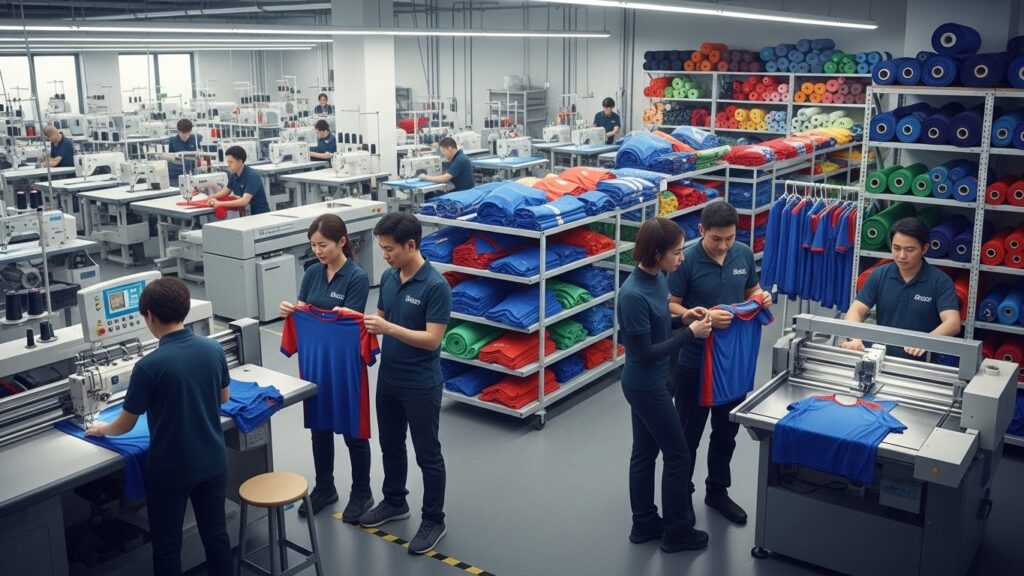
BUSHI Sports® provides custom wholesale denim jacket manufacturing for brands, retailers, distributors, clubs, and private label businesses. Buyers can also use the company’s broader OEM, ODM, sampling, customization, quality-control, and global delivery services to develop coordinated casualwear and sports-inspired collections.
This guide explains ten manufacturing secrets that help a denim jacket manufacturer combine authentic denim character with the comfort, flexibility, and function expected from modern sportswear.
“A successful hybrid jacket should look like denim, move like sportswear, and remain consistent enough for a brand to reorder with confidence.”
The Hybrid Opportunity: Why Denim and Sportswear Now Overlap
Denim jackets have moved far beyond one traditional silhouette. Brands now develop oversized streetwear jackets, cropped women’s fits, stretch travel jackets, fleece-backed denim layers, lightweight summer denim, varsity-inspired hybrids, utility jackets, and products that combine denim panels with knit or technical fabrics.
This development is commercially useful because it allows one product to serve several customer needs:
- The visual familiarity of denim
- The comfort of casual sportswear
- The mobility required for travel and active daily use
- The layering function of outerwear
- The branding potential of a jacket
- The durability expected from woven apparel
However, the hybrid concept creates technical risks. If stretch denim is selected without recovery testing, the elbows and hem can become baggy. If knit panels shrink differently from denim, the jacket may twist after washing. If heavy embroidery is added to a lightweight shell, the panels can pucker. If wash effects are not standardized, every production batch can look different.
A capable denim jacket manufacturer treats the hybrid garment as a complete system rather than as a denim body with random sportswear details added afterward.
Hybrid Jacket Specification at a Glance
| Development area | Traditional denim direction | Sportswear direction | Hybrid manufacturing objective |
|---|---|---|---|
| Fabric | Rigid cotton denim | Stretch woven, knit, mesh, fleece | Preserve denim appearance while improving movement |
| Fit | Structured and close to classic blocks | Athletic, relaxed, ergonomic | Balance recognizable styling with mobility |
| Sleeves | Set-in woven sleeves | Raglan, articulated, stretch panels | Reduce restriction without losing shape |
| Closures | Metal shank buttons | Zippers, snaps, lightweight hardware | Select closures for function, weight, and brand identity |
| Pockets | Chest patch pockets | Zip, phone, internal, secure storage | Add practical storage without excessive bulk |
| Cuffs and hem | Buttoned denim tabs | Rib, elastic, adjustable systems | Improve comfort and fit recovery |
| Finish | Rinse, stone, enzyme, vintage wash | Stretch, softening, performance finish | Create a controlled fashion finish with wearable comfort |
| Branding | Leather patch, embroidery, metal trims | Transfers, silicone badges, reflective details | Build a coherent visual identity across materials |
| Quality testing | Shrinkage, strength, colorfastness | Stretch recovery, mobility, bonding, trim function | Test the complete hybrid garment after processing |
The table shows why a denim jacket manufacturer must control both fashion and sportswear requirements. The design cannot be finalized from appearance alone.
Secret 1: Start With the Customer, Not the Wash Effect
Many brands begin denim development by requesting a light wash, vintage fade, distressed finish, or a color reference. Those decisions matter, but they should follow the commercial brief.
Before fabric is sourced, the denim jacket manufacturer should know:
- The intended customer and age range
- Men’s, women’s, unisex, or youth positioning
- Climate and selling season
- Expected retail price
- Whether the jacket is fashion, streetwear, teamwear, travel, outdoor-inspired, or corporate apparel
- The underlayers the customer is expected to wear
- Required mobility and stretch
- Target garment weight
- Planned branding method
- Destination markets
- Quantity by style, color, and size
A heavyweight rigid jacket may suit heritage streetwear but feel restrictive for travel. A highly elastic fabric may improve comfort but fail to deliver the structured appearance expected from premium denim. A soft, heavily washed garment may look attractive but require additional processing, shrinkage control, and shade management.
The customer brief helps the denim jacket manufacturer decide which compromises are acceptable. A product can prioritize structure, stretch, low weight, wash character, or low cost, but rarely maximizes all of them simultaneously. At this stage, the denim jacket manufacturer should also identify which design choices are essential and which can change to protect cost or delivery.
Three Example Hybrid Positions
| Product concept | Customer promise | Suggested manufacturing direction |
| Urban travel denim jacket | Denim appearance with easy movement and secure storage | Medium-light stretch denim, articulated sleeve, zip inner pocket, soft wash |
| Team lifestyle jacket | Coordinated outerwear for clubs, academies, and staff | Stable cotton-rich denim, embroidered crest, comfortable fit, repeatable dark wash |
| Premium street-sport jacket | Fashion-led silhouette with athletic components | Heavy or mid-weight denim body, knit sleeves or rib, bold patches, controlled vintage wash |
A clear position also prevents the article’s subject from competing with a generic jacket brief. Brands comparing wider outerwear options can review BUSHI Sports®’s guide to custom outerwear manufacturing for global brands.
Secret 2: Understand Denim Weight, Weave, and Construction
Denim is commonly recognized by its twill structure and diagonal surface line. In many traditional blue denims, indigo-dyed warp yarns are combined with undyed or lighter filling yarns, creating the familiar contrast between the outer face and inner surface.
The CottonWorks™ denim basics guide explains that finished denim fabrics can range from approximately 3.5 to 16.5 ounces per square yard. It notes that heavier denim, approximately 8 to 16.5 ounces per square yard, is commonly used for trousers, jeans, and jackets.
Weight is important, but a denim jacket manufacturer should also evaluate:
- Twill direction and structure
- Warp and filling yarn count
- Fabric density
- Cotton quality
- Stretch percentage
- Recovery
- Surface texture
- Skew and bow
- Shrinkage potential
- Tear and breaking strength
- Shade consistency
- Compatibility with washing and decoration
Practical Denim Weight Directions
| Approximate weight | Jacket direction | Main benefit | Main risk |
| 6–8 oz | Lightweight overshirt or summer layer | Low weight and easier layering | Lower structure, show-through, seam sensitivity |
| 8–10 oz | Lightweight casual or travel jacket | Balanced comfort and recognizable denim hand | Needs strength and recovery control |
| 10–12 oz | Standard fashion denim jacket | Good structure and broad styling flexibility | Can feel rigid without wash or stretch |
| 12–14 oz | Premium heritage or streetwear jacket | Strong structure and substantial feel | Higher weight, bulk, and sewing difficulty |
| 14 oz and above | Heavy specialty outerwear | Strong heritage identity and durability | Restriction, freight cost, needle and seam demands |
These ranges are development references rather than fixed quality grades. Two 10-ounce fabrics can behave differently because of yarn, density, finishing, fiber content, and stretch.
A denim jacket manufacturer should send physical swatches and, where possible, washed swatches. Raw fabric does not always predict final hand feel or shade because washing can significantly change surface, color, and dimensions. The denim jacket manufacturer should record the fabric reference, weight, composition, width, and approved finish for future reorders.
“Denim weight communicates character, but construction and finishing determine whether that character becomes comfort or restriction.”
Secret 3: Engineer Stretch Instead of Simply Adding Elastane
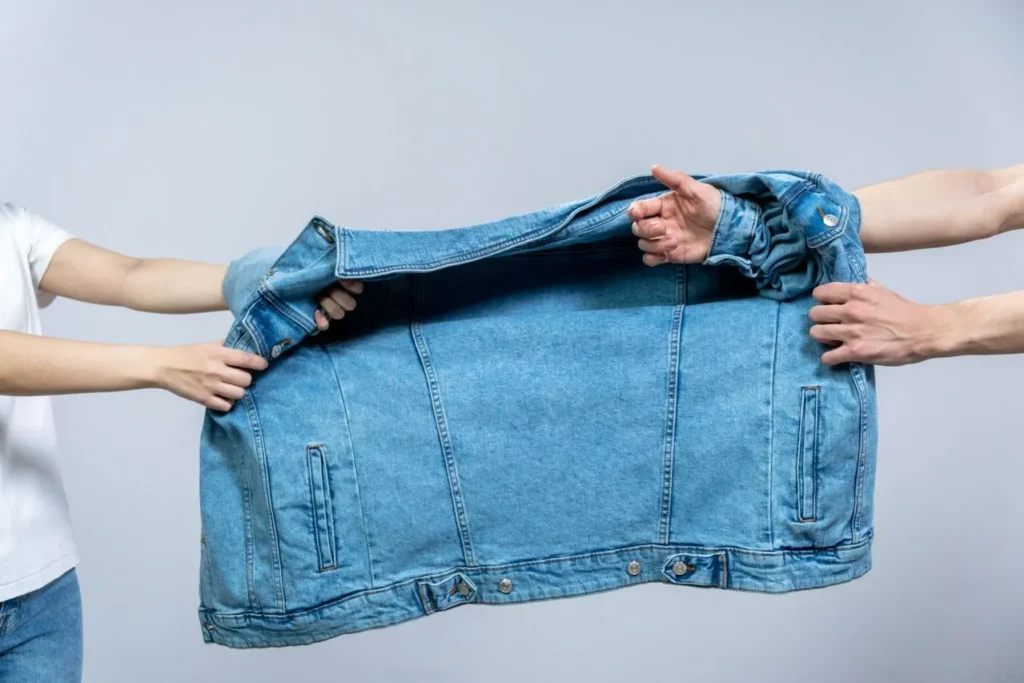
Stretch is one of the clearest ways to bring sportswear comfort into denim, but stretch denim must recover after movement. Fabric that extends easily but does not return toward its original dimensions can create baggy elbows, loose cuffs, distorted pockets, and permanent growth around the hem.
A denim jacket manufacturer should evaluate:
- Stretch percentage in the required direction
- Recovery after extension
- Growth after repeated movement
- Shrinkage after washing
- Heat sensitivity
- Seam extension
- Pressing and finishing temperature
- Compatibility with embroidery and transfers
Some hybrid jackets use comfort stretch rather than highly elastic stretch. Others combine a stable denim body with stretch panels at the underarm, side body, back yoke, or inner sleeve.
Stretch Strategies for Hybrid Jackets
Full-Garment Stretch Denim
The entire jacket uses stretch denim. This provides consistent appearance and broad mobility, but pattern measurements and sewing must account for extension and recovery.
Hidden Stretch Panels
Stretch woven or knit inserts are placed under the arms, along the side body, or inside movement zones. The outside retains a more traditional denim appearance.
Knit Sleeve Hybrid
A denim body is combined with fleece, interlock, rib, or another knit sleeve. This can create a varsity or street-sport appearance but requires careful shrinkage and color coordination.
Action Back or Pleat Construction
Pattern features add movement without relying entirely on elastane. This approach can preserve rigid denim character while improving reach.
Raglan or Articulated Sleeves
Sportswear-inspired sleeve shapes can reduce shoulder restriction. They must still match the jacket’s fashion silhouette.
A reliable denim jacket manufacturer will test movement after the final wash because finishing can change stretch, recovery, and garment measurements. The denim jacket manufacturer should compare elbow, shoulder, and hem recovery before and after the wear trial.
Secret 4: Combine Materials Without Creating Shrinkage Conflict
Hybrid manufacturing often uses more than one textile. Denim may be combined with rib, fleece, mesh, jersey, stretch woven fabric, lining, synthetic insulation, or coated panels.
Every component can respond differently to washing, heat, moisture, and mechanical action. The greatest visual problem occurs when one material shrinks more than another. The result can include twisting, rippling, puckering, uneven hems, distorted zippers, and stretched seams.
Before approving the pattern, the denim jacket manufacturer should compare every material as part of one wash-compatible system. The denim jacket manufacturer should review:
- Dimensional change of each material
- Stretch and recovery
- Fabric weight and thickness
- Colorfastness and color transfer
- Wash compatibility
- Pressing temperature
- Seam bulk
- Needle requirements
- Surface friction
- Pilling or abrasion behavior
BUSHI Sports® explains the general causes and control methods in its guide to fabric shrinkage control.
Material Pairing Matrix
| Denim combination | Potential benefit | Main production risk | Control method |
| Denim + rib cuffs | Comfort and recovery | Rib and denim shrink differently | Pretest both materials after intended wash |
| Denim + fleece sleeves | Warmth and varsity styling | Pilling, shade mismatch, seam distortion | Approve washed garment and joint seam construction |
| Denim + mesh lining | Improved internal comfort | Lining growth or twisting | Control lining ease and attachment points |
| Denim + stretch woven panels | Mobility with low bulk | Different recovery and heat sensitivity | Test extension, seams, and pressing |
| Denim + synthetic insulation | Warmth without full heavy denim | Quilting and laundering distortion | Confirm insulation stability and stitch pattern |
| Denim + reflective transfer | Sports visibility detail | Heat marks or poor adhesion | Test application on finished washed denim |
The denim jacket manufacturer should also consider color migration. Indigo or dark sulfur-dyed denim can transfer color to pale rib, lining, labels, footwear, or upholstery. Dry and wet rubbing tests are therefore especially relevant.
Secret 5: Build the Pattern Around Movement and Layering
Classic denim styling often includes a yoke, chest pockets, vertical panel seams, button front, collar, cuffs, and waistband tabs. A sportswear hybrid can preserve these visual elements while modifying the internal pattern for mobility.
A denim jacket manufacturer should define the intended underlayer. A close jacket worn over a T-shirt needs less ease than an outer layer designed over a sweatshirt or hoodie.
Important measurements and checks include:
- Half chest
- Waist and hem circumference
- Shoulder width
- Across-back width
- Front and back length
- Armhole depth
- Sleeve length
- Bicep width
- Elbow width
- Cuff opening
- Collar stand and neck opening
- Pocket dimensions and placement
- Hem tab adjustment
Movement Tests During Fitting
The fit model should be asked to:
- Raise both arms
- Reach forward
- Cross the arms
- Rotate the torso
- Bend the elbows fully
- Sit while the jacket is closed
- Wear the intended underlayer
- Place realistic objects in the pockets
The denim jacket manufacturer should photograph and document these tests. Excessive hem lift, back restriction, sleeve pull, pocket gaping, or front closure strain indicates that the pattern requires adjustment. A denim jacket manufacturer should repeat the assessment after any major change to fabric, wash, lining, or sleeve construction.
Fit Options for Different Markets
| Fit direction | Pattern characteristics | Suitable product position |
| Classic regular | Balanced chest and shoulder, traditional length | Commercial denim and uniforms |
| Athletic | Controlled body, improved arm mobility | Travel, teams, sports lifestyle |
| Relaxed | Added ease with moderate shoulder drop | Casual unisex and layered styling |
| Oversized | Wide body, dropped shoulder, larger sleeve, planned proportions | Streetwear and fashion collections |
| Cropped | Short body with balanced sleeve and hem structure | Women’s and fashion-led products |
Oversized does not mean selecting a larger standard size. A true oversized block requires deliberate shoulder, sleeve, chest, length, pocket, and collar proportions.
Secret 6: Treat Wash Development as Product Engineering
Washing is where raw denim begins to develop its final commercial identity. A rinse can soften the fabric and remove loose dye. Enzyme treatments can modify the surface. Abrasive or stone-inspired effects can create contrast. Tints, sprays, sanding, whiskers, and localized treatments can produce a specific fashion appearance.
However, each process can affect:
- Shade
- Hand feel
- Measurements
- Seam appearance
- Thread color
- Metal trims
- Labels
- Patches
- Strength
- Stretch recovery
- Surface abrasion
A denim jacket manufacturer should develop a wash standard before bulk production. The standard should include an approved physical sample, shade range, placement references, measurement tolerances, and acceptable variation. The denim jacket manufacturer should keep this standard available at washing, finishing, inspection, and packing stages.
Common Denim Finish Directions
| Finish direction | Visual result | Manufacturing consideration |
| Rinse wash | Dark, clean, lightly softened | Color transfer and residual shrinkage |
| Enzyme wash | Cleaner surface and softer hand | Strength and shade must remain controlled |
| Stone-inspired wash | More visible abrasion and contrast | Panel and seam damage risk |
| Vintage wash | Aged, faded, worn appearance | Repeatability and localized variation |
| Black or grey wash | Modern neutral denim finish | Shade stability and rubbing colorfastness |
| Garment tint | Added color cast over denim | Batch consistency and trim staining |
| Ozone or lower-water process | Alternative fading route where available | Capability, target appearance, and verification |
| Resin or shape finish | Structured or creased character | Hand feel, chemical compliance, and durability |
The wash recipe alone is not enough. Load size, machine type, garment arrangement, water conditions, time, temperature, chemistry, and drying can influence the result.
A denim jacket manufacturer must also grade wash effects across sizes. Pocket sanding or localized abrasion should remain proportional rather than appearing misplaced on larger or smaller garments.
“A denim wash is a production specification, not a verbal mood. If the target cannot be measured and approved, it cannot be repeated reliably.”
Secret 7: Choose Trims and Branding That Survive the Wash
Denim jackets often use visible hardware and branding. These elements help communicate quality but can also become failure points.
Possible components include:
- Metal shank buttons
- Snaps
- Zippers
- Rivets
- Adjustable tabs
- Cord systems
- Woven labels
- Leather or synthetic patches
- Embroidery
- Screen printing
- Heat transfers
- Appliqué
- Silicone badges
- Reflective details
The denim jacket manufacturer should determine whether trims are attached before or after washing. A denim jacket manufacturer should also confirm whether replacement trims from another supplier would change appearance, function, or wash behavior.
Pre-wash attachment allows hardware and labels to age with the garment, but some components may stain, corrode, scratch, shrink, or deform. Post-wash attachment can protect components but may change the production sequence and final appearance.
Branding Method Comparison
| Method | Suitable use | Strength | Main risk |
| Embroidery | Chest, back, sleeves, patches | Durable and premium | Puckering and stiffness |
| Screen printing | Large graphics and fashion artwork | Strong visual impact | Uneven surface and wash change |
| Heat transfer | Detailed logos and reflective elements | Clean edges and flexible quantities | Adhesion and heat sensitivity |
| Woven patch | Heritage and private label identity | Detailed repeatable branding | Edge and attachment quality |
| Chenille patch | Varsity and team styling | High texture and strong identity | Weight, shedding, and wash behavior |
| Silicone badge | Modern sportswear detail | Flexible tactile appearance | Attachment and wash durability |
| Leather-style patch | Traditional denim identity | Premium heritage appearance | Shrinkage, staining, and legal material description |
Artwork should be supplied in production-ready formats. BUSHI Sports® explains related requirements in why vector artwork is important for sportswear printing and how to prepare print-ready files.
The denim jacket manufacturer should create decoration samples on the actual denim after the intended wash whenever possible. Raw denim and washed denim can respond differently to heat, adhesive, thread tension, and ink.
Secret 8: Test Indigo, Strength, Recovery, and Finished-Garment Performance
Denim testing should reflect the customer’s real experience. A fabric may look attractive and still transfer color, tear at pockets, shrink excessively, or lose stretch recovery.
A denim jacket manufacturer should agree on a testing plan according to the material, wash, claims, destination, and price level. The denim jacket manufacturer should record the required method, sample stage, acceptance level, and action required after a failure.
Colorfastness to Rubbing
Indigo denim can transfer color through rubbing, especially when dark or minimally washed. ISO 105-X12 specifies a method for assessing textile color resistance to rubbing and staining, using dry and wet rubbing conditions.
Brands should set realistic requirements for the product. A raw or dark denim aesthetic may naturally present different color-transfer behavior from a heavily washed jacket, but consumers still need accurate care information.
Abrasion Resistance
Jackets experience rubbing at cuffs, elbows, pockets, shoulders, side seams, and bag-contact areas. ASTM’s textile standards include abrasion methods such as the Martindale abrasion test.
Breaking and Tear Strength
Washing, distressing, and abrasion can reduce strength. Testing is particularly important when the design includes holes, heavy sanding, thin fabric, or concentrated stress points.
Dimensional Stability
The garment should be measured before and after the specified care procedure. Body length, sleeve length, chest, hem, cuff, and collar can all change.
Stretch and Recovery
Stretch denim should be evaluated for extension, recovery, and growth. The denim jacket manufacturer should test fabric and finished garments because seams and wash processing affect performance.
Seam and Trim Performance
Functional checks should include:
- Button and snap attachment
- Zipper movement
- Pocket loading
- Bartack security
- Cuff function
- Tab adjustment
- Embroidery stability
- Transfer adhesion
- Lining attachment
- Movement after laundering
BUSHI Sports® gives a wider overview in its guide to fabric testing methods and explains inspection stages in how quality control works in sportswear manufacturing.
Secret 9: Use Cotton and Sustainability Claims Carefully
Cotton remains central to denim. According to the Textile Exchange Materials Market Report 2025, global cotton production was approximately 24.5 million tonnes in the 2023/24 season and represented about 19% of global fiber production.
The same organization reports that recycled cotton remains a small share of the cotton market. This means brands should distinguish between conventional cotton, certified or program cotton, organic cotton, pre-consumer recycled cotton, and post-consumer recycled cotton.
Better Cotton reports that in the 2023–24 season, approximately 1.39 million licensed farmers produced 5.64 million tonnes of Better Cotton. Its current website states that Better Cotton represents roughly 23% of global cotton production.
These figures can support sourcing decisions, but claims must match the chain-of-custody system and documentation available to the buyer.
A responsible denim jacket manufacturer should avoid promising that every cotton option is sustainable. The denim jacket manufacturer should separate verified material facts from marketing language and provide supporting records when available.
The supplier should help the buyer identify:
- Fiber composition
- Cotton program or certification where applicable
- Recycled-content documentation
- Fabric mill information
- Dye and finish details where available
- Wash process used
- Trim composition
- Packaging materials
- Testing and compliance records
Practical improvement areas include:
- Designing the jacket for a longer useful life
- Selecting durable fabric and hardware
- Reducing unnecessary mixed-material complexity
- Improving marker efficiency
- Limiting avoidable sample rounds
- Testing wash recipes before scale-up
- Providing accurate care guidance
- Using environmental claims that can be verified
The OECD garment and footwear due-diligence guidance provides a framework for identifying and addressing supply-chain risks related to labor, human rights, integrity, and environmental impact.
“Responsible denim sourcing begins with traceable facts, not broad adjectives.”
Secret 10: Control Bulk Production With Physical Standards
A digital image cannot fully communicate denim shade, wash contrast, hand feel, abrasion, seam character, or trim aging. For that reason, a denim jacket manufacturer should use signed physical standards whenever shade or wash appearance is commercially important.
Important approval standards include:
- Raw and washed fabric swatches
- Lab dip or shade reference where applicable
- Approved base-size fit sample
- Size-set measurements
- Pre-production sample
- Wash standard
- Artwork strike-off
- Embroidery or patch sample
- Trim board
- Label and packaging samples
- Approved measurement tolerance chart
Bulk Manufacturing Route
1. Requirement Review
The buyer and denim jacket manufacturer confirm the concept, target customer, quantity, fit, fabric, wash, artwork, labels, packaging, destination, target cost, and deadline.
2. Fabric and Trim Development
Denim, rib, lining, pocketing, thread, buttons, zippers, labels, patches, and packaging are sourced and approved.
3. Pattern Development
The base pattern is created around the intended fit, layering, mobility, and fabric behavior.
4. Prototype and Fit Sampling
The first garments are reviewed for styling, measurements, movement, pockets, sleeves, collar, and closures.
5. Wash Development
Sample garments are processed until the approved shade, hand feel, contrast, and dimensional result are achieved.
6. Pre-Production Approval
The buyer approves the complete garment using intended bulk materials, wash, trims, labels, branding, and construction.
7. Fabric Inspection and Cutting
Fabric is checked for defects, width, shade, skew, and consistency. Panels are cut and grouped to reduce visible shade mismatch.
8. Sewing and In-Line Inspection
Production checks cover seam construction, panel alignment, pocket placement, topstitching, hardware, and measurements.
9. Garment Washing and Finishing
The wash process is controlled against the approved standard. Garments are dried, finished, trimmed, and pressed as appropriate.
10. Final Inspection and Packing
Finished jackets are measured and checked for shade, workmanship, function, labeling, cleanliness, and packaging.
A strong denim jacket manufacturer records each approval so that reorders do not depend on memory.
How Hybrid Denim Jacket Cost Is Built
A quotation should reflect a defined specification. Before confirming price, the denim jacket manufacturer should state the fabric, wash, trims, branding, packaging, sample scope, and delivery basis included.
The same jacket drawing can produce very different costs depending on fabric, wash, trims, pockets, branding, lining, and quantity.
Major cost drivers include:
- Denim price and consumption
- Cotton, stretch, or specialty fiber composition
- Fabric weight
- Wash development and processing
- Number of panels and pockets
- Knit, rib, lining, or insulation components
- Buttons, snaps, zippers, rivets, and custom hardware
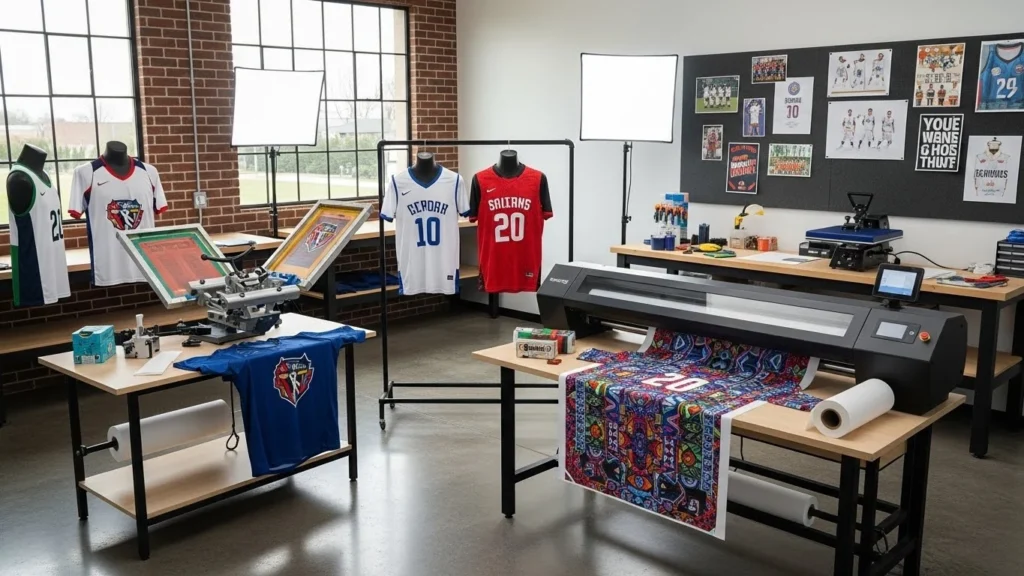
- Embroidery, patches, screen printing, or transfers
- Pattern making and sampling
- Testing
- Labels and hangtags
- Individual packaging
- Quantity by style and color
- Freight and Incoterm
A minimal rinse-wash jacket with standard buttons costs less to produce than a lined hybrid jacket with stretch panels, multiple zip pockets, custom hardware, embroidery, and a controlled vintage wash.
BUSHI Sports® explains broader costing factors in its sportswear manufacturing cost breakdown.
MOQ and Material Minimums
MOQ may be influenced by:
- Fabric mill minimums
- Custom dye or shade requirements
- Number of washes
- Rib and lining minimums
- Custom hardware quantities
- Artwork setup
- Label and packaging minimums
- Production efficiency
A denim jacket manufacturer may support a lower initial quantity when brands use available denim, existing wash directions, standard hardware, and limited colorways. Highly customized fabric and trims often require larger commitments.
Labeling and International Market Requirements
A private label jacket needs accurate legal and care information. The denim jacket manufacturer should receive final label artwork early enough to check placement, dimensions, material, and attachment method before bulk production.
For products sold in the United States, the Federal Trade Commission’s textile labeling guidance explains that most covered textile products require disclosure of fiber content, country of origin, and the identity of the manufacturer or another responsible business.
The FTC’s Care Labeling Rule guidance explains that manufacturers and importers of covered textile wearing apparel must provide care instructions based on a method that will not cause substantial harm when followed.
Brands should confirm:
- Shell, lining, filling, and sectional fiber wording where applicable
- Country of origin
- Business identity or required registration information
- Care instructions
- Size information
- Required language
- Traceability or batch references
- Safety information where relevant
- Barcode and retailer ticket requirements
- Packaging marks
A denim jacket manufacturer can produce and attach labels according to approved files, but the brand or importer should verify legal requirements in each destination market.
BUSHI Sports® also provides an overview of sportswear labeling requirements for the USA, UK, and EU.
Buyer Scorecard: How to Compare Denim Jacket Suppliers
| Evaluation area | Strong supplier response | Warning sign |
| Denim knowledge | Explains weight, twill, shrinkage, stretch, shade, and wash behavior | Describes fabric only as “premium denim” |
| Hybrid capability | Demonstrates control of denim with knit, rib, lining, or stretch panels | Treats mixed materials as simple substitutions |
| Pattern development | Reviews layering, mobility, sleeve shape, and size grading | Uses one generic jacket block |
| Wash development | Provides physical wash standards and controlled shade ranges | Approves wash from photos only |
| Branding | Tests decoration after or with the intended wash process | Assumes any transfer or embroidery will work |
| Testing | Discusses rubbing, strength, shrinkage, recovery, and trim function | Relies only on final visual inspection |
| Quality control | Uses incoming, in-line, wash-stage, and final checks | Inspects only after packing |
| Compliance | Follows approved labels and market instructions | Treats labels as a last-minute addition |
| Commercial clarity | States material, wash, inclusions, MOQ, timeline, and Incoterm | Gives a price without a clear specification |
| Reorder control | Maintains samples, shade standards, patterns, and records | Cannot explain how the same wash will be repeated |
A buyer can use this scorecard when evaluating any denim jacket manufacturer, especially for a product that crosses fashion and sportswear categories. The selected denim jacket manufacturer should be able to explain technical trade-offs rather than agreeing to every request without evidence.
Common Development Mistakes
Selecting the Wash Before the Fabric
Different denim fabrics react differently to the same wash process. Choose the base material and then develop the wash.
Approving Stretch Without Recovery Data
High extension can feel comfortable in a sample but produce bagging during wear.
Combining Materials Without Wash Testing
Denim, rib, fleece, and lining can shrink or release color differently.
Using Heavy Branding on Lightweight Denim
Dense embroidery, heavy patches, or metal trims can distort the garment.
Ignoring Indigo Transfer
Dark denim may rub onto pale garments, furniture, shoes, labels, or lining.
Grading a Hybrid Jacket Like a Basic Shirt
Pockets, yokes, collars, sleeve articulation, and movement zones require proportional grading.
Approving From Digital Photos
Screen color cannot accurately represent shade, hand feel, wash contrast, or surface texture.
Comparing Quotations Without Matching Specifications
One supplier may include custom wash development, testing, labels, and packaging while another excludes them.
Changing the Wash During Bulk Production
Late changes can affect measurements, trims, shade, strength, and delivery.
Why Work With BUSHI Sports®?
BUSHI Sports® is a custom sportswear and apparel manufacturer based in Sialkot, Pakistan. It supports brands, retailers, wholesalers, distributors, teams, academies, gyms, and corporate buyers with OEM, ODM, private label, and bulk production.
As a denim jacket manufacturer, BUSHI Sports® can support:
- Product consultation
- Denim and trim sourcing
- Custom pattern and fit development
- Men’s, women’s, unisex, and brand-specific sizing
- Stretch, knit-panel, and fashion-sportswear hybrid concepts
- Wash and color customization
- Embroidery, printing, patches, labels, and branding
- Development and pre-production samples
- Low-MOQ and bulk manufacturing pathways
- Quality-control checks
- Custom tags and packaging
- International shipping coordination
- Reorder support
Brands can combine denim jackets with custom jackets, custom casualwear, sweatshirts, pullover hoodies, casual shorts, and activewear products.
Learn more about the company on the BUSHI Sports® About Us page or submit a project through the contact page.
To discuss a hybrid denim jacket collection:
- Message BUSHI Sports® on WhatsApp
- Email info@bushisports.com
- Call +92 348 4018 578
- View the BUSHI Sports® location on Google Maps
- Follow BUSHI Sports® on LinkedIn
- Follow BUSHI Sports® on Instagram
- Follow BUSHI Sports® on Facebook
- View product inspiration on Pinterest
- Watch company content on YouTube
Frequently Asked Questions
What does a denim jacket manufacturer do?
A denim jacket manufacturer develops and produces jackets according to a buyer’s requirements for denim, weight, stretch, fit, wash, pockets, trims, branding, labels, packaging, quantity, and destination. Services may include material sourcing, pattern making, sampling, wash development, cutting, sewing, decoration, quality control, and shipping.
What denim weight is suitable for jackets?
Many denim jackets use material in the approximate 8-to-16.5-ounce range, although lighter overshirts and hybrid jackets may use lower weights. The correct choice depends on structure, season, mobility, wash, target price, and customer expectation. A denim jacket manufacturer should provide raw and washed swatches before approval.
Can a denim jacket be made with stretch fabric?
Yes. Stretch denim can improve comfort and movement. It should be tested for recovery and growth because fabric that stretches without returning can become baggy at the elbows, hem, and pockets.
Can denim be combined with sportswear fabrics?
Yes. Denim can be combined with rib, fleece, jersey, interlock, mesh, stretch woven fabric, lining, or insulation. The denim jacket manufacturer should test shrinkage, color transfer, stretch, seam compatibility, and wash behavior across all materials.
Which wash is best for a denim jacket?
There is no single best wash. A rinse preserves a darker, cleaner appearance; enzyme and abrasive processes can create softness and contrast; vintage effects create a more aged look. The correct wash depends on the fabric, brand position, strength target, and acceptable variation.
How is indigo color transfer tested?
Colorfastness to rubbing can be assessed using recognized methods such as ISO 105-X12 under dry and wet conditions. The product’s shade, wash level, intended use, and care instructions should guide the acceptance criteria.
Can denim jackets include embroidery and patches?
Yes. Embroidery, woven patches, chenille, screen printing, transfers, silicone badges, and other methods can be used. The denim jacket manufacturer should test the decoration with the intended fabric and wash process.
What causes denim jacket shrinkage?
Cotton fiber, fabric construction, finishing, garment washing, drying, and pressing can all affect dimensions. Mixed materials can shrink at different rates, so the complete jacket should be measured after the intended care procedure.
What is the MOQ for custom denim jackets?
MOQ depends on fabric availability, wash development, colorways, custom hardware, labels, artwork, and production efficiency. Using available denim, standard trims, and established wash directions can support smaller starting quantities.
How long does denim jacket production take?
The timeline includes fabric sourcing, pattern development, samples, wash trials, approvals, bulk-material preparation, sewing, washing, quality control, packing, and shipping. Complex washes and custom hardware can extend development.
Can startups order private label denim jackets?
Yes. Startups can reduce risk by selecting one base fabric, one or two wash directions, standard hardware, a focused size range, and a thoroughly approved fit. This gives the denim jacket manufacturer a stable foundation for bulk production and reorders.
How can overseas buyers control wash consistency?
Approve a physical wash standard, define an acceptable shade range, keep measurement tolerances, request production checks, and compare bulk garments against the approved sample under controlled lighting.
What should be included in a denim jacket tech pack?
A complete tech pack should include technical drawings, measurements, grading, fabric, wash, thread, trims, pockets, stitches, artwork, labels, packaging, tolerances, and revision history. The denim jacket manufacturer should confirm every unclear point before sampling.
Conclusion
A hybrid denim jacket must satisfy two sets of expectations. It should preserve the recognizable texture, structure, and visual character of denim while providing the comfort, mobility, storage, and easy wear associated with sportswear.
Achieving that balance requires coordinated decisions about fabric weight, twill construction, stretch recovery, mixed materials, pattern engineering, wash development, hardware, branding, testing, labeling, and bulk quality control.
The best denim jacket manufacturer is not simply the supplier offering the darkest indigo, the lowest price, or the strongest wash effect. It is the partner that can translate a brand’s market idea into a documented, testable, and repeatable garment.
BUSHI Sports® supports fashion and sportswear hybrid development through material sourcing, custom patterns, sampling, private labeling, wash and branding customization, quality inspection, packaging, and global delivery.
Explore the custom wholesale denim jacket manufacturer page or contact BUSHI Sports® to discuss your fabric, fit, wash, stretch, branding, quantity, packaging, and shipping requirements.