Horse Boots and Wraps Guide: Materials, Protection and Comfort
Horse boots and wraps are made for different uses, from reducing contact with the lower leg during exercise to covering a leg during travel or stable care. Their materials and construction determine where they provide coverage, how securely they stay in place and whether the horse remains comfortable while wearing them.
For equestrian brands and wholesale buyers, the choice goes beyond selecting a color and adding a logo. A protective boot needs the right shape, padding and fastening for its intended area. A wrap depends on both its material and the way it is applied. Neither product should be described as preventing every injury or providing medical support without evidence for that specific claim.
This guide explains the main types of horse boots and wraps, compares common materials and sets out the fit, care and sample checks buyers should complete before placing a custom order.

Table of Contents
- Choose the product by intended use
- Compare materials and protective construction
- Understand what coverage can achieve
- Check sizing, fit and fastening
- Treat wraps and bandages as application-dependent products
- Account for heat and airflow
- Review comfort, care and durability
- Prepare a clear manufacturing brief
- Approve samples before bulk production
- Frequently asked questions
1. Choose Horse Boots and Wraps by Intended Use
“Leg protection” describes several products, each with a different shape and purpose. A buyer should first identify the part of the leg to be covered, the activity and how long the product is expected to be worn. Those answers provide a better starting point than choosing the thickest available material.
| Product | Typical design focus | Main point to check |
|---|---|---|
| Brushing boots | Coverage where one leg may contact another | Position and security during movement |
| Tendon boots | Shaped lower-leg coverage for the specified riding use | Fit around the leg and fastening |
| Fetlock boots | Coverage around the fetlock area | Correct size and placement |
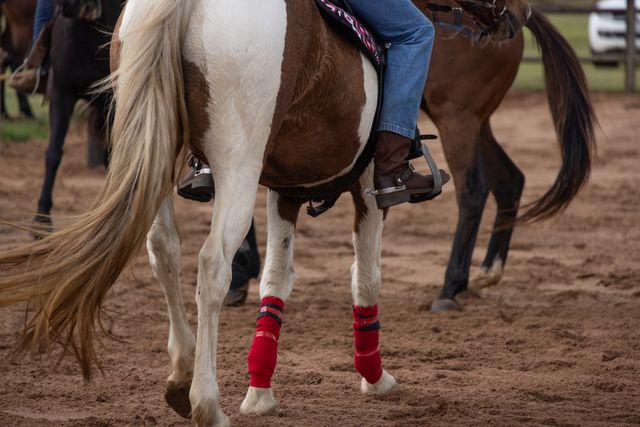
| Overreach boots | Coverage around the heel and hoof area | Length, movement and rubbing |
| Travel boots | Broader coverage during transport | Secure fit without slipping |
| Polo wraps | Flexible fabric wrapped around the lower leg | Correct, even application |
| Stable wraps | A wrap system used for a defined stable-care purpose | Suitable layers and application |
These are product categories, not interchangeable promises of protection. The exact coverage depends on the finished design and where it sits on a particular horse. Bushi Sports® lists brushing boots, tendon boots, fetlock boots, overreach boots and wraps within its custom horse boots and wraps range.
A brand may offer several styles, but each should have its own product brief and approved sample. Developing one boot and simply changing its name for another use will not address differences in coverage, leg shape and fastening.
2. Compare Horse Boots and Wraps Materials as a System
Most protective boots combine several components: an outer surface, an inner contact layer, any cushioning or structured area, edge binding and a closure. Wraps may use a fleece or elastic-blend fabric, sometimes as part of a separate padding and securing system. Buyers need to assess how these parts perform together.
An outer boot material may be chosen for shape retention and resistance to everyday knocks or abrasion. Softer inner materials help create a suitable surface against the leg. Padding can be placed where the design requires it, but more padding is not automatically better: added thickness affects fit, weight, airflow and drying time.
| Component | Options a buyer may consider | Sample question |
|---|---|---|
| Outer material | Structured synthetic panel, flexible textile or a combination | Does it retain the intended shape? |
| Inner surface | Smooth lining, padded textile or other specified contact material | Is it comfortable and easy to clean? |
| Cushioning | Foam or layered textile in selected areas | Is its position consistent across sizes? |
| Ventilation | Mesh or perforated sections where suitable | Does the complete boot remain practical for its use? |
| Closure | Adjustable straps with hook-and-loop fastening | Does it stay secure without excess pressure? |
| Wrap fabric | Fleece or specified elastic blend | Is its length and stretch suitable for the intended method of application? |
The broader horse gear materials and construction guide explains why a material cannot be judged independently of seams, linings and fasteners. That principle is particularly useful for horse boots and wraps because every layer changes the product’s overall thickness and handling.
Ask the manufacturer for swatches, then assess a complete sample. A lining may feel soft in the hand yet bunch when sewn into a curved boot. A closure may hold firmly when new but collect debris or lose effectiveness if its position is poorly planned.
3. Be Precise About Protection Claims
A boot can place a physical layer between part of the horse’s leg and an external contact. What it covers depends on its pattern, size and position. It is more accurate to describe that coverage than to promise that the product will prevent tendon, ligament or other injuries.
Consider where an impact or contact is expected. A brushing boot aimed at one area may leave another exposed. A tendon or fetlock boot has a different profile. Buyers should inspect the finished shape on the horse and make sure product descriptions match what the boot actually covers.
Horse boots and wraps also vary in how they respond to movement. A boot that rotates during exercise may no longer cover the intended area. A wrap that loosens or bunches can change its pressure and position. Protection therefore depends on correct selection and use as well as materials.
For medical or rehabilitation purposes, a retail product description cannot replace veterinary advice. If a horse has a wound, swelling or a diagnosed injury, the owner should follow a veterinarian’s instructions on whether and how to cover the leg.
4. Check Horse Boots and Wraps for Fit and Fastening
Fit should be assessed on a clean, dry leg. A boot needs enough room for its lining and padding to sit smoothly, while remaining secure during the intended movement. Straps should close at the planned position rather than relying on the last possible point of adjustment.
Inspect the upper and lower edges, especially near areas that flex. Look for gaps, folds or points where the binding presses into the leg. Then observe the horse moving and check whether the boot slips or turns. Remove it after a supervised trial to look for signs of rubbing or trapped dirt.
A size chart should specify how each size is measured. Labels such as pony, cob and full can help customers shop, but they do not replace product measurements. Leg circumference, length and shape vary, so buyers developing several sizes should assess the fit of each size rather than assuming the pattern scales perfectly.
Closure construction deserves equal attention. Check strap length, placement and stitching, and confirm that the fastener can be used without pulling the boot into an uneven shape. For matched pairs, compare both pieces side by side: padding, curvature and fastening should be consistent.

5. Wraps Depend on Correct Application
A wrap is different from a shaped boot because the person applying it determines much of its final fit and pressure. Fabric quality matters, but even a well-made wrap can be unsuitable if it is pulled unevenly, allowed to wrinkle or used for a purpose it was not designed to serve.
Research on pressure beneath different equine bandage constructions found that pressure varied with bandage type and changed after walking for some constructions. The study examined specific bandaging methods in eight healthy horses; it should not be read as a universal pressure recommendation for everyday polo wraps. It does show why application method matters.
For wholesale buyers, a wrap specification should state its intended use, fabric, width, length, stretch, edge finish and care instructions. If the product is meant to be used with separate padding, that needs to be clear in the product information. Directions for use should be reviewed by someone qualified to advise on that application.
The University of Minnesota Extension’s equine first-aid guidance lists several bandaging materials for emergencies. First-aid and wound bandaging are distinct from choosing a retail exercise wrap; suspected injury or wound care calls for veterinary guidance.
6. Consider Heat and Airflow During Use
A boot’s coverage also changes how much of the leg is enclosed. Material thickness, lining and ventilation should therefore be assessed in the conditions for which the product is intended. A design suited to short training sessions may need different material decisions from one intended for another setting.
Heat research is a reason for careful testing, not for a blanket statement that all boots are harmful. In a 2025 experimental study involving six sedated horses, standing bandages raised measured tendon core temperatures during the study period, while the researchers reported that those temperatures remained within physiological limits. The result concerns that particular protocol and should not be extended to every boot, wrap or exercise situation.
When evaluating horse boots and wraps, buyers should compare the complete products rather than trusting a “breathable” fabric label. A mesh outer panel may still be paired with a substantial inner layer. Check how the product feels after its intended period of use, how readily moisture and dirt can be removed and how long it takes to dry after cleaning.
Avoid unverified “cooling” or “temperature control” claims. If a brand wants to advertise a measurable performance advantage, it should decide what will be tested, against which comparison product and under what conditions.
7. Make Comfort and Care Part of the Design
Comfort is affected by the surfaces and edges that touch the horse. A smooth lining, neatly covered seams and well-positioned padding help the product sit as intended. Rough binding, exposed stitching or a folded inner panel can undermine an otherwise strong design.
Everyday care matters as well. Sand and dirt caught beneath a boot can change how it feels against the leg, while damp wraps or thick padded boots may need adequate drying time before reuse. Product labels should give care instructions suited to the actual materials and fasteners.
For horse boots and wraps sold as coordinated sets, consistent color and finish also support a professional appearance. A brand may want matching boots, wraps, saddle pads and ear bonnets, but shared colors should not force unsuitable materials into a product. Bushi Sports®’ private label equestrian gear guide covers how a collection can share a visual identity while each item keeps its own functional specification.
8. Write a Clear Manufacturing Brief
A clear brief lets the manufacturer quote and sample the product you actually want. Specify whether the request concerns a shaped boot, a textile wrap or a coordinated range. Then describe the intended use, target customer and any reference design.
Include:
- Style and coverage: The boot or wrap type and area it should cover.
- Materials: Outer, lining, padding, wrap fabric and preferred finishes.
- Measurements: Size range, dimensions and any reference sample.
- Closures: Strap count, position, adjustment and fastener type.
- Appearance: Colors, logo position, labels and matching products.
- Order details: Quantity by style and size, packaging and destination.
A physical sample is useful when an existing product has the fit or construction you want to reproduce. Mark which features should remain and what should change. Photographs can communicate appearance, but they are less reliable for judging padding thickness, curvature and the feel of a closure.
Horse boots and wraps can be customized for different wholesale collections, but minimum order quantities and costs depend on the exact design. Buyers can review the factors behind those decisions in the custom equestrian gear MOQ guide.
9. Approve Horse Boots and Wraps Before Bulk Production
Sampling should confirm more than the product’s color. Measure the finished pieces and compare them with the specification. Inspect the outer material, inner surface, padding position, binding, stitching, strap attachment, logos and labels. For paired boots, check that the two pieces match.
Next, fit the sample on a horse representative of the intended size. Assess whether it remains in position during the activity for which it is being developed. Check the leg and product after removal for rubbing, shifting, trapped debris or unexpected wear. A wrap should also be assessed by a person familiar with its proper application.
Clean the sample according to the proposed label instructions and inspect it again. This can reveal distorted padding, damaged fasteners or materials that dry differently. Record any changes, approve a revised sample where necessary and retain the final version as the bulk-production reference.
Bushi Sports®’ sample approval checklist provides a broader framework for recording material, measurement, construction and branding decisions before production. For horse boots and wraps, the approved file should also document fit and the intended method of use.

Frequently Asked Questions
Are horse boots and wraps interchangeable?
No. Shaped boots and fabric wraps are constructed and fitted differently. Select the product according to the intended use, required coverage and whether the customer can apply it correctly.
Which material is best for a horse boot?
There is no single best material for every style. Buyers should compare the outer layer, lining, padding and closure as a complete product, then assess fit, cleaning and durability in a finished sample.
Do boots prevent tendon injuries?
A boot may provide a physical barrier over the area it covers. That does not establish that it prevents tendon injury or supplies therapeutic support. Specific injury-prevention claims require suitable evidence.
How should a wrap fit?
A wrap’s final fit depends on its dimensions, material and application. Uneven tension, wrinkles or slipping can cause problems. For standing, medical or injury-related bandaging, follow guidance from a veterinarian or another appropriately qualified professional.
Can I order matching boots and wraps for my brand?
Yes. Bushi Sports® can discuss coordinated colors, logos, labels and packaging for custom wholesale orders. Each product should still be sampled and approved against its own material and fit requirements.
What should I send to request a quotation?
Send the required styles, reference images or samples, material preferences, size range, quantities, branding details, packaging requirements and destination country. Those details make it easier to prepare a relevant quotation and sampling plan.
Conclusion
The most useful horse boots and wraps begin with a defined purpose. Choose the coverage first, then assess materials, padding, fastening, fit, heat and cleaning as parts of one finished product. A carefully reviewed sample gives equestrian brands and wholesale buyers a dependable reference for bulk production.
To discuss a sample or custom order, contact Bushi Sports® through the contact page, send your requirements by WhatsApp, or email info@bushisports.com. You can view the company’s location on Google Maps and connect with Bushi Sports® on LinkedIn, Instagram, X, Threads, Facebook, Pinterest, TikTok and YouTube.