Recycled polyester vs virgin polyester is a central sourcing decision for sportswear brands and private label buyers. Both are normally based on polyethylene terephthalate, or PET, and can be engineered into jerseys, activewear, tracksuits, shorts, jackets, and compression products. Their main difference is feedstock and processing route.
Virgin polyester uses newly produced fossil-based raw materials. Recycled polyester uses recovered inputs such as bottles, industrial PET waste, or textile waste and may be mechanically recycled, chemically processed, or blended to meet a specification.
The choice is not simply sustainability versus quality. Recycled polyester vs virgin polyester must be compared through strength, abrasion, moisture management, colour, sublimation, microfiber shedding, certification, price, MOQ, and traceability.
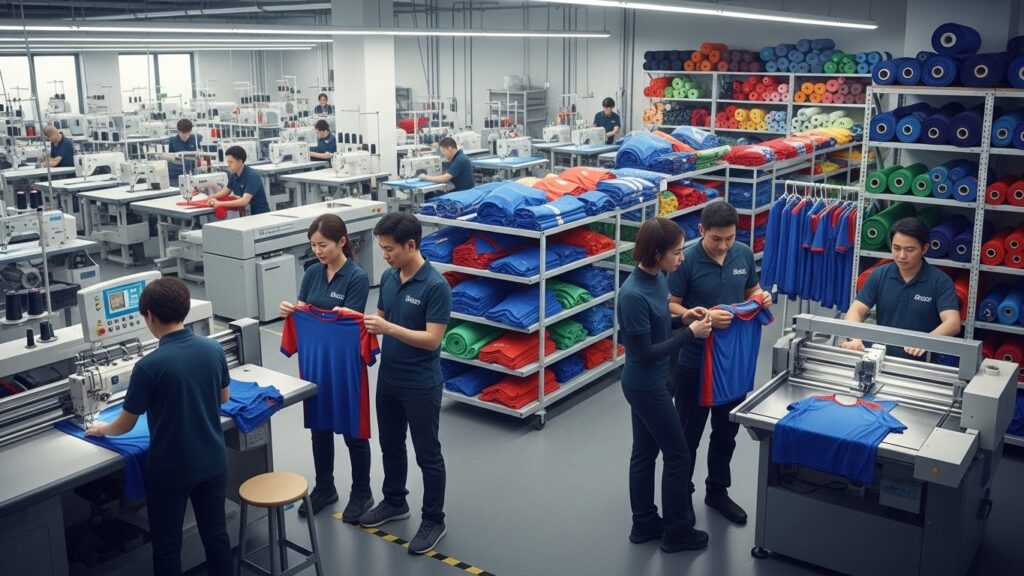
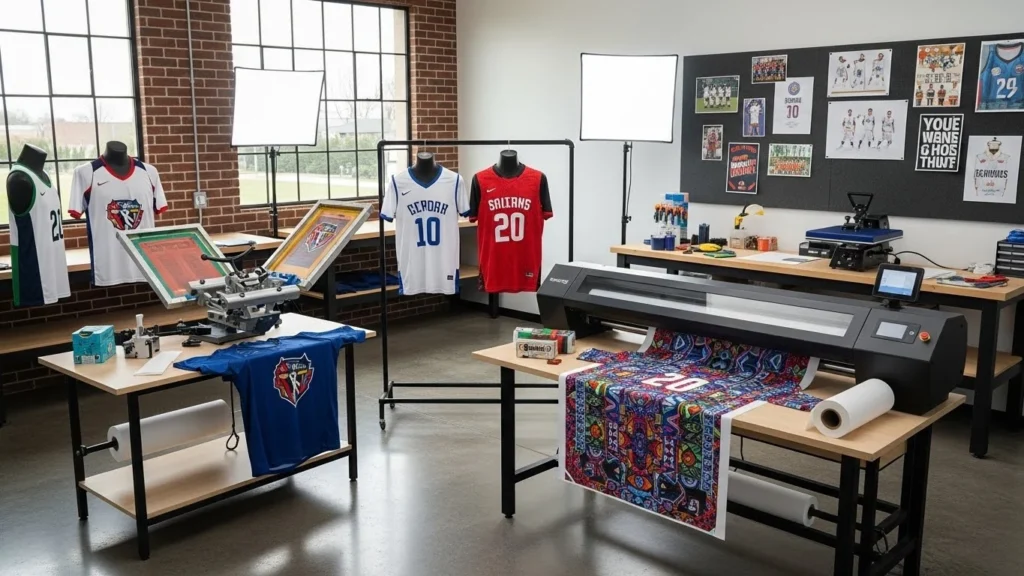
BUSHI Sports® supports custom wholesale activewear manufacturing and teamwear production through fabric comparison, sampling, sublimation, patterns, testing coordination, labels, packaging, and bulk manufacturing.
This guide explains seven commercial decisions that help buyers evaluate recycled polyester vs virgin polyester without relying on vague environmental or performance claims.
“Recycled content should be verified through traceability, while product quality should be verified through testing. One type of evidence cannot replace the other.”
Quick Answer
Recycled polyester can meet commercial sportswear requirements when yarn, knitting, finishing, and testing are controlled. Virgin polyester may provide wider availability, easier small-order sourcing, or a specialized property unavailable in a recycled option.
The practical recycled polyester vs virgin polyester answer is product-specific. Approve the exact fabric rather than treating recycled or virgin as a complete technical specification.
Recycled Polyester vs Virgin Polyester Comparison
| Requirement | Recycled polyester | Virgin polyester |
|---|---|---|
| Feedstock | Recovered PET from bottles, production waste, or textiles | Newly produced fossil-based PET |
| Performance | Can match demanding products when engineered and tested | Generally predictable with broad yarn availability |
| Quality variation | Depends on feedstock sorting, recycling route, and yarn control | Depends on polymer, spinning, knitting, and finishing quality |
| Certification | May require RCS, GRS, transaction certificates, or equivalent evidence | Recycled-content certification is not applicable |
| Colour | Some sources may create shade or purity limitations | Broad and predictable colour-development options |
| Sublimation | Usually suitable when the fabric is designed for sublimation | Widely used and well established |
| Cost | Can carry a premium due to feedstock, certification, and scale | Often economical and widely available |
| MOQ | Depends on certified yarn, fabric stock, and colour | Often easier for standard stock fabrics |
| Circularity | Depends on feedstock and end-of-life system | Uses new raw material and is not circular by itself |
| Main risk | Unsupported claims or inconsistent supply | Continued reliance on virgin fossil resources |
Decision 1: Understand the Feedstock Before Comparing Recycled Polyester vs Virgin Polyester
The first recycled polyester vs virgin polyester decision is the origin of the material. “Recycled polyester” can describe several inputs that have different commercial and circularity implications.
Bottle-to-Textile Polyester
Most recycled polyester currently comes from PET bottles. Textile Exchange reported that recycled polyester represented about 12% of polyester production in 2024 and that 98% of recycled polyester was still made from plastic bottles.
This route is established and widely available, but it transfers material from a bottle-recycling system into textiles rather than closing a textile-to-textile loop.
Pre-Consumer Textile or Industrial Waste
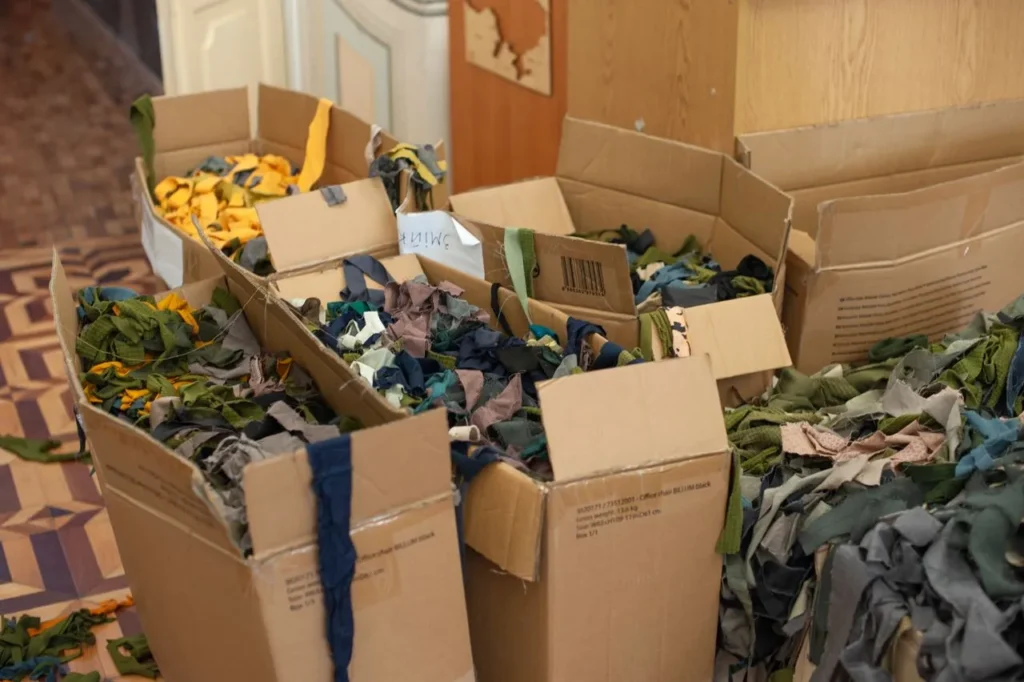
Pre-consumer material may include production scraps, yarn waste, rejected fabric, or other waste diverted before consumer use.
The source must meet the applicable recycled-content definition and should not simply be normal production material that would ordinarily have been reused within the same process.
Post-Consumer Textile Waste
Textile-to-textile recycled polyester uses discarded garments or textile products. It offers a more direct circular route for apparel, but sorting, elastane, dyes, coatings, trims, contamination, and fibre degradation make processing difficult.
Textile Exchange reported that less than 1% of the global fibre market in 2024 came from pre- and post-consumer recycled textiles. That figure shows why textile-to-textile sourcing remains more limited than bottle-based recycled polyester.
Mechanical and Chemical Recycling
Mechanical recycling cleans, sorts, shreds, melts, filters, and respins PET. Chemical recycling breaks polyester into chemical building blocks or intermediates before producing new PET.
Both routes depend on feedstock quality, technology, energy, chemicals, yield, and process control.
A recycled polyester vs virgin polyester brief should identify the feedstock, recycling route, recycled percentage, and chain-of-custody evidence.
Decision 2: Compare Performance Through the Finished Fabric
The second recycled polyester vs virgin polyester decision is performance. Fibre origin alone does not determine how a sportswear fabric behaves.
The final result depends on polymer quality, yarn construction, texturing, knit structure, GSM, thickness, finishing, elastane, dyeing, sublimation, surface treatment, and garment construction.
Research has produced fabric-specific results. A 2023 sportswear study found different aging effects across strength, abrasion, wetting, and moisture behaviour, while a 2024 study found faster drying but larger reductions in selected mechanical properties for one recycled sample.
Recycled polyester vs virgin polyester must therefore be tested at fabric level rather than judged by feedstock alone.
Strength and Abrasion
Sportswear fabric may require bursting strength, tensile or grab strength, abrasion resistance, pilling resistance, and seam durability. A recycled yarn can meet the requirement when fibre formation, polymer viscosity, spinning, and fabric construction are controlled.
High-abrasion applications include leggings, cycling shorts, inner thighs, goalkeeper wear, and equipment-contact zones. Test the actual fabric.
Moisture and Drying
Both recycled and virgin polyester are generally hydrophobic. Moisture performance depends heavily on yarn shape, capillary channels, fabric density, finish, and airflow.
When recycled polyester vs virgin polyester is tested for activewear, compare:
- Wetting time
- Moisture spreading
- One-way liquid transport
- Drying time
- Air permeability
- Water-vapour resistance
- Performance after laundering
Stretch and Recovery
Recycled polyester may be blended with elastane in the same way as virgin polyester. The blend should be tested for extension, recovery, growth, opacity, and heat stability.
The BUSHI Sports® guide on two-way stretch vs four-way stretch fabric explains why direction, recovery, and fabric power matter more than a simple stretch label.
Decision 3: Evaluate Colour, Sublimation, and Surface Quality
The third recycled polyester vs virgin polyester decision involves appearance. Polyester is widely used in custom sportswear because it supports disperse dyeing and sublimation printing.
High-quality recycled polyester can produce strong colours and detailed graphics. However, feedstock purity, polymer colour, filtration, yarn consistency, optical brighteners, and finishing can influence the final shade or white base.
White and Pale Colours in Recycled Polyester vs Virgin Polyester
White recycled polyester should be checked for:
- Base whiteness
- Yellow or grey cast
- Lot consistency
- Optical-brightener stability
- Show-through
- Appearance after heat pressing
Virgin polyester may provide an easier route to a very clean white in some specifications, but this is not guaranteed. Physical approval remains necessary.
Sublimation
Recycled polyester vs virgin polyester can both support sublimation when the exact fabric is compatible.
Approve:
- Colour saturation
- Fine-detail clarity
- Gradient smoothness
- Heat stability
- Width and length change
- Surface shine
- Colour migration
- Shade after washing
A digital mockup cannot prove fabric colour. Use physical strike-offs and a complete pre-production sample.
The sportswear sample approval checklist explains how colour references, artwork versions, fabrics, trims, and tests should be locked before bulk production.
Decision 4: Verify Recycled Content and Environmental Claims
Certification is one of the most important differences in recycled polyester vs virgin polyester. A supplier invoice that says “recycled” is not enough for a brand making consumer-facing claims.
ISO 14021:2026 establishes principles and requirements for self-declared environmental claims and provides guidance on commonly used environmental statements.
Textile Exchange’s Recycled Claim Standard and Global Recycled Standard provide third-party certification and chain-of-custody systems.
Textile Exchange states that both standards verify recycled material and its path through the supply chain. GRS also includes additional social, environmental, and chemical-processing requirements.
For GRS, a product can be handled as a business-to-business certified product from at least 20% recycled content, while consumer-facing GRS labelling requires at least 50%, subject to the complete standard and claims policy.
Documents Buyers May Need
Depending on the programme, request:
- Scope certificates
- Transaction certificates
- Supplier invoices
- Composition records
- Purchase and production lot references
- Chain-of-custody documents
- Approved claims and logo files
- Certification-body details
A certificate for one supplier does not automatically certify every product made in that factory. The correct material, organization, transaction, and claim must be covered.
Avoid Unsupported Language
Do not assume that recycled polyester automatically means:
- Zero environmental impact
- Microplastic free
- Biodegradable
- Infinitely recyclable
- Carbon neutral
- Made from ocean plastic
- Textile-to-textile recycled
A strong recycled polyester vs virgin polyester product page should name the verified recycled percentage, source category where known, certification, and limits of the claim.
Decision 5: Examine Microfiber Shedding and Product Life
The fifth recycled polyester vs virgin polyester decision concerns fibre release and durability. Both are synthetic polyester and both can release microfibres during manufacturing, wearing, abrasion, washing, and drying.
Recycled content does not automatically prove lower microfiber shedding. Fibre release depends on:
- Filament or staple yarn
- Knit structure
- Brushing or sanding
- Abrasion
- Surface damage
- Cutting and sewing
- Washing conditions
- Product age
BUSHI Sports® provides a detailed guide to microfiber shedding in polyester sportswear, including ISO 4484 and AATCC testing approaches.
Longevity in Recycled Polyester vs Virgin Polyester
A garment that remains wearable for more seasons can reduce replacement demand, but longevity should be measured through abrasion, strength, recovery, dimensional change, colourfastness, print durability, seams, and surface appearance.
When recycled polyester vs virgin polyester samples are compared, use the same GSM, construction, finish, test conditions, and garment pattern. Otherwise, the result may reflect different fabrics rather than recycled content.
Decision 6: Compare Manufacturing Cost and MOQ
The sixth recycled polyester vs virgin polyester decision is cost. Recycled polyester is not automatically cheaper because its feedstock began as waste.
Cost can increase through:
- Collection and sorting
- Washing and contamination removal
- Recycling and filtration
- Polymer-quality adjustment
- Certified chain of custody
- Transaction-certificate administration
- Smaller yarn or fabric runs
- Special colour development
- Testing
- Separate inventory and traceability
Virgin polyester often benefits from large-scale production, broad stock availability, established colour programmes, and predictable yarn supply. This can make it less expensive for basic or smaller orders.
MOQ Considerations in Recycled Polyester vs Virgin Polyester
A stock recycled polyester fabric may support a manageable MOQ. A custom recycled yarn, special GSM, custom colour, textile-to-textile input, or certified blend may require a higher minimum.
Recycled polyester vs virgin polyester quotation comparisons should use the same:
- Fabric structure
- GSM
- Yarn quality
- Finishing
- Colour
- Testing
- Certification
- Packaging
- Order quantity
A lower quote may exclude certification, transaction documentation, testing, or the exact recycled percentage requested.
BUSHI Sports® explains broader commercial planning in its sportswear manufacturing cost breakdown and MOQ guide.
Decision 7: Choose by Product and Brand Strategy
The final recycled polyester vs virgin polyester decision should combine technical performance, verified sourcing, customer expectations, price, and long-term product strategy.
| Product | Practical sourcing direction | Main consideration |
| Sublimated team jersey | Either, after print and performance approval | Colour, weight, supply consistency |
| Running T-shirt | Recycled option can be suitable | Drying, airflow, softness |
| Training shorts | Either | Strength, movement, price |
| Leggings | Recycled polyester-elastane or virgin blend | Recovery, opacity, abrasion |
| Sports bra | Either engineered blend | Support, comfort, wash durability |
| Tracksuit | Either | Shape, colour, surface durability |
| Replica jersey | Either | Hand feel, colour consistency, reorder supply |
| Premium sustainability range | Certified recycled polyester | Traceability and verified claims |
| Very small custom programme | Stock virgin or recycled fabric | Availability and MOQ |
| Specialized technical fabric | Best tested option | Exact performance requirement |
Practical Verdict
Recycled polyester can be preferred when a certified fabric meets the required performance, appearance, cost, and supply targets.
Virgin material may remain practical when the alternative is unavailable, has an unrealistic MOQ, misses a technical target, or lacks traceability.
The strongest recycled polyester vs virgin polyester strategy applies the same technical approval standard to both options.
Recycled Polyester vs Virgin Polyester Testing Checklist
| Property | What to compare | Why it matters |
| Fibre identity and content | Laboratory or certified documentation | Confirms composition |
| Recycled-content traceability | RCS, GRS, or required chain of custody | Supports the claim |
| GSM and thickness | Same conditioning and method | Controls weight and hand feel |
| Strength | Bursting, tensile, or garment-relevant method | Protects durability |
| Abrasion and pilling | Recognized comparative methods | Protects surface appearance |
| Moisture management | Wetting, spreading, transport, and drying | Supports activewear comfort |
| Air and vapour performance | Relevant standard methods | Supports heat management |
| Stretch and recovery | Both directions and after washing | Protects fit |
| Dimensional change | Approved wash procedure | Controls sizing |
| Colourfastness | Washing, rubbing, and perspiration | Protects colour |
| Sublimation | Strike-off, heat, and wash trial | Confirms graphic quality |
| Microfiber release | Same ISO or AATCC protocol | Enables valid comparison |
Supplier Questions
Use these recycled polyester vs virgin polyester questions before approving a fabric:
- What is the recycled percentage?
- Is the source post-consumer, pre-consumer, bottle-based, or textile-based?
- Is the recycling route mechanical or chemical?
- Which certification applies?
- Can scope and transaction certificates be provided?
- Is virgin polymer blended into the yarn?
- What performance differences exist between the options?
- Are whiteness and colour consistent between lots?
- What MOQ applies per colour?
- Will the approved yarn and fabric code remain unchanged?
- What happens if certified material becomes unavailable?
- Which claims can legally and contractually be used?
Common Buying Mistakes
Treating Recycled as a Performance Specification
Recycled identifies material origin. It does not define GSM, strength, stretch, moisture performance, or durability.
Treating Certification as Product Testing
Certification verifies recycled content and chain of custody within its scope. It does not prove that a jersey will pass abrasion or fit requirements.
Comparing Different Fabrics
A lightweight recycled mesh and a heavy virgin interlock cannot isolate the effect of feedstock.
Ignoring the Source
Bottle-to-textile and textile-to-textile inputs support different circularity stories.
Claiming More Than the Evidence Supports
Environmental wording should remain within the certification, recycled percentage, and verified supply chain.
Why Work With BUSHI Sports®?
BUSHI Sports® supports sportswear brands, clubs, gyms, academies, retailers, distributors, and private label buyers with:
- Recycled and virgin polyester fabric comparison
- Activewear and teamwear manufacturing
- Jerseys, running tops, shorts, leggings, and tracksuits
- Sublimation and custom branding
- Men’s, women’s, youth, and unisex patterns
- Size sets and pre-production samples
- Certification-document coordination
- Testing coordination
- Private labels and packaging
- Bulk quality inspection
- International order management
A complete recycled polyester vs virgin polyester brief should identify the product, recycled percentage, feedstock preference, certification, GSM, performance tests, colour, artwork, sizes, quantity, price target, and delivery date.
Frequently Asked Questions
What is the main difference in recycled polyester vs virgin polyester?
The main difference is feedstock. Recycled polyester uses recovered PET material, while virgin polyester uses newly produced fossil-based raw materials. Finished performance still depends on yarn and fabric engineering.
Is recycled polyester lower quality?
Not automatically. High-quality recycled polyester can meet commercial sportswear requirements. Buyers should test strength, abrasion, moisture behaviour, stretch, colour, and wash durability for the exact fabric.
Is recycled polyester more expensive?
It can be. Collection, sorting, processing, certification, traceability, scale, and custom colour requirements may increase cost. Stock recycled fabrics may reduce that difference.
Can recycled polyester be sublimated?
Yes. Many recycled polyester fabrics can be sublimated. The exact material should be tested for colour, heat stability, dimensions, print clarity, and washing.
Does recycled polyester shed fewer microfibres?
Not necessarily. Shedding depends on yarn, fabric structure, finishing, abrasion, manufacturing, and laundering rather than recycled content alone.
What do GRS and RCS verify?
They provide third-party certification for recycled material and chain of custody. GRS also contains additional social, environmental, and chemical-processing requirements.
Is bottle-based recycled polyester textile-to-textile recycling?
No. It uses PET bottles as feedstock. Textile-to-textile recycling uses textile waste to produce new textile material.
Which option is better for sportswear?
The better option is the fabric that meets performance, quality, price, supply, and claim requirements. A certified recycled fabric is attractive when it passes the same technical controls as the virgin option.
Conclusion
Recycled polyester vs virgin polyester should be evaluated through both material origin and finished-product performance.
Recycled polyester can reduce demand for newly produced fossil-based feedstock, but buyers must identify its source, recycling route, percentage, and evidence.
Virgin polyester often provides broad availability, stable supply, and competitive pricing, but it relies on new fossil-based raw material. Neither origin alone proves performance.
Brands should compare exact fabrics for strength, abrasion, moisture management, stretch, opacity, colour, sublimation, washing, microfiber release, cost, and MOQ. Recycled claims should be supported by appropriate certification and chain-of-custody documents.
BUSHI Sports® supports recycled polyester vs virgin polyester development through fabric comparison, samples, patterns, sublimation, certification-document coordination, testing, labels, packaging, quality inspection, and international bulk manufacturing.
To discuss a custom sportswear project, email info@bushisports.com, message BUSHI Sports® on WhatsApp at +92 348 4018 578, or submit requirements through the contact page.