Microfiber shedding in polyester sportswear has become an important product-development issue for activewear brands, teamwear companies, retailers, clubs, and private label buyers. Polyester remains valuable in performance clothing because it can be lightweight, durable, quick-drying, stretch-compatible, colourfast, and suitable for sublimation. Those benefits do not remove the fact that small fibre fragments can be released during manufacturing, wearing, abrasion, washing, and drying.
The correct response is not to treat every polyester garment as identical or to claim that one fibre label automatically creates a low-shedding product. Research shows wide variation between fabrics and garments. Construction, yarn type, mechanical finishing, thickness, surface hairiness, abrasion, washing conditions, and previous production damage can all influence microfiber shedding in polyester sportswear.
A 2021 study of 37 consumer textiles found an exceptionally wide difference between low- and high-shedding products. Mechanically treated polyester samples, including fleece and jersey structures, released substantially more material on average than some smoother filament constructions. The study also found that natural textiles shed fibres, which is why “microfiber” and “microplastic” should not be used as automatic synonyms. A microfiber describes a small fibre fragment; it becomes a microplastic fibre when the fragment is made from a synthetic polymer such as polyester.
The European Environment Agency reported in 2025 that textiles were estimated to be the fourth-largest source of unintentional microplastic release into the European environment in 2019, although estimates remain broad and measurement methods continue to develop. This uncertainty makes standardized testing and honest product communication more important, not less.
Microfiber shedding in polyester sportswear should therefore be managed through source control. Brands should compare fabrics before approval, reduce unnecessary surface damage, test the finished garment, avoid unsupported environmental claims, provide suitable care guidance, and preserve the approved specification during bulk production.
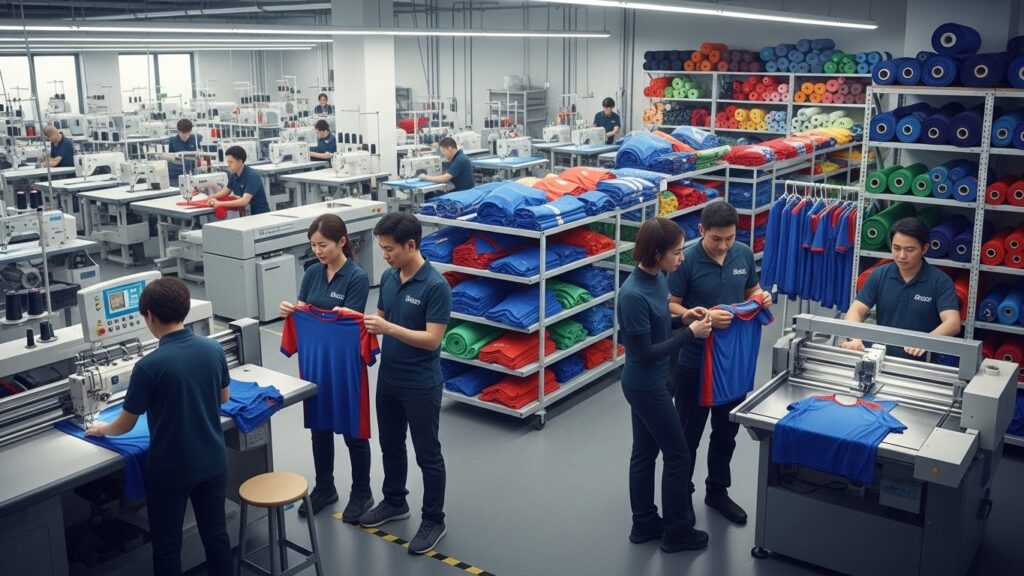
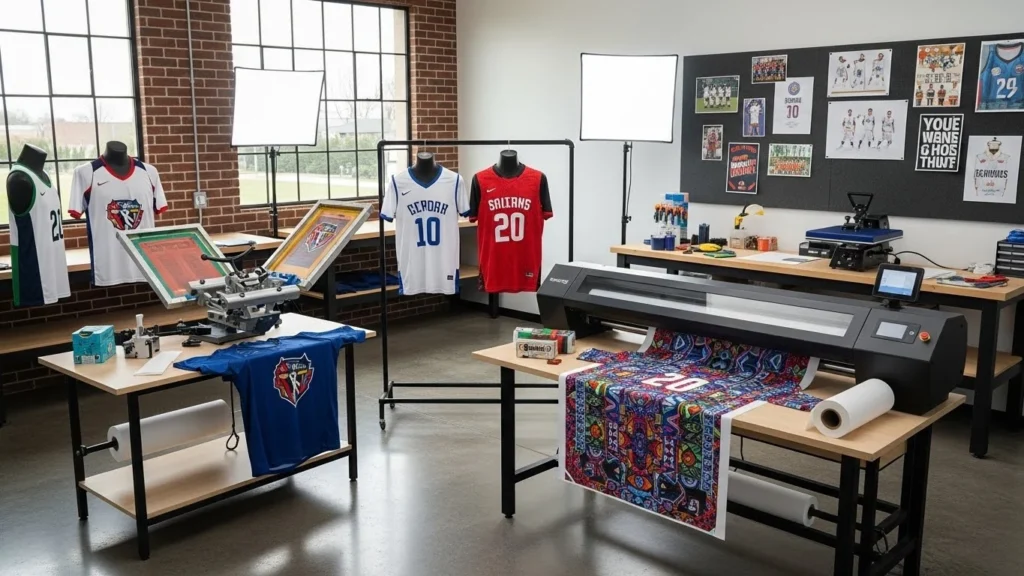
BUSHI Sports® provides custom wholesale activewear manufacturing and custom teamwear production for sports brands, clubs, academies, schools, universities, gyms, retailers, wholesalers, distributors, and private label buyers. Product development can include fabric selection, sublimation, pattern development, sampling, size sets, labels, packaging, testing coordination, and bulk quality control.
This guide explains eight practical manufacturing controls for microfiber shedding in polyester sportswear. It also clarifies what current test methods can and cannot prove.
“A low-shedding claim should come from comparative testing of the exact fabric or garment, not from the word polyester, recycled, premium, or sustainable.”
First, Use the Right Terminology
Confusion over terminology can weaken sourcing decisions and environmental claims.
| Term | Practical meaning | Important limitation |
|---|---|---|
| Microfiber | A small fibre fragment released from a textile | Can be natural, regenerated, or synthetic |
| Microplastic fibre | A small fibre fragment made from a plastic polymer | Requires material identification, not visual inspection alone |
| Fibre release | Material lost during testing, use, washing, drying, or abrasion | May include fibres, fibrils, particles, finishes, and non-fibrous fragments |
| Shedding rate | Quantity released under defined conditions | Results depend heavily on the method and specimen preparation |
| Low shedding | Comparative performance against an approved benchmark | Not a universal certification unless linked to a defined test and threshold |
| Biodegradable | Ability to break down under specified conditions | Does not mean instant or harmless disappearance in every environment |
The ISO 4484 series was created to improve comparability in this area. ISO 4484-1:2023 measures material loss from fabrics under controlled washing conditions. ISO 4484-2:2023 addresses qualitative and quantitative analysis of microplastics collected from textile-related matrices. ISO 4484-3:2023 measures collected material released from complete textile products through a domestic washing method.
AATCC also publishes TM212, Test Method for Fiber Fragment Release During Home Laundering, which provides a standardized route for filtering and quantifying released material.
These methods do not allow brands to compare results gathered through unrelated machines, filters, loads, temperatures, and reporting units as though they were interchangeable. Microfiber shedding in polyester sportswear should always be compared under one controlled protocol.
Control 1: Measure Microfiber Shedding in Polyester Sportswear
The first control for microfiber shedding in polyester sportswear is measurement before bulk approval.
A supplier may describe a fabric as compact, filament-based, anti-pilling, low lint, or environmentally improved. Those descriptions are useful only when supported by a material specification and a repeatable test result.
The buyer should decide whether testing will be performed on:
- Fabric before cutting
- Finished garments
- New samples
- Prewashed samples
- Samples after repeated laundering
- Dry abrasion specimens
- Wet laundering specimens
- Multiple colours
- Multiple production lots
Fabric Testing and Garment Testing Answer Different Questions
Fabric testing helps compare candidate materials under controlled conditions. It is useful during sourcing because the design team can reject a high-shedding fabric before pattern development and printing.
Garment testing includes the effects of:
- Cutting edges
- Sewing operations
- Brushing or sanding
- Heat-transfer application
- Sublimation heat
- Labels
- Reinforcement
- Washing after production
- Loose process fibres trapped inside the garment
The final product can release more or less material than the base fabric depending on how it was manufactured.
Define the Reporting Unit
Results may be reported as:
- Mass released per kilogram of textile
- Number of fibres per garment
- Number of fibres per kilogram
- Mass per wash
- Fibre length distribution
- Polymer composition
- Percentage material loss
Brands should not compare one supplier’s fibre count with another supplier’s released mass unless a qualified laboratory explains the relationship.
Create an Internal Benchmark
A practical B2B programme can begin with three fabric categories:
- Existing approved low-shedding reference
- Candidate fabric
- Known high-shedding comparison
The same method, laboratory, specimen mass, detergent, temperature, wash programme, filter, conditioning, and reporting unit should be used.
Microfiber shedding in polyester sportswear should then be treated as one approval criterion alongside weight, moisture management, air permeability, stretch, recovery, opacity, snagging, pilling, colourfastness, and cost.
Control 2: Engineer Fabric Construction for Microfiber Shedding in Polyester Sportswear
The second control is the textile structure itself. Microfiber shedding in polyester sportswear begins with how the yarn and fabric hold fibres during stress.
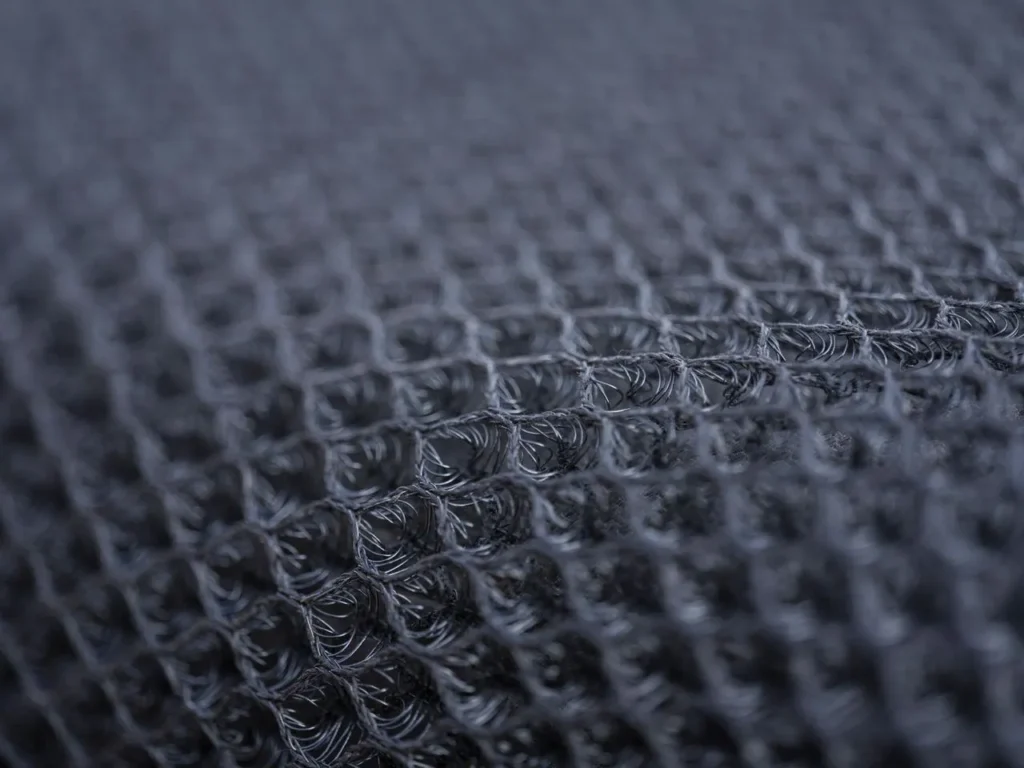
Polyester is a fibre family, not one fabric. A smooth circular-knit jersey made from continuous-filament yarn is different from a brushed fleece made from staple or mechanically raised yarn. Even two fabrics with the same fibre content and GSM can release very different amounts.
Research on microfiber shedding in polyester sportswear and other apparel repeatedly identifies construction-related factors such as:
- Filament or staple yarn
- Yarn twist
- Yarn count
- Fibre length
- Fabric density
- Knit or woven structure
- Thickness
- Loop length
- Surface hairiness
- Mechanical finishing
- Abrasion history
Filament Versus Staple
Continuous-filament yarns contain long, continuous polymer filaments. Staple yarns are spun from shorter fibres and naturally contain more fibre ends. This does not mean every filament fabric will outperform every staple fabric, but exposed ends and weak fibre retention can increase release risk.
For lightweight sports jerseys, a compact filament construction may offer a useful balance of smoothness, printing, strength, and lower surface hairiness.
Fabric Density
A more stable construction can retain fibres better, but density must be balanced with breathability and moisture movement. A tightly constructed fabric may reduce mechanical fibre loss while becoming too warm for high-intensity activity.
BUSHI Sports® discusses this wider performance balance in sportswear manufacturing for extreme heat.
Thickness and Surface Area
A thicker garment contains more textile mass and may provide more material that can be released. However, thickness alone does not determine performance. One study found positive relationships between thickness and shedding for several nylon and polyester samples, but construction and surface treatment were also important.
Avoid Approval by Fibre Content Alone
A specification reading “100% recycled polyester, 150 GSM” does not define microfiber shedding in polyester sportswear. It leaves unanswered questions about yarn, knit structure, finishing, abrasion, and previous fibre damage.
The technical file should identify:
- Yarn type
- Filament or staple construction
- Fabric structure
- Machine gauge where relevant
- Finished GSM
- Thickness
- Surface finish
- Approved supplier code
- Shedding result under the selected method
Control 3: Reduce Surface-Driven Microfiber Shedding in Polyester Sportswear
The third control is surface engineering. Microfiber shedding in polyester sportswear often increases when finishing creates a hairier or more damaged surface.
Fleece, peach finishing, sueding, sanding, brushing, and raising create softness, warmth, or a premium hand feel by mechanically changing the textile surface. These processes also expose or break fibres. Studies comparing textile types have often found greater release from mechanically processed surfaces than from smoother unprocessed structures.
This matters because sportswear ranges frequently include:
- Brushed training tops
- Thermal base layers
- Fleece hoodies
- Tracksuits
- Winter leggings
- Warm-up jackets
- Soft-touch performance jerseys
Softness Has an Environmental and Durability Trade-Off
A heavily brushed inner surface may feel comfortable during sampling but can create more loose fibres, pilling, and abrasion during use. The buyer should specify the minimum surface treatment needed to achieve the intended feel.
Possible controls include:
- Reduce brushing intensity
- Reduce the number of raising passes
- Select stronger yarns
- Use compact constructions
- Remove loose process fibres before garment assembly
- Add controlled shearing and cleaning
- Test after finishing, not before
- Compare pilling and shedding together
Abrasion During Wearing Also Matters
Microfiber shedding in polyester sportswear does not occur only in washing machines. A 2020 study comparing polyester garments reported fibre release to air during simulated wear as well as release to water during laundering. Abrasion research has also shown that polyester textiles can form fibres, fibrils, and smaller fragments when surfaces are repeatedly rubbed.
High-abrasion zones in sportswear include:
- Underarms
- Inner thighs
- Backpack contact areas
- Waistbands
- Saddle contact zones
- Shoulder-pad areas
- Velcro contact points
- Rough gym equipment contact
Material placement should therefore reflect the sport. A soft brushed panel may be unsuitable beneath a backpack or in a high-friction compression zone.
Do Not Use Anti-Pilling as a Substitute for Shedding Data
Pilling and fibre release are related to surface damage, but they are not identical properties. A fabric can show limited visible pills while still releasing small fibres. A low pilling grade should not be presented as proof of low microfiber shedding in polyester sportswear.
Control 4: Control Assembly-Related Microfiber Shedding in Polyester Sportswear
The fourth control is garment assembly. Microfiber shedding in polyester sportswear can be influenced by every new cut edge and sewing operation.
Cutting creates thousands of new fibre ends around each pattern piece. Sewing needles, feed mechanisms, overlock knives, heat, and handling can create additional damage. Loose fragments can remain trapped inside the finished garment and appear during the first wash.
Cutting Method
Common methods include:
- Straight knife
- Band knife
- Rotary cutting
- Die cutting
- Laser cutting
- Ultrasonic cutting
No cutting method is automatically best for every fabric. Laser or ultrasonic cutting may seal some synthetic edges, but heat can change hand feel, colour, stretch, or seam behaviour. Conventional cutting can perform well when blades are sharp and cut parts are handled cleanly.
The factory should control:
- Blade sharpness
- Cutting speed
- Lay height
- Fabric relaxation
- Edge distortion
- Heat damage
- Loose-fibre removal
Sewing Control
Needle damage can occur when the needle size, point, speed, or thread is unsuitable. Signs include broken filaments, laddering, seam fuzz, and local weakness.
The sewing specification should define:
- Needle system and size
- Needle point
- Thread type
- Stitch density
- Seam type
- Machine speed
- Differential feed
- Seam allowance
Clean the Garment Before Packing
Air blowing alone can move loose fibres around the production area. A controlled finishing process may include vacuum extraction, garment turning, trimming, internal inspection, and washing where appropriate.
A factory should also manage production waste and process wastewater. A 2023 factory study found microfiber emissions at several manufacturing stages, demonstrating that source control is needed before the garment reaches the consumer.
Microfiber shedding in polyester sportswear is therefore partly a factory housekeeping and process-control issue, not only a consumer laundry issue.
Control 5: Reduce Laundry-Related Microfiber Shedding in Polyester Sportswear
The fifth control is care performance. Microfiber shedding in polyester sportswear continues during consumer use, so care instructions form part of product design.
Laundry conditions influence how much material is released. Studies have examined temperature, cycle time, water volume, agitation, detergent, load size, and repeated washing. Results differ by fabric and method, but several practical patterns are useful.
A study comparing a 25°C, 30-minute cycle with a 40°C, 85-minute cycle found significantly greater microfiber release in the warmer, longer cycle. Other research has shown that higher water volume can increase release by allowing greater movement and mechanical stress.
Product Care Guidance
Where compatible with hygiene, performance, and the tested care programme, brands can advise consumers to:
- Wash only when necessary
- Use the approved lower temperature
- Select a shorter or gentler cycle
- Wash full but not overloaded loads
- Avoid unnecessary prewashing
- Turn garments inside out when decoration requires it
- Close zippers and hook-and-loop tabs
- Keep rough items separate from lightweight jerseys
- Air dry where practical
- Follow the exact care label
Care instructions must be based on the garment’s odour, soil, print, adhesive, and hygiene requirements. A universal “cold wash only” statement should not be copied without testing.
Laundry Filters and Capture Devices
External filters, washing-machine filters, and laundry bags can capture a portion of released fibres. Results vary by device, fibre type, installation, and maintenance. A 2021 consumer-textile study reported high capture for some polyester fibres with tested external lint traps, but performance was lower for other fibres and devices.
Capture devices are a downstream control. They do not replace better textile design.
First-Wash Claims Need Caution
Many textiles release more loose production fibres during early washes, and some studies show a reduction over repeated cycles. Other work confirms that release continues later in garment life. A brand should not claim that one prewash eliminates the problem.
Microfiber shedding in polyester sportswear should be assessed across several cycles when the product is intended for repeated training or competition.
Control 6: Test Recycled Content for Microfiber Shedding in Polyester Sportswear
The sixth control is responsible recycled-content evaluation. Microfiber shedding in polyester sportswear must be measured separately from recycled-content verification.
Recycled polyester can reduce demand for virgin fossil feedstock and can support circular material strategies. It does not automatically guarantee lower microfiber shedding in polyester sportswear.
Research comparing recycled and virgin polyester has produced results that depend on yarn quality, recycling history, fibre damage, fabric structure, and finishing. Recent work also suggests that repeated mechanical recycling can increase susceptibility to fragmentation in some textiles.
The correct B2B approach is to test the actual recycled fabric against the actual virgin alternative.
Separate the Claims
A product may have:
- Verified recycled content
- Lower shedding under a defined method
- Lower product mass
- Longer expected life
- Recyclable design
- Reduced packaging
These are separate claims. One does not prove the others.
A recycled-content certificate does not prove low microfiber shedding in polyester sportswear. A low-shedding laboratory result does not prove the complete product has a lower life-cycle impact.
Ask Better Supplier Questions
Buyers should ask:
- What is the recycled feedstock?
- Is the yarn filament or staple?
- How many recycling cycles has the polymer or fibre undergone?
- Is recycled content independently verified?
- Has the exact finished fabric been tested for fibre release?
- Was it compared with a virgin reference under the same method?
- Does the fabric meet strength, pilling, snagging, and wash requirements?
Avoid Greenwashing Language
Risky descriptions include:
- Microplastic free
- Zero shedding
- Ocean safe
- Eco-friendly polyester
- Biodegradable polyester without defined conditions
- Sustainable because recycled
More defensible language includes:
- Contains independently verified recycled polyester
- Tested for material loss using the stated method
- Released less material than the named reference under identical conditions
- Designed with a compact filament construction
The evidence and test date should be retained in the product file.
Control 7: Validate Finished-Garment Microfiber Shedding in Polyester Sportswear
The seventh control is finished-product validation. Microfiber shedding in polyester sportswear should be checked after fabrics, trims, seams, and decorations become one garment.
Sportswear combines fabric with prints, elastane, thread, elastic, labels, mesh, transfers, and trims. Each component can influence microfiber shedding in polyester sportswear.
Test Representative Products
A useful test plan may include:
- Lightweight match jersey
- Durable replica jersey
- Training T-shirt
- Brushed winter top
- Compression garment
- Legging
- Tracksuit
- Fanwear product
The published BUSHI Sports® guide on match jerseys, replica jerseys, and fanwear explains why product tiers should not be treated as one construction. A lightweight elite jersey and a brushed supporter hoodie require different shedding expectations and controls.
Include Wear and Abrasion
Finished-product trials should inspect:
- Pilling
- Surface fuzz
- Snagging
- Seam damage
- Transfer edges
- Abrasion zones
- Fibre accumulation inside the garment
- Release after repeated washing
Colour and Finish Variations
Different colours may use different dyeing and finishing conditions. White, dark, neon, and printed fabrics should not automatically be assumed to perform identically.
Sublimation exposes polyester panels to heat and pressure. The base polymer is not normally melted during standard sublimation, but the overall finishing sequence may still influence fabric dimensions and trapped loose material. Test the final printed fabric where the graphic covers a large area.
Set an Approval Limit
A brand needs a decision rule, such as:
- Candidate must not exceed the approved reference
- Candidate must remain below an internal mass-loss limit
- No significant increase after production finishing
- No unapproved change between sample and bulk lot
The threshold must use one method and one reporting unit.
Control 8: Control Bulk Microfiber Shedding in Polyester Sportswear
The eighth control is repeatability. Microfiber shedding in polyester sportswear must remain within the approved range across production lots and reorders.
A successful sample does not guarantee that bulk microfiber shedding in polyester sportswear will remain controlled. Yarn lots, machine settings, brushing intensity, finishing, cutting, and cleaning can change between production runs.
The technical file should include:
- Fibre composition
- Recycled-content evidence where applicable
- Yarn description
- Fabric structure
- Finished weight and thickness
- Surface treatment
- Supplier and fabric code
- Approved colour
- Fibre-release test method
- Approved result or limit
- Pilling and snag requirements
- Cutting method
- Needle and seam specification
- Cleaning process
- Care label
- Packaging standard
- Pre-production sample
Incoming Fabric Inspection
Check:
- Supplier code
- Lot number
- GSM
- Width
- Surface hairiness
- Brushing level
- Pilling
- Shade
- Visible contamination
- Test certificate
In-Line Inspection
Inspect high-risk areas for:
- Needle damage
- Rough overlock cutting
- Frayed edges
- Excessive handling
- Velcro contact
- Untrimmed thread and fibre debris
- Surface abrasion
Final Inspection
The final garment should be:
- Internally clean
- Free from loose visible fibre clusters
- Correctly labelled
- Packed dry
- Matched to the approved tier
- Traceable to the approved fabric lot
BUSHI Sports® provides a wider framework in how quality control works in sportswear manufacturing.
Manufacturing Workflow for Microfiber Shedding in Polyester Sportswear
1. Product and Environmental Brief
Define the sport, garment, climate, performance target, expected wash frequency, recycled-content requirement, target price, and environmental claims.
2. Fabric Shortlisting
Compare fibre content, yarn, structure, surface finish, strength, pilling, moisture management, and shedding data.
3. Baseline Testing
Test candidate fabrics under ISO 4484, AATCC TM212, or another approved laboratory method.
4. Pattern and Construction Development
Reduce unnecessary seams, rough trims, and high-abrasion placements while preserving athletic performance.
5. Prototype Production
Use the intended cutting, printing, sewing, and finishing process.
6. Finished-Garment Testing
Compare the prototype with the fabric baseline and approved reference.
7. Wear and Wash Trials
Assess surface damage and release across repeated use and laundering.
8. Pre-Production Approval
Lock fabric, surface finish, construction, care label, test threshold, and packaging.
9. Bulk Lot Verification
Retest when the fabric supplier, yarn, finish, colour, or production method changes.
10. Traceability and Reorder Control
Archive test reports, swatches, lot numbers, specifications, and approved samples.
Quality-Control Table for Microfiber Shedding in Polyester Sportswear
| Inspection area | What to verify | Common failure |
| Yarn and fabric | Approved code, structure, weight, finish | Substitution with hairier or weaker fabric |
| Surface treatment | Brushing, sanding, shearing | Excess loose fibres and pilling |
| Cutting | Sharpness, clean edges, heat effect | Frayed or damaged fibre ends |
| Sewing | Needle, thread, seam, speed | Filament breakage and seam fuzz |
| Abrasion zones | Material placement and reinforcement | Early surface fragmentation |
| Printing | Correct final fabric and process | Untested production change |
| Cleaning | Internal loose-fibre removal | Process debris released in first wash |
| Care label | Tested temperature and cycle | Generic or unsupported guidance |
| Test result | Correct method and reporting unit | Comparing incompatible data |
| Traceability | Fabric lot and production batch | No route to investigate complaints |
Cost and MOQ Implications
Reducing microfiber shedding in polyester sportswear can influence development cost, but the largest expense is often poor quality rather than testing.
Cost factors include:
- Compact or specialized yarns
- Custom fabric structures
- Reduced mechanical finishing
- Laboratory testing
- Multiple wash cycles
- Finished-garment testing
- Separate colour testing
- Improved extraction and cleaning
- Traceability
- Smaller approved supplier pool
A standard stock fabric may support a lower MOQ than a custom low-shedding construction. Brands can reduce development risk by starting with an existing tested fabric and limiting colours, finishes, and product tiers.
The quotation should separate fabric, garment production, testing, packaging, and freight. BUSHI Sports® explains wider commercial planning through its sportswear manufacturing cost breakdown and MOQ guide.
Questions About Microfiber Shedding in Polyester Sportswear
- Which test method is used for fibre release?
- Is the result for fabric or a finished garment?
- How many wash cycles were tested?
- Which temperature, detergent, load, and filter were used?
- Is the yarn filament or staple?
- Is the fabric brushed, raised, sanded, or peached?
- Can the factory control brushing intensity by lot?
- How are cutting and sewing fibres removed?
- Are recycled and virgin options compared under identical conditions?
- Will a material change require retesting?
- Can test reports and lot records be supplied?
- How are environmental claims approved?
A capable supplier should explain uncertainty and trade-offs rather than promise zero shedding.
Common Microfiber Shedding in Polyester Sportswear Mistakes
Treating All Polyester as Equal
Polyester fabrics vary widely in yarn, density, finish, thickness, and surface damage.
Using Pilling Results as Proof
Pilling tests are useful but do not directly quantify microfiber shedding in polyester sportswear.
Approving the Fabric Before Finishing
Brushing, printing, cutting, and sewing can change release behaviour.
Assuming Recycled Means Lower Shedding
The actual recycled yarn and fabric must be tested.
Testing Only the First Wash
Release can decline after early washes but continues over the garment’s life.
Ignoring Wear Abrasion
Fibres can enter air and dust through everyday use, not only wastewater.
Making Zero-Shedding Claims
Current textile products and methods do not support absolute claims without exceptional evidence.
Changing Fabric in Bulk
A visually similar substitute may have a very different surface and shedding result.
Why Work With BUSHI Sports® on Microfiber Shedding in Polyester Sportswear?
BUSHI Sports® is a custom sportswear manufacturer based in Sialkot, Pakistan. The company supports sports brands, clubs, academies, gyms, schools, universities, retailers, wholesalers, distributors, and private label buyers through OEM, ODM, sampling, customization, and bulk manufacturing.
For microfiber shedding in polyester sportswear projects, BUSHI Sports® can support:
- Polyester fabric comparison
- Activewear and teamwear development
- Match, replica, training, and fanwear tiers
- Sublimated jerseys
- Running and gym apparel
- Compression products
- Leggings and shorts
- Tracksuits and jackets
- Men’s, women’s, and youth sizing
- Sample development
- Test coordination
- Private labels
- Quality inspection
- Custom packaging
- International order coordination
BUSHI Sports® can help translate an approved material and testing brief into repeatable production. Independent laboratories should be used when a buyer requires standardized fibre-release results or regulated environmental claims.
Start a Lower-Shedding Sportswear Project
Brands developing microfiber shedding in polyester sportswear controls can contact BUSHI Sports® to discuss fabric construction, surface finishing, sampling, testing, size ranges, branding, minimum order quantities, packaging, production, and delivery.
- Email: info@bushisports.com
- WhatsApp: +92 348 4018 578
- Project inquiry: Contact BUSHI Sports®
Share the garment type, sport, fabric composition, recycled-content requirement, target shedding method, wash conditions, performance needs, quantities, colours, target price, and delivery date. A precise brief allows the manufacturing team to compare materials without making unsupported environmental promises.
Frequently Asked Questions About Microfiber Shedding in Polyester Sportswear
What causes microfiber shedding in polyester sportswear?
Microfiber shedding in polyester sportswear can be influenced by yarn type, fabric construction, thickness, brushing, surface hairiness, abrasion, cutting, sewing, washing temperature, cycle duration, water volume, and garment use.
Is every microfiber a microplastic?
No. Natural and regenerated textiles can release microfibers. A released fibre is a microplastic fibre when it is made from a synthetic polymer such as polyester, nylon, or acrylic.
Does recycled polyester shed more than virgin polyester?
Not in every case. Results depend on recycling history, yarn quality, fibre damage, construction, and finishing. The exact recycled and virgin fabrics should be tested under the same method.
Does fleece shed more than smooth jersey?
Mechanically raised and brushed surfaces often show higher release in comparative studies, but the result depends on yarn, structure, finishing, and test conditions.
Which standards measure textile fibre release?
ISO 4484-1, ISO 4484-2, ISO 4484-3, and AATCC TM212 address different aspects of material loss, microplastic analysis, and fibre-fragment release from textiles.
Can a brand claim zero shedding?
An absolute zero-shedding claim is difficult to support because textiles can lose material during manufacturing, wearing, abrasion, washing, and drying. Comparative claims linked to a defined method are more defensible.
Do colder washes reduce shedding?
Some studies found lower fibre release in shorter, colder cycles than in longer, warmer cycles. The correct care guidance must still account for hygiene, soil removal, garment construction, and tested performance.
Can a washing-machine filter solve the problem?
Filters can capture part of the released material, but performance varies. Source reduction through textile and garment design remains important.
Does sublimation increase shedding?
Sublimation itself is not automatically a high-shedding process. The finished printed fabric should be tested because heat, handling, fabric structure, and earlier finishing may influence the complete result.
How can a buyer compare suppliers?
Require the same test method, specimen type, wash conditions, reporting unit, number of cycles, and laboratory approach. Do not compare unrelated fibre counts and mass-loss results.
Should finished garments be tested?
Yes. Finished-garment testing captures effects from cutting, sewing, printing, labels, seams, surface treatment, and loose production fibres that fabric-only testing may miss.
What affects the MOQ?
MOQ can be influenced by custom yarn, fabric knitting, colour, surface finish, laboratory testing, number of product tiers, size range, labels, and packaging.
Conclusion
Microfiber shedding in polyester sportswear is a measurable manufacturing and product-quality issue, not a reason to treat all polyester clothing as identical.
The strongest control begins with the textile. Brands should compare yarn type, fabric construction, density, thickness, and surface finishing before approving a material. Brushing, raising, sanding, and heavy abrasion require particular attention because they can increase loose or exposed fibres.
The garment process also matters. Cutting, sewing, printing, handling, cleaning, and packaging can add damage or leave process fibres inside the product. Finished-garment testing is therefore essential when a brand intends to make comparative shedding claims.
Care conditions influence release as well. Shorter and colder washing can reduce fibre liberation for some garments, while filters may capture part of what is released. These downstream measures should support—not replace—better source design.
Brands should avoid assuming that recycled polyester automatically sheds less, that anti-pilling proves low release, or that one successful fabric test covers every colour and production lot. The approved method, result, material, finish, and batch controls should remain linked in one technical file.
BUSHI Sports® supports microfiber shedding in polyester sportswear projects through fabric comparison, activewear and teamwear development, sampling, standardized-test coordination, size-set approval, private labeling, bulk quality inspection, packaging, and international production planning.
To discuss a custom product, email info@bushisports.com, message BUSHI Sports® on WhatsApp at +92 348 4018 578, or submit the technical brief through the contact page.