Why Vector Artwork Is Important for Sportswear Printing
Production-ready vector designs plays a critical role in how logos, numbers, and graphics appear on finished garments. Unlike low-resolution images, vector files scale cleanly to any size without losing sharpness. As a result, brands that use vector artwork for sportswear printing achieve crisp prints, accurate colors, and consistent branding across jerseys, hoodies, and training apparel.
Moreover, understanding why vector artwork is important for sportswear printing helps brands avoid common production issues such as blurry logos, pixelated sponsor marks, and uneven print edges. From design preparation to bulk manufacturing, vector files support smoother workflows and higher print quality. Therefore, this guide explains how vector artwork improves printing results and how brands can use it effectively throughout sportswear production.
What Is Vector Artwork in Sportswear Printing?
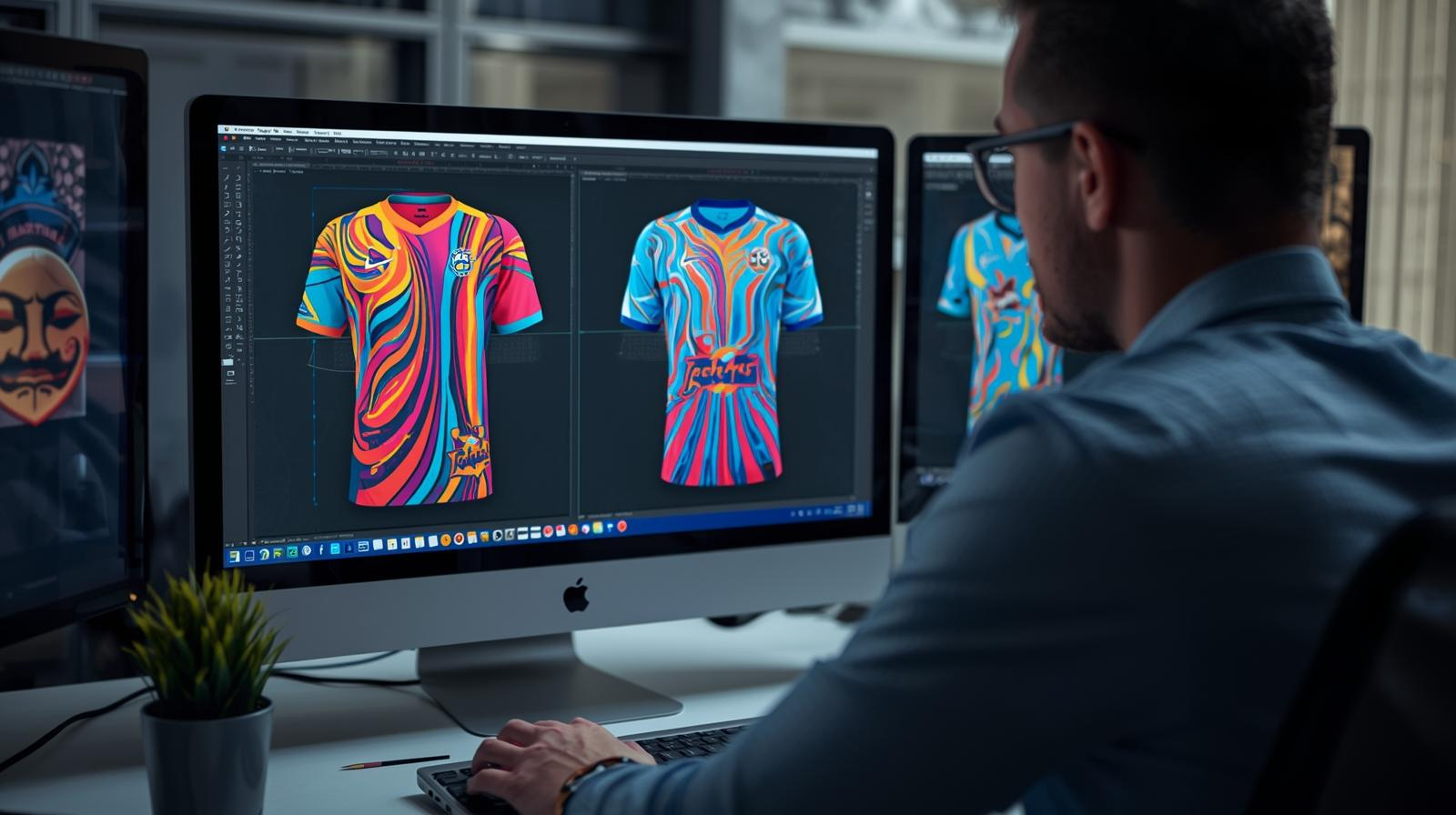
Vector artwork refers to graphics created using mathematical paths rather than pixels. Because of this structure, production-ready vector designs can scale infinitely without losing clarity. Designers typically create vectors using professional design software, which makes them ideal for logos, text, patterns, and line-based graphics.
In sportswear manufacturing, vector files support:
-
Sharp logo reproduction
-
Clean typography on jerseys
-
Accurate sponsor branding
-
Consistent scaling across sizes
-
Smooth integration with printing machines
As a result, most professional manufacturers request vector artwork for sportswear printing to ensure production-ready files.
Why Vector Artwork Is Important for Sportswear Printing Quality
Print quality directly affects how customers perceive your brand. Therefore, production-ready vector designs helps maintain clean edges and consistent details across all garments.
How Vector Artwork Prevents Blurry Sportswear Prints
Raster images often blur when resized for large prints. In contrast, scalable artwork for jerseys retains sharp edges regardless of scale. This ensures that:
-
Team logos remain crisp
-
Player numbers stay readable
-
Fine line details do not break
-
Sponsor marks look professional
As a result, vector files protect brand presentation on both small badges and large back prints.
How Vector Files Improve Color Accuracy
Vector artwork separates colors into clean layers. Consequently, printers can control ink application more precisely. This improves color consistency across production runs and reduces color bleeding during printing.
Brands often align design workflows with professional manufacturing processes used by custom sportswear producers like Bushi Sports.
Vector Artwork vs Raster Images in Sportswear Printing
Understanding the difference between vector and raster formats helps brands avoid costly mistakes.
Key Differences Between Vector and Raster Files
Vector files:
-
Scale without losing quality
-
Maintain crisp edges
-
Work well with printing machines
-
Support color separation
Raster files:
-
Lose quality when enlarged
-
Pixelate on large prints
-
Require resolution adjustments
-
Often cause print distortion
Therefore, it remains the preferred format for professional production.
How Vector Artwork Is Used in Sportswear Printing Methods
Different printing techniques rely on vector artwork for accuracy and consistency.
Vector Artwork for Screen Printing
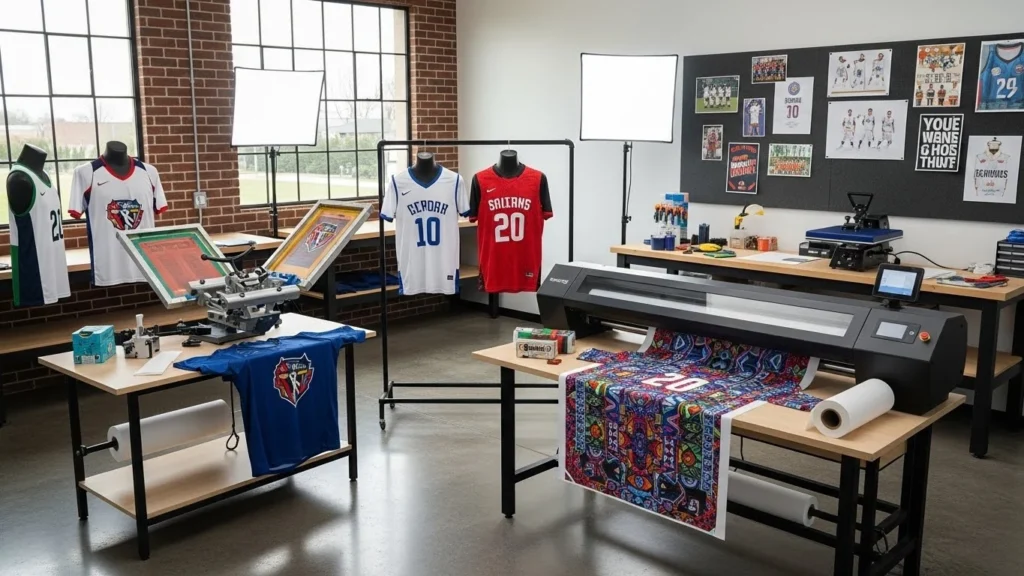
Screen printing requires precise color separations. Vector graphics for apparel printing supports this by allowing printers to separate colors into individual layers for each screen.
Vector Artwork for Heat Transfer and Vinyl Printing
Heat transfer vinyl relies on clean outlines. Therefore, vector files guide cutting machines with exact paths. This ensures smooth edges and accurate logo shapes.
Vector Artwork for Sublimation Printing
Although sublimation prints full-color designs, vector artwork helps define sharp logos and text within complex layouts. As a result, even detailed designs remain clear after transfer.
Industry resources from Textile World explain how digital printing workflows depend on accurate design files for consistent results.
Preparing Vector Artwork for Sportswear Production
Proper file preparation ensures smooth communication between brands and manufacturers.
What Makes Vector Artwork Production-Ready?
Production-ready vector artwork for sportswear printing includes:
-
Correct file formats (AI, EPS, PDF)
-
Outlined fonts
-
Expanded strokes
-
Defined color layers
-
Clear logo placements
Many brands review technical preparation standards with manufacturing partners during early product development, following workflows similar to those used by Bushi Sports.
Common File Preparation Mistakes to Avoid
Designers sometimes submit:
-
Low-resolution raster logos
-
Unoutlined fonts
-
Complex gradients unsuitable for printing
-
Incorrect color profiles
However, proper vector preparation prevents production delays and quality issues.
Quality Control Benefits of Vector Artwork for Sportswear Printing
Vector artwork supports quality control by improving consistency across batches.
How Vector Files Improve Production Accuracy
Because this uses exact measurements, printers can replicate the same logo size and placement across thousands of garments. As a result, brands achieve consistent branding across different styles and collections.
Testing Prints Before Bulk Production
Before bulk manufacturing, teams test vector-based prints on sample garments. These tests help identify alignment issues, color mismatches, and sizing errors early in the process.
Ethical production frameworks promoted by organizations like WRAP encourage structured quality control processes in apparel manufacturing.
Packaging and Presentation of Printed Sportswear
Although packaging does not affect printing directly, it protects printed graphics during shipping.
How Packaging Protects Printed Logos
Proper folding and protective packaging prevent:
-
Creasing across printed areas
-
Surface abrasion
-
Color transfer during transit
Industry insights from Packaging Europe discuss how packaging materials protect printed apparel surfaces during distribution.
Why Brands Rely on Professional Manufacturers for Vector-Based Printing
Clean vector designs for sportswear works best when combined with professional manufacturing expertise. Many brands partner with experienced producers because they offer:
-
Pre-production file checks
-
Print method consultation
-
Quality control systems
-
Scalable production capacity
Brands often explore manufacturing workflows and customization options with partners like Bushi Sports to streamline production.
Common Mistakes Brands Make With Vector Artwork
Even with vector files, brands can face issues if they:
-
Use outdated logo versions
-
Ignore color matching standards
-
Fail to outline fonts
-
Skip print testing
-
Rush bulk orders
Therefore, consistent file management and testing help maintain print quality.
How to Scale Sportswear Printing Using Vector Artwork
As brands grow, vector artwork simplifies scaling because designs remain consistent across sizes and collections. By standardizing vector files and maintaining organized design libraries, brands can streamline production for future drops.
Future Trends in Vector Artwork for Sportswear Printing
Emerging trends include:
-
AI-assisted vector design tools
-
Automated color separation software
-
Cloud-based design libraries
-
Faster digital print workflows
As a result, vector artwork will continue to play a central role in efficient sportswear production.
Final Thoughts on Why Vector Artwork Is Important for Sportswear Printing
Professional design files for apparel ensures clean graphics, accurate colors, and consistent branding across production runs. From screen printing and heat transfer to sublimation, vector files support professional results at every stage of manufacturing.
Brands that understand why vector graphic is important for printing of sportswear can reduce production errors, improve visual quality, and scale their apparel lines more effectively. With the right design preparation and manufacturing partners, vector artwork becomes the foundation of reliable, high-quality sportswear printing.