Stretch Recovery: Why It Matters in Activewear
Stretch recovery activewear plays a crucial role in how modern performance garments fit, function, and last over time. While stretch allows activewear to move with the body, recovery determines whether the fabric returns to its original shape after being pulled, compressed, or extended. Therefore, garments with poor recovery may feel comfortable initially but quickly lose structure, leading to sagging waistbands, loose knees, and reduced compression support.
In today’s competitive sportswear market, customers expect activewear that delivers flexibility without sacrificing long-term fit. However, when recovery performance is weak, garments lose their intended shape after just a few workouts and washes. As a result, product lifespan shortens, customer satisfaction drops, and return rates increase. Because of this, stretch recovery activewear has become a core performance metric for brands developing leggings, compression wear, training kits, and fitness apparel.
This guide explores how recovery works in performance fabrics, why it matters for activewear fit and durability, how manufacturers engineer recovery performance, and how brands can apply these insights to develop higher-quality products.
Understanding Stretch Recovery in Activewear Fabrics
Stretch recovery refers to a fabric’s ability to return to its original dimensions after being stretched. In activewear fabrics, this property is just as important as elasticity. While elasticity measures how far a fabric can stretch, recovery measures how well it rebounds after repeated movement.
In stretch recovery activewear, recovery performance influences:
-
How consistently garments hold their shape
-
The level of compression and muscle support
-
Long-term comfort and fit retention
-
Resistance to fabric fatigue and deformation
Because activewear garments are worn during repetitive motions such as squatting, running, bending, and stretching, fabrics must recover thousands of times throughout their lifecycle. If recovery performance is poor, garments may permanently deform, resulting in loose areas and uneven fit.
Why Stretch Recovery Activewear Affects Fit and Support
Strong recovery performance is what allows activewear to maintain its intended fit throughout repeated use. When fabrics rebound effectively, compression panels continue to support muscles, waistbands remain snug, and silhouettes stay consistent. Consequently, wearers experience a stable, supportive fit during workouts.
Key benefits of high-quality stretch recovery activewear include:
-
Long-lasting compression support
-
Reduced sagging and bagging in high-movement zones
-
Improved fit consistency after laundering
-
Better overall garment appearance over time
On the other hand, when recovery performance declines, garments begin to lose shape. Over time, knees become baggy, seams distort, and elastic zones lose tension. As a result, users perceive the product as worn out, even if the fabric itself has not torn or frayed.
Factors That Influence Recovery Performance in Activewear
Several factors determine whether activewear fabrics maintain strong recovery over time. These factors span material selection, fabric construction, finishing processes, and consumer care habits.
Key factors that affect recovery performance include:
-
Quality of elastane or spandex fibers
-
Fiber blend ratios and yarn construction
-
Knit or weave structure
-
Heat setting and finishing techniques
-
Exposure to heat, chlorine, and harsh detergents
In addition, repeated high-temperature washing and tumble drying can weaken elastic fibers. Therefore, even well-engineered stretch recovery activewear can degrade faster if not cared for properly. This is why care labels and consumer education play a supporting role in long-term performance.
In addition to in-house testing, many apparel brands reference independent textile research to validate recovery performance benchmarks. Organizations such as Textile Exchange provide valuable insights into fiber quality, sustainability standards, and material performance in modern activewear production. By aligning fabric development with globally recognized guidelines, manufacturers can improve consistency, reduce material failure rates, and build stronger trust with performance-focused consumers.
How Manufacturers Engineer Stretch Recovery Activewear
Manufacturers apply a range of technical strategies to ensure reliable recovery performance in activewear products. These strategies focus on fiber blends, fabric construction, and controlled finishing.
Fiber Blends That Support Stretch Recovery
Blending elastane with polyester or nylon is one of the most effective ways to improve recovery performance. Elastane provides stretch and rebound, polyester contributes moisture management and shape stability, and nylon adds abrasion resistance. As a result, blended fabrics used in stretch recovery activewear achieve a balance between flexibility, comfort, and durability.
Fabric Construction and Knit Engineering
Fabric construction strongly influences recovery behavior. Tighter knit structures, such as warp knits, generally offer better rebound than loosely constructed weft knits. Balanced yarn tension and fabric density also improve shape retention. Consequently, knit engineering is a key part of performance fabric development.
Heat Setting and Stabilization Processes
Heat setting stabilizes elastic fibers by locking them into a controlled configuration. This process improves rebound behavior and reduces long-term deformation. Without proper stabilization, fabrics may stretch easily but fail to recover effectively. Therefore, controlled finishing processes are essential for consistent stretch recovery activewear.
Brands developing private-label activewear often work with experienced manufacturers such as Bushi Sports to access technical fabric development and finishing expertise.
Testing Stretch Recovery in Activewear Production
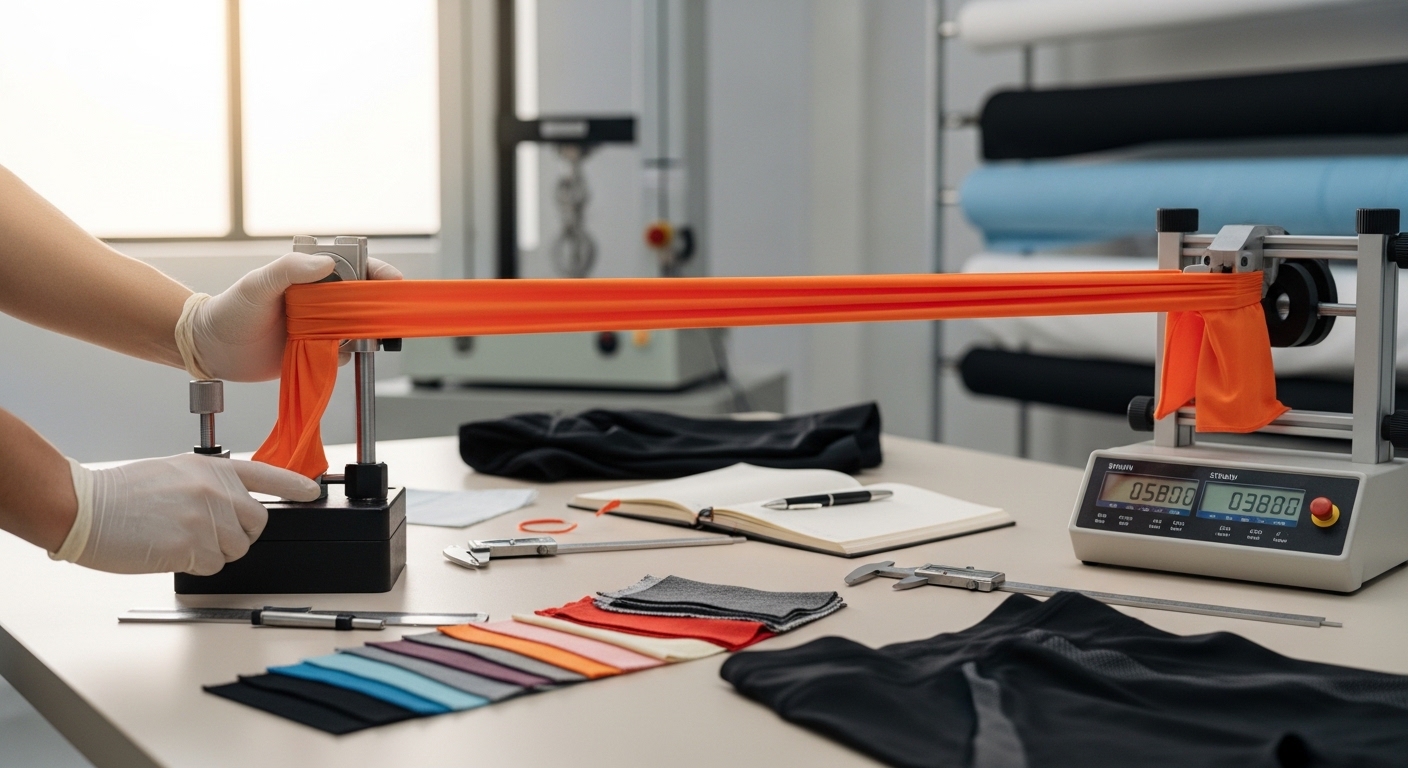
Testing ensures that recovery performance meets product standards before garments reach the market. Manufacturers simulate real-world use by repeatedly stretching fabrics and laundering samples under controlled conditions.
Common testing methods include:
-
Cyclic elongation and recovery testing
-
Dimensional stability testing after washing
-
Compression retention measurement
-
Visual inspection for permanent deformation
By identifying weaknesses early, manufacturers can adjust fiber blends, fabric structures, or finishing processes before mass production begins. Brands can also review quality control practices through apparel manufacturing partners such as Bushi Sports.
Performance Needs Across Activewear Categories
Different activewear categories place different demands on recovery performance. Compression leggings require strong rebound to maintain muscle support, while yoga wear requires fluid movement combined with shape retention. Training kits and team uniforms must combine durability with consistent fit after frequent washing.
Because of these varied demands, brands should align fabric and construction choices with the intended activity type. Manufacturers specializing in performance apparel can help translate these requirements into appropriate material solutions. Visit here!
Sustainability and Stretch Recovery Activewear
Sustainability is becoming increasingly important in performance apparel development. Recycled polyester and eco-friendly elastane alternatives are now being incorporated into stretch recovery activewear. However, maintaining strong recovery performance while reducing environmental impact requires careful material engineering and testing.
Sustainable strategies include:
-
Using recycled fibers with high-quality elastic content
-
Designing garments for longer lifespan to reduce waste
-
Minimizing chemical finishes while preserving rebound
-
Improving production efficiency to lower resource consumption
As sustainable textile technologies continue to evolve, brands will gain more options to deliver performance apparel with both environmental and functional benefits.
How Brands Can Ensure Long-Term Fit Retention
From a brand perspective, ensuring long-term fit retention starts with fabric selection and continues through product testing and quality assurance. Brands should request recovery performance data from suppliers and conduct wear trials under realistic conditions.
Practical steps for brands include:
-
Reviewing stretch and recovery test reports
-
Conducting wash and wear testing
-
Specifying fabric performance standards in tech packs
-
Collaborating with experienced manufacturers
Working with established partners such as Bushi Sports helps brands streamline development, reduce quality risks, and maintain consistent product performance.
Final Thoughts on Stretch Recovery Activewear
Stretch recovery activewear is a defining element of garment quality in the performance apparel market. While stretch enables freedom of movement, recovery ensures garments retain their fit, structure, and support over time. Therefore, recovery performance directly influences customer satisfaction, product longevity, and brand credibility.
By investing in material quality, fabric engineering, and rigorous testing, brands can deliver activewear that performs consistently throughout its lifecycle. Ultimately, prioritizing recovery performance leads to better products, fewer customer complaints, and stronger long-term brand trust.