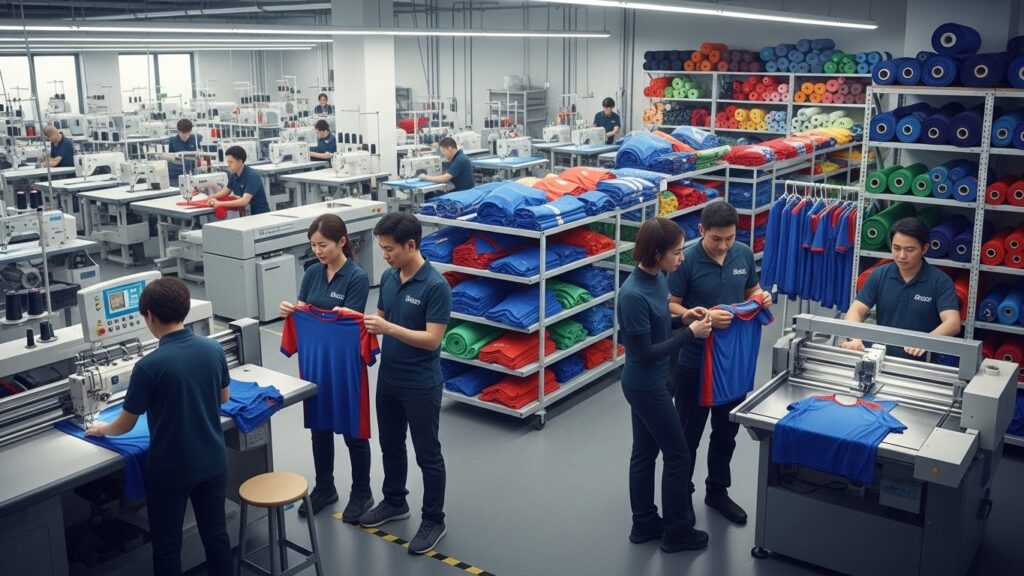
The global sportswear industry has evolved far beyond performance-focused athletic apparel and has entered an era where branding, lifestyle identity, and visual consistency play major roles in consumer purchasing decisions. Among the garments driving this transition, polo shirts have become one of the most versatile and commercially important apparel categories for sportswear companies, corporate brands, golf apparel businesses, fitness retailers, and lifestyle fashion labels. Because of this growing market demand, the role of a polo shirt manufacturer has become increasingly specialized within modern apparel production systems.
Unlike traditional t-shirts or standard uniforms, polo shirts occupy a unique position between professional appearance and casual comfort. This balance makes them highly valuable for sports organizations, activewear companies, hospitality businesses, training academies, and retail fashion brands. Modern consumers expect polo shirts to provide breathable comfort, premium aesthetics, durability, and customization flexibility simultaneously.
As a result, a professional polo shirt manufacturer now focuses on much more than simple garment stitching. Production today involves textile engineering, embroidery integration, color consistency systems, ergonomic fitting, private label customization, and scalable OEM manufacturing solutions. Manufacturers must ensure that every garment supports branding visibility while maintaining comfort and long-term durability.
Many growing apparel companies collaborate with a custom wholesale activewear manufacturer to create performance-oriented polo shirt collections designed for both athletic and lifestyle markets.
Fabric innovation and performance engineering in polo shirt production
Fabric selection is one of the most critical elements in modern polo shirt manufacturing because material quality directly influences comfort, durability, branding appearance, and garment lifespan. A polo shirt manufacturer carefully analyzes textile composition before large-scale production begins.
Traditional cotton polo shirts remain popular because of their softness and breathable feel. However, modern sportswear brands increasingly demand blended fabrics that combine cotton comfort with synthetic performance advantages. Polyester-cotton blends, elastane-enhanced pique fabrics, and moisture-management knits are now widely used throughout sportswear production.
Performance polo shirts designed for active environments often rely on lightweight engineered textiles capable of moisture evaporation, stretch flexibility, and wrinkle resistance. These fabrics improve comfort during long periods of wear while maintaining a professional appearance.
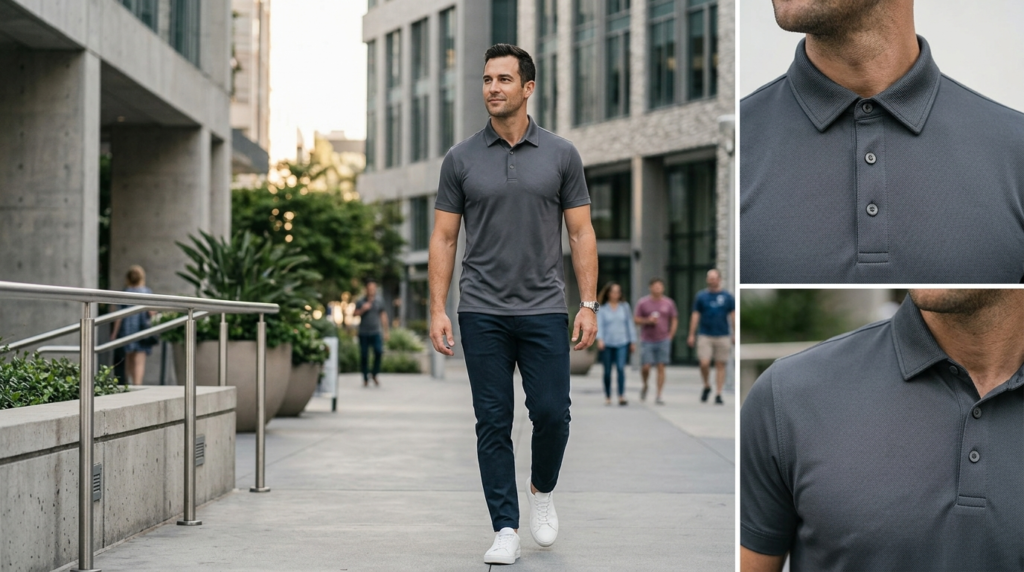
One of the biggest innovations in polo shirt production involves advanced pique knitting systems. Unlike flat jersey fabrics, pique textiles feature textured surfaces that improve airflow while adding visual structure to the garment. This has become especially important for golf apparel, corporate sportswear, and training uniforms.
Research published by Textile World in its performance apparel manufacturing analysis explains how modern sportswear fabrics continue evolving toward lighter, more breathable, and highly durable textile systems designed for active lifestyles.
Modern fabric engineering now allows manufacturers to produce polo shirts that function effectively across sportswear, business casual, and athleisure environments simultaneously.
Branding integration and visual identity development
Branding is one of the most important reasons companies invest in custom polo shirt manufacturing. A polo shirt manufacturer must ensure that logos, embroidery, color palettes, and garment finishing systems accurately reflect a brand’s identity.
Unlike generic apparel products, custom polo shirts often function as visual brand ambassadors used during events, competitions, retail promotions, hospitality services, and team activities. Because of this, branding precision becomes essential throughout production.
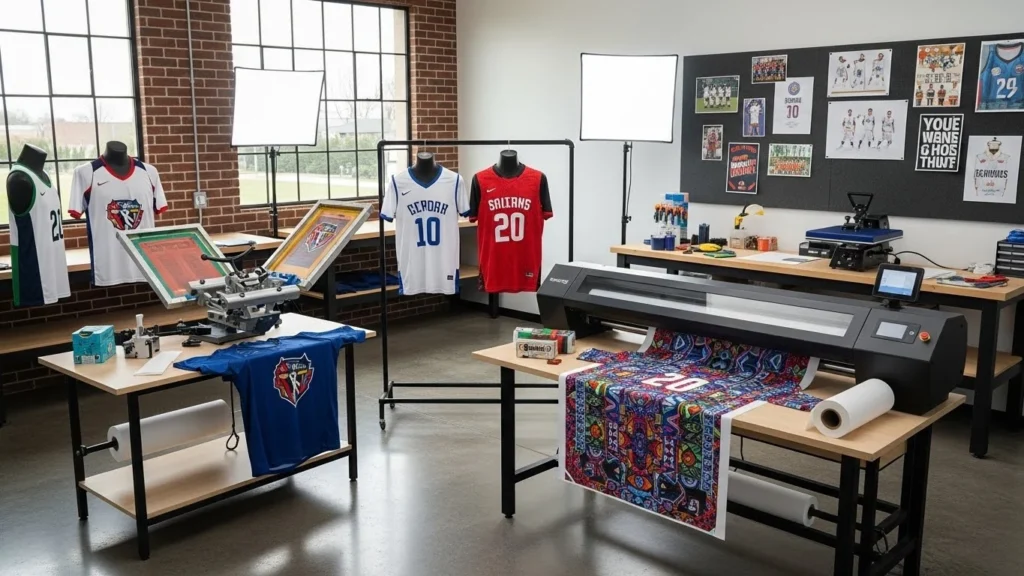
Embroidery remains one of the most widely used branding methods because it provides durability and premium visual appeal. High-density stitching systems allow manufacturers to produce clean logos capable of withstanding repeated washing and long-term wear.
Screen printing and heat-transfer branding are also commonly used for modern sportswear collections. These methods provide flexibility for larger graphics and performance-oriented branding applications.
Color consistency is another major challenge in branded apparel production. A professional polo shirt manufacturer must maintain exact color matching across multiple production batches to ensure brand uniformity. This process often involves digital dye calibration systems and standardized fabric testing methods.
Modern sportswear companies increasingly prioritize apparel branding because visual identity plays a major role in customer recognition and long-term market positioning.
Ergonomic garment construction and fit optimization
Modern polo shirt production relies heavily on ergonomic design systems that improve mobility, comfort, and garment structure. A polo shirt manufacturer must ensure that garments maintain a professional silhouette while allowing unrestricted movement.
This balance is especially important in sportswear applications where consumers expect flexibility alongside polished aesthetics. Manufacturers therefore invest heavily in fit optimization systems designed around body movement analysis.
Sleeve construction, shoulder alignment, collar shape, and side seam positioning all influence overall garment comfort. Even small adjustments in panel structure can significantly affect mobility and long-term wearability.
Collar engineering is particularly important because poorly constructed collars often lose shape after repeated washing. Modern manufacturers use reinforced collar systems and structured interlining materials to maintain appearance stability.
Many sportswear companies also prioritize athletic-fit polo shirts that provide closer body contouring without restricting movement. This has increased demand for stretch-enhanced fabrics and ergonomic pattern systems.
The combination of structured aesthetics and movement flexibility has become one of the defining characteristics of modern polo shirt production.
Digital production systems and modern manufacturing efficiency
Technology has transformed the apparel industry, and polo shirt production is no exception. A polo shirt manufacturer now relies heavily on digital systems to improve production efficiency, quality control, and customization flexibility.
CAD-based pattern software allows manufacturers to create highly accurate garment patterns while reducing development errors. Digital grading systems also improve sizing consistency across multiple production batches.
Automated cutting systems ensure fabric precision and reduce material waste during large-scale manufacturing. These technologies help manufacturers maintain consistent quality while improving production speed.
Another major innovation involves digital embroidery systems capable of producing highly detailed branding applications with improved accuracy and efficiency.
Manufacturing technology research published by Fibre2Fashion highlights how automation and digital systems are reshaping global apparel manufacturing through improved speed, precision, and scalability.
Modern production facilities increasingly integrate AI-assisted planning systems that improve inventory management, workflow coordination, and production forecasting.
OEM manufacturing and private label sportswear growth
OEM manufacturing has become one of the most important growth drivers within the global sportswear industry. A polo shirt manufacturer often manages sourcing, sampling, embroidery, stitching, packaging, and logistics while brands focus on marketing and retail expansion.
Private label production has expanded rapidly because many startup sportswear companies prefer outsourcing manufacturing instead of investing in factory infrastructure.
OEM systems allow brands to customize fabric selection, labels, branding placement, sizing systems, and packaging while maintaining scalable production capabilities.
Many companies also work alongside a custom wholesale casual wear manufacturer to create coordinated lifestyle apparel collections that complement sportswear polo shirt lines.
This flexibility makes OEM manufacturing highly attractive for golf brands, fitness retailers, hospitality companies, esports teams, and corporate apparel businesses.
Manufacturers capable of maintaining quality consistency while handling customization requests are becoming increasingly valuable throughout the global apparel industry.
Sustainability and responsible polo shirt manufacturing
Sustainability has become a major focus within modern apparel production as brands increasingly seek environmentally responsible manufacturing solutions. A future-focused polo shirt manufacturer now invests in recycled textiles, water-efficient dye systems, and low-waste production methods.
Many manufacturers are also exploring organic cotton fabrics and biodegradable packaging systems to reduce environmental impact.
Sustainable apparel production has become especially important for global sportswear companies because modern consumers increasingly evaluate brands based on environmental responsibility.
Reports published by McKinsey & Company continue highlighting how sustainability is becoming a competitive requirement rather than an optional marketing advantage within global fashion and sportswear industries.
Durability itself is now viewed as a sustainability factor because long-lasting garments reduce replacement frequency and overall textile waste.
Manufacturers capable of balancing performance, branding quality, and sustainability will likely remain highly competitive in future sportswear markets.
Polo shirts in corporate and teamwear markets
Polo shirts have become one of the most widely used garments within corporate branding and teamwear industries because they provide a professional appearance while maintaining casual comfort.
A polo shirt manufacturer frequently works with sports academies, hospitality businesses, schools, gyms, event companies, and corporate organizations to produce branded apparel systems.
Unlike formal uniforms, polo shirts provide flexibility and comfort during long work hours while still supporting consistent brand identity.
Teamwear production has also expanded significantly as organizations increasingly seek coordinated apparel solutions for employees, athletes, and promotional staff.
Many organizations collaborate with a custom wholesale sports uniforms manufacturer to integrate polo shirts into larger teamwear collections that include tracksuits, training apparel, and performance uniforms.
This crossover between corporate apparel and sportswear has significantly expanded global polo shirt demand.
Quality control and long-term durability systems
Quality control plays a major role in modern polo shirt production because branded garments must maintain visual consistency and structural integrity throughout long-term use.
A professional polo shirt manufacturer performs extensive testing throughout production to evaluate fabric stability, colorfastness, shrinkage resistance, embroidery durability, and seam strength.
Collar retention testing is especially important because collars are one of the most visible structural components of polo shirts.
Manufacturers also test garments under repeated washing conditions to ensure logos, stitching, and fabrics maintain performance standards over time.
This level of quality assurance is essential for sportswear companies seeking reliable OEM production partnerships.
Future trends shaping polo shirt manufacturing
The future of polo shirt production will likely focus heavily on smart textiles, lightweight fabric systems, and digitally customized apparel manufacturing.
Manufacturers are already experimenting with cooling fabrics, antibacterial textile technologies, and seamless knitting systems designed to improve comfort and performance.
At the same time, customization technologies will continue evolving as brands seek faster production turnaround and greater design flexibility.
The rise of sustainable sportswear will also push manufacturers toward recyclable fabrics and environmentally responsible dyeing methods.
Manufacturers capable of combining branding precision, advanced fabric engineering, scalable OEM production, and sustainability innovation will remain highly competitive within future global apparel markets.
Conclusion
Polo shirt manufacturing has evolved into a highly advanced segment of modern sportswear production where branding systems, fabric engineering, ergonomic design, and scalable OEM manufacturing all work together to create premium apparel solutions.
A professional polo shirt manufacturer now plays a critical role in helping sportswear companies, corporate brands, and lifestyle retailers develop garments that balance comfort, durability, customization, and modern visual identity.
From advanced pique fabrics and embroidery systems to sustainable production and private label manufacturing, polo shirt production continues expanding alongside global demand for premium branded apparel.
Businesses seeking scalable OEM sportswear production, custom branding solutions, or private label polo shirt manufacturing can benefit from working with experienced apparel manufacturing partners capable of delivering modern production expertise and long-term quality consistency.
For production inquiries and custom apparel consultations:
Email: info@bushisports.com
WhatsApp: +92 348 4018578