Fabric Shrinkage Explained & How Manufacturers Control It
Fabric shrinkage control is one of the most critical quality factors in modern apparel production. When customers buy clothing, they expect the size to remain consistent after washing. However, when garments shrink, dissatisfaction rises, returns increase, and brand trust suffers. Therefore, understanding how fabric shrinkage occurs—and more importantly, how manufacturers control it—is essential for fashion brands, private labels, and bulk buyers.
At its core, fabric shrinkage happens because textile fibers are stretched during manufacturing and later relax when exposed to heat, water, and mechanical action. As a result, the fabric contracts. While shrinkage is natural to some degree, uncontrolled shrinkage signals poor material preparation and weak quality control. Consequently, professional manufacturers invest in shrinkage control methods to deliver stable, reliable garments.
If you’re developing private-label apparel, understanding fabric preparation is part of building a reliable production workflow with manufacturers like Bushi Sports.
In today’s competitive apparel market, shrinkage control is no longer optional. Instead, it is a fundamental requirement for brands that aim to maintain consistency, reduce customer complaints, and build long-term credibility.

What Is Fabric Shrinkage?
Fabric shrinkage refers to the dimensional reduction of a textile after washing, drying, or exposure to moisture and heat. During spinning, weaving, knitting, and dyeing, fabrics are held under tension. Because of this tension, fibers become elongated. Later, when the garment is washed, the fibers relax and return closer to their original length, causing shrinkage.
Shrinkage can affect:
-
Length (vertical shrinkage)
-
Width (horizontal shrinkage)
-
Overall garment fit
Moreover, the amount of shrinkage depends on several factors, including fiber type, fabric structure, finishing process, and washing conditions. For example, natural fibers such as cotton and wool generally shrink more than synthetic fibers like polyester. However, blended fabrics can also shrink if not properly stabilized during production.
Why Fabric Shrinks During Washing
Fabric shrinkage control begins with understanding why shrinkage occurs in the first place. Several physical and chemical factors play a role:
-
Fiber relaxation: Fibers stretched during manufacturing contract when exposed to water.
-
Heat exposure: High temperatures accelerate fiber movement and relaxation.
-
Mechanical agitation: Washing machines cause fibers to compress and shift.
-
Moisture absorption: Natural fibers swell when wet and contract during drying.
As a result, garments that are not pre-treated or stabilized are more likely to lose their original dimensions after washing. Over time, repeated wash cycles can further amplify the problem. Therefore, manufacturers must anticipate real-world usage and prepare fabrics accordingly.
Types of Fabric Shrinkage
Not all shrinkage is the same. In fact, manufacturers categorize shrinkage into different types to better control it during production.
Common types of fabric shrinkage include:
-
Relaxation shrinkage: Occurs when tensioned fibers relax after washing.
-
Progressive shrinkage: Happens gradually over multiple wash cycles.
-
Felting shrinkage: Seen mainly in wool when fibers interlock under heat and agitation.
-
Thermal shrinkage: Caused by heat exposure, especially in synthetic fibers.
Because each type behaves differently, manufacturers must apply tailored finishing and testing methods to ensure dimensional stability across various fabric categories.
Why Fabric Shrinkage Control Matters for Brands
Fabric shrinkage control is not just a technical manufacturing issue; it directly affects brand perception and profitability. When garments shrink:
-
Customers lose trust in sizing consistency
-
Return rates increase
-
Negative reviews damage brand reputation
-
Long-term customer loyalty declines
On the other hand, when shrinkage is well controlled, brands benefit from:
-
Improved customer satisfaction
-
Lower return and exchange costs
-
Stronger product reliability
-
Higher repeat purchase rates
Therefore, working with experienced manufacturers that prioritize fabric preparation and testing is essential. Many apparel brands partner with established production specialists such as Bushi Sports to ensure consistent fabric performance across collections. Learn More!
How Manufacturers Control Fabric Shrinkage
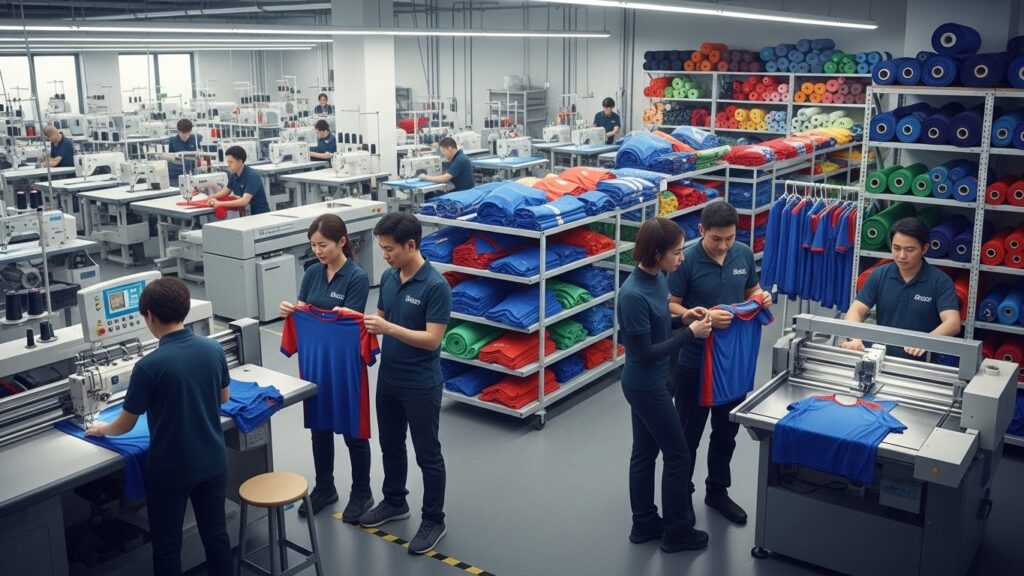
Professional manufacturers use a combination of mechanical, chemical, and procedural techniques to ensure fabric shrinkage control before garments reach the consumer.
Pre-Shrinking and Fabric Relaxation
One of the most effective methods is pre-shrinking the fabric before cutting and sewing. During this process, fabrics are washed or steamed under controlled conditions. As a result, most of the natural shrinkage occurs before garment construction.
Key benefits of pre-shrinking include:
-
Reduced post-purchase size changes
-
Improved garment fit consistency
-
Better size accuracy across batches
Mechanical Finishing Techniques
Manufacturers also use mechanical finishing processes such as sanforization for cotton fabrics. This process compresses the fabric in a controlled manner, stabilizing its dimensions. Consequently, sanforized fabrics shrink significantly less during home laundering.
Chemical Treatments for Shrinkage Control
In some cases, chemical finishes are applied to fibers to improve dimensional stability. These treatments help fibers maintain their structure even after repeated washing. However, manufacturers must balance chemical use with sustainability goals and regulatory compliance.
Controlled Heat Setting for Synthetic Fabrics
Synthetic fibers such as polyester are heat-set during manufacturing. Heat setting locks fibers into a stable configuration. As a result, thermal shrinkage is minimized during later washing and drying cycles.
Fabric Testing and Quality Control
Fabric shrinkage control relies heavily on testing and quality assurance. Before mass production begins, manufacturers perform laboratory wash tests to measure dimensional changes. These tests simulate real-world washing conditions and help identify potential shrinkage issues early.
Key testing steps include:
-
Washing fabric samples under standardized conditions
-
Measuring length and width changes
-
Comparing results against acceptable shrinkage tolerances
-
Adjusting finishing processes based on test results
By incorporating shrinkage testing into production workflows, manufacturers can ensure consistency across bulk orders. Brands that collaborate with reliable suppliers such as Bushi Sports often benefit from established quality control systems that reduce shrinkage-related risks.
The Role of Fabric Selection in Shrinkage Control
Choosing the right fabric plays a crucial role in managing shrinkage. While no fabric is entirely shrink-proof, some materials perform better than others in terms of dimensional stability.
Fabrics with lower shrinkage tendencies include:
-
Polyester
-
Nylon
-
Blended fabrics with heat-set fibers
Meanwhile, fabrics that require more shrinkage control include:
-
100% cotton
-
Wool
-
Linen
Therefore, brands should consider end-use requirements when selecting fabrics. For example, performance sportswear often favors synthetic blends because they offer better shrinkage control and durability. For insights into how textile innovation shapes fabric performance, industry resources like Textile World provide valuable context.
How Brands Can Reduce Shrinkage Complaints
While manufacturers handle technical shrinkage control, brands also play a role in minimizing customer dissatisfaction.
Effective strategies include:
-
Clear care label instructions
-
Pre-washed or pre-shrunk garments
-
Transparent sizing guidelines
-
Consistent fabric sourcing
-
Regular quality audits
Moreover, educating customers about proper washing and drying practices can further reduce shrinkage-related issues. For instance, advising cold-water washing and air drying can significantly extend garment life and fit.
Sustainability and Fabric Shrinkage Control
Sustainability is increasingly influencing how manufacturers approach shrinkage control. Traditional chemical finishes can reduce shrinkage but may raise environmental concerns. As a result, many manufacturers now explore eco-friendly alternatives such as:
-
Low-impact finishing processes
-
Reduced water usage
-
Mechanical shrinkage control methods
-
Recycled fiber stabilization techniques
Consequently, fabric shrinkage control is evolving alongside sustainable manufacturing practices. Brands that prioritize both performance and environmental responsibility gain a competitive advantage in today’s conscious consumer market.
Future Trends in Fabric Shrinkage Control
As textile technology advances, new solutions for fabric shrinkage control continue to emerge. Innovations such as smart fibers, improved fabric blends, and digital quality monitoring tools are shaping the future of garment stability. In addition, automation in testing and finishing processes allows manufacturers to maintain tighter tolerances and faster production cycles.
Looking ahead, shrinkage control will become even more integrated into end-to-end apparel development. From fabric sourcing to final packaging, dimensional stability will remain a core quality benchmark.
Final Thoughts
Fabric shrinkage control is a vital component of high-quality apparel manufacturing. Although some degree of shrinkage is natural, uncontrolled shrinkage undermines brand credibility and customer satisfaction. Therefore, manufacturers must apply pre-shrinking, finishing, testing, and fabric selection strategies to ensure size stability.
At the same time, brands should work closely with experienced production partners such as Bushi Sports to implement reliable shrinkage control processes across their supply chains. By combining technical expertise, quality assurance, and customer education, apparel businesses can minimize shrinkage-related issues and deliver garments that perform as expected long after purchase.