Understanding Your Business Needs Before Ordering
Before placing any bulk order, it’s important to pause and clearly define what your business truly needs. Are you ordering for a sports club, a retail brand, or a corporate team? Knowing this shapes everything that follows. A solid B2B sportswear manufacturing guide always starts with clarity. Think about quantities, timelines, and how often you’ll reorder. This helps you choose the right B2B sportswear supplier and avoid costly mistakes later in the process.
Next, focus on how much customization your customers expect. Some brands need fully customized sportswear with unique colors, logos, and fits, while others prefer simple, repeatable designs. Understanding this early helps align your expectations with factory direct sportswear options. It also affects MOQ sportswear orders and production methods. When your needs are clear, custom sportswear manufacturing becomes smoother, faster, and far more predictable for both sides.
Finally, consider your budget and long-term goals, not just the first order. Bulk sportswear orders often make more sense when planned as part of a bigger strategy. Think about consistency in quality, future scalability, and sportswear quality control. A reliable wholesale sportswear printing partner should support growth, not just deliver products. When you define your business needs clearly, you set the foundation for a strong, professional, and lasting B2B partnership.
Minimum Order Quantity (MOQ): What Works for Your Budget
Minimum Order Quantity can feel confusing at first, especially for growing brands. MOQ simply means the smallest number of pieces a factory can produce in one run. A smart B2B sportswear manufacturing guide treats MOQ as a planning tool, not a barrier. When you understand it clearly, you can match your budget with realistic production goals. The right B2B sportswear supplier will explain options honestly, helping you avoid overstock while still accessing factory direct sportswear pricing.
Budget plays a big role in deciding the right MOQ sportswear orders. Smaller orders often cost more per unit, while bulk sportswear orders reduce pricing through efficiency. The key is balance. If you need fully customized sportswear, colors, fabrics, and prints may increase the minimum. Knowing this early helps you plan cash flow and timelines. A transparent custom sportswear manufacturing partner will guide you toward quantities that protect both quality and cost.
MOQ also affects design flexibility. With higher quantities, you gain more control over fabrics, fits, and finishing. Custom team uniforms benefit from this, especially when consistency matters across seasons. Lower MOQs may limit choices but work well for testing new designs. Understanding these trade-offs keeps expectations realistic. Strong sportswear quality control doesn’t depend on size alone, but stable production runs often lead to better, more reliable results.
Finally, think beyond a single order. A long-term relationship with a factory direct sportswear partner can unlock better MOQ options over time. As trust grows, wholesale sportswear printing becomes more flexible and efficient. Planning repeat orders allows you to scale without financial stress. When MOQ aligns with your budget and growth plan, B2B sportswear becomes less risky and far more profitable.
Choosing the Right Fabrics and Materials
- Start with end use, not trends. Every B2B sportswear manufacturing guide begins with how the product will be used. Training kits, match jerseys, and lifestyle wear all demand different fabric behavior, durability, and feel.
- Work with a reliable B2B sportswear supplier. An experienced supplier explains fabric pros and cons clearly. This guidance helps brands avoid costly mistakes in custom sportswear manufacturing.
- Balance performance and comfort. Fabrics should breathe, stretch, and handle sweat without feeling heavy. This balance is key for fully customized sportswear that athletes actually enjoy wearing.
- Consider durability for bulk sportswear orders. High-volume production needs materials that hold shape, color, and print quality after repeated use and washing.
- Match fabric to printing method. Some materials work better with wholesale sportswear printing, while others limit design options. Early alignment prevents quality issues later.
- Factor in MOQ sportswear orders. Certain premium fabrics require higher minimums. Understanding this upfront protects your budget and production timeline.
- Quality control matters more than labels. Strong sportswear quality control ensures consistency across rolls, sizes, and colors, especially for factory direct sportswear.
- Custom team uniforms need consistency. Using the same fabric batch avoids shade and texture differences that stand out on the field.
- Think long-term, not one season. Choosing stable materials supports repeat orders and smoother scaling for b2b sportswear brands.
- Factory direct partnerships simplify choices. A factory direct, fully customized setup gives access to tested materials, better pricing, and reliable performance across collections.
Printing & Branding Quality You Should Never Ignore
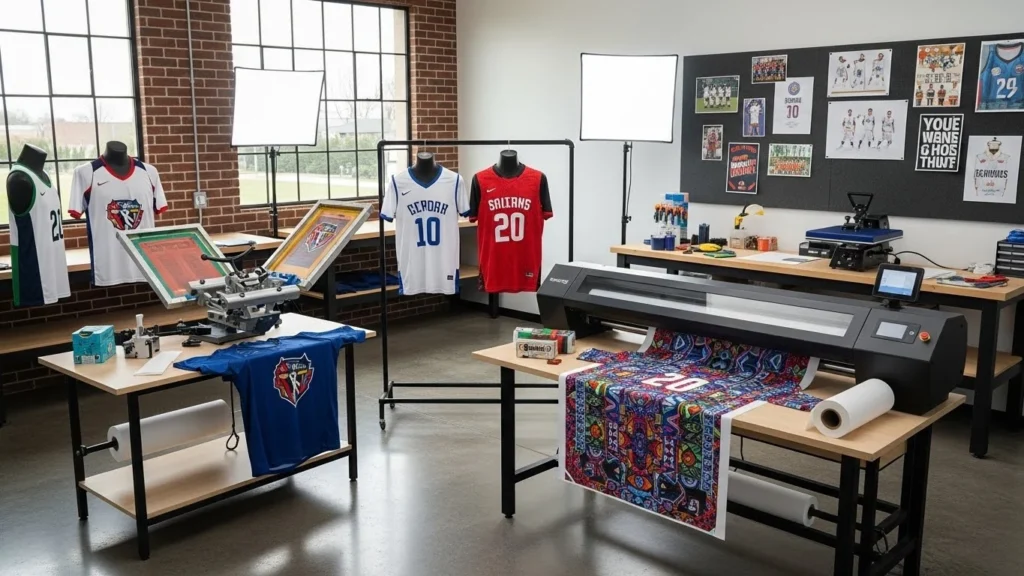
Strong branding starts with print quality you can trust. In any B2B Sportswear Manufacturing Guide, printing is never just decoration. It reflects your brand’s professionalism. Poor prints crack, fade, or peel fast, especially on custom team uniforms used weekly. A reliable B2B sportswear supplier focuses on sharp details, clean edges, and colors that stay bold. When you invest in custom sportswear manufacturing, consistent printing builds confidence with teams, clubs, and distributors who expect premium results from bulk sportswear orders.
Branding quality also depends on proper sportswear quality control at every stage. From artwork setup to final inspection, factory direct sportswear production reduces errors and misalignment. Wholesale sportswear printing should match the fabric type, stretch level, and intended use. Ignoring this leads to uneven logos and weak adhesion. For fully customized sportswear, print testing before full production protects your budget, especially when MOQ sportswear orders are high and reprints become costly.
Finally, long-term brand value comes from durability, not shortcuts. Factory direct partners understand how prints behave after repeated washing and intense play. This knowledge matters for b2b sportswear brands that rely on repeat orders. Clean branding, durable inks, and proven techniques help custom sportswear stand out in competitive markets. When printing lasts as long as the garment, your brand message stays visible, professional, and trusted season after season.
Customization Options: Flexibility Matters
In any B2B Sportswear Manufacturing Guide, flexibility is what separates a good supplier from a great one. Every team, brand, or distributor has different needs. A reliable B2B sportswear supplier should offer real customization, not fixed templates. From colors and cuts to logos and finishes, custom sportswear manufacturing allows brands to express identity clearly. This matters even more in bulk sportswear orders, where small design limits can turn into big compromises across hundreds of pieces.
True flexibility also supports smarter planning around MOQ sportswear orders. Factory direct sportswear partners can adjust designs, fabrics, and printing methods without pushing unnecessary minimums. That freedom helps businesses manage budgets while still delivering fully customized sportswear. Whether it’s custom team uniforms for a league or wholesale sportswear printing for retail, adaptable production keeps projects on track. It also reduces costly revisions that come from rigid systems and limited options.
Customization must go hand in hand with strong sportswear quality control. Offering choices is only valuable when execution stays consistent. Factory direct production allows tighter checks on sizing, branding, and finishing details. For b2b sportswear brands, this balance is critical. When customization is flexible and reliable, custom sportswear becomes easier to scale, easier to trust, and far more appealing to long-term partners looking for quality without restrictions.
Factory Direct vs Middlemen: Know the Difference
| Factory Direct Sportswear | Working Through Middlemen |
| Factory direct sportswear gives you a clear line to production. You speak directly with the people who make the garments, which improves trust and speeds up decisions. | Middlemen act as a bridge, but that distance often slows communication. Messages pass through layers, and details can get lost along the way. |
| Costs stay more controlled because there are no extra commissions. This matters a lot for bulk sportswear orders and long-term B2B sportswear partnerships. | Prices usually rise since each middle layer adds margins. Over time, this affects budgets and limits flexibility. |
| Custom sportswear manufacturing is easier when you work factory direct. Design changes, sizing updates, and fabric choices feel more manageable. | Customization can feel restricted. Middlemen often rely on fixed options instead of fully customized sportswear solutions. |
| MOQ sportswear orders are often more flexible. Factories understand production flow and can adjust based on real capacity. | Middlemen may enforce higher MOQs to protect their margins, even when production does not require it. |
| Sportswear quality control improves with direct oversight. Issues are spotted early and fixed before scaling. | Quality feedback takes longer to reach production, which can delay corrections and increase risk. |
| Wholesale sportswear printing stays consistent because the same team manages fabric, print, and finishing. | Printing is often outsourced again, adding more steps and less accountability. |
| Custom team uniforms benefit from direct sampling and faster approvals. This keeps timelines realistic. | Samples may take longer as approvals move back and forth between parties. |
| In a strong B2B Sportswear Manufacturing Guide, factory direct sourcing supports long-term growth and transparency. | Middlemen can work short term, but scaling often becomes complex and less predictable. |
| For b2b sportswear brands, factory direct relationships feel like partnerships built on shared goals. | With middlemen, the relationship often stays transactional rather than collaborative. |
| Factory direct production makes it easier to deliver fully customized results with confidence and consistency. | Customization exists, but control and clarity are usually limited. |
Quality Control and Sample Approval Process
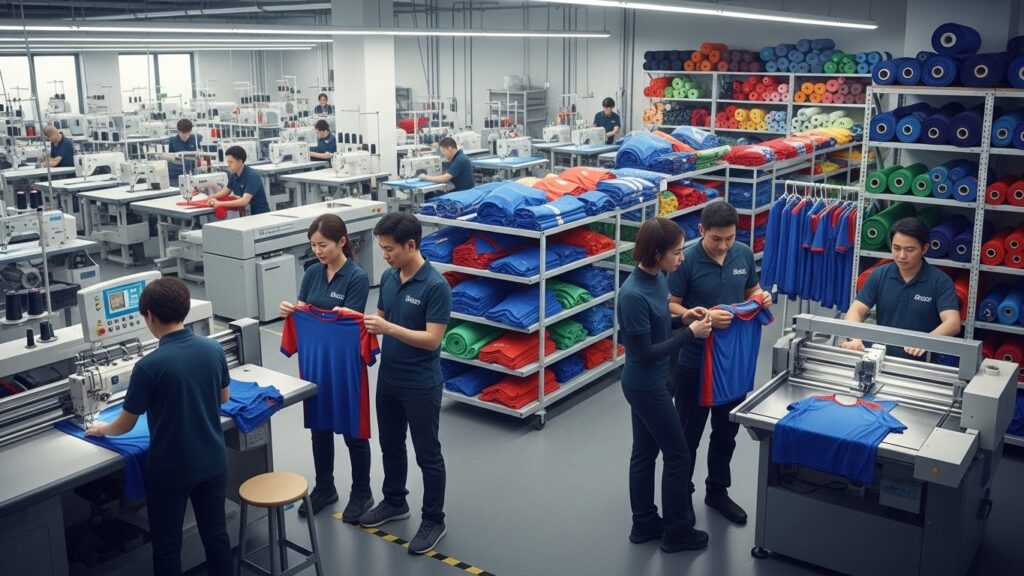
Quality control is the backbone of any reliable B2B Sportswear Manufacturing Guide. Before bulk sportswear orders move forward, every detail needs careful checking. A trusted B2B sportswear supplier starts with fabric testing, stitching checks, and size accuracy. This early control avoids costly mistakes later. When you choose factory direct sportswear, you gain clearer visibility into this process. Issues get spotted early, not after hundreds of pieces are produced. Strong quality control builds confidence, especially when brands rely on consistent results for long-term growth.
Sample approval is where ideas turn into reality. In custom sportswear manufacturing, samples act as a shared reference point. Colors, prints, fabric feel, and fit must match expectations. For custom team uniforms, this step is crucial because teams notice small differences. A good factory direct partner encourages feedback and revisions. This back-and-forth ensures the final product feels right. Sample approval protects both sides. It saves time, reduces waste, and keeps the production process smooth and predictable.
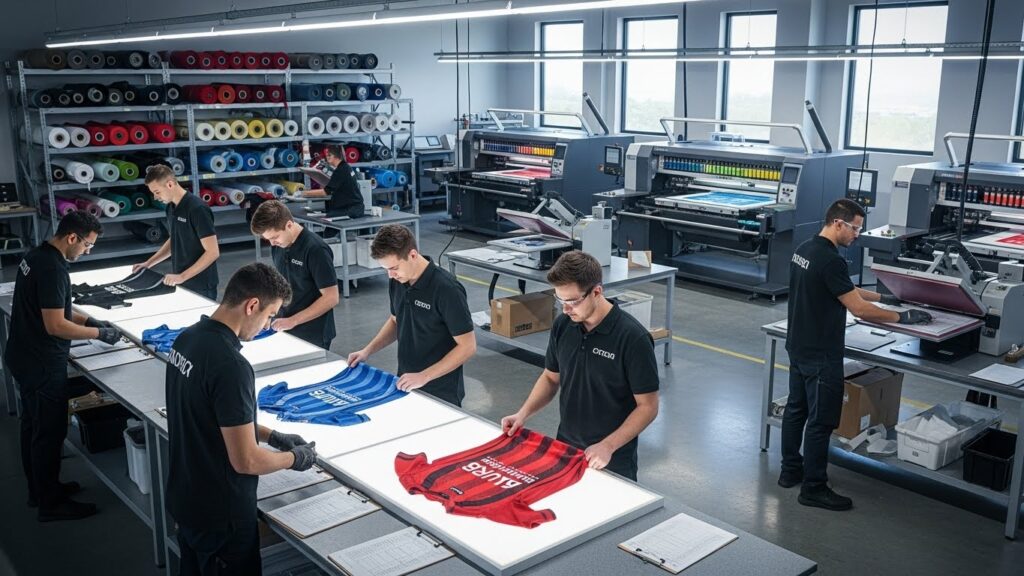
Sportswear quality control does not stop after samples. During production, checks happen at multiple stages. Stitch strength, print durability, and sizing consistency are reviewed regularly. This matters even more for MOQ sportswear orders, where each unit counts. In fully customized sportswear, small variations can impact brand image. Reliable wholesale sportswear printing also depends on steady checks. Continuous monitoring helps maintain the same standard from the first piece to the last.
For b2b sportswear brands, a clear approval process builds trust. When samples are approved carefully, bulk production feels less risky. Factory direct communication allows faster fixes and honest updates. This transparency supports better planning and delivery timelines. Strong quality control and sample approval protect your investment. They ensure your custom sportswear reflects your brand values, performs well in real use, and meets expectations every time.
Production Timelines, Shipping, and Reliability
Clear production timelines protect your planning
In any B2B Sportswear Manufacturing Guide, timelines matter more than promises. A reliable B2B sportswear supplier shares realistic schedules from day one. Custom sportswear manufacturing takes time, especially for fully customized designs. Fabric sourcing, printing, and stitching must align properly. When timelines are clear, brands can plan launches, tournaments, or retail drops with confidence. Factory direct sportswear partners usually give better visibility because there are fewer delays caused by middle layers.
Bulk orders need structured production flow
Bulk sportswear orders demand discipline on the factory floor. Each stage must move smoothly to avoid bottlenecks. This is even more important when handling MOQ sportswear orders with multiple designs. Strong internal systems help manage custom team uniforms without confusion. When production flows well, sportswear quality control stays consistent. That consistency builds trust, especially for b2b sportswear clients who rely on repeat orders and long-term cooperation.
Shipping reliability is as important as production speed
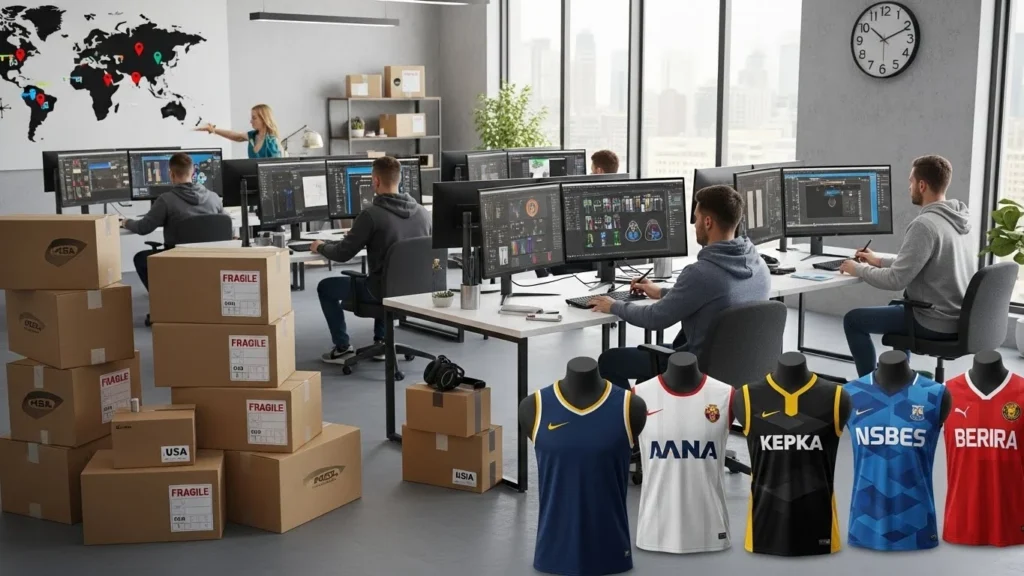
Fast production means little if shipping fails. A factory direct sportswear setup often handles logistics more carefully. They understand export rules, packaging standards, and delivery timelines. Wholesale sportswear printing orders usually ship in larger volumes, so proper labeling and tracking matter. Reliable shipping keeps stress low and avoids last-minute surprises. Good suppliers update clients regularly instead of going silent once goods leave the factory.
Communication keeps everything on track
Strong communication ties production and shipping together. In custom sportswear manufacturing, changes happen. Sizes adjust. Colors need confirmation. A dependable B2B sportswear supplier responds quickly and clearly. This reduces mistakes and delays. Factory direct contact makes it easier to solve issues early. Open updates help brands feel in control, even when production runs are complex or deadlines are tight.
Reliability builds long-term partnerships
In the end, reliability defines success. Meeting timelines, delivering correct quantities, and maintaining quality turns one order into many. Fully customized sportswear requires trust because every project is unique. When a supplier consistently delivers, brands stop worrying about logistics. They focus on growth instead. That reliability is what separates an average supplier from a true production partner.
Why Choosing the Right B2B Sportswear Partner Matters
Selecting the right partner is more than a business decision—it’s a strategic move. In a B2B Sportswear Manufacturing Guide, the emphasis is on reliability, quality, and communication. A trusted B2B sportswear supplier ensures that every step, from custom sportswear manufacturing to delivery, aligns with your brand’s expectations. Factory direct sportswear partners offer transparency, reducing delays and avoiding misunderstandings. For bulk sportswear orders, this becomes even more critical, as any error can impact timelines and client satisfaction.
Working with a capable partner directly affects your product quality and operational efficiency. Fully customized sportswear requires attention to detail at every stage. Sportswear quality control processes ensure that MOQ sportswear orders and wholesale sportswear printing meet consistent standards. Custom team uniforms need precise sizing, colors, and branding, which only a reliable B2B sportswear partner can guarantee. A dependable supplier reduces risk, giving you confidence that your products will reach customers exactly as intended.
Long-term growth hinges on these relationships. A good B2B sportswear supplier doesn’t just fulfill orders—they support your vision. Factory direct communication simplifies changes, approvals, and troubleshooting, making complex projects manageable. By choosing a partner who understands both production and client needs, brands can focus on expansion and marketing rather than firefighting issues. Ultimately, selecting the right partner ensures efficiency, quality, and scalability for all custom sportswear initiatives.