The difference between a match jersey, a replica jersey, and fanwear is not simply that one product is “real” and another is “fake.” All three can be legitimate, licensed, well-made products. They are designed for different users, different performance expectations, different price points, and different commercial purposes. Understanding match jersey vs replica jersey terminology prevents buyers from confusing product tiers with authenticity.
A match jersey is developed as the closest retail equivalent to what professional players wear on the field. It commonly uses a lightweight performance fabric, an athletic pattern, body-mapped ventilation, and low-bulk branding. A replica jersey keeps the main visual identity of the team but adapts the fit, fabric, and construction for supporter comfort, durability, and broader sizing.
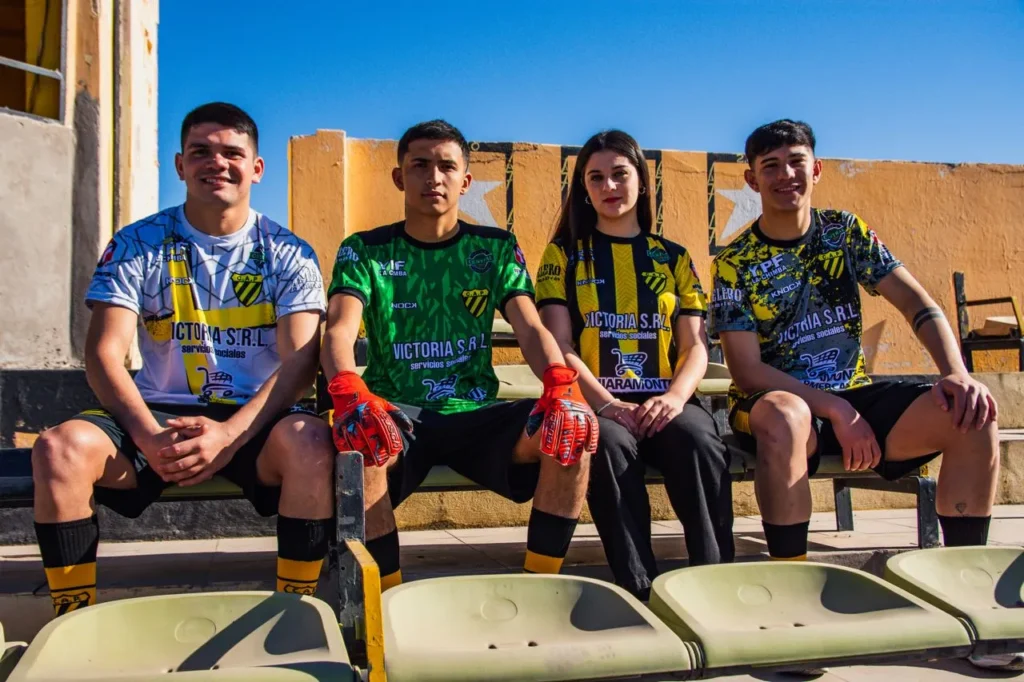
Fanwear is the widest category. It can include simplified fan jerseys, T-shirts, polos, hoodies, track tops, retro-inspired shirts, jackets, scarves, and lifestyle products that express team identity without reproducing the exact playing garment.
The match jersey vs replica jersey comparison matters to clubs, retailers, sports brands, academies, and private label buyers because using one product for every customer usually creates dissatisfaction. Players may reject a heavy, loose supporter shirt. Fans may dislike a narrow match fit that feels restrictive in everyday use. Retail buyers may not want the production cost or care sensitivity of elite-level construction. A lower-priced fan jersey may be commercially useful, but it should not be presented as the same product worn by professionals.
Current brand terminology demonstrates the distinction. Nike commonly labels its elite product “Match” or “Authentic” and its supporter version “Stadium” or “Replica”. Nike explains that Match jerseys use Aero-FIT technology and authentic design details, while Stadium jerseys use Dri-FIT and provide a game-ready look inspired by the professional product.
Adidas describes authentic jerseys as lightweight, fitted performance products comparable to those worn on the field, while replicas use a more relaxed fit for fan comfort. PUMA similarly separates ULTRAWEAVE Authentic jerseys from relaxed Replica versions, while maintaining the same main visual identity.
These terms are not perfectly standardized across every supplier. A custom teamwear brand may use Elite, Pro, Match, Team, Club, Replica, Stadium, Supporter, or Fan. What matters is that the specification and intended user are explained clearly. A transparent match jersey vs replica jersey description should state the fit, fabric, decoration, and intended use rather than relying on the tier name alone.
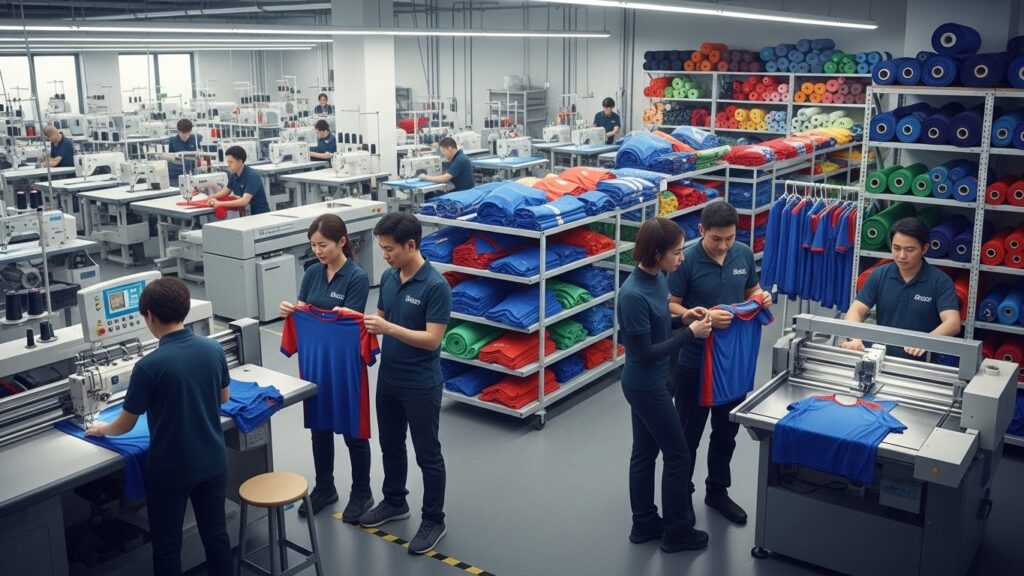
BUSHI Sports® provides custom wholesale soccer uniform manufacturing for sports brands, clubs, teams, academies, schools, universities, retailers, distributors, and private label buyers. Projects can include match-level soccer jerseys, durable team jerseys, supporter versions, fanwear, goalkeeper kits, shorts, socks, training apparel, names, numbers, custom labels, packaging, sampling, and bulk production.
This guide explains five essential differences in the match jersey vs replica jersey decision and then shows how fanwear fits into a complete soccer merchandise strategy.
“The best product tier is not always the most technical one. It is the one whose fit, fabric, construction, price, and purpose match the person buying or wearing it.”
Quick Comparison: Match Jersey vs Replica Jersey vs Fanwear
| Feature | Match jersey | Replica jersey | Fanwear |
|---|---|---|---|
| Main user | Professional or performance-focused player | Supporter, amateur player, everyday wearer | Broad fan and lifestyle market |
| Primary purpose | On-field performance | Team identity with comfort and durability | Accessible support, fashion, and collection building |
| Fit | Slim, athletic, or pro fit | Regular or relaxed athletic fit | Regular, relaxed, oversized, women’s, youth, or fashion fit |
| Fabric | Lightweight technical polyester, engineered mesh, body mapping | Durable moisture-managing polyester | Polyester, cotton, blends, fleece, tricot, or lifestyle fabrics |
| Branding | Often heat-applied or lightweight | Often woven, embroidered, printed, or durable transfer | Simplified crest, print, embroidery, appliqué, or fashion treatment |
| Construction | Low weight, advanced paneling, reduced bulk | Practical construction and repeat-wash durability | Simplified or fashion-led construction |
| Price level | Highest | Mid-range | Entry to premium lifestyle, depending on design |
| Best for | Elite competition and premium collectors | Supporters, clubs, academies, and regular wear | Retail expansion, events, casual wear, and broad sizing |
A clear match jersey vs replica jersey comparison should begin with purpose before moving into materials and price. The table provides a useful starting point, but match jersey vs replica jersey differences are not universal rules. Exact construction varies by brand, season, federation, club, and supplier. Buyers should always compare technical specifications rather than relying only on the product label.
Difference 1: Purpose and Target Customer
The first match jersey vs replica jersey difference is the intended user.
Match Jerseys Are Developed Around Performance
The match jersey vs replica jersey distinction begins with the level of performance the garment is expected to support.
In the match jersey vs replica jersey comparison, the match tier is built around movement, heat management, low weight, and the requirements of high-level competition. The pattern may be developed from athlete body data, with reduced excess fabric and carefully positioned ventilation zones.
The product may use:
- Bonded details
- Lightweight heat transfers
- Engineered knits
- Laser-cut ventilation
- Different fabrics across the body
- Reduced seam bulk
- Lightweight crests
- Athletic pattern shaping
The wearer is expected to use the jersey during high-output activity. This affects almost every development decision:
- Fabric weight
- Stretch direction
- Moisture management
- Sleeve shape
- Shoulder mobility
- Collar construction
- Side-panel placement
- Seam bulk
- Crest weight
- Number application
- Garment length
Match products may also be attractive to collectors because they are the closest commercial version to the player-worn construction. However, the same features that improve performance may make the shirt less practical for some supporters.
A very slim fit, lightweight fabric, or heat-applied crest may require more careful sizing and care.
Replica Jerseys Are Developed Around Supporter Use
The match jersey vs replica jersey choice changes when comfort, retail sizing, and repeated everyday wear become the priority.
In match jersey vs replica jersey product planning, a replica jersey is an official or brand-authorized supporter version that reproduces the team’s main design while changing selected technical features.
The purpose is not to deceive the buyer into thinking it is player-issued. The purpose is to make the visual identity available in a product that is comfortable, durable, easier to size, and usually more affordable.
Adidas explicitly explains that both authentic and replica jerseys can be legitimate licensed products. “Replica” in this context does not mean counterfeit. It describes a fan-focused product tier.
Replica jerseys commonly prioritize:
- Comfortable regular fit
- Stable fabric
- Repeat washing
- Wider size range
- Easier retail fitting
- Durable crest application
- Lower production complexity
- More accessible pricing
This makes replicas useful not only for supporters but also for amateur teams, school programmes, academies, and recreational players who want the official look without elite construction.
Fanwear Serves the Broadest Audience
Fanwear is not limited to replica jerseys. It is a complete merchandise category designed around identity, accessibility, fashion, and everyday use.
This is why match jersey vs replica jersey analysis should include fanwear as a separate commercial layer rather than treating every supporter item as a replica.
Fanwear can include:
- Simplified fan jerseys
- Cotton T-shirts
- Polyester supporter shirts
- Polos
- Hoodies
- Sweatshirts
- Track jackets
- Retro shirts
- Fashion jerseys
- Cropped jerseys
- Women’s lifestyle tops
- Youth products
- Caps and scarves
- Travel apparel
A fan jersey may use the club colours and crest but simplify the official match graphic. Another product may borrow the number font, collar idea, or cultural pattern while using a completely different garment silhouette.
The commercial importance of match jersey vs replica jersey vs fanwear is that each tier reaches a different buyer. A club that offers only an expensive match jersey excludes many supporters. A brand that offers only low-cost fanwear may struggle to demonstrate technical authority.
A planned range can serve both performance and lifestyle markets.
B2B Lesson: Define the Customer Before the Product
Before requesting a quotation, a buyer should state the commercial purpose of each tier. A detailed match jersey vs replica jersey brief should answer:
- Who will wear the garment?
- Will it be used in competition?
- Is it being sold at retail?
- What fit does the customer expect?
- What is the target price?
- How often will it be washed?
- Does it need player names and numbers?
- Will the product be reordered during the season?
- Is the design licensed or owned by the buyer?
The match jersey vs replica jersey decision becomes much easier when the end user is defined first.
Difference 2: Fabric and Performance Construction
The second match jersey vs replica jersey difference is the material and construction system.
Match Jersey Fabrics
Match jerseys typically use the lightest and most technically advanced fabric available within the brand’s product architecture. In match jersey vs replica jersey development, this material choice creates one of the largest performance and cost differences.
Current official examples include Nike Aero-FIT and PUMA ULTRAWEAVE, while other suppliers use their own engineered polyester and ventilation systems.
The exact technology name matters less to a private label buyer than the underlying fabric properties:
- Low garment weight
- High moisture transfer
- Air permeability
- Rapid drying
- Mechanical stretch
- Dimensional stability
- Opacity
- Snag resistance
- Soft skin contact
- Compatibility with printing and transfers
Some match jerseys use body-mapped fabrics, meaning different knit structures or panel materials are placed according to heat, movement, or ventilation needs.
An open structure may appear beneath the arms or across the back, while a more stable fabric may be used around the shoulders, chest, or number zone.
The benefit is targeted performance. The trade-off is greater material complexity, more cutting operations, additional colour matching, and a higher risk of production variation.
Replica Jersey Fabrics
Replica jerseys generally use durable moisture-managing polyester that balances comfort, print quality, opacity, wash stability, and price. A match jersey vs replica jersey fabric comparison should therefore assess durability and comfort as well as weight.
The fabric may still be technically suitable for football and training, but it is usually less specialized than the match construction.
A replica fabric may be:
- Slightly heavier
- Less open
- More stable during washing
- Easier to print consistently
- More forgiving across body types
- Less transparent in light colours
- Better suited to repeated supporter use
Nike’s Stadium products use Dri-FIT rather than the current Aero-FIT system used in Match products. Adidas describes replicas as fanwear with a relaxed fit and comfort orientation. PUMA states that its replica shirts maintain dryCELL moisture management while using a more relaxed construction than its ULTRAWEAVE player versions.
This means replica does not equal non-performance. A replica jersey can still wick moisture and work well for recreational play. It simply uses a different balance of performance, durability, comfort, and cost.
Fanwear Fabrics
Fanwear opens a much wider material range. Unlike the relatively defined match jersey vs replica jersey categories, fanwear fabric is selected according to the individual garment.
Depending on the product, a brand may use:
- Lightweight polyester
- Interlock polyester
- Bird-eye mesh
- Cotton jersey
- Cotton-polyester blend
- Piqué
- Fleece
- Tricot
- Woven nylon
- Denim-inspired fabric
- Recycled polyester
- Lifestyle knit
A fanwear fabric should be selected for the actual garment. A cotton T-shirt does not need to imitate a match jersey’s moisture system. A fashion jersey may prioritize drape, texture, or oversized fit. A supporter hoodie needs warmth and shape retention rather than maximum ventilation.
Fabric Weight Is Not a Quality Score
A lighter fabric is not automatically better. The match jersey vs replica jersey choice should not be reduced to the lowest GSM because opacity, snagging, durability, and feel also matter.
An extremely light match jersey may be appropriate for elite players but unsuitable for a school uniform if it becomes transparent, snags easily, or requires delicate care.
A heavier replica fabric may create better opacity, durability, and customer confidence. A fanwear T-shirt may need enough weight to support embroidery or retail presentation.
The match jersey vs replica jersey comparison should therefore include measurable fabric specifications rather than words such as premium, pro, or high performance.
Useful information includes:
- GSM
- Fibre composition
- Knit structure
- Stretch percentage
- Recovery
- Air permeability
- Moisture behavior
- Opacity
- Pilling
- Snag resistance
- Shrinkage
- Colourfastness
B2B Manufacturing Decision
For a three-tier private label range, the match jersey vs replica jersey fabric plan may look like this:
| Tier | Fabric direction | Production objective |
| Match | Lightweight engineered polyester with ventilation mapping | Performance, low weight, premium positioning |
| Replica | Durable moisture-managing polyester with stable print surface | Comfort, repeat washing, accessible price |
| Fanwear | Product-specific polyester, cotton, fleece, or blend | Lifestyle, broad audience, merchandising variety |
This is one of the most important match jersey vs replica jersey lessons: visual similarity does not require identical fabric.
Difference 3: Fit, Pattern, and Size Architecture
The third match jersey vs replica jersey difference is fit.
Match Jersey Fit
A match product commonly uses a narrow athletic pattern. Fit is often the first match jersey vs replica jersey difference a customer notices after trying both products.
The shape may follow the chest, waist, shoulders, and arms more closely to reduce loose material during play.
Typical characteristics may include:
- Tapered torso
- Narrow sleeves
- Shorter sleeve opening
- Shaped shoulder
- Longer back hem
- Reduced chest ease
- Stretch-dependent fit
- Performance collar opening
This fit can feel excellent on an athlete wearing the correct size. It can feel uncomfortable on a supporter who expects a normal T-shirt fit.
The buyer must also remember that professional players may wear customized sizes or modified garments. A retail authentic jersey may be close to the on-field product without reproducing every athlete-specific alteration.
Replica Jersey Fit
Replica jerseys usually use a regular or relaxed athletic fit. This match jersey vs replica jersey fit difference is intentional because supporter comfort and easier sizing are core replica objectives.
Adidas describes authentic jerseys as slim and replica products as relaxed. PUMA similarly describes replicas as suitable for match days and everyday wear. Nike Stadium jerseys are designed to deliver the visual identity with supporter-oriented comfort.
A replica pattern may provide:
- More chest ease
- More waist ease
- Wider sleeve opening
- Less dependence on stretch
- Easier layering
- Broader customer acceptance
- More predictable retail sizing
This fit makes replica jerseys easier to sell online and in stores because customers can often choose their normal top size.
Fanwear Fit
Fanwear can use almost any deliberate fit. The match jersey vs replica jersey fit system is performance-led, while fanwear can follow lifestyle and fashion demand:
- Standard unisex
- Men’s regular
- Women’s shaped
- Youth
- Oversized
- Cropped
- Boxy retro
- Slim fashion
- Longline
- Modest fit
- Adaptive fit
The key is to label it clearly. A fan jersey with an oversized streetwear cut should not share the same size chart as a team replica.
Women’s and Youth Patterns
A professional product range should not assume that one adult men’s block can be reduced for every customer. Match jersey vs replica jersey planning should also be repeated for women’s and youth ranges rather than using one universal pattern.
Women’s products may require changes to:
- Chest shaping
- Waist
- Hip
- Shoulder width
- Sleeve angle
- Garment length
- Neck opening
Youth products may require changes to:
- Body proportion
- Sleeve length
- Head opening
- Hem length
- Number size
- Crest scale
- Safety and care labeling
The match jersey vs replica jersey structure should be planned separately within each size and gender range. A women’s replica should not simply be a smaller men’s match jersey.
Size-Set Testing
Each tier should have an approved size set. A match jersey vs replica jersey size review should compare both measurements and the way the garment behaves on the body.
Check:
- Chest
- Body length
- Shoulder
- Sleeve length
- Sleeve opening
- Collar opening
- Hem
- Stretch recovery
- Number placement
- Crest position
- Pattern scaling
A common failure occurs when the medium sample looks correct but small and large sizes distort the artwork or fit.
Match Jersey vs Replica Jersey Fit Table
| Fit point | Match jersey | Replica jersey | Fanwear |
| Torso | Close and tapered | Regular or relaxed athletic | Product-specific |
| Sleeve | Narrow performance shape | More comfortable opening | Regular, oversized, cropped, or fashion-led |
| Stretch reliance | Often higher | Moderate | Depends on fabric |
| Layering | Limited | More practical | Often designed for casual layering |
| Size tolerance | More exact | More forgiving | Defined by style concept |
| Main risk | Customer chooses too small | Product feels less “elite” | Inconsistent sizing between styles |
A brand should publish a separate measurement chart for every tier.
Difference 4: Crests, Logos, Numbers, and Construction Details
The fourth match jersey vs replica jersey difference is how details are applied.
Match Jersey Decoration
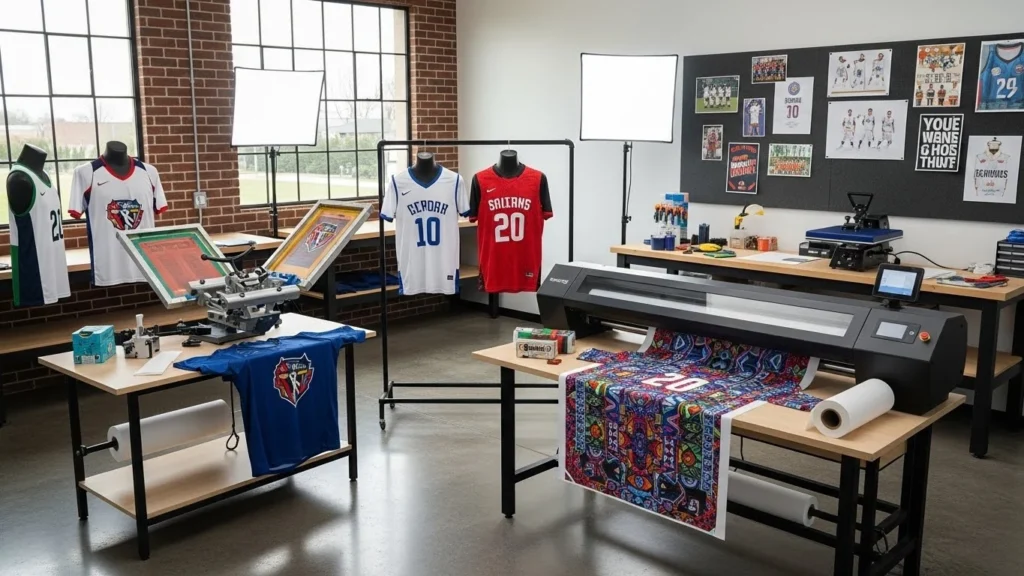
Match jerseys often use low-weight applications to reduce bulk, friction, and water retention. Decoration is a visible match jersey vs replica jersey difference, but the exact method varies by supplier.
Depending on the product, this may include:
- Heat-applied crest
- Thin silicone badge
- Lightweight transfer logo
- Perforated transfer
- Bonded label
- Sublimated internal detail
- Lightweight names and numbers
Adidas notes that authentic jerseys often use printed or heat-applied logos rather than stitched applications to save weight. Nike refers to authentic design details in its Match products. PUMA’s player jerseys combine lightweight ULTRAWEAVE construction with performance-oriented decoration.
These applications can produce a clean technical appearance, but they require controlled heat, pressure, adhesion, and washing. Poor application can lead to edge lifting, cracking, colour migration, or delamination.
Replica Jersey Decoration
Replica jerseys may use more durable or tactile applications. In the match jersey vs replica jersey specification, the replica crest may prioritize texture and repeat-wash durability:
- Woven crest
- Embroidered crest
- Heavier heat transfer
- Sewn label
- Standard name and number transfer
- Simplified badge construction
Adidas states that replica products may use a woven team badge rather than the heat-applied application used on an authentic jersey. This provides a more traditional feel and can suit repeat supporter wear.
However, this is not a universal rule. Some replica jerseys use heat transfers, while some match jerseys include embroidered or structured elements. The bill of materials must state the exact method.
Fanwear Decoration
Fanwear can use the broadest range. A match jersey vs replica jersey decoration comparison is relatively narrow, while fanwear can use fashion-oriented techniques:
- Screen print
- Embroidery
- Chenille
- Appliqué
- Puff print
- High-density print
- Woven patch
- Silicone badge
- Debossing
- Sublimation
- Distressed print
- Fashion label systems
The decoration should suit the fabric and price tier. Heavy embroidery may work on a sweatshirt but distort a lightweight jersey. A large screen print may work on a cotton T-shirt but restrict airflow on a performance top.
Visual Accuracy Across Tiers
A three-tier collection should decide which design details remain identical and which are simplified. The match jersey vs replica jersey relationship should preserve the team identity even when the technical construction changes.
Elements usually kept consistent:
- Main colours
- Crest identity
- Primary pattern
- Sponsor hierarchy
- Name and number style
- Season or campaign story
Elements that may change:
- Fabric texture
- Panel count
- Ventilation
- Crest method
- Collar complexity
- Internal taping
- Hem label
- Packaging
- Fit
The match jersey vs replica jersey relationship should feel intentional. The replica should not look like a production error or unauthorized imitation.
Names, Numbers, and Licensing
Official club and national-team products require permission to use protected crests, sponsor marks, player names, competition logos, and other intellectual property. A private label manufacturer should receive authorized artwork from the buyer.
FIFA actively protects its tournament names, symbols, logos, and identifiers. Similar rights apply to clubs, leagues, federations, sponsors, and athletes.
BUSHI Sports® can manufacture custom teamwear from buyer-approved artwork, but the buyer remains responsible for confirming ownership, licensing, and authorization.
Production Testing
Every match jersey vs replica jersey decoration method should be tested on the exact fabric.
Testing should cover:
- Adhesion
- Stretch
- Wash resistance
- Abrasion
- Colour migration
- Heat damage
- Edge lifting
- Cracking
- Puckering
- Placement accuracy
BUSHI Sports® explains artwork preparation in why vector artwork matters and how to prepare print-ready files.
Difference 5: Price, Durability, Care, and Commercial Role
The fifth match jersey vs replica jersey difference is the complete value proposition.
Why Match Jerseys Cost More
A match jersey can cost more because it may require specialized development. The match jersey vs replica jersey cost gap may include:
- Specialized fabric
- Multiple fabric zones
- More pattern pieces
- Bonded construction
- Lightweight badges
- Performance testing
- Narrower tolerances
- Smaller production volume
- Premium packaging
- Higher development cost
The higher price does not mean every component is heavier or more durable. In fact, some elite components are selected primarily for low weight and performance rather than maximum resistance to rough daily wear.
Why Replica Jerseys Can Be Better for Everyday Use
Replica jerseys often provide a strong balance of identity, comfort, durability, and price. For many clubs, the replica is the highest-volume product in the match jersey vs replica jersey range.
Their stable fabric and regular fit can make them more practical for:
- Stadium attendance
- Regular washing
- Travel
- Casual football
- School use
- Academy training
- Retail gifting
- Broad supporter sizing
For many buyers, the replica is the best overall product—not a lower-quality mistake.
Fanwear Has the Widest Price Range
Fanwear can be the least expensive tier, but it can also become premium lifestyle merchandise. The match jersey vs replica jersey price ladder therefore does not define the maximum price of every fanwear product.
A simple printed T-shirt may offer accessible entry pricing. A limited-edition retro jacket, artist collaboration, or premium knit jersey may cost more than a replica.
This is why fanwear should be understood as a category, not a quality level.
Care Differences
A match jersey may require careful washing because of lightweight fabric, bonded seams, and delicate heat applications. Match jersey vs replica jersey care instructions should be written separately when materials or applications differ.
A replica may tolerate regular supporter use more easily. Fanwear care depends on the specific fabric and decoration.
Common guidance includes:
- Wash according to the approved care label.
- Turn decorated garments inside out.
- Close zippers and hook-and-loop components.
- Avoid high dryer temperatures.
- Do not iron directly over transfers.
- Separate dark and light colours.
- Avoid harsh bleach.
- Dry away from excessive heat.
Care instructions should be based on finished-product testing, not copied from another jersey.
Inventory and Reorder Strategy
The match jersey vs replica jersey business model affects inventory.
Match jerseys may have:
- Higher unit cost
- Lower demand volume
- More size sensitivity
- Longer component lead times
- Greater risk of leftover stock
Replica jerseys may have:
- Higher supporter demand
- Easier sizing
- More repeat orders
- Broader customization options
- Better core-stock potential
Fanwear may have:
- The widest product range
- Seasonal colour changes
- Event-driven sales
- Lower entry price
- Lifestyle sizing
- Cross-selling potential
A brand should not produce equal quantities of every tier automatically. Forecasting should reflect the customer base.
Commercial Positioning Table
| Business question | Match jersey | Replica jersey | Fanwear |
| Brand authority | Highest technical statement | Main supporter product | Expands culture and accessibility |
| Average unit cost | Highest | Mid-range | Low to premium |
| Size risk | High | Moderate | Depends on silhouette |
| Reorder complexity | Higher | Moderate | Product-specific |
| Retail audience | Players and collectors | Broad supporters | Widest audience |
| Product lifespan | Season and performance focused | Strong core-season product | Seasonal, evergreen, or limited edition |
This final match jersey vs replica jersey difference shows why a complete product architecture is more valuable than one “best” shirt.
What Exactly Is Fanwear?
Fanwear is often confused with replica jerseys because replicas are made for supporters. The categories overlap, but they are not identical.
A replica jersey is usually a supporter adaptation of a specific on-field design. In match jersey vs replica jersey terminology, fanwear is the umbrella category that can contain the replica plus many other products.
Fanwear includes that replica and all other apparel or accessories created around the team identity.
Fanwear Categories
Direct Kit Fanwear
- Replica home jersey
- Replica away jersey
- Goalkeeper replica
- Fan jersey
- Youth kit
- Baby kit
Training-Inspired Fanwear
- Training shirt
- Anthem jacket
- Tracksuit
- Travel polo
- Pre-match top
- Warm-up shirt
Lifestyle Fanwear
- Cotton T-shirt
- Hoodie
- Sweatshirt
- Retro jersey
- Fashion jersey
- Denim jacket
- Varsity jacket
- Cropped top
- Oversized shirt
Accessories
- Cap
- Scarf
- Socks
- Bag
- Beanie
- Flag
- Wristband
Official brand stores demonstrate this wider structure. Adidas federation pages combine authentic jerseys, replica products, fan jerseys, track tops, T-shirts, jackets, and accessories. The official FIFA store similarly separates jerseys from wider apparel and merchandise.
Fanwear Design Does Not Need to Copy the Match Shirt
A fanwear collection can use selected assets from the match identity. This allows the match jersey vs replica jersey design language to extend into lifestyle merchandise:
- Club colours
- Crest
- Season pattern
- Number font
- Founding year
- Stadium coordinates
- Supporter phrase
- Heritage badge
- Cultural motif
The design can then be adapted to a different garment and audience.
For example:
- Match jersey: full tonal cultural pattern
- Replica jersey: same pattern on a stable polyester base
- Fan jersey: simplified pattern with regular fit
- Cotton T-shirt: crest and one graphic detail
- Hoodie: embroidered heritage badge
- Jacket: lining printed with the season pattern
This creates a connected range without pretending every item is the player shirt.
Terminology: Authentic, Match, Replica, Stadium, and Fan Jersey
The terminology used in match jersey vs replica jersey discussions can confuse buyers because brands use different names.
| Term | Common meaning | Important note |
| Match jersey | Player-performance retail product | Often equivalent to authentic |
| Authentic jersey | Same or closest retail construction to on-field version | Does not mean replicas are counterfeit |
| Stadium jersey | Nike supporter-oriented product tier | Often labelled replica in product descriptions |
| Replica jersey | Licensed supporter adaptation of match design | Replica means product tier, not fake |
| Fan jersey | Simplified or lower-price supporter shirt | May differ more significantly from match design |
| Fanwear | Entire supporter apparel and merchandise category | Includes jerseys and non-jersey products |
| Team jersey | Can mean playing uniform or general club shirt | Specification must be clarified |
| Pro or Elite jersey | Supplier-defined high-performance tier | Not a universal standard |
A private label brand should publish its own match jersey vs replica jersey definitions. Product names should not be used to hide material substitutions.
How Teamwear Brands Can Build a Three-Tier Product Range
The match jersey vs replica jersey framework can be converted into a clear B2B product system.
Tier 1: Match
Recommended direction:
- Lightweight performance polyester
- Athletic fit
- Body-mapped ventilation
- Low-bulk seams
- Heat-applied crest
- Lightweight numbers
- Premium packaging
- Detailed technical specification
Best suited to:
- Professional clubs
- Elite teams
- Premium academies
- Collectors
- High-end retail
Tier 2: Replica or Team
Recommended direction:
- Durable moisture-managing polyester
- Regular athletic fit
- Stable collar
- Woven, embroidered, printed, or durable heat-applied crest
- Sublimated or transfer names and numbers
- Wide size range
- Practical packaging
Best suited to:
- Supporters
- Amateur clubs
- Academies
- Schools
- Universities
- Main retail volume
Tier 3: Fanwear
Recommended direction:
- Product-specific materials
- Lifestyle or relaxed fits
- Simplified graphics
- Broad size and style range
- Accessible entry products
- Seasonal and limited-edition options
Best suited to:
- General supporters
- Families
- Events
- Sponsors
- Retail partnerships
- Community campaigns
Preserve One Visual Identity
The match jersey vs replica jersey design should remain recognizably connected even when the construction and price change.
Across all tiers, keep selected assets consistent:
- Main colours
- Crest
- Story
- Number language
- Campaign identity
- Quality standard
The construction can change without weakening the brand.
Manufacturing Workflow for Three Jersey Tiers
1. Define Product Architecture
Confirm the number of tiers, intended users, target prices, and distribution channels.
2. Approve the Core Design
Lock the home, away, goalkeeper, sponsor, crest, colour, and number system.
3. Select Tier-Specific Fabrics
Choose match, replica, and fanwear materials according to performance, comfort, durability, decoration, and price.
4. Develop Separate Patterns
Create athletic, regular, women’s, youth, and lifestyle blocks where required.
5. Assign Decoration Methods
Define crest, logo, sponsor, name, number, label, and packaging methods by tier.
6. Produce Physical Samples
Sample every tier. Do not approve a match jersey and assume the replica will be correct.
7. Conduct Wear and Wash Tests
Assess fit, movement, moisture, print, transfer adhesion, shrinkage, pilling, colourfastness, and seam stability.
8. Approve Size Sets
Check grading, number scale, crest placement, and artwork across the full size range.
9. Lock Bills of Materials
Create separate bills of materials for each tier to prevent unapproved substitution.
10. Approve Pre-Production Samples
Sign off final materials, fit, colours, decoration, labels, and packaging.
11. Inspect Bulk Production
Compare bulk garments with the correct tier reference sample.
12. Archive Reorder Files
Store artwork, swatches, patterns, measurements, labels, and production records.
BUSHI Sports® explains broader inspection planning in how quality control works in sportswear manufacturing.
Quality-Control Checklist
| Inspection area | Match jersey | Replica jersey | Fanwear |
| Fabric | Weight, ventilation, stretch, opacity | Durability, print, comfort, stability | Product-specific feel and performance |
| Fit | Athletic measurements and low excess | Regular fit and broad consistency | Style-specific measurements |
| Crest | Lightweight application and adhesion | Durable application and alignment | Style-appropriate decoration |
| Numbers | Low weight, stretch, competition placement | Readability and durability | Optional or lifestyle treatment |
| Seams | Low bulk and strength | Repeat-wash durability | Construction suited to fabric |
| Colour | Match approved team standard | Match visual identity | Coordinate with collection |
| Labels | Authentic tier identification | Replica or team identification | Clear product description |
| Packaging | Premium, technical, or collector | Retail practical | Lifestyle or campaign-led |
Prevent Tier Mixing
One of the biggest match jersey vs replica jersey production risks is mixing components between tiers.
Examples include:
- Replica fabric used in match production
- Match heat-transfer crest applied to the wrong fabric
- Fanwear size labels placed in replica jerseys
- Incorrect care labels
- Regular-fit pattern used for match tier
- Simplified collar used without approval
Every carton, production line, and inspection report should identify the tier clearly.
Cost and MOQ Planning
The match jersey vs replica jersey price difference begins at product development, not only at final sewing.
A match jersey vs replica jersey quotation should separate each bill of materials.
Cost drivers include:
- Fabric technology
- Fabric minimums
- Number of panel materials
- Pattern development
- Collar construction
- Crest application
- Sponsor and number method
- Testing
- Size range
- Women’s and youth blocks
- Packaging
- Order quantity
Match jerseys may require higher minimums when custom engineered fabrics or trims are used. Replica jerseys may support larger quantities and more stable reorders.
Fanwear can sometimes use standard stock materials, but a wide product assortment can increase total development and inventory complexity.
A quotation should list each tier separately. Do not accept one vague description for three different products.
BUSHI Sports® explains broader pricing through its sportswear manufacturing cost breakdown and provides additional guidance on minimum order quantities.
Common Buyer Mistakes
Believing Replica Means Counterfeit
A licensed replica is an official supporter product. Counterfeits are unauthorized copies.
Buying Match Fit Without Checking Measurements
A customer may need a larger match jersey than a replica because the athletic pattern is closer to the body.
Assuming Match Jerseys Are Always More Durable
Elite products may prioritize low weight and performance. Replica products can be more practical for repeated everyday wear.
Using the Same Fabric for Every Tier
This removes meaningful differentiation and may make the match product overpriced or the replica product uncomfortable.
Using One Size Chart
Match, replica, women’s, youth, and fanwear fits need separate measurements.
Simplifying Without a Plan
A replica should keep the core visual identity. Randomly removing panels, colours, or details can weaken the design.
Ignoring Licensing
Club crests, competition marks, sponsors, player identities, and official designs require authorization.
Producing Too Many Match Jerseys
Premium performance products may have a smaller audience than replicas and fanwear.
Hiding Product Differences
Customers should know which fabric, fit, crest, and construction they are buying.
Which Jersey Should You Choose?
The final match jersey vs replica jersey decision should be based on actual use rather than the assumption that the most expensive option is always best.
Choose a Match Jersey When:
- You want the closest retail version to the player product.
- You prefer a slim athletic fit.
- Low weight and ventilation are priorities.
- You are a collector seeking premium technical details.
- You understand the care and sizing requirements.
Choose a Replica Jersey When:
- You want the official visual identity in a comfortable fit.
- You plan to wear it regularly.
- You want easier sizing.
- Durability and price balance matter.
- You may use it for recreational football or training.
Choose Fanwear When:
- You want team identity in an everyday garment.
- You prefer cotton, fleece, or lifestyle fabrics.
- You want a lower entry price or a premium fashion product.
- You prefer an oversized, retro, cropped, or relaxed fit.
- You want apparel beyond the official kit design.
The right answer to match jersey vs replica jersey depends on use, fit preference, care expectations, and budget—not status alone.
A buyer who understands match jersey vs replica jersey trade-offs can choose the correct product without paying for features that do not serve the intended use.
Why Work With BUSHI Sports®?
BUSHI Sports® helps sports brands and teamwear buyers convert the match jersey vs replica jersey structure into distinct, clearly specified products.
As a custom soccer uniform and private label sportswear manufacturer based in Sialkot, Pakistan, BUSHI Sports® can support:
- Match-level soccer jerseys
- Replica or team jerseys
- Fan jerseys
- Supporter T-shirts
- Training apparel
- Tracksuits and jackets
- Home, away, and goalkeeper kits
- Men’s, women’s, and youth sizing
- Sublimation
- Embroidery and woven crests
- Heat transfers and silicone badges
- Names and numbers
- Private labels
- Size-set sampling
- Custom packaging
- Bulk inspection
- International order coordination
Buyers can begin with the custom wholesale soccer uniform manufacturer page and submit technical requirements through the contact page.
Start Your Three-Tier Soccer Apparel Project
Sports brands, clubs, academies, schools, universities, retailers, distributors, and private label buyers can contact BUSHI Sports® to discuss match jerseys, replica jerseys, fanwear, fabrics, fits, samples, minimum order quantities, pricing, names, numbers, logos, labels, packaging, bulk production, and delivery.
- Email: info@bushisports.com
- WhatsApp: +92 348 4018 578
- Project inquiry: Contact BUSHI Sports®
Share the intended customer, product tiers, target prices, design files, fabrics, size range, estimated quantity, branding methods, packaging, and required delivery date. A complete brief allows the manufacturing team to prepare separate recommendations and quotations for every tier.
Frequently Asked Questions
What is the difference between a match jersey and a replica jersey?
A match jersey is designed as the closest retail version of the player-worn product, usually with lightweight fabric, athletic fit, and low-bulk performance details. A replica jersey keeps the main team design but uses a more comfortable fit and supporter-oriented construction.
Does replica jersey mean fake?
No. In official football retail, replica commonly means a legitimate supporter version of the team’s match design. A counterfeit is an unauthorized product that copies protected branding or design.
Is an authentic jersey the same as a match jersey?
Usually, yes. Brands commonly use “authentic” for the player-performance retail tier. Nike often uses Match, while Adidas and PUMA commonly use Authentic. Exact terminology varies.
What is a stadium jersey?
Nike uses Stadium for its supporter-oriented jersey tier. It is generally the equivalent of a replica jersey, using the professional design with a comfort-focused construction.
What is fanwear?
Fanwear is the broad category of apparel and merchandise designed for supporters. It includes replica jerseys, fan jerseys, T-shirts, hoodies, jackets, retro products, scarves, caps, and other team-branded items.
Are match jerseys better than replica jerseys?
They are more performance-focused, but they are not automatically better for every buyer. A replica may provide a better fit, greater everyday durability, easier care, and better value for a supporter.
Can you play soccer in a replica jersey?
Yes. Many replica jerseys use moisture-managing polyester and are suitable for recreational play. Elite athletes may prefer match-level fabric and fit.
Why are match jerseys tighter?
The athletic pattern reduces loose fabric and supports high-intensity movement. Buyers should check the specific measurement chart rather than assuming their normal casual size.
Why are some match crests heat applied?
Lightweight heat-applied or silicone crests can reduce bulk and water retention. Replica jerseys may use woven or embroidered badges for supporter durability and texture, although methods vary.
Are replica jerseys more durable?
They can be more practical for repeated everyday use because of stable fabric and durable applications. Durability still depends on the exact material, construction, care, and supplier.
Is fanwear always cheaper?
No. Basic fan products may be inexpensive, but limited-edition retro jerseys, collaborations, jackets, and premium lifestyle pieces can cost more than standard replicas.
Should a club offer all three tiers?
Not always. The decision depends on audience size, budget, sales channel, and inventory. Many growing clubs can begin with a durable team or replica jersey and a small fanwear range before adding a match tier.
Can the three tiers use the same design?
Yes. The main visual identity can remain consistent while fabric, fit, paneling, crest method, and packaging change. Simplification should be planned rather than random.
What should a private label buyer send to the manufacturer?
Send product-tier definitions, artwork, colour references, size charts, target prices, quantities, fabrics, crest and logo methods, names and numbers, labels, packaging, and delivery requirements.
What affects the MOQ?
MOQ can be affected by custom fabrics, panel materials, knitted collars, labels, badge methods, size range, number of tiers, packaging, and production setup.
Conclusion
The match jersey vs replica jersey comparison is not a contest between a real product and a fake one. It is a comparison between two legitimate product strategies, while fanwear expands the range into broader supporter and lifestyle apparel.
Match jerseys prioritize elite-level performance, low weight, athletic fit, and technical construction. Replica jerseys preserve the team’s main visual identity while improving comfort, durability, sizing accessibility, and price. Fanwear uses the team identity across jerseys, T-shirts, hoodies, jackets, retro products, and other merchandise for a wider audience.
For brands and clubs, the strongest match jersey vs replica jersey strategy is to define each tier clearly. Choose separate fabrics, patterns, decoration methods, labels, size charts, packaging, and prices. Preserve the core colours, crest, story, and visual identity across the collection without pretending that every product uses the same construction.
BUSHI Sports® supports match jersey vs replica jersey product development through fabric selection, pattern development, sublimation, samples, size sets, crest applications, names, numbers, private labels, quality inspection, packaging, and international production coordination.
To discuss a custom collection, email info@bushisports.com, message BUSHI Sports® on WhatsApp at +92 348 4018 578, or submit your requirements through the contact page.