Jacket Manufacturer: 7 Proven Custom Outerwear Manufacturing Strategies for Global Brands
A jacket is rarely a simple garment. Even a clean, lightweight style may combine a shell fabric, lining, zipper, pocket bags, elastic, rib, labels, decoration, reinforcement, and packaging components. Each element has to work with the others, which is why choosing the right jacket manufacturer can directly affect product quality, delivery reliability, and the reputation of an apparel brand.
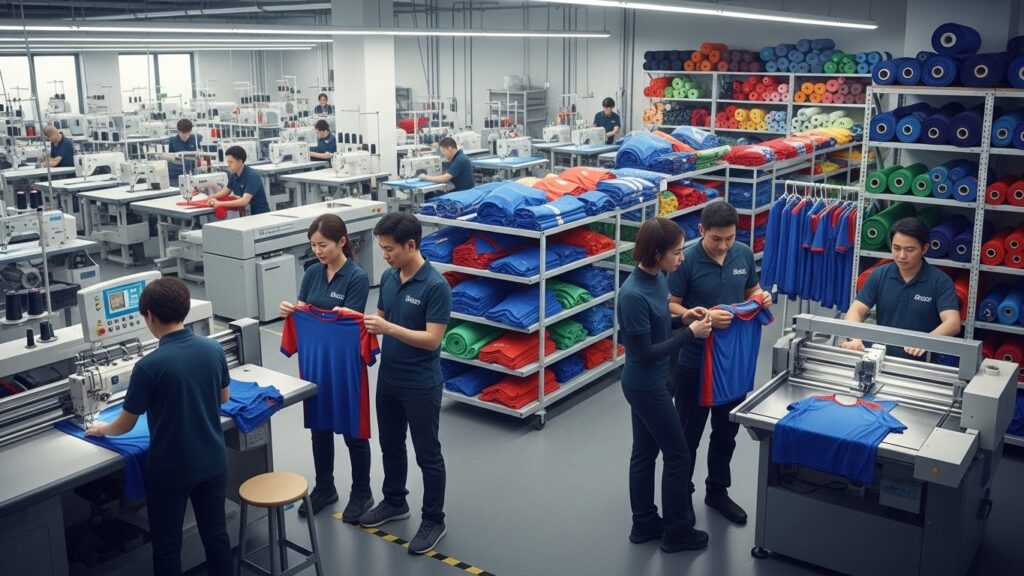
For global brands, custom outerwear manufacturing is not just the process of sewing fabric panels together. It includes product planning, technical development, fabric sourcing, pattern making, sampling, branding, bulk production, quality control, labeling, packaging, and international shipping. A successful program turns a design idea into a repeatable commercial product that performs consistently across sizes, colors, and reorders.
Global brands therefore need more than a sewing contractor. They need a custom outerwear manufacturing partner that can coordinate design, materials, production, and delivery.
BUSHI Sports® supports apparel companies through custom jacket manufacturing and complete OEM, private label, sampling, customization, quality-control, and logistics services. This guide explains the seven areas brands should control when planning custom outerwear manufacturing for domestic or international markets.
“A strong jacket collection is created when design, fabric, fit, construction, branding, testing, and delivery are managed as one connected system.”
What Is Custom Outerwear Manufacturing?
Custom outerwear manufacturing is the development and production of jackets according to a buyer’s design, performance, sizing, branding, packaging, and quantity requirements. Unlike buying ready-made wholesale stock, custom production allows a brand to determine how the garment should look, feel, fit, function, and appear at retail.
A project may include customization of:
- Jacket silhouette and intended use
- Shell fabric, lining, insulation, and reinforcement
- Fabric weight, texture, stretch, breathability, and finish
- Collar, hood, cuff, sleeve, hem, and pocket construction
- Zippers, snaps, drawcords, toggles, and elastic systems
- Embroidery, screen printing, heat transfers, patches, and badges
- Brand labels, care labels, size labels, hangtags, and barcodes
- Men’s, women’s, unisex, youth, athletic, regular, or oversized fits
- Folding, individual packaging, carton ratios, and export markings
The level of development varies. An established brand may submit a complete tech pack, while a startup may provide sketches, inspiration images, or a physical reference sample. In either case, custom outerwear manufacturing becomes more predictable when the buyer records every approved choice in a clear technical specification.
The finished jacket should not depend on verbal instructions or scattered messages. Fabric references, measurements, artwork dimensions, trim details, stitching requirements, tolerances, and packaging instructions should all be documented before bulk cutting begins.
1. Define the Jacket Before Requesting a Quotation
The first proven strategy is to define the product clearly. A request for “a premium custom jacket” does not give a manufacturer enough information to calculate material consumption, labor, sampling needs, or production cost.
Before approaching a factory, brands should decide:
- Who will wear the jacket?
- In which climate or season will it be used?
- Is it designed for sport, work, fashion, travel, promotion, or everyday wear?
- Will it be worn over a T-shirt, uniform, hoodie, or multiple winter layers?
- Does it need wind resistance, water repellency, warmth, stretch, visibility, or packability?
- What is the target retail price and target manufacturing cost?
- Which countries will receive the finished product?
- What quantity is needed by style, color, and size?
These questions guide every later decision in custom outerwear manufacturing. A clear custom outerwear manufacturing brief also gives suppliers a fair basis for preparing quotations and comparing material options.
A lightweight running windbreaker and a padded lifestyle jacket may look similar in a sketch, but they require different fabrics, patterns, seam structures, trims, tests, and cost expectations.
Common Jacket Categories
| Jacket type | Typical use | Common material direction | Main production priority |
|---|---|---|---|
| Windbreaker | Running, training, events, teamwear | Lightweight polyester or nylon | Wind protection, low bulk, mobility |
| Coach jacket | Streetwear, clubs, staff clothing | Woven shell with light lining | Snap quality, clean branding, collar shape |
| Bomber jacket | Fashion, lifestyle, uniforms | Woven shell, lining, rib trims | Rib recovery, symmetry, sleeve setting |
| Varsity jacket | Teams, schools, fashion collections | Wool blends, fleece, faux leather, rib | Patch placement, trim consistency, structure |
| Softshell jacket | Outdoor, workwear, travel | Stretch woven or bonded fabric | Movement, abrasion resistance, breathability |
| Puffer jacket | Winter lifestyle and outdoor use | Woven shell, insulation, lining | Fill distribution, quilting, warmth, bulk |
| Rain shell | Wet-weather use | Coated or laminated woven fabric | Water resistance, hood design, seam control |
| Fleece jacket | Layering and casualwear | Polar fleece or brushed knit | Pilling, shrinkage, zipper compatibility |
| Track jacket | Sports teams and activewear | Tricot, interlock, stretch woven | Athletic fit, logo durability, movement |
| Utility jacket | Workwear and outdoor collections | Canvas, twill, durable woven fabrics | Pocket strength, reinforcement, abrasion |
A brand should identify one primary use case instead of attempting to combine every feature into one product. Custom outerwear manufacturing works best when each performance claim is linked to an actual customer need.
2. Select Fabrics as a Complete Performance System
Fabric selection is one of the most important stages of custom outerwear manufacturing. In practice, a reliable custom outerwear manufacturing program treats the shell, lining, insulation, trims, and care method as one material system.
Fiber composition alone does not define performance. Two fabrics labeled “100% polyester” can differ significantly in weight, yarn, density, construction, coating, stretch, hand feel, wind resistance, water repellency, and durability.
A fabric specification should consider:
- Fiber composition
- Woven or knitted construction
- Weight in GSM or ounces per square yard
- Thickness and density
- Mechanical or elastane stretch
- Stretch recovery
- Air permeability
- Water repellency or resistance
- Abrasion and snag resistance
- Colorfastness
- Dimensional stability
- Pilling tendency
- Surface finish and hand feel
- Compatibility with printing, embroidery, bonding, or heat
According to the Textile Exchange Materials Market Report 2025, global fiber production increased from 125 million tonnes in 2023 to 132 million tonnes in 2024. Polyester represented 59% of total global fiber production, and 88% of polyester was fossil-based. These figures show why polyester remains central to jackets, linings, fleece, and performance apparel, but they also show why brands are under pressure to make more responsible material choices.
Polyester and Nylon
Polyester is widely used in custom outerwear manufacturing because it can be developed into lightweight shells, fleece, interlock, tricot, linings, insulated constructions, and coated weather-resistant textiles. It can also provide strong color consistency and compatibility with several branding methods.
Nylon is common where brands need a smooth touch, low weight, and strong abrasion performance. However, nylon and polyester should not be selected only by name. The actual fabric structure and finish determine whether the material is suitable for a windbreaker, puffer, rain shell, or fashion jacket.
Cotton and Cotton Blends
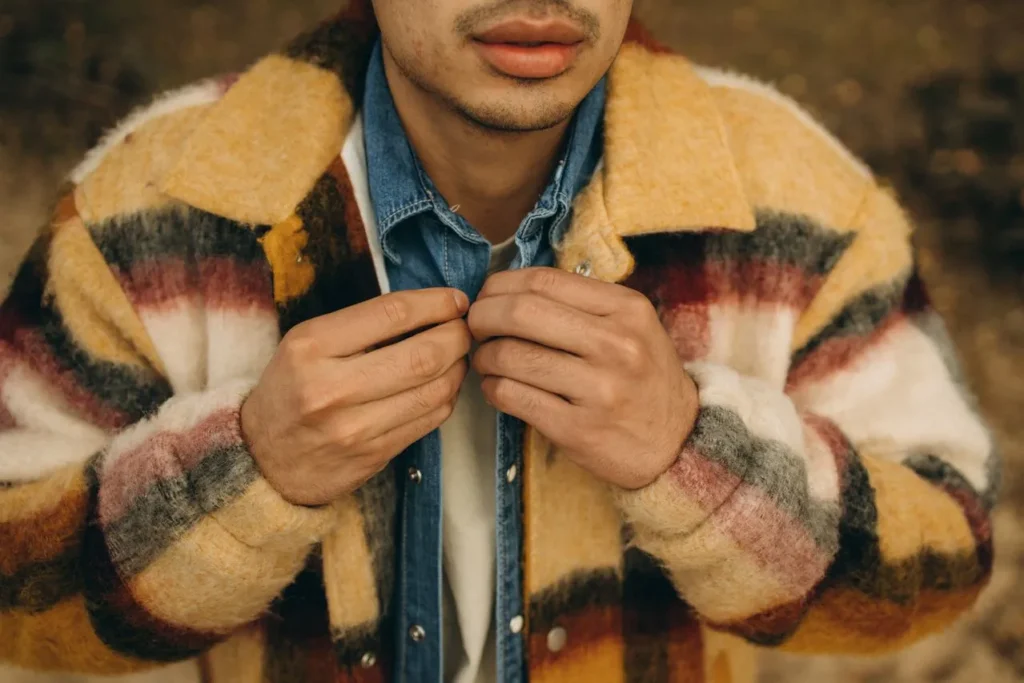
Cotton twill, canvas, and cotton-rich blends are suitable for coach jackets, utility styles, streetwear, and casual outerwear. They can provide a natural hand feel and good print compatibility, but shrinkage and colorfastness must be controlled. Brands can learn more from the BUSHI Sports® guide to fabric shrinkage control.
Fleece, Softshell, and Bonded Fabrics
Fleece works well for warm-up jackets, midlayers, and casual collections. Key risks include pilling, shedding, shrinkage, and zipper waviness. Bonded softshell fabrics combine multiple layers and may provide stretch, wind resistance, and a soft interior, but the bond strength between layers must remain stable.
Lining and Insulation
A jacket lining affects comfort, durability, dressing ease, and appearance. Insulated products also require decisions about fill type, fill weight, loft, quilting pattern, migration control, and garment bulk. In custom outerwear manufacturing, warmth is created by the complete garment system—not by the shell fabric alone.
“The best outerwear fabric is not automatically the most expensive fabric. It is the material that matches the end use, target price, care method, branding process, and expected product life.”
3. Build a Production-Ready Tech Pack
A visual concept communicates style, but a tech pack communicates production. Reliable custom outerwear manufacturing depends on a technical document that removes uncertainty for pattern makers, sample developers, buyers, and quality inspectors.
A jacket tech pack should normally include:
- Front, back, side, and internal technical drawings
- Product name, style number, and revision date
- Shell, lining, insulation, and trim specifications
- Approved color references
- Measurement chart and points of measure
- Base-size measurements
- Grading rules
- Seam and stitch requirements
- Pocket dimensions and positions
- Zipper lengths and hardware finishes
- Artwork files, dimensions, and placements
- Label and hangtag instructions
- Care-label content
- Packing and carton instructions
- Testing requirements
- Measurement and workmanship tolerances
Fit Must Reflect Layering
Jacket fit is different from T-shirt fit because outerwear is frequently worn over other clothing. For that reason, custom outerwear manufacturing should define both body measurements and the amount of ease required for movement and layering.
A running shell may need close athletic shaping, while a winter puffer must allow room for underlayers without creating excessive bulk.
During custom outerwear manufacturing, fit development should evaluate:
- Chest, waist, and hem ease
- Shoulder width
- Armhole depth
- Sleeve length and bicep allowance
- Elbow movement
- Back length and front drop
- Collar comfort
- Hood depth and visibility
- Cuff opening
- Pocket accessibility
- Hem lift during arm movement
Wearers should be able to raise their arms, reach forward, rotate, sit, and bend without severe pulling at the shoulders, sleeve strain, zipper distortion, or excessive hem movement.
Digital mockups and 3D tools can improve early communication, but they do not replace physical fitting. BUSHI Sports® explains how virtual development can support production in its article on 3D apparel design technology.
4. Use Sampling to Control Risk Before Bulk Production
Sampling is not a decorative step. Within custom outerwear manufacturing, it is the most practical opportunity to identify fit, construction, material, and branding problems before they become bulk-order problems.
It is the stage where a brand tests whether the design can become a repeatable product. In professional custom outerwear manufacturing, sampling reduces the risk of producing hundreds or thousands of jackets with an incorrect fit, unsuitable fabric, unstable trim, or misplaced branding.
A project may use several sample types.
Development Sample
The first development sample tests the basic construction and interpretation of the design. It may use substitute materials when approved bulk materials are not yet available.
Fit Sample
The fit sample focuses on measurements, shape, layering allowance, sleeve movement, collar comfort, hood balance, and pocket position.
Size-Set Sample
A size set checks whether the grading works across smaller and larger sizes. This is important because a correct medium size does not guarantee that an extra-small or 3XL will remain proportional.
Sales or Photography Sample
These samples support presentations, line reviews, campaigns, or pre-orders. Brands should clearly identify whether they are visual samples or final production standards.
Pre-Production Sample
The pre-production sample should reflect the confirmed bulk product as closely as possible. It should use approved fabric, trims, colors, labels, artwork, construction, and packaging direction.
Every sample round should be documented with photographs, measurements, comments, and revision numbers. BUSHI Sports® discusses the importance of this process in why sampling is the most important step in sportswear manufacturing.
A common mistake in custom outerwear manufacturing is approving a sample with comments such as “make it a little looser” or “move the pocket slightly.” Comments should use measurements: increase half-chest by 2 cm, lower pocket opening by 1.5 cm, or reduce collar height by 0.8 cm. Measurable feedback prevents different interpretations.
5. Match Branding Methods to the Jacket Material
Branding is a technical decision as well as a visual one. A professional custom outerwear manufacturing workflow confirms decoration compatibility before approving bulk fabric or final artwork.
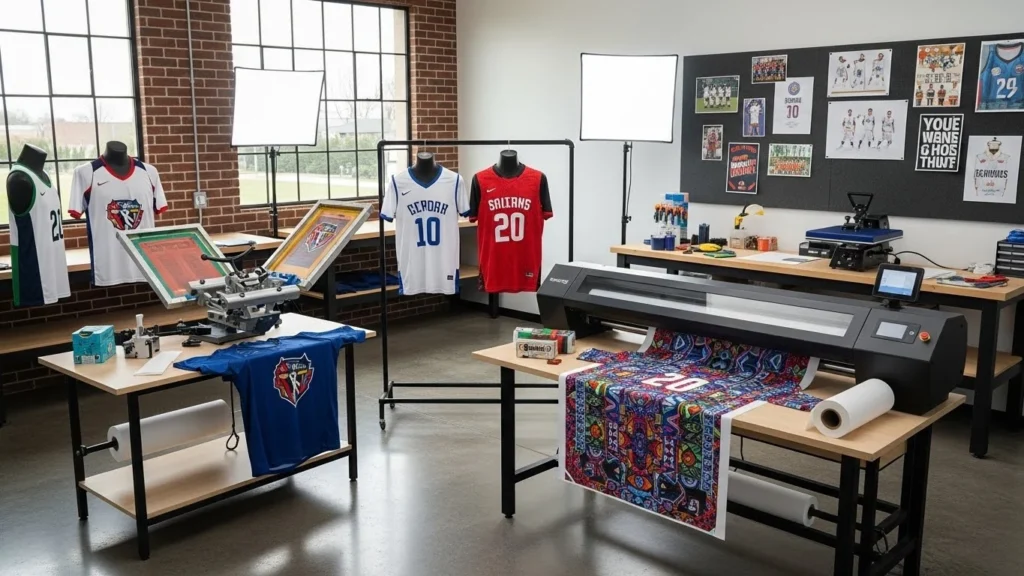
Embroidery, screen printing, heat transfer, sublimation, woven patches, silicone badges, and reflective applications behave differently on coated shells, fleece, cotton twill, stretch woven fabrics, and insulated panels.
| Branding method | Best applications | Main benefit | Risk to control |
|---|---|---|---|
| Embroidery | Chest logos, names, premium marks | Durable, textured appearance | Puckering, needle damage, backing visibility |
| Screen printing | Flat panels and larger graphics | Strong color and efficient bulk production | Coating compatibility and curing temperature |
| Heat transfer | Detailed logos, names, reflective graphics | Flexible design and placement | Adhesion, wash durability, heat sensitivity |
| Woven patch | Varsity, club, workwear, lifestyle products | Detailed branded element | Edge quality and attachment consistency |
| Embroidered patch | Team and heritage branding | Strong texture and identity | Thickness and stiffness |
| Silicone badge | Technical and modern fashion jackets | Distinct tactile finish | Weight, flexibility, washing |
| Sublimation | Selected polyester panels and linings | Permanent full-color graphics | Requires compatible polyester material |
| Reflective transfer | Running, cycling, and visibility products | Low-light visibility | Placement and wash resistance |
The decoration should be tested on the actual fabric. A transfer that adheres well to untreated polyester may fail on a water-repellent coating. Heavy embroidery can distort a lightweight shell, while high curing temperatures can damage heat-sensitive materials.
Artwork must also be finalized before panel cutting or decoration. BUSHI Sports® provides practical guidance on preparing print-ready files and why vector artwork is important.
In custom outerwear manufacturing, branding extends beyond the exterior logo. Neck labels, care labels, size tabs, zipper pullers, internal binding, lining prints, hangtags, barcode stickers, polybags, and cartons can create a consistent brand presentation.
6. Establish Measurable Quality-Control Standards
A sample can look impressive and still fail after washing, abrasion, movement, or repeated use. Therefore, custom outerwear manufacturing needs measurable acceptance standards rather than visual approval alone.
Quality control in custom outerwear manufacturing should combine visual inspection, measurement checks, functional testing, and documented tolerances.
Incoming Material Inspection
Shell fabric, lining, insulation, ribs, zippers, snaps, labels, and decoration materials should be checked before cutting. Inspection may identify shade variation, width differences, coating defects, stains, holes, inconsistent stretch, or damaged trims.
In-Line Production Checks
In-line checks allow problems to be corrected before they spread across the full order. Inspectors may examine seam allowance, stitch formation, panel matching, pocket position, zipper installation, quilting, bartacks, and decoration placement.
Final Garment Inspection
Finished jackets should be checked for:
- Measurements against the approved specification
- Stitching, seam security, and skipped stitches
- Pocket symmetry and reinforcement
- Zipper, snap, and drawcord function
- Logo size, color, and position
- Lining tension and cleanliness
- Insulation distribution
- Shade consistency
- Thread trimming
- Label accuracy
- Packing and carton assortment
BUSHI Sports® explains a broader inspection workflow in how quality control works in sportswear manufacturing.
Useful Performance Tests
Testing requirements should match the intended use. Depending on the product, custom outerwear manufacturing may require checks for abrasion resistance, air permeability, water repellency, water penetration, seam strength, colorfastness, pilling, dimensional stability, or trim durability.
For example, the ISO 12947-2 Martindale method is used for determining specimen breakdown through abrasion testing for applicable textiles. ASTM D737 measures textile-fabric air permeability, while AATCC TM22 is used to evaluate resistance to surface wetting.
A water-repellent fabric does not automatically create a waterproof jacket. Seams, zippers, vents, pockets, hoods, cuffs, and front closures all influence the performance of the completed garment.
“Outerwear quality is cumulative: durable fabric cannot compensate for weak seams, unstable trims, incorrect grading, or incomplete testing.”
7. Plan Compliance, Packaging, and Global Delivery Early
Compliance should be considered before label artwork is approved—not after the jackets are finished. International custom outerwear manufacturing projects should identify the destination market during product development so labels and documentation can be prepared correctly.
Requirements vary by destination, product, fiber content, age group, performance claim, and sales channel.
For textile products sold in the United States, the Federal Trade Commission’s labeling guidance explains requirements involving fiber content, country of origin, and manufacturer or responsible dealer identity. The guidance also provides specific label-placement information for jackets and blazers.
Brands should confirm:
- Fiber-composition wording
- Shell, lining, filling, or sectional disclosures where required
- Country-of-origin wording
- Company identity or required registration information
- Care instructions
- Size information
- Language requirements
- Safety or warning information when applicable
- Barcode and retailer ticket requirements
- Packaging and recycling marks
- Batch or traceability codes
BUSHI Sports® has published an overview of sportswear labeling requirements for USA, UK, and EU markets. Final legal compliance should always be checked against the rules of the destination market.
Packaging Decisions
Packaging should protect the jacket without adding unnecessary bulk or cost. Brands may specify:
- Folding method
- Tissue or protective inserts
- Individual bags
- Size and barcode stickers
- Hangtags
- Hangers
- Carton quantity
- Size and color ratios
- Carton dimensions
- Shipping marks
- Moisture protection
Professional custom outerwear manufacturing also requires early agreement on freight mode, delivery destination, insurance, duties, and Incoterms. Buyers can review BUSHI Sports® guides to shipping and logistics, Incoterms in export contracts, and export-ready sportswear.
OEM, ODM, and Private Label Jacket Production
Global buyers should understand how their development model affects responsibility, control, cost, and speed. The selected custom outerwear manufacturing model determines how much technical work is led by the buyer and how much is supported by the factory.
| Manufacturing model | Buyer provides | Manufacturer provides | Best suited to |
|---|---|---|---|
| OEM | Detailed design and technical specifications | Sampling and production to specification | Established brands with technical teams |
| ODM | Market direction, concept, and approval | More design, sourcing, and development input | Brands needing guided product development |
| Private label | Branding and selected modifications | Existing or adaptable product direction | Startups, retailers, clubs, and distributors |
| Fully custom cut-and-sew | Original concept and commercial requirements | Shared pattern, material, trim, fit, and construction development | Brands seeking differentiated outerwear |
In OEM custom outerwear manufacturing, the buyer generally controls more technical decisions. ODM production gives the factory a larger role in product development. Private label production can reduce development time by adapting an existing product direction, but the brand should still confirm measurements, materials, labels, branding, and quality requirements.
BUSHI Sports® offers jacket production within a broader custom casualwear manufacturing structure. Brands can develop coordinated collections that include denim jackets, sweatshirts, zip-up hoodies, T-shirts, and polo shirts.
What Determines Custom Jacket Manufacturing Cost?
A jacket quotation cannot be evaluated correctly without comparing specifications. Transparent custom outerwear manufacturing costing should connect every price difference to materials, construction, customization, testing, packaging, or order quantity.
One supplier may quote a lighter shell, generic zipper, basic lining, and simple packaging, while another includes specialized fabric, branded hardware, multiple pockets, testing, and custom labels.
The main cost drivers in custom outerwear manufacturing include:
- Shell-fabric type, weight, finish, and consumption
- Lining and insulation
- Zippers, snaps, elastic, ribs, cords, toggles, and labels
- Number of panels, pockets, facings, and reinforcement areas
- Embroidery stitch count or print complexity
- Order quantity and number of colors
- Pattern making and sampling
- Laboratory testing
- Individual packaging and carton requirements
- Freight, duties, insurance, and delivery terms
A puffer jacket with a lining, insulation, quilting, hood, internal pockets, custom zipper pullers, embroidery, and retail packaging will normally cost more than an unlined windbreaker. The useful question is not “What is the cheapest jacket?” It is “What is the cost of producing the approved specification consistently?”
For more detail, review the BUSHI Sports® sportswear manufacturing cost breakdown.
MOQ and Lead Time in Custom Outerwear Manufacturing
Minimum order quantity may be influenced by fabric dyeing minimums, custom trim quantities, label production, printing setup, color count, and factory efficiency. Low-MOQ custom outerwear manufacturing can be possible when brands use available materials, standard hardware, and limited colorways. Fully custom fabric, coatings, or hardware usually require higher commitments.
The complete lead time includes:
- Requirement review
- Material sourcing
- Pattern development
- Sample production
- Fit revisions
- Bulk-material preparation
- Cutting and decoration
- Sewing and assembly
- Quality inspection
- Packing
- Freight
Late changes to artwork, fabric, labels, size ratios, or packaging can delay the order. A disciplined custom outerwear manufacturing schedule should include approval deadlines for every critical component.
Brands should therefore request a milestone schedule instead of one broad delivery promise. BUSHI Sports® explains these stages in understanding lead times in sportswear production.
Sustainability and Responsible Material Decisions
Sustainability claims should be specific and supported by documentation. Responsible custom outerwear manufacturing should focus on verifiable material information, durable construction, efficient development, and realistic environmental claims.
Terms such as “eco-friendly,” “green,” or “sustainable” are too broad unless the brand can explain the material, process, evidence, and intended benefit.
The European Commission’s textiles strategy states that around 5 million tonnes of clothing are discarded in the EU each year—approximately 12 kilograms per person—and only 1% of clothing material is recycled into new clothing. These figures emphasize the importance of durability, repairability, material traceability, and better end-of-life planning.
Practical decisions for more responsible custom outerwear manufacturing may include:
- Designing jackets for a longer useful life
- Selecting durable shell and trim combinations
- Avoiding unnecessary material complexity
- Using replaceable components where practical
- Reducing sample rounds through accurate tech packs
- Planning efficient cutting markers
- Verifying recycled-content claims
- Using packaging appropriate to the actual shipping risk
- Providing accurate care instructions
- Avoiding environmental claims that cannot be supported
The OECD’s garment and footwear due-diligence guidance also provides a six-step framework for identifying and addressing responsible-business risks within supply chains.
“Responsible manufacturing begins with evidence: traceable materials, documented processes, realistic claims, and products designed to deliver lasting value.”
How to Evaluate a Jacket Manufacturer
A low quotation or attractive sample should not be the only basis for choosing a supplier. Successful custom outerwear manufacturing depends on whether the supplier can repeat the approved product consistently at the agreed scale.
Brands should evaluate whether the factory can manage repeatable custom outerwear manufacturing across materials, sizes, colors, and future reorders.
Ask the manufacturer:
Product Capability
- Which jacket types does the factory produce regularly?
- Can it work from tech packs, sketches, or reference samples?
- What shell, lining, insulation, and trim options are available?
- Can it develop men’s, women’s, unisex, and youth fits?
- Which branding methods suit the chosen fabric?
- Can it arrange relevant testing?
Development Control
- Which sample stages are recommended?
- How are revisions documented?
- Will the pre-production sample use bulk materials?
- How are measurement tolerances agreed?
- How are fabric, trims, and colors approved?
Quality Control
- How is incoming fabric inspected?
- Which in-line checks are performed?
- How are finished measurements recorded?
- How are defects and shade variation managed?
- Can inspection reports be shared?
- What happens if the final inspection identifies a problem?
Commercial Terms
- What is the MOQ per style and color?
- Which costs are included in the quotation?
- Are samples and testing charged separately?
- What payment schedule applies?
- Which Incoterm is used?
- How are cartons packed and labeled?
BUSHI Sports® provides further guidance in what to ask a manufacturer before ordering and how to choose the right sportswear manufacturer.
Common Mistakes Brands Should Avoid
Even experienced buyers can create unnecessary production risk. The following mistakes can weaken custom outerwear manufacturing outcomes.
Approving Fabric From a Photograph
A photograph cannot communicate thickness, stretch, noise, hand feel, opacity, warmth, coating, or recovery. Review physical swatches and test the chosen fabric in a garment sample.
Skipping Movement Tests
A jacket must be assessed while reaching, rotating, sitting, bending, and wearing the intended underlayers. Static appearance alone does not confirm functional fit.
Ignoring Trim Compatibility
A strong shell does not prevent failure if the zipper, snap, rib, elastic, or drawcord system is unsuitable.
Finalizing Artwork Too Early
Logo placement should be confirmed after the pattern, pockets, seams, quilting, and panels are finalized.
Giving Unmeasurable Sample Comments
Replace “make it slightly larger” with a specific measurement change.
Changing Specifications During Bulk Production
Late changes can create wasted materials, delays, mixed production, and disputes.
Comparing Unequal Quotations
Compare the same fabric, construction, trims, decoration, testing, packaging, and delivery scope.
Why Choose BUSHI Sports® as Your Jacket Manufacturer?
BUSHI Sports® is a Sialkot-based custom sportswear and apparel manufacturer serving brands, retailers, wholesalers, distributors, teams, academies, and corporate buyers. Its custom outerwear manufacturing support covers product consultation, sampling, fabric and trim customization, branding, private labeling, bulk production, quality control, packaging, and international delivery.
Depending on the project, BUSHI Sports® can support:
- Custom jacket design and product development
- OEM, ODM, and private label production
- Fabric, lining, color, fit, and size customization
- Embroidery, printing, transfers, badges, and labels
- Development samples and pre-production approval
- Low-MOQ and bulk-order pathways
- Multi-stage quality checks
- Custom packaging and export coordination
- Reorders and ongoing production communication
Brands can learn more about BUSHI Sports®, explore its custom wholesale jacket manufacturing, or submit a project through the contact page.
To discuss a new custom outerwear manufacturing project:
- Message BUSHI Sports® on WhatsApp
- Email info@bushisports.com
- Call +92 348 4018 578
- View the company’s Google Maps location
- Follow BUSHI Sports® on LinkedIn, Instagram, Facebook, and YouTube
Frequently Asked Questions
What information should I send to a jacket manufacturer?
Send the intended jacket type, use case, tech pack or reference images, required materials, colors, sizes, quantity, branding, packaging, destination market, target cost, and desired delivery date. Complete information allows the manufacturer to evaluate custom outerwear manufacturing requirements more accurately.
Can a jacket be developed from an idea or reference image?
Yes. A manufacturer with product-development capability can convert an idea into a technical design, but a reference image does not define measurements, fabric, internal construction, trims, labels, or performance. Sampling is still required.
What is the difference between a jacket manufacturer and a wholesaler?
A manufacturer develops or produces garments, while a wholesaler may sell pre-existing finished stock. Brands that need unique fit, fabric, colors, labels, and packaging generally require custom outerwear manufacturing rather than standard inventory.
Which fabrics are commonly used for jackets?
Common materials include polyester, nylon, cotton twill, canvas, polyester-cotton blends, fleece, tricot, interlock, stretch woven textiles, bonded softshell, coated materials, and insulated constructions. The correct choice depends on climate, end use, cost, durability, care, and branding.
How many samples are required?
The number depends on product complexity and the quality of the initial specification. A project may need a development sample, fit sample, size set, sales sample, testing sample, and pre-production sample.
Which branding method is best for jackets?
There is no single best method. Embroidery provides texture and durability, screen printing works for suitable flat panels, heat transfer supports detailed artwork, and patches create a distinctive identity. The method must be tested on the actual fabric.
What affects the MOQ?
MOQ is affected by fabric minimums, dyeing, custom trims, labels, decoration setup, number of colors, pattern complexity, and production efficiency. Using available materials and standard components can make smaller custom outerwear manufacturing orders more practical.
How long does production take?
The timeline depends on design complexity, material availability, sample revisions, order quantity, testing, production capacity, and shipping method. Buyers should request a stage-by-stage schedule.
How can overseas buyers control quality?
Use a detailed tech pack, approve physical materials, confirm a pre-production sample, define tolerances, request inspection reports, arrange testing when needed, and document every approved revision.
Conclusion
Choosing a jacket manufacturer is a strategic decision for any brand that wants consistent quality, dependable delivery, and a product that reflects its market position. Effective custom outerwear manufacturing starts with a defined use case and continues through fabric selection, technical development, sampling, branding, testing, controlled bulk production, compliant labeling, secure packaging, and international logistics.
The lowest quotation is not always the best commercial option. A strong manufacturing partner should understand materials, patterns, fit, trims, decoration, inspection, documentation, and repeat production. When these areas are managed correctly, custom outerwear manufacturing can help global brands develop jackets that look professional, perform as intended, and remain consistent from the first sample to future reorders.
BUSHI Sports® provides OEM, ODM, private label, and bulk jacket production for businesses seeking a reliable long-term manufacturing partner. Explore the custom jacket manufacturer page or contact BUSHI Sports® to discuss your design, fabric, quantity, branding, packaging, and delivery requirements.