
The modern apparel industry has changed dramatically over the last decade as fashion brands increasingly shift toward scalable manufacturing systems capable of supporting fast-moving retail demand. Among all garment categories, t-shirts remain one of the most commercially important products because they combine affordability, branding flexibility, seasonal adaptability, and mass-market appeal. As a result, the role of a t-shirt manufacturer has expanded far beyond basic garment production into a highly organized production ecosystem driven by textile innovation, automation, supply chain efficiency, and private label customization.
Unlike premium outerwear or highly technical sports apparel, t-shirts operate within a unique production environment where speed, consistency, and scalability become just as important as design quality. Fashion startups, ecommerce stores, streetwear labels, gym brands, music merchandise companies, and corporate apparel businesses all depend heavily on reliable bulk production systems capable of delivering large quantities without sacrificing consistency.
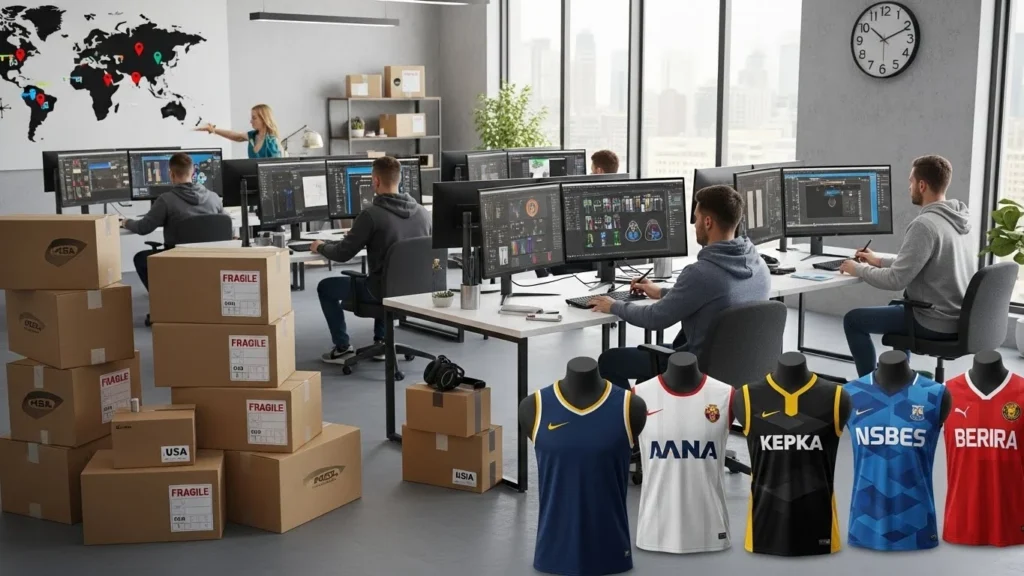
Because of this growing demand, a professional t-shirt manufacturer must now manage sourcing, fabric engineering, pattern development, printing systems, inventory coordination, quality assurance, and packaging logistics simultaneously. Bulk apparel manufacturing has evolved into a highly technical process designed to help brands scale efficiently in competitive global markets.
Many emerging fashion labels collaborate with a custom wholesale casual wear manufacturer to build scalable t-shirt collections tailored for lifestyle and retail audiences.
The Shift From Simple Garments to Brand-Driven Apparel Systems
T-shirts were once considered basic everyday garments produced mainly for comfort and affordability. However, modern fashion culture has transformed them into highly important branding products used to represent identity, lifestyle, and community affiliation.
Today, consumers purchase t-shirts not only for comfort but also for aesthetics, storytelling, social influence, and brand loyalty. Streetwear brands use oversized t-shirts as fashion statements, fitness companies use them for athletic branding, and ecommerce businesses use graphic tees as core retail products.
This shift has changed how a t-shirt manufacturer approaches product development. Manufacturing today is no longer limited to fabric assembly; it now involves visual merchandising, trend forecasting, branding integration, and scalable customization systems.
The rise of influencer-driven fashion and direct-to-consumer ecommerce has also increased demand for rapid bulk production capable of supporting frequent product launches and limited-edition apparel drops.
Manufacturers must therefore operate with both production efficiency and fashion adaptability in mind.
Fabric Selection and Casual Wear Comfort Engineering
Fabric selection remains one of the most important decisions in t-shirt production because comfort is one of the primary reasons consumers repeatedly purchase casual apparel.
A professional t-shirt manufacturer carefully evaluates fabric weight, softness, shrinkage behavior, breathability, and surface texture before beginning bulk production.
Unlike performance sportswear garments that prioritize compression or thermal engineering, casual t-shirt production focuses more heavily on wearability, softness, and long-term comfort.
Cotton remains one of the most widely used fibers because of its natural breathability and soft feel. However, modern fashion brands increasingly use blended materials such as cotton-polyester and cotton-modal combinations to improve durability and wrinkle resistance.
Oversized fashion trends have also influenced fabric selection because heavier textiles are often preferred for premium streetwear silhouettes. Lightweight jersey fabrics remain popular for everyday retail collections due to their breathable structure and affordability.
Research published by Cotton Incorporated in its apparel consumer behavior analysis highlights how comfort and fabric softness continue influencing apparel purchasing decisions across global fashion markets.
Modern fabric sourcing strategies now focus heavily on balancing affordability, visual appearance, and comfort performance simultaneously.
Bulk Production Requires Advanced Workflow Coordination
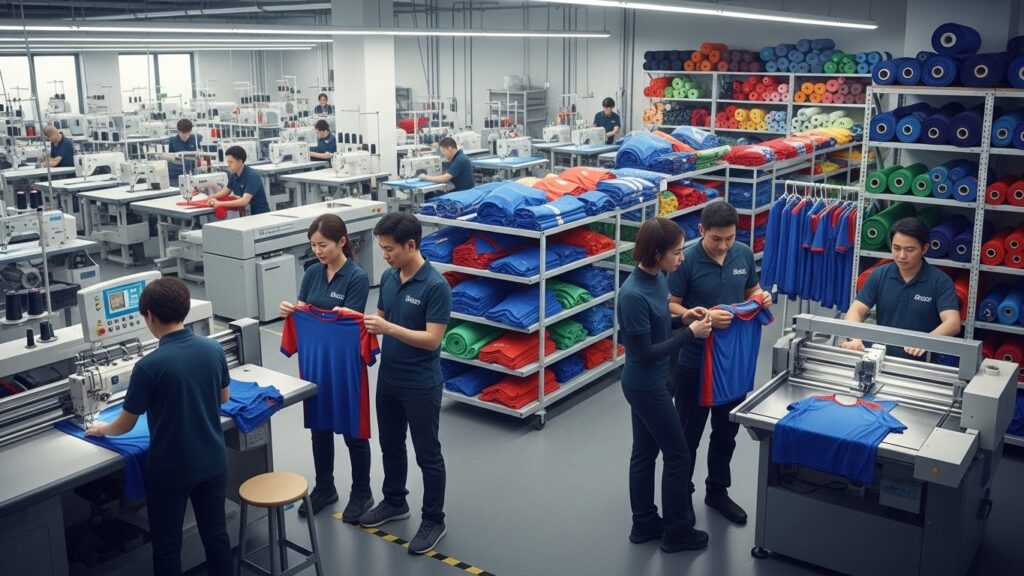
One of the biggest differences between small-scale garment manufacturing and large-volume apparel production is workflow coordination. A t-shirt manufacturer operating in bulk production environments must carefully manage timing, inventory movement, staffing efficiency, and production sequencing.
Large apparel orders often involve thousands of garments produced across multiple sizes, colors, and print variations simultaneously. This level of complexity requires highly organized manufacturing systems capable of maintaining consistency throughout production.
Bulk production workflows typically involve fabric sourcing, digital pattern preparation, cutting, printing, stitching, finishing, packaging, and distribution operating in synchronized stages.
Production delays in one area can disrupt the entire supply chain. Because of this, manufacturers increasingly rely on digital planning systems that improve production forecasting and workflow visibility.
Operational efficiency has become one of the biggest competitive advantages within global apparel manufacturing.
Printing Technology and Graphic Apparel Production
Graphic printing is one of the most commercially important aspects of modern t-shirt production because branding and visual design are central to fashion retail success.
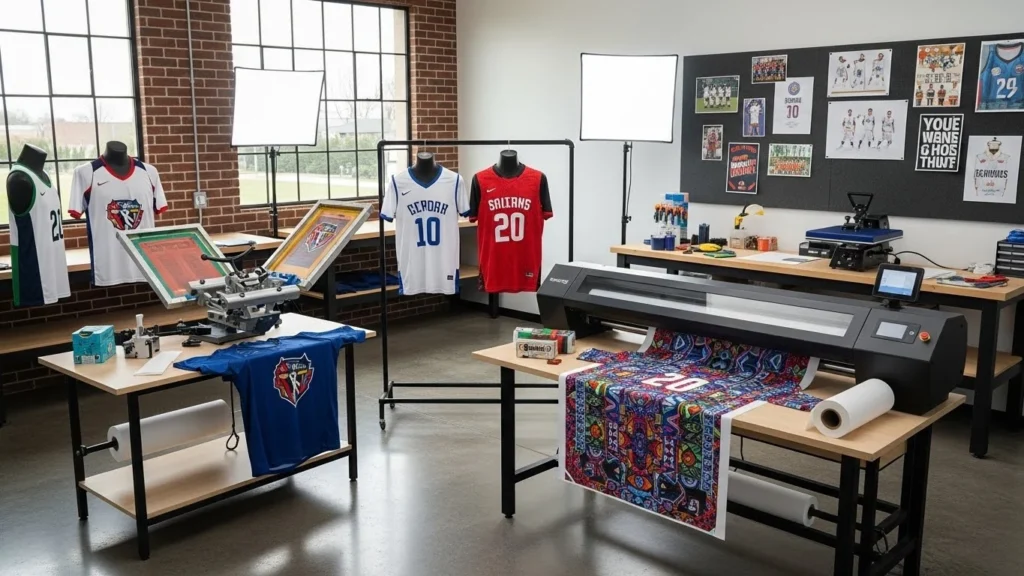
A professional t-shirt manufacturer commonly uses multiple printing technologies depending on fabric type, artwork complexity, and order volume.
Screen printing remains one of the most widely used systems for large-volume apparel orders because it provides durability and cost efficiency. Direct-to-garment printing is increasingly popular for smaller customized orders and ecommerce brands requiring rapid production flexibility.
Puff printing, discharge printing, silicone graphics, and high-density ink systems are also becoming more common in premium streetwear collections.
Print placement accuracy is extremely important because even small alignment errors can affect retail quality perception. Manufacturers therefore use automated positioning systems to improve consistency across large production runs.
Fashion brands increasingly prioritize unique graphic applications as part of their market identity strategies.
Streetwear Culture and the Expansion of Premium T-Shirt Markets
Streetwear culture has significantly reshaped the global t-shirt industry by transforming simple garments into premium fashion products.
Oversized silhouettes, heavyweight cotton fabrics, minimalistic branding, and vintage wash effects have become major trends within modern casual wear markets.
Because of this shift, a t-shirt manufacturer must now understand both production efficiency and fashion trend evolution simultaneously.
Premium streetwear t-shirts often require garment dyeing, enzyme washing, oversized pattern structures, and specialty finishing techniques designed to create a high-end appearance.
Research published by Highsnobiety’s fashion market reports explains how streetwear continues influencing global apparel buying behavior and premium casual fashion development.
This cultural transformation has increased the commercial value of bulk t-shirt production significantly.
Private Label Manufacturing and Ecommerce Brand Growth
The rise of ecommerce has dramatically increased demand for private label t-shirt production because online fashion brands can now launch globally without owning manufacturing facilities.
A t-shirt manufacturer often handles sourcing, sampling, production, labeling, packaging, and logistics while brands focus on social media marketing and online retail growth.
Private label systems allow companies to create custom apparel collections with unique branding while maintaining scalable production flexibility.
This manufacturing model has become especially popular among:
- influencer clothing brands
- startup streetwear labels
- gym apparel companies
- event merchandise businesses
- online print-on-demand retailers
Many companies also work with a custom wholesale activewear manufacturer to expand from casual t-shirt collections into fitness apparel categories.
The flexibility of OEM production continues driving apparel entrepreneurship globally.
Sustainability and Ethical Apparel Manufacturing
Sustainability has become one of the most important topics in modern fashion manufacturing as consumers increasingly evaluate brands based on environmental and ethical responsibility.
A future-focused t-shirt manufacturer now invests in recycled cotton systems, organic fabrics, low-water dye technologies, and reduced-waste production workflows.
Many apparel companies are also shifting toward ethical sourcing policies and transparent manufacturing partnerships.
Research from Fashion Revolution’s transparency reports continues showing how consumer awareness around ethical fashion production is increasing globally.
Sustainable apparel production is no longer viewed only as a marketing strategy but as a long-term business requirement for modern fashion brands.
Manufacturers capable of balancing affordability, quality, and sustainability are expected to remain highly competitive within future global apparel markets.
Automation and Digital Manufacturing Technologies
Technology integration has become essential in large-scale t-shirt production because modern fashion brands demand faster turnaround times and greater production accuracy.
A t-shirt manufacturer increasingly relies on automation systems for cutting, printing alignment, inventory tracking, and quality control.
Digital manufacturing tools now allow brands to visualize garments before production begins, improving design approval speed and reducing sampling waste.
Automated cutting systems improve precision while reducing material waste. AI-assisted inventory forecasting helps manufacturers manage bulk orders more efficiently.
Manufacturing technology research published by Apparel Resources highlights how automation continues improving apparel production efficiency and supply chain reliability.
As fashion retail cycles become faster, technology-driven manufacturing systems will become even more important.
Quality Control in Bulk Apparel Production
Maintaining consistency across thousands of garments is one of the most difficult aspects of bulk apparel production. A professional t-shirt manufacturer therefore implements extensive quality control systems throughout manufacturing.
Testing commonly includes:
| Quality Area | Production Focus |
|---|---|
| Fabric consistency | Weight and softness uniformity |
| Print durability | Crack resistance and wash stability |
| Stitch quality | Seam strength and alignment |
| Shrinkage testing | Dimensional stability after washing |
| Color accuracy | Batch consistency across production |
These systems help ensure that garments maintain consistent retail quality throughout large production runs.
Reliable quality control is one of the biggest reasons fashion brands continue partnering with experienced OEM manufacturers.
Future Trends in Bulk T-Shirt Manufacturing
The future of t-shirt manufacturing will likely focus on customization speed, sustainable materials, AI-driven production systems, and on-demand apparel manufacturing.
Consumers increasingly expect fashion products that feel personalized while still remaining affordable.
Manufacturers are already exploring:
- AI-assisted design systems
- automated fulfillment centers
- recyclable textile programs
- digital garment sampling
- waterless dye technologies
At the same time, ecommerce growth will continue increasing demand for scalable bulk apparel production capable of supporting rapid product launches.
Manufacturers capable of combining fashion adaptability, automation, sustainability, and branding flexibility will remain highly competitive in the future apparel industry.
Conclusion
T-shirt manufacturing has evolved into a highly organized and technology-driven segment of the global fashion industry where bulk production systems, branding integration, fabric engineering, and scalable OEM manufacturing all work together to support modern apparel brands.
A professional t-shirt manufacturer now plays a major role in helping fashion businesses develop products that balance comfort, retail appeal, affordability, and large-scale production efficiency.
From streetwear collections and ecommerce apparel to private label branding and sustainable manufacturing systems, bulk t-shirt production continues shaping the future of global casual wear markets.
Businesses seeking scalable apparel manufacturing, OEM production support, or custom private label t-shirt development can benefit from working with experienced manufacturing partners capable of delivering modern production expertise and long-term quality consistency.
For production inquiries and custom apparel consultations:
Email: info@bushisports.com
WhatsApp: +92 348 4018578