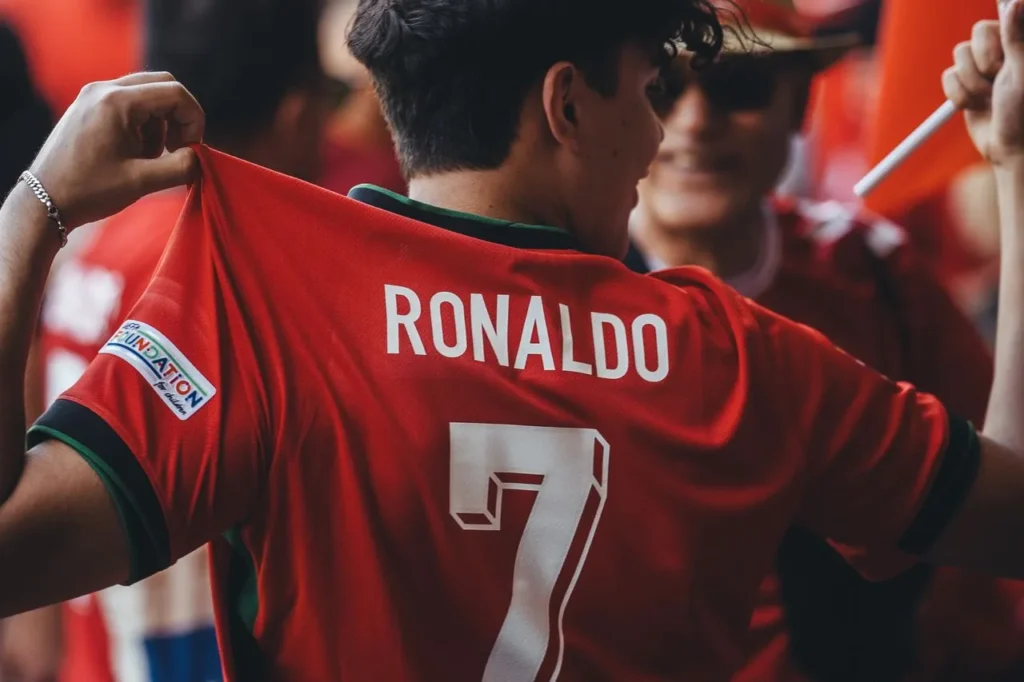
The World Cup is not only a football tournament. It is where soccer jersey design trends become visible to teams, manufacturers, retailers, and supporters at the same time. It is also the largest global showroom for teamwear design, performance fabrics, national storytelling, sponsor visibility, retail merchandising, and sports-fashion culture.
The 2026 tournament has created an especially useful reference point for teamwear brands. Forty-eight national teams are competing across Canada, Mexico, and the United States, bringing together different climates, cultures, colour traditions, supporter expectations, and supplier technologies. Every shirt must work on television, in stadium lighting, on mobile screens, in retail photography, and during high-intensity performance.
The most important 2026 soccer jersey design trends are not simply about choosing louder colours or adding more graphics. For commercial brands, soccer jersey design trends must also be evaluated through cost, fit, repeatability, and customer demand. The strongest kits show disciplined design systems. They connect national identity with modern visual language, use technical fabrics according to player needs, separate match products from supporter products, and plan colour contrast before production.
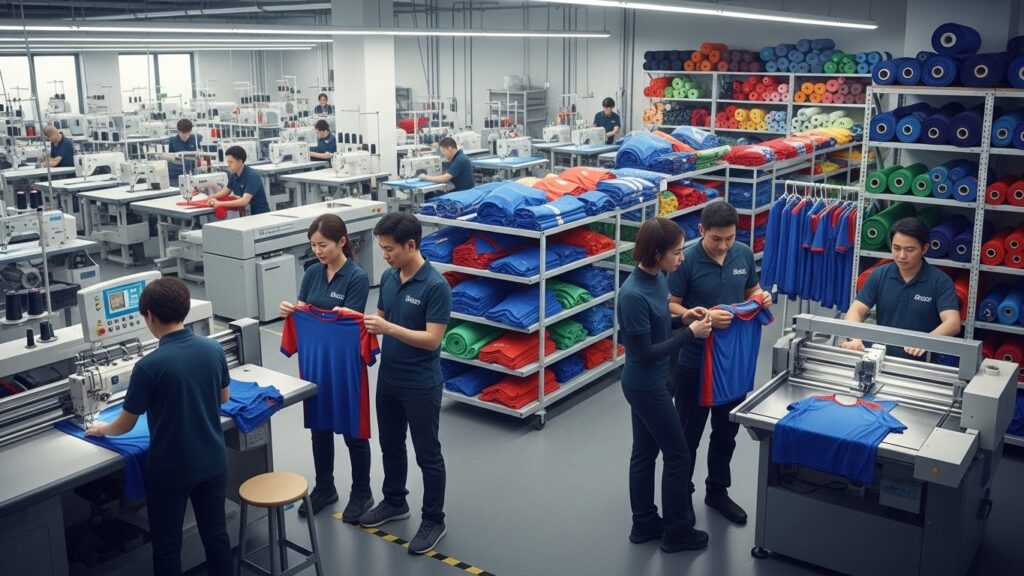
BUSHI Sports® provides custom wholesale soccer uniform manufacturing for sports brands, clubs, academies, schools, retailers, distributors, and private label buyers. Projects can include custom jerseys, shorts, socks, goalkeeper kits, training wear, sublimated graphics, embroidered crests, names, numbers, labels, packaging, sampling, and bulk production.
This guide examines eight soccer jersey design trends visible around the 2026 World Cup and translates them into practical lessons for growing teamwear businesses. The aim is not to copy national-team kits. It is to understand why the designs work and how similar principles can be applied to original custom collections.
“The best teamwear design is recognizable from a distance, meaningful at close range, and manufacturable at scale.”
A Quick View of the Eight Trends
| Trend | What the World Cup shows | What teamwear brands should do |
|---|---|---|
| Heritage reinterpreted | Historic shapes, colours, logos, and eras return in updated form | Build from authentic brand or club history |
| Cultural graphics | Local art, architecture, landscape, and symbols become patterns | Create original visual stories, not generic templates |
| Controlled experimentation | Home kits protect recognition; away kits carry greater creative freedom | Use a stable core and a bolder secondary range |
| Tonal texture | Low-contrast graphics add depth without overwhelming the shirt | Design patterns that survive distance and production |
| Climate-led performance | Fabric engineering responds to heat, humidity, and movement | Select fabric before finalizing graphics |
| Authentic and replica tiers | Player and supporter products share identity but use different constructions | Design clear product levels for different buyers |
| Contrast and legibility | Match colours, names, numbers, and goalkeeper kits are planned as a system | Test every combination before bulk production |
| Full collection storytelling | Jerseys connect with training wear, travel pieces, packaging, and launch content | Build ranges rather than isolated shirts |
Trend 1: Heritage Is Being Reinterpreted, Not Simply Repeated
One of the clearest soccer jersey design trends in 2026 is the return of heritage references. However, the strongest designs do not reproduce an old shirt exactly. They extract recognizable elements and rebuild them for current materials, fits, graphics, and retail expectations.
Adidas described its 2026 home collection as a group of bespoke designs influenced by the histories, landscapes, and cultures of its partner nations. Germany’s home jersey, for example, uses diamond and chevron details connected to previous tournament shirts, including the 2014 winning design. The company’s official 2026 home-kit release presents heritage as a design resource rather than a restriction.
The return of the adidas Trefoil on 2026 away jerseys provides another example. Adidas states that the symbol returned to the World Cup stage for the first time in 36 years, connecting the collection with the visual culture of 1990s football. The official away-jersey collection shows how a historic brand mark can create a new commercial story without making every shirt look old.
What This Means for Teamwear Brands
Among current soccer jersey design trends, heritage works best when it is tied to a specific team rather than used as a generic retro effect. For growing brands, these soccer jersey design trends should guide research and storytelling without encouraging direct imitation.
A club or private label business does not need decades of international history to use heritage intelligently. It can draw from:
- Founding year
- First club colours
- Local stadium architecture
- Historic badge shapes
- Regional textile patterns
- Previous championship seasons
- City maps
- School or academy symbols
- Traditional collar styles
- Supporter chants or mottos
The mistake is to copy a famous retro jersey and replace the crest. That creates a weak identity and can introduce intellectual-property concerns.
A stronger process is:
- Collect real historical references.
- Identify two or three recurring visual elements.
- Decide which element should remain obvious.
- Convert the remaining references into subtle trims, textures, labels, or internal details.
- Test whether the final shirt still looks contemporary.
Manufacturing Implications
The manufacturing side of soccer jersey design trends is easy to underestimate. The visual idea must be translated into repeatable trims, colours, panel shapes, and applications before it becomes a reliable product.
Heritage-inspired soccer jersey design trends often use details that are more difficult to reproduce than a basic sublimated template:
- Ribbed collars with multiple colours
- Woven hem labels
- Embroidered crests
- Jacquard or tonal fabric patterns
- Contrast sleeve cuffs
- Retro-style number fonts
- Internal neck messages
- Metallic accents
Every extra component affects minimum order quantity, sampling time, labour, colour matching, and cost. A custom teamwear brand should decide which heritage detail delivers the most value rather than adding every possible feature.
A useful approach is to keep the main body sublimated or cut-and-sewn while reserving one premium detail—such as a custom collar, woven crest, or hem label—to carry the historical story.
Trend 2: National and Local Identity Is Moving Into the Graphic System
Cultural storytelling is one of the most visible soccer jersey design trends around the tournament. National identity is no longer expressed only through flag colours and crests. It increasingly appears through all-over patterns, geometric structures, landscapes, local art, and architectural references.
Adidas explains that its 2026 away collection draws from the culture, identity, and heritage of each nation. Mexico’s away design reinterprets traditional greca patterns associated with art and historic architecture, while Japan’s away jersey combines 12 colours to express unity between players and supporters.
PUMA’s 2026 national-team collection follows a similar direction. The company’s official launch for 11 nations combines distinctive national storytelling with one coordinated performance platform. The result is not one repeated template in different colours; each federation receives a separate visual narrative.
The Lesson for Smaller Brands
This part of soccer jersey design trends is especially valuable for smaller businesses because a meaningful local story can create distinction without requiring a large marketing budget. Well-developed soccer jersey design trends turn community references into ownable design assets.
Teamwear buyers often request “something unique” without providing a design story. The designer then adds random shapes, gradients, lightning effects, camouflage, or brush strokes. The result may look active, but it does not create ownership.
Effective soccer jersey design trends begin with a source that belongs to the team.
Possible sources include:
- A city skyline
- Mountain contours
- River routes
- Local tiles
- Indigenous or regional geometric traditions
- School architecture
- Mascot features
- Club initials
- Historic maps
- Supporter culture
- Community landmarks
The source should be transformed rather than traced directly. Designers must also avoid using sacred, culturally protected, copyrighted, or community-specific motifs without permission and understanding.
A Practical Graphic Development Method
To apply soccer jersey design trends responsibly, designers need a repeatable method for moving from research to artwork. The following approach keeps soccer jersey design trends connected to identity and production reality.
Start with a visual reference and create three levels of interpretation:
Level 1: Literal
The object or motif is clearly visible. This can work for a badge, internal label, or limited-edition shirt, but it may feel too illustrative across a full jersey.
Level 2: Abstracted
Lines, shapes, and proportions are simplified into a repeating pattern. This is often the strongest choice for sublimated teamwear.
Level 3: Tonal
The motif remains visible only through texture, gloss, weave effect, or a small colour difference. This supports premium visual depth without reducing sponsor or number clarity.
The best level depends on the customer, sport, sales channel, and production method.
Originality Matters
Teamwear brands should not copy World Cup graphics. The commercial lesson is the process: identify a genuine story, develop a custom visual language, and connect the shirt with the people who will wear it.
BUSHI Sports® recommends preparing scalable vector files before sampling. The guide on why vector artwork matters explains why clean paths, controlled colours, and editable graphics improve print accuracy and repeat orders.
Trend 3: Home Kits Protect Recognition While Away Kits Carry More Risk
Another major pattern among 2026 soccer jersey design trends is the different role assigned to home and away shirts.
Home jerseys usually preserve the team’s strongest visual code. This makes home-kit consistency one of the most commercially reliable soccer jersey design trends. They may introduce new textures, collars, or panel shapes, but the dominant colour remains immediately recognizable.
Away jerseys often carry more creative experimentation through unexpected palettes, historic references, cultural artwork, alternate logos, and fashion-led styling.
This division is commercially useful.
A home shirt has to satisfy traditional supporters, television recognition, team identity, and long-term brand consistency. An away shirt can attract collectors, younger buyers, fashion customers, and people who prefer a design that works beyond the stadium.
Build a Collection Hierarchy
Current soccer jersey design trends make the role of each kit clearer. Brands can use these soccer jersey design trends to assign a specific commercial and visual purpose to every product in the collection.
Home Kit
- Primary club colour
- Most recognizable crest treatment
- Strong number contrast
- Broadest appeal
- Lower design risk
- Longest reorder life
Away Kit
- More flexible palette
- Stronger cultural story
- Experimental collar or pattern
- Lifestyle potential
- Opportunity for seasonal sales
Goalkeeper Kit
- Maximum contrast from outfield sets
- Separate visual identity
- Strong visibility
- Consistent names and numbers
- Optional shared graphic language
Third or Special Kit
- Anniversary
- Charity project
- Tournament campaign
- Community story
- Limited retail release
- Sponsor activation
A small club may need only one jersey, but a brand selling to multiple teams can still use this hierarchy across its catalogue.
Avoid Random Variation
Home and away shirts should feel related. The relationship may come from:
- Shared collar construction
- Repeated side-panel shape
- Same number font
- Common crest application
- One recurring pattern
- Matching cuff detail
- Consistent label system
When every shirt uses a completely different construction, sampling and inventory become more complicated. A shared pattern block allows design variation without rebuilding the entire product.
Commercial Advantage
From a business perspective, these soccer jersey design trends create more than visual variety. They give brands additional launch moments, reorder opportunities, and customer segments.
These soccer jersey design trends show that an away shirt can be more than a colour-clash solution. It can create a second retail story.
For private label brands, this means planning the collection before production rather than designing one shirt at a time. Fabric bookings, trim colours, labels, and packaging can then be coordinated across the range.
Trend 4: Tonal Patterns and Surface Texture Are Replacing Visual Noise
Many current soccer jersey design trends use graphics that are visible at close range but quieter from the stands. Tonal patterns, engineered textures, low-contrast gradients, fine striping, and repeated motifs create depth without overwhelming the crest, sponsor, number, or player name.
This is an important change from designs that rely on large digital effects simply because sublimation makes them possible.
A fully sublimated jersey can reproduce almost any graphic. That capability has expanded soccer jersey design trends, but it has also made design restraint more important. Technical freedom does not mean every available space should be filled.
Why Tonal Graphics Work
Tonal artwork has become one of the most adaptable soccer jersey design trends because it can support both performance and retail products. These soccer jersey design trends also help brands create visual depth without sacrificing legibility.
Tonal patterns can:
- Add premium visual depth
- Preserve team-colour recognition
- Keep sponsor marks readable
- Photograph well at close range
- Reduce visual conflict with numbers
- Support fashion and retail use
- Allow the same graphic across several products
The colour difference must be controlled. A pattern that looks subtle on a monitor may disappear after printing, or it may become too strong under bright stadium lighting.
Design at Three Viewing Distances
A practical way to evaluate soccer jersey design trends is to review every concept at three distances. This prevents a design from succeeding only in a close-up mockup.
Close Range
Can the supporter see the pattern, badge detail, labels, and fabric texture?
Medium Range
Does the shirt still have a clear composition in product photography and social-media content?
Long Range
Can viewers distinguish the team colour, crest zone, number, and player silhouette?
The strongest soccer jersey design trends perform at all three distances.
Production Methods
Tonal effects may be created through:
- Sublimation
- Jacquard knitting
- Engineered mesh
- Embossing
- Heat-applied gloss or matte film
- Yarn-dyed striping
- Laser perforation
- Different fabric panels
- Silicone or high-density print
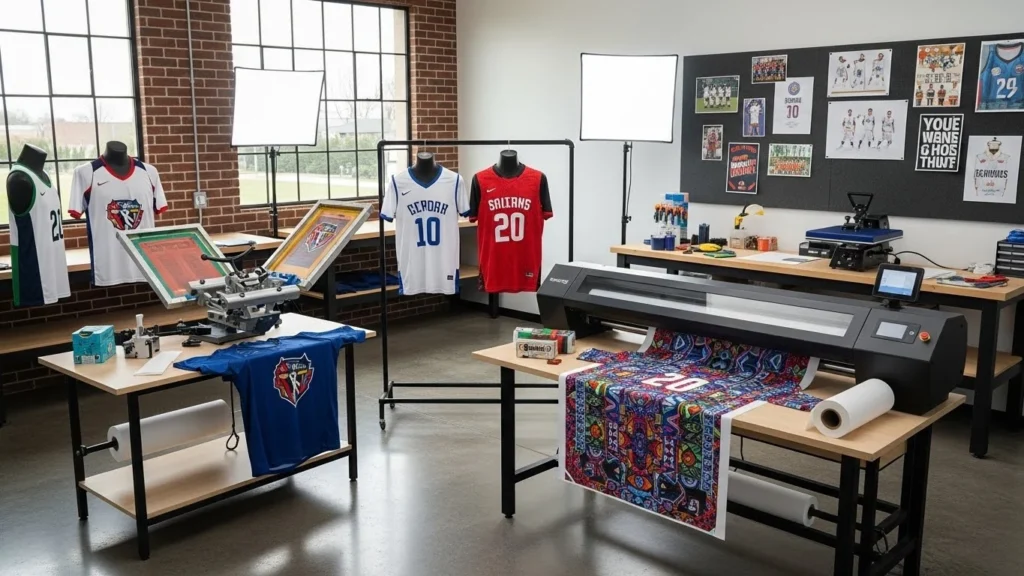
For most club and private label orders, sublimation provides the most flexible route. It supports all-over graphics, names, numbers, and colour variation without adding separate print layers.
However, sublimation requires polyester-compatible fabric and accurate panel alignment. Designers must account for seams, side panels, raglan sleeves, collars, and size grading.
Avoid Fake Texture That Cannot Be Manufactured
A digital mockup may include lighting, shadows, metallic reflections, or three-dimensional effects that do not translate to fabric. The production artwork should specify whether the effect is:
- Printed
- Knitted
- Embossed
- Applied
- Structural
- Only part of the presentation mockup
BUSHI Sports® explains artwork preparation in how to prepare print-ready files.
Trend 5: Performance Design Is Becoming Climate-Specific
The 2026 tournament spans three host nations and a wide range of summer conditions. As a result, climate engineering is one of the defining soccer jersey design trends of the tournament. This has pushed climate and moisture management into the design conversation.
Adidas states that its 2026 home collection uses body-mapped, mechanically stretched fabrics and CLIMACOOL+ materials to support players in varying conditions, including more intense warm-weather environments. The important lesson is not the supplier’s technology name. It is the decision to engineer the jersey around climate, movement, and body zones.
Nike’s 2026 national-team range also separates match-level products using Aero-FIT from stadium or replica shirts using Dri-FIT. PUMA similarly distinguishes lightweight ULTRAWEAVE authentic jerseys from more relaxed replica products while using dryCELL moisture management across the range.
Fabric Selection Comes Before Final Artwork
Performance-led soccer jersey design trends begin with material selection. Brands that treat fabric as an afterthought often lose the colour, fit, and technical benefits promised by the original concept.
A common mistake is approving a graphic first and selecting any available polyester fabric later. Fabric influences:
- Colour saturation
- Print sharpness
- Stretch
- Opacity
- Weight
- Breathability
- Moisture transfer
- Snag resistance
- Fit
- Collar stability
- Durability
The design may need to change when the fabric changes.
For example, a highly detailed dark pattern may lose clarity on an open mesh. A lightweight white fabric may require opacity testing. A four-way stretch material may distort a rigid geometric graphic. A heavy double-knit may improve coverage but retain more heat.
Body-Mapped Construction
Teamwear brands can use different materials in different areas:
- Main front and back body fabric
- Mesh underarm panels
- Ventilated side panels
- Stronger shoulder fabric
- Stretch collar
- Lightweight sleeve material
- Reinforced hem
This approach can improve performance, but it creates more cutting, sewing, colour-matching, and inventory requirements.
Match the Fabric to the Customer
The commercial value of soccer jersey design trends depends on matching them to the buyer. Elite construction, academy durability, and supporter comfort require different specifications even when the graphic identity is shared.
Not every buyer needs an elite match jersey.
| Customer | Recommended direction |
| Professional or elite club | Lightweight athletic fit, body mapping, advanced ventilation |
| Academy | Durable performance polyester, controlled stretch, repeat washing |
| School or university | Comfort, opacity, broad sizing, easy reorder |
| Retail supporter line | Relaxed fit, soft hand feel, stable decoration |
| Tournament team | Fast production, reliable sublimation, clear numbering |
| Budget league | Limited panels, durable fabric, efficient customization |
The strongest soccer jersey design trends are commercially adaptable. A brand should translate performance principles into the appropriate price point rather than copying elite construction blindly.
Trend 6: Authentic and Replica Jerseys Are Becoming Separate Products
One of the most commercially important soccer jersey design trends is the clear separation between what players wear and what supporters buy.
PUMA’s official 2026 release states that authentic jerseys use ULTRAWEAVE for lightweight movement, while replica versions keep the same design in a more relaxed fit. Nike’s current national-team range similarly lists Aero-FIT match jerseys and Dri-FIT stadium jerseys. Adidas also sells authentic and standard supporter versions across its World Cup collection.
This product architecture matters for private label teamwear.
Why One Jersey Cannot Serve Every Buyer Perfectly
This is one of the most important soccer jersey design trends for private label companies. Product segmentation allows the same visual idea to serve athletes, teams, and supporters without pretending that one construction is ideal for everyone.
Players may prioritize:
- Low weight
- Athletic fit
- Ventilation
- Stretch
- Reduced seam bulk
- Performance construction
Supporters may prioritize:
- Comfortable relaxed fit
- Durability
- Lower price
- Everyday styling
- Easier care
- Wider size availability
A highly fitted player jersey can frustrate retail customers. A heavy relaxed replica may not satisfy elite athletes.
A Three-Tier Model for Growing Brands
Teamwear companies can turn these soccer jersey design trends into a clear three-tier product system. The model below keeps design consistency while changing fit, fabric, and price.
Tier 1: Match
- Lightweight technical fabric
- Athletic fit
- Body-mapped ventilation
- Heat-applied or lightweight branding
- Higher sampling and production cost
Tier 2: Team
- Durable performance polyester
- Regular athletic fit
- Sublimated names and numbers
- Practical collar and seam construction
- Suitable for clubs, academies, and schools
Tier 3: Supporter
- Relaxed fit
- Soft and durable fabric
- Simplified construction
- Retail sizing
- Optional embroidered or woven crest
- Lifestyle-oriented packaging
The same visual identity can be maintained across all three levels.
Manage Expectations Transparently
Product pages and catalogues should state:
- Fit
- Fabric weight
- Stretch
- Decoration method
- Intended use
- Available sizes
- Care instructions
- Whether names and numbers are included
- Whether the crest is printed, woven, or embroidered
The lesson from current soccer jersey design trends is that product differentiation should be designed intentionally, not created through unexplained material substitutions after the sample is approved.
Trend 7: Colour Contrast and Number Legibility Are Core Design Work
A jersey can look excellent in a catalogue and still fail during competition when the full kit system has not been tested for colour contrast. This is why contrast planning remains one of the non-negotiable soccer jersey design trends for professional and amateur teamwear.
FIFA confirmed match colour designations for all 72 group-stage fixtures before the tournament. Its official guidance states that first-choice colours are preferred, but alternative combinations are selected when necessary to achieve acceptable contrast. FIFA also allocates numbers 1 to 26, with number 1 reserved for a goalkeeper.
The FIFA World Cup 2026 Regulations include a dedicated section on kit and colour approval. The official match-colour announcement demonstrates that colour planning is an operational requirement, not only a design preference.
Design the Full Kit, Not Only the Shirt
Colour-focused soccer jersey design trends must be evaluated across the complete uniform. A shirt that works alone may fail when combined with shorts, socks, goalkeeper colours, or an opponent’s kit.
Approval should cover:
- Jersey
- Shorts
- Socks
- Goalkeeper jersey
- Goalkeeper shorts
- Goalkeeper socks
- Player numbers
- Player names
- Crest
- Sponsor marks
- Sleeve badges
- Training bibs where relevant
A light shirt with light shorts may create a different visual result from the same shirt with dark shorts.
Number and Name Legibility
Legibility remains one of the most practical soccer jersey design trends because competition, broadcast, and retail use all depend on clear identification. Decorative graphics should never make player customization difficult to read.
Names and numbers should be tested against:
- Main body colour
- Pattern intensity
- Gradient
- Seams
- Ventilation panels
- Television distance
- Stadium lighting
- Printed photographs
- Mobile screens
A pattern may need a clean number zone, outline, or contrast panel.
Goalkeeper Planning
Goalkeeper kits should be distinct from:
- Both outfield sets
- Match officials
- Opponents
- Other goalkeepers where required
A brand offering only one goalkeeper colour may create problems for tournaments and leagues.
Colour Standards
Use controlled colour references rather than terms such as royal blue, bright red, or neon green.
A technical file can include:
- Pantone reference where appropriate
- Digital values
- Approved printed swatch
- Fabric lot
- Tolerance
- Lighting condition
- Supplier recipe
Sublimated colour changes with fabric, coating, heat, pressure, ink, and finishing. Bulk production should be checked against a physical approved sample.
Trend 8: The Jersey Is Now the Centre of a Larger Brand Story
The final of the eight soccer jersey design trends is the expansion of the kit into a complete cultural and commercial system. Among modern soccer jersey design trends, this wider collection approach offers some of the strongest retail opportunities.
A World Cup shirt is no longer launched as a single product photograph. It appears through films, players, musicians, creators, community events, travel wear, training collections, digital campaigns, packaging, and retail environments.
FIFA’s 2026 volunteer uniform provides a parallel example. The official design uses the tournament visual identity and a heart-shaped programme pattern, showing how one graphic system can extend across clothing and event communication.
PUMA’s tournament activity includes national-team storytelling, creator-led reveals, community projects, and travel wear. Adidas connects home and away kits through heritage campaigns and shared brand codes. Nike sells match, stadium, women’s, and youth versions across its national-team assortment.
What a Teamwear Brand Can Build Around One Jersey
Collection-building soccer jersey design trends encourage brands to treat the match shirt as the starting point rather than the complete offer. One graphic system can support multiple products and marketing assets.
A complete range may include:
- Match jersey
- Away jersey
- Goalkeeper jersey
- Shorts
- Socks
- Training shirt
- Tracksuit
- Travel polo
- Jacket
- Supporter T-shirt
- Cap
- Scarf
- Kit bag
- Presentation box
- Social-media launch assets
The shirt becomes the central graphic source for the wider collection.
Create Reusable Design Assets
The strongest soccer jersey design trends are easier to scale when the artwork is organized as a reusable system. This protects consistency across future products, campaigns, and reorders.
When building original soccer jersey design trends for a club or private label range, create:
- Primary pattern
- Secondary tonal pattern
- Colour palette
- Number font
- Name font
- Crest rules
- Sponsor placement rules
- Icon set
- Packaging graphics
- Social-media templates
This reduces inconsistency and makes repeat orders easier.
Design for Digital Presentation
Jerseys are increasingly judged first on a phone screen. The product should have:
- Clear silhouette
- Recognizable colour balance
- Strong crest zone
- Readable details
- Good front and back composition
- Clean flat-lay appearance
- Attractive close-up texture
- Consistent mockups
However, digital impact should not replace physical wear testing. A dramatic shoulder graphic may look excellent online but create panel-matching problems or distort in larger sizes.
Packaging as Part of the Experience
Custom packaging can reinforce the story through:
- Club history
- Campaign message
- Player or team photography
- Care guidance
- QR code
- Reorder information
- Product authenticity
- Sponsor presentation
BUSHI Sports® explains this commercial role in how packaging influences perceived value.
What Teamwear Brands Should Copy—and What They Should Avoid
The value of soccer jersey design trends lies in the underlying decisions, not in copying the final appearance. Brands should translate soccer jersey design trends into original research, product planning, and manufacturing controls.
The World Cup is a source of strategy, not a template library.
| Learn from | Avoid |
| Clear national or club identity | Copying a famous team’s graphics |
| Controlled home and away hierarchy | Random colour changes with no relationship |
| Tonal patterns with real meaning | Generic brush strokes and digital noise |
| Performance-led fabric selection | Choosing fabric after the artwork is final |
| Authentic and replica product tiers | Quietly reducing quality in bulk |
| Full colour-contrast planning | Designing only the front of the jersey |
| Consistent names and numbers | Decorative fonts that are hard to read |
| Collection storytelling | Launching unrelated products with no system |
| Physical sample testing | Approving only digital mockups |
| Documented artwork and colour standards | Relying on screenshots and colour names |
A Practical Soccer Jersey Design Workflow
The following workflow helps brands convert soccer jersey design trends into production-ready specifications. It also reduces the gap between an attractive mockup and a repeatable bulk order.
1. Define the Buyer and Use
Confirm whether the product is for:
- Professional team
- Amateur club
- Academy
- School
- University
- Retail brand
- Tournament
- Supporter collection
2. Build the Identity Brief
Collect the crest, colours, history, location, symbols, sponsor requirements, and design references.
3. Define the Collection
Decide whether the project includes home, away, goalkeeper, training, and supporter products.
4. Select Fabric Direction
Choose material based on climate, performance, opacity, stretch, durability, price, and print method.
5. Develop the Graphic System
Create the main pattern, secondary details, collar, cuffs, trims, and back-number zone.
6. Prepare Names and Numbers
Confirm font, outline, size, placement, numbering range, and player-name rules.
7. Choose Branding Methods
Select sublimation, embroidery, woven crests, heat transfer, silicone badges, or a combination.
8. Produce Digital Mockups
Show front, back, side, shorts, socks, goalkeeper set, and close-up details.
9. Create Print-Ready Files
Separate panels, define bleed, add colour references, outline fonts, and label sizes clearly.
10. Make a Physical Sample
Check fit, fabric, print, collar, crest, number visibility, stitching, and colour.
11. Conduct Wear and Wash Tests
Assess movement, sweat, stretch, abrasion, colourfastness, shrinkage, and decoration stability.
12. Approve a Size Set
Verify graphic scaling and placement across small, medium, large, and extreme sizes.
13. Approve Pre-Production Standard
Lock the bill of materials, artwork, measurements, tolerances, labels, and packaging.
14. Inspect Bulk Production
Compare bulk jerseys with the approved sample and technical file.
BUSHI Sports® explains wider inspection methods in how quality control works in sportswear manufacturing.
Sublimation, Cut-and-Sew, and Applied Branding
Different soccer jersey design trends require different manufacturing methods. The production route should be selected according to the graphic, fabric, quantity, performance target, and price point.
Modern soccer jersey design trends often combine several production methods.
Sublimation
Sublimation is suitable for polyester-based fabrics and can produce:
- All-over graphics
- Gradients
- Tonal patterns
- Names
- Numbers
- Sponsor marks
- Multiple colours
The design becomes part of the fabric rather than a raised layer. This reduces cracking and peeling associated with some surface applications.
Limitations include:
- Polyester requirement
- Colour variation between fabrics
- White show-through when material stretches
- Panel-alignment challenges
- Difficulty producing metallic or raised effects
Cut-and-Sew Colour Blocking
Different fabric panels can create strong colour separation and premium construction. This method may suit retro or heritage concepts.
It requires control of:
- Seam alignment
- Panel stretch
- Fabric shrinkage
- Colour matching
- Added labour
- Size grading
Embroidery and Woven Crests
These methods add texture and perceived value, especially for supporter or heritage jerseys. They also add weight and stiffness.
Heat Transfers and Silicone Badges
Lightweight transfers can support match jerseys, while silicone or TPU badges create a modern three-dimensional effect.
Every application should be tested for:
- Adhesion
- Stretch
- Heat
- Washing
- Abrasion
- Colour migration
- Edge lifting
Quality-Control Checklist for Custom Soccer Jerseys
Quality control determines whether soccer jersey design trends survive bulk manufacturing. Every visual and technical feature must be compared with the approved sample and production file.
| Inspection area | What to check | Common failure |
| Fabric | Weight, stretch, opacity, moisture performance | See-through areas, snagging, wrong hand feel |
| Colour | Match to approved swatch | Shade variation between panels or batches |
| Sublimation | Sharpness, saturation, alignment | Ghosting, banding, white gaps |
| Collar | Shape, stretch, recovery, symmetry | Waving, twisting, tight opening |
| Sleeves | Length, cuff alignment, graphic matching | Uneven cuffs or mismatched pattern |
| Crest | Position, size, adhesion, embroidery | Crooked placement or puckering |
| Sponsor | Legibility and approved dimensions | Cracking, migration, wrong colour |
| Names and numbers | Font, size, spacing, contrast | Poor readability or incorrect player data |
| Seams | Strength, comfort, consistency | Open seams, skipped stitches, rough edges |
| Fit | Measurements and size grading | Inconsistent sizing or restricted movement |
| Shorts and socks | Colour and set coordination | Kit mismatch |
| Packaging | Size label, barcode, dryness, presentation | Mixed sizes or trapped moisture |
Cost and MOQ Planning
Some soccer jersey design trends are inexpensive to create through sublimation, while others require custom knitting, trims, molds, or multiple fabrics. Brands should evaluate cost before promising a final retail price.
The cost of a custom jersey is influenced by more than the number of colours.
Major cost factors include:
- Fabric type and weight
- Number of fabric panels
- Sublimation coverage
- Collar and cuff complexity
- Mesh or body-mapped construction
- Embroidered or woven crest
- Heat-applied logos
- Custom number font
- Size range
- Women’s and youth patterns
- Goalkeeper variations
- Labels
- Packaging
- Testing
- Order quantity
A basic fully sublimated jersey with a standard collar will generally cost less than a body-mapped match shirt using several fabrics, a custom rib collar, a woven crest, lightweight transfers, special labels, and premium packaging.
The quotation should state:
- Fabric
- Construction
- Decoration
- Included customization
- Sizes
- Sample cost
- MOQ
- Packaging
- Production lead time
- Freight basis
BUSHI Sports® explains broader pricing in its sportswear manufacturing cost breakdown and explains minimums in what MOQ means in sportswear manufacturing.
Common Mistakes When Following Soccer Jersey Design Trends
Soccer jersey design trends become risky when brands follow the appearance but ignore identity, fit, production, and reorder planning. The following mistakes are common in custom teamwear projects.
Copying Instead of Learning
World Cup kits can inspire a process, but copying graphics, fonts, or badge treatments weakens originality and may create legal problems.
Starting With Effects Instead of Identity
Random gradients and aggressive graphics do not replace a real team story.
Ignoring the Back of the Jersey
The back must support clear player names and numbers.
Designing Home and Away Kits Separately
The range should share construction or visual codes.
Selecting Fabric After Artwork Approval
Fabric changes colour, stretch, detail, and fit.
Using One Pattern for Every Customer
Player, supporter, women’s, youth, and goalkeeper products may need different fits.
Making Every Detail Custom
Too many special components increase MOQ, cost, lead time, and defect risk.
Approving Colours on a Screen
Physical printed swatches are essential.
Forgetting Goalkeeper Contrast
A goalkeeper set must work with both outfield kits and likely opponents.
Launching Without Reorder Planning
Future orders require saved artwork, colour records, measurement charts, and supplier specifications.
Why Work With BUSHI Sports®?
BUSHI Sports® helps buyers translate soccer jersey design trends into original, manufacturable collections rather than copied templates. The process can cover concept review, material selection, sampling, customization, and bulk control.
BUSHI Sports® is a custom sportswear manufacturer based in Sialkot, Pakistan. The company supports sports brands, clubs, academies, schools, universities, retailers, wholesalers, distributors, and private label buyers through OEM, ODM, sampling, customization, and bulk manufacturing.
For custom soccer teamwear, BUSHI Sports® can support:
- Home and away jerseys
- Goalkeeper uniforms
- Shorts and socks
- Training shirts
- Tracksuits and travel wear
- Men’s, women’s, and youth sizing
- Sublimated graphics
- Embroidered and woven crests
- Heat transfers and silicone badges
- Custom collars and cuffs
- Names and numbers
- Sponsor placement
- Private labels
- Size sets
- Custom packaging
- Quality inspection
- International delivery coordination
Buyers can explore the custom wholesale soccer uniform manufacturer page or review the broader soccer uniform manufacturing guide.
Start Your Custom Soccer Jersey Project
Brands applying soccer jersey design trends need a clear technical brief, not only inspiration images. BUSHI Sports® can review the intended market, construction, artwork, quantity, and delivery requirements before sampling.
Sports brands, clubs, academies, schools, universities, retailers, distributors, and private label buyers can contact BUSHI Sports® to discuss original jersey concepts, fabrics, sublimation, samples, minimum order quantities, size ranges, pricing, names, numbers, logos, labels, packaging, production, and international delivery.
- Email: info@bushisports.com
- WhatsApp: +92 348 4018 578
- Project inquiry: Contact BUSHI Sports®
Share the intended market, team level, design references, colour standards, size range, estimated quantity, required delivery date, sponsor artwork, and packaging plan. A clear brief allows the manufacturing team to recommend the correct material and production route.
Frequently Asked Questions
These answers address the most common commercial and manufacturing questions about soccer jersey design trends.
What are the main 2026 soccer jersey design trends?
The main soccer jersey design trends include reinterpreted heritage, culturally specific graphics, recognizable home shirts, more experimental away kits, tonal patterns, climate-led fabrics, separate authentic and replica products, stronger colour planning, and complete collection storytelling.
Why are heritage designs popular in 2026?
Heritage creates emotional recognition and retail value. The strongest designs update historic colours, shapes, logos, and details instead of reproducing old shirts exactly.
Are all-over graphics still popular?
Yes, but many soccer jersey design trends now use controlled tonal artwork rather than visually crowded effects. The pattern supports identity while leaving space for crests, sponsors, names, and numbers.
What is the difference between an authentic and replica jersey?
Authentic jerseys are generally developed for player performance using lighter fabrics, athletic fits, and technical construction. Replica shirts usually keep the same visual identity with a more relaxed fit, durable construction, and accessible price.
Is sublimation suitable for custom soccer jerseys?
Sublimation is suitable for compatible polyester fabrics and supports full-colour graphics, patterns, names, numbers, and sponsor marks. Fabric selection, colour testing, and panel alignment remain important.
Should a home and away kit use the same template?
They do not need identical graphics, but they should share selected elements such as collar construction, side-panel shape, number font, crest treatment, or pattern language.
How can a small club use World Cup design ideas?
The club can identify a local story, preserve its primary colour, create one original pattern, develop a clear number system, and choose one premium detail. It should learn from the design process rather than copy a national-team jersey.
How should numbers be designed over a patterned jersey?
Use sufficient contrast, outlines, clean number zones, or controlled pattern intensity. Test readability at close, medium, and long distances.
Do women’s and youth soccer jerseys need separate patterns?
They may. A brand should consider body proportions, fit preferences, movement, comfort, and sizing data rather than reducing one adult pattern for every user.
What fabric is best for a soccer jersey?
There is no universal best fabric. The correct choice depends on climate, level of play, fit, opacity, stretch, durability, printing, price, and care requirements.
How many goalkeeper colours should a teamwear brand offer?
The appropriate number depends on the league and customer, but offering several clearly distinct options reduces colour-clash problems.
What makes a jersey look premium?
A clear identity, controlled graphics, accurate colour, good fit, stable collar, clean stitching, quality crest application, readable customization, and thoughtful packaging usually create more value than excessive decoration.
What information should be sent to a manufacturer?
Send artwork, colour references, logo files, sponsor files, size range, quantities, fabric preference, fit direction, names and numbers, packaging needs, target price, and required delivery date.
What affects the MOQ for custom jerseys?
MOQ can be affected by custom fabrics, knitted collars, trims, number of designs, size range, special labels, crest type, packaging, and production setup.
How should a teamwear brand choose which soccer jersey design trends to use?
Choose only the ideas that strengthen the team’s identity, suit the target customer, work with the production budget, and remain practical for reorders. A trend should support the product rather than control it.
Conclusion
The 2026 World Cup shows that successful teamwear balances recognition with change. The strongest soccer jersey design trends combine heritage, culture, performance engineering, clear product tiers, colour discipline, and commercial storytelling.
For teamwear brands, the lesson is not to imitate tournament kits. It is to build a more complete design process.
Start with identity. Decide the role of the home, away, and goalkeeper kits. Select the fabric before finalizing the artwork. Use patterns with purpose. Test names and numbers for visibility. Create separate performance and supporter products when the market supports them. Document colours, measurements, branding, and packaging so the collection can be reproduced consistently.
BUSHI Sports® supports custom soccer jersey development through concept review, fabric selection, sublimation, pattern development, sampling, private labeling, size-set approval, quality inspection, packaging, and global order coordination.
To discuss a custom collection, email info@bushisports.com, message BUSHI Sports® on WhatsApp at +92 348 4018 578, or submit your requirements through the contact page.