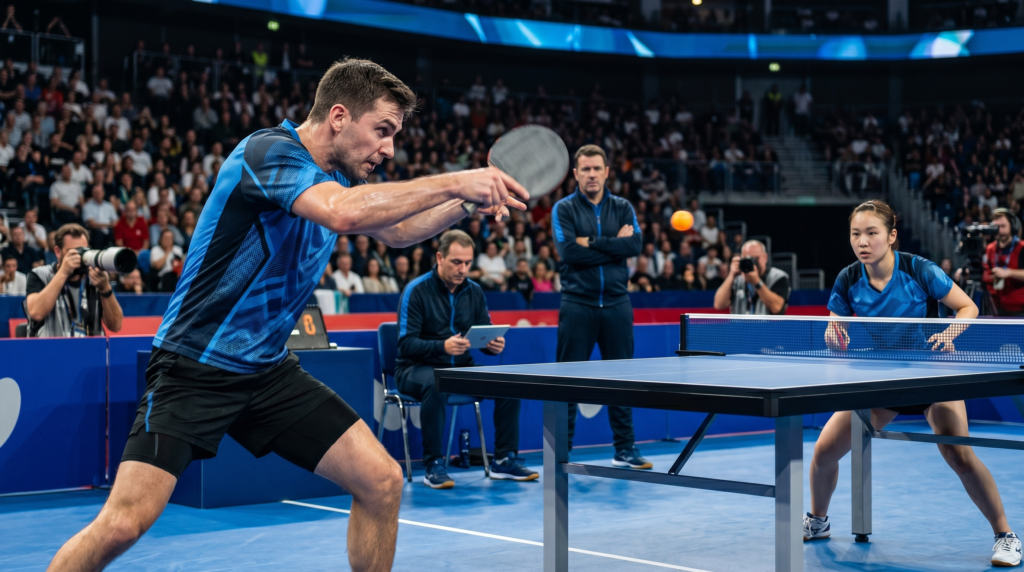
Table tennis is often underestimated when discussing physically demanding sports, yet professional players operate under extreme speed, coordination, and reaction-based conditions. Every movement happens within fractions of a second, which means apparel must support unrestricted mobility while remaining breathable during extended indoor competition.
Because of this, the global sportswear industry has started treating table tennis apparel as a specialized category rather than generic activewear. Modern sports brands increasingly seek performance-driven uniforms specifically engineered for fast indoor movement, lightweight comfort, and professional customization.
This demand has elevated the importance of working with a reliable table tennis uniform manufacturer capable of combining textile innovation with scalable OEM production systems.
Unlike traditional teamwear, table tennis uniforms require careful fabric balancing. Apparel that feels too heavy can restrict agility, while poorly ventilated garments can reduce comfort under indoor tournament lighting. Modern manufacturers therefore focus heavily on lightweight polyester blends, ergonomic garment construction, and moisture-control technologies tailored specifically for indoor sports environments.
Many sportswear businesses seeking scalable production solutions now partner with Bushi Sports®, a global sportswear manufacturing company specializing in custom teamwear, OEM activewear production, and private label athletic apparel for international sports brands and distributors.
Why Table Tennis Apparel Requires Specialized Engineering
Indoor sports create different physical challenges compared to outdoor competition. In table tennis, athletes constantly shift direction, rotate their upper body rapidly, and perform explosive footwork movements inside compact playing spaces.
Because players compete in enclosed indoor environments, airflow and temperature regulation become essential apparel considerations. Heavy fabrics or low-quality stitching can quickly affect performance during long matches and tournament sessions.
According to the International Table Tennis Federation development initiatives, table tennis participation continues expanding globally through youth development systems, national programs, and international competitions. This growth has significantly increased demand for customized athletic apparel designed specifically for competitive indoor play.
A professional table tennis uniform manufacturer helps sports brands develop apparel collections that balance:
| Performance Requirement | Manufacturing Focus |
|---|---|
| Speed and mobility | Lightweight fabric engineering |
| Indoor comfort | Breathable ventilation systems |
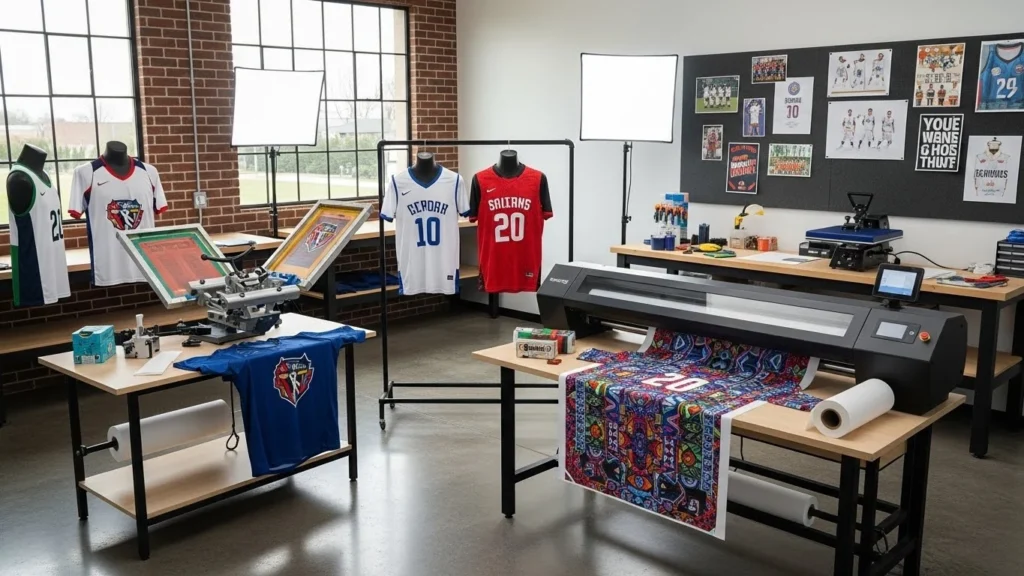
| Brand identity | Sublimation customization |
| Long-term durability | Reinforced stitching quality |
| Athletic flexibility | Stretch-performance textiles |
Modern table tennis apparel has therefore evolved into a technical product category requiring both textile expertise and precision manufacturing.
The Shift Toward Lightweight Indoor Sportswear
The sportswear industry has changed dramatically over the last decade. Consumers and professional athletes now expect apparel capable of supporting movement without sacrificing comfort or visual identity.
For indoor sports such as table tennis, lightweight construction has become one of the most important product features. Manufacturers increasingly use microfiber polyester blends and moisture-wicking fabrics designed to reduce garment weight while improving airflow.
Recent analysis from Textile World’s performance fabric coverage highlights how advanced sports textiles continue shaping the future of athletic apparel manufacturing through breathable fabric engineering and flexible garment systems.
What makes table tennis apparel particularly demanding is the sport’s constant upper-body rotation and rapid side-to-side movement. This forces manufacturers to engineer uniforms capable of stretching naturally without losing shape after repeated athletic use.
Many modern sportswear brands are also prioritizing apparel aesthetics alongside performance functionality. Customized sublimation graphics, minimalist athletic fits, and modern color-blocked designs have become increasingly common across professional table tennis uniforms.
As a result, the role of a table tennis uniform manufacturer now extends beyond simple production into complete apparel development and brand presentation support.
OEM Manufacturing and the Rise of Custom Teamwear
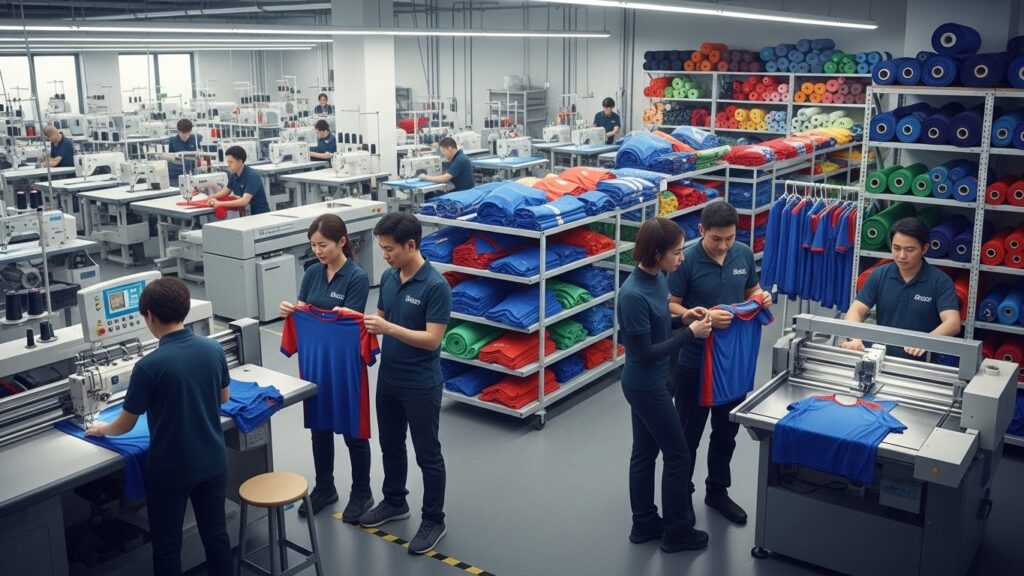
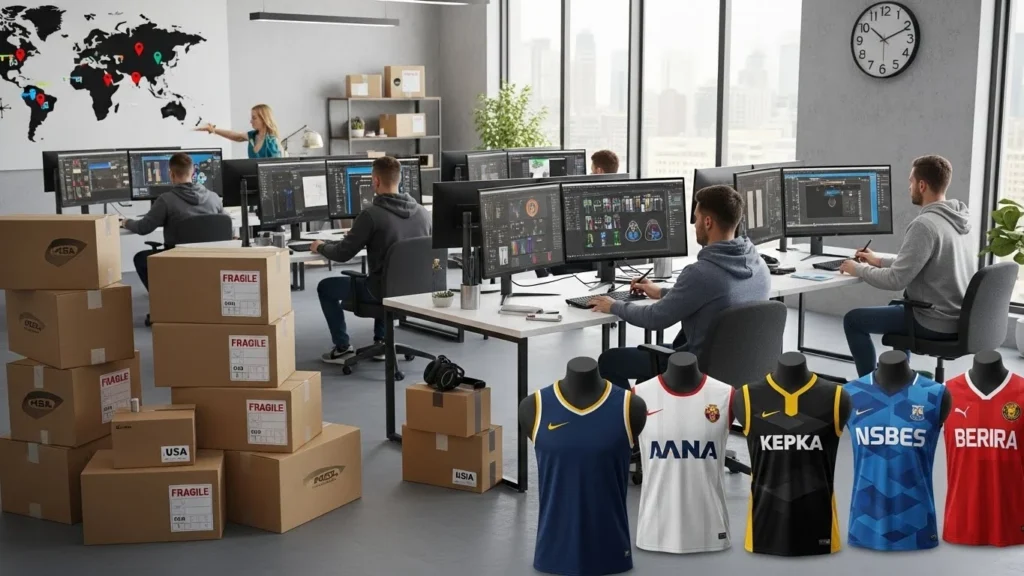
OEM manufacturing has become one of the most important growth models within the sportswear industry. Instead of operating their own factories, many sports brands collaborate directly with specialized manufacturers capable of handling sourcing, development, customization, and large-scale production.
This model allows brands to focus more heavily on marketing, athlete partnerships, and retail expansion while manufacturing partners manage technical production processes.
An experienced table tennis uniform manufacturer typically supports businesses through:
- Fabric sourcing and sampling
- Sublimation printing and customization
- Private label branding
- Bulk apparel production
- Packaging development
Private label production has become especially valuable for sports academies, e-commerce activewear businesses, distributors, and startup sportswear companies seeking scalable manufacturing without major infrastructure investment.
Organizations looking for flexible OEM apparel manufacturing frequently work with Bushi Sports® because of its expertise in sublimated sportswear production, moisture-wicking apparel systems, and global athletic wear manufacturing.
How Performance Fabrics Influence Fast Indoor Sports
Modern sportswear engineering relies heavily on textile science. In fast indoor sports, fabrics must regulate moisture while supporting unrestricted athletic movement.
Moisture-wicking technology remains one of the most important developments in modern athletic apparel because it helps move sweat away from the skin during high-intensity competition.
Recent reporting from Performance Sports Textile research coverage explains how breathable sportswear fabrics continue evolving toward lighter and faster-drying textile systems designed for modern athletic performance.
Table tennis apparel now commonly incorporates:
| Fabric Technology | Athletic Advantage |
|---|---|
| Quick-dry polyester | Faster sweat evaporation |
| Mesh ventilation panels | Improved airflow |
| Stretch fabric systems | Better movement flexibility |
| Lightweight seam design | Reduced friction during play |
Rather than relying solely on traditional sportswear cuts, manufacturers now use ergonomic body-mapping techniques that position ventilation zones strategically around heat-intensive movement areas.
This approach helps improve player comfort during long indoor matches while maintaining lightweight garment performance.
Quality Standards in Table Tennis Apparel Production
Consistency is one of the most important factors in professional sportswear manufacturing. Teams, retailers, and distributors expect apparel capable of maintaining quality across large production orders and repeated athletic use.
A dependable table tennis uniform manufacturer carefully monitors every production phase from fabric inspection to final packaging.
Unlike fashion apparel manufacturing, sportswear production requires greater emphasis on durability testing because garments experience repeated stretching, sweat exposure, and intense movement conditions.
Manufacturers therefore evaluate:
- Print durability
- Stitch strength
- Fabric flexibility
- Color consistency
- Sizing accuracy
Industry coverage from Vogue Business activewear manufacturing analysis notes that modern sportswear consumers increasingly associate technical quality with brand credibility, making manufacturing precision more important than ever before.
For sportswear brands, reliable quality management directly influences customer satisfaction, athlete trust, and long-term product performance.
Future Trends in Indoor Sportswear Manufacturing
The next generation of sportswear manufacturing is expected to focus heavily on sustainability, smart textiles, and advanced performance engineering.
Many manufacturers are already integrating recycled polyester systems and environmentally responsible production methods into modern sportswear development.
Research published through smart sportswear textile studies highlights how wearable textile technology may eventually allow athletic garments to integrate movement tracking and biometric performance systems directly into sports apparel.
Although these technologies are still developing, they demonstrate how rapidly sportswear manufacturing continues evolving.
At the same time, sports brands increasingly demand faster production timelines, lower minimum order quantities, and greater customization flexibility. Manufacturers capable of adapting to these market expectations will likely dominate the next phase of global activewear production.
Conclusion
Table tennis apparel manufacturing has evolved far beyond standard athletic clothing. Modern uniforms now require lightweight engineering, moisture-management systems, ergonomic garment construction, and scalable customization designed specifically for fast indoor sports.
Working with an experienced table tennis uniform manufacturer allows sports brands to maintain professional product quality while scaling production for academies, retailers, clubs, and competitive athletic organizations.
From OEM production and sublimation printing to breathable fabric innovation and private label development, the right manufacturing partner plays a major role in modern sportswear business growth.
Businesses seeking custom indoor sportswear and scalable apparel manufacturing solutions can explore professional OEM services through Bushi Sports®.